Kensington Security Consulting


Podcast not found.

For nearly one-half of a century, the Islamic Republic of Iran made war, on different levels, against Israel and America. The war was conducted surreptitiously and overtly, boldly and timidly, militarily and non-militarily, conventionally and, usually, uncoventionally. The attacks came from guns and bombs and words and funding. But the attacks continued. The Reckoning podcast examines the men and women behind this drama. What is Iran's argument with Israel and America? Why such passion? All this and more is the subject of this podcast.

Iran’s deep-seated anti-Semitism has persisted for over four decades. With the rise of the Islamic revolution, hidden anti-Semitic sentiments surged to levels unseen in generations. A long-dormant hatred of Jews resurfaced. After seizing power in 1979, Iran’s new leader, Ayatollah Ruhollah Khomeini, reversed the Shah’s pro-Western policies. The once-prominent museum exhibitions and art-house cinema in Tehran disappeared. Non-Muslim Iranians became suspects in the eyes of the newly formed Iranian intelligence and security services. In the mid-1980s, Iranian state-controlled media outlets began vilifying Jews. Illustrators of children’s cartoons depicted Jews as pigs and apes. Themes in television talk shows and literary coffee klatches include Jewish vampirism and old blood libels. Clergy recycled ancient accusations of Jews persecuting Muhammad. Among politicians and public intellectuals, the word "Jew" is used as a slur in Iranian political discourse. The words "Jew" and "Zionist" are often used interchangeably and generally with disdain. This podcast explores the nature of impact of this hatred.

Every day, you hear the words terrorism and terrorist. These words have different meanings to different people. Some are confused by the terms. This chapter will broadly cover terrorism, as it affects businesses. The Manager's Guide explores how terrorism affects business planning and operations. In these podcasts, you will hear: • How different people define terrorism.• The interrelationship between terrorism and crime.• When workplace violence becomes terrorism.• How terrorism affects business and why businesses are targeted.• The influence of politics in driving terrorism.• Mental health issues and personality traits of terrorists.• Some steps you can take to identify terrorists. All this and more are the subjects of this podcast.
Jihad and the World is a periodic update of global issues that involve Jihad, which generally refers to the expansion of the world of Islam or the protection of the world's Islamic community. Jihad and the World centers on persons and events featured in Mark Silinsky's five books on militant Islam. These podcasts are offered as a courtesy of Dr. Silinsky's firm Kensington Security Consulting where we bring education to national security.
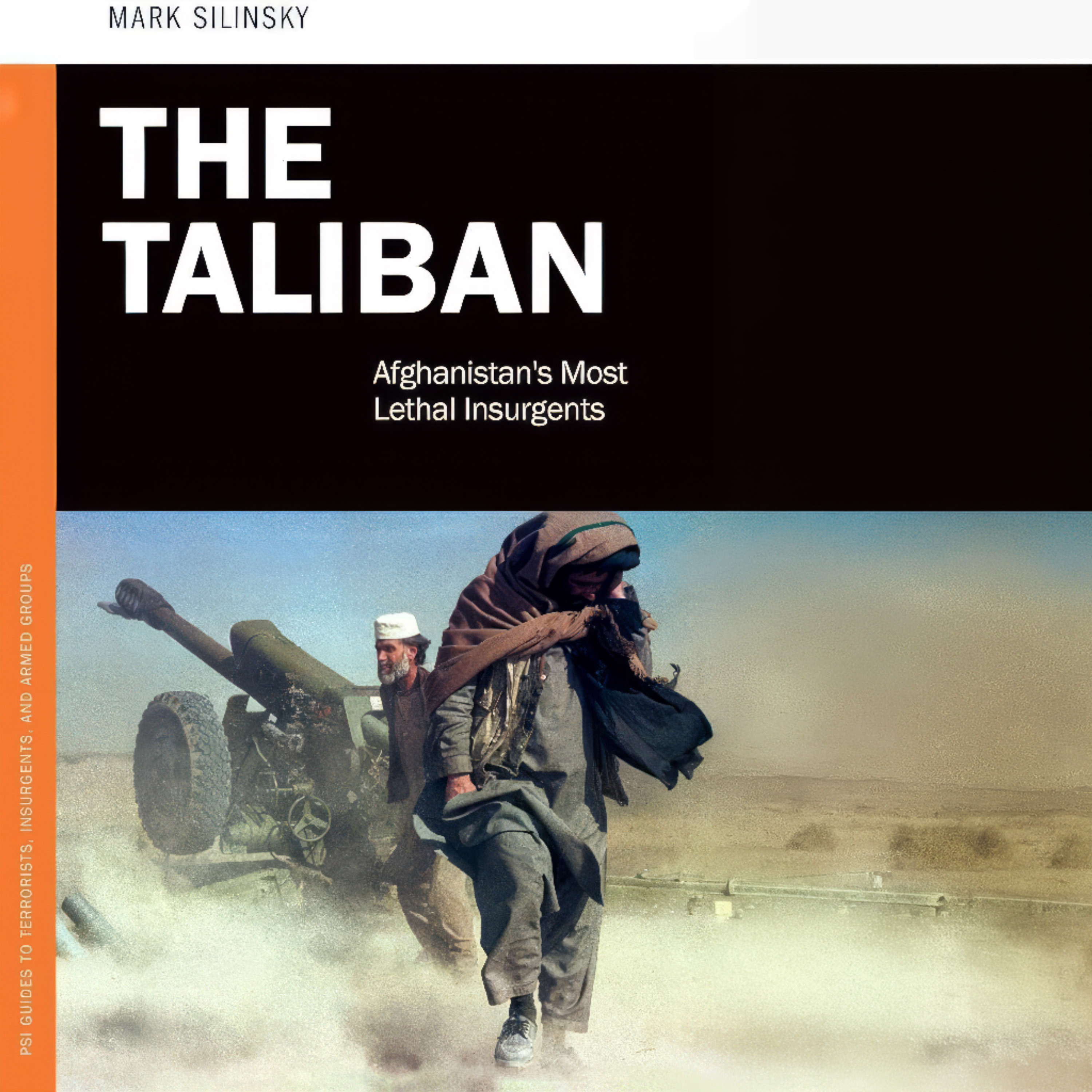
The Taliban offer an unrelenting dedication to conquer Afghanistan, an unconstrained use of terror, and solidarity with important fragments of global Islam. The Taliban leverages deeply ingrained Afghan skepticism of Western promises for a better future. Foreign men have come and gone from Afghanistan, and, despite promises, only the poverty remains. Taliban leaders boast that Afghans are armed with religious fervor, honor, and resolve. “Such weapons are neither available in the arsenal of America nor in the warehouse of her allies." In January 2013, the Taliban crowed, “No sooner will the foreigners quit than the Afghans will start living under the cover of an Islamic government and in the environment of Islamic brotherhood." Perhaps, but pro-government forces also have centers of gravity. Most Afghans fear the Taliban and remember the misery and brutality of its 6-year rule. The Taliban’s world is a phantasmagoria of savagery. Women are stoned for promiscuity, and men are beheaded for trivial offenses. Boys are raised to blow themselves up in bazaars, where other children and their mothers' shop. There is no music or television in Taliban territory, and no kites soar above the orchards and towns. There is a poverty of empathy and compassion. The American-led Coalition is determined to prevent the Taliban’s triumph. Today’s soldiers on both sides of the struggle have known only war. The sons of Taliban fighters, who were 10 when the group was scattered into Pakistan, are now in their early 20s. Many are hardened fighters and will undoubtedly face the sons of the Northern Alliance. The Taliban are tough, but so are many other Afghans.

Welcome to an excerpt of Empire of Terror, Iran’s Islamic Revolutionary Guard Corps, written by Mark Silinsky and published by Potomac Books, an imprint of the University of Nebraska Press. This is presented by Kensington Security Consulting, which brings education to national security. This excerpt comes from the introduction. In the early 1980s, many Western observers viewed the new government as a band of overzealous reformers who would moderate their rule once their fervor subsided. However, although the wholesale killings of the early years subsided, widespread repression continues, and the Guards remain the primary instrument of that subjugation. Today, Iranians under forty-five have little memory of Iran without the Guards. The Islamic Revolution established a new social order grounded in fundamentalist Islamic family ethics and values. In present-day Iran, there is little room for political, religious, or social deviation. A woman’s life is valued at half that of a man’s, as stated in Article 209 of Iran’s Islamic criminal law. Article 1210 sets the age of majority for females at nine years. Girls can be married then. Life for gays and lesbians in Iran is often unbearable. Jews, Christians, Zoroastrians, and Baha’i are regarded with suspicion and contempt as outsiders. Morality police patrol the streets and social haunts, on the lookout for men with long hair and women wearing short skirts and revealing clothing. Women must cover their hair and wear baggy clothing to avoid sexually stimulating men. Those who do not comply are beaten and imprisoned. The penalty for adultery is stoning or one hundred lashes. In September 2018, Brian Hook, senior policy advisor to the Secretary of State and Special Representative for Iran, said, “Iran is the last revolutionary regime on Earth. It does not respect the sovereignty of its neighbors or any nation. It doesn’t recognize the citizenship of other Shias who are members of other nations in the Middle East.” Iran is a land of contrasts. Prominent mullahs and senior Guards leaders have enriched themselves by plundering the fortunes of the previous ruling class and by creating a vast system of patronage, sinecures, kickbacks, and monopolies. This is IRGC Inc. But many of today’s Iranians subsist in absolute poverty, while others exist on the margins of survival. Photographic images released to the world reveal the poverty of the “grave sleepers of Tehran,” the penniless and the drug addicts who sleep in cartons or under bridges or in the tombs of cemeteries.Among the more vulnerable are indigent immigrants. In 2018, Iran’s indigent and angry masses rose to challenge the regime, and the Guards responded with brutality. The anger is still palpable. But mullahs and Guards maintain their power by offering financial and social privileges. The IRGC also projects power abroad and underwrites terrorist organizations and attacks around the world. For this reason, in April 2019, the United States designated the entire IRGC as a terrorist organization. As of the writing, it still holds that status. Who Are the Guards? The Guards’ origins, mission, orders of battle, leadership, strengths, faults, and defects are discussed in detail in subsequent chapters. It suffices here to introduce some basics. The Guards were created by the leaders of the Islamic Republic in 1979 to protect the new regime. Just as Lenin and Hitler created bodyguards for their new governments, the Ayatollah Khomeini forged a shield of guardians. While the Guards began piecemeal, cobbled together from local militias, they evolved to become a great power. Many founding leaders were political outlaws during the Shah’s tenure. Others had been rusticated to Iraq or Paris or were imprisoned in Tehran’s Evin prison, which became a blast furnace of radical ideas in the 1960s and 1970s. Over time, the Guards grew from a military force that used both conventional and unconventional tactics to a multipurpose enterprise that controls an economic conglomerate. Today, the Guards possess political and military power and control strategic industries, commercial services, and black-market enterprises. The total defense budget for 2016–17 was approximately $9 billion. In contrast, the Guards were reportedly allocated $4.9 billion, a 67 percent increase over the previous year, to which should be added the Basij budget of $357 million.12 The budget for the fiscal year 2018–19 allocated the Guards' funds three times those received by the army. Comparisons of Guards to the Soviet KGB and to the Nazi SS are a leitmotif of this book. All three were created to protect radical, expansionistic, and authoritarian states. As chapter 3 shows, the early leaders of all three services were true believers, drawn from the inner circles of Lenin, Hitler, and Khomeini. Their initial efforts were focused on eliminating the remnants of the old regimes and rivals to power—the tsar’s Okhrana; the German Sturmabteilung, or sa; and the shah’s Sazeman-e Ettelaat vaxx Keshvar, or savak.After domestic security was forged, all three services built beachheads of influence abroad. All comprised military or paramilitary units and economic domains. This book argues that Iran’s regime is so intertwined with and dependent upon the Guards that it is difficult to separate the two. Similarly, in Nazi Germany and the Soviet Union, the government and the protective and intelligence services were woven of the same cloth. All three services offered (and Iran’s case continues to offer) unwavering obedience to their nation’s dictator. After 1934, German military, paramilitary, intelligence, and security officers took personal oaths of allegiance to Adolf Hitler.15 Many, particularly SS men and women, followed Hitler until the war’s end, despite his reckless and ultimately self-defeating strategy, as well as his contemptuous disregard for the lives of those who served him with blind loyalty. For their part, leaders of the Soviet services proved their loyalty to Stalin. But when their assistance was no longer useful, they, too, were killed on the dictator’s orders. Iran’s Guards, like those of Stalin’s Soviet Union and Hitler’s Germany, swear allegiance to their leader. But they, too, are sometimes killed or psychologically ruined. As with the other services, the Guards pressure and sometimes harm the families of individuals whom they consider enemies. Finally, like their historical counterparts, the Guards help deceive the world about life in Iran. At the 1936 Berlin Olympics, Hitler deceived the world into believing he had peaceful global intentions. In the Soviet Union, Lenin and Stalin cultivated Western sympathizers, including leading intellectuals, professors, and liberal clergymen. The Guards’ information operations churn out material to polish Iran’s tarnished image, obscuring the conditions under which political prisoners, women, gays, and dissidents live. The Guards control press media outlets and satellite channels that broadcast in many languages; their active measures include subsidizing allies, establishing front companies, and funding friendly mosques. Empire of Terror is available for purchase online and as select bookstores worldwide. This reading does not represent the official position of any agency or individual within the United States government. On behalf of Kensington Security Consulting, thank you for listening.

The word “jihad” is misunderstood and misrepresented. It is a human concept (rather than a heavenly mandate) and has a historic and political as well as religious context, and has been applied in different ways by different users over the centuries. Today its most important application is by the members of the Global Jihadist Movement, most specifically Al Qaeda and the Islamic State which grew out of Al Qaeda. For Abu Bakr al Baghdadi and the tens of thousands of young men who have joined his cause, “jihad” refers to the last Holy War against the Infidel, a war to be waged in the eschatologically highly significant territory of Syria and Iraq as well as on the soil of infidel lands, be it a nightclub in Orlando, a concert hall in Paris, or on the streets of Boston. Many clichés are founded on a modicum of truth, and the wisdom inherited from Sun Tsu that one must “know the enemy” to defeat them is just such a fact-based cliché. (For the record, the ancient strategist actually advised that we must know ourselves and the enemy if we wish to be victorious, but that apparently was too long a phrase for general consumption!) Dr. Silinsky has done the Western world a great service by writing Jihad and the West: Black Flag over Babylon. In fact, his contribution must be read by as many national security professionals, policy-makers, and leaders as possible if we are to truly understand the threat we face and soon vanquish the new totalitarianism that is Global Jihadism. The facts about the religiously-bounded ideology and strategy our foe follows is available for all to unearth without even having to learn Arabic. Al Qaeda has its English-language internet magazine Inspire, and the Islamic State, as I write these words, is already on the fifteenth issue of its End-Times-suffused Jihadi magazine Dabiq. These publications are the “field manuals” of modern Jihad. But the story of where these ideas came from and how they evolved over time is a far richer one than can be gleaned from solely reading today’s internet propaganda. The information is available but it is dispersed, scattered around the globe. What Dr. Silinsky has done is bring all the disparate threads together in one tome, backed up by the latest news reports and on-the-ground information, which allows us to do the most important thing any nation can do in a war: understand the enemy as they understand themselves. More importantly, the author does so not to fulfill some abstruse academic requirement but to support the war-fighter and the policy-maker. With decades of practical experience inside the “machine” that is the US Intelligence community, Dr. Silinsky only writes of that which is relevant. This is best exemplified by the numerous case studies and three dozen profiles his book is built around. If the fact is not relevant to the war, it is not important. This is how such works should be written and is an exemplar for others. Dr. Silinsky must also be commended for braving the political correctness that has so infected and distorted Western threat-assessment in recent years. Denying that Jihadism is but “Fascism with an Islamic face” will not secure our nations or help undermine our enemy. In fact, such distortions of reality will strengthen groups like the Islamic State and weaken our Muslim allies who know full well just how adroitly the Jihadis leverage and exploit religious themes to recruit fighters and justify their atrocities. The willful blindness on behalf of our leaders has led in part to the abysmal reality that 2015 saw the highest number of Jihadi plots on American soil since 2001, and the highest number of terrorist attacks on the European continent since the EU started recording terrorist attacks. (It is no accident that halfway through the Orlando massacre, the largest US Jihadi attack since 9/11, the perpetrator stopped to call 911 and pledge his allegiance to Abu Bakr and the Islamic State). Lastly, I have a personal thank you to make. As someone who makes his life by reading and utilizing such works, I am indebted to the author for making Jihad and the West: Black Flag over Babylon just so enjoyable a text. As Dr. Silinsky subtly injects quotes from fine literature and stage plays to get his points across, he achieves that which I thought was nigh impossible: making a book on the horrors of Jihad eminently readable. May as many people as possible learn what they need to know about our enemy from this book and may the city of Palmyra rise again.

Hamas, an acronym for Harakat al-Muqawama al-Islamiya or Islamic Resistance Movement, has been cast as a terrorist organization, a national liberation group, a religious-social movement, an Islamo-fascist or neo-Hitlerian force, anda counter-colonial group. The group itself is an outgrowth of the Muslim Brotherhood, an international organization that propounds radical Islam.On October 7, 2023, Hamas launched a day-long slaughter-fest against multiple sites near Gaza. Hamas operatives fired on anything that moved – men, women, children, infants, and house pets. Militants also abducted over two hundred soldiers and civilians to be used as bargaining fodder. The carnival-like atmosphere surrounding the killing harkened to the Nazi death squads of World War Two. In response, Israel launched Operation Swords of Iron against Hamas in Gaza, which has lasted over one year, pulverized many Gazan towns and homes, and killed many Gazans. Silinsky, a careermilitary intelligence analyst, explains the strategy and tactics of both Hamas and Israeli forces used in the war. But this battlefield extended well beyond the streets of Gaza. It was, and remains, a battle of ideas fought to win international public opinion. Silinsky examines the information operations employed by both sides to secure global sympathy. International organizations have taken sides in the war, and Silinsky examines the global diplomatic maneuvering. Agencies of the United Nations are examined, particularly the United Nations Relief and Works Agency and theInternational Court of Justice. Cauldron also examines some pro-Israel- and anti-Israel-leaning non-governmental organizations and the heated activism that erupted on college campuses and in the streets of Western cities. The war is, at its core, a tragedy. Silinsky brings to light the human dimension to people on both sides of the war /