Send a text
As the experience economy has expanded from hotels and theme parks to maternity wards and hospices, has design delivered better outcomes for people or have we designed out the more abstract parts of experiences, making them easier to measure and manage, but devaluing them for people?
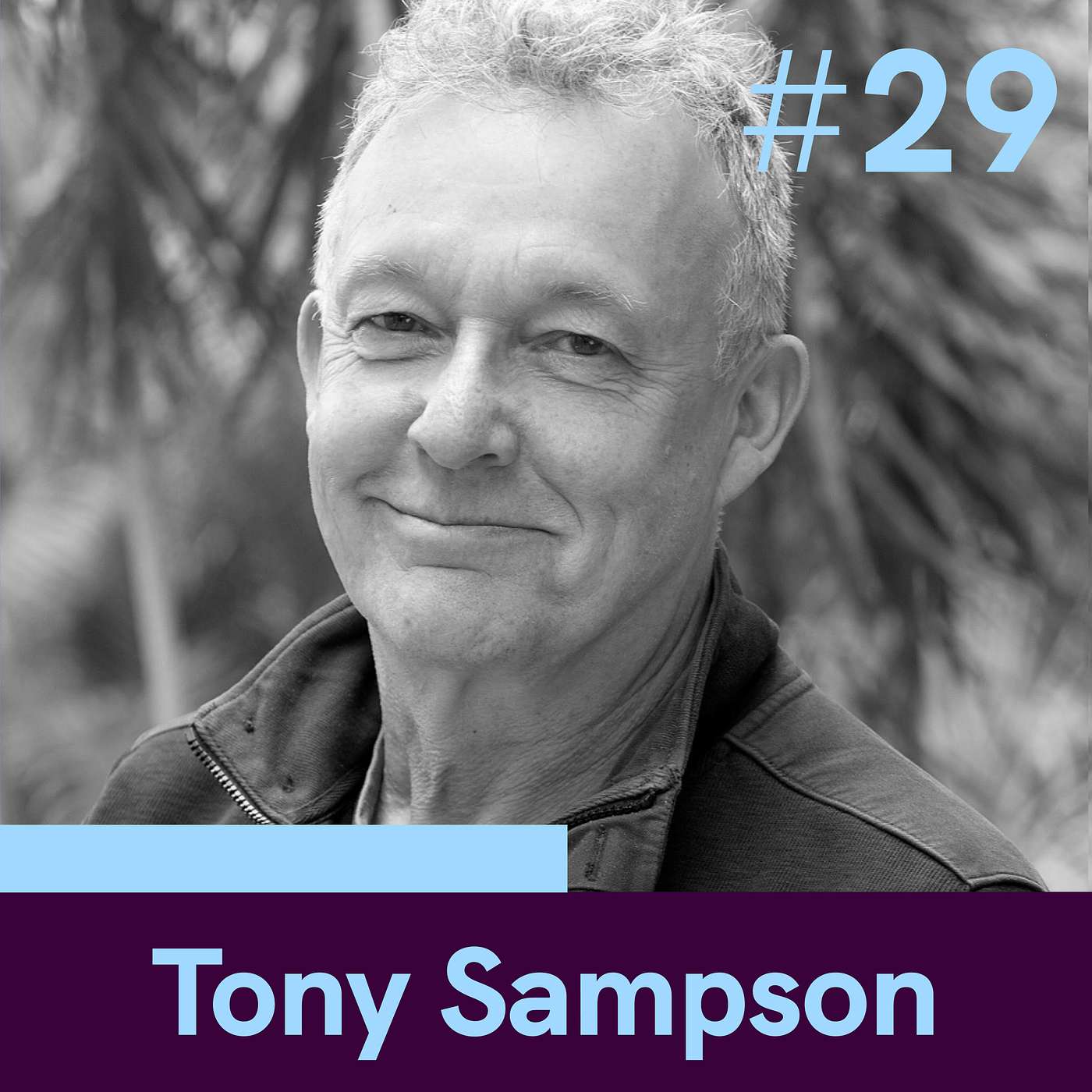
In this episode we chat to Tony Sampson, reader in digital communication at the University of Essex and explore how the most fundamental human experiences birth, school, and death and the public services that underpin them have been designed in a way that erases friction, complexity and what can only be called the human messiness. But when we remove these elements is it always positive? Or does it undermine the experience, devaluing it for the humans that we claim to be designing form?
Trigger warning: We spend a lot of this episode talking about death and how experience capitalism has reshaped this ultimate "moment that matters" into and commodified experience. We also talk about pubs and there's plenty of levity and laughter.
Bio:
Dr Tony D Sampson is a reader in digital communication at the Essex Business School, University of Essex. He has published widely on digital communication, marketing, labour, virality, neuroculture, social media, and user experience (UX).
Tony's publications include numerous monographs, edited volumes, and journal articles, including:
• The Spam Book (Hampton Press, 2009)
• Virality: Contagion Theory in the Age of Networks (University of Minnesota Press, 2012)
• The Assemblage Brain: Sense Making in Neuroculture (University of Minnesota Press, 2017)
• Affect and Social Media (Rowman & Littlefield, 2018)
• A Sleepwalker’s Guide to Social Media (Polity, 2020)
His forthcoming book, The Struggle for [USER] Experience: Birth, School, Work, and Death (University of Minnesota Press, 2026), examines the pervasiveness of experiential marketing and design across contemporary lifecycles.
Service Design YAP is developed and produced by the Service Design Network UK Chapter.
Its aim is to engage and connect the wider Service Design community.