What’s the truth about our AI future? Our guests have different takes. On the one hand, Dave McClure and Aman Verjee predict a $7 trillion future for just three AI startups in 2027. On the other, Salima Bhimani doesn’t believe that Silicon Valley has the imagination to create the moonshot to address our jobless future. For That Was The Week publisher Keith Teare, it’s a time for what he calls “champions.” What he wants is the development of a “human dividend” from intelligence. Supposedly thi...
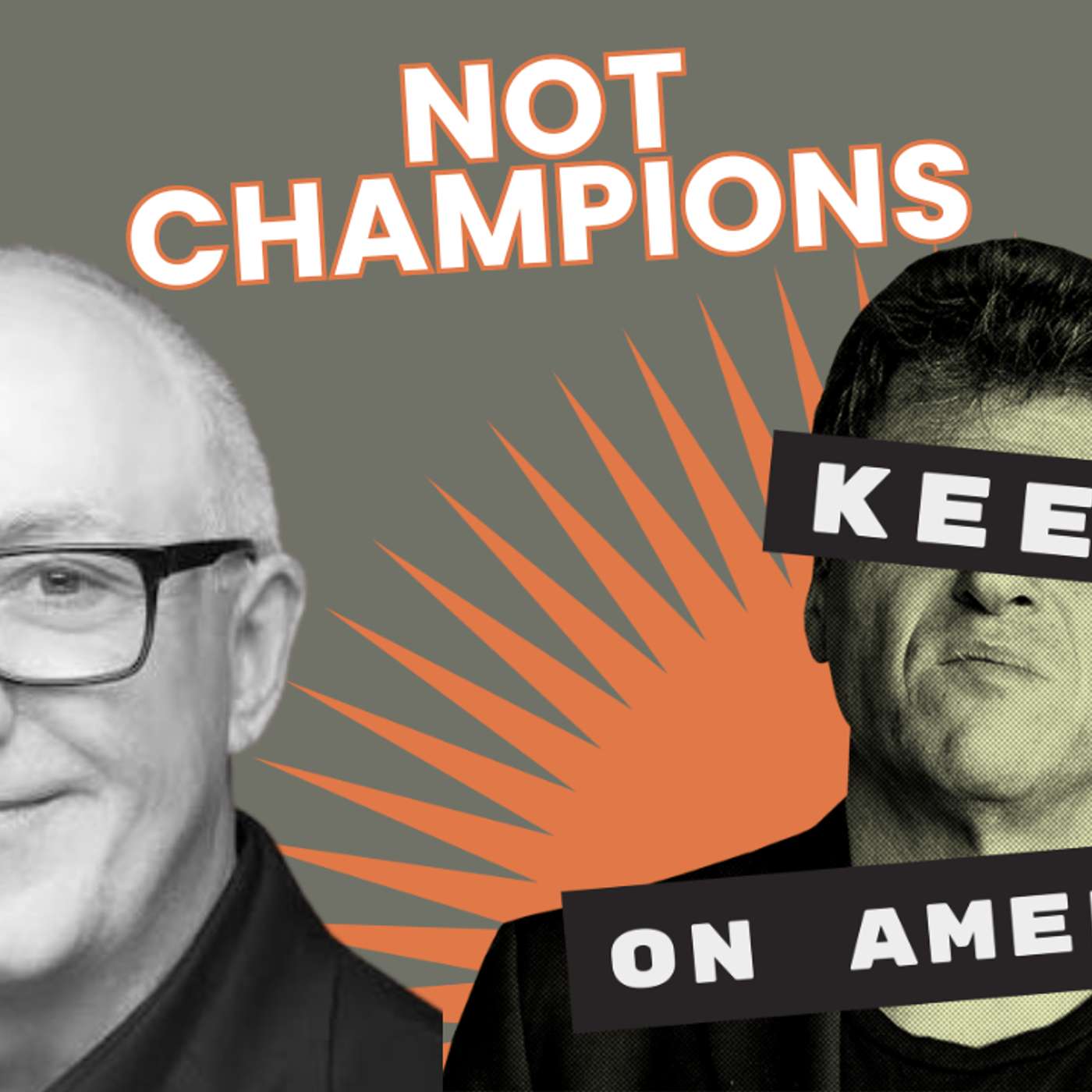
What’s the truth about our AI future? Our guests have different takes. On the one hand, Dave McClure and Aman Verjee predict a $7 trillion future for just three AI startups in 2027. On the other, Salima Bhimani doesn’t believe that Silicon Valley has the imagination to create the moonshot to address our jobless future.
For That Was The Week publisher Keith Teare, it’s a time for what he calls “champions.” What he wants is the development of a “human dividend” from intelligence. Supposedly this will be provided by the multi-trillion dollar AI companies like OpenAI and Anthropic that will pioneer the social ownership of intelligence. But a Norwegian-style Human Wealth Fund is about as likely, I suspect, as a new Freddie Mercury recording of “We Are the Champions.”
Dream on. Salima Bhimani is right. The moonshot to fix our jobless AI future won’t come out of workaholic Silicon Valley. Look elsewhere for those types of champions, my friends. Brazil perhaps. The movie, not the country.
Five Takeaways
• The Zeitgeist Exaggerates. The week’s split screen: a $7 trillion future for OpenAI, Anthropic, and SpaceX on one side; Ed Luce’s “AI phobia” consensus and Jill Lepore’s AI-versus-the-people politics on the other. Keith’s contrarian read: the negativity is loud but thin. Most intelligent people already use AI daily — from high school onward — and simply don’t talk about it; weigh the happy users against the vocal critics and the users “massively dominate.” He suspects a tipping point has been reached, with the anti-AI minority “starting to sound a little cultish.” The political stakes are his real worry: if the Democrats mistake the noise for populism and run against AI, they will lose 2028 “quite heavily” — and Lepore, he charges, is writing opinion, not history.
• Who Are the Champions? The editorial’s diagnosis: the problem isn’t negativity but “the lack of vocal connection between AI and people’s futures.” The champions exist — but they hedge everything into pointlessness, “trained as politicians as opposed to business leaders,” each with a little voice saying don’t upset anybody. “Can you imagine any other major breakthrough in human history where people would be shy to champion it?” His roster pointedly omitted both Dario Amodei and Elon Musk (“fairly balanced with who I left out”); the goal is to assemble the articulate case so “the minority who are politicizing negativity can be exposed as a minority.” Andrew’s genealogy for the project: Nixon’s silent majority, reborn with a token budget.
• 90% Sacks — and Squashed Armadillos. The hour’s fault line ran through David Sacks’s tweet: Dario believes frontier AI is “too powerful to distribute”; Sacks believes it is “too powerful to centralize,” fearing a marriage of corporate and state power. Andrew took Dario’s side; Keith claimed the middle until Andrew invoked the Texas rule — the only thing in the middle of the road is squashed armadillos — and extracted a confession: “I agree with Sacks, I’d say, 90%.” The 10% is Keith’s own position: happy with centralized giants (free intelligence needs their investment) and happy with the growing edge — the world’s intelligence in a solar-powered box, no grid required. Dario is championing “handcuffs on AI”; Lepore’s car-regulation analogy fails because corporations are already regulated and AI itself is safe; and Helen Toner’s Hugging Face alarm, aired on Ezra Klein’s podcast, was “contrived in a lab” — a dismissal that sparked the hour’s frenemy flashpoint: “Are you telling me I’m ignorant of something?”
• Metering the Dividend. Keith solved Andrew’s billing mystery on air: the $100-a-month Claude plan that throttled him last week has a quota page he never found — and the price is “actually a very generous amount. They’re losing money on you.” The honest price would be $200 to $400. Hence the editorial’s champion, Stripe: its acquisition of OpenRouter — which routes every prompt across all the models to the cheapest good answer — puts the payments company in the middle of the token traffic stream. Azeem Azhar’s $6 AI agent points the direction: prices tending toward zero at the edge, free for the kid, the school, and the hospital, paid for by the company running three thousand agents — even if delivering intelligence to six billion people ultimately costs tens of trillions. The parable: a Chinese dumpling shop built an agent API so customers’ AIs could place orders, and sales went through the roof — the corner store getting a website, circa 1994. “You could do it with Keen On,” Keith noted. Meanwhile founders live like Captain Kirk on the bridge — productivity through the roof, but the agents must be flown daily.
• The Human Dividend. The coda: Keith’s book is done, and its name is settled — The Human Dividend, asking who owns intelligence. Written in two days, cut from eighty thousand words to sixty in three more — seventeen chapters rewritten paragraph by paragraph in an AI agent’s two-panel editor, purging repetition and AI-isms until “it was a Keith Teare-written book.” The thesis in one line: intelligence is the central product of this era; its surplus is co-produced; the property should be too. The mechanism: a Human Wealth Fund on the Alaska-Norway model — one share per person, given not bought, expiring at death with no inheritance — funded by AI companies donating equity on day one and governed by its own constitution, no state involved (unlike Trump’s $1,000 baby accounts: what the state gives, the state can take away). The pitch to the companies: owners, not just users, are how you win affinity. Sell it or give it away? To be continued in two weeks — Andrew is off to Italy, and Manchester United, who lost to Hull, are off the champions list entirely.
About the Co-Host
Keith Teare is the co-host of the weekly That Was The Week segment on Keen On America and editor of the That Was The Week tech newsletter. Founder and CEO of SignalRank Corporation, he was previously a founder of TechCrunch (with Michael Arrington), Archimedes Labs, EasyNet, and cyber café Cyberia. A serial entrepreneur across four decades of Silicon Valley and London tech, he writes weekly on the state of innovation — and is completing his first book, The Human Dividend.
References:
• That Was The Week — Keith Teare’s newsletter; this week’s editorial: “Who Are the Champions?”
• Ed Luce’s Financial Times column on “AI phobia” as America’s new consensus — its third invocation on this show in a week.
• Jill Lepore’s FT weekend essay and new book on “AI versus the people” — the politics of 2026 and 2028, per America’s best historian.
• David Sacks’s tweet on Dario Amodei — “too powerful to distribute” versus “too powerful to centralize” — the hour’s fault line.
• Helen Toner’s conversation with Ezra Klein on the Hugging Face incide...