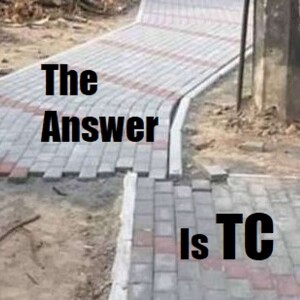
Send us Fan MailWe argue that “friction” is not always a flaw and can be a deliberate shield against bad collective decisions. We use Buchanan and Tullock’s public choice framework to show why supermajorities, veto points, and other transaction costs can protect rights while still leaving room for day to day governing. • contrasting cheap outrage with intentional institutional friction • explaining why constitutional amendment rules use supermajorities • breaking down external costs versus decision-makin...
View more
Comments (3)
More Episodes
All Episodes>>






Get this podcast on your phone, Free


Create Your Podcast In Minutes
- Full-featured podcast site
- Unlimited storage and bandwidth
- Comprehensive podcast stats
- Distribute to Apple Podcasts, Spotify, and more
- Make money with your podcast
It is Free
