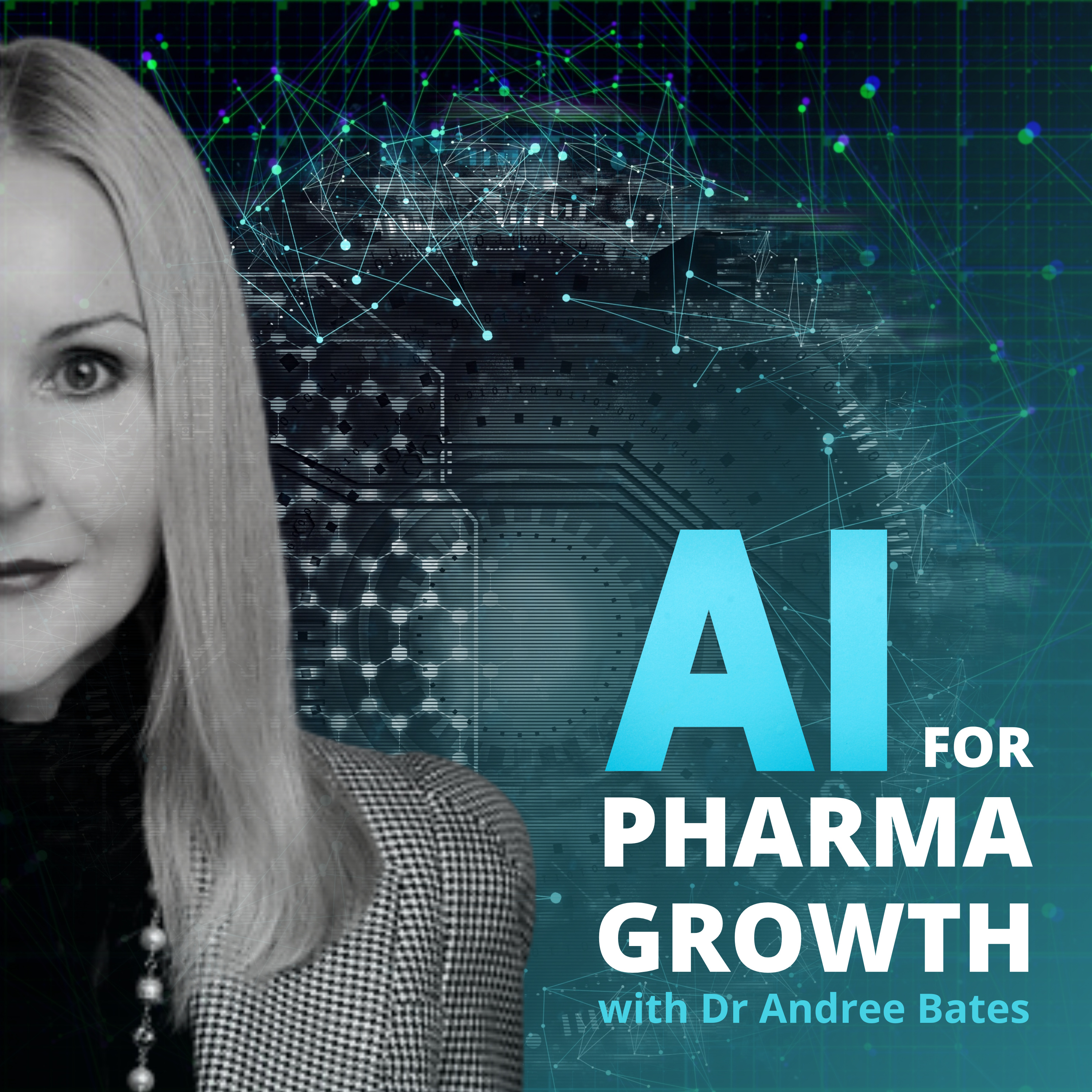
Clinical trials are a massive industry with brutal economics, long timelines, and failure rates that would be unacceptable in almost any other sector. In this episode, Dr Andree Bates is joined by Dr Joseph Geraci of NetraMark to break down why trials fail so often, how patient heterogeneity drives cost and uncertainty, and where AI can realistically shift the economics.Joseph shares his unusual path from mathematics and mathematical physics into oncology and medical science, including a decision to move into hospital research...
Clinical trials are a massive industry with brutal economics, long timelines, and failure rates that would be unacceptable in almost any other sector. In this episode, Dr Andree Bates is joined by Dr Joseph Geraci of NetraMark to break down why trials fail so often, how patient heterogeneity drives cost and uncertainty, and where AI can realistically shift the economics.
Joseph shares his unusual path from mathematics and mathematical physics into oncology and medical science, including a decision to move into hospital research rather than follow a more traditional academic route. That shift shaped his focus: not just discovering more molecules, but understanding why the same drug can work brilliantly for some patients and fail for others.
A central theme is that clinical trials are not “one disease, one patient type”. In many areas, disease definitions are too broad for trial design, making trials feel like trying to hit multiple dartboards with one dart. Joseph explains how NetraMark’s approach aims to identify meaningful subpopulations inside small datasets, finding the “pocket” where a drug’s true advantage shows up, without discarding patients as outliers.
The conversation also touches on regulators, including growing interest in innovation pathways, but also the fear pharma teams have about changing protocols and risking setbacks. Joseph argues that AI’s biggest economic value in trials is speed, using better insight from limited trial data to guide enrichment strategies, smarter substudy decisions, and faster iteration, especially in oncology and rare disease where time is everything.
Topics Covered
Why clinical trial economics are becoming unsustainable
Patient heterogeneity and why disease definitions break trials
Finding “pockets” of responders within small datasets
Trial enrichment and substudies that reveal a drug’s advantage
Why pharma adoption can be slow, even when failures are constant
Regulatory interest, guidelines, and sponsor risk aversion
Large language models vs mathematically augmented AI approaches
Speed as the biggest economic lever in trials
Practical examples across depression, schizophrenia, oncology, and beyond
What clinical trials could look like in five years with AI-driven insight
This show blends deep sector experience with practical conversations that demystify AI for biopharma leaders, from start-up biotech right through to Big Pharma. Each episode features experts building AI-powered tools that are driving real-world results across discovery, R&D, clinical trials, medical affairs, market access, regulatory, insights, sales, marketing, and more.
Dr. Andree Bates LinkedIn | Facebook | X
View more