In order for stars to form, you need the right ingredients to make it happen: gravity, mass, time, and of course the right type of matter in the form of baryons. Shortly after the Big Bang, the Universe had plenty of them, but they were all very simple: protons, deuterons, helium-3 and helium-4 nuclei, and a tiny bit of lithium-7. These nuclei, made out of protons and neutrons, were all that the Universe gave us to work with prior to the formation of stars. But, in clumps of material small and...
In order for stars to form, you need the right ingredients to make it happen: gravity, mass, time, and of course the right type of matter in the form of baryons. Shortly after the Big Bang, the Universe had plenty of them, but they were all very simple: protons, deuterons, helium-3 and helium-4 nuclei, and a tiny bit of lithium-7. These nuclei, made out of protons and neutrons, were all that the Universe gave us to work with prior to the formation of stars. But, in clumps of material small and large, from individual star clusters to enormous galaxy cluster scales and everything in between, these baryons went to work and, across the Universe over the past 13.8 billion years, created sextillions of stars within the observable Universe.
In a very real way, the story of how we ourselves came to be is the story of how baryons evolved, matured, and wound up deducing our own cosmic history. Yet so many mysteries about that process still remain, from the baryon life cycles within galaxies to identifying the right conditions to trigger star-formation in the vastly different environments where they formed throughout cosmic history. Yet, it's by examining so many different environments where stars do and don't form, in galaxies of all different masses and metallicities, and in the modern, nearby Universe as well as far back in ancient cosmic history, that we can begin to piece the full story together.
Here to guide us through this topic, and starring in this episode of the Starts With A Bang podcast, I'm so pleased to welcome newly-minted Dr. Ava Polzin to the show. Ava got her Ph.D. from the University of Chicago and is about to begin a postdoc at the University of Toronto, and has a whirlwind tour of information in store for us all on this episode of the podcast. Plus, at the end, there are a few bonuses she was eager to highlight, and you can find the links to two fabulous papers she's written for the good of the world below. Make sure you tune in; this is one episode you won't want to miss!
Astronomy as a Field: https://arxiv.org/abs/2312.04041
Picture an Astronomer: https://arxiv.org/abs/2512.24465
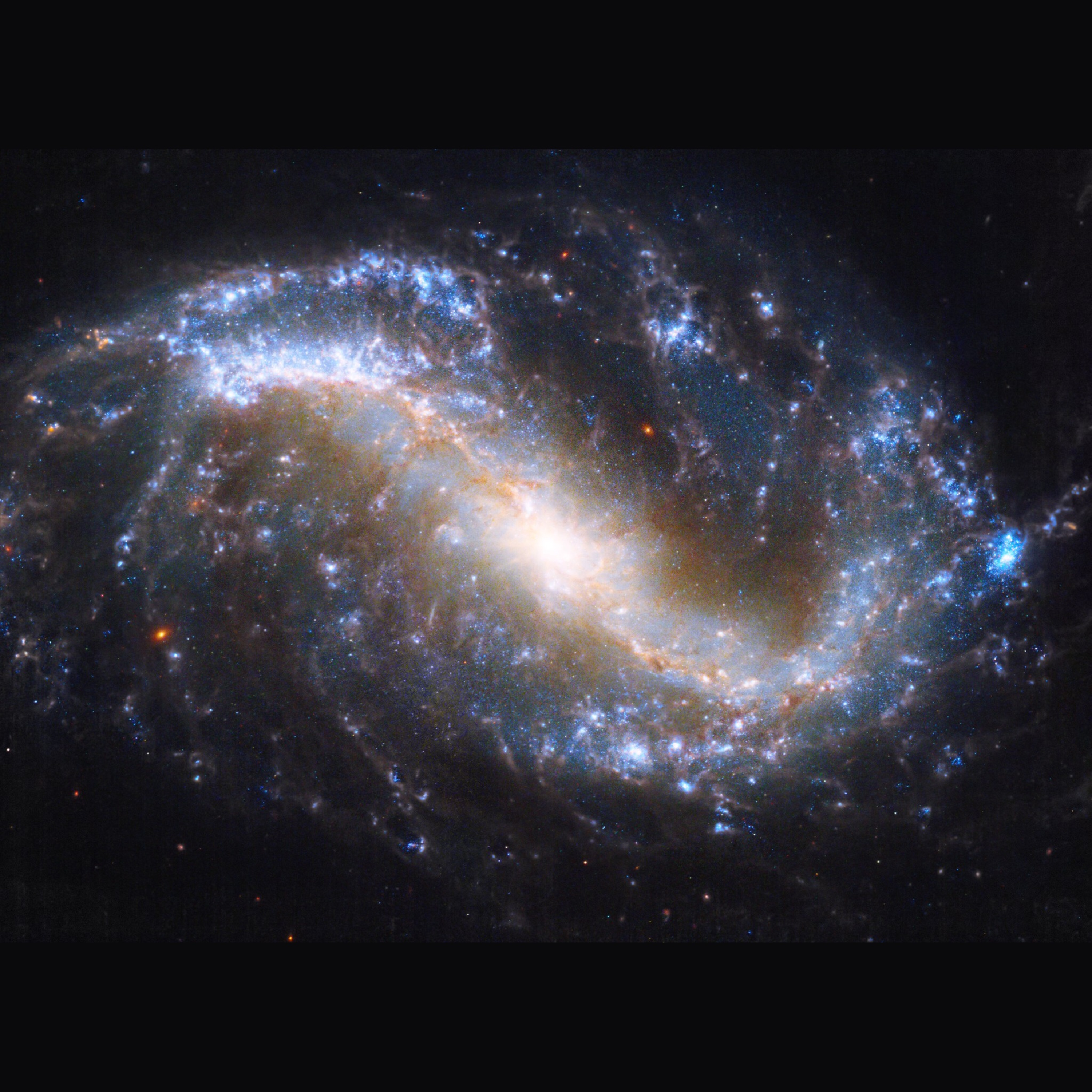
(This image shows a composite of Hubble and JWST data for gas-rich spiral galaxy NGC 7496, which highlights not only the starlight you're used to seeing in optical images, but heated dust that shines brilliantly in JWST imagery, showcasing the locations of near-future episodes of star-formation yet to come. Credit: NASA / ESA / CSA / Judy Schmidt)
View more