Sketchplanations - The Podcast
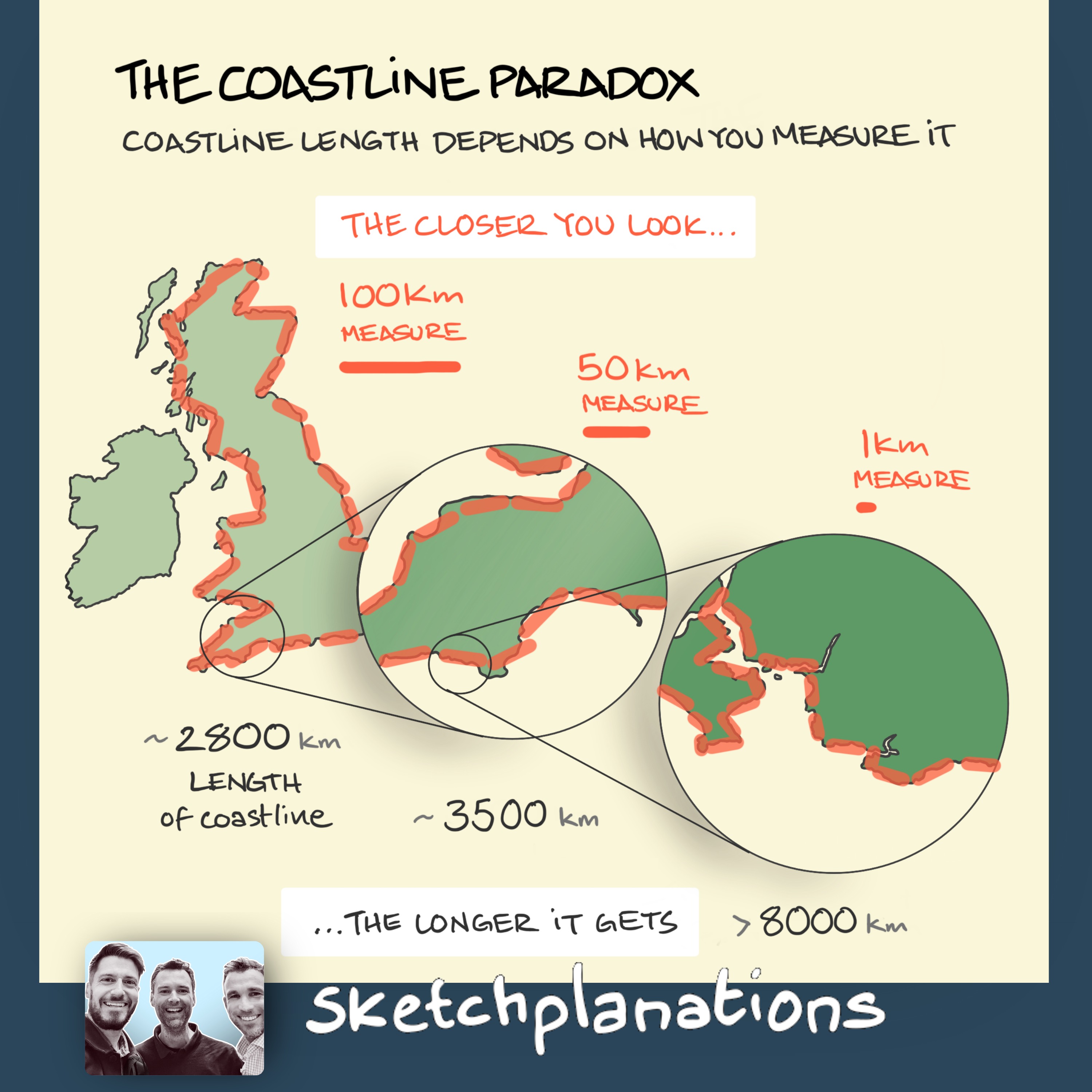
The closer you look, the longer it gets: The Coastline Paradox
2026-02-10
When you want to measure something you take your ruler or tape measure and read off the length right?But when it comes to measuring the length of a coastline, things get a bit tricky and totally counter intuitive. 🌊The science and maths of measuring wiggly coastlines reveal that the smaller the unit of measure, the longer the coastline becomes. Jono recounts the origins of this phenomenon from polymath, Lewis Fry Richardson and its further exploration by Benoit B. Mandelbrot. The trio also relate the concept to various other re...
View more
Comments (3)
More Episodes
All Episodes>>








Get this podcast on your phone, Free


Create Your Podcast In Minutes
- Full-featured podcast site
- Unlimited storage and bandwidth
- Comprehensive podcast stats
- Distribute to Apple Podcasts, Spotify, and more
- Make money with your podcast
It is Free