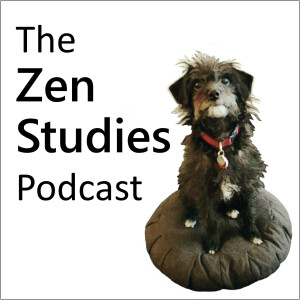
The Zen Studies Podcast
https://zenstudiespodcast.libsyn.com/rssEpisode List

325 – Imagine Yourself as a Buddha and Unblock Your Natural Generosity
In Buddhism, we are guided by the ideal of a Buddha, or awakened being. One of the characteristics of a Buddha is unconditional and selfless generosity, and when your generosity is blocked, you can be sure that some part of you still needs understanding, healing or liberation. On the other hand, when you're able to set aside your self-doubt and imagine yourself as a Buddha, when you look on other beings as if they were your children, you may find your generosity flows more naturally.

324 - Yunmen's "Every Day Is a Good Day"
In koan #6 from the Blue Cliff Record, Yunmen says, "Every day is a good day." I explore this koan, including the way we sometimes imagine our real life is going to happen after something, and the various ways we can experience "good."

323 – Zazen As Defiant Self-Care
Since the term arose in 1950's, "self-care" has referred to a number of different things. If we consider self-care to be things you do to remain physically and mentally healthy, then Zazen – simple, goalless, Zen meditation – can be seen as excellent self-care. In these troubled times, such self-care can even be seen as defiant – refusing to be broken down by challenging circumstances. Other forms of meditation can also be seen as self-care, of course, but Zazen can be a little difficult to get your mind around. Framing it as self-care may help you appreciate what it's all about.

322 – Q&A: Relationships, Cultural "Zen," No-Self, and Confession
This a Q&A episode based on questions I've received from listeners: Does Zen have anything to say about human relationships? Can we learn anything from the cultural popularization of the term "Zen"? If we have no independent self-nature, what about our sense of enduring self? Do Buddhists practice confession like Catholics?

321 - How Buddhist is Zen? The Buddha's Teachings Compared to Radical Nondualism
Viewed historically, Zen is a form of Mahayana Buddhism that evolved from the original forms Buddhism that were established in India after the Buddha's death around 2,500 BC. Many aspects of original Buddhism are retained in Zen, including respect for Shakyamuni Buddha and his teachings. However, the degree of transformation Buddhism underwent when it took root in China and evolved into Chan (later called "Zen" in Japan) is difficult to overestimate, resulting in a path of radical nondualism. Both the ultimate goal of practice and the means to achieve that goal changed so radically that it's legitimate to question whether Chan is even Buddhism. If you want to walk the path of Zen/Chan, it's essential to understand how it differs from original Buddhism.



Get this podcast on your phone, Free


Create Your Podcast In Minutes
- Full-featured podcast site
- Unlimited storage and bandwidth
- Comprehensive podcast stats
- Distribute to Apple Podcasts, Spotify, and more
- Make money with your podcast