Project Management Happy Hour
https://pmhappyhour.libsyn.com/rssEpisode List
119 - TSR: They told me I'm 'too nice'??
Have you ever gotten feedback that made you want to flip a table because it was both insulting and totally useless? In this Top Shelf Replay, we revisit "They Told Me I'm Too Nice" and break down what that kind of vague feedback is really doing (sometimes gendered, almost always inactionable), why it hits so hard, and how to respond without spiraling - or people-pleasing your way into a personality transplant. Then we go beyond the original episode with practical, real-world tactics: how to ask better follow-up questions, how to force examples without sounding defensive, how to "prime" your manager before a meeting so you get usable feedback, and how to figure out whether your boss is actually trying to coach you… or just dumping drive-by advice from a book they skimmed on a flight. If you lead people, we also flip the lens: how to avoid giving your team confusing feedback that basically translates to "please be a different person," and how to coach toward outcomes instead of vibes. Key actionable insights Treat vague feedback as a starting point, not a conclusion. Thank them, then ask them to say more until you have something observable and specific. Ask for examples on demand. Use: "Can you tell me about a time I did that well?" or "Who does that really well?" This forces specificity and gives you a model to study. Match your effort to their effort. If it was a drive-by comment, don't burn three weeks of anxiety trying to decode it. If they clearly invested in you, invest back proportionally. Prime your manager before a meeting so they know what "good" looks like. Tell them your goal (scope agreement, signature, commitment, decision) so their feedback anchors to outcomes, not vibes. If you want feedback, specify what kind you want. "I'm not looking for grammar edits—I want alignment on strategy" is a transferable skill for stakeholder reviews and exec comms. For managers: don't "coach" people who don't want coaching. Find out what they want first, or you'll waste time and damage trust. Key Quotes - "I don't need you to be my Grammarly when you review this document. I need to know if we are strategically aligned." "Below the line? You just crossed the line, buddy." Love our content? Then join the PM Happy Hour membership at pmhappyhour.com/membership
118 - PM Turf Wars: Sharing your projects with other Project Managers
"Three PMs walk into a bar: a business PM, an IT PM, and a Vendor PM…" Sounds like a bad joke, but if you don't get it right - the joke will be your project. In this Top Shelf Replay episode, Kim and Kate revisit an episode that was originally inspired by one of their listeners. Very often, you aren't the "one PM to rule them all" - you may have other PMs involved in your project that you need to work with. But how do you decide who is what, and how do you prevent turf wars from turning your project into a slow-motion train wreck? In this episode, we ditch the corporate fluff to dive into the messy reality of projects with "too many cooks". We discuss how to navigate the friction between different project management roles, how to handle "useless" vendor PMs who won't manage their own resources, and what to do when an executive buyer bypasses you to talk directly to the vendor. You'll learn how to look "one level up" in the hierarchy to identify what actually drives your counterparts and how to draw professional boundaries that keep you in the driver's seat. In this episode, you'll learn: How to use the "Hierarchy Hack" to uncover your counterparts' hidden motivations. Strategies for handling a vendor PM who refuses to do their job. Why a high-level human conversation beats a technical tool every time. The "Time and Materials" pivot to force vendor accountability. How to professionally block an executive from undermining your role. From this episode: "The first thing to do is to have a conversation and, honestly, call it out in the open." — Kate "One of the ways I like to think about situations like this is one level up in the hierarchy." — Kim "I've been like, 'No, you can talk to me. Shut up, talk to me.'" — Kate "If I and my team are going to be held accountable... I have to be able to plan what we're accountable for." — Kim Love our content? Then join the PM Happy Hour membership at pmhappyhour.com/membership
117 - Top Shelf Replay: Say No by Saying Yes
Project managers are constantly told they need to "learn how to say no." But in the real world—especially when the ask comes from a sponsor, executive, or important customer—just saying no often isn't productive, strategic, or even possible. In this Top Shelf Replay episode of Project Management Happy Hour, Kim Essendrup and Kate Anderson revisit one of the show's earliest "Appetizer" episodes: Say No by Saying Yes, originally aired in 2017. Short, deceptively simple, and still painfully relevant, this episode breaks down a technique that helps project managers protect scope, schedule, cost, and sanity—without sounding combative or inflexible The core idea is straightforward: Instead of responding to tough requests with a flat "no," you respond with "yes—but" or "yes—and here's what that would require." "Yes, we can do it faster—but it will require triple the resources." "Yes, we can release both languages at once—but we'll need more budget or a delayed launch." "Yes, we can remove that resource—but you'll need to help me explain the downstream impact to the sponsor." This approach reframes the conversation away from emotion and into trade-offs, which is where real project leadership lives. As the conversation unfolds, Kim and Kate explore why this technique works so well psychologically. Leaders—especially busy executives—often don't have full context. Their "ridiculous asks" aren't always malicious; they're frequently driven by incomplete information, pressure from above, or a misunderstood business constraint. Saying "yes" first acknowledges their goal, signals partnership, and keeps them engaged long enough to hear reality The episode also connects this technique to a broader leadership pattern the hosts have refined over the years: what they now describe as "affirm, caution, query." You affirm the request. You surface the risk or constraint. You return the decision to the person who actually owns it. In other words, you stop absorbing problems that don't belong to you—and you stop shielding leaders from the consequences of their own decisions. The replay discussion expands the idea further, touching on burnout, executive presence, and why many project managers get stuck in a defensive "control mindset" around the triple constraint. Kim and Kate argue that stepping back—mentally taking off the project manager hat and putting on the sponsor's hat—makes these conversations easier, calmer, and more strategic. When you focus on outcomes instead of guarding boundaries, you stop reacting and start partnering. There's also an unexpected but memorable parallel: gentle parenting. The same structure used to redirect an emotional five-year-old ("I see what you want—but here are your options") turns out to work remarkably well with stressed executives, difficult customers, and unrealistic stakeholders. You don't remove agency; you structure it. Ultimately, this episode is about more than saying no politely. It's about changing the power dynamic—from executor to partner. From order-taker to decision facilitator. From "blocking progress" to helping leaders make informed choices. If you've ever been handed an impossible deadline, an under-funded scope change, or a request that made your stomach drop, this episode gives you language, structure, and confidence to respond without burning trust—or yourself.
116 - How to quit your job and completely fail as a PM contractor
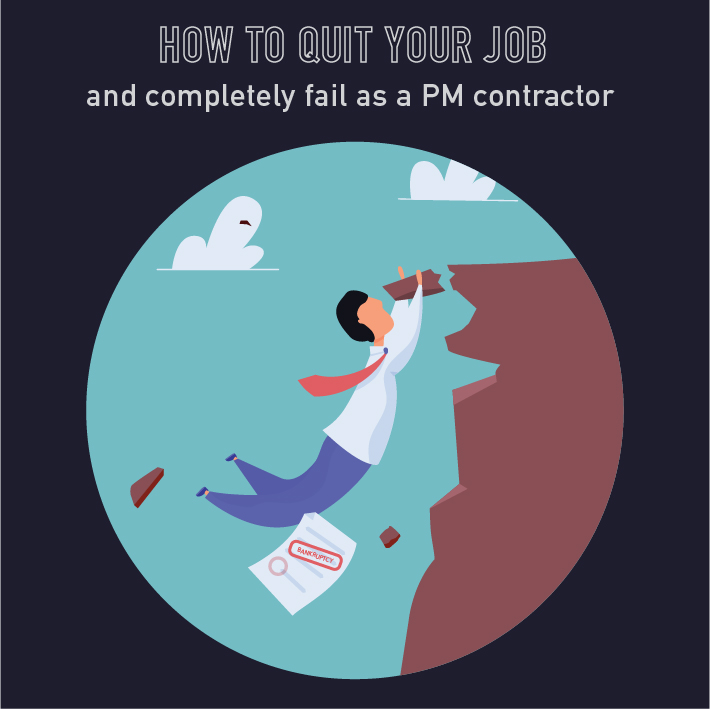
Thinking about going contractor? Kate and Kim share how they each left corporate and made the leap—two very different stories (burnout vs acting early) with the same core truth: contracting is built on relationships, reputation, and value… not job boards and commodity rates. We cover how to know if you're ready, why sales is part of the job, what to watch out for (hello, 2008), and how to avoid racing to the bottom. Want us to teach the full process with scripts + steps? Head to http://pmhappyhour.com/be-free.

115 - Top Shelf Replay: Trust Bricks
As project managers, we spend a lot of time talking about tools, processes, and delivery frameworks—but far less time talking about the invisible structure that holds projects together: trust. In this Top Shelf Replay episode of Project Management Happy Hour, Kim Essendrup and Kate Anderson revisit one of the show's earliest and most enduring concepts: Trust Bricks. Originally recorded in 2018, this short but powerful episode explores how trust is built—not through grand gestures or heroic saves—but through consistent, everyday actions that compound over time. The core idea is simple: trust is predictability. When you repeatedly do what you say you'll do—whether that's sending meeting notes on time, honoring estimates, or showing up prepared—you lay one small Trust Brick at a time. Over weeks, months, and years, those bricks form a structure strong enough to withstand missed deadlines, bad news, or the occasional broken promise. Kim and Kate break down why Trust Bricks matter so much in project environments: Teams are more honest with you when they trust you Estimates improve when people believe they won't be punished for telling the truth Difficult conversations become easier when everyone believes you're on the same side Sponsors give you more latitude when your track record is consistent The conversation also explores what happens when trust breaks—and how the same Trust Brick approach can be used to rebuild credibility. Rather than trying to restore trust with a single "big win," the hosts argue that rebuilding starts small: partial deliverables, frequent check-ins, and deliberately meeting micro-commitments until confidence is restored. In the replay commentary, Kim and Kate reflect on how their thinking has evolved since the original recording. They discuss: The role of showing up consistently, even when no explicit promise was made How trust operates differently in virtual and remote teams Why strong performers can accidentally set expectations that lead to burnout How leaders vary widely in how much "trust damage" they tolerate before overreacting The episode also revisits the journey of Trust Bricks beyond the podcast, including Kim's experience delivering a TEDx talk on the topic and refining the framework into three enduring lessons: You are always building or breaking Trust Bricks—whether you realize it or not Missed expectations don't pause trust building; they actively tear it down Unspoken expectations are the fastest way to accidentally destroy trust This episode is a reminder that trust isn't soft, vague, or optional—it's a core delivery skill. If you want stakeholders who back you, teams who tell you the truth, and projects that don't require constant firefighting, it starts with sweating the small commitments. The next time you make a commitment—big or small—ask yourself: Am I laying a brick… or cracking one? Check out Kim's TEDx talk at trust-bricks.com or on the TED youtube channel Want more PM reality without the fluff? Join the PMHH membership for courses, templates, community, and direct access to Kate and Kim. https://pmhappyhour.com/membership
You may also like










Get this podcast on your phone, Free


Create Your Podcast In Minutes
- Full-featured podcast site
- Unlimited storage and bandwidth
- Comprehensive podcast stats
- Distribute to Apple Podcasts, Spotify, and more
- Make money with your podcast