CREECA Lecture Series Podcast
https://feeds.soundcloud.com/users/soundcloud:users:307669548/sounds.rssEpisode List
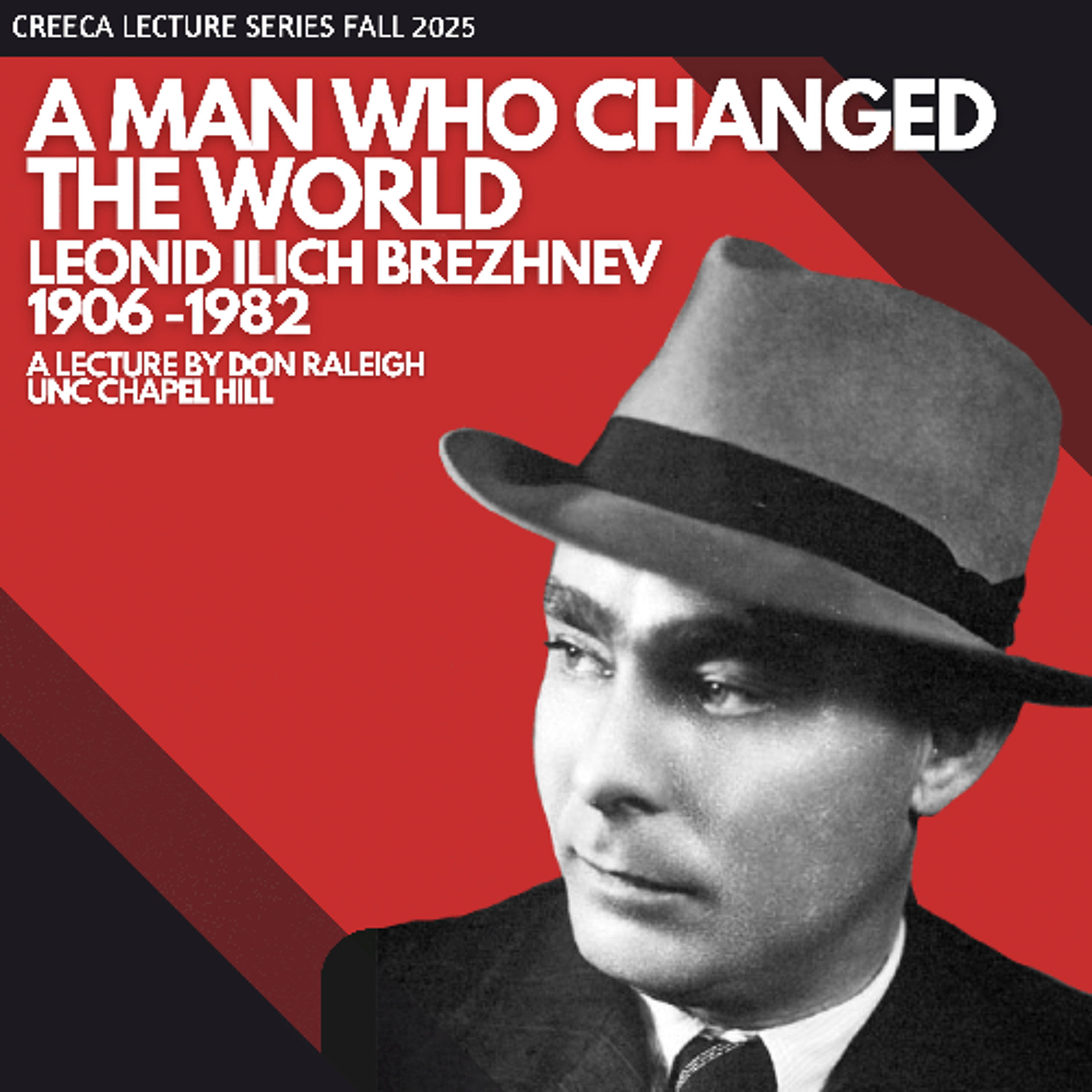
A Man Who Changed the World: Leonid Ilich Brezhnev, 1906-1982
In 1991, as the USSR broke apart and its population became open to the reforming discourse of Mikhail Gorbachev’s reform program of perestroika, Soviet dissident historian Roy Medvedev set the tone for subsequent writing on Leonid Ilich Brezhnev, concluding that he was “a personality so mediocre and a politician so ordinary” that he “quickly disappeared from the political scene and also in the literal and metaphorical sense.” But not for long. When it became clear by the end of the decade that market capitalism and democracy had not improved people’s lives, nostalgia for the Brezhnev era rightly raised the question of whether he had been given his just due and unfairly blamed for the shortcomings of the Soviet system. This reversal of fortune also makes clear that no Soviet leader has been as neglected or as misunderstood as Brezhnev and therefore no Soviet party boss is in such need of a fresh historical reassessment. Divided into two parts, my presentation will first make a case for Brezhnev, emphasizing his vision of guaranteeing stability, assuring peace, and letting people live well. Earlier I coined the term “Soviet man of peace,” to characterize Brezhnev. I emphasize this point here, arguing that his dream of wanting to be remembered as an asset for world peace made him a leader who changed the world. In part 2 of my presentation, I zoom in on the Leonid Brezhnev that, as his biographer, I might never know and propose what these unresolved questions might mean. Donald J. Raleigh is the Jay Richard Judson Distinguished Professor of Russian History Emeritus at the University of North Carolina, Chapel Hill. He has authored, translated, and edited numerous books on modern Russian history including Revolution on the Volga (1986), Experiencing Russia’s Civil War (2002), Russia’s Sputnik Generation (2006) and Soviet Baby Boomers (2012). He currently is writing a biography of Soviet leader Leonid Ilich Brezhnev, research for which has taken him to archives in Russia, Moldova, Ukraine, Kazakhstan, the UK, and the US. This lecture is sponsored by the Alice D. Mortenson/Petrovich Distinguished Chair of Russian History and University Lectures.
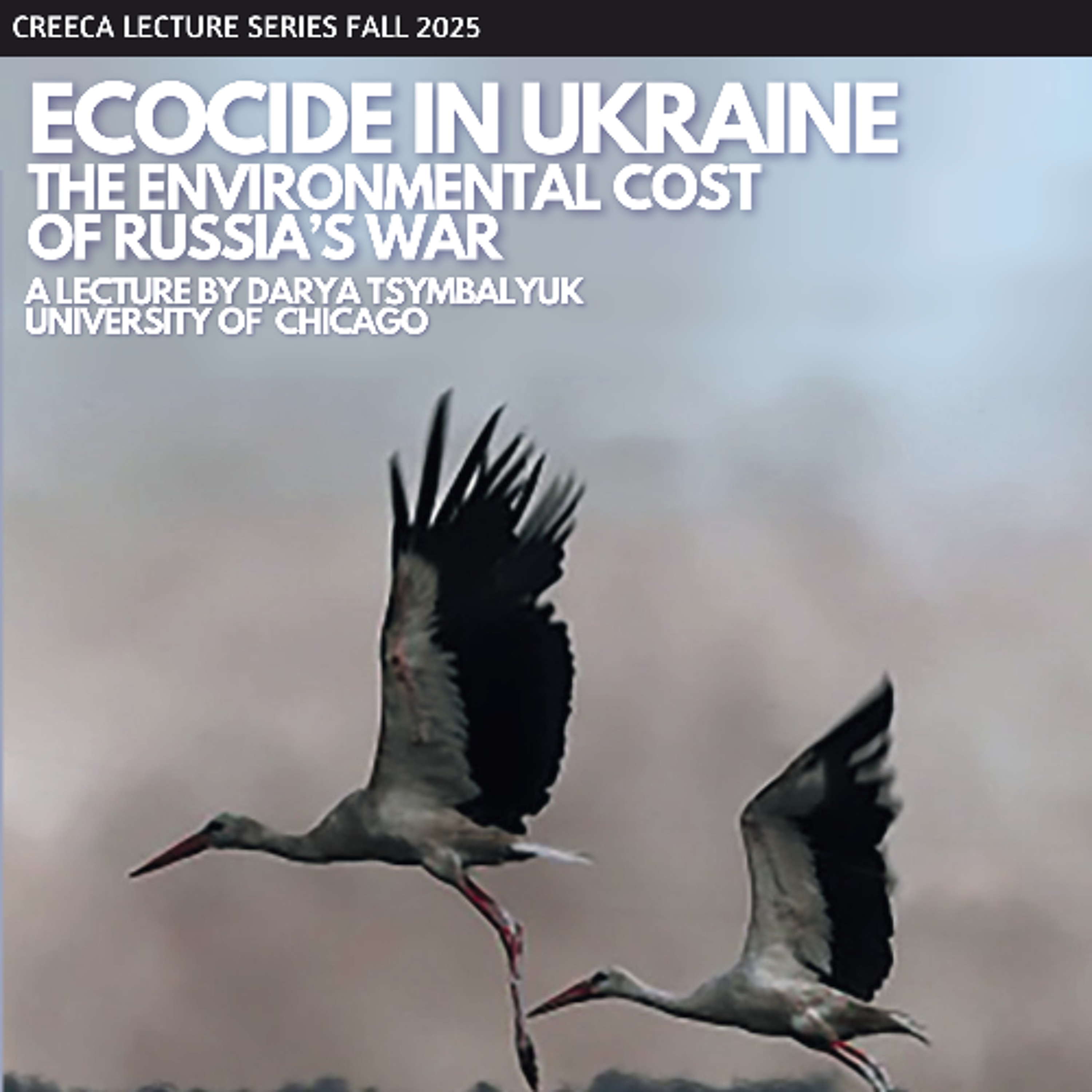
Ecocide in Ukraine: The Environmental Cost of Russia’s War
In this talk Darya Tsymbalyuk presents her recent book Ecocide in Ukraine: The Environmental Cost of Russia’s War (Polity Press, 2025). The book focuses on the impact of the Russian invasion on the more-than-human worlds of Ukraine, discussing how witnessing and experiencing environmental destruction profoundly changed our perceptions of familiar places and spaces such as forests, agricultural fields, and shelterbelts. Combining autoethnography with cultural and media analysis, and environmental data, Tsymbalyuk asks: what does it mean to inhabit a world under attack, what does it mean to live on contaminated land? Darya Tsymbalyuk is an interdisciplinary researcher, and her practice includes writing and image-making. Most of Darya’s work lies at the intersection of environmental humanities and artistic research. Darya is an Assistant Professor in the Department of Slavic Languages and Literatures and the Committee on Environment, Geography, and Urbanization (CEGU) at the University of Chicago. She is the author of Ecocide in Ukraine: The Environmental Cost of Russia’s War (Polity Press 2025). Among her many shorter scholarly publications is a double special issue on the environmental humanities of Ukraine co-edited with Tanya Richardson and forthcoming with East/West: Journal of Ukrainian Studies. Her other scholarly texts have been published by Nature Human Behaviour, Journal of International Relations and Development, Narrative Culture, REGION: Regional Studies of Russia, Eastern Europe, and Central Asia, to name a few. Her public-facing writing appeared in BBC Future Planet, openDemocracy, The Funambulist, KAJET, NiCHE: Network in Canadian History & Environment, and many other platforms. In 2023, she received Mary Zirin Prize from the Association for Women in Slavic Studies. In addition to writing, Darya also works with images through drawing, painting, collage, and film essays. You can learn more about her work here: https://daryatsymbalyuk.com/ This lecture is made possible in partnership with Wisconsin RISE-EARTH Initiative.
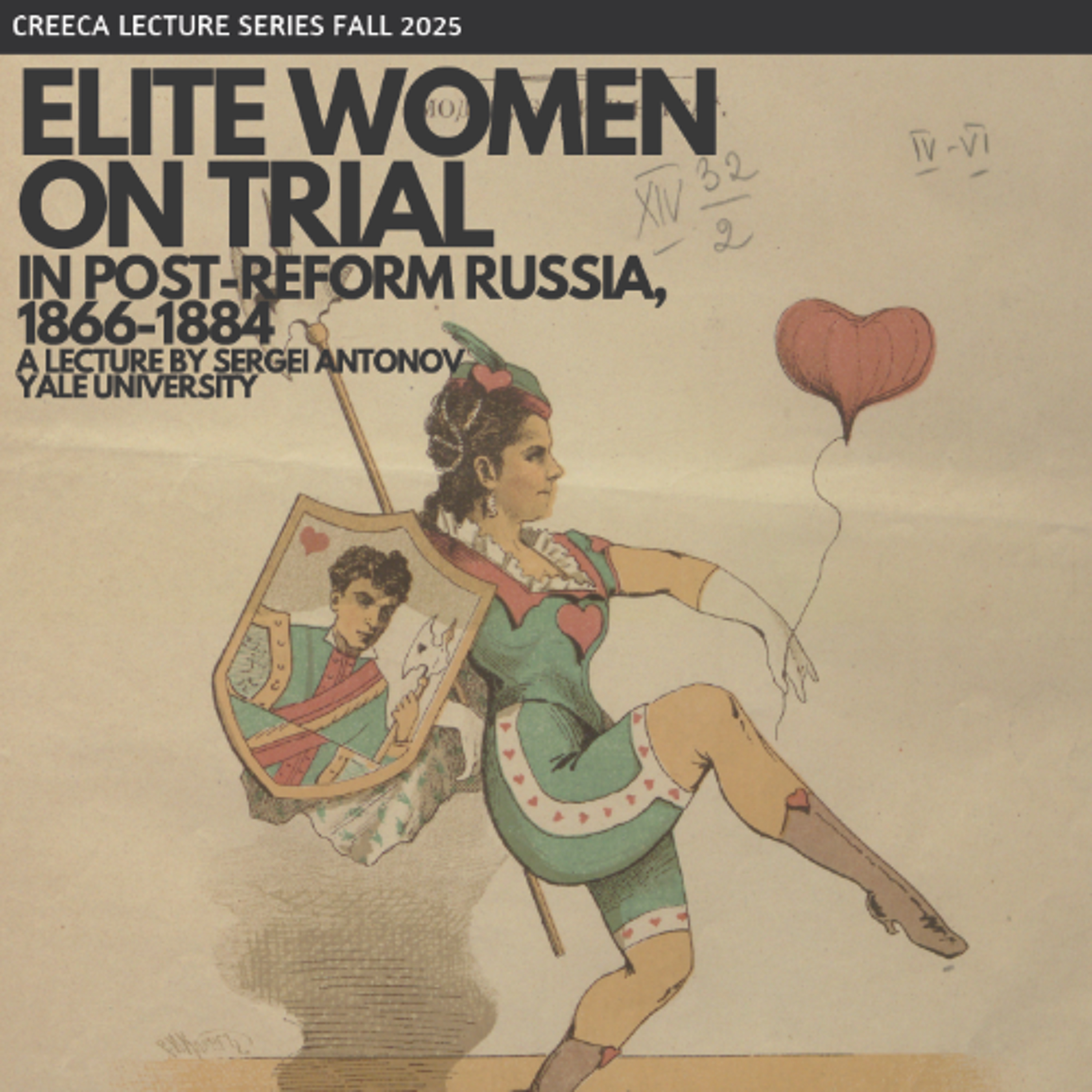
Elite Women on Trial in Post-Reform Russia, 1866-1884
Russia’s landmark judicial reform of 1864 introduced the public jury trial and turned the courtroom into a protected forum for social and sometimes even political debates. This lecture will explore some of the most prominent criminal cases of the post-reform era that involved elite women accused of murder, forgery, and embezzlement. For the only time in Russian history, late imperial criminal trials exposed the hidden lives of Russia’s elites to public scrutiny and discussion, framing many key “questions” of the age, such as the limits of permissible violence, bourgeois privacy and autonomy, exercise of personal power, and profit-seeking. Also for the only time in Russia’s history, powerful persons could reliably expect to go on trial for major crimes, while also expecting that trial to be fundamentally fair. But the effects of this panoptic gaze were complex and ambiguous, and the narratives produced during the trials were unintentionally ambivalent not only about those being prosecuted, but also about the new governing regime itself. Sergei Antonov is Associate Professor of History at Yale University. He was born in Moscow and came to the US in 1992. Antonov earned his Ph.D. in History from Columbia University and his J.D. from NYU Law. His first book, Bankrupts and Usurers of Imperial Russia: Debt, Property, and the Law in the Age of Dostoevsky and Tolstoy (Harvard, 2016), won the Ed A. Hewett Book Prize. His second book, Russia’s Rogue Masters: Elite Criminal Trials in the Age of Reform, 1866-1884, is forthcoming from Yale University Press in 2026. This lecture is sponsored by the Alice D. Mortenson/Petrovich Distinguished Chair of Russian History.
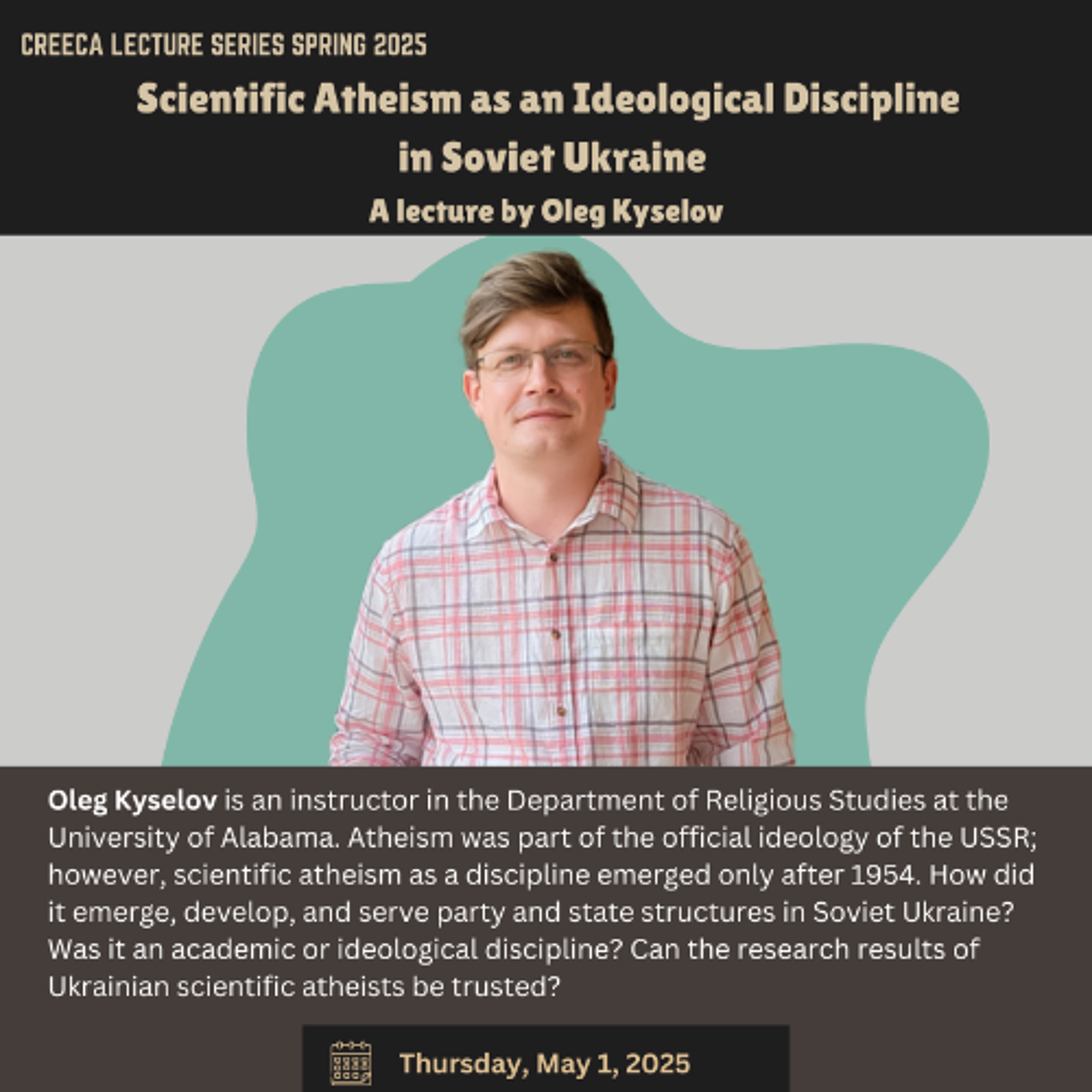
Scientific Atheism as an Ideological Discipline in Soviet Ukraine
Scientific Atheism as an Ideological Discipline in Soviet Ukraine by Center for Russia, East Europe, and Central Asia at the University of Wisconsin, Madison
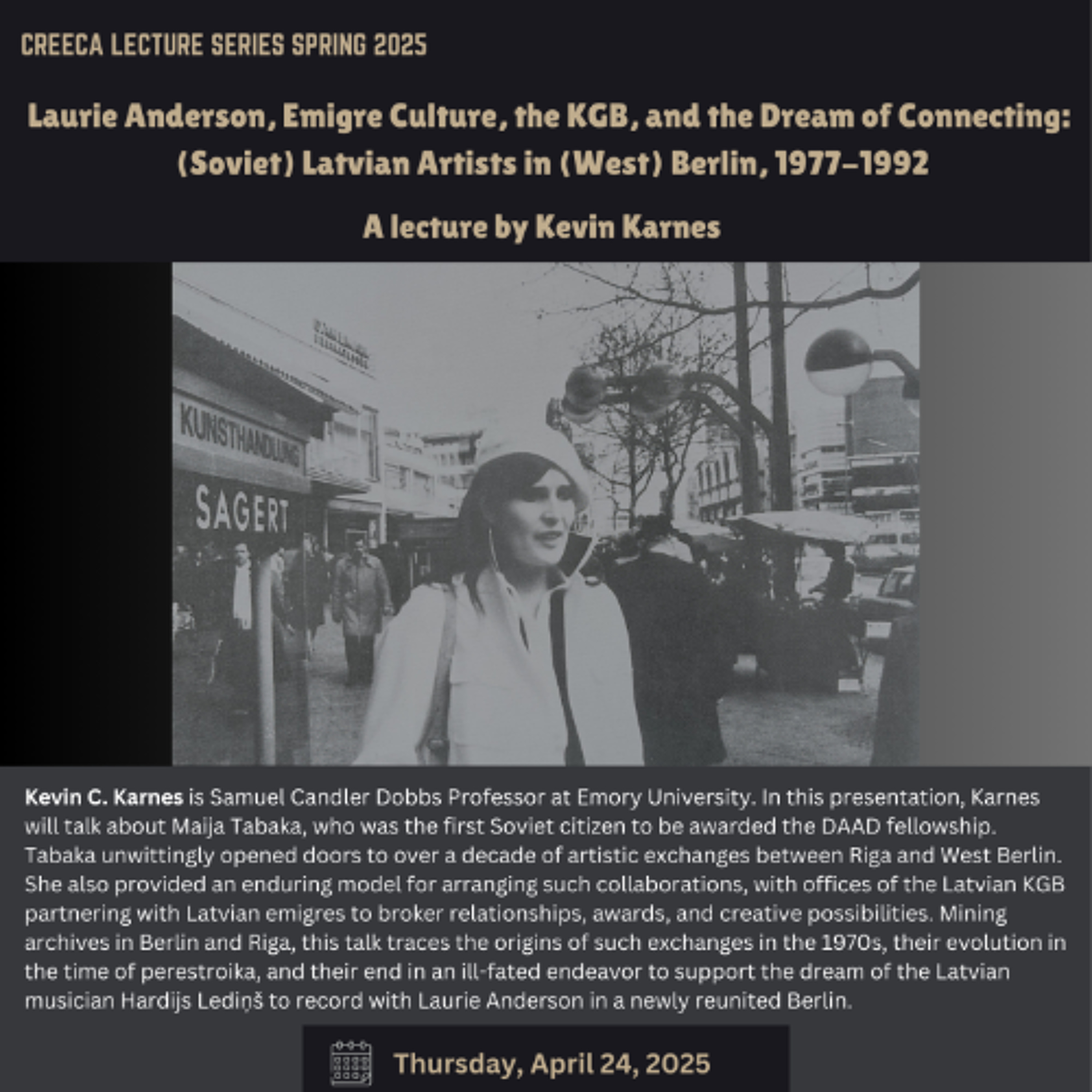
Laurie Anderson, Emigre Culture, the KGB, and the Dream of Connecting: (Soviet) Latvian Artists in (West) Berlin, 1977-1992
About the Lecture: In this presentation, Karnes will talk about Maija Tabaka, who was the first Soviet citizen to be awarded the DAAD fellowship. Tabaka unwittingly opened doors to over a decade of artistic exchanges between Riga and West Berlin. She also provided an enduring model for arranging such collaborations, with offices of the Latvian KGB partnering with Latvian emigres to broker relationships, awards, and creative possibilities. Mining archives in Berlin and Riga, this talk traces the origins of such exchanges in the 1970s, their evolution in the time of perestroika, and their end in an ill-fated endeavor to support the dream of the Latvian musician Hardijs Lediņš to record with Laurie Anderson in a newly reunited Berlin. About the Speaker: Kevin C. Karnes is Samuel Candler Dobbs Professor of Music and Divisional Dean of Arts at Emory University and Visiting Professor of Musicology at the Jāzeps Vītols Latvian Academy of Music. His most recent book is Sounds Beyond: Arvo Pärt and the 1970s Soviet Underground (2021). His latest research considers techno music and club culture as both product and reflection of transnational exchange across reimagined European borders at the turn of the 1990s.
You may also like










Get this podcast on your phone, Free


Create Your Podcast In Minutes
- Full-featured podcast site
- Unlimited storage and bandwidth
- Comprehensive podcast stats
- Distribute to Apple Podcasts, Spotify, and more
- Make money with your podcast