Episode List
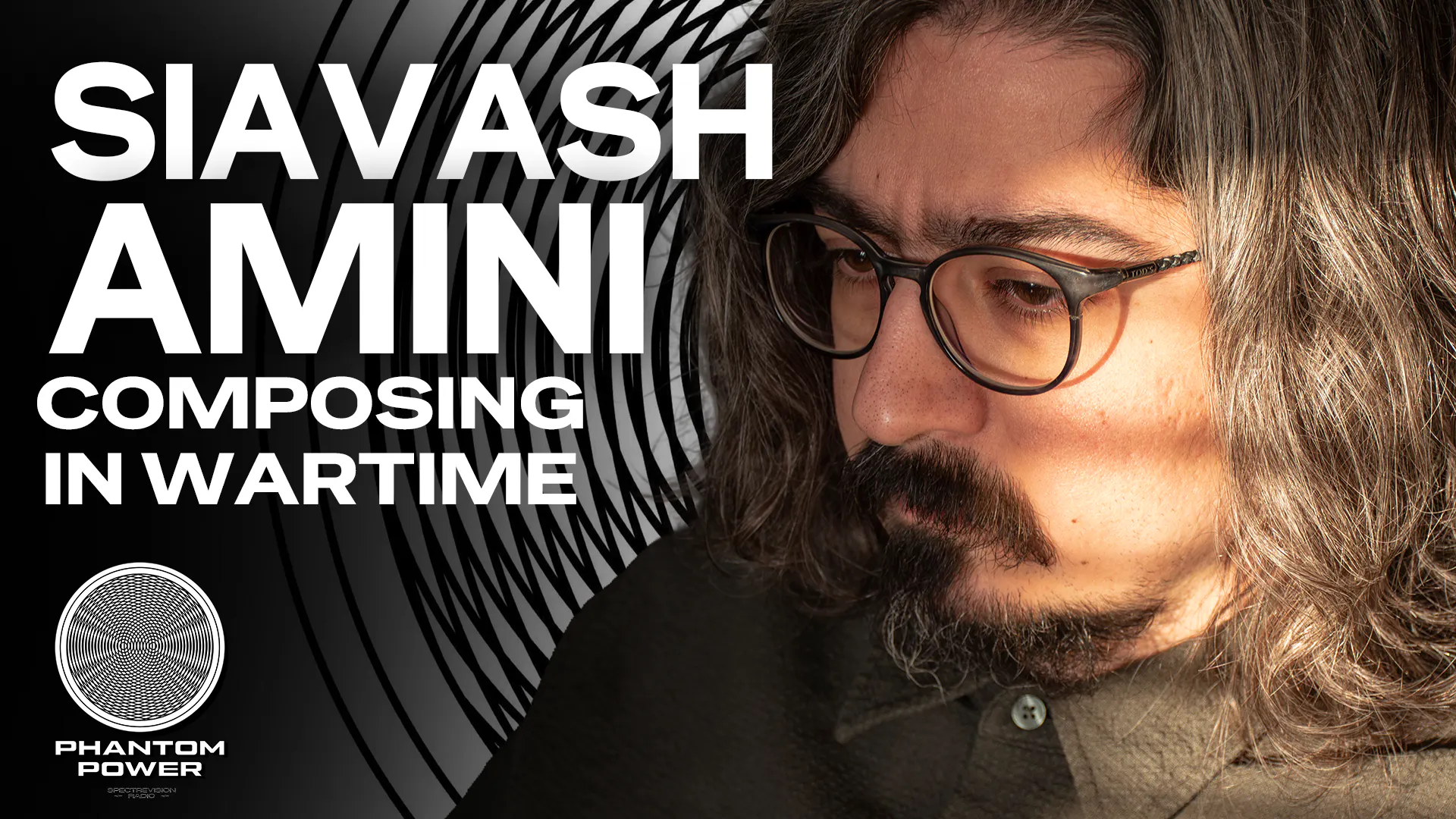
Disquiet in Tehran (Siavash Amini)
Siavash Amini is an experimental composer living in Tehran, trying to live his life and hone his craft amid United States bombings and government crackdowns. Amazingly, he is still creating. August 28th will see release of his collaboration with the American theorist and poet Eugene Thacker, Songs for Sad Poets Vol. III (Hallow Ground). He’ll also soon drop a solo record, Beneath the Pine on Lawrence English's Room 40 label. In this conversation, we talk about the war, Siavash's daily life, and what he'd like to ask of people on the left in the United States and Israel. We also dive into his two albums and his text-based composition techniques. For the full unedited conversation, become a member at mackhagood.com. Finally, please consider joining Siavash's Patreon page. It's the best way that you can support a great artist going through the unimaginable. Cited Media: Music: Mazen Kerbaj - Starry Night (2006) Albums: Siavash Amini & Eugene Thacker - Songs for Sad Poets, Vol. 1 & 2 (2022) Siavash Amini & Eugene Thacker - Songs for Sad Poets, Vol. 3 (2025) Siavash Amini - There Beneath the Pine (UNRELEASED) Literature: Sadegh Hedayat - Three Drops of Blood (1932) Sadegh Hedayat - Buried Alive (1930) Theorists/Writers: Eugene Thacker - In the Dust of This Planet (2011) Matt Finney Chapters: 0:00 Intro3:49 Daily Life in Tehran7:58 Western Indifference11:56 Art Under Fire13:26 New Records21:28 There Beneath the Pine23:54 Persian Music Influence26:47 Collaborating with Eugene Thacker28:48 Songs for Sad Poets Origins32:57 UTAU Vocals Technique40:11 Nation States & Dialogue47:36 Still Making Music To read the full transcript click here. Learn more about your ad choices. Visit megaphone.fm/adchoices
Audiobook Superstar Robin Miles: The Full Interview
While Mack takes a summer break, we bring you this treat from the archives: the full-members-only version of his 2024 interview with beloved audiobook narrator Robin Miles. This episode features almost an hour of additional content, including our What’s Good segment where Robin unsurprisingly makes some really great book recommendations! To get access to all our members’ content, past and future, become a member at mackhagood.com. This episode is a masterclass in audiobook narration and acting with an acclaimed actor, casting director, audiobook narrator and audiobook director. Miles has narrated over 500 audiobooks, collecting numerous industry awards and, in 2017, was added to the Audible Narrator Hall of Fame. She’s the most recognizable voice in literary Afrofuturism, having interpreted books by Octavia E. Butler, Nalo Hopkinson, N.K. Jemisin, and Nnedi Okorafor. Miles holds a BA and an MFA from Yale. She has taught young actors and narrators at conservatories across the country and she has an amazing talent for doing accents—something we really dig deep into on this podcast. In this conversation we talk about technique, the audiobook industry, and the politics of vocal representation. How do we avoid the misrepresentation of marginalized people on the one hand and vocal typecasting on the other? Cited Media: Books: Nalo Hopkinson - Midnight Robber (2000) N.K. Jemisin - The City We Became (2020) N.K. Jemisin - The World We Make (2022) N.K. Jemisin - Broken Earth trilogy (2015–2017) Octavia E. Butler - Patternmaster series (1976–1984) Octavia E. Butler - Kindred (1979) Octavia E. Butler - Parable of the Sower (1993) Octavia E. Butler - Parable of the Talents (1998) Octavia E. Butler - Xenogenesis series (1987–1989) Tananarive Due - The Good House (2003) Isabel Wilkerson - Caste (2020) Isabel Wilkerson - The Warmth of Other Suns (2010) Bell Hooks - Teaching to Transgress (1994) Bell Hooks - Teaching Community (2003) Bell Hooks - Teaching Critical Thinking (2010) Dennis Lehane - Small Mercies (2023) Ian Reid - We Spread (2022) Cicely Tyson - Just As I Am (2021) Karina Yan Glaser - The Vanderbeekers series (2017–present) Nnedi Okorafor - Binti series (2015–2018) Taylor Jenkins Reid - The Seven Husbands of Evelyn Hugo (2017) Plays: Suzan-Lori Parks - Topdog/Underdog (2001) Tony Kushner - Angels in America (1991–1992) 0:00 Intro & preamble4:51 Guest intro: Robin Miles11:03 Teaching acting17:00 Script marking technique20:48 Character switching & IPA24:08 The IPA explained25:19 Vocal colors & authorship27:53 Physical embodiment of text35:54 Nalo Hopkinson deep dive40:56 Roles in audiobook production51:44 Broken Earth & sci-fi voicing1:12:09 Politics of representation1:16:33 Recording gear & software1:19:44 AI vs. human narration1:30:08 Writing & narrator matching1:45:16 What's Good Click here to read the full transcript Learn more about your ad choices. Visit megaphone.fm/adchoices

Noise, Tinnitus and Affect Theory: Marie Thompson Extended Interview Recast
While Mack takes a summer break, we bring you this treat from the archives: the full-members-only version of his 2024 interview with the influential theorist of noise and affect theory, Dr. Marie Thompson. This episode features 40 minutes of additional content on Thompson’s research on tinnitus and hearing loss. To get access to all our members’ content, past and future, become a member at mackhagood.com. Feminist sound scholar and musician Marie Thompson is a theorist of noise. She has also been one of the key thinkers in integrating the study of sound with the study of affect. Noise is a notorious concept that means different things different people. In this conversation, Marie Thompson examines noise through the affect theory of Gilles Deleuze and Baruch Spinoza as well as the systems theory of Michel Serres. We’ll also talk about her critique of acoustic ecology and a rather public debate she had with sound scholar Christoph Cox. And if you don’t know what any of that means, don’t worry—we break it down! Dr. Thompson is Senior Lecturer in Popular Music at the Open University in the UK. She is the author of Beyond Unwanted Sound: Noise, Affect, and Aesthetic Moralism (Bloomsbury, 2017) and the co-editor of Sound, Music, Affect: Theorizing Sonic Experience (Bloomsbury, 2013). She has developed Open University courses on topics such as Dolly Parton and Dub sound systems. Cited Media: Books: Steve Goodman - Sonic Warfare (2010) Marie Thompson & Ian Biddle (eds.) - Sound, Music, Affect (2013) Marie Thompson - Beyond Unwanted Sound: Noise, Affect and Aesthetic Moralism (2017) Jacques Attali - Noise: The Political Economy of Music (1985) Michel Serres - The Parasite (1980) R. Murray Schafer - The Tuning of the World (1977) Anahid Kassabian - Ubiquitous Listening (2013) Rosemarie Garland-Thomson - Extraordinary Bodies (1997) Eric Drott - Streaming Music, Streaming Capital (2024) Paul Rekret - Take This Hammer: Work, Song, Crisis (2024) Melinda Cooper - Family Values: Between Neoliberalism and the New Social Conservatism (2017) Claude Shannon & Warren Weaver - The Mathematical Theory of Communication (1998) Articles / Journal Pieces: Marie Thompson - "Whiteness and the Ontological Turn in Sound Studies," Parallax (2017) Annie Goh - "Sounding Situated Knowledges," Parallax (2017) George Lewis - "Improvised Music after 1950: Afrological and Eurological Perspectives" (2002) Christoph Cox - "Sonic Flux: Sound, Art, and Metaphysics” Parallax (2017) Journals: The Senses and Society: The Aesthetics of Tinnitus Capacious: Journal for Emerging Affect Inquiry Chapters: 0:21 Intro5:17 Introducing Marie Thompson7:57 Liverpool music roots10:38 PhD at Newcastle14:55 Defining noise20:38 Spinoza & affect39:44 Materialism debate with Cox47:57 Tinnitus1:09:04 Tinnitus & ableism in sound studies1:13:11 Normate listening1:23:57 Closing thoughts1:24:22 What's Good segment To read the full transcript click here Learn more about your ad choices. Visit megaphone.fm/adchoices

Podcasting's Politics of Empathy with Jason Loviglio
Today we talk radio, podcasting, and democracy with Jason Loviglio. Jason is an expert on the history of National Public Radio and a key theorist of how audio media have changed the public sphere. He traces the politics of radio down to the smallest details, like the kinds of mics that are used, the way radio personalities use their voices, even the fan mail that comes in. In this episode, Jason Loviglio discusses everything from FDR's fireside chats to the politics of NPR to his new book, Empathy Machines: This American Life, Podcasting and the Public Radio Structure of Feeling, the first full-length book on This American Life. He argues that TAL was designed from the start to function as an empathy machine, but over the years, the politics of that empathy have changed substantially. Jason Loviglio is Professor of Media and Communication Studies at University of Maryland, Baltimore County. Jason is the author of Radio's Intimate Public: Network Broadcasting and Mass Mediated Democracy. He's the co-editor of Radio Journal and he has edited three different volumes on radio. Cited Media: Books: Jason Loviglio - Radio's Intimate Public: Network Broadcasting and Mass-Mediated Democracy (2005) Jason Loviglio - Empathy Machines: This American Life, Podcasting and the Public Radio Structure of Feeling (2026) Benedict Anderson - Imagined Communities: Reflections on the Origin and Spread of Nationalism (1983) James Tobin - The Man He Became: How FDR Defied Polio to Win the Presidency (2014) Eric Nuzum - Make Noise: A Creator's Guide to Podcasting and Great Audio Storytelling (2019) Sara Ahmed - The Cultural Politics of Emotion (2004) Raymond Williams - Marxism and Literature (1977) Podcasts / Radio Programs: This American Life (1995–present) Essays / Speeches: Newton Minow - Television and the Public Interest "Vast Wasteland" Speech (1961) Theodor Adorno - The Culture Industry Reconsidered (1975) Chapters: 0:00 Intro5:15 Intimate Public10:35 FDR's Radio Voice17:00 Radio & Affect27:41 NPR's Origins39:31 This American Life44:40 Ira Glass's Formula52:59 Empathy & Its Limits1:02:27 Podcast Explosion To read the full transcript click here. Learn more about your ad choices. Visit megaphone.fm/adchoices
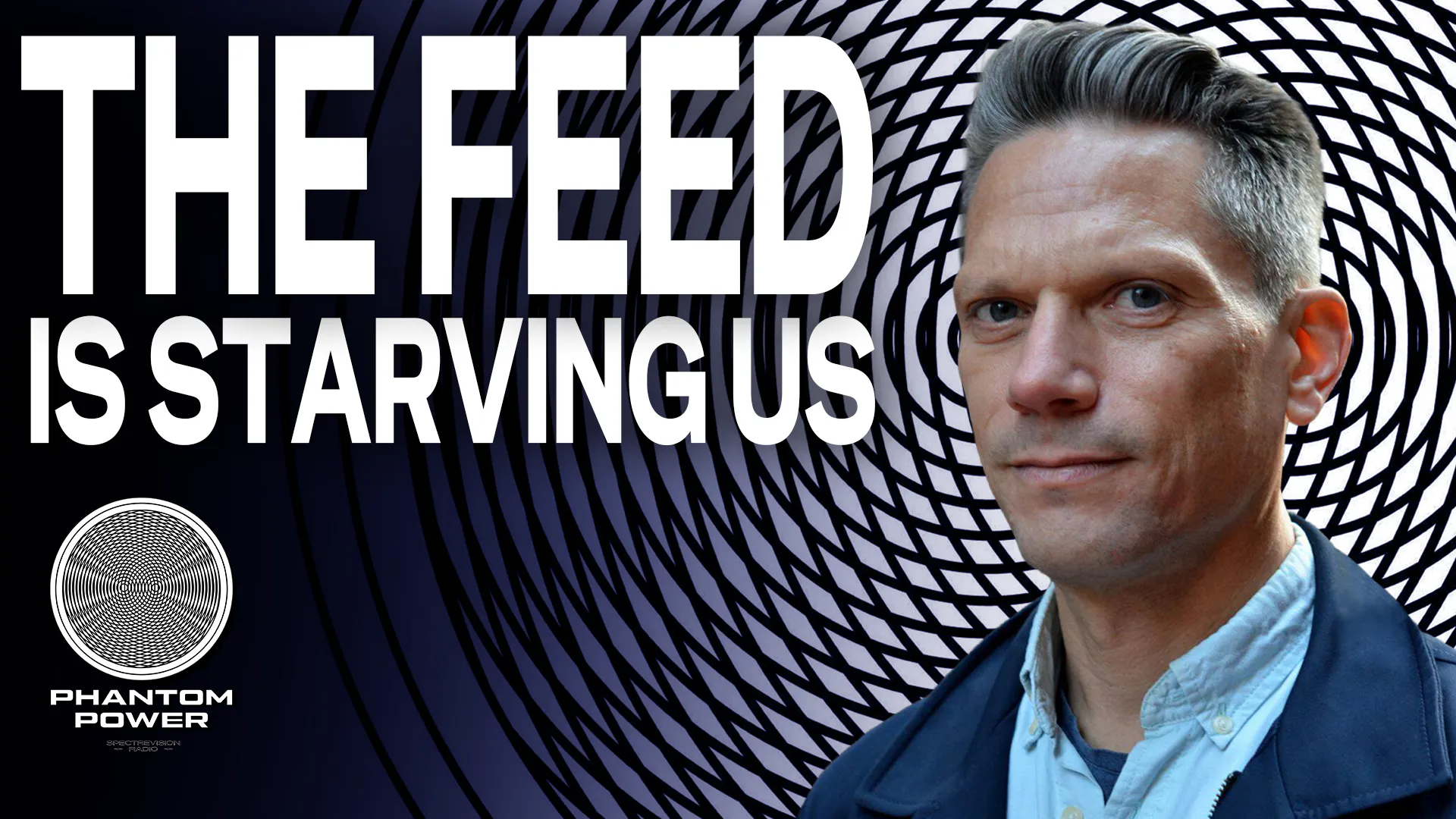
Digital feeds, malnourished students
Today we’re doing one of our occasional episodes where host Mack Hagood talks about a new essay he’s written for our newsletter “Feed Logic and the Failure to Thrive” Mack writes that students and professors are struggling, both academically and spiritually. He tries to diagnose the issue he felt in his classrooms this year and the role technology may play in it. For new listeners, Mack is a writer and researcher who studies sound, technology, and culture. He is the author of Hush: Media and Sonic Self-Control, a book on noise-canceling headphones, white noise, tinnitus, and the ways people use sound to manage modern life. He is currently writing a new book for Penguin Press, and he also hosts this podcast Phantom Power, where he interviews artists, scholars, musicians, and sound designers about the invisible power of sound in everyday life. Besides all that, Mack is a university professor and that’s what his most recent essay is about. Click here to read the newsletter for free. Cited Media: Film:Mary Bronstein - If I Had Legs I'd Kick You (2025) Books:Ben Lerner - Transcription (2026)Mack Hagood - Hush: Media and Sonic Self-Control (2019)Hartmut Rosa - Resonance: A Sociology of Our Relationship to the World (2019) Newsletter/Essay:Mack Hagood - Feed Logic and the Failure to Thrive (2025) Lecture:Amar Bose - MIT Lecture on Engineering Chapters: 0:00 Intro1:58 The Essay & Its Response3:13 ARFID as Metaphor8:38 University Pressures & AI9:50 Student Disengagement14:05 Feed Logic & Screen Time16:30 Ultra-Processed Communication29:50 Student Doubleness & Motivation36:05 Resonance vs. Control To read the full transcript click here Learn more about your ad choices. Visit megaphone.fm/adchoices





Get this podcast on your phone, Free


Create Your Podcast In Minutes
- Full-featured podcast site
- Unlimited storage and bandwidth
- Comprehensive podcast stats
- Distribute to Apple Podcasts, Spotify, and more
- Make money with your podcast
