Still Scared: Talking Children's Horror
https://stillscared.podigee.io/feed/mp3Episode List
Robert Cormier Megamix
The Cheese Stands Alone Our email address is stillscaredpodcast@gmail.com and we're on instagram @stillscaredpodcast! Intro music is by Maki Yamazaki, and you can find her music on her bandcamp. Outro music is by Jo Kelly, and you can find their music under the name Wendy Miasma on bandcamp. Artwork is by Letty Wilson, find their work at toadlett.com Transcript Ren Welcome to Still Scared: Talking Children’s Horror, a podcast about creepy, spooky and disturbing children’s books, films and TV. I’m Ren Wednesday, my cohost is Adam Whybray, today we’re talking about a selection of stories by the American author Robert Cormier. Enjoy! Adam Hello Ren, we were just saying we’re veteran podcasters now! Ren Yeah, we kind of are! Adam We definitely are! Which means we’re super equipped, capable and connected and ready to talk about Robert Corm-i-air, or I don’t know if it should be pronounced (extra Frenchly) Robert Cormiair — since he was from the French Canadian part of Massachusetts. RenAs will be relevant. Adam As will be relevant. But we’ll call him Robert Corm-i-air. Ren Well, his website says Cor-meer. Adam Oh does, it, it tells us how to pronounce it! See we are pros, you’ve done your research, thank you. Ren Which is good because until I read that I was calling him Cromier, which would have been embarrassing. Adam Robert David Cromier-berg. So I discovered — I can’t remember how you pronounced it now — RenCor-meer Adam Cormier’s work by a Discord friend, Polygonal, who has a tendency to recommend things out of the blue, and dropped me a pdf of The Rag and Bone Shop and said ‘What do you think of this?’, so I was like ‘Oh, okay, I’ll get back to you’. But it looked in my wheelhouse, when I looked on Wikipedia I saw that he was a Young Adult writer and it was clearly going to be horror or horror-adjacent — it turned out to be a thriller — and I was just struck by how grim it was! Reading the Wikipedia article, I liked this description of him: ‘Robert Edmund Cormier (January 17, 1925 – November 2, 2000) was an American writer and journalist, known for his deeply pessimistic novels, many of which were written for young adults. Recurring themes include abuse, mental illness, violence, revenge, betrayal, and conspiracy. In most of his novels, the protagonists do not win.’ And then I discovered that his work has been challenged and banned from many school libraries across the States and while I’m not normally sympathetic towards book bans there were moments where I could understand by parents might be uncomfortable with their children reading some of this. Which was interesting because that’s very rarely how I feel, but my gosh they go to some troublesome places! Ren I think for this we’re leaning into the disturbing part of our ‘creepy, spooking and disturbing’ tagline. Adam I know we interminttenly do content warnings, but these books are dark! I would not have coped with them before sixth form — I think 16/17 but before that, if I’d come across them at 13/14 they would have done a number on me, they would have triggered my OCD something terrible. He’s basically got all the Catholic guilt but without the possibility for redemption! In some way he’s got the passion and intensity of an adult Catholic novelist like Graham Greene or Flannery O’Conner, but with this gloomy atheistic belief that the world is unjust and that bad things happen, and a deep, deep cynicism about institutions, which I wonder is what led to the bans, because generally figures of authority are not to be trusted in his work. Had you heard of him before? Ren I think he’s one of those that I might have seen on a rotary display in a school library, but not really. Adam My partner Leah reckons that she might have read the Chocolate War, and I think that’s his most well-known. But we were probably just that tiny bit too young for him. Ren Yeah, he died in 2000 Adam But certainly he seems more well-known in America than in the UK or Europe. But broadly, you’ve read two of these books, I’ve read three and a bit so far, how have you found reading them? Ren Fascinating. He’s a great writer, it’s so tense. I read The Bag and Bone Shop first which is his last novel, but it’s such a tense, sweaty little novel. It’s not quite like anything I’ve read before, and particularly not anything Young Adult. Adam It reads more like a play or a film, a thriller, something like Seven by Fincher. There’s moments that recall the intensity of Harold Pinter’s plays perhaps. The bulk of it is a long interrogation scene and the only reference point I have for that is Martin McDonagh’s play The Pillowman which is a very upsetting read, before he moved into screenplays like In Bruges and Seven Psychopaths, which is very intense and this is similarly a very intense read. I think my favourite of the ones I’ve read — I read that one first and then I read Fade, which is sort of atypical for Cormier because it has some supernatural or fantasy elements, arguably. It’s a complex book but it’s less grounded than some of his other novels or novellas. Then there’s I Am The Cheese which I know you haven’t read yet, which is easily my favourite I think it’s astonishingly good. But that’s the one I mentioned last time because I was intrigued by it being called I Am The Cheese, which is a reference to The Farmer in the Dell, where one version of the nursery rhyme is that the farmer’s wife wants a cat, the cat wants a mouse, the mouse wants some cheese, and ‘the cheese stands alone, the cheese stands alone, ee-i, adio, the cheese stands alone’. I’ve started reading the fabulously titled ’After the First Death’ which is an incredible name for a Young Adult book, he’s not messing around! It does indeed start with a kid having just been shot in a terrorist attack and that is the first paragraph. And that one is controversial because Cormier likes playing around with narrative perspective and one chapter is narrated by the teenage bus driver, she’s a 16-year old bus driver, I don’t know if that ever happens! Maybe it’s work experience, I got to work at a funeral parlour, I guess some teenagers get to be bus drivers. Ren Maybe Otto started when he was 16, in The Simpsons. Adam Ah yeah, that would check out. Narrated by her, also I think maybe one of the teenagers on the bus, and also one of the terrorists. And I think maybe some parents weren’t okay with their kids inhabiting the point of view of a terrorist. But I respect Cormier’s humanism because I think he’s very much of the school ‘hurt people hurt people’ and that people do things for reasons, basically. That seems to be pretty he’s pretty keen to understand why humans do the things they do, and he has this curiosity towards human behaviour even at its worst. So which one do you want to start with? Ren Shall we start with The Rag and Bone Shop? Adam In a way, it’s a good place to start, and in a way it’s a funny place to start as it was his last novel before his death. But it is a short one and I think it’s a good one to introduce someone to his work. I read it over two sittings which is unlike me, scattered attention these days. But it’s so intense, it’s so gripping that I really did plough through it. Ren I think I did the same. It’s about — a little girl is murdered and this master detective is bought in who is known for always getting the confession. Adam And it seems like he’s right out of film noir, right? You can picture him immediately as this hard-bitten weary detective, he’s quite deliberately archetypal. And the main suspect is a boy. Ren Yeah, who had been the last person, or so they think, to see the girl alive. But he’s a very gentle soul and a bit of a misfit, but he just likes doing jigsaw puzzles with this girl, they’re friends, kind of. But he’s the suspect and so the bulk of the novel is this interrogation, he thinks he’s just going along to give general evidence but he’s actually being bought in as the main suspect and the bulk of the novel is this interrogation in which the detective psychologically breaks Jason down. Adam We’re kept in a certain amount of suspense about whether he might be the killer, right? Jason definitely seems sympathetic but we don’t know that much about him, and we are repeatedly told that the interrogater is a very good interrogater and he’s never been wrong before. It feels like maybe — the idea of investigating what it means to tell a story is present in I Am The Cheese, for instance, which is a much earlier book, but it seems these meta elements become more present in Cormier’s later work to me The Rag and Bone Shop seems to be about why we tell stories, the power of stories, and to a degree whether stories can alter reality, or how it feels like they can alter reality even if the truth is out there. You could almost say that it’s a novella about post-truth because once authority figures start saying something is the truth and they’re very certain it’s the truth and keep repeating it, if you’re the person in the position of not having a very clear sense of self, maybe being easily manipulated, being vulnerable, you might start to question what the truth is even if it relates to you and who you are. Ren Shall I read a bit of the interrogation that demonstrates that?: “What kind of books do you like to read?” Mr. Trent asked, as if reading his mind. “All kinds. But I like mysteries. Horror stories. Stephen King. Science fiction.” “You don’t mind all that violence in those books? People killing each other?” “It’s only stories. They’re not real.” “How about movies and television? Do you like violent ones, too? Horror stuff?” Jason was puzzled. He liked horror stories but he wasn’t wild about them and somehow these questions made it sound like he was some kind of fanatic when it came to horror stuff. “I like other kinds of stories and movies, too. I mean, adventure. Like Indiana Jones, and Star Wars.” “They’re kind of violent, too, aren’t they?” “I don’t know.” He thought of them as cartoons, unrelated to anything in real life. “They’re unreal.” “You seem to be fascinated by things that are unreal,” Trent said. Do I? Jason wondered. He had never really thought about it. “Do you sometimes get confused between what’s real and unreal?” Jason squirmed, fidgeted, tried not to show his impatience and his growing uneasiness. “I don’t know what you mean,” he said. Adam It really puts you slap-bang there in the interrogation room with them, you really start to experience what Jason experiences, I imagined that I was going to start sweating myself, reading it. You start to feel the claustrophobia, or I did anyway. Ren Oh yeah, absolutely. Trent is doing these tricks like putting him in a small cramped room, planting the idea of being thirsty and then not bringing him water, this kind of thing. Adam From my limited experience, I've been arrested once on a climate protest which was thrown out of court, but I did have to spend a night in a cell on the charge of trespassing, we protested a petrol station. And yeah, the police sergeant and then the person questioning me definitely played little mind games that did get under my skin. So it’s strange even being taken in the back of the police van because you can’t see out and there’s no seatbelts, which is a bit funny because normally it’s illegal not to wear seatbelts! But if you’ve been arrested you can slip and slide about in the back of a police van, and handcuffed as well so it’s hard to keep steady which feels pretty dangerous. And if you’ve been arrested somewhere you don’t really know the journey you’re taken, you might be taken to a police station a county away, it’s not necessarily going to be taken to somewhere near where you are, so it might be quite a journey, and you can’t see out, so you feel, or I felt, quite disorientated by the time I came out. And one of the first things the desk sergeant said to me was: ‘Don’t worry back when we used to arrest you eco-protesters I used to spit in your food. But then my daughter got involved in that kind of thing, so I don’t do that anymore.’ And of course, with plausible deniability he’s introduced this idea that he might spit in my food, he had done it before. Oh, he doesn’t do it anymore but that was a possibility. I don’t think I was offered any food anyway, but there was no way, I have OCD, there was no way I was going to eat food after that. In the police cell there was a white spray painted arrow on the ceiling seemingly pointing to nothing, it was really odd. I kept trying to work out why that’s there — is it pointing to a crack? And I wondered is that just there to put the fear in you a bit — what’s that? what’s that relate to? Because it did, it played on my mind. And in terms of being questioned I was being questioned at two in the morning, without having got to sleep because you’re checked in on every hour. And it was a Friday night so it was noisy, there were a lot of people in the drunk tank, people who were drunk and crying out, shouting and screaming. So there’s no way I would have got to sleep, and it was a hard bed and a thin mattress anyway. So by the time I was questioned I was shaken up, and it was a small room so it was claustrophobic. And some of the questions they asked were tricksy — how did you feel when the fire engines arrived? And I was like ‘What? I don’t remem—‘ and I should have just No Commented, you’re told to just go ‘No comment’, but I think I’m too scrupulously honest to be able to do that, I want to be fair and give answers so I said ‘I didn’t know there were any fire engines’. And I spoke to my partner at the time afterwards who was also at the protest and she said ‘No, there weren’t any fire engines, that never happened’. So clearly they were trying to confuse me or make me feel guilty about protesting, like ‘oh, you inconvenienced the fire service’, but that never happened that was just completely made up. And the funniest thing was they asked me if I had a religion and what I believed in and I said I was a Unitarian and they clearly hadn’t heard of Unitarians ‘Uni-what now? Uni-what now? What does that mean?’ So at two in the morning, without any sleep I was trying to explain the principle tenants of Unitarianism under interrogation, which is very difficult: ‘We um, don’t believe in the, err, divisibility of the trinity, um’. So it did bring some of that back to me actually. The way you’re really put on the back foot in a police interrogation. Ren Yeah that’s fascinating context, and then this is a 12 year old boy that he’s going to town on with all his interrogative skills and tricks. Adam And I’m sure this happens, right. There are still states in America where children are tried as adults and sentenced as adults, appallingly. And it does happen, often to kids of colour. Twelve seems very young but it does happen. You can easily see how a skilled interrogater would just end up getting the answers they want to get. Ren So I think for once we’re not going to spoil these books. Adam No, I don’t want to say exactly what happens at the ending. It’s interesting and provocative but it’s a short read and I don’t really want to reveal the ending. I think the book works very effectively even without the ending, though the ending is very interesting. It definitely got under my skin, it’s an effective little book, and an inditement of children being treated as adults and an inditement of the justice system, I guess. I do think there is an anti-authoritarian streak in Cormier’s work that comes through here. Ren Yeah, definitely. Adam I’ll quickly mention I Am The Cheese, which I know you haven’t read yet but I hope you do because it’s my favourite of his books I’ve read so far. It’s one of his earlier books, first published in this country in 1977. It has a forward in my copy, which says it began as an exercise on Saturday morning in the autumn of 1975, as an experiment with first person present tense I placed a boy on a bicycle, trying to create movement and action with words, simply because I had nothing else to create. So he’d already had a great deal of success with The Chocolate War, which is his most famous and didn’t know what to do for a follow up, so started with this semi-autobiographical sketch of the boy on his bicycle and the book then crosscuts two different narrative perspectives. You have the first person perspective of the boy on his bike, and then these interrogation scenes, possibly, or psychiatric sessions, it’s very hard to say! But these records of a dialogue seemingly between the boy and some kind of questioner about his life, and you slowly start to work out the connection between these two different narrative voices and what’s going on. So it’s almost set up like a psychological mystery, but it has some real similarities between The Rag and Bone Shop, like what is this interviewer or interrogator doing, to what extent are they trying to work towards a certain outcome or being manipulative? Ren What cover do you have? Adam Oh, I have an incredibly pink cover. My cover is an incredibly garish, Windows 95, MS Paint pink. Ren Beautiful. Adam With a photograph of a boy, who’s been stretched and twisted so it’s elongated his arms and made him look extra quizzical and then there’s a pendant hanging down from the top of the page. And then a white, ghostly, I don’t know if it’s a silhouette exactly, but an image of a dog’ss fangs and nose coming in at the back. It’s quite striking! What’s your one? Ren Mine is a late ‘80s Teen Tracks edition, which has that torn paper effect beloved of 80s graphic design. And the central image is a coloured pencil drawing, I think, of a boy on a bike from above, quite stylised. He looks carved, it’s quite sculptural, like he might be a wooden figurine. Adam I’m going to have to see if I can see this now, because I don’t recognise this cover. Ren And there’s a border above and below this central image which has a telephone receiver in the middle and little pigs on either side. Adam What?! Ren Yeah! Adam Oh I can see it now, oh my gosh, you didn’t mention how green he is! Ren Oh yes, he is extremely green! And of course the title is I Am the Cheese, so just looking at this cover I had no concept what this book was about: ‘Oh, it’s the telephone, pig, cycling book about cheese’. Adam My favourite cover is, I don't know if it’s the original one, but it’s the incredibly grey and brown image of the boy in the cell looking incredibly haunted, it just looks like the grimmest book. Ren Hell yeah. Oh my god, he’s like the, you know the, Ursula Le Guin, the Ones who Walk Away From Whatsitsface — Adam Oh my god, he is! Oh no! Omelas! Ren He’s the Omelas boy! Adam Oh no! Yeah! So yeah if you look at that one you think ‘I’m not in for a fun time’. But yeah it’s a beautifully written book and more dreamlike, stranger than the Rag and Bone Shop, it has some very odd, slightly trippy interactions. The whole thing has a very woozy feeling to it. Or the first person bits do, and then there are these very stark interrogative chapters. I want to read a section from it actually because I’ve been using it in my English tutoring, because one of the questions in the UK GCSE exams that 16 year olds have to do, this is true for the AQA exam board and also for Eduqas, they’re the two main ones in this country for English at least, one of the questions is on structure. The kids get an extract and they have to say how does the structure in this excerpt create suspense. And kids find it very hard. I find it quite hared to explain structure, I tend to say it’s the order that things happen. And I often say to them that I didn’t get structure when I was a kid, and it was only when I started looking at films and did film studies because you can understand with a film that you see one character before another, or maybe you see the location before you see the character. It’s easier to understand in a film that you see things in a different order. But anyway, it’s hard to teach and I’d been looking for extracts to use. I found this, it’s about chapter four and I think it’s a beautiful example of rising tension and suspense and just a great piece of writing, it makes sense that Cormier says it began as this exercise in first-person, present-tense with him trying to create movement with words, and I think he does a great job here. “The dog is ferocious and I am terrified. He is waiting for me at the end of a long flat stretch at the bottom of the hill. I had seen him waiting for a long distance when he was only a small, silent lump at the side of the road. Then, as I drew nearer, he revealed himself as a German shepherd, sleek and black, a silent sentinel guarding the driveway of a big white house. The house is set back from the road. I sense that the house is deserted, that I am alone out here with the dog. I pump furiously, wanting to sail by the dog as fast as possible, so fast that I will dazzle him with my speed and leave him stunned by my passing. The dog lifts his head at my approach, alert, ears sharp, as if he is accepting a challenge. My eyes swing quickly, left to right and back again, but there are no rescuers in sight. The driveway behind the dog is empty, no cars in sight, and the house itself wears an abandoned look, as if the people have all gone away. Across the street, an open field lies behind a wandering low stone wall. As I approach, the dog steps out into the road and I think, It’s as if he has been waiting for me all my life. The dog is unmoving, his tail not wagging, his eyes like marbles. He is silent, watchful, a killer dog. I am close enough now to see how his sleek hair is shiny, and I tell myself, Let’s go, it’s just a dog, a dog is man’s best friend, it’s not a lion or a tiger. The dog makes a move, steps into the roadway directly in the path of the bike, his head lifted now, a snarl on his lips. He is silent, he has not barked or growled or maybe I can’t hear the growl as the wind rushes past my ears. I pedal hard, crouched on the bike, fingers clutching the handlebars, legs pumping away, the bike aimed directly for him, afraid that if I try to steer around him, I will somehow lose my balance and be flung to the pavement, at his mercy on the pavement. I slit my eyes and my legs slash away and I hurtle toward the dog. And at the last possible moment the dog darts aside, and now I hear his growl and then the growl erupts into short sharp savage barks and this is worst of all because the barks reveal his teeth. The dog keeps trying to dash in front of the bike, as if he is more interested in stopping the bike than in attacking me. I take heart at this. The dog bites at the front tire and turns away as the tire scrapes his nose and the wheel wobbles frantically. And I keep yelling to myself, It’s all right, it’s all right, but my words are lost on the wind and inside I am saying, The hell with this, if I get away from this dog, I’m going home, I’m taking the first bus back, the hell with Rutterburg, Vermont, the hell with everything … The bike is in danger of toppling now as the dog continues to attack the front wheel and I realize with horror that this has been his intention from the beginning: to topple the bike, send it askew and have me crashing to the roadway, his victim. We are past the driveway now and approaching a curve. I hope desperately that there is safety around the curve, a house or a store or a shack or anything. That’s when I hear a car approaching and a horn frantically blowing. I suddenly realize that I have drifted perilously close to the center of the road. The oncoming car, a yellow Volkswagen with luggage lashed to the roof, has to cut speed and swerve to avoid hitting me, the blast of the horn joined by the squeal of brakes. The dog is distracted by the car and the honking and the screeching and it hesitates for a moment, pausing almost in midair, looking at the car as if puzzled. Or tempted. I keep pedaling. But I can’t resist looking behind me and I see the dog streaking away, down the road in pursuit of the VW, barking wildly, body arched and stretched, a fuzzy furry arrow. “Let’s get out of here,” I yell to nobody, and renew my pedaling, fear and panic having obliterated any weariness, any aching muscles. The barking of the dog grows distant as I swoop around the curve and sail steadily onward. I am approaching the main street of Fairfield and it is hardly a Main Street and hardly a town, just a few stores and that church with the white steeple, and I speed through the street, carried by my momentum. I know I should stop but I don’t want to get off the bike. I want to keep going, to get to Rutterburg. I have a feeling that the dog will pursue me forever, will wait for me outside stores if I stop to eat or go to the john. I open my mouth and gulp air and the rush of air is sweet in my lungs and I feel strong again as the air caresses my lungs. I pedal through the town, across a wooden bridge, the sound of the slats like applause in my ears. And I say hello and goodbye to Fairfield and continue on my way, feeling as though I will never stop, never stop.” I think that’s a pretty terrific piece of writing, a whole story in a chapter! Ren Yeah — I wrote a short story for a prompt where the character is in motion the whole time and I wrote it about someone cycling, not being pursued, cycling in a less frantic way than this, but it’s a good writing challenge and it can really bring out a different approach than someone who’s standing… I trailed off there. Adam But it’s true, it’s hard to make writing dynamic, and when I’m practicing creative writing with the kids they find it hard not to just paint a frozen picture. They either just do back and forth dialogue — well the younger ones just do ‘and then, and then, and then’ just a succession of stuff, but the older ones struggle to create a living scene and to get that sense of movement, so I think it is a useful example of writing. Ren It also reminds me, there was some kind of scrapyard that I had to go past on my way back from school that had German Shepherds barking it and they would always jump at the fence and bark. Adam I hated that kind of thing as a kid! Ren And now I’m with Mattie and he's very fond of them, and I actually did meet a German Shepherd later who was the first dog that I ever really got to know, and she was very calm and placid and also intimidating enough to all the other dogs that they didn’t bother us, and I was like, okay, I like this one. Adam Yeah, I think for me having the years during lockdown of living with two dogs made a big difference in terms of my fear of dogs. It made me realise that when dogs are barking it doesn’t automatically mean they’re angry or trying to get you to go away, dogs do also bark when they’re excited and happy and I think understanding that helped quite a bit. Ren But a German Shepherd also comes up towards the end of Fade, so there might be an autobiographical — Adam Well Fade seems the most autobiographical, he certainly is inviting that reading, because it seems to track his life in that the main character is also born seemingly around the mid 1920s and is growing up between the wars and then the outbreak of World War II. And also in the French Canadian section of Massachussetts. So it certainly seems to have autobiographical elements, this is quite a complex novel, it’s a hard one actually to succinctly — Ren Uhhuh. AdamStructurally it’s quite complex, but it starts narrated by a character called Paul, talking about his experiences as a teenager and then later we flash forward to many decades later at which point Paul has becomes a successful author and his agent, or publisher, discovers this lost manuscript that she realises has autobiographical element. So there’s that meta element to it where the protagonist becomes an author known for setting stories in his hometown, which Cormier does, does make it seem like it might be quite autobiographical! And Paul has hidden this manuscript away in part because it has some shameful aspects, some confessional aspects, so rightly or wrongly it does make you wonder if these confessional aspects are true to life, are there some things that Cormier is confessing to, in which case it does make it a pretty unsettling read. Ren I will say, the beginning is quite a traditional children’s horror star. Adam That’s an interesting point, with the photograph? Ren With the photograph, yeah, he's talking about this mysterious photograph of his father’s family, taken before World War I in Quebec and there’s his father as a kid and his grandparents and all his aunts and uncles but one of his uncles is invisible — isn’t in the photo, though everyone swears he was there when the photo was being taken. And I feel like that’s quite a traditional intriguing start. Adam Yeah, it’s almost like a Goosebumps start! Ren It is, exactly! And then the rest of the novel is so weird. Adam And then we get to — I don’t know how much depth we want to go into and I certainly don’t want to spoil too much of the book, but I will say trigger warning for squickiness. If you’re someone who’s not comfortable with um, troubling, I guess… oh gosh there’s all sorts of troubling stuff! I guess if you don’t want to read about unhealthy sexuality, I don’t know if there are any healthy displays of sexuality, maybe avoid it. It can be squicky at times. Squicky in an insightful and probably pretty accurate kind of way, in terms of looking at a teenage boy who hasn’t had much in the way of good direction? I don’t know, I don’t really know what to say. I don’t think it’s exploitative exactly, he’s not an exploitative writer it’s just — Ren Uncomfortable. Adam Yeah, it’s very uncomfortable. It reminded me of watching Peep Show sometimes, the Robert Webb and David Mitchell sitcom. But obviously Peep Show is for adults and this is aimed at a young adult audience. I will say basically, the main character really fancies his aunt, and we hear quite a lot about this and it doesn’t go well. It’s like some weird thing out of a visual novel, basically. I’ve said enough I’ll pass over to you Ren! What are your thoughts? Ren It took me quite a while to read this book, I read the first Paul section and I was like: ‘right, okay, that’s some rich stuff there’. It does have this supernatural element to it because Paul discovers that he can ‘fade’, become invisible, and this is a hereditary skill/curse/. Adam Yeah, kind of curse because it allows him to see the awful things that various people do in his town in the darkness and some of them are really grim. Ren That’s passed down from uncle to nephew, and any hijinks inherent in this scenario are quickly curtailed with horror. Adam Yeah, like at first it seems like it might be an episode of Round the Twist with some quirky, maybe mildly squicky or troublesome but mostly harmless fun, but no. No it is not. It’s bad. And I guess it tracks Paul’s loss of innocence, basically. Both in terms of Paul doing some really bad inexcusable things, but also witnessing even worse things. Ren And then there’s very much that theme of trauma being passed on generationally — Adam The uncle seems like a very haunted figure who also had his own experiences with the Fade, and Paul learns as a much older man later in the novel that he has his own nephew, who has unfortunately grown up in extreme privation experiencing a lot of abuse and so is very troubled and uses the Fade in even worse ways than Paul. I did send you a text because I’d just finished reading that section and I was like — if you think it’s already dark, buckle up. Ren And I was like, ooohkay, as I read the metatextual middle section, what is going to happen now. Adam So guys, if you want to read a Young Adult novel in which a homeless person is mercilessly abused for long stretches, do we have the book for you! The thing is it’s really well-written. It’s just really grim. This is the first thing we’ve read for the podcast where that’s part of me that’s like ‘Yeah, I don’t know if this should be in a school library’. And that takes a lot for me to say because I’m not big on censorship! But I’m glad I didn’t read it when I was too young, it would have really upset me. Ren Yeah, I think Fade is a 16+ novel. Adam Yeah, that’s my feeling. I think if I’d read it in Sixth Form I would have got on with it because I was starting to read adult fiction then. Ren Yeah, I mean I was reading adult fiction by about 13, but I don’t know if that was a great idea. It was certainly mind-expanding. Adam To be fair that is true of quite a few bookish friends I have, but we’re all quite neurotic, so. Ren The question is, do you have a texture? Adam Oh my gosh, I do, but the question is, is it just going to be the same texture? Adam (editing voiceover) With a serious amount of contrition and even self-disgust here, I, Adam Whybray, editing this episode of Still Scared: Talking Children’s Horror that I forgot to sing Texture of the Week before providing my texture to Ren. So with that in mind, I have my guitar here. (Loud strumming on acoustic guitar) Texturr-uhhh Textuur-uhhhh, Texturrree O—ooof the weee-eeek Okay back to the episode. Adam Because mine is the texture of the fade Ren Oh, no mine is a different one. Adam Okay cool, because there are actually quite a lot of descriptions of the experience of the Fade but all of them are pretty evocative so I’ll read the first main one: “First of all, the pause. Then the pain. And the cold. The pause is a moment in which everything in your body stops, the way a clock stops. A terrible stillness that lasts only the length of a drawn breath—although it seems longer than that, almost an eternity—and then, at the onset of panic, the heart beats again, blood rushes through your veins and sweet air into your lungs. After that, the flash of pain, like lightning, pain that darts throughout your body, so intense that you gasp at its brutality. But the pain is merciful in its quickness, gone as quickly as it comes. The cold begins when the fade begins and remains all the time you are in the fade. It has nothing to do with the time of year or the seasons of the weather. The cold comes from inside, spreading under the surface of the flesh, like a layer of ice between skin and bone” Doesn’t sound like a nice time! Ren No. I’m glad you did that one. My one was, so, Paul’s father works in a comb factory, and at one point he’s punished by the foreman or whatever by being sent to work in the Rub Room, which is the worst station in the factory. Adam If you’ve had dreams about working in a comb factory because you like combs, this book will see to those! So this is the description of Paul going into the Rub Room: “You opened the door of the Rub Room at the comb shop and a blast like purgatory struck your face. The workers sat on stools, huddled like gnomes over the whirling wheels, holding the combs against the wheels to smooth away the rough spots. The room roared with the sound of machinery while the foul smell of the mud soiled the air. The mud was a mixture of ashes and water in which the wheels splashed so that they would not overheat at point of contact with the combs. Because the Rub Room was located in the cellar of the shop where there were no windows, the workers toiled in the naked glare of ceiling lights that intensified everything in the room: the noise, the smells, the heat, and the cursing of the men. On the coldest day of the year, the temperature in the Rub Room was oppressive; in the summer, unbearable. The workers there were exiles from the rest of the shop: newcomers from Canada and Italy eager for any job at all, troublemakers who needed their spirits broken, and workers who had lost favor with the superintendent, Hector Monard.” Adam I appreciated actually the amount of focus on worker’s rights and the worker movement in this novel, I thought that was unusual for a Young Adult novel and gave it a lot more historical texture. Ren There was also some discussion about the conflict around the next generation working in the industry, one of Paul’s brothers wants to work in the comb factory like his father but his father says: ‘no, I want something better for you’. Adam It’s a very rich historical novel in many ways. Looking on Goodreads it’s got quite divisive reviews, which is to be expected I think. I can imagine if you were an intelligent introverted sort, with a tendency towards the dark and macabre, or Catholic navel-gazing this book would hit you hard if it came to you at the right time, but I can also understand why some people just bounce off it because it’s quite grubby. It’s pretty oppressive. He manages to write these very claustrophobic books, you often get very caught in the minds of the main characters and they’re not very nice places to be. Which might be why it reminds me of a visual novel, this one in particular, Chaoshead or some of these Nitro Plus visual novels that are quite grubby and uncomfortable. Ren Endorsed by Stephen King on the cover. Adam Which checks out, I think. Stephen King’s stuff is sort of appropriate for teenagers and sort of not. Because teenagers often do discover Stephen King novels and he’s quite accessible as a writer, but also quite grubby. Reading Carrie, I might have said before, I was quite surprised at how grubby and tawdry it is. There’s stuff that I thought was just in the film because it was in the film and it wouldn’t be in the book, but it was, very much, if not more so. I’m not saying any of this to be like, cancel Cormier. Because it seems like he was a very decent guy. I found — this is the kind of thing that was probably ill-advised at the time but it’s quite nice to read about. In I Am The Cheese there is a telephone number for the main character’s girlfriend and Cormier just used his own telephone number where he lived with his family, and so inevitabley got quite a lot of phone calls from random teenage readers just trying it. Which obviously sounds like: ‘Oh my god safeguarding’. But I found a Reddit thread of people who had called him and there was a guy who was a teenager at the time who said it was really enriching for him they talked about literature and things and he was going through a really hard patch and Cormier was really kind and generous with his time, which was quite sweet. And while I don’t want to say you can tell a wrong ‘un or a good person from their face, he does has a lovely face. Ren He does have a very nice face! Adam He does! You look at photos of him and he looks like a very nice man. So that’s good enough for me! But yeah, I’m glad we’ve had him on the podcast because although they don’t always fit traditional children’s horror they’re certainly some of the most disturbing and unsettling Young Adult books I’ve ever read. Ren Absolutely. I’m glad we dipped into this, and you know, there are plenty more. Adam I know! That’s the same with a lot of these writers, like Swindells, several of the writers we’ve covered, there’s always more. We’ll be doing this into our old age or civilisational collapse, whichever comes first. And continuing on the light note, we’re going to be doing another pretty dark book next, right, Clive Barker. Ren I’m so excited. Clive Barker’s children’s book, The Thief of Always. Adam I just can’t believe that Clive Barker wrote a kids book. Ren That concept alone is worth it. But I met someone who read it as a kid and hopefully we can get her to talk about it with us. Adam Process any feelings that came up. Ren Uhuh. I watched Hellraiser in preparation. Adam I’ve never done it. I think Antonia or someone told me I wouldn’t like it, like ‘it’ll make you uncomfortable, it’ll make you feel dirty Adam’. But you liked it. Ren I did, I really liked it. Adam Maybe I’ll watch it. Apparently the Hellraiser sequels are notoriously bad, Evolution of Horror did all of the sequels but Mike Muncer sounded like he’d really gone through something, he sounded really deflated. Obviously there’s a lot of bad horror sequels but the Hellraiser ones are generally seen as The Worst. It’s the worst series for bad sequels.* Ren This is a bit out of nowhere, but speaking of bad films that people might watch for a project, it’s been a while since we’ve mentioned Cage Wisdom on here. Adam Oh my gosh, our old blog? Well, it’s still online, so you can find our reviews of now only about a quarter of Cage’s output because obviously he continues at a pace. But I always enjoyed your review for The Boy in Blue on there because you seemed so unhappy about having to watch it. Ren So you know, if you want to dig into our back catalogue, our pre- Still Scared project. Adam I sometimes think I should log back in and review — I liked Pig a lot from some years back now, I could review that, The Surfer was a bit silly but not bad, an Oz-ploitation film with Cage doing his angry thing. There have been some good ones over the last 10 years. Alright, thank you for listening. Do you want to do credits while I think of something to say. Ren (Ren starts doing credits) You can email us at Still Scared Wisdom — oh, wait, I'm still thinking about Cage Wisdom. Adam What?! Still Scared Wisdom! That’s not our email. Uh, Stillscaredpodcast@gmail.com. Ren Or follow us on Instagram at stillscaredpodcast where I do Canva collages to encapsulate the themes of the episodes. Adam Did you upload the last one? Ren No, I need to do it, I need to do it! Adam I wondered if your dad had objected, I know your dad is in this collage and I wondered if he said ‘No! that’s not going online!’ Ren Yeah, I used a photo of my dad at about 10 years old as a model of Matthew from Chocky. I will upload that now. Do you have a sign-off for us Adam? Adam Yes. Never forget that the cheese stands alone creepy kids! Ren The cheese stands alone! Alright. See you next time creepy kids! Bye! Adam Bye! I would contest this claim in that I thought the first sequel, Hellbound: Hellraiser II from 1988 was pretty decent! Maybe I’m just a Hellraiser apologist.
John Wyndham's Chocky
Kamikaze! **Transcript: Chocky ** Ren Welcome to Still Scared: Talking Children’s Horror, a podcast about creepy, spooky and disturbing children’s books, films and TV. I’m Ren Wednesday, my co-host is Adam Whybray and today we’re talking about Chocky by John Wyndham. Enjoy! (Intro music plays) Ren Good evening, Adam! Adam Good evening and merry Christmas, Ren! Ren Yeah, we’re recording on the 22nd of December. Adam That checks out! Ren So things are about to get festive. Adam How are you doing? You said you were a little bit tired. Ren I am a bit tired. I feel like I have lots of Christmas jobs left to do, and I don’t think I actually do. I think I just feel intangibly burdened. Adam Like a little Gregor Samsa! Ren Exactly. Adam So, just to check up on you… you do rollerblading these days, you’ve got back into rollerblading, so do you do rollerblading round a track and then knocking people other? Ren No… Adam I thought maybe you were doing roller derby. Ren Not the roller derby, you have to do that on rollerskates anyway. Adam Ah, okay, because I can imagine you doing the ducking, diving and weaving around and being quite sneaky with it, but at the same time it sounds quite terrifying. Ren Well, I go to the roller disco, which we have here in Glasgow. Adam Well that sounds very hip! Ren It’s great fun, I go to the roller disco and go round and round in circles and just have a lovely time. Adam Oh my gosh, do you get the Pet Shop Boys playing and stuff? Ren Well yeah, I’m always very into the 80s bangers, as you know. Adam Amazing! I never did much rollerskating, I never got into rollerblading as a kid but I did go rollerskating at the tenpin bowling place and I do have vivid memories of ‘Go West’ by Pet Shop Boys playing while desperately trying to push myself towards the side, holding on. Ren It’s a good time, I went for a birthday and got a shout out, “Ren it’s their 37th birthday” and I’m like “Hell yeah!” Adam Oh my gosh, we’re old! How did we get old? I took my eye off the ball to be honest! Ren Are you 39? Adam Not quite, I’m still 38. I blame lockdown, I spent too much time during lockdown playing Sega Mega Collection and completing Sonic Spinball for the first time. Ren Sonic Spinball, yes! Adam With the rewind function! Which was very gracious, I think. I was suddenly able to complete Sonic Spinball, which obviously was the highlight of my life. I remember it taking an evening but maybe it didn’t, maybe it took the whole lockdown, maybe I spent the whole year and a half doing it. Ren Aw, it’s such a good game. Adam It’s really funny because it wasn’t made by the Sonic team it was made by a different team, so I don’t know if you remember the sprites are chunkier, it’s a chunky Sonic. But yeah, it is a very satisfying game, and it was really satisfying to complete it. Ren Yeah, I bet! That’s worth ageing prematurely. Adam Yeah, I agree! Thank you, thank you! So today we’re returning to an author we’ve covered before, way back near the start of the podcast. Ren Yep, 2018. Adam 2018 before time started to get weird. We did The Crysalids, which was an earlier Wyndham and we’re now looking at Chocky which was the last book Wyndham published before he died, though it does continue the theme or motif of telepathy that we had in The Crysalids, in The Crysalids it was these mutated teenagers, or teenagers that had this mutation that meant they could communicate telepathically, and that meant they became the outcasts in their society, whereas in Chocky it’s an otherwise normal 8 year old boy — Ren — 11 year old — Adam — Oh, 11 year old boy Matthew, who is communicated telepathically with by an alien, an alien presence or being called Chocky. Does Matthew name her Chocky, do we find out? Or is that how she names herself? Ren I think that is Chocky’s own choice. Adam Because it’s quite a diminutive name, it sounds like a pet name. Chocky! Ren Yeah, this novel’s from 1968, there’s also a TV series from 1984 — Adam — Yeah, quite a while later. Ren Which we both watched the first series of which follows the events of the book quite faithfully, and then there are subsequent seasons and I don’t know what they do! Adam Yeah, I looked at the Wikipedia articles and it sounds like they go down the government intrigue [route], I might watch them play itself [themselves] out. This was expanded from a shorter story originally, I know some other sci-fi authors of his generation could be a bit down on Wyndham as an author. I suppose he's a soft sci-fi, civilisation and how humans work and don’t work together, but he’s not really interested in the technical details of how, say, telepathy works. How humans react to certain events, and seeing those play through rather than scientific aspects. It’s tricky whether the book is children’s horror, people do read Wyndham as children, my mum read him. He’s quite similar to Ray Bradbury, he started writing for sci-fi magazines, short stories, golden age… Ren When you could make a living out of short stories Adam When you could make a living out of short stories, same for Kurt Vonnegut. I must have come across Chocky as a TV show in lists of ‘Which TV shows scared you as a child?’ Ren I can see that, because with the book, most of the stories [in] children’s horror, the parents are usually either dead or absent or useless. Adam It’s narrated by Matthew’s father. Ren And the parents learn gradually about Chocky through Matthew and their concerns are those of parents. So we do get the trope of the child being disbelieved by adults, but from the other perspective. Adam Margaret Atwood, who wrote an introduction to the re-issue of the book, said that she had just about lost interest by the time Chocky was released, describes it as lightly humorous. I think Chocky’s really interesting in terms of genre, because Wyndham takes a long time to play his cards over whether Chocky is dangerous or not, and on the surface the narrative looks — what Matthew's mother is worried about — early onset schizophrenia, coming from inside his head on some level. So there’s uncertainty about that, and what Chocky is up to and whether Chocky is a friendly presence or a more sinister presence. It’s not scary but it’s quite an uneasy read; also how Matthew reacts to Chocky. Matthew likes having Chocky around and Chocky asks a lot of questions about human culture but is also amused by aspects of human culture, rude and mocking… Matthew is deeply upset by this. There’s a scene where Matthew's dad has a nice new car and Chocky is really unimpressed by the car, and poor Matthew is screaming “No, no!” with some serious intensity in the TV version. (Clip: No! No! No! Go away!) Ren Good child actor Andrew, really sells it. Adam Went on to be a teacher and died sadly, recently, and is great. Sells what is a quite difficult role because there’s quite a lot of him basically talking to himself. Ren Prompts Matthew’s dad to say “I know this fella from Cambridge, he’s a psychiatrist, maybe he can have a little chat with Matthew”. The character is Roy Landis, who I think comes across more sinister in the TV series. Adam He’s quite amicable in the book. Ren He’s quite intense. Adam It’s quite clear to Landis that this is not in Matthew’s head because he’s able to talk about these aspects of future technology that are clearly coming from an outside source, being communicated with, he’s a cultural relativist, ancestors might have called this possession. Ren I think that is one of the potential horror aspects, this idea of possession, and possession by what? Adam Weird voice, whispering little reverberant voice, do find it a bit creepy. (Clip: Alright, concentrate and I will show you.) Ren Accompanied by a blue light Adam That’s kind of superimposed – shall we do ‘Texture of the Week’ early? I’ve got some Waitrose cooks ingredients as taken from my mum: “Be bold with the stem ginger”. Ren Well you have to, you simply have to. Adam I am going to be bold with it, I’m going to shake it! Ren Okay. Adam We should be whispery I guess, like Chocky. Ren Adam So yes I thought of the title sequence they have this vapourwave horror, library music by Astral Sounds. Ren Amazing. Adam Library music that’s meant to evoke being underwater (clip of music plays underneath the description) and then this vapourwave prism. Ren Mmhmm mhm. Adam And then Matthew’s head. Ren There’s a negative of his head, which becomes green. Adam So I thought of that, I then later thought of Matthew’s mother’s jumper which was astonishing. (Ren cackles.) Adam It’s got this beautiful flower pattern on it, it’s really nice then along the top in large letters it says ‘Kamikaze!’ Ren Yeah, it does! thank you for mentioning that. Adam So my actual texture is white fruit. Ren Oh, white fruit? Adam I’m glad this is a different one. Matthew ends up in what looks like a hospital, it’s not a hospital, researching that Matthew might have telepathic powers, he is kidnapped briefly and put in this facility for a week and given a truth serum and in this very white facility he is fed or given white fruit, there’s a bowl of fruit and it’s all been painted white, like white grapes, odd little detail. Ren I think I’m going to go with Twinklehooves. Matthew has a little sister called Polly, and one of the running jokes in the book is Polly’s unhelpful interjections about her favourite fictional character, a horse called Twinklehooves. So when Matthew is kidnapped she says: “When Twinklehooves was kidnapped they tried to turn him into a pit pony!” and when Matthew doesn’t finish his dinner she says “Twinklehooves went off his food when his friend Stareyes died. It was very sad”. And I love the continuing adventures of Twinklehooves. Adam Wyndham probably enjoyed coming up with that. She’s quite precocious – she’s quite a convincingly irritating little sister. Ren I wondered if you wanted to read the description of Piff. Adam “Piff was a small, or supposedly small, invisible friend that Polly had acquired when she was about five. And while she lasted she was a great nuisance. One would start to sit down upon a conveniently empty chair only to be arrested in an unstable and inelegant pose by a cry of anguish from Polly; one had, it seemed, been about to sit on Piff. Any unexpected movement, too, was liable to bowl over the intangible Piff who would then be embraced and comforted by a lot of sympathetic muttering about careless and brutal daddies. Frequently, and more likely than not when a knockout seemed imminent, or the television play had reached the brink of its denouement, there would come an urgent call from Polly’s bedroom above; the cause had to be investigated although the odds were about four to one that it would concern Piff’s dire need of a drink of water. We would sit down at a table for four in a cafe, and there would be agonized appeals to a mystified waitress for an extra chair for Piff. I could be in the act of releasing my clutch when a startling yell would inform me that Piff was not yet with us, and the car door had to be opened to let her aboard. Once I testily refused to wait for her. It was not worth it; my heartlessness had clouded our whole day.” Ren This is when Chocky first turns up, this is what they’re comparing Chocky to. Adam Chocky is less irritating than Piff, Chocky is a scout, trying to work out if the Earth is practical for their race – I say their, but, Chocky struggles with the idea of a mother and a father and they just have one parent on their planet. Ren This is one of the strange questions that Matthew asks his mother. Adam Matthew and his father can’t cope with the indeterminacy of calling Chocky ‘they’. Ren Chocky sounds a bit like a bossy older sister, doesn’t have a gender on the prog rock album cover planet. Adam It is a very prog rock album cover planet. Ren Matthew lets Chocky take hold of him, or use his hands to draw, so she can – she’s annoyed at his lack of drawing skills, these slightly odd paintings. Adam I think handing over to Chocky is a bit like handing over to AI, really it’s Chocky’s work, he’s quite an honest kid and doesn’t like the idea. Ren Quite like a young Adam, I imagine. Adam I respected that! He’s a nice kid, it’s an 80s TV show but it’s early 80s. Our sense of a decade often comes from the mid or late part of the decade, this still feels quite 70s. The quietness is particularly striking, you do get them playing a video game, an Atari. Ren They play an Atari, and Matthew solves a Rubix Cube. Adam I remember Stewart Lee, in an early Screenwipe comparing, slightly unfairly, Children of the Stones to Skins. And I don’t think that’s comparing like with like anyway, but he was talking about how polite the children are in Children of the Stones; Matthew was a very polite child. John Wyndham’s background is interesting – his full name is, he came from an upper-middle class background, and his father tried to sue his mother’s family for emotional control and failed, an early harassment case was bought against him and ruined his father’s reputation and then Wyndham was downwardly mobile and he and his mum and sibling had to move to a smaller home. I don’t think there’s much about class in it, except for the fact that they’re comfortably middle-class. Ren I think that’s meant to be part of the ‘the very normal, look at this extremely normal family’. Adam What did you think of the TV series as an adaptation of the book? Ren It was very faithful to the book, there were some moments where things felt creepier than in the book. Adam I thought it was creepier than the book. Ren The kidnapping sequence, I think, seeing Matthew in this white room where he thinks he’s been in a car accident, and they’re injecting him with things, and it is a very benign kidnapping as they go, but it is very creepy. Adam It’s like something from The Prisoner, do you see things from Matthew’s perspective in that scene? Interestingly, Steven Spielberg has long held the adaptation rights to this, and is a big fan, and I think that makes sense in light of this being an influence on ET and Close Encounters, the hospital scenes in ET are quite unsettling and have this vibe of threat, I suppose. And ET’s obviously a pretty friendly alien but you're not sure at first what’s going on with him, and the same with Close Encounters. You do see the aliens eventually in Close Encounters but for a lot of the film you don’t see the aliens, they’re quite mysterious, and clearly it’s concerned like how do you communicate with an alien. Because Chocky communicates with Matthew through telepathy but only has access to Matthew’s vocabulary, so is restricted to… Ren Yes because it turns out at the end, Chocky talks to the father through Matthew and Chocky explains why they came to Earth and about being a scout and that humans would need to find a new source of power. Adam Oh Chocky, it’s true! It’s true! Ren And she’s been trying to tell Matthew about this endlessly renewable source of power, but he doesn’t understand it, and he goes to see another psychologist who hypnotises him and fobs off the father saying “it’s just a fantasy” but it’s implied he’s behind the kidnapping. Adam I’d already, something that felt a bit uncanny, I don’t know if you saw the story the other day about a Portuguese scientist who was murdered, it’s speculated that this was an assassination basically, so that became a little bit unsettling, revisiting the end of Chocky and the TV show and to become the scientist who unlocks this potential energy source. There would obviously be vested interests, whether fossil fuel interests or others ones who would want to stop this or take it themselves, I think that is another sinister element of the book, you have this relationship or friendship that is developing between, but once adults start finding out about it it becomes more fraught, how the adult humans try to get involved In terms of explicit horror, I think the hospital seems the most unsettling, but actually before the kidnapping, but before that there’s this accident that happens when Matthew and his family are on holiday and him and his sister are out on a jetty and a boat comes loose of its moorings and they're both catapulted into the water, this comes right at the end of episode 4, family friends’ daughter screaming really loudly and this close up on her face as she screams, and that’s the cliffhanger. Ren For whatever reason the version I was watching on YouTube the sound cut out at the end of episode 4, close-ups of this girl. Adam A very Stranger Things cliffhanger, currently watching Season 5, the kids – well they’re not kids anymore – the characters are put into peril. Ren If they’ve lasted this long. Adam Do a Blake’s 7 and kill off all of them at the end. Here’s hoping! Ren You’ll be one of the only people to know, who’s continuing to watch Stranger Things. Adam Oh well, you know, the first season was good. Ren Yeah, I liked the first season. So I have a bit of a digression we can take if we want to. Adam I think we have time for a small digression. Ren I have been reading at the same time, Donald Winnicot’s The Piggle? Adam So is the psychologist Winnicot [the same as the author]? Ren Yes, and this book is a blow by blow account of a girl called Gabrielle, she was having nightmares about something called the ‘Babacar’ that was chasing her, and it was about what he did in these sessions. It’s really interesting. John Wyndham and Donald Winnicot are very close contemporaries in age, and they’re a very particular generation in Englishman, to us they would be great-grandparents. And I found something similar in tone, and a similar masculinity that I find quite appealing in Wyndham’s protagonists. I quite like Wyndham’s men, like the father in Chocky and the protagonist in The Kraken Wakes. Adam They’re protectors, and it is paternalistic, but there’s a kind of gentle, non-patronising paternalism in the way that Matthew’s father talks to him. Ren And if you compare, I was talking to Mattie about this, the father in The Crysalids, who is this very intolerant fundamentalist, and the father in Chocky is open-minded, and is like: “Well, Matthew old chap, why don’t you tell me about this Chocky?” Adam Yeah, yeah. Presumably that was Winnicot’s approach? Ren Well, it has this kind of old-fashioned masculinity, but he is also getting on the floor and playing with the child, and I quite like that. That was my digression. Adam The Piggle? It does seem like the name of a children’s horror book. Ren The psychologists or psychiatrists don’t come across well in Chocky, so they are un-Winnicot like. Adam That’s true actually. Controlling his body to swim, I’m not sure if it’s that Chocky puppeteers Matthew in these instants, or Chocky unlocks this. When Matthew’s drawing he says that Chocky teaches him to see properly, it’s like the potentiality is already inside Matthew’s body. Ren He gets a medal from the Royal Swimming Society, but he doesn’t want it because… Adam No! It wasn’t me! It was Chocky! Ren The book and the TV series end on this very sweet note. Adam It is very sweet. Ren The dad has had the medal re-inscribed so it says “awarded to Chocky for a valorous deed’. Any other bits from the TV series to mention? We’ve talked about the kamikaze jumper. Adam It was directed by Doctor Who and Z Cars writer Anthony Read, so if there’s a slight Doctor Who feel to proceedings, that’s why. Ren I think there is a slight Doctor Who feeling to proceedings Adam We should probably do some Doctor Who at some point, it’s one of those things like Goosebumps where I feel like there’s so many podcasts talking about Doctor Who, and probably every Doctor Who episode that it’s like ‘eh, what’s the point?’ Ren Shall I read the description of the painting of Chocky’s home world? Adam Ooh yeah, I really like that! The paintings of humans sound a bit like Modigliani with these elongated faces. Ren “It was a view across a plain. As a background, a view of rounded, ancient-looking hills, topped here and there by squat dome towers was set against a cloudless blue sky. In the middleground, to the right of centre, stood something like a very large cairn. It had the shape, though not the regularity, of a heightened pyramid, nor where the stones, if stones they were, fitted together. Rather they seemed, as far as one could tell from the drawing, to be boulders piled up. It could scarecely have been called a building yet it quite certainly was not a natural formation. In the foreground were rows of things precisely spaced and arranged in curving lines. I say things because it was impossible to make out what they were. They could have been bulbous succulent plants, or haycocks or perhaps even huts, there was no telling. And to make their shape more difficult to determine, each appeared to throw two shadows. From the left of the picture, a wide cleared strip ran straight as a ruler’s edge to the foot of the cairn, where it changed direction towards a bank of haze at the foot of the mountains. It was a depressing vista, all except the blue of the sky in unrelieved browns, reds, greys, filled with a sense of aridity and a feeling of intolerable heat.” Adam It does sound pretty Prog Rock. Ren Yeah. Adam Have you ever listened to Cat Stevens very strange Prog Rock concept album? Ren I haven’t, should I? Adam Well yeah, once. It's sort of about Pythagorean theory. Ren Okay great, brilliant. Adam It’s very hippyish. It’s got a little book inside the record sleeve. It’s called Numbers and it’s Cat Stevens one and only concept album. It’s based on a fictional planet in a far off galaxy called Polygor. Ren Mmhmm. Adam This is Wikepdia: “The concept of the album is a fantastic spiritual musical which is set on the planet Polygor. In the story there is a castle with a number machine. This machine exists to fulfill the sole purpose of the planet – to disperse numbers to the rest of the universe: 1, 2, 3, 4, 5, 6, 7, 8, and 9 (but notably not 0). The nine inhabitants of Polygor, the Polygons, are Monad, Dupey, Trezlar, Cubis, Qizlo, Hexidor, Septo, Octav, and Novim. As the first lines of the book say, they “followed a life of routine that had existed for as long as any could remember. It was, therefore, all the more shocking when on an ordinary day things first started to go wrong. The change takes the form of Jzero, who comes from nowhere as a slave and eventually confuses everybody with his simple truth.” Ren Ahhh, okay! Adam It’s very ‘zen’ in probably heavy quotation marks, but I quite like it. Ren Okay, I’m going to wrap it up. Adam That’s fair, we don't need to talk about Prog Rock too much. I’ve got a couple of ideas for the next podcast, have you heard of Robert Cormier? Ren Oh yeah. Adam Oh you have, okay! There’s one called Fade, a kind of Invisible Man story about a child who starts doing wrong when he gets the chance to become invisible, which sounds quite unsettling. And his last Young Adult novella is called The Rag and Bone Shop, and it’s genuinely very dark. But the reason I thought of you, and I might be wrong, I might have been thinking of someone else but in my mind I was like: ‘this must have been Ren’. So, Ren, did you used to get emotional about the fact that the cheese stands alone, in ‘The Farmer in the Dell’. Ren (laughing) No… Adam I remember someone pointing out that the last line in ‘The Farmer in the Dell’ is “The cheese stands alone, The cheese stands alone, Ee-i, adio, The cheese stands alone.” I can definitely imagine you going: (distraught) “Adam, the cheese stands alone! The cheese stands alone!” To be honest, I can’t imagine anyone else I know saying that. Ren It does sound like me! Adam Let’s be honest, it does sound like you! Ren I also have a couple of suggestions. Adam Oh, I’ll just say quickly, my other suggestion was because Ava was interested, I messaged Ava because I was in a primary school with nothing to do during registration, because in this school they give me nothing to do. And it was Robin Jarvis, and the introduction to The Woven Path, and it was horrible! Oh Robin Jarvis, I forget about how horrible you are! It was nasty. So I did say, hey, Ava, do you want to do the museum ones, and Ava was keen so we should definitely do that at some point. Ren That sounds good. Adam What were your suggestions? Ren Well, I met someone in London called Kat, who I mentioned this podcast and she said: “Ah! You should do Clive Barker of Hellraiser fame’s children’s book The Thief of Always!” Adam Ooh, I didn’t know he did a children’s book, that is quite tempting. That would give me a chance to play some of his FMV games as well. Ren Yes, so I think we should do Clive Barker’s children’s book at some point. And after we talked about Melvin Burgess last episode I bought Junk to reread, and another book of his called Sara’s Face, which I think is a horror one. It might be a bit grisly. Adam I bet. Junk made quite the impression on me. I think these last two have been my choices, so I’m definitely up for Clive Barker, because I didn’t know he’d done a children’s book. Ren Do you have a sign-off for us Adam? Adam If you tell anyone about this episode, make sure you say ‘Chocky’ and not ‘Chuhcky!’ because then people will think you’re saying ‘Chucky’ and Chucky from Child’s Play is not children’s horror and I wouldn’t be putting it on the podcast. Ren Alright. Catch you next time spooky kids! Adam Bye!
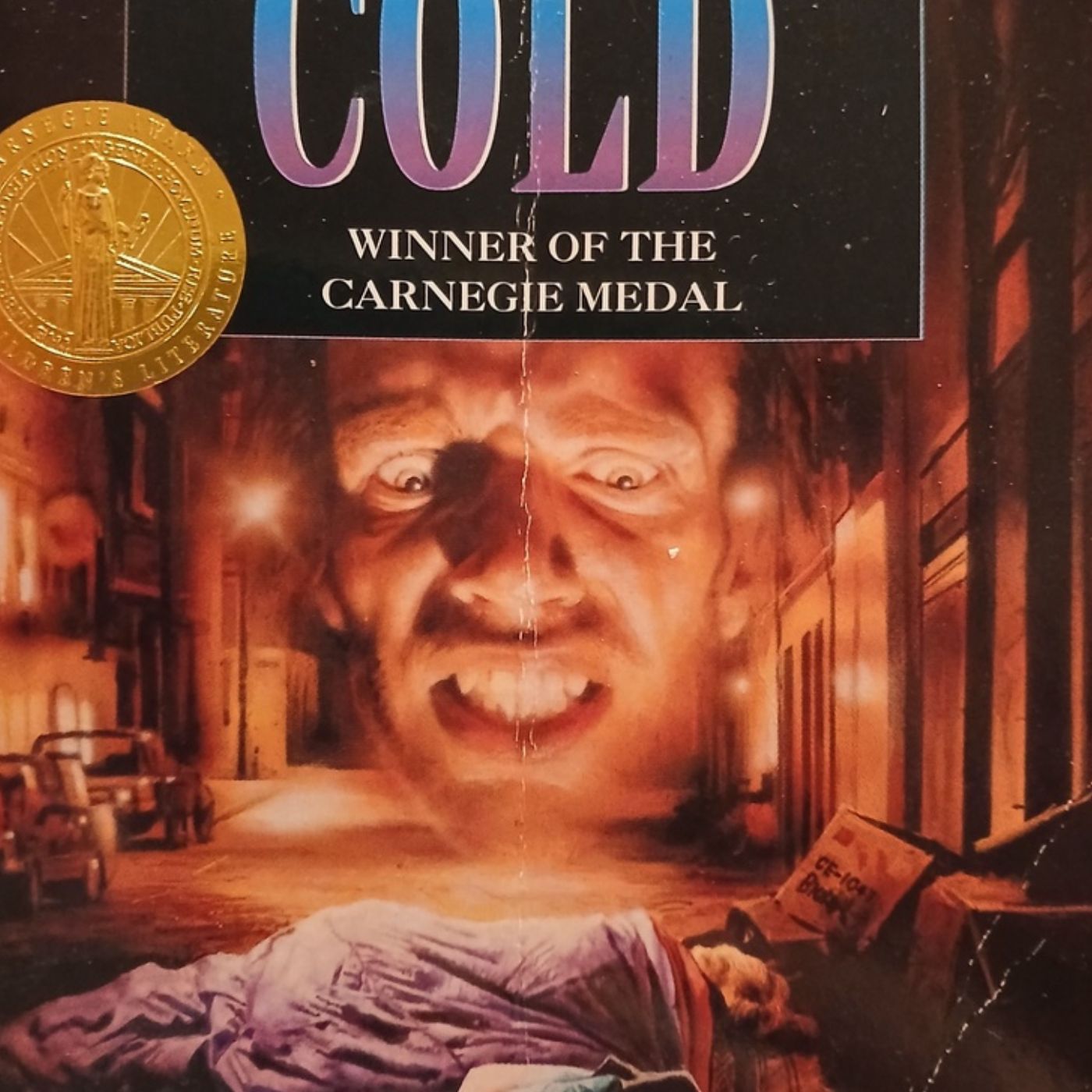
Stone Cold and Hydra
Explosive Denouement! Our email address is stillscaredpodcast@gmail.com and we're on instagram @stillscaredpodcast! Intro music is by Maki Yamazaki, and you can find her music on her bandcamp. Outro music is by Jo Kelly, and you can find their music under the name Wendy Miasma on bandcamp. Artwork is by Letty Wilson, find their work at toadlett.com Transcript: Hydra and Stone Cold Ren: Welcome to Still Scared, Talking Children’s Horror, a podcast about creepy, spooky and disturbing children’s books, films and TV. I’m Ren Wednesday, my co-host is Adam Whybray. Today we’re talking about two books by Robert Swindells, Stone Cold and Hydra. And just a warning, Stone Cold is on the grittier side. There’s a serial killer character and a bit more violent. Nothing too explicit, but it’s not as fun as some of our other topics. Hydra is pretty fun though, so you can skip to the end if you just want that one, at 52.00. Ren: Good morning, Adam! **Adam: ** Good morning, Ren and it is the morning! Ren: It is the morning, for once, we are recording in the morning! Will this make a difference to our output? Let’s see. Today we’re going back to Robert Swindells, who we last talked about in 2019 — Adam: Oh the years they go past! They go past! **Ren: ** They do! **Adam: ** I grow old, I grow old, I shall wear my trousers rolled. **Ren: ** With an episode back then when we were young and dewy-eyed on Room 13 and Nightmare Stairs and we’re back for another double-header today with Hydra from 1991 and Stone Cold from 1993. Two quite different examples of children’s horror: Robert Swindells is a land of contrast. Shall we start with front covers? **Adam: ** Oh yes, that’s a great call because they have a few. Let’s start with Stone Cold. My cover looks like it’s been taken from a computer screen at the back of a CSI episode. It’s just a silhouette, is yours a gauzy silhouette, with light coming in? A sinister, a possibly sinister shadow! **Ren: ** No, I’ll explain what mine is because it’s quite striking. So it’s an illustration by Peter Menim, we have two blond-haired young people sleeping on a city street in sleeping bags in the foreground, one turned towards the reader and the other turned away, and then looming above them is a man’s disembodied face, with a really quite strange expression - he’s slightly cross-eyed, and he’s flaring his nostrils and baring his teeth — Adam Now you’ve said flaring his nostrils, I’m just imagining Rimmer from Red Dwarf — Ren Yeah, yeah, the impression is a bit Rimmer, but also ‘predatory’, but also a bit puzzled. Adam Puzzled?? Ren It’s strange. I might make it the cover image for the episode so people can see it. **Adam: ** Yeah, it’s quite hard to imagine. I think I’ve seen this one before. When you say disembodied, it’s not like a head on a stick, is it floating in the sky? **Ren: ** It’s floating above the ground in the street, it’s filling the whole alleyway. **Adam: ** Oh my gosh, well that is scary. The sub-heading on my cover says: ‘Fear stalks the streets’, and it does seem like your cover captures that. **Ren: ** Yeah, it doesn’t need to say that on mine, you can see. It also has a gold embossed Carnegie medal on the cover. **Adam: ** Ooh. This one just says in a small font ‘Winner of the Carnegie medal’ which isn’t as good. Ren: I was quite pleased with this cover, I think it’s a vintage early 90s one. My Hydra is a re-release that’s very ‘the year 2000’, I think. Adam Oh, how so? Ren Well, it’s this blurry horseshoe crab Xenemorph image. It’s the fonts, I think that’s really making it. **Adam: ** I think I’ve got the same one. There’s been quite a lot of covers for Hydra, some of the translated ones actually have a rather better Hydra. Not that it’s called a hydra, there’s no mention of a hydra in the book at all, I don’t think. And when we do see the creature, it’s not really how I’d imagine a hydra, let’s be honest. Ren: It only has one head, for one thing. Adam: Yeah, surely the whole point of the hydra, right! Is that it has multiple heads! So why on earth Swindells called this Hydra, I don’t know. **Ren: ** One other mention, this made me laugh on the back where it has the blurbs, one of the blurbs for Hydra is ‘explosive denouement’. **Adam: ** I’m sure lots of kids are going to see that at the back, and go ‘Ooh, yes’. **Ren: ** ‘Ooh, an explosive denouement you say’. **Adam: ** Also not quite the Carneige medal winner — runner-up for the Sheffield children’s book award’. **Ren: ** Well, you’ve got to start somewhere. I think we start with Stone Cold and then we can have a bit of a lighter ending with Hydra. **Adam: ** Yeah, so Hydra is the earlier book but maybe he was warming up to the horrors of Stone Cold. But looking at the ‘also available’, he had done - was it Room 13 we did, and Nightmare Stairs — **Ren: ** Yep. **Adam: ** So they’re early ones and they are very much little Hammer Horror stories for children. He’d also done Jacqueline Hyde — which is obviously a reworking of Dr Jekell and Mr Hyde. **Ren: ** gasp Is that what the tv series was based on? **Adam: ** Well, I think it must be, right?* Ren Oh my goodness, yes. Adam I don’t know if that’s a future one to do, that TV series, because the Jacqueline Hyde costume was quite something. Ren It was quite something. This is a real deep cut, children’s TV series. Adam It’s a proper deep cut. Ren British children's TV from the ‘90s. Adam She was really hulking, wasn’t she? Ren: She was, she was quite like the Honey Monster. **Adam: ** Yeah, well, the Honey Monster was developed by the Jim Henson creature workshop, I’ve got this amazing book and the Honey Monster is in it. Ren: Woah. Adam Who knew?! But I suspect the company who made Jacqueline Hyde costume didn’t have that kind of money. But anyway, Swindells would then go on to do both Stone Cold and Brother in the Land. And I say that Stone Cold is harrowing, I kind of didn't want to make you read Brother in the Land because it might be too much! **Ren: ** Maybe it will have it's own episode at some point. **Adam: ** Yeah, we could do an episode on two nuclear wasteland stories — **Ren: ** Wahey! **Adam: ** For the kids. Stone Cold as you say is a pretty grim read, I can’t remember if it was one I read in school, I think it might have been, it had won the Carniege. Do you remember what year it won the Carniege? Ren ’94, or ’93. Adam Yeah, I think I might have done it either at the end of primary or the beginning of secondary school, it might have been a Year 7 book. It had a real impact on me, I found it really gripping and I remember really liking it but I found it really disturbing. I honestly think it properly shaped me, I do think my tendency to chat to a lot of homeless folks might come from having read this book. It definitely made me think about the experience of homelessness and particularly what it would be like to be young and homeless in a way that I hadn’t before, which stayed with me. Obviously I like trash, I don’t think that all children’s horror needs to be edifying or shaping kids into thoughtful socialists of the future, but I do think it’s pretty worthy in the best possible sense. **Ren: ** You can tell from the GoodReads reviews that it is still taught in schools, there’s lots of kids griping about their English teachers **Adam: ** Aw, I’m glad to see that kids are using Goodreads at least, get them off Tiktok and onto Goodreads! **Ren: ** But you can see why it would be a good one to get kids to read to think about homelessness. I was coming to this for the first time, reading it for the podcast. I feel like it was in the school library but I never picked it up. **Adam: ** You are 2 1/2 years younger than me, so I think by the time you got to it in the school library it was probably quite dog-eared. The copy had probably fallen apart. **Ren: ** I remember seeing Stone Cold or Brother in the Land looking very dog-eared and early 90s in the school library rotary stand and thinking ‘nah, I don’t fancy it.’ **Adam: ** You were like, instead there’s this new shiny Artemis Fowl, or something. Ren: Well, there were all the Paul Jennings ones. **Adam: ** Ooh, of course! With their exciting double-covers. I can see how that would have got you. Ren: Possibly venturing into a new horror genre for us, political horror, social horror — Adam: social-realist horror, kitchen sink horror. **Ren: ** Because before you even get to the overt horror of the serial killer — there is a serial killer in this book — there is the horror of Thatcherism, basically. Which isn’t mentioned by name, but is otherwise quite explicitly set-up. Our protagonist is 16 year-old Link, that’s his nickname, from Bradford, and the catalyst for his homelessness is his abusive stepfather, but the reasons why his situation becomes so bad are this spiralling combination of: lack of apprenticeships/job opportunities for young people, predatory private landlords, and the cruelty and indifference of what’s meant to be the social security system, and the messages of right-wing media, all of that. It’s quite explicitly shown to cause Link to end up sleeping rough in London. So we’ve got this dual structure for the book, it’s very short, only 132 pages, but we have alternating chapters between ‘Link’, and our antagonist ‘Shelter’, who is an ex-Army drill sergeant, who has been discharged on ‘medical grounds’, which we quickly pick up from his narrative is code for ‘ being a dangerous sadist’. **Adam: ** Yeah. **Ren: ** And he’s keeping a log called Daily Routine Orders, that are numbered and are his plans to murder homeless children. **Adam: ** And we know he’s evil from the font. Link has a nice humane serif font with curls so we know he’s nice, whereas Shelter has a sans-serif font that is really regimented and orderly, like ‘look at this inhumane robot monster!’. So I could tell just from the font choice! **Ren: ** There you go. **Adam: ** It’s quite useful having the two different fonts so you don’t get them mixed up. **Ren: ** He’s got this very creepy voice that he writes in — **Adam: ** Yeah, it’s hard to place, it’s quite insinuating. **Ren: ** It’s probably worth reading a bit of it: "Daily Routine Orders 2 I’m getting used to my name. Breaking it in like a pair of new boots. Good morning, Shelter, I say to the bathroom mirror. Smiling. Good morning, Shelter. You’re a handsome devil but you’re idle, lad. You need a shave. I’ve been writing it, too, on the backs of old envelopes. Shelter. Shelter. Shelter. It’s starting to look like an authentic signature already. I realize of course that all this has precious little to do with recruiting, and perhaps you think I’m stalling. Putting it off. Not so. I’m merely indulging myself. After all there’s plenty of time. The street people aren’t going to go away, and anticipation is the best part of a treat, as my old grannie never used to say. So it’s a case of wait for it, you ’orrible little man.” **Adam: ** There’s this weird faux-friendliness to it, and this barely-contained rage. It’s good at building this horrid sense of complicity, like he’s talking to you.I think it’s really effective, actually. It’s quite cinematic, this cross-cutting between these two narratives, good for creating dramatic irony and suspense. Obviously we care about Link and want him to be okay, and we know from Shelter’s account that he’s spotted Link and Link is one of his new targets, and he’s stalking him. And so we’re cutting to Link doing things and going about his day, and back to Shelter talking about Link. And obviously from his perspective Link is just this victim or this target, whereas we know Link as a human being. I think it’s really effective, actually, it makes the dehumanisation hit harder. It’s a really clever device and much more effective than if it was just narrated from one of those two perspectives. Ren: So Shelter’s plan is to act the part of the non-threatening do-gooder, dress in cords and sweaters, adopt a cat, and offer street kids a bed to sleep on at his place, then kill them and stash their bodies in the ventilated space underneath the floorboards. There’s some interesting stuff about how Shelter presents himself, the specific person he’s going from. I’ve written homosexual (unthreatening), not to jump too far ahead but when Link eventually ends up in Shelter’s flat he says that this is the kind of man that his Auntie would describe as “a Mary-Ellen’ which is not a mainstream piece of slang as far as I can find. But I think it means fussy, tidy — I think homosexual (unthreatening) is it, and there is insinuation of the other kind of homosexual. **Adam: ** I was also reading it as how the right-wing imagines an ineffectual left-wing tweedy academic, like how so many people found it so easy to be contemptuous of Corby ‘Oh, he’s probably got an allotment!’ Ren: Yeah, that did also occur to me, the Corbyn comparison. Adam: This idea of a soft liberal do-gooder. It’s interesting having this character adopt this persona, because it’s a figure he would be quite contemptuous of, but he’s having to adopt it to fulfil his really predatory desires. **Ren: ** But he also has his own prissiness — Adam That’s true. Ren He doesn’t swear, one of his repeated phrases is ‘by golly I will’, which is really sinister and there’s that touch of this murderer who is squeamish about swearing. **Adam: ** It’s a bit like Annie Wilkes in Misery. **Ren: ** Ah, I don’t know it. **Adam: ** Part of what’s disturbing about her character is that she’s willing to commit extreme violence and be homicidal but at the same time she doesn’t like swearing and uses a lot of this Ned Flanders-style euphemisms. **Ren: ** Link is a sympathetic character, crucially he doesn’t drink or take drugs, which I think is Swindells keeping it simple in a book aimed at teenagers, people are more likely to blame addicts for their situation. **Adam: ** I guess this must have come out around a similar time — was it Melvin Burgess who did Junk? **Ren: ** I learned so much from that book. **Adam: ** I’m trying to think what year - that’s ’96. That’s set in Bristol, with two homeless squatters, teenagers, who become heroin addicts. That’s more complex in terms of character identification. Both characters are sympathetic, but to memory, the male character starts becoming abusive himself — he’s had an abusive father and he hates himself as he recognises that he’s becoming like his father as he descends into the heroin addiction. **Ren: ** I think it’s Gemma who’s the lead in Junk, I remember her being very sympathetic. **Adam: ** Gemma really anchors it. They would be interesting comparison pieces, it’s been a little bit too long since I read it to remember clearly enough, but they would be interesting books to pair together. Ren: It is sort of mentioned in the text, Link meets another teenager called Ginger who teaches him how to live on the street, and Ginger writes a sign for them to hold that says ‘Homeless, non-alcoholic’ and says they won’t give you money if they think you’re alcoholic. So addiction isn’t completely ignored, but Link is quite straightforwardly sympathetic, there isn’t anything to complicate that. **Adam: ** I think that’s true. I guess it might end up being overly complex, obviously one of the complicated things about someone being alcoholic on the streets is that if you go cold turkey you go into alcohol withdrawal which is really risky, even compared to withdrawing from heroin. If you go completely cold turkey and you’re a heavy drinker, you could die. I’ve seen the argument where if you give money to a homeless person for them to buy alcohol you could be endangering their life, but you could also be endangering their life not giving them money for alcohol, to be honest! I could see why he does it, because it’s so often what people use to not engage with people who are homeless, or give money or talk to them, like oh well they’re addicts. And let’s be honest, a lot of addicts, it does tend to go hand in hand with trauma. Ren Oh yeah, absolutely. Adam It would make sense if you’ve been abused or otherwise exploited or mistreated, why you might turn to substances. Ren: As well as the trauma of being on the streets — Adam And being cold! Ren And we can talk about that a bit in the book, because as research Swindells went out to sleep rough in Central London and more importantly talked to homeless people. So do you want to read the bit about where he’s talking about sleeping on the cold pavement? Adam: “If you think sleeping rough’s just a matter of finding a dry spot where the fuzz won’t move you on and getting your head down, you’re wrong. Not your fault of course – if you’ve never tried it you’ve no way of knowing what it’s like, so what I thought I’d do was sort of talk you through a typical night. That night in the Vaudeville alcove won’t do, because there were two of us and it’s worse if you’re by yourself. So you pick your spot. Wherever it is (unless you’re in a squat or a derelict house or something) it’s going to have a floor of stone, tile, concrete or brick. In other words it’s going to be hard and cold. It might be a bit cramped too – shop doorways often are. And remember, if it’s winter you’re going to be half frozen before you even start. Anyway you’ve got your place, and if you’re lucky enough to have a sleeping bag you unroll it and get in. Settled for the night? Well maybe, maybe not. Remember my first night? The Scouser? Course you do. He kicked me out of my bedroom and pinched my watch. Well, that sort of thing can happen any night, and there are worse things. You could be peed on by a drunk or a dog. Happens all the time – one man’s bedroom is another man’s lavatory. You might be spotted by a gang of lager louts on the lookout for someone to maim. That happens all the time too, and if they get carried away you can end up dead. There are the guys who like young boys, who think because you’re a dosser you’ll do anything for dosh, and there’s the psycho who’ll knife you for your pack. So, you lie listening. You bet you do. Footsteps. Voices. Breathing, even. Doesn’t help you sleep. Then there’s your bruises. What bruises? Try lying on a stone floor for half an hour. Just half an hour. You can choose any position you fancy, and you can change position as often as you like. You won’t find it comfy, I can tell you. You won’t sleep unless you’re dead drunk or zonked on downers. And if you are, and do, you’re going to wake up with bruises on hips, shoulders, elbows, ankles and knees – especially if you’re a bit thin from not eating properly. And if you do that six hours a night for six nights you’ll feel like you fell out of a train. Try sleeping on concrete then. And don’t forget the cold. If you’ve ever tried dropping off to sleep with cold feet, even in bed, you’ll know it’s impossible. You’ve got to warm up those feet, or lie awake. And in January, in a doorway, in wet trainers, it can be quite a struggle. And if you manage it, chances are you’ll need to get up for a pee, and then it starts all over again. And those are only some of the hassles. I haven’t mentioned stomach cramps from hunger, headaches from the flu, toothache, fleas and lice. I haven’t talked about homesickness, depression or despair. I haven’t gone into how it feels to want a girlfriend when your circumstances make it virtually impossible for you to get one – how it feels to know you’re a social outcast in fact, a non-person to whom every ordinary everyday activity is closed.” **Ren: ** Thank you, Adam **Adam: ** I think it also captures how much of a dramatic monologue a lot of Link’s chapters are. I don’t know if this was ever adapted for stage but you can imagine it as two competing monologues on a stage. **Ren: ** Yeah, definitely. I feel like you can tell in that extract that Robert Swindells did go and try and sleep on some pavement, obviously going to try out being homeless is not — **Adam: ** Yeah, it’s going to be very partial. **Ren: ** But for writing, quite useful. And as well as all those troubles, Link is having to content with Shelter, whose political project is to lure vulnerable homeless kids to his home, murder them and stash them under the floorboards as his army, where he ends up calling ‘The Camden Horizontals’ which is particularly nasty. He’s cutting their hair post-mortem and dressing them up in surplus army gear. As you said, Shelter briefly encounters Link and Ginger early on when they ask him for money and then laugh at him, so he calls them ‘Laughing boy one and two’ and sets his sights on them’. Shelter tricks him into following him home, telling him that Link is hurt and in Shelter’s house, and when he gets there Shelter kills him. Link is obviously upset that Ginger’s disappeared and doesn’t know what’s happened to him, but then he meets a girl in a cafe, a fellow ‘dosser’ as he calls them, called Gail, and Link is besotted enough that he doesn’t key into the clues that there’s something a bit off about her. They start putting pieces together about Shelter, there’s a few missing homeless kids now, and someone’s seen one of them with a man in his 40s, so they’re starting to put it together. They go to the police, who go to Shelter’s door and he does his do-gooder, big softie act and totally fool them. **Adam: ** There’s a parent looking around, a dad looking for his daughter who we know that Shelter’s killed, so that’s pretty bleak. **Ren: ** Yeah, and that’s another moment of contrast as we’ve had Shelter’s dehumanising narrative about this girl and then we have the father looking for his beloved daughter, so that really hits home Link ends up hanging out around Shelter’s flat, and decides that he’s got it wrong and that Shelter’s harmless, but Shelter invites him in and Link sees his watch on the side cabinet that was stolen by the Scouser the first night he was in London, and then the Scouser was killed by Shelter. Shelter drops the act and it’s quite horrible. "The strength of the insane. I’d come across that phrase, and now I found out what it meant. I’m not a small guy and he was a lot older but I couldn’t break free. I bucked and writhed and lashed out with my feet, but he’d wrapped his arms round me and his grip was like bands of steel. My feet left the floor and he carried me across the room like he’d carried the cat, except he didn’t croon or nuzzle, and when we reached the hole in the floor he threw me down and fell on me like a wrestler. I was pinned, lying on my stomach with my head overhanging the hole. A draught rose from the hole, carrying a cloying, sweetish smell. After a few seconds my eyes adjusted to the dimness and I saw them. There were seven, laid out in a row like sardines. He’d done something to their heads – they were all like his – you couldn’t tell if they were girls or boys – but I recognized Ginger by his clothes. His face was – well, I wouldn’t have known him from that. I gagged, twisting my head to one side. ‘Let me up!’ I screamed. ‘I’m gonna puke.’” Ren: Yeah. Hah. Um… He's saved by Gale coming in, but she's followed by a camera crew. And it turns out that her name's actual Louise and she's a journalist who's been researching homelessness for the last few months before stumbling into the story of a serial killer murdering homeless youths and now it';s her scoop. So, we sort of end on this kind of… Link feeling deeply betrayed and… Yeah, it's a really bleak ending.Adam: It's also really interesting… as is it a mea culpa for Swindells? It's interesting. I don't know if Swindells has a discomfit with his own role as a writer and the fact that he's gone out and talked to or befriended homeless people (as Dawn did) so he can write his book. Or whether he's kind of trying to differentiate himself from a more cynical opportunistic journalistic practice, while as a fiction writer he's doing something different to what someone working for a newspaper would be probably writing. I did find that quite interesting. I don't know if it is a completely unexpected ending because we get some indications that something is up with Gail. She keeps supposedly phoning her “sister” and it is mentioned enough times that we know that it can't be – that she's doing something… talking to someone.I don't know if the betrayal is the betrayal is partly a class betrayal. So, her boyfriend is really obviously written as comfortably upper-middle class.Ren: Link's really upset and he's like, “Gosh, she saved your life/ C'mon”. He doesn't understand; and Gail tells Link her story that she had an abusive step-father as well… so, them being in the same situation.Adam: It's a really interesting ending. Shall I just read the end of it?Ren: Yeah please.Adam: 'Gail' is revealed as actually Louise and gives him some money. And she is a human being and is not some cynical jerk. She clearly does care about what she's doing and has come to care for Link. So, she gives him this wad of bank notes and says she's really sorry. Link says:“Oh, I know. I ought to have chucked the money in her face. A telly hero would have, but then a telly hero doesn’t have to live on the street. Anyway, that’s the sort of happy ending it was. Yeah, but like – justice was done, right? Was it, though? Shelter (that’s what he called himself – they found a sort of log book) – Shelter gets life, which means he gets a roof, a bed and three square meals a day. I don’t.What I hope is this. I hope when Louise and Gavin do their story it’ll have some truth in it and that a lot of people will read it. People can only start to make things better if they know what’s going on. There has to be an end to this some day. I just hope it happens while I’m still around.In the meantime, though, I’m not sure what I’ll do. I can’t stay round Camden, that’s for sure. Too many ghosts. I’d be forever seeing Gail across the street, or Ginger. I might try the Embankment or Covent Garden. There’re a lot like me round Covent Garden. Or of course I could leave London altogether.It’s a free country, right?” Adam: That final line seems like a final jab at Thatcher. Ren: Absolutely. The character of Link is someone who has been shut out of every opportunity. Or, if there might… you can imagine someone saying “There must be some kind of charity that can help him”. If there is… nobody's told him. As far as he knows there is no-one to help him and nowhere to turn. Adam: I respect Swindells for not just giving it a really cosy ending. And actually similar in some ways to Brother in the Land. Brother in the Land, looking this up… it's actually quite an early one, from 1984. So, he had already done more grounded horror – or, like, the horror comes from things that are not too fantastical. I guess you could say he operates in two modes of horror: More fun, escapist horror, and then more gritty horror. Stone Cold is not fun. Did you enjoy it — maybe not enjoy, but did you appreciate it? Ren: Yeah, I appreciated it. It's snappy and compelling and does its job. Adam: Yeah it does what it sets out to do. And it's short, which is always an advantage as a teacher. Ren: Would you set this for Year 7s or 8s? Adam: Yeah I would… there's not much for language analysis, but in terms of structure, and actually talking about structure is something that kids find very hard to do, actually. And where some kids fall down at GCSEs is that they’ve got good at the language analysis but they don’t think about structure and form at all. So actually it could be useful in that regard. And it’s a good little length. The last two years I’ve been reading my way through Middlemarch — Ren Oh have you! I’ve also been reading Middlemarch! Adam It’s so well-written, right! George Elliot is so obviously a genius, and yet it’s so slow. I simultaneously feel — it’s clearly incredible, like every sentence you’re like “Oh George Elliot, you’re much smarter than me!” but also like “How have you taken village gossip and made it into a novel, and it’s this long! How!” **Ren: ** I’ve been reading it since January and I think I’m about 60% through. **Adam: ** Do you know what I mean, it’s kind of a weird thing to read because on one level it’s obviously incredible, it’s quite staggeringly good, it kind of makes Dickens seem a bit juvenile by comparison. Like, okay, these are real human beings, this is amazing character writing. But you’ve got to get into a different head space, or a different time space, I think. Ren: You’re going to sit down for several hours to read this, and by the time you’ve done maybe people may have had some conversations, about who’s leaving who money in a will, or local politics, or maybe Dorothea will have had some feelings. **Adam: ** It’s kind of like a soap, but a soap with some very low quiet drama, and written in the most sophisticated way possible. Ren: Yeah, yeah. Adam: But I mention Middlemarch, because amusingly, Michael Gove said that it should be on the syllabus and taught to kids, back when he was education minister. **Ren: ** Jesus Christ **Adam: ** I was just trying to imaginine teaching Middlemarch to a bunch of 14 year-olds or 16 year-olds, it’s not going to happen! **Ren: ** As I’ve been reading it I’ve been thinking I’d struggle to have read this at degree level just because of the length and the denseness, you know. **Adam: ** I think you’ve got to challenge kids, I like the idea of meeting kids where they’re at, but that doesn’t mean there can’t be some level of challenge in the reading. But you’ve got to be realistic, not Middlemarch! I did read a lot of Hydra with my year 7s last year because we finished what we were doing, basically. We got through a whole scheme of work and there was still four weeks left at the end of the term, so I asked the head of department what we should do now, and he said, “Just chose one of the books we have a whole load of copies of that you want”. So I made my own little scheme of work based around Hydra. Generally speaking, I’d say that the kids were pretty receptive to it. What they didn’t like, interestingly, was the romance element. And as much as this is an alien thriller, it is also something of a romance, surprisingly. Quite considerably, more than you would expect. You’ve got these characters of Ben and Midge, they are friends and they’re only kids. I can’t remember how old they are, 12? **Ren: ** They’re talking about going to secondary school next year, so maybe 11? **Adam: ** I think this is set somehwere with a middle school, maybe. **Ren: ** Ah right, yeah. **Adam: ** Anyway, they’re not that old. I've mentioned this before, but one of the fascinating things I’ve found — and it was probably always the case but it’s got more pronounced. But some of the 11 year olds will make the most awful innuendo and laugh at the mere suggestion of words they’ve heard of TikTok. I’m sure some of them have been exposed to more than that online, but some of them haven’t. But there’s a fair amount of inappropriately sexualised banter that you have to reign in and do safeguarding reports about. And yet at the same time, as soon as there is any romantic, emotional intimacy, either on screen or on the page, they freak out. Like, as soon as there was hand-holding in this book, my word! “We can’t be doing this!! this is innapropriate! Waurghh!” What on earth?? It’s so strange! **Ren: ** Wow, that’s… huh… okay. **Adam: ** It’s very odd. It’s very mild romance but too rich for the blood of the 11 year-olds I was teaching. Unexpectedly that caused a bit of an issue, much to my bemusement. Ren: Bizarre, okay. **Adam: ** We talked about Stone Cold as having a dual narrative, this is incredibly structually ambitious! Like, it jumps between a lot of characters. Ren: It does, doesn’t it? And the first character perspective is the aliens! Adam: It’s not first person but the narrative voice is very closely linked, I think there’s a technical term for it, like an over-the-shoulder shot. **Ren: ** Close third, I think it’s called. **Adam: ** Okay, close third. But as you say it starts kind of with the perspective of the alien, which is cool. **Ren: ** Do we want to read that, maybe? **Adam: ** Yeah. “One. It was sick and hungry and a long, long way from home. It had little brain but it sensed that the tank was a hostile environment and it cruised around the wall, revolving slowly about its axis, bumping the frost-rimed metal till it found the door. As the floater’s soft bulk bumped against it, the door moved. The floater felt the motion and bumped again. Minute ice-flakes, dislodged from the hinges, drifted down, melting in the first waft of warm air as the door swung outward. The temperature inside the tank rose a half-degree. The floaters, half-poisoned by the chemical cocktail mist on which they fed, didn’t notice. As the creature entered the airlock, the woman jabbed the CLOSE button and the door swung slowly, clunking into its housing. Smiling behind her face-mask, she opened the outer door and stood aside. The floater moved out into the barn. Eyeless, it felt the faint pull of starlight and followed, passing through the great open doorway and drifting away in the dark” **Ren: ** Yeaaah! **Adam: ** And that’s a whole chapter! So one thing I like about this book, this is a longer book than Stone Cold, and yet the chapters are very short. It feels quite cinematic, we jump between these different scenes and perspectives. I think it’s a flawed book but that’s one thing I really like about it, it does keep what is actually a fairly slow story quite dynamic. And if we couldn’t picture the floater we have nice little drawings at the start of each chapter. **Ren: ** So this is my favourite thing about the book is the illustrations by Mark Robertson, above each chapter heading of these aliens that are initially described as floaters. They start off jellyfish-like and over the first 30-something chapters they are still these jellyfish but are slowly shedding their tentacles, which is really neat. And between chapters 31-36 it transforms into it’s adult form. So my texture — **Adam: ** Oh, okay, yep. So I was going to sing — I don’t know if this is a bit gauche — (mispronounced) Ren Gauche? Adam (In an aristocratic accent) A bit gauche! But do you know the song Homeless from Paul Simon’s Graceland album? **Ren: ** Not to memory, no. Adam Because it came into my head and you can kind of go: (to the tune of Homeless by Paul Simon) ‘Texture, texture, texture of the week’ But I’m guessing you don’t know the backing vocals? Ren I don’t, it’s been quite some time since I’ve listened to Paul Simon’s Graceland. Adam Well, when I go ‘texture’, you do a quieter ‘texture’ right afterwards, like a call and response thing: Texture Ren (quieter) Texture Adam Yeah, like that but right after it. Texture. Ren Texture. Adam Texture of the week. Yeah, nice! So what’s your texture of the week? Ren So my Texture of the Week is chapter 34 in its entirety. Adam Oh yeah, that’s probably mine too -- yeah, it’s the same, it’s obviously the best texture. I was like: “Can I do a whole chapter for a texture?” but you have too. Do you want to read it? Ren “It was night when the real change came. The terrestrials slept. There was no witness. During the course of the evening the largest floater had risen till it hung just beneath the domed roof of the tank. Spikes like a crown of thorns circled its mantle. It had ceased to rotate. Instead, it began a sort of bobbing motion: ascending a little, sinking back, ascending again, like a boat on an oily swell. As it did so, a shallow depression appeared at the centre of its mantle. Gradually this deepened, so that the creature appeared to be falling into itself. As the hollow deepened, a bump appeared on the floater’s underside, growing as the depression on top became more pronounced. As the process continued, the spiked rim of the floater’s mantle was drawn in towards the centre and the creature’s diameter slowly shrank as it poured its substance into the bump which hung from its underside, elongating like a great glob of wax falling in slow motion from a melting candle. For a while, the creature resembled a monstrous, floating flower, its ring of spiky petals closing. But as the process of change became complete, an observer would have realised that the flower’s head had become a great mouth ringed with spiky teeth: that the floater, by turning itself inside out, had become another creature.” Adam Urgh, gross!! Ren Brilliant! Adam “As it poured its substance into the bump which hung from its underside, elongating like a great glob of wax” That’s horrid. Ren It really is. It’s an ambitious book, isn’t it? Adam Yeah, for a book that’s mostly a lark, it’s not a book of great thematic depth compared to Stone Cold, it is really ambitious. Ren It also does kill a dog. Adam It does! I do wish that the creature had killed a few more — maybe it’s a bit bloodthirsty, but it builds up so much to this transformation, it’s like “Oh my god, it’s on now, it’s ready for a killing spree! It’s going to take over the world!” But it doesn’t get very far. Obviously the martians in War of the Worlds get a bit further, but like the martians they’re not very adapted, they didn’t think it through. They can’t cope with the climate conditions, so once they’re outside of their chamber — Ren They dissolve. Adam They dissolve. Ren I was half expecting them to get into the library. Adam That would have been fun! Ren Because Ben’s mum works at the library and it keeps being mentioned. Adam And as ever with the parents in children’s horror, they doubt the kids! That would have shown them what-for! Ren And we do get a full-page illustration of the monster. Adam Yes, we do. And I’ll tell you what the kids enjoyed. Well, this is interesting to be fair — the copies of this book dated from the ‘90s from when it came out, so they’ve probably been left in a cupboard for the best part of a decade if not more, and I was quite excited about getting to the full-page illustration. And this creature, it’s not really a hydra, it’s like a horrid newt with wings, I guess. Ren Big teeth. Adam The maw is quite bestial, it's like a dog crossed with an eel. Ren It’s quite dribbly. Adam Quite dribbly in the way a dog might be, but it’s also got these moray eel-type fangs. It’s got all this spit coming down from its fangs. It’s got horned wings with spikes coming out of them, and then there’s a kind of dorsal fin coming out of the side, would you say it’s a fin? Ren Yeah… Adam Well, whatever it is, that’s certainly not what — Ren Oh. Oh okay. Adam That’s certainly not what many young people thought it was, and they had extended this extrusion, obscenely, on many, many copies of the book. With anatomy of various shapes and sizes. So this was to their great delight and amusement — however shocked and horrified they were by hand-holding — they were not shocked and horrified by this, quite the opposite. Kids who had copies with the graffiti were very keen to share them around and show everyone. But what really amused me, and I pointed this out to them, is that this was their parents’ generation. And a lot of kids at my school, went to literally the same school as their parents — these could have been drawn by your literal parents! Go home to your dads tonight, ask them if they remember studying Hydra in school, because if so. So I did find that quite funny — an educational bridge connecting parent and child — Ren The generations. And that’s what we call the teacher’s insight. Adam So that was a noisy lesson. It is a really good creature, I just wish it had been allowed to do a bit more. But I did like the fact that the drawing at the end just shows it melted, It’s just a puddle with eyes and teeth. RenIt’s good. Adam It’s surprisingly soppy this book, between Ben and Midge, the two child investigators, and there’s this recurring motif of Midge’s ‘Mona Lisa smile’ that Ben keeps fixating on. So it ends with Ben looking at her and seeing “That smile, that Mona Lisa smile”. And then we get the jawbone of the creature underneath it! I don’t need that association, I’m assuming that Midge’s Mona Lisa smile doesn’t look like that! Ren “… as she unhinges her jaw…” Adam Yeah. The villains are quite sinster, as well. Ren We do have another adult who is quite willing to kill children, in this book. Adam Yes, that’s true. She’s pretty nasty. What’s her name, Wanda Free. Which is a pun of sorts? Ren Yeah, I was wondering if we were going to find out that was a pseudonym because she was on the run from having done NASA crimes, but apparently that was her name, I don’t know. Adam Very odd. She’s a maniacal scientist type who becomes increasingly obsessed with fame and fortune to a degree, but she also becomes obsessed with letting the aliens out into the world and being able to say, “I did that! I let the alien plague upon humanity! Haha!” I think, basically. Ren That does seem to be her deal. Adam And she’s teamed up with a very cynical, greasy journalist type. He’s rich, he owned a newspaper. Exley. He’s the kind of character that Eric Idle would play in a children’s horror film, like in the Casper movie, the Eric Idle character in that. A completely spineless, money-craving — not necessarily actively evil but with no moral backbone whatsoever. Ren Any other stray Hydra observations? Adam There’s a bit, didn’t you mention this, there theres’s a food choice — Ren — Yeah, I feel like tahini gets unfairly maligned in this book, because Exley and Wanda Free move up onto this farm and to make the point that they’re different from the locals, it says that they read the Daily Telegraph and they cook with tahini, which I found an odd combination of cultural stereotypes. Adam I don’t know, I come from the countryside, you’re a Londoner, you and your London tahini, coming down here with your tahini! Ren I feel like it would more be like reading The Guardian and tahini, I don’t know what I stereotypically associate with the Telegraph, what do they eat, Union Jacks. Adam Bourbon biscuits with Union Jacks emblazoned on them. Ren Yeah, exactly. Adam The worst thing to eat. Ren That’s good, end on a lighter note after the gritty realism of Stone Cold. Adam We might always come back to Swindells because he was pretty prolific and generally worked within a broad children’s horror vein. Ren And we were saying before we started recording that if we were a YouTube podcast, our clickbait-y image would be ‘Stone Cold - the book that stopped Adam being a Thatcherite’, with open-mouthed expressions. ‘If it weren’t for this book Adam would be a Thatcherite’ Adam Yeah, that’s how you get them. But as ever, as Thatcher was laissez-faire about economics, so we are laissez-faire about growing our listenership, assuming that the invisible hand of the market will do it for us. So review our podcast, thanks. Ren Apparently some people have, but I can’t see them — Adam What do you mean?? You heard on the grapevine? Rumour has it! Ren It’s on Spotify, but it says "You have to listen to the podcast to review it”, simply making it is not enough. Adam We’re locked out of our own podcast. Ren It has about a four star average, which seems fair. Adam Yeah, I’ll take it. We’re good but we’re not that good. Ren A bit rough around the edges. So, do we have any remaining avenues of self-promotion? Yes, we’re still on Instagram, I do collages. **Adam: ** You do collages! Are you going to combine both these books into one very strange collage? Ren Yes, I am. Adam Great. Ren Also you can email us at Still Scared Podcast at gmail.com. We don’t check the emails very often, but when we do it’s nice to have an email from a listener rather than a spambot. Adam Spambots listen to our podcast too Ren Do you have a sign off for us Adam? Adam Read Middlemarch but don’t eat borboun biscuits, spooky kids. Ren Yeah! See you next time spooky kids! Bye! Adam Bye! **Adam: ** * Turns out, what we were both thinking of here was the CBBC series ‘Julia Jekyll and Harriet Hyde’, which ran between 1995 and 1998 and which was not based on the Robert Swindells novel. There is also a 2005 horror-comedy film called ‘Jacqueline Hyde’, but that doesn’t seem to be based on the Swindells novel either, as that book is apparently a fable illustrating the dangers of glue-sniffing.
Y Mabinogi (The Otherworld)
The Cries of Past Woes In this episdoe we discussed the film Y Mabinogi from 2003.b Our email address is stillscaredpodcast@gmail.com and we're on instagram @stillscaredpodcast! Intro music is by Maki Yamazaki, and you can find her music on her bandcamp. Outro music is by Jo Kelly, and you can find their music under the name Wendy Miasma on bandcamp. Artwork is by Letty Wilson, find their work at toadlett.com Big thanks to Mattie who did the transcript for this episode! Transcript Ren - Welcome to Still Scared, talking children's horror. A podcast about creepy, spooky and disturbing children's books films and TV. I’m Ren Wednesday, my co-host is Adam Whybray. Today we’re joined by Mattie – Mattie – (Mattie makes a noise imitating a dancehall air horn) Ren – To talk about Y Mabinogi, from 2003, a film about Welsh mythology. Full transcript will be available, so check the shownotes for that. (Intro plays) Ren – Good evening Adam Adam – Good evening Ren Ren - Good evening Mattie Mattie – HIIIIIIIIIII Ren – Mattie is here, our Welsh correspondent Mattie – Thanks. Like so many so-called correspondents, I know a bit of something maybe about the subject I’ve been bought in to talk about. Ren - Perfect, that’s what we want to hear! Adam - But Ren, I know you do Welsh on Duolingo, right? Ren – Yes Adam – I’m ready for some pronunciations mate. Ren – Oh… Good. Mattie – I’m sorry to tell you there is not a lot about parsnips in the film, so Ren is at a little bit of a disadvantage. Ren – I am, there’s nothing about parsnips, nor leeks, or the verb To Iron Mattie – Smwddio! Adam – That’s fair, if I’m not talking about different coloured potatoes I can’t talk Czech very well. Ren – It’s less hot now because it’s half seven, but it has been very hot here, so we’ll blame any lapses in concentration, or knowledge, or Welsh pronunciation- Mattie – Or English pronunciation, to be fair, you’re gonna get what you’re gonna get. It’s live, sort of. Adam – I guess one of the consequences of climate change which maybe hasn’t been taken seriously enough, the impact on our podcasting abilities. Ren – Yeah Adam – Where’s that in the UN reports? Mattie – I like the way that you said that like those adverts for like, for £4.99 a month you can rescue this donkey from weird donkey hell, which no one is where it is or why it exists. For £5 a month you can mitigate climate change consequences against podcasters. And, like, its absolutely a money laundering scheme Adam – So, today, as far as I can tell, things were left on a slightly uncertain note, although it was a kind of “escort you to the door” level of uncertain note. I might have managed to basically have lost a job before I actually got to sign the contract. Mattie and Ren – (sympathetic groans) Mattie – I mean, speedrun strats? Ohhh no Adam – Yeah, because, you know, and this should get some subscribers, right? I’m donating a kidney! Ren and Mattie – Yay! Ren – He is! Adam – Which is great, and is going to be very helpful to the recipient, but I’m afraid a HR department does not consider it so good, because it means I’d probably have to have cover for like 2 weeks. And I’m afraid that doesn’t cut it in the harsh world or HR by the looks of it. But, but, that’s okay because I’ve been cheered up by a film about some bickering siblings in ye olde Wales. Ren – 2003, to be precise! Mattie – So much happens! Did you watch the Welsh version? Adam – Yeah Mattie - Like the Welsh language version with the live bits. One of my favourite things about it is that it does demonstrate what I have asserted about Pembrokeshire. Pembroke in the early 2000s, all the fashion was current, everything else was the 70’s Adam – okay, so, Mattie, do you want to introduce this film? Is this a film you suggested to Ren or is this a film Ren that you came across. Ren – Mattie suggested it Mattie - Yeah, this is my fault. Yeah, I can’t actually remember how I’ve seen this. I’ve definitely seen it multiple times. It’s possible, my secondary school had the local cinema in it, because it needed to be somewhere, and it’s possible when it came out we were all herded to watch the big animated film in welsh. Adam – I mean, there is, lets get out the way what is the name of the film? Mattie – It’s name is Y Mabinogi, the English translation was called The Otherworld, I’ve never actually seen a title card for it called anything other than Y Mabinogi. It’s based on a series of Welsh tales from the Middle Ages, with a, I don’t know, does it count as a modern twist? A modern bookend? Ren – Yeah, a modern framing device? It starts in live action, ends in live action, and the bulk of the film is kind of animated, sort of rotoscope. Adam – Yeah, so there’s bits of rotoscoping, possibly some traditional frame animation, and occasional bits of CGI Ren – Mmmm, And rotoscoping, for people who don’t know, when you draw over the live action film. Mattie – Yeah, you kind of film a film, then trace over it and make it cooler Adam – Yeah, it’s why Snow White in the Disney original Snow White and the Seven Dwarves looks all kinda loosy goosey and fluid compared to some of the other characters. Or kind of loosey goosey, no, I don’t know if that quite right. Anyway, she was rotoscoped and the rest of the film wasn't Mattie – Huh, I didn’t know that Ren – Ralph Bakshi’s Lord of the Rings is another well known, question mark? Mattie – Other film that is – Adam – Did you just laugh at the mention of Ralph Bakshi’s name? Poor Ralph! Mattie – No, Ralph Bakshi had exactly the life that he wanted, that dude is fine Adam – Making troubling problematic weirdly animated films Mattie – Yeahhhh. And this is a, this isn’t Ralph Bakshi weird, but it’s a pretty good… So the Mabinogion is a collection of the early, well some of the earliest Welsh prose stories, and they were compiled in the 12th and 13th century from different sources. This is basically an example of oral tradition being written down. So on one hand you have, when oral traditions are written down often there are lots of things that don’t necessarily get included cause everyone knows the story, because it’s an oral tradition. So beyond the fact that over history details get lost, or context is lost, there’s also just an amount of like, why were they being written down why were they being collected in forms, what gets written down? They’ve also gone on a wild journey of, well, the Victorians got them for one, and Victorians loved adding stuff to things. So, um, this film is brilliant, and does a, in as far as it’s a bit, it can be a little difficult to follow, that’s actually a pretty decent representation of the stories. Both in as far as, life as we live it is a bit intense, life with a bit of magic in it is going to be a little more intense, and yeah. Just the way that they’ve been transferred through history has… yeah. Does that make sense? Adam – Yeah, that helps explain to me, I’ve written down a note of how fast things erupt into chaos. If that makes sense? Mattie - Yeah Adam - So, like, you’re getting characters doing something and then it’s like suddenly everyone’s killing each other. It’s like, what? It didn’t take much provocation! Things are on fire and it happens very quickly! Mattie – Yeah, and presumably if you were telling these stories, if you were an oral story teller, if you needed to keep a bunch of people really interested for 4 hours, and if you needed to get peoples attention immediately you’d go to the bloody bits pretty quickly. Adam – Yeah Mattie – So, like, there’s lots of different ways of telling these sorts of stories and the people who were being told the stories knew what it meant. In the same way as, like, I dunno, the villain’s always backlit you know? We know the villain’s always backlit, and humans throughout history have had their ways of showing “this is the bad guy, I don’t need to tell you he’s the bad guy, he’s 12th century Welsh backlit”. But that doesn’t necessarily translate to someone coming in with no previous knowledge and seeing something on the screen. So it is kind of like, I really strongly recommend watching it, but it is very much one of those like, just watch it for what it is and let it wash over you. Don’t look for plot holes, don’t try, just try and experience it. Experience my weird culture. Adam – Do you think this was made, cause I don’t know anything really about the production apart from what I read on Wikipedia, and you mentioned that you think you watched this in school. And I did note down early on that it does have a bit of a Look and Read feel to proceedings. So, for those of you outside of the UK, Look and Read was a kind of, I guess, government initiative TV education scheme that was bought into schools, primary schools, for English teaching and to increase vocabulary. So the one that I’ve mentioned before that's really stayed with me is through the Dragons Eye, which starts off, I mean it’s all live action, but it starts off in a playground and then this girl, there’s a painting of a dragon, a mural on the outside school wall of the playground and then the dragon winks at them and comes to life, and beckons them into the enchanted realm. So they kind of go through the Dragons eye into this fantasy land, then it kind of focuses on teaching you very important words. Like vetacore, which is the source of all power within Palamir, the magical realm of through the dragons eye. So they’ll say “Vetacore, V-E-T-A-C-O-R-E. Vetacore.” But, yeah, so, this to me had, I think it was probably that live action book ending, that was sort of starting with these characters, and clearly we’re meant to realise at some point that problems in their lives are mirrored by the problems in the lives of these sort of early-Medieval Welsh characters. So its like “Ahh!”, you know, so one of them is anxious about being pregnant and then there’s pregnancy issues going on in this. And another character finds out that his parents aren’t who he thought they were, and he’s adopted. And then we’ve got a mythical character who is adopted. So you’ve got mirroring between the live action segments and I did wonder if that was deliberately to try and say to teenagers watching, like, “hey, look, you see this stuff is relevant, not just old stories, it relates to your own lives”. Mattie – I, well, it’s interesting you say that cause the live action bits at the start, I don’t know. So this is absolutely supposition, but they really have the vibe of teen, like Welsh teen drama. Wales has a Welsh language television channel called S4C and it is government funded and it has all the things that a television channel would have, including the Welsh equivalent of Byker Grove, the Welsh equivalent of Top of the Pops, the Welsh equivalent of Newsround. And the segments at the beginning and the end of the Mabinogi really reminded me of the admittedly quite small amount of that I watched as a teenager. Because obviously like, it’s government, it’s, I don’t mean government like “The Man is controlling your telly!”. I mean like it’s message driven television, there’s not advertiser led, it’s very like – Wales is not a big country. Anyway. Part of me wondered if the reason that was the way it was was that was how people were writing teen stuff. But, what you were saying about, what was it? Adam – Look and Read Mattie – Look and Read. This film was made in 2003 but it’s based on a comic book by Mike Collins which was made in 2001, and he actually worked, probably still does actually but I can’t be sure, but as a key illustrator for Welsh language school books making comic strips for reluctant learners. So I don’t know if there is a connection there other than that’s a sweet little coinkydink. But this film is based off a comic book based off of Y Mabinogion and basically any contemporary work that’s based on those texts is usually based on a more contemporary translation. Like, you can go to Aberystwyth and like, and the big ol’ books are tucked away in a library somewhere in Wales, I think in Aberystwyth, but like people don’t work off of those, they work off more contemporary translations. So again it is that, like, message through different mediums through time. Adam – I mean I also noted that, and this is the first note I made, that it had a bit of an animated Shakespeare vibe. Mattie – Yeah Adam – And it turns out that it’s something like the same production company, or at least some of the people who were involved in the animated Shakespeare, I think the Tempest which is actually very good. Mattie – Oh yeah! Adam – And, yeah yeah, I really like that one. And A Winters Tale, was also involved in this. So yeah, there is a loose connection to Animated Shakespeare which again maybe gave it that slight educational feel. Ren – Yeah, it’s certainly got an educational flavour to it. Adam – Which I say, I don’t necessarily regard as a bad thing. I think on this podcast I’m on record saying that I’m very actually fond of edutainment. The animated version of The Tempest from animated Shakespeare, whenever I’ve taught the Tempest I’ve used it. I think it’s really wonderful piece of stop motion animation. Ren – What we haven’t mentioned is that one of the young people, one of our teens at the beginning is a young Matthew Rhys, with frosted tips Adam – Oh! I didn’t notice! Ren – Yeah, off the Americans and other things that aren’t the Americans but I just associate him with the Americans. Mattie – I know, just the idea of headcannon consistency that Lleu ends up defecting to Russia and ends up doing terrible things. Adam – The live action segments, I don’t know if they’re wholly necessary. There’s another version, there are two versions of this uploaded to Youtube, one which is in its original Welsh language and another which is dubbed, and the dubbed version only has the animated segments interestingly, it doesn’t have the live action bookending. Though the live action bookending does seem to be connected to myth, and a kind of myth that reminded me of Laputa, the Castle in the Sky. I mean I know, and I only mention this because I know Miyazaki quite likes his European and his, I think of, Welsh influences, Diana Wynne Jones adaptations, obviously Howls Moving Castle and possibly Mary and the Witches Flower. But yeah, this idea of an island that kind of appears at certain times, a floating island that appears at certain times, which you have in Miyazaki. I did wonder if he took that from Welsh mythology because there’s this portal, as far as I understood it, into this realm of the past, this island that emerges, Atlantis like, from the sea off the coast of Wales or something? Mattie – They’re at Grassholm Island, that seems to be where they’re going, which is past Skomer Island off the southern end of Pembrokeshire. And there’s a little bit of text at the end that goes into it a little bit more. I wasn’t totally clear whether the portal was an island that appears and also there’s a real island. There’s quite a few islands that appear out of west Wales, well out of the Irish sea essentially, so it’s entirely possible Miyazaki got it from one of them. Pretty sure we’ve got at least two. Adam – Yeah, I quite liked that. And then you get this strange bit of animation where the live action morphed into rotoscoping. Mattie – And where Matthew Rhys just cannonballs into the sea! Which I did enjoy. Just grab your knees and just fling yourself into Mythology time! Adam – But it is quite odd, right, it’s like the live actors are just trapped in their animated forms. Partly because it’s rotoscoped, partly because it's very unclear as to whether they’re inhabiting these mythologic ancient figures, or whether they’re just observing what’s happening. It seems like they’re experiencing what they experience vicariously or something. Mattie – If I had to guess, and I haven’t been able to find much information, but if I had to guess, the live action bits are only in Welsh because they were for a Welsh domestic audience for teens to watch on telly. And so that was just a bit of extra messaging in there and making it extra relevant and interesting. Adam – Yeah, yeah Mattie - Or ticking whatever “we need to tell the teens not to have unprotected sex” messaging there needs to be. Because I love that she’s “Oh no, I had sex last night, guess I’m pregnant!” Like, it’s 2003, there’s plenty of things you can do. It’s not like “Oh, I guess I’m a mum”, no, that doesn’t, alright then. But the dub, it’s pretty much the same actors doing the dub, because the vast majority of Welsh people can also speak English, and all Welsh actors can also act in English, and in Welsh if they speak Welsh. So I imagine it was either they didn’t want to re-record the live action bits in English, or this is not relevant to a market outside Wales. This is just here because we’re talking to the youth, but the grown adults buying the DVD do not need to know about this guy finding out that he’s adopted. Which does mean they miss out on one of the best bits of the whole thing, which is the film, which is the blue camo print Lada Riva estate at the start, which is the best car that’s ever existed. Ren – See, we don’t often get car talk on this podcast! Adam – Yeah, I mean, have you ever seen the Phantasm films Mattie? Mattie – No? I’m excited for possible Ladas though! Adam – Because me and my friend Andee, who is the landlord of the Brewers Arms in Ipswich and has his own podcast Beyond Graves and Stars, or possibly the other way round. But anyway, we’ve been reviewing the Phantasm franchise on there, the idea is he kind of likes to review horror series that have a whole bunch of sequels. Mattie – So, like the Kamen Riders of horror? Adam – And Phantasm has a whole bunch of sequels. But, doing the podcast, well one thing I’d read about Phantasm is that petrolheads really like it because apparently the models of cars are very specifically chosen and there’s quite a few car explosions. Me and Andee, neither of us drive and I don’t know anything about cars, so I’m very aware that there’s probably a whole bunch of people in there listening to it who like Phantasm because of the cars and we’re just like “don’t have any idea what model car that was.” Mattie – Excellent Adam – But there aren’t any cars in the animated sequences because we’re in the ye olde mists of medi– I mean what century are we dealing with here? Mattie – errrrr Ren – Twelfth? Mattie - Somewhere between Dinosaur Time and now. Yeah, we’re looking medieval, these were written down, collected in the twelfth and thirteenth century. Adam – This is clearly a period where there were clans. That’s what I gather. I’m picturing it a bit like the Scotland of Macbeth, right? That there are lots of clans who occasionally fight each other. Ren – Yeeeeeah? Adam – I mean, I’m no expert here! Mattie – No, no, you are pretty much spot on, in as far as, like most, we’re sort of pre the modern concept of nations at this point. We’re probably looking at, blueeeeeeegh, about 1040 or something til about, yeah, we start knocking up against the annexation of Wales. So yeah, 11th and 12th century. And yeah, there were just a lot of different kingdoms within kingdoms within kingdoms within kingdoms, nesting like little Russian dolls. Adam – Yeah and because of that I found it quite hard to follow some of the geography but I got as much as there seemed to be a lot of fighting between Welsh clansmen and Irish clansmen, I think? Mattie – Yeah. So, it was broadly set in Arberth, which is in Pembrokeshire, and they were up North for, they were in Harlech for the bits with Bendigeidfran the giant and fighting the Irish, they were in Gwynedd for Pwyll (n.b Mattie misspoke here, he meant Lleu Llaw Gyffes). So they’re in three geographic areas and then ‘cause Wales isn’t very big some of the people turn up in some of the other areas. It doesn’t take long to get around to be honest. So, the three characters have the places where their stories are based, and yeah it does just kind of throw you around and exposition text comes up and says “you’re here now” and it’s just like “Cool” Adam -But this giant, so what’s the giants name again? Mattie – Bendigeidfran Adam – Okay, so Bendigeid-. Sorry, Ben-Dy-Geid-Fran? Mattie – Yeah, you smashed it mate. Adam – Sure, okay, alright, he’s not always been a giant as far as I can tell. It seems like he started off like a regular man and then, Incredible Hulk like, got so angry he became a giant, am I right? Mattie – I mean, he was always- Ren – I think he was a big guy! Mattie – He was always, like, would make the Undertaker look like a normal sized human. And when he’s mad gets like I dunno, “I’m a ship now” big. Adam – Yeah, that’s quite a big difference! Mattie – I think the implication is that he’s like maybe about 8 or 9 foot tall, which is pretty giant, and gets engianted when you lock his sister in a kitchen. Adam – So, so, yeah, why did he get so angry? Ren – Well. He gets so angry, because, this is the part that Dan is involved in, who is one of our teens. Mattie – Love Dan. Dan’s the best. Ren – He’s not as central to his strand of the story as the other two are. Well, he gets more important. Adam – Okay Ren – To begin with he’s sort of there as part of Bendigeidfran’s entourage. Mattie – He does, well he is one of the brothers. And he consistently has the most sense out of everyone. Which I really like about his character. Cause, if you’ve got the live action bit, these three people are learning about themselves through the medium of their experiences in mythology, and mostly what Dan seems to learn is “Oh, I’m not actually an idiot, I’m just a bit late for stuff sometimes”. But he does do his best to prevent multiple international incidents. Ren – Yeah, cause the King of Ireland, Matholwch, appears off the coast with a fleet of boats and says he wants to marry Branwen, who is Bendigeidfran’s sister. And so they’re like “Well, this does seem like this would be good for relations between our countries, so sure”, but… Mattie – But they have a really angry racist brother called Efnysien who they’re like “I’m sure if we arrange a wedding feast to marry our sister to the Irish, who he is super racist about”… Adam – He really, really hates Irish people… Mattie – “…He won’t find out and do anything.” Yeah, he’s not about them. And they’re like “Ahhh, no but, this is a good decision, it’ll be fine.” Like, everyone has someone in their life who really doesn’t like conflict and thinks that if they just try hard enough, they can make reality not involve people doing unreasonable things, and this is the very extreme “No, no he’s going to lose his temper and stab all the horses”. Ren – Yeah, Efnisien stabs all the horses. Adam – I guess this is where the horror comes in. Cause at first I was quite confused, well not confused because it’s an interesting animated film that’s vaguely for kids, but like obviously at first I thought “this isn’t horror”. But I think the aspects that make it, and maybe it’s more dark fantasy. But I think, I mentioned how fast things erupt into chaos and I think it’s that which is horrifying. Because things are just ticking along and then suddenly things are really bloody and violent! Ren – Mmm, horses are being slashed. Mattie – Yeah, and it is one of those things they don’t go into because the film would be about a million years long. But for us obviously, those horses didn’t do anything wrong, that’s horrible that you slashed up those horses, you’re a bad person. But horses are incredibly significant in Irish culture, and lots of cultures. They’re big strong powerful freedom providers. If you imagine how adverts want us to feel about cars is how people actually feel about horses. They are, who you are when you’re on your horse is the true completion of you. That is agency, that is power. And, you know, connections to, cause horses are pretty, I don’t know how much time you’ve spent around horses but they are pretty magic. Destroying things that are, like, holy to you. And that it’s so wanton and violent. It’s really intense. Which they do not make a big deal of because as I am explaining I’m like “Man, I am saying too much”. So they’ve got to be like “ The man cut up the horses, it’s not good to cut up the horses”. Adam – Okay, so, is this, and I’m sorry I’m asking so many questions. I think part of recording this podcast is just trying to make this film clear in my head. Because not knowing really any Welsh mythology going into it, it was quite a confusing experience. Not a bad experience, and as you say, like, maybe it makes sense to have the telling of these stories be rhythmically a bit weird, like rushed in some bits, and then slowing down, and then really fast, that makes a certain amount of sense. But it means the experience of watching it if you’re not familiar is sometimes a bit overwhelming and confusing. So, was the killing of the horses something that then prompted the appearance of this wicker bone headed horse monster? Mattie -The wicker bone headed horse monster is in the other story that’s in, the first story that begins the film that’s down in Narberth. Which is funny to me because that’s the town up the road to the village I grew up in. It’s like I know Narberth, I’ve sat and drunk cider in that castle. Adam – Does that creature have, I just thought it’s like a hobby horse, that’s the name I think when I think skeleton horses. Does that have a special name? Mattie – Not that I can… It’s worth, as we said at the start while we were setting up and trying to work out how to make microphones work, I sound really reassuring and like I know what I’m talking about. But I want to be very clear, I am not passing on any scholarship here. I’m passing on what is in my mind and my person from being, from having all of this stuff be part of the general sea water that I was raised in, the briny soup that I rose out of. Ren – That you were pickled in. Mattie Yeah, it’s the pickle brine, this is the mustard seeds in the pickle brine. And I would highly encourage people to check out different translations of these stories and find out more. But, if anything I say sounds really good, just treat it like I’m just another oral story teller telling the story, that doesn’t mean I’m telling you anything accurate. Adam – So, did anything cause that creature? Did anything make it or did it just appear like some sort of agent, is it like Grendel in Beowulf? Just this monster? Mattie – Are you talking about when it comes and nicks that baby? Adam – Yeah! Mattie – Well that’s cause Rhiannon was meant to marry one dude, but she didn’t want to marry him, so she went and found the other dude and went “What up, do you want to marry me?” Well, “ What up, do you love me?” and Pwyll was like “Well, I’d be a fool to say no wouldn’t I, so yes, I do.” So there was a bit of a, it’s Red Wedding situation, actually, wherein you were meant to marry one person, and you married someone else, and the baby getting stolen was a bit of a like, wizardly consequence of that. But not the wizard later, a different wizard. Adam – Okay, yeah, I guess I just sort of, what’s it got to do with you bone horse? You just seem to appear and be really awful. Oh my gosh, it’s just taken off this poor baby. And I’m like, Why? What’s it doing? And this is a bit of CGI animation, so it looks pretty, pretty demented. Ren - Yeah Mattie – Yeah, doesn’t it look so much better than it has any right to? Adam – Yeah, it looks pretty cool. Can we do texture of the week? Cause, you know. Ren – Yeah, yeah lets do it! Adam – What… Is there an obvious translation of Texture of the week into Welsh? Ren – [Villainous chuckle] Mattie – Errrrrrrrrrrrgh Adam – Sadly we’re not using the webcam so I can’t see Mattie’s expression at my very reasonable request. Mattie – I mean, like, there is. Do I know it? Mmmmmm, that’s a, that’s a beautiful question. Ren – Penwythnos. No, that’s a weekend. Mattie – Penwythnos. So if Pen is end… Ren – Yeah, wythnos. Mattie – Boom, got it. Ren – It means week. Adam – So what do we need to say… Mattie – Yr wythnos, of the week. Um, I cannot remember off the top of my head what texture is though. So “Tecsture”. Tecsture yr wythnos. Ren – Eyyyyyy! Adam – Oh! That’s nice Mattie – Just take the English word and say it a bit Welsh. It’ll do. You can fix it in post! Adam – I thought that sounded really nice! Ren – Thank you Mattie. Adam – Thank you, yeah. So mine is wicker bone headed horse monstrosity. Because especially as rendered in early 2000s CGI, it looks incredibly metal. It looks like it’s just stepped out of some kind of ridiculous nu-metal music video, straight into the medieval Welsh past to snatch up babies and cause havoc. Mattie – Yeah, it does look like the back projection for some profoundly problematic doom metal band. Adam – Yeah Mattie – That thing’s just in the background destroying stuff whilst they play 40 minute long songs that absolutely slap and then you look up the lyrics and you’re like “Oh No. Oh, that man went to prison for reasons why people should go to prison.” Adam – Yeah, but anyway, I was all there for it. You could imagine it as some sort of terrifying puppet on stage. Ren – My texture, they have some little bits of interstitial bits of live action scenery, that fades back into animation. Adam – Oh yeah! They do actually, it’s quite odd. There’s some kind of, I don’t know if it’s bones or just like charred ashen ruins. Ren – Yeah, that was the bit, kind of blackened charred wood that then turns into a crows wing. I thought that was pretty textural. Mattie – Yeah, that’s after they burned down… I love that the Irish are like “Aww, can we make up imprisoning your sister for you by building you a Big House? Build you a Big House that you fit in, and then it will get burned down.” For me, it’s right towards the end, when Lleu Llaw Gyffes has continued having the most bewildering time, just absolutely bewildering, and he’s a hawk tucked up in a tree whilst his adoptive Mum-Dad Gwydion the Wizard is like “Look mate, I’m really sorry but I love you, could you come down here so I can make it so you don’t die”. And he’s just up there like “I wasn’t equipped to deal with where we started with this and I am not equipped to deal with where it’s ended up, but actually yeah I would like a hug”. And there’s something about that that really gets me. And Gwydion just being like “I’m sorry you’ve never really had a choice and this is your first go at having a choice. Will you please come down here so I can make this better?” I don’t really know if that counts as a texture, but tree leaves and my own tears would be my texture of the week. Cause yeah… yeah, how are you meant to know how to deal with that? Ren – This is the third strand, this is Lleu, Matthew Rhys, who in the real life beginning finds out he is adopted. So his Welsh fantasy counterpart is also dealing with parental woes. Mattie – Yeah, there’s a lot to unwrap there. Cause there is really something to be said of Gwydion, Gwydion being the mage, or wizard, who takes care of Lleu. He kind of is that archetype of a parent who’s really really good with kids but doesn’t quite understand that one day they’ll be adults and you need to prepare them for being adults. But yeah, poor Lleu was a child born in shame who’s mother was like “I’m not having anything to do with this, get my trauma baby away from me!”. And within his culture the only person who can name a child is their mother, and the only person who can give them arms, weaponry, make them a warrior, is their mother. [ Note - Mattie is wrong here, actually Arianrhod cursed Lleu with three “tynged”, social prohibitions or taboos, on him. One that no one but her could name him, one that no one but her could arm him, and finally that no woman from any race that was on the earth then would be his wife.] His mum didn’t want anything to do with him, so Gwydion finds ways of tricking her by using illusions to make it look like the child who will be called Lleu are different people. In the first case, we were talking about it earlier, he’s clearly decided what he wants this child to be called, and so engineers a situation that's really long winded. “Ohhh,. He just pinned a sparrow to a piece of wood with a pin from 300 yards. He’s good with his hands, isn’t he. Would you call him Mr Good-with-his-hands? AHA! That’s his name now!” There really is a great deal of someone's good intentions really colliding with their lack of emotional intelligence to create a bit of a compounded omnishamble of this young man's life. Ren – Yeah, both Lleu and Rhiannon have a difficult time in the otherworld. Rhiannon’s baby, well the skeleton horse monster tries to steal her baby, but actually the skeletons hand is hacked off with the baby inside, but they don’t know that the baby is still alive. Mattie – So yeah, skeleton horse monster hobbyhorse, if you will, steals the baby, makes all the nursemaids fall asleep and nicks the baby, and then goes to try and steal the foal of a friend of theirs, who’s gone back to make sure his mare foals safely. And the man is there looking after his horse, horses, you’ve gotta look after them, and he hacks off the hand of the terrifying monster and is like “Ohh, a baby! Guess we’re keeping it!” Cause him and his wife haven’t been able to have children, so they’re like “well, miracle horror baby is here, might as well look after it.” And then, considering that he saw Pwyll and was like “Oh, gotta go home and make sure my mare foals alright, see you later!” and then doesn’t come back for seven years… Ren – Yeah, when the nursemaids wake up and they find the baby gone, they decide they’re all going to stick together on the lie that Rhiannon destroyed her own baby. So they sort of, so this is some more horror… Adam – Yeah, this is quite distressing actually. Ren – So they get some animal blood and put it on her and her hands and she wakes up and they’re like “don’t you remember what you did?” Mattie – Yeah, they basically gaslight her into thinking she had some sort of terrible post-partum psychosis and her husband never believes that that is the case but the court of their community finds her guilty and her punishment is to sit at the gates of their settlement and tell everyone who comes what she did. And she gobs off, as you would!, and an additional punishment is put onto her that she has to carry everyone who comes to visit the court on her back for 7 years. So, your man with the foal, who ended up with the baby, comes to visit after 6 years and is like “Oh look, this child sure does look like my old friend, maybe I did kind of know about this”. Ren – Yeah, at which point, reunited with Rhiannon and named Pryderi? Mattie – Yeah. In a very lovely… so Pryder is, like, a worry or a care, as in “you’ve got all the cares in the world”. And she’s just like “Well, you coming back has taken them all away. So you are all my cares, it’s all redeemed in your return.” Which is lovely, and also woooooooow, that is some taking the high road there. I do note that those nursemaids are not seen again. I don’t remember what happens to them, but they’re gone. Ren – Meanwhile in Ireland, Branwen is being punished for the horse killing actions of her… uncle? I think he’s her uncle? Mattie – I think he’s her brother. So, after horse-gate, Branwen has been married to Matholwch, and he’s like “Why would you do such a humiliating thing after I’ve married your sister?” and they're like “We didn’t plan this, he’s a nutter, can we just give you this ominous magic cauldron to make it up to you?” and he’s like “Yep, we’re sorted, it’s all good, we will not take any vengeance.” And that’s a recurring theme in this, because it’s something that is very important in sort-of clan based cultures, in modern times as well as in the past, is “If you say we’re good then we’re good. And if you say we’re good in front of people then we’re good. And if you go back on that…” It’s important that stories contain the consequences of going back on your word that we are forgiven. But yeah, going back to Ireland and decide “Actually, we’re not good, let’s take it all out on the sister.” So they separate her from her child, and she works in the kitchen and is abused the whole time. She nurses a starling back to health and sends that starling back over the Irish sea with a message to her giant older brother, who becomes Very large, really very large. Ren – Yeah, and stomps across the sea. Adam – And then becomes a bridge! And says “The one who leads must be a bridge!” And I assumed that was an emotional bridge, or some sort of moral, but no! I should have taken that far more literally. The one who leads must become A bridge! Mattie – Fun fact! So, when I was in primary school, I was quite tall for my age which, in combination with the amount of group performance that was involved in the Welsh education system, would mean I was included in things because it was handy to have a girl that was quite big and who was quite biddable. So I featured in the school choir as the point of the triangle but wasn’t allowed to sing. And in a performance of a long spoken word poem about this, about Stori Branwen, I was Bendigeidfran and had to be the bridge. So, like, we were all stood together reciting this poem really dramatically, and at this point I would then step to the right, then lie down on the floor and be a bridge and everyone else would march. Next to me, thankfully, not over my body. Adam – Oh good, yeah! Mattie – But just sort of march next to me. And then I think I’d sort of get up again and then stand next to them, and then die. Ren – Amazing. Mattie – And all you’ve got to be is like 5 foot 8 when you’re 10 and this could all be yours! Adam – You too could be a bridge! Mattie – You too could be a bridge and an apex! Ren – Yeah, when the Irish crew see this increasingly giant brother they decide… Mattie – “Oh no. We made a mistake.” Ren – Yeah, and they said “How about we’ll build you a giant house.” But then they sneakily decide to hide men in the house. Adam – As bags of flour or something? Ren – As bags of flour. Adam – Cause there’s a horrible bit where one of them [inaudiable] “Oh, it’s just a bag of flour!” and crushes the person inside the bag to death. Ren – This is our friend Efnisien the horse slasher. He’s not convinced by the good intentions of these Irish people. Mattie – Yeah, he’s like “That’s some lumpy flour.” Ren – And he just goes round methodically crushing all of their skulls, the men who were hiding in the flour sacks. Adam – In the original Welsh version it also had subtitled sound effects. It said “Sound of body being crushed.” Mattie – Yeah, the subtitles were a hilight for me, it was memory lane, Ceefax 888 Welsh subtitles. [n.b. It wasn’t Ceefax, it was Teletext] Adam – I think my favorite one was “the cries of past woes”. Mattie and Ren – Yes! The cries of past woes! Yes! Mattie - There was also a very “Oh this is why they gave it a 12 rating” bit of animation wherein they go to like the Congratulations on your house! feast and the scene begins on one of these quote bag of flour, pans down it to a droplet, a large droplet of blood forming, which has in it reflected the scene of the room, and then the camera pans to the room. And it’s just, like, that is intense guys, that is some intense animation there. Ren – Yeah, and then during this betrayal feast Matholwch opens these bags of flour, I guess the men are meant to jump out and start fighting. But this really quite graphically crushed corpse slides out of the bag instead. So yeah. Adam – Yeah, just slumps. Ren – Yeah, but… Mattie – And Matholwch is genuinely like, at least voice acted. Really horrified. Like, “I was not expecting this. These are people I know. And we were about to do an awful thing. But I’m not thinking like the welsh are people, I’m thinking like these corpses in bags are people. It’s really quite visceral. Because, like, that’s probably a lot of members of his extended family. Adam – Yeah, yeah Ren – So this leads to a big fight. And they have the cauldron, because they were given it. Adam – The Black Cauldron, which we met in the episode Mattie was on before where we talked about the Disney film The Black Cauldron. Mattie – Yeah, you think I’m here for the Welsh episodes, I’m actually just here for the cauldron episodes. All about the cauldron. Ren – So yeah, they have this big fight, and the soldiers start coming back to life out of this cauldron. Mattie – Yeah, they’re coming back to life but they’re all mute, they can’t speak. Ren – Efnisien, in the end, destroys the cauldron. Mattie -He does also throw his nephew in a fire. Ren – He did do that, yeah. Mattie – He did also do that. Branwen is having… Ren – Yeah Mattie – This really is a myth about how men make women's lives miserable, archetypally. Adam – Yeah, that was quite a shocking moment, the baby really goes flying. It’s quite a sort of quick, sudden, horrid thing. Mattie – Yeah, and it’s such a sweet moment of him going and sitting in the throne and being just a regular little kid. Adam – Yeah! Mattie – Efnisien really represents a sort of, like a reactionary antisocial element. In many ways, he’s not wrong in terms of not trusting Matholwch means he finds the bodies in the bag. He’s an antihero, you are not meant to like him. He’s not a cool antihero, he ruined everyone’s lives by caring more about being a very particular kind of right. In a way that’s quite uncomfortable for us living at the time we’re living in right now. Yeah, we’ve got some of that going on right now. You are the worst and none of the ways you’re right matter. Yeah, so, he climbs in the cauldron and destroys it. Ren - Bendigeidfran was hit with a poison spear. So they cut off his head and take it back to Wales. Adam – Big head, presumably quite heavy to cart around? Ren – Yeah, big head! And they go to a magic island. Mattie – I would also like to say that Branwen dies of a broken heart on the beach. That also happens. She sings a very, very sad song about two islands, two cultures being destroyed because of her. She just takes it all as her fault and dies on the beach. And then all of her surviving relatives go to what I have called the Cocaine Bender Island where they wish to forget about everything they did. Which they do successfully for 8 years until someone breaks the spell and… Ren – The cries of past woes enter the dining hall… Mattie - And Bendigeidfran dies. Yeah, Celtic mythology is, it does not mess around. It has a very very high body count and like, actions have consequences. Adam – Yeah. Mattie – Yeah, how does this compare to the Black Cauldron for you? Revisiting another great Cauldron film. Like, this bit specifically, looking at The Black Cauldron, how are you feeling right now? Adam – I think the Black Cauldron’s more of a romp than this. You know, the Black Cauldron obviously… Okay, I think it’s because The Black Cauldron, for a contemporary viewer, is working within very clear fantasy and Gothic-hued fantasy registers. You’ve got the spooky castle, and you’ve got, like, I don’t know, even the undead warriors look like something you might find in an EC Horror comic or something. It’s all kind of palatable somehow. Whereas I think you’re right that this film somehow gets across these stories… I dunno, maybe on some level how they were communicated, or how they might have felt at the time. Like, yeah, they’re not softened. I don’t know, maybe it’s the difference between a fairy tail that’s passed down through an oral tradition, and then there’s the Disney version of that fairy tail. And this is closer to the stories in the oral tradition. What do you think Ren? Ren – I think, despite the kind of live action bookending bit of it, which is a kind of “Ohh, we’re going to wrap this up, sort of, in a way” kind of thing, but apart from that it’s not very concerned with wrapping things up neatly, or parcelling up into palatable stories. And I think the way it cuts between the three different stories, it sort of, I don’t know, feels kind of a bit chaotic and tumbling. It feels very rich and alive, but it’s not neat. Adam – What’s your memories, can you remember your experience of watching it for the first time Mattie? Mattie – Oough. That’s an interesting question, because it ties into something I was thinking about. Because this is very much mythic storytelling, so it’s archetypal universal things that are supposed to make you feel something about the culture you live in and your place in it. And you asking that question, I don’t remember anything factual about it, like what day it was, where, I can’t remember anything factual, but I can remember how I felt. I can remember how it made me feel. Like, I can remember feeling so sad about Branwen. I guess that’s kind of part of why I wanted to ask about The Black Cauldron, because obviously Lloyd Alexander was really impressed with the cannon of Welsh mythic storytelling, it had a massive impression on him. And he managed to work out how to take elements of that to make a narrative story that you could follow from beginning to middle to end, with people in that you know what they’re doing and what they’re about and you don’t know much about their context because you don’t need to. And I think that’s a magnificent skill, and I think it’s an important skill because a lot of culture, elements of it get preserved through that process which can be woven back in later. Whereas this story, as we’re talking about it’s really difficult for me, at least, to follow through my notes and feel confident that anything I’m saying is going to make sense to anyone listening. Cause, look, I just felt a lot of things about these people who in some ways existed, in some ways never existed and in some ways always exist and will never stop existing. And, yeah, I feel a lot of respect for the people who made the film of the Black Cauldron, and anyone who’s ever tried to grapple with this sort of text, because how, how do you do that? Cause you’re trying to make people feel something beyond whether or not they can tell you the story in a linear way, and that’s… Humans have achieved a few miracles, I think music is one of them and I think this sort of storytelling is one of them. Adam – Oh, thank you, that was quite moving Mattie – Thanks, cause I was going to follow it up with also, I love that in the film of the Black Cauldron, the person who breaks the cauldron is the cute comedy scruffly little guy, and in this one it’s the worst person you have ever met, and I’m really curious as to how that decision was made. Adam – That’s a really good point! Mattie – I kept thinking about it whilst I was watching Efnisien doing stuff because I remembered what he was going to do, and I kept thinking “You’re Gurgi!” Your character inspired Gurgi, which inspired Gollum. What is art?! Adam – Before we wrap up, I should mention just because it’s of interest, that the soundtrack was, I believe, done by John Cale. Mattie – Yeah it was! Adam – So there we go, we have Welsh co-founder of the Velvet Underground doing the soundtrack. Mattie – Yeah, he sure gets around. Ren – We should also mention that Dan meticulously makes a mouse gallows, just, I think that’s important to our listeners. Adam – Oh! That is important to our listeners, you’re right. You know our listeners. Mouse gallows, to hang a little mouse that’s not really a mouse but someone’s wife. Mattie – And it’s genuinely I think one of the best bits of the film. Adam – That bit is really good actually. Mattie – A guy being like “No, you cannot move me. I know what I’m doing. The reasons for it are revealed and it is resolved in a way that is good for him, everyone, it’s good for reality, reality is restored. But it’s just this guy being like “No, I don’t care if I look unreasonable, I don’t care if I look insane, I’m going to build this mouse gallows until I get what I want.” Adam – Do you think that’s what I should have done in terms of hanging on to my new job today? Mattie – I think it’s what we should all do at all times Adam – I should have sat there staring at the woman from HR whilst building a tiny gallows for a mouse? Mattie – Yeah, cause what else are you going to do? Like, literally what else are you going to do? Like, I absolutely think going home and going “Nah, I’m not dealing with this” is a really good response to that sort of situation. But, there’s no talking to them, there’s no reasoning with them, there’s no negotiating. Build a mouse gallows. Just stop responding to unreasonable people with reason. Just be really weird until they go away. I’m just going to be weird and difficult until you stop lying. Now give me all my friends back. Yeah. Adam – Yeah, that’s a good message actually. Mattie – Yeah, just build mouse gallows. And, we’re completely… Everyone listening, just go and watch this, it’s on Youtube. You will get the joy of knowing that someone has done a VHS rip of this, and in many ways I think that’s great because a lot of the effects, a lot of the CGI, probably looks as good as it does for us watching it because it’s from a VHS. So it’s not a DVD, it’s within the technology it’s made for. Just go watch it, it’s great. Adam – No, you’re right though, cause it’s like when you get those Bluray editions, those 4k Bluray editions of Video Nasties, it’s like I really don’t think the visual effects were made to be scrutinised at that level. Mattie – No! Or even worse, no, the person who made these special effects gave themselves a mental breakdown trying to work out how to make a bucket full of meat scraps look horrifying, on VHS. This was done the way it was done on purpose, it doesn’t need to be in 4k. But yeah, like, a woman is made, is bought into existence and then cast out of it to try and.. Ohhh, it’s just, Blodeuwedd. In the time of AI and people having a lot of their emotional needs met through constructed means, it’s a good story in that no-one looks good in it and also you can kind of see where everyone’s coming from. It’s a mess, again, it’s consequences. But yeah, Blodeuwedd gets done dirty. And then that leads you into Alan Garner and the Owl Service. Adam – Ohhhh! Yeah, of course! Oh, we need to do the Owl Service at some point. Maybe you can come back and do the Owl Service at some point Mattie. Mattie – Oh, you know what, I’ve never actually read the Owl… No! You know what, I have read the Owl Service, it’s just from a bit of my life that I don’t remember. Adam – Have you watched it? Mattie – Ooooh, there’s a watching format? Adam – Yeah, there’s a TV version. Mattie – Ooohhh, when is it from? Ren – Oh, it’s from the 70’s. Yeah, it’s proper. Mattie – Yeahhhhh Adam – Cool, well that sounds like a good future project. Ren – Well, thank you Mattie. Adam – Yeah, thank you. Mattie – Thank you Ren and Adam, and to you dear listeners in your homes, living your beautiful individual lives, swimming in archetypes and retaining your selfhood. Well done, that wasn’t easy, good job. Thank you for putting up with getting a bit intense about things. And also shout out Richard Bros coaches, that I loudly popped for at the start of the live action bit when one of the buses comes past and I’m like “Oh, I’ve probably been on that bus to Cardigan!” Go to Pembrokeshire, go to Wales, go to the 70’s. Someone buy me a Lada. It’s so hot…. Ren – Right, well, so, our intro music is by Maki Yamazaki, our outro music is is by Joe Kelly, artwork’s by Letty Wilson. You can email us at stillscaredpodcast@gmail.com or follow us on instagram @stillscaredpodcast. Do you have a signoff for us Adam. Adam – Yeah! You too can be a bridge, creepy kids! Go and be a bridge. Ren – Yeah, go and be a bridge creepy kids. Mattie – Be a bridge. All – Byeeeeeee!
Who Framed Roger Rabbit & Terrorvision
Judge Doom killed Bambi's mother, pass it on In this episdoe we discussed Who Framed Roger Rabbit from 1988 and TerrorVision from 1986. Our email address is stillscaredpodcast@gmail.com and we're on instagram @stillscaredpodcast! Intro music is by Maki Yamazaki, and you can find her music on her bandcamp. Outro music is by Jo Kelly, and you can find their music under the name Wendy Miasma on bandcamp. Artwork is by Letty Wilson, find their work at toadlett.com Transcript Ren Welcome to Still Scared Talking Children's Horror, a podcast about creepy, spooky and disturbing children's books, films and TV. I'm Ren Wednesday, my cohost is Adamy Whybray, today we’re joined by special guest Ava Foxfort, and we're talking about Who Framed Roger Rabbit from 1988 and Terror Version from 1986. Enjoy! Ren Hi — Ava I think that was the opposite of in time — oh shit you're going straight into an intro? Adam That's fine. Hi, Ava! Ava Hi!! Ren Hi Adam, Hi Ren. Ava Hi Ren! Adam You are Ren. Ren I am Ren. Okay, this is setting the scene perfectly for this episode — Adam No, no, I have made a lot of notes. I have prepared. Ren No, that's true. Adam has prepared, Adam has prepared. Maybe Ava has prepared? Ava Define prepared. I haven't made notes, but I've never made notes in my life. Adam OK, so we're discussing two films — Ren Who Framed Roger Rabbit from 1988 and Terror Vision from 1986. And we decided to do this episode a long time ago and have now somewhat forgotten our reasoning. Adam OK, so let me explain. So. I found Terrorvision on a list of supposed children's horror films on Letterboxed, which is a lie, it’s not. Ava It's so not! Adam Ok, but, but — my thinking is that Who Framed Roger Rabbit is a Disney film and it's PG rated, it’s a family film that is largely not going to be understandable by a child audience. I watched it as a child and it made me feel weird and troubled. And I probably didn't follow the plot because the plot of Who Framed Roger Rabbit is quite complex. It's like a Chinatown film noir conspiracy with lots of references to old cartoons that most kids watching in the late ‘80s wouldn't have got. On the other hand, Terrorvision is clearly a film made sbstensibly for an adult audience that I don't think anyone over the age of 12 is going to enjoy. Ava So we've got definitely an adult film — one of them is definitely a horror film. One of them is horrific if you see it as a child. I imagine both of them would be horrific if you saw them as a child. Adam Well, that’s the thing, I think both of these films have a really kind of specific squick that is going to really impact you if you see it as a kid. Ava And like, are we just going for similarly traumatising, is that the theme that we've got here? Yeah, but you didn't see this as a kid. Was anyone traumatised by Terrorvision as a child? Out of us three, we're allowed to answer for ourselves. Adam Oh, no, I assumed none of you had. I mean, I thought you were talking for the audience. Ren Yeah, I assume anyone who saw Terrorvison as a child was traumatised by it. Adam I assume they're now locked up. Ava The thing that was confusing to me about Terrorvision was there was quite a charming, childish humour to it, woven in between all of the deeply inappropriate humour. Adam Well, that’s what I mean! I think a really juvenile film! Ava It's incredibly juvenile, yeah. Adam And ostensibly the main two characters end up being the child character and the teenagers. And also, we've talked time and time again, here me out, time and time again on this podcast, we've talked about plots in which the child characters are not believed, right? In which there's some kind of monster or some kind of demonic or supernatural presence, and a child insists and insists that it's real and all of the adults don't believe them. And the child's right and bad things happen to the adults. And that is exactly what the plot of this. Ava Yeah, it does have a really classical children's narrative. Can we explicitly not make an argument for terrorism being child friendly? Like I think on a moral level — Adam To be fair, on a moral leve that probably would rightfully get me barred from ever teaching again, I think. And that's definitely not the hill I want to die on, I don’t want to pin my teaching career on it, it’s terrible. Ren Right, I need to introduce Ava. Ava To who?? Adam She’s been on here before. Ren She has been on here before, but it’s been a while. Adam It’s been a while. Ava It has been a while. Ren Ava Foxfort, veteran of the Deptford Mice series. Which maybe you should go back and listen to, because it was quite an epic undertaking. Adam I think they’re the best episodes we’ve ever done. Ava Yeah, I mean, there's they are like absolutely some of the best children’s horror I’ve ever read. I remember reading it when I was little and genuinely getting horror. So yeah, go and listen to me, listen to more of me, I’m great. I’m Ava Foxfort, I'm a guest today. I'm very confused as to why I'm here and what we're doing. Ren Thank you for coming back, Ava. I also don't know why we saw these two films and were like, Ava, let's get Ava for this. I don't know why. Ava Like, I'm offended by the suggestion that Terrorvision — Adam Yeah, I was going to say that that's probably not going to make you feel great about yourself. I mean, I don't know, maybe I I saw that Medusa character. Ava I think I've got Medusa vibes. You know, I would really love that kind of rubberized snake outfit that she's got, I think it's a beautiful feast of costumery that I would 100% wear out. Adam Well, exactly. So maybe that's why, that's the only justifiable reason I could think of. Ava And Who Framed Roger Rabbit was a beloved film when I was little, so this was absolutely my jam. So half of this makes sense. The other half, I don't know what you think of me. Adam Just Medusa, really. But Who Framed Roger Rabbit I watched as a kid, I definitely watched it more than once, but I found it was one of those films I was fascinated by but I found quite troubling. I don't think I loved it as a kid, I think. I think it worried me. What about you Ren? Ren I saw it for the first time two days ago. So. Ava Oh, that's an interesting perspective I'd like to hear your thoughts are on it, which I guess is what we're here for, so that's good. Ren Yeah, all I knew coming in was that it combined animation and live action and that there is a sexy lady called Jessica Rabbit. That was the sum total of my knowledge. Adam That's fair. That's probably the legacy of the film, right? In terms of what someone who hasn't seen Who Framed Roger Rabbit knows about it, I would say yeah, animation and live action and sexy Jessica Rabbit is probably what most people think. Ava I mean, it's probably the origin of my lifetime affection for Bob Hoskins. Adam Well, I was gonna say I was thinking this episode might be a meeting of the chapter of the Bob Hoskins Appreciation Society. Ren Oh, it absolutely is. My appreciation obviously comes from the Terry Gilliam film Brazil, in which he plays one of the Central Services heating engineers. And he utters the classic line, which I'm sure I've already said on the podcast, because it's just absolutely embedded in my head: “Machines don't fix themselves.” Ava Yeah, connection — because I did actually read the Wikipedia this morning. So that's a level in which I'm prepared. Terry Gilliam was up to direct Who Framed Roger Rabbit for a while. He was one of the first directors to be picked and he said it looked too difficult so he didn't do it. Ren Yeah, it would absolutely never have got made -- Ava No way, absolutely no way. And it would have been terrible if it had been — Ren And it would have taken 20 years to not get made. Adam Well, we know that Robert Zemeckis’ main interest in filmmaking is having increasing amounts of special effects hopefully replace the work of actors and cinematographers until I'm assuming his end point is he just wants AI to do it. But at this point he was still having to do a lot of work because this is way before The Polar Express, right? It's way before Here. This is non-digital filmmaking. So all of this film was achieved through optical printing. So what that means basically is it's all composite shots and so it was filmed with the live actors using these awful — and I encourage you to look this up — these horrible rubber stand-ins. I would love, you know, my jam would be a director’s cut of the film that’s just the version of this cut together with the horrible rubber versions of the characters being waved around by puppeteers. While the actors have to react to them. And there's also, you know, mechanical arms and other things. But basically they filmed with the live actors and then the animators had to use this three tier animation process. So the characters were drawn and coloured and then the shadowing was added and then the texturing and the integration of the lighting in this film. It's a film noir basically, so we should say this is set in 1947 Hollywood. And it's very much in the mould of something like Chinatown. You know, it's the LA of corruption and seedy bars and private eyes. And Bob Hoskins plays Eddie Valiant, who is a kind of down at heel detective who's hired to find proof that Roger Rabbit's wife is cheating on him with Marvin Acme, which is a great invention of this film. So if you've ever seen a Roadrunner and Coyote cartoons, remember that everything that Wiley Coyote bought had Acme on the side and was produced by Acme. Well, it turns out that Marvin Acme is the factory owner who invents and produces all of these gag objects. Ava There's a really lovely sub-theme running through everything about that intersection between these things — like the concept that this isn't just that we're using animation on top of live action, it's that we're living in a world where cartoons exist as pieces of entertainment. But they’re acted, by real physical embodiments of people, right? And so having to have Acme and having to have all of the gag props available, all of the ridiculous impossible ideas that cartoons make possible, have them be real mass-produced objects, it's a really particularly — it's going to be the first time I'm saying it — textural, a textural kind of solidity. Adam It really is yeah. Because these objects that are kind of squishy, like there's a lot of squash and stretch cartoon physics in this film, but obviously these are also real chunky objects and there's something really satisfying about seeing things like the cartoon hammers or those vinyl-like holes. Ren I was thinking about the holes. Yeah. Adam And that's all really satisfying. But yeah, so the process was they then did the the lighting and then they did the textural effects. Because the important thing was that the animated figures looked absolutely integrated into the real world. And I think that is pulled off to an astonishing degree, particularly, I think matching the lighting on the animated characters to the lighting on the real life actors, which is wild. Ava I mean, this is like a famous term that originates here. I don't know how widely it's used, but there’sthat idea of knocking the lamp, right? So there's a scene where they're in the back of the bar and Bob Hoskins walks into the room and immediately head-butts the light fitting dangling from the ceiling, which means that then for an entire — quite elaborately shot scene — the light is just swinging around randomly. Adam Yeah, through the whole scene, there's just this constant — Ava And this makes sense from a noir point of view, right? Like noir is very much like built on that light and shadow. And so it makes sense for them to be doing things like this. But my God, have they made it hard for themselves. And knocking the lamp on the way in is the perfect symbol of that thing. And I have heard that used as the term for when people go the extra mile to kind of sell a visual effect or anything in a way that's just like, they made so many people's lives harder for themselves by making that decision. Adam Oh yeah. Ava And it doesn't technically add much to it apart from making it difficult, right? I mean, it gives it more vibrancy and life and movement, so it makes sense. But there's already a cartoon rabbit constantly bouncing off the walls and Bob Hoskins playing a perfect dead straight man to this. Like there's already that kinetic energy to the scene and to just add an extra layer of random difficulty, it's delightful. I really treasure all of the like little details of physicality throughout this film. And I think I spotted them more watching it as an adult. Looking through and just being like: God, that's such a difficult way to do that, that's so delightful. One of my favourite gags in the whole film that I don't think I ever spotted as a child is that Jessica Rabbit obviously has quite a — I can't think of the right word — a structurally impressive bosom. Adam I’ve seen the word ‘pneumatic’ used. Ava Pneumatic. And at one point, Bob Hoskins is picking up something off the floor and comes back up and knocks his head back into them and they make a comedy drum noise. And it's a perfect bit of slapstick that's been delivered with someone who isn't there, right? Like, someone who isn't in that room. And Bob Hoskins has just had to pretend to knock his head on something, aware that what he's knocking his head on is someone's tits. It's incredible. It's so, so stupid. It's such a stupid film that takes itself so seriously, and I love that. I love that so much. Adam Yeah. It's really committed to the bit. And I think it's that lack of cutting corners that really, really sells it. And I think mentioning that moment, it's Bob Hoskins, mine work. I think he came from a tumbling background. Ren gasps Incredible. Adam Like the amount of clowning he has to do with this film is astonishing. Ava And that is set up within the world. Like I don't think I realised when I was little that he does have a past life as a clown. It’s narratively set up that Bob Hoskins character Eddie Valiant was originally part of Eddie and Teddy Valiant, a pair of clowns who were also cops for a while. And then private detectives, and then one of them died and oh God, there's a lot going on. It's quite efficient, but it's a dense film. Adam It is dense, especially — well, whether this is a children's film is not very clear. So this was produced in a period where Disney were going through a real slump. So we have previously talked about 1985's The Black Cauldron. Which as we talked about at the time, was a financial black hole for Disney. And Disney in this period were making live action films, you know, this was before the so-called Disney Renaissance. And in fact, a lot of the animators who worked on Who Framed Roger Roger Rabbit did go on to work on The Lion King and those films of the Disney Renaissance. But we're not there yet. So this is a period where Disney are under new management and they're trying to find a way to broaden their appeal. And this was made in collaboration with Steven Spielberg. And the effects here are by Industrial Light and Magic. And you know, I think you can see that it's trying to take that Spielberg family-film formula, that Spielberg had done so well with ET and films like The Goonies and it is trying to get a very broad audience in. But in a in a way that I think is much preferable to what DreamWorks would then do with Shrek. Because in Shrek you've got these two different registers of the fairy tale stuff for the kids and the innuendo for the adults. Whereas here it's much more integrated. There is a bit of, oh, OK, it's the cartoons for the kids and the film noir stuff for the adults, but you can't really extricate them at all. It's al lso mixed together. Ava I’m still trying to work out exactly what my understanding of Patty Cake was as a child. Right, which here is used as a euphemism for sex, but also literally playing Patty Cake doing hand games — Acme and Jessica Rabbit are found in photos — and oh my God, this is another beautiful scene as well, isn't it? Because Roger gets the photos of them playing Patty Cake on the bed and then flips through them and flips through them so fast that they turn into an animation of that scene and it's like, Oh my God. Like you just shown us how animation works through the lens of photographs taken and being interacted with by a cartoon character. It's beautiful. It's really beautiful filmmaking. Adam I heard you make a kind of “Ooh” noise when I mentioned tumbling, Ren, was that you thinking of Hoskins later in the film where he does his song and dance routine? Ren No, I was just enchanted by the idea of Bob Hoskins tumbling, I think. I think that's just delightful. I'm glad that that I live in a world where that that happened. Ava But it was generally like, I think I saw it noted that most of his work before this was quite hard, serious acting. He was like 10th or 13th choice for this role in a way that that feels quite harsh because he does also seem completely perfect for this role. But they like tried to get Harrison Ford in, they tried to get Eddie Murphy in who apparently really regrets not taking that role. Bill Murray was famously impossible to contact, so he missed out on the opportunity to go for this. But you end up with Bob Hoskins. Ren Yeah, look at this list: Robin Williams, Robert Redford, Jack Nicholson, Sylvester Stallone. Wallace Shawn! Ava There's a lot of interesting versions of this film that could have been made, each of those suddenly turns into an entirely different thing! But I'm glad we got Bob because I suspect it improves the quality of the tumbling. I can't see Robert Redford doing a good tumble. Adam No. So the film starts actually with an animation, right? So they clearly want to set up who this Roger Rabbit is because we're meant to kind of understand him immediately as, some kind of classic cartoon character, AKA, you know, Goofy, Mickey Mouse, Donald Duck, etcetera. So it starts with this short cartoon with Roger Rabbit and Baby Herman. And actually they produced three Roger Rabbit films after the release of Who Framed Roger Rabbit and they all have that same structure of Roger Rabbit being some kind of pet rabbit/slash babysitter who has to look after baby Herman who blithely gets himself into lots of danger. And Roger is a kind of perpetual victim, basically. He's a pretty pitiful character. He tries hard, but he's very nervous and everything goes wrong and he just gets beaten over the head again and again. What I find interesting about the animation — so the lead animator was Richard Williams. Largely known, certainly online because there have been loads of YouTube videos about it, for the much compromised, very, very long production-running film The Thief and the Cobbler, but he was a sort of legendary animator. And so he designed Roger Rabbit. And clearly, you know, Roger’s meant to have a lot of those iconographic elements of classic Disney cartoon characters. But really, I think the three Roger Rabbit films seem closer to Tom and Jerry. And this film here is very much like a Tom and Jerry short, but perhaps stylistically closer to a Tex Avery film. Ava I mean it is one of the interesting things here, isn't it that shows up in the production notes, but also is visibly there is that this is a homage to quite a lot of different modes of animation at the same time, right? Like it's made by Disney in collaboration with Warner Brothers, is that right? Adam Yeah, yeah. And apparently Spielberg himself had to do all the kind of business — Ava Yeah, but managed to get all the different production houses, or a lot of the different production houses to offer characters. So this is one of the only times you will see certain characters together, because they would never do that. And then there’s this idea that getting Daffy and Donald together meant that they had to be portrayed as equally talented pianists. Adam And you even get some of the old Fleischer characters crop up. You see Koko the Clown walk past on the street. Ren Ah, do you? Adam Yeah, and then you get quite a touching little bit with Betty Boop in the nightclub. Ava The relationship between Betty Boop and Eddie is quite charming because it feels weirdly real. There’s the detail of how she's a bit down on her luck because nobody's into black and white cartoons these days. It's really sweet. Adam I like the little figurine of Betty Boop he has on his desk. Ava Aw, I hadn’t noticed that. That's lovely. Adam Yes. But the animation we get to start is like, it's clearly structurally like a Tom and Jerry film, but it looks much more like the Animaniacs to me, almost. There's a lot of whizz-bang 3D effects. It must have been a pain to animate because you've got the camera as it were, swooping around this kitchen, right? Like diving up, diving down, lots of distortion, you know, extreme close-ups and so on. And I think the 3D effects are immediately a bit unsettling. But it's also really important that they established that the cartoon world is also the real world, right, that this is a real 3D space. And so at the end of the short, we then immediately enter the film studio and you see the camera men, and baby Sherman turns out to be played by, I don't know — he’s a toon, she's a baby, but he's got this gruff old man voice. Ava Does it not say at one point he's got the lust of a 50 year old and the dinky of a three-year old? Adam The dinky, yes. Ava Which is unsettling! Adam So apparently Richard Williams loved Baby Sherman and insisted on doing all of Baby Sherman — Ren Herman, Sherman's in Terrorvision. **Adam **Herman, sorry. But yes, did all of Herman's animation himself. But I mean, was he born? Presumably these toons, they're kind of ageless, right? I mean, they're talked about as being immortal, and previously nothing's been able to kill them. So presumably he's always existed as this old-man baby. Ava I mean maybe at one point he was a baby-baby and his internal self has simply aged normally. Oh God, that's what a hideous life! Adam I don't know, he seems to quite like being pushed around in the pram and stuff. Ava It's hard to have a lot of sympathy for the lecherous baby, I'll be honest with you. Adam He is, it should be noted, a very lecherous baby, which is is quite disturbing. Ren Yeah, watching this for the first time the other day, it starts with this animation and I didn't know what was going to happen next. And then when they call cut and it zooms out — Ava Because that could have been a pre-feature thing, right? Sometimes films just have a little cartoon in front of them, or films of that era. So it could have been that you can read that as a fake out. Ren So it it did feel quite surprising and magical! Adam Aw. Yeah. I mean, it really sells this cartoon world. I mean, I guess, and this has been written about before, but it feels like the cartoons are kind of segregated, right? You have some kind apartheid, or at least sort of Jim Crow like-situation. It never really commits itself to being a commentary on racism or anything like that, but it seems like the Toons are treated as second-class citizens at least. Ava Yeah, I mean, but whilst also being functionally immortal and allowed to do whatever they want, apart from the villain judge. I mean I don't think it's delving there, but there are definitely interesting parallels to make because it's just so strange, it's so strange everything that they do. How exploited are these workers? Like what does it matter if the creature is immortal? I think it was something that I was reading afterwards, but it implied a sort of melancholy to Roger Rabbit’s character because he's so focused on well, people will only like me if I make them laugh, right? There's some weird stuff going on. I'm just going to leave it at that. Adam Oh, yeah. I mean, he sees it as his existential function, right? He later says, you know, “I’m a toon! I've got to make people laugh.” And there are moments of suspense in the film where it's really imperative that Roger doesn't laugh because it draws attention to him, but he can't help himself. Every fibre in his being because he's a toon is urging him to make jokes. But also this is clearly a commentary on the 1940s studio system. So we've mentioned we see Dumbo and actually I’d not appreciated how complex this shot is, but we see Dumbo flying outside the window of Maroon's office. And you see Dumbo through the blinds. And that sounds simple enough, but they are animating Dumbo. So they're having to animate Dumbo, right, while leaving bits of Dumbo out and make it look completely real — Ava — and having him interact with the blinds, right. That was one of the things that struck me there, is that the blinds are moving in response to Dumbo’s trunk. Whilst not being hooked up to anything else — it’s such odd bits of puppetry because the puppetry is aimed at physical objects throughout the film. Adam Yeah, and apparently poor sweet Dumbo has been got on loan from Disney. Ava Along with loads of the cast of Fantasia who then show up in the next scene just as background characters and people that Eddie bumps into. Adam Yeah, the broom. You could see the broomsticks and the little demons from the end of Fantasia. Yeah, it's all those little Easter eggs that I think make it really, really charming. But yeah, so Eddie's hired to investigate. And as we say, he finds that Jessica is playing patty cake with Marvin Acme. And then Acme is found murdered! And I guess all fingers point to Roger as the spurned husband. Ren So Valiant is bought into — well, 'cause he id this job of taking the photos of Acme with Jessica Rabbit but he was very conflicted about it because he said he didn't want anything to do with toons after his brother had been murdered by a toon. But he's unwittingly drawn into this, and he finds Roger Rabbit in his bed. He has a Murphy bed. Ava Which he pulls down for a nap in broad daylight. Middle of the day is just like right, now it's time for a lie down. Adam Yeah, because they look like just a bunch of filing cabinets where he'd keep his case notes, don't they? Yeah and Roger obviously says, you know, I'm not guilty, I'm not guilty, I'm not a murderer! and then handcuffs himself to poor Eddie, so Eddie's bound to Roger, even if he doesn't want to be involved. And soon they're being investigated by the antagonist of this film, Judge Doom. Ren Yeah and this, this is where the children's horror comes in — Adam With Christopher Lloyd. Ava Yeah, Christopher Lloyd being the Demon Headmaster, right? Ren Very similar aesthetic, yeah! Adam So obviously he'd previously been in Zemeckis’s Back to the Future, but here he's a much less benign character. He has these nasty, very white, very fake, false teeth. Ava I mean, it's a brilliant bit of casting just in terms of how Christopher Lloyd very much looks like a cartoon character and very much is able to perform as a cartoon character, even ignoring the twist. Adam Yeah, so we we don't know at this stage. Ava No, but ignoring that, still to have him be that cartoonish whilst being this villain, this nasty, uncaring, unfeeling, monstrous character who is like — oh my word, the putting of the shoe, the animated squeaky shoe in the dip. It's got to be like the most horrific kicking the dog of of any TV show, of any show ever. Like, right, we need to establish just how evil this guy is. Oh yeah, he's just going to torture this shoe for being in the way. Which I guess wouldn't normally be a problem. Adam But it’s a living shoe. Ava And it’s adorable! Ren Voiced by Nancy Cartwright! Ava Oh my god! Adam Little Bart Simpson shoe with a little squeaky voice. Well, not a voice, just squeaks. Adorable big eyes. And Judge Doom wants to show off this dip he's developed because before now there's been no way to kill toons and he's developed this dip which — Does anyone remember what it’s made of? Ava It’s turpentine and acetone are the two main ingredients, which is how you clean a cartoon cel, right? Like this is completely factually accurate. If you wanted to kill a cartoon, that is what you would need. Adam And he has these little uncanny elements to his performance that make him scarier. Like, I don't know if you noticed, Ren, but he doesn't blink once in the film. Ren No, I didn't notice. Adam We later see his wild cartoon eyes, but this sets that up, he never blinks in the film. And they often used a fan. When he is on screen just to make his cape move slightly. So he’s just got these tiny littl elements that make him uncanny, basically. Even before we know he's a cartoon. Ava Knowing the ending, I liked how many clues there were throughout. I think paying alert attention to certain details will give away the twist and mystery element of the things. But it's just that thing of it being a very tight script in a lot of ways. Like everything that is said has actually got some hidden meaning or is is pointing back towards something. So you really do get that like noir conspiracy vibe running through it. Adam Oh yeah and that screenplay was revised a lot of times over several years. And I think actually for the better here because it doesn't feel focus grouped, you know, it's still very weird. But it doesn't have any fat at all, it’s a very lean kind of film. For instance that they used to be more weasels, they had to cut those down. There were seven weasels. So the weasels are Judge Doom’s henchman, basically, this nasty little police force and they could have helped with the interrogations. And it was meant to be based on the seven dwarfs originally, so Richard Williams designed his own weasel versions of the dwarfs and it was like: greasy, sleazy, wheezy, slimy, etcetera but they had to cut them down. Ren There’s so much you could say about this film, I think it is a masterpiece. So much care and effort has gone into this film, which I think is just good to experience as a human. Just like, someone's put so much love into this film, and it's such a weird result! Ava You do feel that love for the effort that's gone into it, but also it itself is a love letter to this kind of bygone era. Like, you know, film noir wasn't hugely fashionable at that point. And it's just clearly very, very in love with the whole history of animation building up to it and really wanted to celebrate that, whilst also talking about the Hollywood system and corruption in there. One of the things that delighted me while reading the Wikipedia, I mean delighted slash horrified, is that one of the big themes of this is actually the trams, right, the red car trams that run through Hollywood. Eddie uses one of them to hitch a ride right at the very beginning and then borrow some cigarettes from some children, which is a lovely little character detail that you get there. Like he helps a little kid get onto the front of the trolley car. But this has just been brought up by Cloverleaf, who it turns out are part of this giant conspiracy and attempting to build a freeway through LA and this is legit, right? Like this is this is one of those little details that like, to me, it just felt like, oh, it just really knows my particular like anti-car bias and my desire for public transportation. Like it references how great LA's public transport is at the beginning and says it's the best in the world. And then this is because part of the narrative is that… Well, yeah, a syndicate of motor companies bought the red car, bought the real LA red car so that they could throw it out of business, so that they could build that freeway that runs along the route that the trams previously did. Like, it's legit. Like, it knows the history and it cares about the history in a way that I love. I love that sort of thing: the layers of detail that run into this essentially very silly “Oh, what if cartoon characters were real?” And it kind of wants to delve a little bit into what that means. Like there's something about the idea that like… Well, obviously Daffy and Donald would be, like, having to supplement their income, like playing bars in between shows. And of course, they'd have like, a really petty rivalry. I don't know. It's, it's, it's so strange on so many levels and I really appreciate it for it. Adam Well, you're sort of suggesting that it's a very deep and textured film, so should we should we do Texture of the Week? Ava I had actually forgotten until we sat down that I had to come up with the best texture. So yeah. But yeah, that's true. I'm sure I can come up with something //Adam, Ren and Ava sing 'Texture of the Week' in high-pitched cartoon voices.// Adam Maybe I should change our voices so we're high-pitched like cartoons or something. Okay, so Ren, do you want to start? Ren Yeah, I mean, I think. It's not… Obviously there's a lot of choice and I went for quite an obvious one, but… It's just that, the monster from TerrorVision. It was just so much texture. I couldn't, couldn't snub it for 'Texture of the Week'. Adam OK, so we'll move on to TerrorVision. Yeah, one of the the main - I guess, antagonist of of the film - although it's it's just hungry really… is this monster? And I think it doesn't redeem the film, but the latex monster, you know, it's definitely worth seeing, seeing a picture of because as you say, it is disgusting. Ren It's so wet. Ava I mean like I would specifically nominate the first time you see the granddad's face pull out of the mouth of the beast, right. Like, that is a texture that is a texture unto itself. Adam Yeah, the amount of like KY Jelly they must have like slathered onto his face is ridiculous. So, so, so mine is… We mentioned the shoe toon being dipped. And so for me, it's the shoe toon blood sludge on the black glove. So, Judge Doom wears this one black glove like a true kind of fascist when he when he does his dipping and after he's dipped the shoe, he's got this awful kind of… Ava Yeah, I mean, it's so lovely as well in that, like, that's coded as very much coded as blood. But presumably it's just the ink, right? It's the ink that's gone into this character just being now dissolved and oozing down his hand. But. Oh. Yeah, it's a good texture. Adam Did you, did you manage to come up with one? Ava Well, so I mean, basically I'm just going to shoehorn in my own childhood trauma as usual. So I think… Weirdly like my texture is just the texture of cartoon… like, that clean block cell shaded - however you want to frame it, the texture of cartoons to me is so disconcerting, and so the constant pulse between the texture of like a gritty film noir and an actual cartoon… Like at that fundamental level. When I was young - I think I've told Ren this before - I might have even mentioned it on this podcast before… When I was young, one of my recurring nightmares was simply pastel blocks of colour. Just huge. Abstract pastel box of colour suddenly turning to these jagged, raw, like the same shapes but with all of the joins between them now being this like monstrously like a different way of drawing. These colours, a different texture to those colours. So this is kind of why I'm always fascinated by the 'Texture of the Week' thing, to be perfectly honest, which is why I think it might have gone before. But like, nothing represents this disconcertingness of like constantly flipping between these different textures. That is through this film. And I remember being really unsettled with this film when I was little. I remember really loving it on one level, being fascinated by it and excited about cartoons getting to be chaotic in the real world. Like, it's genuinely magic. But then even before you get to the fact that these cartoons are being dipped in it, dipped in dip and destroyed in like, really viscerally disgusting ways that are really played as horrific. They're really played as painful and torturous. Even before you get that, just that mix of textures puts me in a slightly uncanny place that means that the whole film has this texture of like, fear to it. That doesn't come through in the same way as an adult at this point. I kind of can distance myself from that by discussing the technique and the themes. But as a child, I think I was genuinely really upset by it and genuinely like had that slightly… I don't know. I had this with a lot of things that I watched when I was little where I didn't quite understand everything that was going on, where there was this kind of transgression between what I understood and what I didn't. And then this was just one of those films that I had recorded off the telly. And that in itself is another real, real odd texture of like VHS tapes that you've watched 100 times and don't quite understand. Ren Did it have adverts in it? Ava I don't think this one did. It will have had something in the beginning and I think I got a BBC screening of it at some point. So it was it was fine for adverts but… But yeah. Just the way it is layered is fundamentally quite disconcerting because it is a bit too real and like, like how much would you freak out if you if a cartoon walked into the room right now? Like, just think for a moment, right? Roger Rabbit walks in through the door. It's not a good feeling. Like everything that you understand about the world has just been dismantled right in front of you. Adam And obviously this layering gets flipped. So, well, just over halfway through the film in which Eddie has to go to Toontown. So, up to this point, we've had cartoons integrated into the real world, and then Eddie has to venture across into Toontown. Ava Like going through the tunnels [with] like genuine dread on his face, right? Like it's the central horror of having to go back to Toontown when he hasn't been there since his brother died. Adam It's this painted black tunnel. And they painted the whole tunnel black. And then he's driving through and then there's this astonishing shot where these red curtains come up at the end of the tunnel and suddenly you're in Toontown. And it's visually really zany, really wild. Like it looks like one of those… It looks like about three old Merry Melody cartoons - like those old Disney cartoons - come to life at once. And you've got loads of these characters like skipping around and cavorting. Little bird circling around Eddie's head. You know, the plants weaving and dancing and singing, all these animals singing. It's just incredibly overwhelming. I think that tht moment, to me, it's a bit like in The Wizard of Oz when you shift. Av But they've already established this ominiousness about it, right? Like Eddie's relationship with Toontown is complicated enough that when they first visit the factory like, and he's, he's like, “I haven't been this close to Toontown in ages”. And then they've got just got a shot over the wall. And so you've got this wall and behind it you have this cavalcade of colour and drama. And so you have that initial hint of it and then this opening up into the full, the full red curtain effect and it's all singing at you, literally singing. And Eddie is horrified - like, oh, it's lovely. Adam And it kind of visually obviously changes as well, because this is where we have switched into blue screening and it looks a little bit like this could have been an FMV game. I did maybe think a little bit of like FMV adventure games I've played, yeah. But yeah, it's still great. They had a different animation team do Toontown, so. A lot of this film was actually interestingly filmed in Britain, so a lot of it was filmed in London and apparently it was very cold. So they're having to, you know, bring in all these palm trees and make it look like, make it look like LA, very hot LA. And apparently, yeah, it was bitterly cold a lot of the time. And then they had Industrial Light and Magic doing their stuff and then also an animation unit in California as well. Ava I thought the animation unit was based in the UK as well. Adam Yeah, no, the animation unit just for Toontown. Ava Brilliant. Ren Amazing. Ren There's a sort of weird layer of like with Toontown that like at Disneyland, or at least one of one of the Disneyland, probably several of the Disneylands, there is a Toon town. Adam Oh my gosh. Ren They've made a real little town that's in the style of an animated town. Recursive layers. Ava Everything has so many layers here, right? It is that fascinating thing of like this film has been made by projecting layers on top of each other and it's got lots of layers. It's very clever. I like it. Adam But it turns out that the murder was committed by Judge Doom and his goons and that it's all part of this conspiracy to sort of take control of Toontown so he can then demolish it, basically. Ava Demolish it and build a freeway. Like, I do really enjoy the scene of Christopher Lloyd explaining how delighted he is by the concept of a freeway. Like just the idea of like, it'll be, it'll be huge and then there'll be loads of cheap motels and he describes this paradise in this like, absolutely hellish way that has the genuine fervour for it. But yeah, I like, I like it. Adam Yeah, and, and Eddie, of course, says that only a toon could come up with an idea that crazy.. Ava Yeah. Which again, bear in mind, it's real. Like this is a real piece of infrastructure history. I mean, sorry, to be clear, Toontown is not real. The idea of building a freeway to replace the public infrastructure that was already there is very much a real, real historical moment. So I appreciate Eddie. I like Eddie a lot. Eddie and Teddy Valium. I love that they're Eddie and Teddy. Adam And it turns out that it was it was Judge Doom who also killed his brother. And he reveals his high cackling voice and his red staring eyes. Ava Yeah, one of my favourite little like odd little clever script based clues here is that there's two times in which the word simoleons (sic?) is used to mean money in this film, right. And the first one is describing how Judge Doom bribed his way into office. And the second one is describing what the toon who killed Eddie's brother stole from the heist where that murder happened. So it's just, I don't know how I spotted this, but it's so lovely to me as a detail that they just used that same, like, classic noir slang just to make that connection and make it possible to kind of like, solve the mystery yourself. I love it. I love it. I love it. Sorry, I'm a bit too excited about this film. Ren Well, no, it's great. Adam Something that they did have to take out, though, because obviously, you know, Disney had to sign off on all of this, as did the other, you know, other film executives from Warner Brothers and the other studios, and apparently in one iteration of the script - and the screenwriters… So there's an audio commentary on the 25th (I think) anniversary Blu-ray release. Well worth getting - loads of extras. It's got a commentary with Zemeckis, Frank Marshall, Jeffrey Price, Peter Seaman, Steve Starkey and Ken Ralston. The two writers say that they wanted it to be Judge Doom who killed Bambi's mother!! But yeah, apparently Disney wouldn't let them do that. Ava Oh, that's brilliant. Ren It seems so unlikely that this film was made. Ava Like, oh, well, then it must come from that fact that Disney was in such a slump at that time, right? It is interesting, the idea that like, in some ways this was part of the kick-off of the Disney Renaissance, right? Like, this was, this was a real success at the time, despite probably being, I think, the most expensive animated feature of the up-to-date [moment] as it was created and that was before it went over budget. But it was a huge success and it was popular, and it did genuinely make people excited about cartoons. And it made some of the stuff that Disney then started producing - now thought of as the Disney Renaissance – [what] it was. It was a kick start to some of that. And yeah. That's weird and amazing, right? Because this is a very… like, every step of the way decisions have been made to make something very bizarre, to commit to that thing, to make it as real and specific as it is. I've talked/ I talk a lot about the fact that, like, for me, great art isn't necessarily about being, like, functionally good. Which, to be clear, this film is. But it's about people making strong decisions and fully committing to them. And, like, this is 100% a film that has decided to make that powerful decision of, like, “No, we are going to treat this like it is a real world where humans and cartoons coexist. And we're going to attempt to base everything on that completely. We're going to go full film noir. We are not going to, like… we're not going to stay back from that. We're not going to be coy about that in any way. We are going to make it be a film full of comedy-slapstick, because those are the elements that we're bringing together.” And it does it, and it did it, and it was a great success as a result. Unlike the film that I'm normally talking about, unlike the Bob Hoskins film that I'm normally talking about when I say “I like a film that makes a strong decision and commits to it”, which isn of course, Super Mario Brothers 1993. I like that Ren absolutely knew that was coming. Adam You could always. We could always have you back on the podcast to discuss that. Ren Oh, my God. Oh, my God. That would make sense. That would make more sense than me trying to discuss TerrorVision, which we're going to have to start doing in a minute. Adam Right. Yeah, we are. We are, so, so, so Judge Doom… Ava (interjecting) SEGUE! Adam [Judge Doom] has poor Roger and Jessica tied up ready to receive the dip, but is revealed as a cartoon himself and ends up being dipped himself. So in a moment that recalls the “I'm melting” scene from The Wizard of Oz, the dip is released; floods this factory. And I will say this was a real factory. So this is one of the few, few locations that isn't a studio set actually. I really love the factory's location. It's got some really bizarre background details, like there's a giant pink elephant, presumably one of the pink elephants on parade, I guess from Dumbo. Ava I thought it was interesting how much of this physical space you're introduced to. Like, we kind of start off with an earlier spot and they do a load of ''Chekhov's cartoon mallets''. Adam Yeah, yeah. You can see all of those props earlier. AvaYeah, you see the props and you kind of they're just a throwaway thing, but they're almost all used in that final confrontation. Which is beautifully located within that space and really, really feeds into the nature of it, and it's horrifying. Like Judge Doom dies horrifically twice. Absolutely horrifically. Adam (interjecting) Steamrollered! Ava Like actually seeing someone steamrollered because they've got because they've got glued with their foot and hands to it. It's an appalling death. And then even more disconcertingly you see him have to reinflate himself, like you see himself, like, peel up. Adam Oh yeah, that's a lovely bit of stop-motion, actually. They have have him sort of 2D sort wibbling about. And then he has to inflate himself with helium like a balloon. Ava Which finally forces his eyes to pop out. Adam And and then, yeah, he, he, he's melted and, yeah, I almost chose the texture of Judge Doom's corpse actually as my texture because he really becomes complete mush - like [he] liquidises and then at the end there's this awful kind of plastic latex mask of his face. Just, just, just with all the kind of goop around it. Ren Which reminded me of 'The Substance'. Adam Yeah, weirdly, actually, yeah. And it is is the kind of goop that we get actually in television. So that's one thing that unites these two films. They're both very //goopy//. //Ava snortles// Ren Yeah. From a beloved classic with an astonishing amount of effort and care put in it to TerrorVision (1986). Adam Which is probably the groddiest film I've ever seen. I was trying to settle on the word. Ava I think grody is absolutely the word. I think you could define grody using this film. Ren Yeah. Which as we sort of trailed at the beginning does have a solid children's horror core to it, but is then…. Unrelentingly and Dementedly Horny. To which? Ava Not knowing anything going into this film, right? Like, I was kind of expecting. I don't, I don't know what I was expecting, but I was expecting children's horror. I don't know if you know this podcast. I believe it's supposed to be about children's horror. And which which kind of could have held up for quite a lot of the intro. Like, you see we're in space and the beast is being disposed of, but is being turned into electricity and then beamed and bounced around the universe towards us. That all adds up and then we've got this set up with some kids staying home. Adam Exactly! You've got two children protagonists and adults not believing them. You've got goofy humour. It's already colourful. It looks like Pee Wee's Playhouse (that someone's pointed out online). I thought, yeah, that's true. How is this not children tolerated? Ava Well, the thing is that you step into it… I stepped into it expecting children's horror. And just found the innuendos… Quite a lot of like kids' films or family films quite often like have those little bits of innuendo for the parents. Adam Exactly. Ava And so like it kind of fades in in a way where it's like initially… It's like, “Okay, this is a little bit of its era, bit dated. I wouldn't really have made that reference now. Wouldn't want to talk about grabbing heinies so quickly, but I can see how they're doing that double layer thing. Adam Excuse me, Ava – and I will quote from 'Who Framed Roger Rabbit': “50 year old's lust with a three-year-old's dinky.” Ava OK, that's one moment of feeling like a bit deeply problematic in the middle of this film. Whereas this is just constantly that! Like, early on when I was still not quite sure what I was watching. And I mean, I still don't know what I was watching, if I'm perfectly honest. I could see that the innuendos increased. At one point I was relieved because they talked about going out to swing and then made a joke about it being they were going to some dance lessons. And it was only later on revealed to be like, no, no, we're going to see some swingers. This is going to be a major part of the movie, like a good like 15-to-20 minute chunk is going to be the mum and dad of this film [swinging]. One thing I would say is, is Ren, in your intro, I think you referred to it as… or you implied that 'Roger Rabbit' was something where a lot of effort had been put into it. And I think you were implying there was no effort put into this? And I don't think it's zero effort. Like, I think there's been an incredible amount of set design work in particular, like the physical. The props, the scenery and all of those elements are clearly like labours of love in a way that is almost certainly the only redeeming feature of this film. Adam I want a survivalist bunker like that grandad's, to be honest. If we're going to have to, you know, see out a complete civilizational collapse, I want his bunker. His bunker's great. It's got all the stuff in it. It's a brilliant bunker. And I want the grandpa's costume, which is a military jacket with plastic soldier toys glued to it. Ren You're going to fit in really, really well down at the survivalist community, Adam. Just rocking up the libertarian rally. Your waistcoat coated in little army man. Ren I did have the note – like, what is this house? Adam It's a palace. Ren It is some kind of mansion, some kind of erotic desert mansion. Adam Yeah, an erotic desert mansion. Ava It's just a classic suburban house, Ren. I don't know what you're talking about. Adam Well, well, well, the couple who arrive, the man says, “Oh, it's very Greek”. And, you know, the husband says, “No, it's Roman”. So it's clearly got this kind of Roman influence to it. There's a lot of sculptures. There's very tasteful art on the walls. Ren I mean, lots of it in every room. Ava Yeah, no, their filthy art isn't limited to the pleasure dome in any way, right? In a way that is disconcerting. Adam It's like the art is kind of like if Andy Warhol designed like erotic clip art. Ava Is there not one thing that's just four breasts on a circle? Adam What I kind of find fascinating about this film is, as you say, like, it's got this relentless horniness… and yet it's one of… I mean, I might like, maybe if you were a kid, like, you know, you were starting, you know, you started puberty and you watched this, like, maybe you'd find some of it appealing. But I think it's probably the least sexy film about sex that I've ever seen. Ava Yeah. No, nothing. Nothing is sexy. Adam Yeah. It's astonishing. Ava Nothing. Adam Yeah. Umm, well, and also like, it is like, OK, maybe why I felt this had a children's horror feeling is it almost… (Adam struggles to articulate a difficult point.) It's like a child's idea of sex, right? The way the characters talk about sex. Like the husband, like, you know, seeing someone's breasts, goes “Holy tomatoes!” Come on. “That bikini is dynamite!” Ren Yeah, yeah, I think that's a good way of describing it. It's kind of… Yeah, it's kind of like an 11-year-old's view of sex. Ava And I think it, I think weirdly it does kind of commit to that in quite a few ways throughout the process. Not least the kind of, like, the revelatory horror of the fact that all of the parents have been taken over by aliens is essentially just mum, dad, their two swinging friends, and grandpa all in bed together covered in horrible alien goop. And having the kids walk in on this in a way, yeah, and play it quite blasé. But also the kids are clearly horrified. Adam And Sherman, the youngest kid, the boy, he says “I thought it was a monster.” And the older teenage girl says “That's OK, Sherman. Someday you'll understand.” Ava I don't think Sherman should have to understand that. Adam Yeah. I mean, I think child protection services probably be be getting on that. Ava There's definitely a failure, there's an institutional failure to recognise what is going on in this house. On several levels. Adam Sherman seems happy enough… like, he loves his granddad and he loves playing around with guns. In terms of child actor with massive prop guns, I think this this film wins out because Sherman has to spend a lot of time with really proper lmilitary grade guns. Ren Yeah, did either of you see the 'Bojack Horseman' episode where, like… Todd is asexual and he has he has a girlfriend who's also asexual and they have to go and meet her family it's like like this kind of comedy reversal where the family are all, like, enormously sexual and at every possible instance. And they're trying to tell, she's trying to tell her parents that she's [asexual]. Yeah, I felt like they were… This family is like that family. Ava Yeah. Sherman could have easily grown up into Todd, right? Like, I mean, maybe, maybe not the libertarian gunman [part]. Susie's hair and costuming is utterly fabulous. If we're looking for some positive things for me to say about this film, like, oh my God, Susie looks incredible in this film. Like, it's like the perfect embodiment of 80s teen neon bouffant hair in multiple layers. Those little Madonna gloves. Yeah, everything perfect about the costuming there. She also went on to play Princess Joanna in 'Bill and Ted's Excellent Adventure'. Which is a significantly better 80s film I'm going to say. I'm willing to put my flag in the ground there. Do we need? Were we trying to describe the plot? The satellite is broken. I don't know. The monsters come to Earth. The parents are swinging. Grandpa's. Grandpa's exposing his child to, like, finally pornographic Medusa Horror Night. Adam Well, so Medusa is basically like a kind of parody of Elvira, as long as I could tell. Yeah. So, you know. Buxom presenter in revealing costume who makes lots of innuendo and presents horror films. Very low rent horror films, basically. If 'Who Framed Roger Rabbit' is a love letter to film noir and classic animations, you could say this film is a love letter to kind of bad 50s horror and sci-fi basically. Ava Well, I think it's a love letter to like… I think one of the things that does explain, like, the weird kind of nostalgic perviness of this is… I think it's a love letter to growing up in the 80s, right. And it's in the sense of, like, being a child exposed to media that you shouldn't and, like, being excited to stay up late and watch horror. Like, you know, this is clearly made by people who love horror films. And I think it is a real experience of, like, kids seeing this sooner. And like, I don't think it's like a sensitive satire, but I think that there is there's a satirical nature to how it's just saying, like, this is what kind of 80s capitalism the word wrought/ makes/ creates. Yeah, I don't know. I don't know. I don't want to defend this film much. I did quite enjoy it. Like, I cackled a lot. There were definite moments of cackling throughout. It makes strong choices and commits to them. So I guess I think it's high quality art, so… Ren I did like the monster. Yeah, I like the monster. Ava The monster's very good. The monster's, like, a giant boglin with an extra eye and bonus mouths that just appear whenever they need to. Ren Yeah. So, the story is that these… the monster is called a hungry beast. And it's a kind of house pet that people have on this planet, but they are prone to mutation. And when they mutate, they have to be exterminated, which is done by transforming them into pure energy and beaming them to the furthest reaches of the galaxy. Ava And unfortunately, in this case, the furthest reaches of the galaxy was Earth. Which was just a bureaucratic error that like… there's a very, very worried waste disposal alien. Ren Yeah, the sanitation captain just keeps appearing on the TV to implore the people of Earth to turn off their devices. Ava For the next 200 years. Like, please turn off your television for the next 200 years! Ren Which I do think is a good children's horror plot. Adam It is. Ren Yeah. Yeah. Yeah. To come back to this, is it sponsored by Heineken? Ava It must have been sponsored by Heineken. There was Heineken money in this. There's a lot of


Get this podcast on your phone, Free


Create Your Podcast In Minutes
- Full-featured podcast site
- Unlimited storage and bandwidth
- Comprehensive podcast stats
- Distribute to Apple Podcasts, Spotify, and more
- Make money with your podcast
