Poetry Pea - haiku and other English Language Japanese short forms
https://feeds.redcircle.com/719f3e09-bcf6-4c08-8307-d1db1b40c67cEpisode List
S9E32 Tyrone McDonald reads Haiku - A Poetry Pea Summer Classic
In this special summer replay, Patricia McGuire welcomes acclaimed haiku poet Tyrone McDonald for a memorable Poetry Pea reading and conversation.Tyrone's haiku explore family, identity, race, music, memory and the natural world with remarkable clarity and emotional depth. From the unforgettable morning fog / when my embryo... had gills to poems of jazz, gratitude, homecoming and history, his work demonstrates the power of the short poetic forms.Along the way, we consider Ferris Gilli's thoughts on resonance in haiku and hear Etheridge Knight's famous observation that making jazz swing in seventeen syllables "ain't no square poet's job."Whether you're discovering Tyrone McDonald for the first time or revisiting this Poetry Pea favourite, this episode offers a masterclass in contemporary English-language haiku and the quiet power of saying just enough.In this episode:• Tyrone McDonald reads a selection of his published haikuIf you enjoy the Poetry Pea Podcast, please consider supporting the show through membership, Buy Me a Coffee or PayPal. Your support helps keep these conversations, readings and poetry resources freely available to the haiku community worldwide.
S9E31 Lorraine Padden reads from her book of Short Poetry - Upwelling. A Poetry Pea Summer Classic
This week on Poetry Pea, we're revisiting one of the highlights from our much-loved reading series.Join acclaimed poet Lorraine Padden as she reads from her beautiful collection Upwelling, sharing poems rich in observation, memory and the quiet moments that so often inspire haiku and related forms.Whether you're discovering Lorraine's work for the first time or returning to this favourite episode, it's the perfect opportunity to enjoy a thoughtful poetry reading and celebrate the craft of concise, image-rich writing.As Poetry Pea takes a gentle summer stroll through the archives, we're delighted to bring this memorable reading back to you.If you enjoy the podcast, please follow, leave a review, and share it with your poetry-loving friends. Your support helps Poetry Pea continue to champion haiku, senryū, tanka and haibun from poets around the world.
S9E30 Reid Hepworth reads from The Improbability of Sea Monkeys Award Winning Haiku & Haibun at Poetry Pea
Join us for a special Poetry Pea Salon recording featuring Reid Hepworth reading from her award-winning collection, The Improbability of Sea Monkeys.Reid's book has received an HSA Merit Book Award, recognised for its evocative haiku and haibun, its honest exploration of identity and memory, and its vivid portrayal of growing up in the 1960s and 70s.In this Poetry Pea Salon event, Reid shares her poems and the stories behind them.📖 About the collection:The Improbability of Sea Monkeys is a deeply personal journey through childhood, history, identity and belonging, told through the precise and powerful lens of haiku and haibun.For a link to Reid Hepworth's award-winning collection: see the show notes.🌱 Support Poetry Pea:If you enjoy these podcasts and would like to help keep Poetry Pea growing, you can support the podcast through membership, Buy Me a Coffee or a donation.🎧 Subscribe for weekly poetry podcasts featuring haiku, senryu, tanka, haibun and conversations with poets from around the world.
S9E29 One Line Haiku & Senryu The Judges' Choices and the best of the submissions
In this episode of Poetry Pea, the leading English-language haiku podcast, Patricia asks can a single line hold an entire world?In this special Poetry Pea podcast, we explore the art of the one-line haiku and senryū through a carefully curated selection of original poems chosen from our latest submission period.Writing a successful one-line poem is far more challenging than it appears. In this episode you'll hear the poems selected for publication, discover why some stood out from hundreds of submissions, and listen to commentary exploring what makes an effective one-liner.This episode also features:Judges' Choices nominations from Clive Grewcock, Lee Hudspeth, Johnny Moran and David GreenCommentary from the Poetry Pea editorial team member and guest contributor Lev HartInsights into the craft of contemporary haiku and senryūWhether you're an experienced haiku poet or just beginning your journey, these original poems demonstrate the precision, surprise and resonance that make one-line haiku so compelling.Poetry Pea is one of the world's leading podcasts dedicated to haiku, senryū and Japanese short-form poetry, featuring poetry readings, interviews, craft discussions and inspiration for writers at every stage.Poet's featured today:John S GreenClive GrewcockSheikha ASusan AndrewsCynthia AndersonEmil Karla Peter JastermskyAdele Gallogly Steve BahrGavin AustinDeborah A BennettRowan Beckett MinorJill MuhrerMichael MullerStephanie ZepherelliLee HudspethJacek MargolakNeena SinghCX TurnerJamie WimberleySara WinteridgeRobert WitmerAnna YinNitu YumnamPegah Rahmati NezhadDeborah Karl-BrandtLori KieferMartina MatijevićRob McKinnonLorraine HaigTony WilliamsRupa AnandKimberly KucharMary OishiRebecca UpjohnKatie Montagna Maria Cristina PulvirentiJenny ShepherdNorman SilverLisa BillaJennifer L BlanckMarc BrimbleMariangela Canzi Erin CastaldiTim CreminChristopher SeepLaurinda LindJohnny Moranpetro ckTracy DavidsonMelissa DennisonJoan C. FingonMark ForresterDenisa HanšutováJon HareMaeve O'SullivanFlorence HeyhoeLouise HopewellLakshmi IyerCelia JenkinsDeborah Karl-BrandtMark GilbertArvinder KaurRohan BuettelRichard TiceBiswajit MishraDavid Green
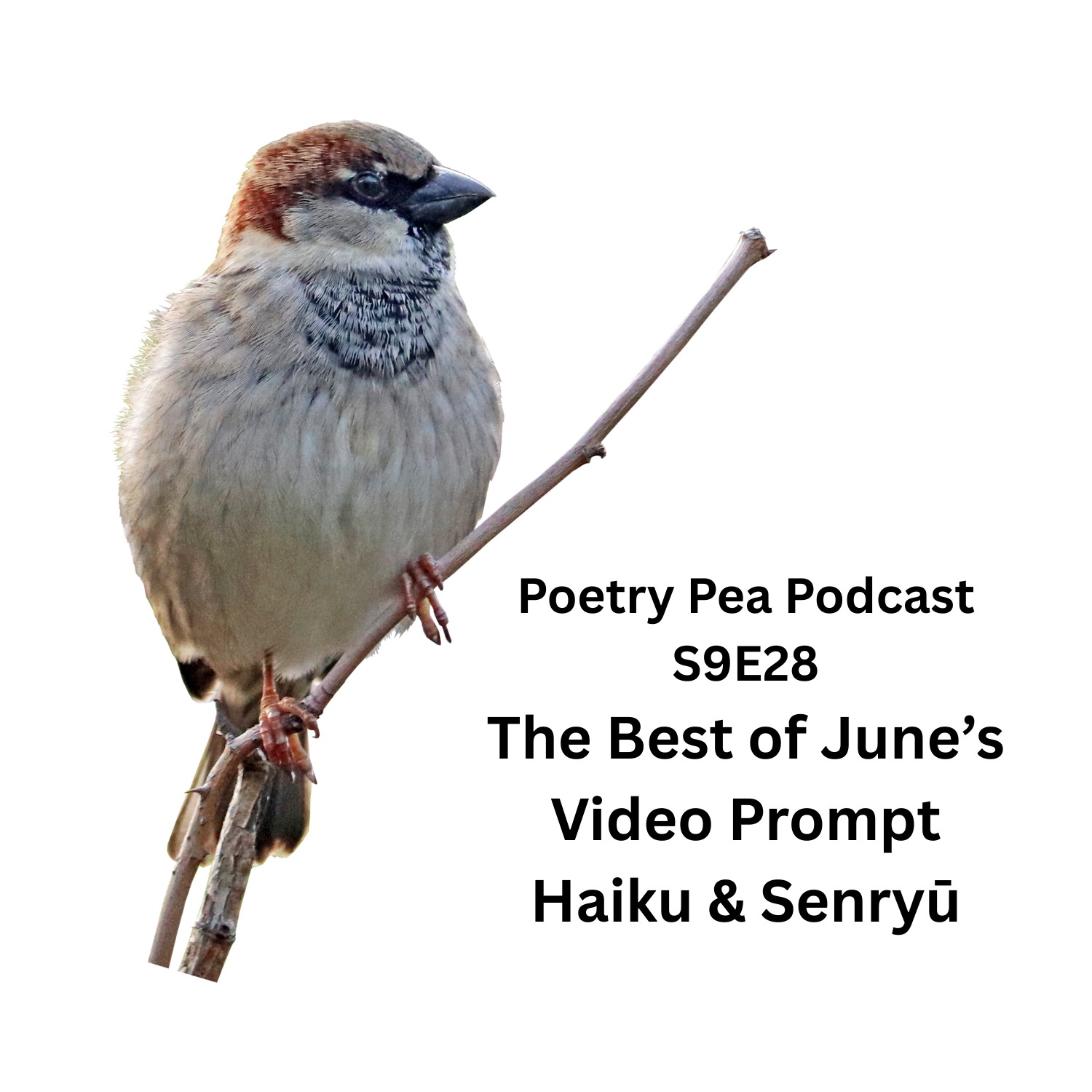
S9E28 The Best of June Poetry Pea Video Prompt Haiku & Senryu
In this episode, In this episode of Poetry Pea, the leading English-language haiku podcast, Patricia McGuire shares the haiku and senryū selected from the June 2026 Poetry Pea Video Prompt, beautifully curated by Lakshmi Iyer.Expect poems filled with birdsong, summer heat, nesting season, squirrels, sparrows, warblers and the small moments that make haiku so memorable. Alongside the selected poems, Patricia also reads a collection of bonus sparrow haiku by contemporary poets and classics from Bashō and Buson.If today's episode inspires you, why not join the next Poetry Pea Video Prompt? New prompts appear on the Poetry Pea YouTube channel almost every month, and your haiku could be featured on a future Poetry Pea Podcast and published in the Poetry Pea Journal.Whether you're an experienced haiku poet or just discovering the genre, this episode is a joyful celebration of observation, nature and the Poetry Pea community.Poets featured:Neena SinghRalph MathewsAlicia SamsonRupa AnandRupa AnandReid HepworthVaishnavi RamaswamySusanne UrowitzSeamus O' ConnorMona BediMelissa DennisonJoanna AshwellMary OishiJoshua St. ClaireJo BalistreriBuson, Trs Michael HaldaneKeith EvettsBruce H FeingoldBill FayCraig KittnerIsabel CavesKristen LindquistDavid Oates, PPJSankara JayanthBasho, Trs David Landis Barnhill





Get this podcast on your phone, Free


Create Your Podcast In Minutes
- Full-featured podcast site
- Unlimited storage and bandwidth
- Comprehensive podcast stats
- Distribute to Apple Podcasts, Spotify, and more
- Make money with your podcast
