
Growing the Valley
https://www.growingthevalleypodcast.com/podcastfeed?format=rssEpisode List
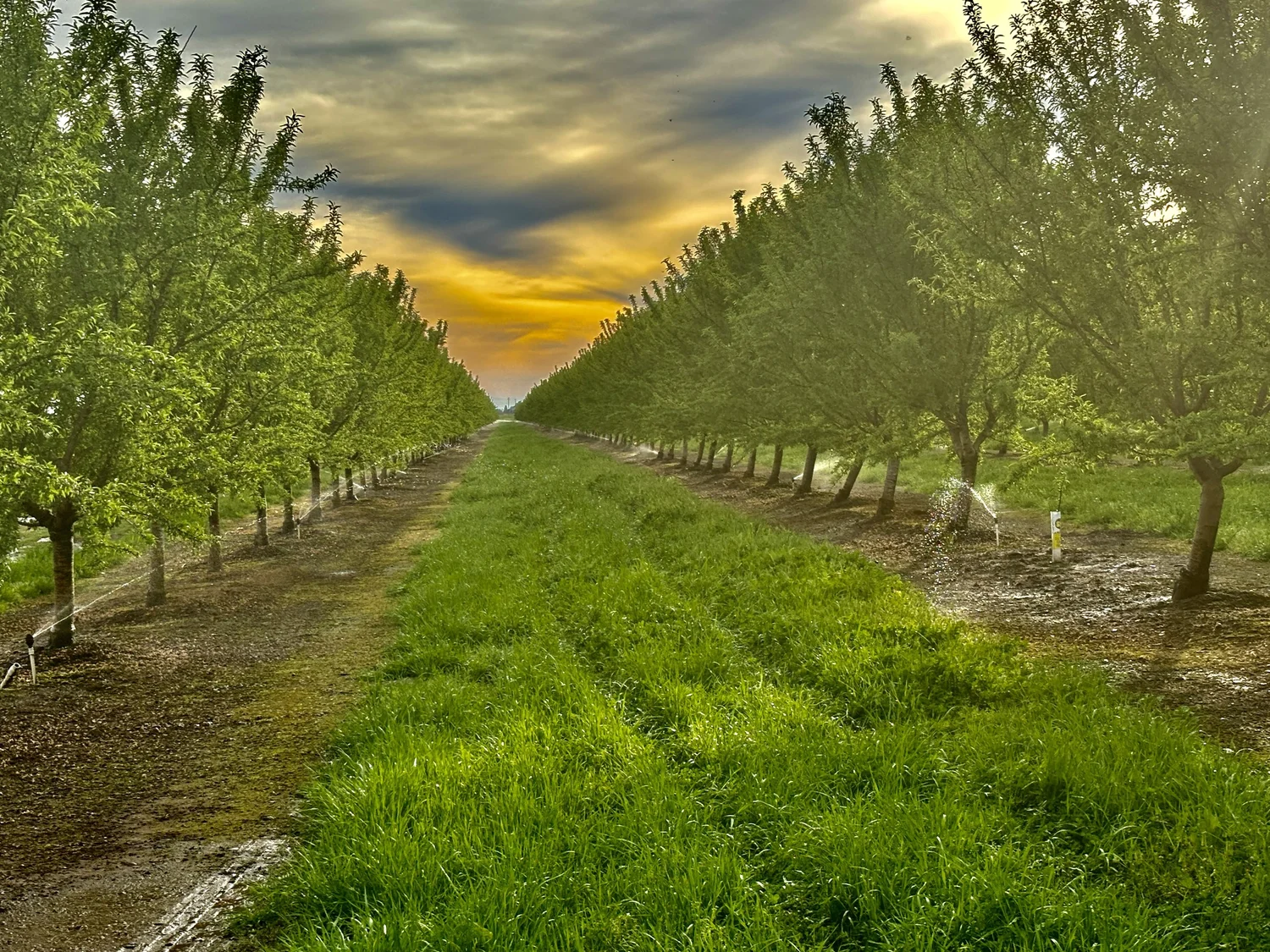
Encore: Earlier Irrigation Start in Almond
Drs. Or Sperling (ARO-Volcani) and Maciej Zwieniecki (UC Davis) discuss their groundbreaking research on almond irrigation. That research has culminated in an exciting irrigation scheduling application. We also get an overview of almond production in Israel. The UC Davis Carbohydrate Observatory is also referenced. Have feedback or questions for the researchers? Or Sperling: orsp@agri.gov.il or +972 52 6278189 Maciej Zwieniecki: mailto:mzwienie@ucdavis.eduZac Ellis (Olam): Zac.ellis@ofi.com (559) 303-0599Come to an upcoming extension meeting!In the San Joaquin Valley: Tomorrow Tuesday April 7 there is an Almond Board of California listening session in Modesto on Cornucopia Way at 8:30 AM UC Cooperative extension has a Regenerative Almond Orchard Field Day on Tuesday, April 21st at the UC Merced Experimental smart farmThe Almond Board of California also has four upcoming IPM meetings, tackling rodents, red leaf blotch, Carpohilus and other pests: Ceres: Wednesday April 22 Durham: Thursday April 23 Fresno: Tuesday April 28And Bakersfield: Thursday, April 30 And finally Wednesday, June 16, if you’re an almond variety nerd like me you can’t miss the Almond Board’s Crackout Event at Merced College In the Sacramento Valley we have a Third Thursday: Nematode Management in Orchards meeting in Orland on April 16 from 11-1 Nickels Field Day is Tuesday, May 19 in Arbuckle I have two almond variety meetings at the Chico State Farm in June. Thursday June 11 and Thursday, June 25th. The Third Thursday on July 16 will be in Yuba City and cover Walnut Mold The Third Thursday on August 20 will be in Orland and tackle labor economics Following a harvest season hiatus, there will be a Third Thursday on November 19 in Yuba City recapping 2026’s IPM challenges and lessons The views, thoughts, and opinions expressed are the speaker’s own and do not represent the views, thoughts, and opinions of the University of California. The material and information presented here is for general information purposes only. The "University of California" name and all forms and abbreviations are the property of its owner and its use does not imply endorsement of or opposition to any specific organization, product, or service.Follow us on Twitter! @SacOrchards and @SJVtandvThank you to the Almond, Pistachio, Prune, and Walnut Boards of California for their kind donations. Thank you to Muriel Gordon for the music. The views, thoughts, and opinions expressed are the speaker’s own and do not represent the views, thoughts, and opinions of the University of California. The material and information presented here is for general information purposes only. The "University of California" name and all forms and abbreviations are the property of its owner and its use does not imply endorsement of or opposition to any specific organization, product, or service.Follow us on Twitter! @SacOrchards and @SJVtandvThank you to the Almond, Pistachio, Prune, and Walnut Boards of California for their kind donations. Thank you to Muriel Gordon for the music.
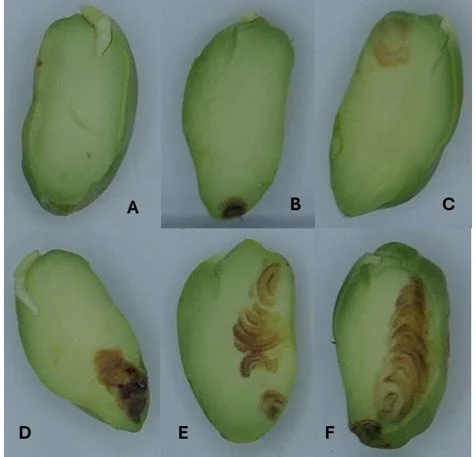
Polyphenol deposition in pistachios - what is it, and how do cultivar and irrigation influence it?
Polyphenol deposition in pistachio kernels, also known as internal kernel discoloration, is a harmless phenotype of pistachios, where dark coloration appears on the internal surface of the pistachio cotyledons (the two halves of the kernel). It started showing up widely in the late 2010s/early 2020s, and researchers Georgia Drakakaki, Phoebe Gordon, and Minmin Wang have been investigating it from different angles (Phoebe from the field perspective; Georgia and Minmin from the anatomical and physiochemical perspective). In this episode, they share some initial results. We still don’t know what truly causes it, but we have some answers to basic questions. Episode transcriptThe views, thoughts, and opinions expressed are the speaker’s own and do not represent the views, thoughts, and opinions of the University of California. The material and information presented here is for general information purposes only. The "University of California" name and all forms and abbreviations are the property of its owner and its use does not imply endorsement of or opposition to any specific organization, product, or service.Follow us on Twitter! @SacOrchards and @SJVtandvThank you to the Almond, Pistachio, Prune, and Walnut Boards of California for their kind donations. Thank you to Muriel Gordon for the music.Come to an upcoming extension meeting!Sacramento Valley And the Nickels Field Day is on Tuesday May 19 San Joaquin Valley (scroll to the bottom)
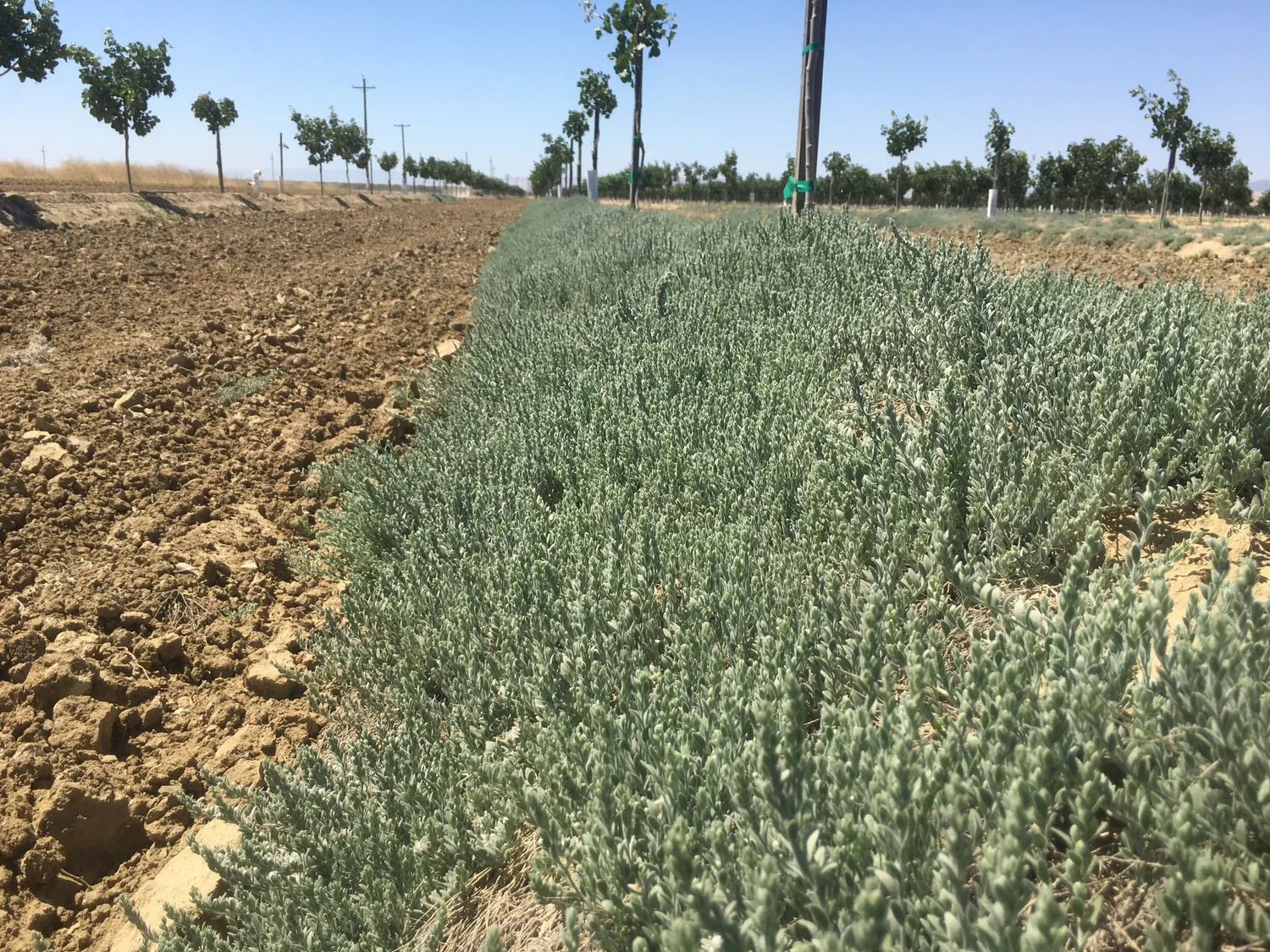
Encore: Climate Change Part 4: Weeds with Lynn Sosnoskie
Our concerns about how climate change will affect agriculture don’t just extend to crop performance; pest species will also be affected. In this week’s episode, Lynn Sosnoskie returns to talk about implications for weed management. Episode transcriptThank you to the Almond, Pistachio, Prune, and Walnut Boards of California for their kind donations. Thank you to Muriel Gordon for the music.The views, thoughts, and opinions expressed are the speaker’s own and do not represent the views, thoughts, and opinions of the University of California. The material and information presented here is for general information purposes only. The "University of California" name and all forms and abbreviations are the property of its owner and its use does not imply endorsement of or opposition to any specific organization, product, or service.
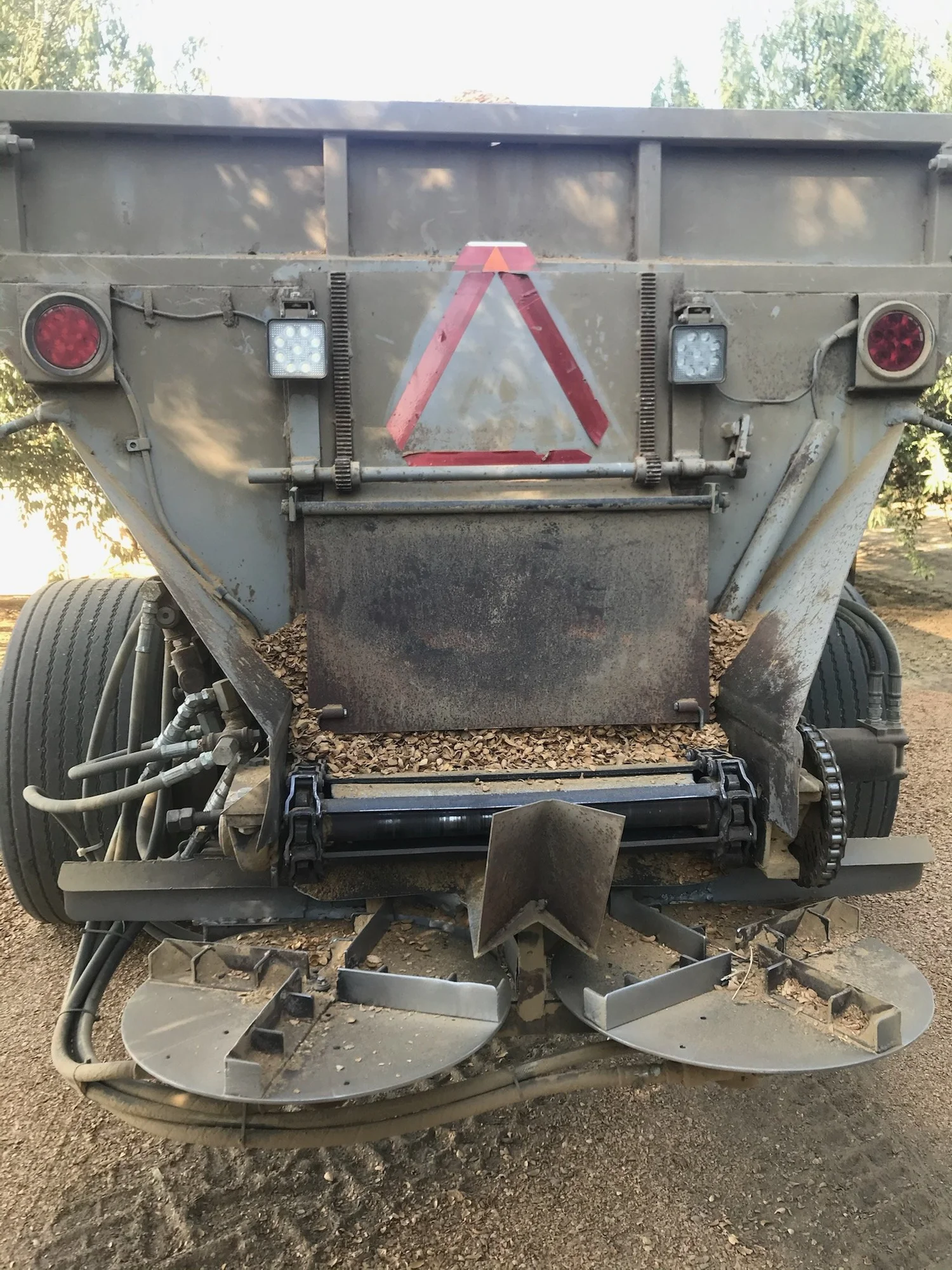
The benefits of applying almond hulls and shells as mulch in orchards
Almond production creates a lot of byproduct. While there are some alternative uses for almond hulls and shells, like livestock feed and bedding, there is still not enough demand to utilize all the biomass created every year. Some growers have been accepting almond hulls and shells from processors to help them get rid of these stockpiles, and using them as mulch in orchards. Ellie Andrews examined how using hulls and shells benefits almond orchards, including their potential as potassium fertilizer, and how they affect soil health. The views, thoughts, and opinions expressed are the speaker’s own and do not represent the views, thoughts, and opinions of the University of California. The material and information presented here is for general information purposes only. The "University of California" name and all forms and abbreviations are the property of its owner and its use does not imply endorsement of or opposition to any specific organization, product, or service.Follow us on Twitter! @SacOrchards and @SJVtandvThank you to the Almond, Pistachio, Prune, and Walnut Boards of California for their kind donations. Thank you to Muriel Gordon for the music.Come to an upcoming extension meeting!Sacramento Valley The 2026 North Sac Valley Olive Day is on Tuesday March 24And the Nickels Field Day is on Tuesday May 19 San Joaquin Valley (scroll to the bottom) Madera/Merced Pistachio Day is on Wednesday March 18
Red Leaf Blotch (2026)
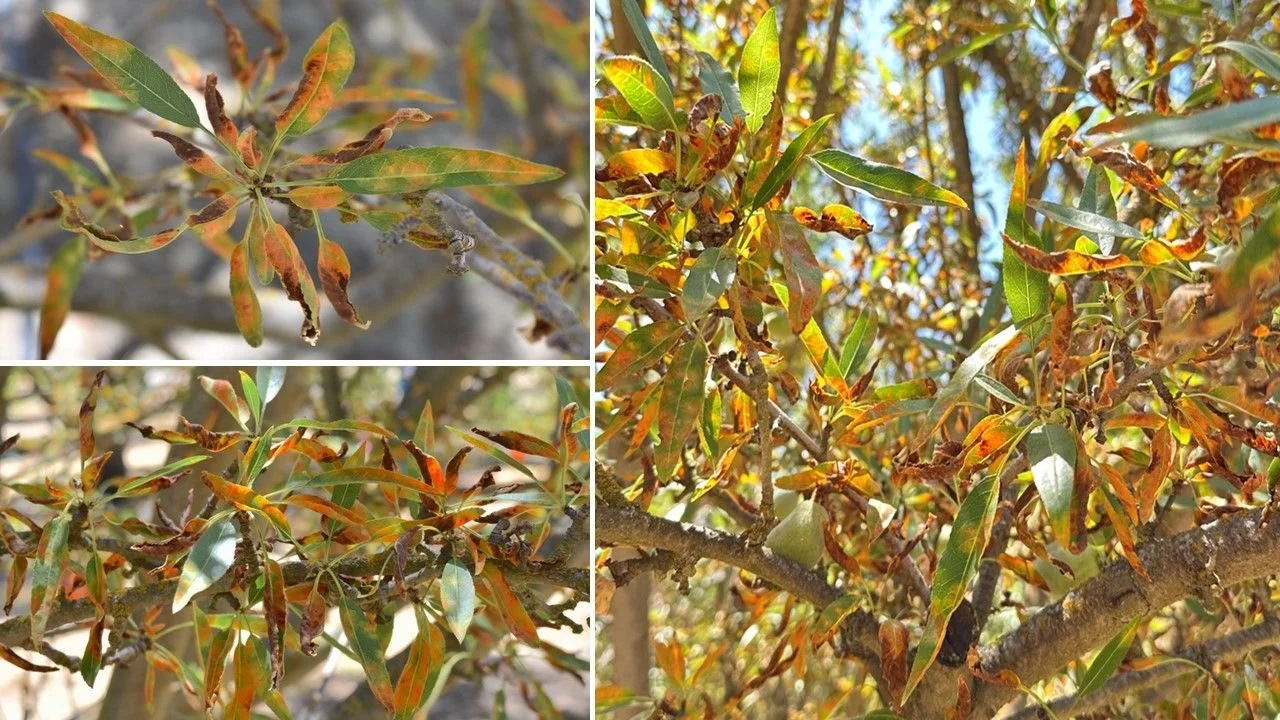
Today on the podcast we’ll be discussing Red Leaf Blotch a new invasive disease in California almond production. I want to offer my sincere apologies to listeners and to the Trouillas Lab for not getting this episode out promptly for maximum usefulness in the 2026 season. Although we are still in the red leaf blotch susceptibility window at the time of podcast airing – there’s not currently any rain in the forecast. Disease management The disease has a long latent period of 35 to 40 days, so by the time symptoms are visible, the infection window has long passed. This makes early, preventive management the key to controlling the disease. Based on 2025 field trials and growers’ experience in Spain, a three-spray program is recommended for orchards at risk. The first spray should be applied at petal fall (young leaflet emergence), followed by a second application two to three weeks later, and a third spray five to six weeks after petal fall if wet weather continues. These timings coincide with elevated inoculum levels of P. amygdalinum in orchards and a period of high leaf susceptibility to RLB. Similar timings for fungicide applications are used to manage other spring diseases like scab, shot hole, rust, and anthracnose, highlighting the need for an integrated approach to disease management in almond orchards.Research trials in 2025 indicated that the most effective products to control RLB included various mixed fungicides with FRAC groups 3 + 7 (e.g. difenoconazole + pydiflumetofen); 3 + 11 (e.g. difenoconazole + azoxystrobin or tebucnonazole + tryfloxystrobin); 7 + 11 (e.g. fluopyram + trifloxystrobin, fluxapyroxad + pyraclostrobin, or boscalid + pyraclostrobin); 7 + 12 (adepidyn + fludioxonil), and FRAC 3-triazoles (metconazole or flutriafol). Growers are advised to rotate modes of action and follow all resistance management and product label guidelines to prevent product failure over time. Cultural practices, focused on eliminating the primary inoculum of infected fallen leaves, also can help mitigate the disease. These consist of removing leaf litter or applying urea to accelerate its decomposition. However, such strategies are only effective when applied over a wide area. Fungicides applied during bloom and after symptoms are visible are not effective.2025 Fungicides, Bactericides, Biocontrols, and Natural Products for Deciduous Tree Fruit and Nut, Citrus, Strawberry, and Vine Crops in CaliforniaMention of a pesticide does not constitute a pesticide recommendation, merely the sharing of research results. Consult your PCA and read the pesticide label. The label is law. The views, thoughts, and opinions expressed are the speaker’s own and do not represent the views, thoughts, and opinions of the University of California. The material and information presented here is for general information purposes only. The "University of California" name and all forms and abbreviations are the property of its owner and its use does not imply endorsement of or opposition to any specific organization, product, or service.Follow us on Twitter! @SacOrchards and @SJVtandvThank you to the Almond, Pistachio, Prune, and Walnut Boards of California for their kind donations. Thank you to Muriel Gordon for the music.Come to an upcoming extension meeting!Sacramento Valley Rice Production Workshop on March 18–19 at Lundberg Family FarmsThe 2026 North Sac Valley Olive Day is on Tuesday March 24And the Nickels Field Day is on Tuesday May 19 San Joaquin Valley (scroll to the bottom) Madera/Merced Pistachio Day is on Wednesday March 18






Get this podcast on your phone, Free


Create Your Podcast In Minutes
- Full-featured podcast site
- Unlimited storage and bandwidth
- Comprehensive podcast stats
- Distribute to Apple Podcasts, Spotify, and more
- Make money with your podcast