Keen On America
https://feeds.transistor.fm/keen-on-americaEpisode List
An Unknown American Hero: Katie S. Sanders on the Man Who Saved Her Grandfather's Life in WW2.
Grandfathers, grandfathers. Yesterday, David Baerwald talked about his grandfather, Ernst Baerwald, an American spy in Second World War Japan. Today, Katie S. Sanders talks about her grandfather, Murray Simon, whose life was saved by an American spy in Second World War France. In Ortiz’s War, co-authored with historian Nicholas Reynolds, Sanders writes about Peter Ortiz, who became the Allies’ secret weapon against the Nazis in France. With his stunning looks, Ortiz might have been a Hollywood creation. Polylingual Franco-American aristocrat, French Foreign Legion, race-car driver, circus lion tamer, the most battle-decorated member of America’s first spy agency. He even played himself (anonymous brave soldier) in a number of post-war Hollywood movies. I wish he was my grandfather. Five Takeaways • The Spy Who Saved Her Grandfather. Murray Simon was a 23-year-old Jewish kid from Queens who had never flown before the Army Air Forces trained him — then sent him over occupied France in a black-painted B-24 Liberator carrying spy supplies and carrier pigeons for the resistance. Shot down on May 6, 1944, a month before D-Day, on an OSS mission whose standing advice was don’t get shot down — spies were tortured and killed, not taken prisoner — he was hidden by a Bulgarian-born Jew passing as Catholic, a man with an eight-month-old daughter and a pregnant wife who was “already supposed to be dead” and opened his door anyway. Smuggled onward, Murray was intercepted by Peter Ortiz — and made it home to the GI Bill, a family, and what he called “the warm womb of Uncle Sam.” Katie never met him; the book is her way of meeting him. “I gravitate towards stories of resistance, probably in part because I’m a product of one.” Publication day: the anniversary of the liberation of Paris.• No Peacetime Soldier. Peter J. Ortiz’s résumé reads like an unpublishable novel: son of a founding editor of Paris Vogue; French boarding-school runaway into the Foreign Legion (North Africa, Casablanca included); merchant seaman, dude-ranch manager, race-car driver, circus lion tamer; wounded fighting the Germans in 1940, captured, serially escaped — once off a hospital train under a dead soldier’s identity; docked in New York the day after Pearl Harbor and enlisted in the Marines, rising to become the most battle-decorated member of the OSS and one of the most decorated Marines of the war. His military file: not a good candidate for a desk job, ever. He spoke five languages, not Wikipedia’s ten (“Wikipedia is a storyteller”), walked into bars in occupied France wearing his Marine uniform, and wrote his own epitaph in a twenty-page memoir: “I’m no peacetime soldier.” Afterward: John Ford’s Hollywood, minor roles, his own uniforms as costume — and no bragging, ever.• The Heroic Surrender at Centron. The book’s climax is Operation Union II, August 1944 — Ortiz’s own inter-Allied mission into the Alps, culminating in the massive “Le Grand Parachutage” supply drop to the Maquis. He recruited his own Parris Island parachute instructors — Marines who remembered the legionnaire who blew them all away at boot camp — plus Francis Coolidge: Harvard dropout, fellow Foreign Legion veteran, and great-great-great-grandson of Thomas Jefferson. When his patrol was surrounded at the village of Centron by vastly superior German forces on a murderous late-war rampage, Ortiz chose saving the town over fighting — the surrender as the war’s most heroic act, bravery as the capacity to think while being shot at. Centron celebrates him every year; Katie was just there with Marines stationed in Germany, for the eighty-second anniversary. Guiding lights: noblesse oblige, Don Quixote, and a lifelong allergy to McCarthyism.• Wild Bill’s Wartime Startup. The OSS — forerunner of the CIA, whose Langley lobby still holds Wild Bill Donovan’s statue — was, in Katie’s telling, a wartime startup: 13,000 military and civilian personnel, mostly Wall Street lawyers, bankers, cryptographers, and cartographers, with a tiny operational subset that included Moe Berg, Virginia Hall trekking the Pyrenees on a wooden leg, and Ortiz. Donovan — World War One Medal of Honor recipient, FDR’s “secret legs,” the man who could “see an acorn, envision an oak tree” — was banned from D-Day as the one man carrying too many secrets, and went sniffing around anyway. J. Edgar Hoover was considered for the job and rejected, with Churchill’s SOE helping tip the choice. “I respect Donovan a lot more than I respect J. Edgar Hoover.” The lineage runs straight to today’s Navy SEALs and MARSOC — including past Keen On guest Brandon Webb.• Are We in 1939? Katie walks the museum timelines — 1933, and it’s “not great”; 1936, and the warnings mount; “I certainly hope we’re not in 1939.” Against Andrew’s needling about greatest-generation nostalgia (via Brandon Webb’s complicated heroism, Kristin Beck’s good-and-evil seduction, Richard Overy’s question of whether the war ever ended, and Matt Damon’s regret-soaked Odysseus), she holds the line: someone like Ortiz is great in any time — and especially needed when democracy is under threat. The warfare itself has closed its chapter: her grandfather’s black-painted bomber and carrier pigeons have become Ukraine’s drones, delivering aid with less risk and less human connection alike. What survives the technology is the lesson: heroes don’t brag — her grandfather and Ortiz would be mortified by the spotlight — and by illuminating what they did, the rest of us might learn to do the right thing. About the Guest Katie S. Sanders is an award-winning journalist who has written for National Geographic, The New York Times, Washington Post Magazine, TIME, Smithsonian, and Vanity Fair. Her reporting has brought her to the CIA, the White House, and the homes and reunions of World War II veterans and Holocaust survivors. After discovering that her late grandfather — a Jewish-American pilot shot down over France — was rescued by Peter Ortiz, she teamed up with the historian Nicholas Reynolds (Writer, Sailor, Soldier, Spy) to co-author Ortiz’s War (Harper Horizon, August 25, 2026). A summa cum laude graduate of the University of Pennsylvania, she lives in Brookline, Massachusetts. References: • Ortiz’s War: The Allies’ Secret Weapon Against the Nazis in France by Nicholas Reynolds and Katie S. Sanders (Harper Horizon, August 25, 2026).• Writer, Sailor, Soldier, Spy by Nicholas Reynolds — the co-author’s Hemingway biography, the book that put him on Katie’s radar.• The Fire Agent by David Baerwald — yesterday’s episode: another grandfather, another secret war, rendered as fiction where this one insists on fact.• &nb...
From Japan With(out) Love: David Baerwald on His Grandfather Spy Who Helped Flatten Tokyo
“That’s how I would picture fascists: this never-satisfied, dissonant climb to nothing… to ruin.” — David Baerwald Earlier this month, the historian James M. Scott came on the show to talk about those three deadly days in August 1945 when the Americans dropped two nuclear bombs on Japan. Today we return to that war in the skies above Japan. Only with a fictional twist. Behind this fiction, however, is the kind of family saga that few novelists have either the nerve or imagination to invent. It concerns three generations of the Baerwalds. In the Thirties, a German Jewish organic chemist called Ernst Baerwald worked for (of all people) I.G. Farben, the company that manufactured the gas used at Auschwitz. A sophisticated Japanophile, Baerwald was Farben’s man in Tokyo, where he hobnobbed with a member of the royal family. American intelligence turned Ernst Baerwald into a spy, using his intimate knowledge of Japan in their firebombing of Tokyo. In exchange, Baerwald fled to the United States with his wife and son Hans, who became a leading authority on 20th century Japanese politics. Hans’ son, David Baerwald, meanwhile, became a platinum-selling musician who has worked with Joni Mitchell, Bob Dylan, Rickie Lee Jones, Sheryl Crow, and Bruce Springsteen. Growing up in California, David knew little about Ernst. But seven years ago, while clearing out the family home after the Los Angeles fires, he discovered his grandfather’s diaries, photographs, and letters. He found a 1943 speech to the American Intelligence School proving that Ernst, a German Jew who loved Japan, knew the details of the Tokyo firebombing in which 140,000 people died, two years before it happened. “I have no qualifications as a historian,” David Baerwald confesses. So what followed was The Fire Agent, a 624-page novel loosely imagined around his grandfather’s enigmatic life. But what David brought to this epic was a lyricist’s skill in the kind of musical composition that enabled him to keep characters in play like sections of an orchestra. No wonder then that The Fire Agent is one of the most acclaimed literary debuts of the year. And no wonder that, in our age of looming fascism, The Fire Agent reads as more than just history. Five Takeaways • Papers Found in a Fire. The novel began, appropriately, in flames: during a Los Angeles fire at an old family home, Baerwald discovered his grandfather’s papers — among them a 1943 speech delivered at the American Intelligence School in San Francisco, proving that Ernst Baerwald was deeply involved in, or at least privy to, the planning of the Tokyo firebombing two years before the bombs fell in March 1945. The shock was moral as much as archival: everything David knew of his grandfather was how much he loved Japan and hated what happened to it. The contradiction became an obsession, the obsession became an investigation — of one family, and of the joining of industry and fascism in three countries — and the investigation became a novel, because “I have no qualifications as a historian” and a novel allows some jokes to carry the tragedy’s weight.• The Man Who Knew Where the Gas Was. Ernst Baerwald, the family’s “dye seller,” was nothing so modest: dyestuffs being slang for organic chemistry, he was Asia director of the chemical cartel that supplied IG Farben — the conglomerate that built a work camp at Auschwitz — a violinist mentor to Prince Takamatsu, and a German Jew too valuable to fire until far too late. He helped build Tokyo’s natural gas distribution system after the Kanto earthquake, which meant he knew every depot, fuel store, and pumping station in the city he loved — knowledge that made this dual enemy alien mysteriously trusted by American intelligence. His OSS box is nearly empty; the OSS Society’s verdict was “he was a commie.” Behind him stands the Philanthropin — the Frankfurt school of the Jewish Enlightenment his father Hermann ran — which raised Ernst antifascist before fascism existed: “before he was a German, before he was an American, before he was a lover of Japan, he was a hater of tyranny.”• “So We Firebombed the Civilians.” The moral reckoning at the book’s heart: 140,000 killed in Tokyo, sixty-five more cities burned — while the industrial strip from Tokyo to Yokohama was deliberately spared, because America wanted it intact to rebuild the Japanese economy after the war. Baerwald calls the firebombing “an atrocity of unspeakable terms” and, following Gar Alperovitz, questions the necessity of the atomic bombs — a message to the Soviets more than a strategy against Japan. His father, scheduled for the invasion that never came, felt lifelong relief at Hiroshima — one of many things father and son never discussed. “Why do fathers and sons have problems? A lot of reasons.” The writing became a posthumous reconciliation: “I understand more of my father than I ever did when he was alive. I’ve forgiven him a lot.” The next book is about him — the UCLA Japan scholar who lost his security clearance to McCarthyism for being insufficiently anti-communist about China.• From Boomtown to The Fire Agent. What a songwriter brings to a 624-page epic: reliability — a working lyricist learns he can “write a page on demand” — and orchestration, since composing instrumental music means keeping track of characters the way you track an orchestra, knowing what each instrument cannot play. Baerwald’s formation was the émigré Los Angeles of a breakfast joint on the Pacific Coast Highway where his surf crew gathered mornings — the same tables once shared by Duke Kahanamoku, Bertolt Brecht, and Stravinsky, in the Santa Monica neighborhood of Thomas Mann, on the street where James Dean later lived. Brecht was always his favorite lyricist, a secret he kept: in Los Angeles, admit you want to write songs like Brecht and “they lock you up in a padded room.” The German Jewish musical tradition that fled to his hometown now flows, a generation on, back into prose.• The Music of Fascism. The novel’s present-tense purpose: fascist movements “have a very limited vocabulary,” and sometimes it’s easier to hear how stupid it is from the mouths of foreigners. The mechanisms — how such movements are funded, how they function, what they do with total power — were identical in Germany, Japan, and Italy, and the contemporary echoes are “impossible to avoid. They’re identical.” All three countries ended as rubble. In Japan, where prime minister Takaichi stands in the lineage of Kishi Nobusuke and Nanking denial persists, the conservatives will object; Baerwald hopes to spark debates. And asked what neo-fascism sounds like, he composed it: Kundera’s kitsch — the child in the field, the tear on the cheek, “sanitized absurdities because the truth is so bloody awful” — rendered as a music-box melody gradually tortured by Ligeti dissonance, resolving into the Shepard tone: an audio illusion of endless ascent that never arrives. “That’s how I would picture fascists: this never-satisfied, dissonant climb to nothing… to ruin.” About the Guest David Baerwald is an award-winning singer-songwriter, composer, and recording artist, best known fo...
We Are (Not) the Champions: Why Silicon Valley Isn’t Providing an AI Human Dividend
What’s the truth about our AI future? Our guests have different takes. On the one hand, Dave McClure and Aman Verjee predict a $7 trillion future for just three AI startups in 2027. On the other, Salima Bhimani doesn’t believe that Silicon Valley has the imagination to create the moonshot to address our jobless future. For That Was The Week publisher Keith Teare, it’s a time for what he calls “champions.” What he wants is the development of a “human dividend” from intelligence. Supposedly this will be provided by the multi-trillion dollar AI companies like OpenAI and Anthropic that will pioneer the social ownership of intelligence. But a Norwegian-style Human Wealth Fund is about as likely, I suspect, as a new Freddie Mercury recording of “We Are the Champions.” Dream on. Salima Bhimani is right. The moonshot to fix our jobless AI future won’t come out of workaholic Silicon Valley. Look elsewhere for those types of champions, my friends. Brazil perhaps. The movie, not the country. Five Takeaways • The Zeitgeist Exaggerates. The week’s split screen: a $7 trillion future for OpenAI, Anthropic, and SpaceX on one side; Ed Luce’s “AI phobia” consensus and Jill Lepore’s AI-versus-the-people politics on the other. Keith’s contrarian read: the negativity is loud but thin. Most intelligent people already use AI daily — from high school onward — and simply don’t talk about it; weigh the happy users against the vocal critics and the users “massively dominate.” He suspects a tipping point has been reached, with the anti-AI minority “starting to sound a little cultish.” The political stakes are his real worry: if the Democrats mistake the noise for populism and run against AI, they will lose 2028 “quite heavily” — and Lepore, he charges, is writing opinion, not history.• Who Are the Champions? The editorial’s diagnosis: the problem isn’t negativity but “the lack of vocal connection between AI and people’s futures.” The champions exist — but they hedge everything into pointlessness, “trained as politicians as opposed to business leaders,” each with a little voice saying don’t upset anybody. “Can you imagine any other major breakthrough in human history where people would be shy to champion it?” His roster pointedly omitted both Dario Amodei and Elon Musk (“fairly balanced with who I left out”); the goal is to assemble the articulate case so “the minority who are politicizing negativity can be exposed as a minority.” Andrew’s genealogy for the project: Nixon’s silent majority, reborn with a token budget.• 90% Sacks — and Squashed Armadillos. The hour’s fault line ran through David Sacks’s tweet: Dario believes frontier AI is “too powerful to distribute”; Sacks believes it is “too powerful to centralize,” fearing a marriage of corporate and state power. Andrew took Dario’s side; Keith claimed the middle until Andrew invoked the Texas rule — the only thing in the middle of the road is squashed armadillos — and extracted a confession: “I agree with Sacks, I’d say, 90%.” The 10% is Keith’s own position: happy with centralized giants (free intelligence needs their investment) and happy with the growing edge — the world’s intelligence in a solar-powered box, no grid required. Dario is championing “handcuffs on AI”; Lepore’s car-regulation analogy fails because corporations are already regulated and AI itself is safe; and Helen Toner’s Hugging Face alarm, aired on Ezra Klein’s podcast, was “contrived in a lab” — a dismissal that sparked the hour’s frenemy flashpoint: “Are you telling me I’m ignorant of something?”• Metering the Dividend. Keith solved Andrew’s billing mystery on air: the $100-a-month Claude plan that throttled him last week has a quota page he never found — and the price is “actually a very generous amount. They’re losing money on you.” The honest price would be $200 to $400. Hence the editorial’s champion, Stripe: its acquisition of OpenRouter — which routes every prompt across all the models to the cheapest good answer — puts the payments company in the middle of the token traffic stream. Azeem Azhar’s $6 AI agent points the direction: prices tending toward zero at the edge, free for the kid, the school, and the hospital, paid for by the company running three thousand agents — even if delivering intelligence to six billion people ultimately costs tens of trillions. The parable: a Chinese dumpling shop built an agent API so customers’ AIs could place orders, and sales went through the roof — the corner store getting a website, circa 1994. “You could do it with Keen On,” Keith noted. Meanwhile founders live like Captain Kirk on the bridge — productivity through the roof, but the agents must be flown daily.• The Human Dividend. The coda: Keith’s book is done, and its name is settled — The Human Dividend, asking who owns intelligence. Written in two days, cut from eighty thousand words to sixty in three more — seventeen chapters rewritten paragraph by paragraph in an AI agent’s two-panel editor, purging repetition and AI-isms until “it was a Keith Teare-written book.” The thesis in one line: intelligence is the central product of this era; its surplus is co-produced; the property should be too. The mechanism: a Human Wealth Fund on the Alaska-Norway model — one share per person, given not bought, expiring at death with no inheritance — funded by AI companies donating equity on day one and governed by its own constitution, no state involved (unlike Trump’s $1,000 baby accounts: what the state gives, the state can take away). The pitch to the companies: owners, not just users, are how you win affinity. Sell it or give it away? To be continued in two weeks — Andrew is off to Italy, and Manchester United, who lost to Hull, are off the champions list entirely. About the Co-Host Keith Teare is the co-host of the weekly That Was The Week segment on Keen On America and editor of the That Was The Week tech newsletter. Founder and CEO of SignalRank Corporation, he was previously a founder of TechCrunch (with Michael Arrington), Archimedes Labs, EasyNet, and cyber café Cyberia. A serial entrepreneur across four decades of Silicon Valley and London tech, he writes weekly on the state of innovation — and is completing his first book, The Human Dividend. References: • That Was The Week — Keith Teare’s newsletter; this week’s editorial: “Who Are the Champions?”• Ed Luce’s Financial Times column on “AI phobia” as America’s new consensus — its third invocation on this show in a week.• Jill Lepore’s FT weekend essay and new book on “AI versus the people” — the politics of 2026 and 2028, per America’s best historian.• David Sacks’s tweet on Dario Amodei — “too powerful to distribute” versus “too powerful to centralize” — the hour’s fault line.• Helen Toner’s conversation with Ezra Klein on the Hugging Face incide...

The The Profitable Art of Dumb Meme Coins: Nicholas Anthony on Trump's $636M Gain & His Fans' $3.8B Loss
“Just because I think something is dumb doesn’t mean I think it should be illegal.” — Nicholas Anthony on meme coins Earlier this month, Elizabeth Warren called for an SEC investigation of Donald Trump’s meme coin. Is the Pope Catholic? No surprise there. More revealing are other critics of the “presidential” token which netted our Grifter-in-Chief $636 million last year. Take, for example, Nicholas Anthony, an expert on crypto at the Cato Institute and author of Digital Currency or Digital Control? It’s news when an unashamed libertarian from Washington’s own temple of free markets calls the president’s crypto adventure “completely unnecessary.” Maybe the Pope isn’t Catholic. Or maybe Elizabeth Warren should join the Cato Institute. Anthony’s verdict is withering because, under his libertarian shell, he’s a crypto bro. The meme coin “has been a problem for everyone but Trump,” he argues, because it has held up legislation, invited investigations, and weaponized ethics concerns about crypto. “We have no one to blame except Trump…” Anthony concludes bleakly. “He knew better than to do it, but he saw the opportunity and ran with it.” When I accused Anthony of sounding like Elizabeth Warren, he was more amused than offended. Unlike the Warren crowd, however, he doesn’t want to ban crypto. “Just because I think something is dumb,” he says, “doesn’t mean I think it should be illegal.” So while Trump-style meme coins are a natural habitat for what he calls “rug pulls,” that shouldn’t be an excuse for lawmakers to pull the rug from the entire industry. Crypto can still revolutionize finance, Anthony believes. It can democratize centralized banking. It can make money fairer. Just don’t confuse that with a Melania meme coin. Five Takeaways • A Hard No from Cato. The week’s most surprising critic of Trump’s meme coin isn’t a Democrat — it’s a Cato libertarian. Anthony’s verdict: “completely unnecessary,” legally gray but ethically indefensible, and “a problem for everyone but Trump” — stalling the crypto legislation the industry actually wants, inviting investigations, and handing opponents a weapon. The explanation is pure self-interest: the first-term Trump attacked crypto as competition to the dollar and pushed policies hostile to the space; the second-term convert was swayed by industry lobbying and campaign money, the opportunity for personal enrichment, and crypto’s libertarian-conservative DNA. “We have no one to blame except for Trump… He knew better than to do it, but he saw the opportunity and ran with it.”• Dumb, But Not Illegal. The libertarian line in one sentence: “Just because I think something is dumb doesn’t mean I think it should be illegal.” Meme coins are “a trading card of sorts” — their value is the person behind them, held up only as long as people stay amused — and a natural habitat for rug pulls, where insiders manufacture interest and vanish with the proceeds. Anthony opposes bans; he demands disclosure, and insists fraud be prosecuted whether it’s snake oil from a cart or a token from a president. Hence the kicker: a Warren-style investigation of the sitting president is “perfectly reasonable,” and “if it turns out he was doing something behind the scenes, then I think he should be prosecuted for it.” From what he’s seen, the fans knew what they were buying — but the line between brilliantly marketed and fraudulently sold is exactly what investigations exist to draw.• The Dollar Launders Better. Isn’t crypto the ideal vehicle for laundering money? “Not so much. The US dollar is definitely the ideal vehicle” — and remains the currency of choice for criminals worldwide. The numbers: roughly one percent of cryptocurrency activity has been identified as illegal, against about five percent of US dollar usage — because the dollar is accepted everywhere, even in criminal circles, and cash, once it leaves your hand, is gone. Most cryptocurrencies, by contrast, run on public blockchains: permanent, searchable records that forensic accounting firms mine daily, and that keep catching criminals who never understood that the ledger remembers everything. The moral panic, Anthony suggests, is aimed at the wrong instrument.• Free Banking’s Revenge. The deeper Cato case: cryptocurrency — born of cypherpunk and libertarian ideas after the 2008 crisis — is “for the first time in over a hundred years, the challenge to the idea that central banks have complete and total ownership of what is money.” Its ancestors are Scottish free banking and the note-issuing American banks that cleared payments for decades before the Federal Reserve existed. The prosecution’s exhibits against central banking: Zimbabwe’s hyperinflation queues, where friends of Anthony’s watched food become unaffordable while they waited in line, and the slower American version — $10,000 bought two Corvettes in 1970 and needs to be $80,000 today. No utopias: Bitcoin won’t erase the debt. But competition would supply the missing incentive for governments to be “better stewards of currency” — and the practice already exists, from Argentina and Lebanon to the crypto hubs of Nigeria, South Africa, and Kenya.• Swept Up by Trump. The sadder confession concerns his own side: “Sadly, many conservatives have been swept up by Trump… the president can do no wrong” — Ted Cruz and Mike Lee among the obsequious, blocking the ethics language Democrats want attached to crypto legislation. The principled exception is Wyoming’s Cynthia Lummis: pro-Trump, yes, but one of the rare members of Congress who has done the technical and philosophical homework. The industry itself — Coinbase included — walks a careful line around the man who will sign its rules into law, seeing the damage but saying little. Anthony acknowledges his privilege: “Here at the Cato Institute, I can call balls and strikes.” As for the wider economy: a storm in a teacup for now — while crypto’s speculative fever has migrated to AI, whose models are quietly integrating the coins as their payment rails. It’s not what Satoshi envisioned; the cypherpunks and the bankers will split the inheritance. About the Guest Nicholas Anthony is a research fellow at the Cato Institute’s Center for Monetary and Financial Alternatives, a fellow at the Human Rights Foundation, and a member of the Economic Inclusion Group’s Advisory Board. His research covers central bank digital currencies, financial privacy, cryptocurrency, and the use of money in society. The author of Digital Currency or Digital Control? Decoding CBDC and the Future of Money, he has testified before Congress, maintains the Human Rights Foundation’s CBDC Tracker, and has been published in the Wall Street Journal, MarketWatch, and Business Insider. Originally from Baltimore, he holds an MA in economics from George Mason University. References: • Digital Currency or Digital Control? Decoding CBDC and the Future of Money by Nicholas Anthony (Cato Institute).• Senator Elizabeth Warr...
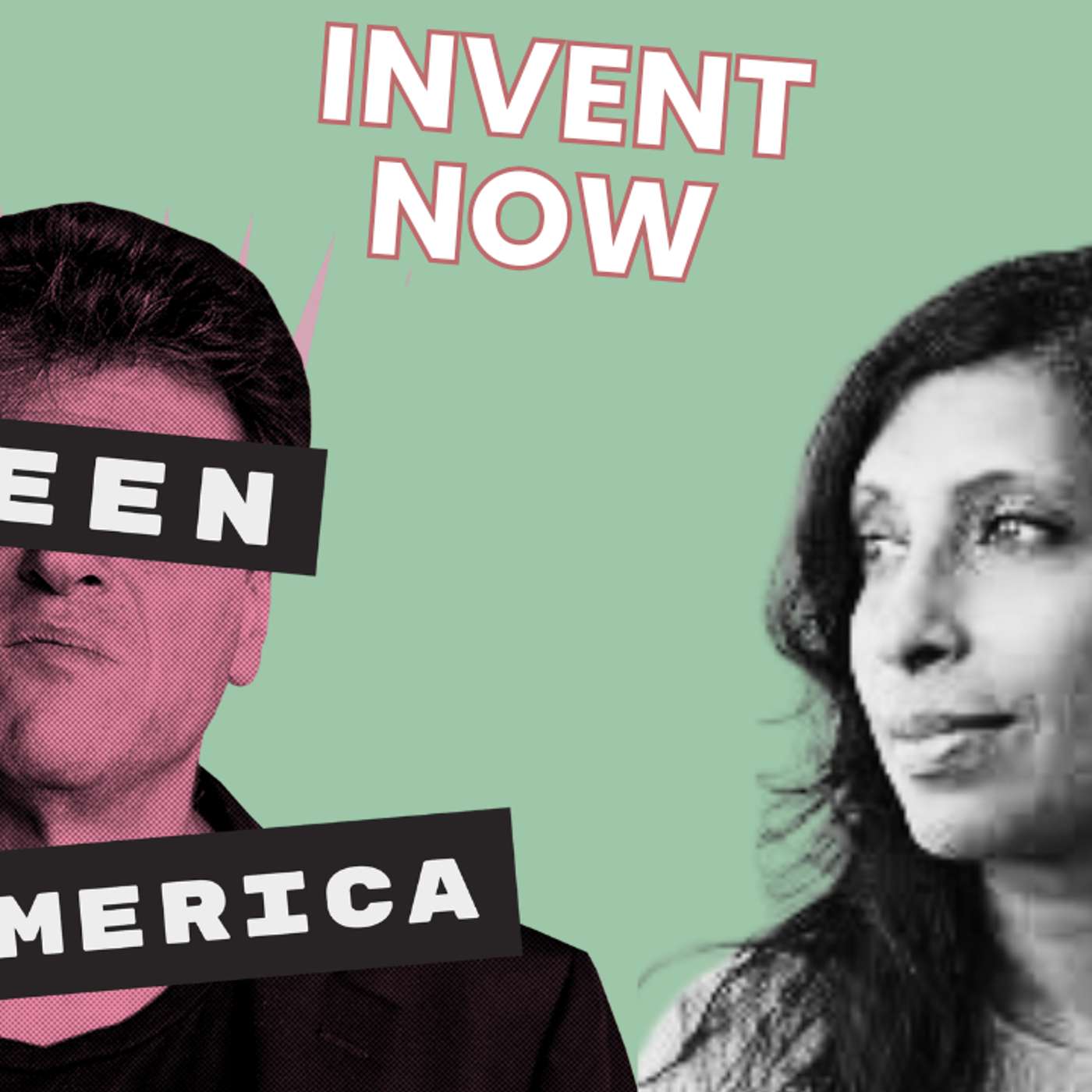
The Next Moonshot Won’t Come from Silicon Valley: ex-Google X’er Salima Bhimani on How to Invent Now
“If we continue to build for people and not with people, we won’t have a say in what this technology will look like or do in ten or twenty years.” — Salima Bhimani Finally some inventive news in our summer of Luddite discontent. Salima Bhimani spent six and a half years at Google X’s moonshot factory as its first Chief Strategist for Responsible Tech. So thank her for the (responsible) magic of Alphabet’s Waymo, Wing, and DeepMind. In her new book, Invent Now, Bhimani provides a map for the next wave of moonshots. No, she speculates, they probably won’t come out of Silicon Valley. But, yes, they will come from somewhere. Her invention was formed long before Silicon Valley. She remembers staring at the Toronto subway from her father’s magazine stall and wondering not where the trains went but “what is our relationship to this tube?” An ethnographer by training, Bhimani arrived at Google X from a world of government and nonprofits where “constraint was bread and butter.” At Alphabet, of course, she was spoilt with endless money and runway. Although that didn’t always guarantee moonshot success. Moonshots fail, she explains, because they are always more than technologies. They are ecosystems, and they need the approval of regulators, communities, and consumers. Take, for example, the abortive Sidewalk Labs, Alphabet’s smart-city bet in her hometown of Toronto, which failed to recognize the practical realities of utopian city-planning. So what will be the most dramatic moonshot of the twenty-first century? No, she says, it probably won’t be consumer rocketships to Mars or a cure for cancer. Instead, it will be about a post-labor society. What is human purpose when it’s not work? No wonder such an outrageous idea probably won’t come out of work-obsessed Silicon Valley. Five Takeaways • A Nuanced Optimist. Bhimani isn’t surprised by the Luddite lurch: people feel “compressed by things they can’t control,” surrounded by technology doing things they don’t understand — and it’s hot out. But against thirty years of Silicon Valley boosterism she offers neither cheerleading nor despair: hold the tension. Technology surveils, and drones make war; technology also lets more people solve problems that were previously unsolvable. She refuses the binary of the moment — the abundance gospel of the Andreessens versus the scarcity warnings of James Crawford — predicting instead “abundance in some areas and scarcity in others”: your spreadsheet skills may become worthless precisely as your capacity to build becomes unprecedented. The task is holding both truths with what she calls a discerning eye, treating technology as a co-partner in a relationship where the friction stays alive.• From the Toronto Subway to the Moonshot Factory. Her father ran a magazine stall in the Toronto subway, and young Salima stared at the trains asking an ethnographer’s question: not where are the people going, but “what is our relationship to this tube?” She came to Alphabet from government and nonprofits, where “constraint was bread and butter” — and met the opposite: endless money, endless runway, and audacity as the house style. As Alphabet’s first Chief Strategist for Responsible Tech, she sat with the CEOs of the Other Bets asking about trade-offs: “Are you willing to take on the potential that your drone could be used in nefarious ways — and how are you gonna ensure that doesn’t happen?” Now on her own — no Google badge to fly doors open — she finds leaving “opens up the aperture”: fifty-one years of experience, and both worlds, constraint and abundance, informing everything she builds.• She Folded Her Own Moonshot. The episode’s quiet bombshell: after leaving Alphabet, Bhimani co-founded a drone-detection company — and discovered what it feels like when the awkward questions are aimed at you. The full-stack solution she was building could genuinely help cities and communities; it could also be used for “all kinds of nefarious things.” Intention, she warns, is “pie in the sky when people actually are impacted”: the moment to map the worst case is now, not five years after your technology is loose in the world — because you will have to live with the choices you make. Some people can live with the range of implications; she and her co-founders decided they couldn’t: “We folded our drone company because the implications are not something that any of us could have lived with.” Responsible tech, practiced on herself.• Moonshots Are Ecosystems (Ask Sidewalk). The factory’s deepest lesson: a moonshot is never just a technology. Wing isn’t drones — it’s regulators, safety, and whether communities want packages falling on their porches; the ecosystem must come first, not at the last mile. Sidewalk Labs — Alphabet’s smart-city bet in her own Toronto — consulted widely, meant well, and died anyway on public distrust of big tech’s data appetite: an early tremor, Andrew suggests, of today’s earthquake against data centers, and evidence of a “massive gap” between society and technology that still hasn’t closed. Google fumbling Geoffrey Hinton’s generative breakthrough shows the other constraint: inside a company the size of a country, innovation must also become the next billion-dollar business. The counterexample is Waymo — sixteen years of perseverance toward John Krafcik’s bigger mandate (self-driving technology, cars merely one expression) — and perhaps Demis Hassabis, whom the latest reshuffle might just free “to be Demis.”• Step In, Not Stepped Out. AI wasn’t born yesterday — it spent thirty or forty years in labs, integrated into our lives in the background — and that incubation is precisely her warning: “If we continue to build for people and not with people, we won’t have a say in what this technology will look like or do in ten or twenty years.” The large language models belong to “the Googles and the Anthropics,” and most of us aren’t inside those companies. Her flip: if such powerful things were built in incubated spaces, imagine what could be built in unincubated ones — collective intelligence as our superpower, moonshots born from the convergence of places, people, and contexts rather than from Silicon Valley’s playbook. The century’s biggest moonshot, she suspects, is labor itself: what is human purpose when it’s not work? Her closing instruction, and the episode’s stamp: “We gotta step in and not be stepped out.” About the Guest Salima Bhimani, PhD, was Alphabet’s first Chief Strategist for Responsible Tech, Business, and Leaders, working for six and a half years with moonshot companies including Waymo, Wing, DeepMind, and Google X. An ethnographer by training who came to Silicon Valley from government and nonprofits, she is now CEO of 10X Responsible Tech and a senior fellow at AI 2030. Invent Now: The Next Leap in Moonshots (John Wiley & Sons, 2026), her first book, introduces the Third Space — a new lens for building moonshots from the convergence of technolog...






Get this podcast on your phone, Free


Create Your Podcast In Minutes
- Full-featured podcast site
- Unlimited storage and bandwidth
- Comprehensive podcast stats
- Distribute to Apple Podcasts, Spotify, and more
- Make money with your podcast
