
True Crime Today | Daily True Crime News & Interviews
https://audioboom.com/channels/5001260.rssEpisode List
Nick Reiner Case: Why "Not Guilty" Doesn't Mean What You Think—Legal Analysis
Nick Reiner pleaded not guilty to two counts of first-degree murder. The headlines wrote themselves. Most of them missed the point.In California criminal procedure, a not guilty plea at arraignment is a placeholder—not a declaration of innocence. If the defense intended to claim Nick didn't commit the killings, they'd say so. They didn't. What they're doing is preserving options while psychiatric evaluations continue and strategy crystallizes.Here's how California insanity defense works: if you want to claim you were legally insane at the time of the crime, you enter a dual plea—not guilty AND not guilty by reason of insanity. The court then bifurcates your trial. Phase one determines guilt. Phase two, if needed, determines sanity. The single not guilty plea suggests the defense hasn't committed to that path yet.Three doors remain open:M'Naghten insanity. Prove Nick didn't understand what he was doing or didn't know it was wrong. Legal experts are skeptical. He was reportedly arguing with his father at a party hours before the killings—suggesting awareness of conflict and context.Diminished actuality. Use his documented schizoaffective disorder and reported medication changes to argue he couldn't premeditate. This doesn't eliminate guilt—it reduces the charge. First-degree becomes second-degree or manslaughter.Incompetence to stand trial. Halt proceedings entirely until treatment restores Nick's ability to participate in his defense.Meanwhile, Jake, Romy, and Tracy Reiner face something the legal system has no category for: being mourners, crime victims, and the accused's family simultaneously. Sources say they've cut Nick off completely. Sources also say they oppose the death penalty. Whether prosecutors honor that preference remains to be seen.Join Our SubStack For AD-FREE ADVANCE EPISODES & EXTRAS!: https://hiddenkillers.substack.com/Want to comment and watch this podcast as a video? Check out our YouTube Channel. https://www.youtube.com/channel/UC8-vxmbhTxxG10sO1izODJg?sub_confirmation=1Instagram https://www.instagram.com/hiddenkillerspod/Facebook https://www.facebook.com/hiddenkillerspod/Tik-Tok https://www.tiktok.com/@hiddenkillerspodX Twitter https://x.com/TrueCrimePodThis publication contains commentary and opinion based on publicly available information. All individuals are presumed innocent until proven guilty in a court of law. Nothing published here should be taken as a statement of fact, health or legal advice.#NickReiner #RobReiner #MicheleReiner #TrueCrimeToday #NotGuiltyPlea #CaliforniaLaw #InsanityDefense #LegalAnalysis #Parricide #HiddenKillers
Nancy Guthrie: What Prosecutors Need to Build a Case—And Why They Don't Have It Yet
Forty thousand tips. Four hundred investigators. Zero suspects identified.The Nancy Guthrie investigation has thrown massive resources at this case—and the evidentiary picture remains incomplete. The DNA at a Florida lab is hitting challenges with mixed samples. The backpack and gloves found near the scene led nowhere. No names are being actively investigated.But one revelation could prove crucial if they ever find their guy.Law enforcement sources confirmed the doorbell camera images span multiple visits. At least one image was captured on an earlier reconnaissance trip—the suspect without his backpack, apparently spooked by the camera. He came back with weeds to obscure it.Criminal defense attorney Bob Motta explains why this matters for prosecution: prior visits establish premeditation. They prove planning. They transform the legal picture from impulse to intent. But there's tension in the official narrative—the Pima County Sheriff's Department calls this "purely speculative" while sources continue leaking details to major outlets.The reward has reached extraordinary levels. Savannah Guthrie announced one million dollars for information leading to Nancy's "recovery"—that specific word choice carries weight. Combined with existing rewards, over 1.2 million dollars is now on the table.Robin Dreeke ran the FBI's Counterintelligence Behavioral Analysis Program. He examines what happens when reward money reaches that threshold. Relationships crack. Loyalty has a price point. Someone in this perpetrator's orbit has noticed the behavioral changes—the stress, the fear, the inconsistencies.ABC News reports the case may scale back to a long-term task force. The family has been briefed that leads aren't panning out. What happens next—and what makes someone finally talk?Join Our SubStack For AD-FREE ADVANCE EPISODES & EXTRAS!: https://hiddenkillers.substack.com/Want to comment and watch this podcast as a video? Check out our YouTube Channel. https://www.youtube.com/channel/UC8-vxmbhTxxG10sO1izODJg?sub_confirmation=1Instagram https://www.instagram.com/hiddenkillerspod/Facebook https://www.facebook.com/hiddenkillerspod/Tik-Tok https://www.tiktok.com/@hiddenkillerspodX Twitter https://x.com/TrueCrimePodThis publication contains commentary and opinion based on publicly available information. All individuals are presumed innocent until proven guilty in a court of law. Nothing published here should be taken as a statement of fact, health or legal advice.#NancyGuthrie #SavannahGuthrie #BobMotta #TrueCrimeToday #Prosecution #DNAEvidence #Premeditation #RewardMoney #TucsonKidnapping #HiddenKillers
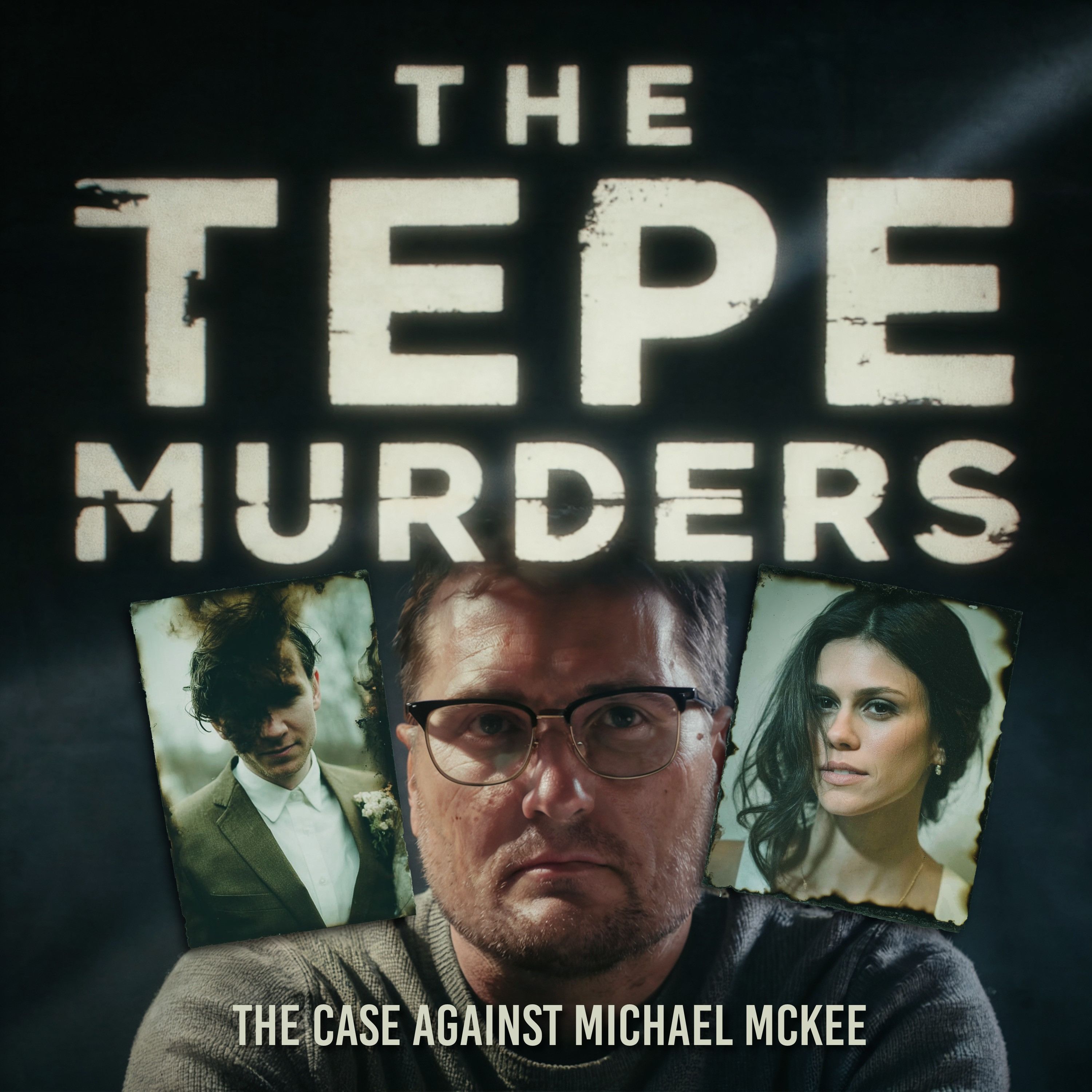
Coercive Control Survivors: Why the Fear Never Fully Leaves—The Tepe Case
PTSD rates among domestic violence survivors match combat veterans. That's not metaphor. That's clinical data.The long shadow of coercive control doesn't end when the relationship does. The hypervigilance that kept you alive becomes a permanent setting. The amygdala stays stuck in overdrive. Triggers hide in ordinary moments—a certain phrase, a car that looks familiar, a knock at the door.According to the unsealed affidavit in the Tepe case, surveillance footage shows Michael McKee walking through the Tepes' yard while Monique was at a football game in Indianapolis. She left at halftime. There's no documented tip-off. Her body just knew.That's not paranoia. That's what years of alleged coercive control do to a human nervous system. And it's what this episode is about.We examine what life looks like after you escape an abusive relationship—the identity excavation that happens when the person who entered that relationship has been systematically disassembled. The question "who am I?" that hits when the controlling voice is gone but still echoes. The shame survivors carry that was installed by someone who needed them to believe they were the problem.We also talk to the people nobody talks to: the partners of survivors. People like Spencer Tepe who inherit the fear alongside the person they love. Family members and friends trying to understand why someone who's been free for years still checks the locks three times. That behavior isn't baggage. It's battle damage.Monique chose love again. She chose parenthood. She chose joy while carrying years of alleged terror. That's not foolishness. That's the most courageous thing a human being can do.You are what you build after. And building is a choice you can make today.Join Our SubStack For AD-FREE ADVANCE EPISODES & EXTRAS!: https://hiddenkillers.substack.com/Want to comment and watch this podcast as a video? Check out our YouTube Channel. https://www.youtube.com/channel/UC8-vxmbhTxxG10sO1izODJg?sub_confirmation=1Instagram https://www.instagram.com/hiddenkillerspod/Facebook https://www.facebook.com/hiddenkillerspod/Tik-Tok https://www.tiktok.com/@hiddenkillerspodX Twitter https://x.com/TrueCrimePodThis publication contains commentary and opinion based on publicly available information. All individuals are presumed innocent until proven guilty in a court of law. Nothing published here should be taken as a statement of fact, health or legal advice.#MoniqueTepe #SpencerTepe #MichaelMcKee #TrueCrimeToday #PTSD #CoerciveControl #SurvivorHealing #Hypervigilance #TepeCase #HiddenKillers
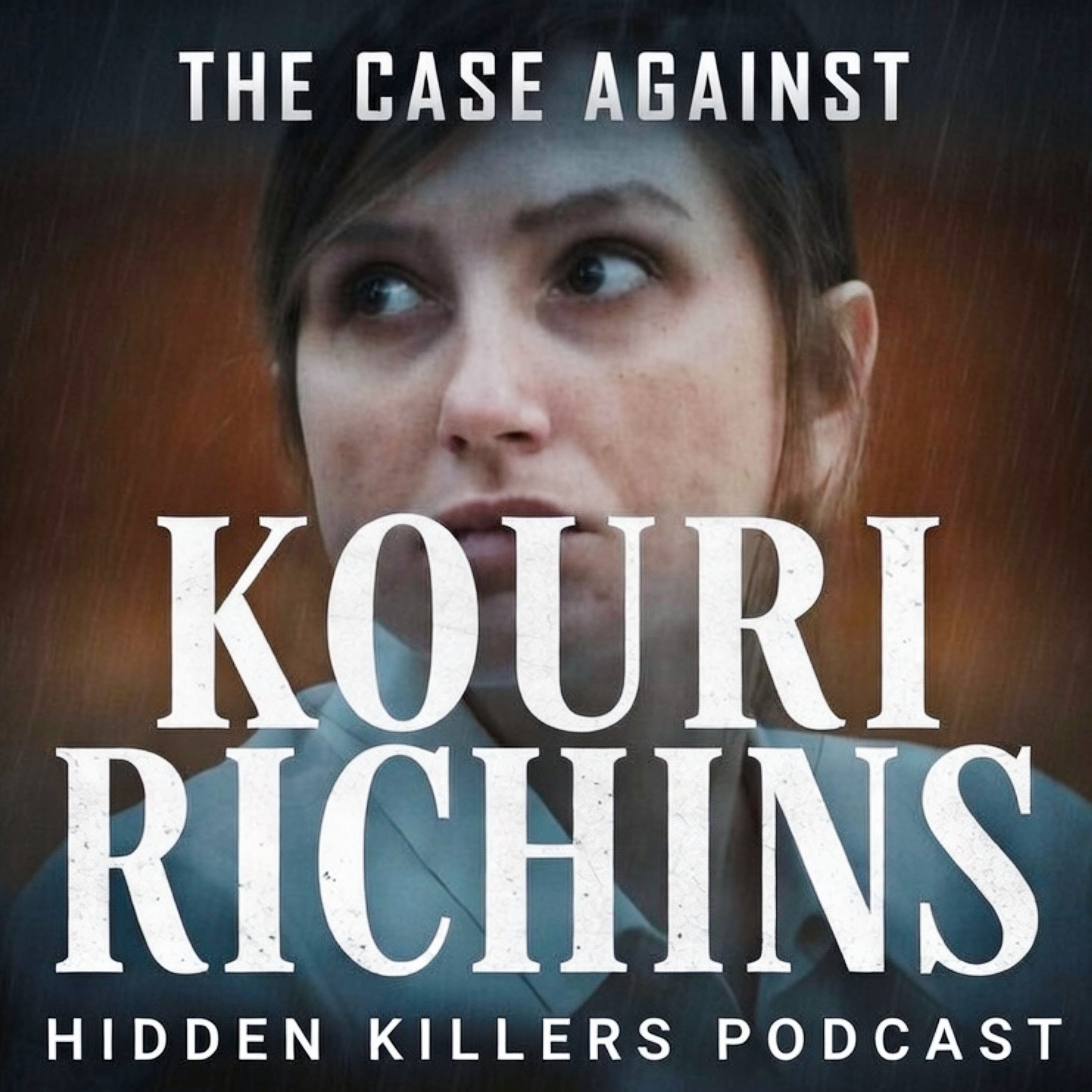
1: Kouri Richins Trial: Defense Attorney Breaks Down the State's Weakest Points
The prosecution has a credibility problem. And criminal defense attorney Bob Motta is here to explain exactly where it lives.Carmen Lauber—the housekeeper who claims she sold Kouri Richins fentanyl to poison her husband Eric—has been granted immunity in exchange for her testimony. But Robert Crozier, Lauber's alleged supplier, has recanted his statement. He now says whatever he sold wasn't fentanyl.No pills were ever recovered from the Richins home. No pills were ever tested. The physical drug evidence that should form the foundation of a poisoning prosecution was never collected.Bob Motta breaks down what that evidentiary gap means for both sides—and where the defense has genuine opportunity to create reasonable doubt.The state's case is circumstantial but substantial. Prosecutors allege Kouri took out nearly two million dollars in life insurance on Eric without his knowledge. They say her phone was unlocked six times in the fifteen minutes before she called 911—and that first responders noted Eric seemed like he had been dead a while. Eric's friends will testify he called them eighteen days before his death and said he believed his wife tried to poison him.That secondhand statement is devastating. Bob walks through how the defense approaches neutralizing it without attacking a dead man's friends—and whether it can be done.Then there's the orange notebook. Kouri allegedly wrote a "firsthand account" of Eric's death. Those self-authored, undated words could contradict other evidence in the case. Bob explains how defendants can be destroyed by their own writings in poisoning cases where forensic evidence is thin.This trial could go either way. Here's a defense attorney's roadmap of where the pressure points are and who has the advantage at each one.Join Our SubStack For AD-FREE ADVANCE EPISODES & EXTRAS!: https://hiddenkillers.substack.com/Want to comment and watch this podcast as a video? Check out our YouTube Channel. https://www.youtube.com/channel/UC8-vxmbhTxxG10sO1izODJg?sub_confirmation=1Instagram https://www.instagram.com/hiddenkillerspod/Facebook https://www.facebook.com/hiddenkillerspod/Tik-Tok https://www.tiktok.com/@hiddenkillerspodX Twitter https://x.com/TrueCrimePodThis publication contains commentary and opinion based on publicly available information. All individuals are presumed innocent until proven guilty in a court of law. Nothing published here should be taken as a statement of fact, health or legal advice.#KouriRichins #EricRichins #BobMotta #TrueCrimeToday #DefenseStrategy #CarmenLauber #FentanylPoisoning #KouriRichinsTrial #ReasonableDoubt #HiddenKillers
Leaving Is When People Die: What the McKee-Tepe Case Reveals About the Most Dangerous Moment
The most dangerous moment in domestic violence isn't the abuse. It's the escape. Research consistently shows the period immediately following separation is when lethality risk spikes. The abuser isn't losing a partner — they're losing control. And for some, that loss demands correction. Sometimes years later.Monique Tepe left Michael McKee within seven months of cohabitation. She filed for divorce. She moved back to Ohio. She did everything we tell domestic violence victims to do. According to prosecutors, eight years later, McKee allegedly drove hundreds of miles to kill her and her husband Spencer in their home while their children slept nearby.This episode examines the real barriers that keep victims trapped — financial dependence, children as leverage, trauma bonding, the credibility gap — and why the legal system is designed to respond to events rather than the patterns that precede them. Coercive control isn't a crime in most U.S. states. Restraining orders work on people who respect legal boundaries. The system waits for the crisis. And by the time the crisis arrives, it's often too late.The question was never about Monique. The question is about a system that left her unprotected.Join Our SubStack For AD-FREE ADVANCE EPISODES & EXTRAS!: https://hiddenkillers.substack.com/Want to comment and watch this podcast as a video? Check out our YouTube Channel. https://www.youtube.com/channel/UC8-vxmbhTxxG10sO1izODJg?sub_confirmation=1Instagram https://www.instagram.com/hiddenkillerspod/Facebook https://www.facebook.com/hiddenkillerspod/Tik-Tok https://www.tiktok.com/@hiddenkillerspodX Twitter https://x.com/TrueCrimePodThis publication contains commentary and opinion based on publicly available information. All individuals are presumed innocent until proven guilty in a court of law. Nothing published here should be taken as a statement of fact, health or legal advice.#TrueCrimeToday #MoniqueTepe #MichaelMcKee #SpencerTepe #WhyDidntSheLeave #DomesticViolence #CoerciveControl #LethalityRisk #TepeCase #SystemFailure









Get this podcast on your phone, Free


Create Your Podcast In Minutes
- Full-featured podcast site
- Unlimited storage and bandwidth
- Comprehensive podcast stats
- Distribute to Apple Podcasts, Spotify, and more
- Make money with your podcast