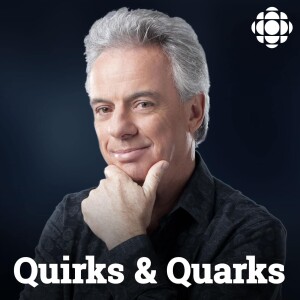
Episode List
Celebrating 50 years of Quirks & Quarks!
For our 50th anniversary celebration last October, we spoke with some of Canada's top scientists about their predictions for the future. We revisit our conversations with:Evan Fraser, director of Arrell Food Institute and professor of geography at the University of GuelphKatie Mack, Hawking Chair in Cosmology and Science Communication at the Perimeter Institute for Theoretical PhysicsLuke Stark, assistant professor in the faculty of information and media studies at Western UniversityLaura Tozer, assistant professor of environmental studies at the University of TorontoAna Luisa Trejos, professor in the department electrical and computer engineering and the school of biomedical engineering and Canada Research Chair in wearable mechatronics at Western University in London, Ont.Yvonne Bombard, professor at the University of Toronto and scientist and Canada Research Chair in Genomics Health Services and Policy
Sensing space junk, and other stellar stories
From filming a black hole to flaming hot water ice on Neptune, we revisit some of our favourite space-related stories from the past season.
Dust? Tongues? Uranus? It’s our Holiday Question Show!
On this week’s best of Quirks & Quarks, we revisit our annual holiday listener question show, with fascinating queries like:Why did a Canadian astronaut's eyesight change when she went to space? How is the dust inside our homes changing? Why do some professional athletes stick out their tongues when they play?Why are most fruits round, but bananas and pineapple are not? What would have happened if the dino-killing asteroid never struck Earth?We'll satisfy all these scientific curiosities and many more!
Monkeys swallow soil to eat more junk food, and other summery science
From the science of how we sweat to solving golf's greatest mystery, we revisit some of our favourite summery segments from the past season.
Using ants to make yogurt, and other producer picks
From elephant whiskers to Arctic rhinos and even science programming in prisons, we revisit some of our producers’ favourite stories from this season. Including:One of the world's earliest plant-eaters discovered in Nova ScotiaElephant trunk whiskers increase their sensitivity to better 'feel' their surroundingsYogurt with a creepy-crawly secret ingredientRhinos roamed Arctic Canada 23 million years agoBringing science education to the incarcerated




Get this podcast on your phone, Free


Create Your Podcast In Minutes
- Full-featured podcast site
- Unlimited storage and bandwidth
- Comprehensive podcast stats
- Distribute to Apple Podcasts, Spotify, and more
- Make money with your podcast
