
Episode List
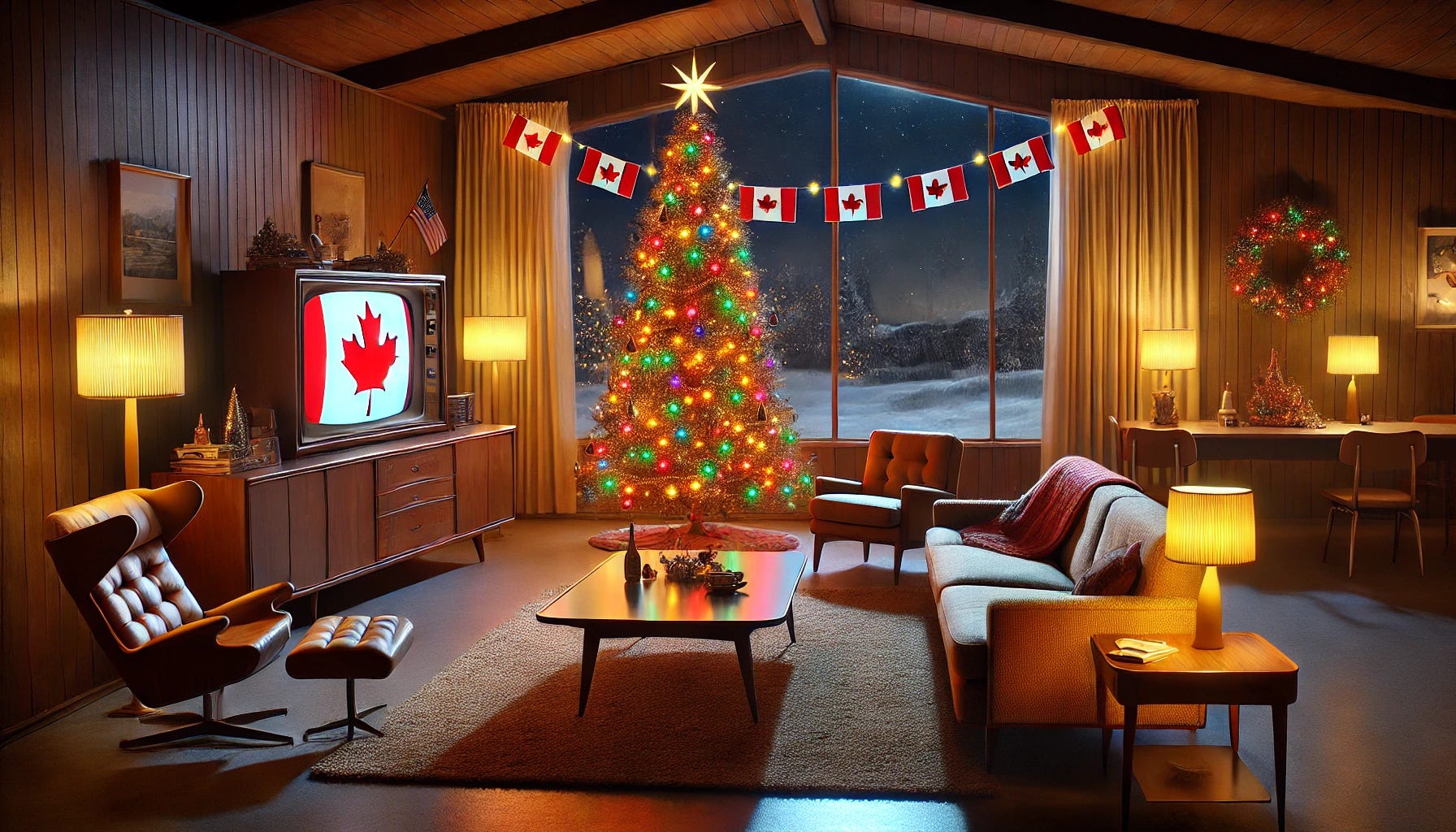
Christmas in Canada (60 Years Later)
Think fast: when I say “Canada,” what immediately comes to mind?If you’re like many people who are only familiar with some of the most basic, obvious stereotypes of North America’s coldest country, you might immediately start imagining giant evergreen trees, massive mountains, loads of snow, and rodents of unusual size (beavers, that is).Above and beyond its rugged, natural landscape, though, you might also think of some of its more symbolic elements: the Maple Leaf flag, these weird things called “Provinces,” coins with Queen Elizabeth on them, hockey, of course, and, if you’re aware of the weird foods they eat above the 49th parallel, deep fried pickles, poutine (french fries covered in cheese curds, and brown gravy), and ketchup chips.But if you’re like me, and probably a few hundred million other Americans, when you think of Canada, well… nothing comes to mind. Because you don’t think of Canada basically ever.I hate to offend the good people from the Great White North, but pretty much all day, every day, I don’t even remember that Canada exists. It’s like that meme I see on the internet from time to time, taken from the TV show Mad Men, where two men are in an elevator. The younger man says: “I feel sorry for you.” The older man says: “I don’t think about you at all.”That’s what Canada is like for me. Sometimes, I’ll be clicking around on the internet, reading a breaking news story about a tragedy unfolding in America in real time, perhaps something involving guns or private health insurance, or guns AND private health insurance.Random people with Canadian flag emojis in their profiles will start commenting about how infinitely superior their country is to mine. And that’s when it will hit me…“Oh yeah! Canada exists! Canada is a thing! I completely forgot about Canada! I’ll be darned.”Now, I will give our frozen friends a point here: they are indeed the superior country… in precisely one manner: they are literally above us. But only literally.Canada is superior to America in the same sense that Lake Superior is superior to the other Great Lakes. That is to say, it is above Lake Michigan, Huron, Erie, and Ontario.But that’s it.As far as the nation of Canada being superior to the nation of the United States of America? Don’t make me laugh. The USA has an economy that is almost 13 times larger than Canada’s, and three of our states have a larger GDP than their entire country (that’s California, Texas, and New York, in case you wondered).And although we have almost the exact same amount of raw land as each other, just the state of California matches Canada’s entire population, still leaving us with 49 states to spare.So… where was I? Oh yeah, Canada exists, and I forget that sometimes. That’s right.Now, to be clear, I have nothing against Canadians personally, and every Canadian I’ve ever met has been delightful. But it’s such a weird phenomenon: I almost never find out their true nationality until after I’ve known them for a while.Over the years, it’s happened to me a few times where I have a friend, or perhaps a coworker, and he or she (let’s say he, in this case) is just an all-around great guy, and we get along just fine. Then weeks, or perhaps months later, the truth about this guy’s identity eventually surfaces, and it’s always jarring when it does.Finding out that someone I know is Canadian is kind of like finding out someone I know has spent time in prison. It’s not necessarily something they should be embarrassed of, but it’s still such a shock when I find out about it. You know?Many times, I’ve had conversations that go something like this:* Me: “Wow, he’s Canadian?”* Someone else: “Yep. Crazy, huh?”* Me: “Yeah, but he seemed so… normal.”* Someone else: “I know. You wouldn’t be able to tell just by looking at him.”* Me: “Why didn’t he tell me himself? I feel weird now that I know the truth.”* Someone else: “Yeah, I wouldn’t mention it if I were you. Might be awkward.”Okay, I’m kidding… but only halfway.First of all, I am kidding about being surprised because Canadians are actually easy to spot from a distance. Not because of how they look but because of how they talk.Every man or woman I’ve met who came from the Land of Loons fails two basic American shibboleths:* They say “Eh?” a lot. (And don’t ever let them gaslight you and tell you they don’t, because they absolutely do. This is not just a stereotype—it’s the truth.)* They pronounce their “Oh” sounds really funny. They say: “aboat” instead of “about,” “prow-cess” instead of “process,” and so on.If I were an American soldier in an old black-and-white war film, and it was up to me to determine who the good guys and bad guys were without having the benefit of spies or special technology, and if we were somehow assuming that the Americans and Canadians were at war (with each other — I know this is a really big stretch, but just go with it), I’d make every soldier line up and give them a test.“Okay everybody, one at a time, repeat after me: ‘Oh, I’ve got a round about process for brewing beer.’”Down the line, I’d go, listening to each man repeat my test phrase until, eventually, one man would say:“Oh, I’ve got a roaned aboat prohcess for brewing beer, eh?”Knowing I’d got my man, I’d ask one more question to be sure: “Is that right? You do?” and he’d do himself in:“Oh, yeah, you betcha.”Boom! Canadian: bad guy! It would be so easy. They can’t hide.Second of all, I’m not kidding about being surprised because aside from those verbal tics that give them away, Canadians pretty much look and act like us in America. And almost all of the Canadians I’ve ever met—I met here.They’re here because they left Canada to come to America. Which, of course, makes me wonder, “If Canada’s so great, why did you come down here?”But when I do meet folks like this, I don’t even think of asking such normal-looking-and-acting people: “Hey, are you actually from here?” I just assume they are, like everybody else. And they pretty much are like everybody else: they fit in just fine.What does all this have to do with Christmas? Hold your mooses; I’m getting to that.Canada is… an interesting place. It’s been in the news quite a lot recently. Right now, as I write this, there’s a huge buzz online about the USA potentially taking steps to annex Canada and make it the 51st American state.There’s so much talk and cross-talk about it that I can’t even tell fact from fiction anymore. I don’t know who first suggested it, but it sounds like some people in America think this is a hilarious joke, while others think it’s a serious suggestion.It also sounds like a small minority of people in Canada welcome this idea, as far-fetched as it may be, while many more think that it’s a very bad idea and insist that it’s not even funny to joke about something this serious at all.Which, to be honest, makes it even more hilarious. The more they keep saying it isn’t funny, the funnier it gets. (And on a side note, when did Canadians, the people who have given us some of the funniest comedians in the world, lose their sense of humor?)So, to recap: my point here is that Canadians are a funny people who talk funny, and who used to be funny in the past but right now really aren’t all that funny, at least when we say funny things back to them.THE DRAMA!O, Canada! America’s hat… where the people drink milk from plastic bags and live in their hoases doan by the moantains… perhaps someday our 51st state… a country so easy to make fun of.All right, all right… so maybe I’m too harsh on Canada.Maybe I am sometimes guilty of directing an unfair amount of ridicule to the country that is home to Dudley Do-Right and his fellow Mounties, those wacky policemen who ride on horses and wear muskrat fur stetson hats and scarlet tunics.Maybe I am too fond of teasing the people who still somehow claim allegiance to the monarchy of the United Kingdom in one of the strangest, most antiquated acts of useless nostalgia an American could possibly imagine.Maybe I am biased against a nation where every single government document and official communication in the entire country must be spoken and printed in both English and French, despite only 3% of the population outside Quebec speaking French as a first language.But c’mon, Canada, you make yourself too easy a target!Bringing up Quebec is a perfect example: while America is currently joking about taking Canada in as another state, Quebec is still very seriously just waiting for its chance to finally declare independence from Canada once and for all.You hear that? Not even Canada wants to be part of Canada!Quebec has been trying to leave Canada for 45 years and just barely missed achieving total independence in 1995, with a vote that lost by one-half percent!(Note: If Quebec were granted independence today, Canada would immediately lose 23% of its population. That is the exact same percentage the USA would have lost if all the Confederate States had won the Civil War and successfully seceded from the Union. Can you imagine?)Okay, enough ragging on Canada. Let’s say Canada is actually a wonderful place and is home to some really great things—things to be proud of. Things that I can point to today and say: “I have to give Canada credit for that.”To that end, I tried an experiment to find out what those things would be. I asked an AI chatbot what things in my life it could pinpoint that I have personally benefitted from, have, hold, use, or eat, etc., that are clearly, conclusively, and uniquely from Canada or Canadians.The results were… interesting. At first, it gave me a list of 10 things that were mostly irrelevant. Things like:* Hockey: Obviously, it’s Canadian, but I don’t play it.* William Shatner: Wow, really? The actor? I had no idea. Are you sure he’s actually Canadian and he’s not just a prisoner?* The Canadarm: The big giant grabby arm thingy used in the NASA space shuttle.Okay, these were true, but this was getting ridiculous. None of these things had anything specifically to do with me. I refined my parameters and tried again.* Maple Syrup: Okay, you got me there. I love real maple syrup. I’m a big fan, although I’m pretty sure most (or all) of the maple syrup I buy comes from Vermont or New Hampshire, but still, I’ll concede a half point.* The Blackberry Smartphone: Wow, this one was a surprise. I did indeed own a BlackBerry Curve 8310 once upon a time—it was my very first smartphone. I had no idea the Blackberry was from Canada, so they definitely get a point there.* Insulin: Well, I’m not diabetic, and neither is else anyone in my family, but I have had friends with diabetes over the years. So, I guess I can be thankful that Canada gave us insulin, especially in the event that I should ever develop diabetes in the future. So, I’ll give them half a point here as well.In all, my AI chatbot experiment didn’t convince me that there’s anything directly or explicitly in my life that I have, hold, use, or eat that I can give full and complete credit to Canada for.But wait…You know what? Now that I think about it more, there are a few things that I have to give Canada credit for. Yes, digging much deeper into my memory banks and thinking more abstractly, I can actually come up with at least three on my own.YES, I CANADA!The first is Rush, the rock band from Toronto. I first discovered Rush when I was 18 years old, and from the very first time I heard the song “Tom Sawyer,” I was totally hooked. I liked them so much that I gave my firstborn son “Rush” as a middle name. So I can give Canada credit for my son’s name. Although he only hears his middle name when talking to government officials or when he’s really, REALLY in trouble.The second is the memories I have from my trip to Canada I took when I was in my teens. I went on a canoeing trip in British Columbia when I was fifteen, and that’s when I discovered just how beautiful nature can be.I think the most breathtaking outdoor scenery I’ve ever seen anywhere in my life was the wilds in and around Bowron Lakes Provincial Park, where we spent two weeks canoeing through glacier-fed lakes and portaging through muddy mountain trails. (And this is where I learned about ketchup chips and poutine.)On a side note, this trip was also where I discovered just how snippy some Canucks get when you say “American.” At a McDonald’s on our very first day in Canada, I told the lady behind the counter: “I only have American money. Is that okay?” She seemed remarkably offended by this and snapped at me.“We’re Americans TOO, you know!”No, I did not know. That didn’t make any sense to me at all.She was Canadian; I was American. What was she even talking about?My country was literally called “The United States of America.” Her country, which I had to leave “America” to visit, was literally called “Canada” and definitely not called “America.” (Well, again, that is until it becomes the 51st American state.)I felt this was exceptionally weird, so I asked some of the adults in my group what her deal was. They discerned that perhaps she meant that Canada is part of NORTH AMERICA, the continent.Oh man… that was just so dumb and pedantic.Seriously, do Mexicans want to be called “Americans” too because they’re also a part of the North American continent? If so, I’ve never met anyone from Mexico who has ever asked for that.Either way, I learned that a better way to phrase this was, “Do you take ‘U.S. currency?’” — This somehow placated people despite the hilarious fact that while we both technically use “Dollars,” my American—err—U.S. Dollars are worth more than their Canadian Dollars.So, fine. Knock yourself out, Canadian McDonald’s lady: I’ll agree that you’re an American just like me if that makes you happy. But I’m the one laughing: I only had to pay 64 cents of my dollars for every one of her dollars.Not bad, eh?The third is the biggest and the main point that I’ve been slowly building to this whole time but keep getting distracted: CHRISTMAS!That’s right. There is, in fact, one big, huge, enormous thing that is a major part of my life that I have to give total and complete credit to Canada for, and that is the Stauffer Family’s Christmas Eve Tradition.The funny thing is, I didn’t even make the connection until a week or two ago. With all this talk about Canada in the news and the upcoming Christmas season, I finally put two and two together for the first time.So, you want to hear the story about the Canadian tradition of eating food on the floor at Christmas time and how my American family has done this since before I was born?Okay. Here goes.In 1964, my grandpa, Ron Stauffer, a fighter pilot in the U.S. Air Force, was stationed at the Ernest Harmon Air Force Base in Newfoundland and Labrador to help work on America’s Distant Early Warning Line, which would protect us from sneak attacks from Soviet bombers.He was transferred there from Langley Air Force Base and took along his wife and children, including my dad, Ron Stauffer, his firstborn son.Although they only lived there for two years, the stories my dad and my uncles have told us over the years are truly amazing and, at least to me, sometimes terrifying.I heard stories about the mind-numbingly cold weather: something like 20 degrees below zero in the winter and up to 40 degrees below with the wind chill.I heard about so much snow falling that the roads would sometimes have walls of snow up to 9 or 10 feet high on the sides.I heard about snow piling up so high it would sometimes cover up the sides of a house so you couldn’t even open your door, and it would reach all the way to the rooftop, so kids could jump off or ride their sleds off the roof into the snow, safely, just a few inches below.I heard about nighttime being so cold that people who had to drive to work in the morning would have to use a “block heater” (whatever that was) to keep their car engine from freezing up (whatever that meant) and, failing that, how some people would even let their car run in their driveway all night long in order to ensure that they could actually drive it away the next morning.I heard about how my uncles would throw snowballs at each other and hike around in the nearby forests and joke about how they were running away from “Newfies” — the local people they almost never interacted with. (Being Americans stationed on a military installation didn’t offer much in the way of interaction with locals).I heard about seafood being so cheap and plentiful that sometimes, they nearly had it coming out of their ears. My grandmother would have freezers filled to the brim with giant glass jars of frozen lobster meat — much more than they could eat.Aside from all the seafood, Newfoundland sounded like a horrifying place to me—about as bad as I could possibly imagine, and I couldn’t understand how any human being would ever choose to live there.Maybe for my dad and his brothers, it was a blast, but I don’t like snow or cold and never have, so no amount of tobogganing down a hill behind the house would make me want to live there.The fact that Newfoundland was an island where you couldn’t drive away from it in a car, even if you wanted to, made it that much worse.However, there is one thing that Newfoundland gave my family that I will forever be grateful for, and it all started, in fact, due to that legendary, hostile, frozen weather.In late December 1964, the weather was so awful due to a massive snowstorm that the Air Force told everybody to stay in their homes and not leave. Being confined in the house didn’t seem like such a big deal, though, since it was Christmas Eve, and Grammy and Grandpa had preparations for a special family Christmas dinner.The boys and my grandparents, the family lore goes, were preparing for dinner, listening to the “Merry Christmas” album by Johnny Mathis. The Christmas tree was decked out in jolly fashion, and everyone was in a great Christmassy mood.Then, all of a sudden, in the howling snowstorm, the house lost electricity.Everything went dark. The lights went out. The oven shut off. The music stopped.Grandpa found a flashlight and took out a small transistor radio he’d gotten in Japan when he had been stationed there before and tuned it to the local station to listen for weather updates, music, and whatever else they could get on this one tiny little device.Well, now, Christmas was about to be completely ruined. Without power, the oven didn’t work, nor a microwave (if they even had one), so Grammy couldn’t even finish baking whatever she had planned for dinner.But that was okay; they just reverted to “Plan B” — pulling out all the cold foods from the fridge that didn’t need to be heated. Bread, meat, cheese, pickles, olives, crackers, cookies, and more.They wouldn’t let Christmas Eve be canceled by a little thing like losing power.Lighting candles and finding flashlights, they sat at the table while Grandpa tried to heat a pot of beans over the candle’s flames. When that didn’t work, he gave up, and they just resigned themselves to only eating cold food.Now, for whatever reason, situations that adults might call a “crisis” often come across to children as exciting and magical, and this was one of those moments. My dad, for whatever reason, came up with a brilliant idea.“Hey, Mom and Dad, can we go sit on the floor over by the Christmas tree… and eat our food there?” he suggested.And for whatever reason, they obliged. So, the family moved dinner from the table to the living room floor. Sitting in a circle on the ground, with candles lit and the lights out, their dinner of simple, cold snacks from the fridge began.Right after they started, however, just as suddenly as it had gone out, the electricity came back on. The whole house instantly lit up again. My grandparents, being the adults in the room, of course, said: “Hooray! The lights are back on. Now we can go back to the table.” But the boys were having too much fun.“Nooooo!” my dad pleaded with them. “Please, turn the lights back off! This is cool—let’s stay here and keep eating on the floor!”So, Grammy and Grandpa agreed and turned off the lights again so they could keep having Christmas Eve dinner on the floor around the tree. But since the electricity had returned, they could augment their candlelit evening: the Christmas tree was now fully lit with mini-lights, and the turntable worked again, so they could turn the music back on.Once again, Johnny Mathis was singing “O Holy Night” while the kids chomped down on their “whatever we could find in the fridge” dinner, and the candles flickered into the night.The next year, still living in Newfoundland, the electricity worked just fine, yet when Christmas came around, my dad asked once again: “Can we have Christmas Eve on the floor again?” and at his insistence, Grammy and Grandpa decided that what was once a response to a catastrophic weather event could now become an annual event.And so it did. On Christmas Eve, 1964, a family tradition began entirely by accident in Newfoundland, Canada. And that tradition has continued to this very day, when, on Christmas Eve 2024, four generations of Stauffers spread across the United States of America will spend Christmas Eve eating on the floor for the 60th year in a row.This special way of celebrating Christmas is so ingrained in my mind and habits that when I was younger and found out that some people didn’t eat Christmas Eve dinner on the floor, I wondered, “What’s wrong with them?”For me and my siblings, Christmas Eve is actually the most wonderful time of the year, to the point where Christmas Day is actually boring in comparison.It’s funny: when you grow up doing things a certain way your entire life, it’s easy as a child to assume that everybody else does, or, if they don’t, you find what they do to be inferior.When I found out that other people don’t do much to celebrate Christmas Eve, but instead, their big day is Christmas Day, and they celebrate it by eating dinner at the table, I thought, “Wow, that’s just… lame.”So, over the years, from the day I was born until today, I have spent Christmas Eve sitting on the carpet near our Christmas tree, just like those early days.Everyone in our family does it slightly differently. At my parents’ house, we usually had sandwiches made with “Dutch crunch rolls” filled with pastrami and melted Swiss cheese.Since I got married, my wife and I usually don’t go to the elaborate lengths of making fancy sandwiches but mostly serve basic cold finger foods like hard salami, Triscuits, olives, pickles, sliced Cheddar, etc.One thing that’s certain, though, is we still all always drink Martinelli’s sparkling apple cider, and we always play Johnny Mathis at every get-together, no matter whose house it is. Many of us also play “Home For Christmas,” an album by Amy Grant, which is a close second in terms of Christmas albums. And, of course, we’ve gone from playing vinyl LPs to CDs to now streaming MP3s on Apple Music.What’s funny about this is that over the years, I’ve noticed that when people outside our family learn about our floor-sitting tradition, they’re intensely curious about it, and some people I know who aren’t Stauffers have even copied it.A few years ago, my wife was part of a women’s bible study, and as Christmas came near, the leader asked everyone to share what their family’s special traditions were, if they had any.My wife told the room, almost embarrassed, about how we eat on the floor by the tree (I say “embarrassed” because, if you don’t have enough time to fully explain how this came to be and how it actually works, “eating on the floor for Christmas” can sound really strange).But the response from the ladies in the room was almost over the top. “Oh, wow! That sounds so cool!” they said. One woman even told her: “I want to try that!”A few weeks after Christmas, that same woman—a single woman who had never been married, had no children, and had always lived alone—did indeed try it… all by herself.She was thrilled to report back to my wife: “I did it! I had Christmas Eve dinner on the floor by my Christmas tree! It was so fun!”How funny.How funny that sixty years ago, on one random night during the Christmas season, the power went out across the city of Stephenville on the island of Newfoundland.And now there are dozens—and perhaps soon to be hundreds—of Americans who are still enjoying fantastic family holiday memories, and making new ones, because of it.When I hear the song “It’s the Most Wonderful Time of the Year,” I can’t help but smile when I hear the lyrics: “There’ll be scary ghost stories and tales of the glories of Christmases long, long ago.”For that’s precisely what we do every Christmas. Aside from watching “The Muppet Christmas Carol,” there are no scary ghost stories in our house… but each year, as we gather around the tree, sitting in a circle, someone, a young child, a family guest, or a new addition to the Stauffer family, will ask: “So what’s this all about anyway? Why are we sitting on the floor?”And I’ll smile as I once again tell the “tales of the glories of Christmases long, long ago,” where it all began.So, thank you, Canada. You’ve given my family over half a century of wonderful, unique holidays and special, happy memories.Merry Christmas, eh?Micron is a reader-supported publication. To receive new posts and support my work, consider becoming a free or paid subscriber. Get full access to Micron at micron.fm/subscribe
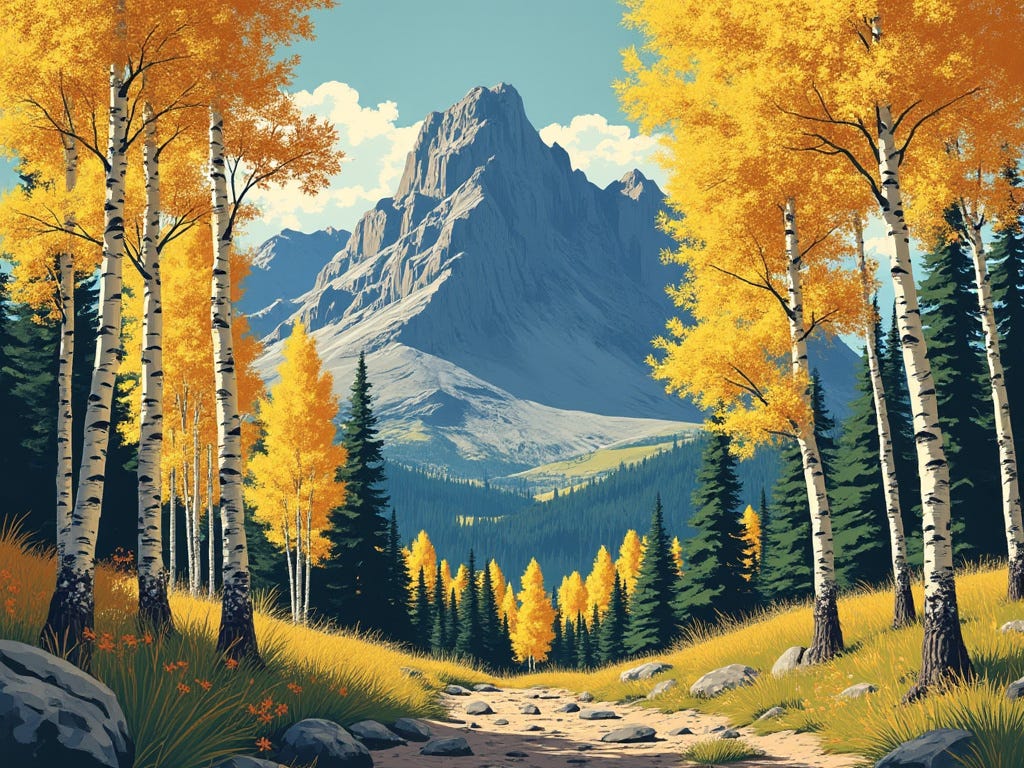
Backpacking With a Terrorist in the Rocky Mountains
For almost all of my childhood, growing up as a homeschooler was extremely lonely. My family knew very few families that homeschooled as we did, and I lost contact with the few we did know in California when we moved to Colorado when I was around 14.After we relocated from the west coast to our new home on the other side of the Rockies, just about everybody I knew that was my age either went to public school or private school, so I was almost always the odd man out.This was exceptionally frustrating and depressing: feeling like an outsider everywhere I went—always—really bothered me, especially because I knew that A) it wasn’t my fault and B) there was nothing I could do about it.Being a teenager in a conservative, homeschooled family with precisely one social circle (a church youth group) where we had almost nothing in common with everybody else in the group made things feel even worse.When we left California and moved to Colorado, our parents decided we would start going to a Baptist church, probably because they simply couldn’t find any Mennonite churches in the nearby area, and they figured that was as close as we’d be able to get.But it really wasn’t close at all: the kids at the Baptist church were nothing like us. They had never even heard of Mennonites before. When I told my new peers about the church I grew up in, they were completely clueless.“Huh? You’re Mormons?” more than one person asked.“No, Mennonite,” I’d insist.“Dude, are you saying your family is like Amish or something? Do you drive around in a horse and buggy carriage?”It was extremely embarrassing.So, we were already in the minority purely from a denominational perspective, and now, adding on the additional embarrassment of being homeschooled was just icing on the cake.The low-intelligence insults abounded:* Hurr, hurr… so you’re saying your mom’s your school teacher? Who’s your principal?* Will you take your sister to the school dance? Will you be the homecoming king and queen?* What happens if you get sent to the office? Do you have to go to your bedroom?* Are you the valedictorian of your house? Har har…But it wasn’t just that our lifestyles were different: our family’s values were extremely different as well. Everybody we knew was far more liberal than we were. I still don’t know why my parents chose to keep going to that church, but it was what it was.At least for the first year or two, my siblings and I were the only homeschoolers we knew in our entire group of friends, but I participated in everything the youth group had to offer despite the stupid jabs from the jerks I met because I was so desperate for friendship and connection of any kind.Some of the kids I met in Colorado were kind, but almost all of them were public schoolers who had lots of friends and who lived what seemed like fabulous lives that revolved entirely around themselves.They mostly came from very small families, often with just one or two kids, lived in big houses, participated in expensive sports and music programs, and spent every waking moment of their lives obsessing over shallow, vapid things like dating, wearing fancy clothes, watching tons of TV, and gossiping about everyone else they knew.When I compared my life to theirs, the thing that stung most of all was that almost every kid I knew, upon reaching driving age, was given a car as a present by their parents.There was just so much about their lives I couldn’t possibly understand. They went to dances at school, held hands, kissed each other, called each other “boyfriend” and “girlfriend,” watched movies I wasn’t allowed to watch, listened to music I wasn’t allowed to listen to, and were utterly, completely infatuated with “fitting in” and “being cool.”They were extremely concerned about fashion trends, knowing the top radio hits, reading the right magazines, and going to movie theaters as soon as the hottest new movies came out.I never understood this or cared about any of it, and it always bothered me that I felt like I didn’t belong in or around the one group of kids that I was supposed to spend time with.I wouldn’t say I hated these kids my age, but I was certainly unimpressed and often disappointed in them. I couldn’t understand how people could be so completely shallow, so easily amused, and yet be so impressed with themselves for doing so very little. It often seemed like everybody I knew who was my age just fantasized about growing up to be a cast character on the TV show “Friends.”When I completed the eighth grade and was now high school aged, I remember looking around at all the kids I knew and asking myself: “Do I really think I’ll still be friends with anybody here when high school is over?”The answer to that was, clearly and sadly, “no.” I was completely different in almost every way from all the kids I was surrounded with. I couldn’t imagine what their lives were like as carefree, “normal” public schooled kids, and none of them had a clue about what my life was like as a homeschooler.Until one day, when out of the blue, a stranger showed up at our church: a young man I’d never met before who finally seemed to have a few things in common with me… who gave me some hope.One random Sunday, I met Shane, a relative of one of the boys I already knew in the youth group. His family, for some reason, decided to start coming to our church.Shane was about a year older than me, about my height, had my same build, and even combed his hair to the side just like I did. He had a baby face that was COVERED in freckles, and he was socially awkward, but there was one thing about him that changed everything for me: he was a homeschooler.A HOMESCHOOLER.Just knowing that I was no longer the only homeschooled kid in the youth group (aside from my siblings) made him immediately noticeable and interesting.Whether he and I had much in common personally or not, I was absolutely going to get to know this guy. We were now the only two homeschooled boys in the youth group, and that alone meant I already had more in common with him than anyone else.Finally, I could talk to someone else who did his schoolwork at the kitchen table. Finally, I’d have a kindred spirit who knew what it was like to be done with school by the early afternoon, reveling in freedom long before everyone who went to public school was even released.Finally, I knew at least one other person who could also make fun of all the weird jargon public schoolers used. Strange words like: intramurals, mock trial, forensics, magna cum laude, hall passes, pep rallies, study halls, enrichment, advanced placement, international baccalaureate diploma programs, and all manner of bizarre concepts that all seemed like foreign language gibberish to me.I immediately struck up a friendship with Shane. And it seemed promising… at first.Like most other people I knew at that time, Shane came from a relatively small family: just four kids, which was just under half the size of my family, which had nine kids. That wasn’t that big a deal, but I noticed that he did seem odd in a way I could never quite put my finger on, and he had a weird sense of humor, but I was just finally relieved to meet someone else close to my age who lived in Colorado and who knew what it was like not having taken ACTs or SATs or not even knowing what those were.After we got to know each other over the course of a few months, he invited me to his house for a sleepover, and it seemed like my life was forever changed.His family lived in an enormous, beautiful home on acreage in the Colorado mountains. They had all kinds of toys: a jacuzzi, ATVs, BMX bikes, and lots of other things that made their lives seem incredibly exciting compared to mine.I could barely believe my good fortune in finding a new friend like this. He and I weren’t a perfect fit when it came to our friendship, but it seemed like we had enough similarities that it still made sense to be friends.Or that’s what I told myself. I think if I were being honest, I was actually feeling like a woman who’d been asked out on a date by a man who wasn’t especially handsome but who drove a Corvette.If I had said it out loud, I would have been embarrassed to admit it, but it was simply the truth that I was determined to develop a friendship with this guy, if only for his stuff. I wanted access to this kind of life.Whenever Shane and I spent time together, I always tried to make sure I went over to his house rather than having him come over to mine. Even comparing our houses felt embarrassing. He lived in what seemed like a luxurious mansion on a sprawling grassy property in the mountains that had a collection of incredible gadgets. My family lived in a decent-sized house, but it was also filled with people and was on a cramped lot in the city. And we had nothing like ATVs to play with.His house in the hills had a natural pond out front, complete with a wooden bench next to a giant evergreen tree, and stocked with Asian Grass Carp. In my mind, it looked like it could have been a set for a romantic movie.My house in the city had a figure-eight-shaped “koi pond” in the basement made of concrete and painted brick that was built in the 1970s and had been completely dry and abandoned for decades. It looked like it could have been a set from a wacky Woody Allen film or a documentary about people with hoarding disorders.I wanted so badly to leave our house and live in a house like his. Everything about it was exciting and fun, and I couldn’t imagine how much better his life was than mine.That first summer after I met Shane, I spent as much time as I possibly could at his house. They had an enormous fish aquarium in their massive living room, a huge back porch with an amazing mountain view, and a hot tub for soaking in late at night and looking up at the stars.They had a video game console (which my family had never owned), and they even had a DVD player, which was something I’d never seen before. Shane showed me just how sharp and clear the picture quality a movie could have on their ginormous flat-screen TV they had that probably cost them $5,000 or $10,000.All of this was intoxicating: I nearly felt drunk at the possibilities I never knew could even exist in this world and just how extravagant everything was.His family seemed nice, and they were so permissive compared to my family that it was almost unreal. His parents let us stay out late at night, chopping firewood, building our own campfire, and sleeping on the top floor of their chicken barn.I was almost deliriously happy with finding my new friend. His best quality, as someone older than me, was a total game changer: the fact that he owned his own car. And not just any car: he had a Jeep Wrangler.All of this coolness was almost too much for me to take in. Was it a dream? Was this an illusion? I now had a friend who lived in the mountains, who could now drive me around without my needing to ask my parents to pick me up and drop me off?Having a Jeep was far cooler than simply owning a car: he had four-wheel drive, and sometimes we’d go off-roading in the mountains around his house. This was a total blast.I hadn’t turned 16 yet, so this new development in my life meant freedom. Having a friend with all these capabilities: spending time in the forest, staying up late, driving to and from youth group events without needing to ask my parents for a ride, cruising across rivers and rocks in the mountains in a Jeep with the top down… it all seemed too good to be true.And, over time, the honeymoon phase ended. I started to realize that, aside from having some similar interests and background, Shane was really nothing like me. And his family was really nothing like mine.As I got to know him more, I slowly started to develop a feeling about him that was…eerie. I wouldn’t have been able to describe it if you had asked me, but I did sense that there was something about him I just didn’t trust.It was never anything big—just occasional side comments he made every once in a while that would catch me off guard or small actions he took that I found slightly disconcerting.I kept spending time with him anyway because I was so desperately lonely, and spending time with him, as awkward as it might have been, was still better than being stuck at home.One of the biggest differences between our families was how his parents were so much more laid back than mine, to a level where it almost seemed absurd.For one example, he was allowed to watch outrageously inappropriate movies like “Austin Powers.” The sheer number of jokes and quotes he shared from that disgusting movie made me feel sick.He laughed and laughed about some guy named “Fat B*****d” and a scene where one man apparently drinks another man’s diarrhea out of a coffee cup. Yuck. I never wanted to see that movie, even if I had been allowed to, and I couldn’t understand why he did.The way he took advantage of his parents’ hands-off approach caused me concern at times, too. One weekend, late at night, Shane, his brothers, and I all went to the back side of their property and lit a fire.They had a very normal-looking fire ring where they’d clearly had fires many times before. But at least on this night, one of his brothers took a gas can and poured gasoline all over the logs they were going to burn. In the process, though, he also spilled gas all over the rest of the ground, apparently thinking this would be a very funny way to start the fire.A lit match was dropped onto the firewood.WHOOSH!Everything in the fire pit went up in flames… as did all the little trails of gasoline that had been splashed all over the ground.Long lines of fire shot up all over the place in a labyrinth pattern, including where I was standing. We all jumped up in fear and ran away as the fire ripped right past us, between our legs, and all over the surrounding area.The other boys guffawed, falling over with laughter at how hilarious it all was. I was terrified that they might have accidentally burned down the entire forest surrounding their house. At a minimum, I thought we’d get in trouble for being so careless.But nothing happened.To his family, it was apparently no big deal. Their parents never even came out to check on us at all. I thought this was extremely weird. What kind of parents let their teenage kids play with gasoline and light crazy fires without supervision in the backyard late at night… when they live in the forest?But nothing bad happened, so I put it past me.One thing that impressed me about Shane was his ability to provide for himself financially, though I could never quite make the numbers work in my mind. For example, the fact that he was able to buy a Jeep at all was surprising to me because he didn’t even even have a job. He would sometimes babysit the neighbor kids, but he only got $10/hour for that and it was very part-time.I asked him how much he paid for it and was stunned when he told me it cost him $7,000. “Wow,” I said, shocked at such a large amount of money for a young man who was barely old enough to drive.He said he bought it used from a friend, which obviously explained the relatively low price for such an amazing car. But I was still confused: how on earth could he afford something at that price, whether it was a good deal or not?“All I can say is,” he told me, “it was an answer to prayer.”Well, his prayers must have been far more powerful than mine were; this big, beautiful Jeep Wrangler was the biggest answer to prayer I had ever seen in my life.When winter came, Shane invited me to go camping with him in the mountains with just the two of us. As a young teenage boy, I had gone camping before, but almost always with my dad and never without adults.“Really? You mean just you and me?” I asked.“Yeah, just us,” he said. “It’ll be great. I’ll drive. We can go backpacking on Mount Evans. Have you ever gone backpacking before?”I never had. Well, I had brought a backpack with me on camping trips before, but I’d never gone backpacking. I didn’t know exactly what that meant.“Do you have a rucksack?” he asked.“A what?” I wondered. I’d never heard of this before.He told me a rucksack was like a fancy backpack for people who want to go hiking a long distance in the mountains. It’s built in such a way that it distributes the weight high on your back, so it’s not so heavy, and feels less fatiguing.“I don’t think so,” I told him. All I had was a camouflage-colored “tactical” backpack that I’d gotten at an army surplus store.“That will work,” he said. “Just make sure to only bring the bare necessities. We’ll be carrying everything in and out on our backs, so we want it to be as light as possible. I am ruthless when it comes to weight: I even cut the twisty ties on my plastic bags in half. Whatever you can do to reduce the weight, do that.”Not having gone “backpacking” before, I didn’t appreciate the full weight (pun intended) of what he was saying, but I would soon learn.He invited me to come with him for a long weekend: Friday night, Saturday night, then Sunday night, then we’d come back Sunday afternoon if memory serves. So we’d essentially be gone for three days.Shane said it wasn’t really worth going all the way up to the mountains for less time than that. It was so much work just to get there and back that we’d want to have as much time as we could actually backpacking.I asked my dad for permission to go, and when I told him our plans, he almost blew a gasket.“You want to be gone for THREE DAYS?” he almost shouted at me, incredulous. I was confused about what the big deal was.“I don’t even know this guy. He could be a criminal, for all I know! No, you can’t be gone for that long. You’re not old enough for that. Let’s try one night to start and see how that goes. Maybe you can take a longer trip next time.”Well… that was really embarrassing, but I accepted it. I called Shane to tell him I could go, but only for one night. He wasn’t happy about this at all.“Oh, come on, what’s the big deal?” he ranted. “Your dad sounds like a real control freak!”In the end, he decided it was still worth going anyway. So, he picked me up from my house, and we hit the road.Driving up the highway from the city to the mountains in a Jeep with the top down was an unforgettable experience. The autumn chill was in the air, the cool breeze zipped by our faces at high speed, and the view of the trees and valleys we drove past was simply breathtaking.At one point during our drive, we had a really awkward moment: somehow, in the course of our conversation, we found out that we both had a crush on the same girl. I had been smitten with one girl in the church youth group—and always that same girl—since my family first moved to Colorado, and we started going to that church.I don’t exactly know why it took me by surprise that he was interested in her as well, but I didn’t expect it. Let’s just say: the tone in the Jeep changed immediately.We’d been chatting up a storm the whole ride so far, but this unexpected news created an unwelcome tension between us. Silence passed. I looked at Shane not just as a friend now but as a competitor of sorts… almost an enemy.Part of me wanted to tell him: “How dare you! I was here first!” as though that really meant anything. But another part of me said, “Hold on, Ron, you’re not in a relationship with her anyway, so calm down.”But the fact that he told me he’d recently made a pass at her was galling. Who did this new kid think he was, butting in on my plans to pursue the prettiest girl in the group?A few miles down the highway, we carefully worked past the uneasiness of this potential rift in our friendship and moved on to other topics.I realized at that point, though, that Shane had always felt like a bit of a threat to me. And not just because he wanted to start dating the girl I was secretly in love with… it seemed like he always had a strange anger management problem: I suspected there was a rage quietly simmering under the surface of his otherwise pleasant demeanor.We kept driving, and the sun started to descend in the sky. I could feel the air get colder as we drove higher in elevation. We kept talking, and at one point, I brought up a topic that really bothered him.“That really CHAPS MY ASS!” Shane shouted angrily in response to whatever it was—I can’t remember what—that clearly ticked him off. This outburst completely shocked me.First of all, I had never heard this phrase before. “Chaps my ass?” Oh my goodness, what a naughty phrase this was!Second of all, I saw his anger here for the first time, and it scared me. It wasn’t even directed at me, and I was thankful it wasn’t. But I was nervous about ever doing something to make him angry at me. How would he act then? I didn’t want to know.I felt even more uncomfortable when I realized that he was driving, and I was now completely at his mercy. I couldn’t even drive a car yet, I didn’t own a cell phone, and I was about to go deep into the mountains, completely off-grid, to spend the night somewhere I’d never been before, with just myself and this new friend I’d recently made who was only a year older than me.As we headed up the steep mountain passes, I pondered all of this. Dad was right, I thought. I was glad we were only going for one night.There were many things he said on that road trip to Mount Evans that made me more and more concerned. I started telling him about one of the other girls in the youth group, Sarah, who was a good friend of mine.“Sarah?” he interrupted me. “Who’s that? Oh, I know her… she’s got nice legs!”What? This interjection made me lose my train of thought, and I couldn’t even finish my sentence. Why was he talking about Sarah’s body like that?I had never really thought of her like that before… and even if I had thought of her in a romantic way, I certainly hadn’t noticed her legs before… and I definitely wouldn’t comment on them.What was that about? Why was he talking like this?Worse, when talking about another girl in our group, he told me how he’d seen up her dress while she was sitting down on a bench during a church potluck.“She wasn’t wearing any underwear!” he snickered.What? Once again, I was nearly tongue-tied, trying to take in what I was hearing. Here I was, thinking I’d found a fellow conservative homeschooler from a Christian family who was just like me… yet, it turned out, he was actually nothing like me.This guy came across as a creepy, sex-crazed maniac who liked dirty jokes, looked up girls’ dresses, and constantly commented on their bodies, and was somewhat of a pyromaniac. I started to regret coming on this trip at all.I realized that there had been some warning signs about his strange behavior a few weeks earlier. I had a flashback to where we had been sitting in church on a Sunday morning. As the pastor droned on during a sermon I wasn’t paying much attention to, Shane, who had been sitting next to me, gave me a nudge.“Psst! Hey, hold out your hand,” he whispered.Confused, I held out my hand in compliance and watched as he brought his closed fist above mine, then dropped some small, heavy items into my hand.Bullets.Staring in utter confusion, my brain tried to comprehend what I was now holding in my palm. Why had he just given me a handful of bullets in the middle of the pastor’s sermon?Why did he even have bullets with him in the first place? He was just a teenager barely older than me: what purpose could he possibly have in bringing bullets with him to church, and why did he drop them in my hand without warning?I looked at him, mystified, and saw him smiling with a big, goofy grin.“Where did these come from?” I asked him, annoyed, almost outraged.“It’s no big deal. I had them in my pocket,” he said, snatching them back out of my hand.He put them back in his pocket, where, I presumed, he probably had at least a few more live rounds. The way he was still smiling and giggling as though it were so hilarious made me feel very uncomfortable.My mind started to worry… did he have a gun with him as well? He really seemed to like surprising people with this sort of dangerous “shock factor” humor, but I found it odd and unnerving. I had originally told myself it wasn’t a big deal, but by now, all these incidents were adding up and making me more and more concerned.At the end of our drive, we finally arrived at a trailhead and parked the Jeep. We took our gear out of the Jeep and put everything we had on since it was getting cold: hats, gloves, hiking boots, sunglasses, and, of course, our backpacks. Shane had his fancy, expensive, lightweight rucksack, and I had my squat, heavy Army surplus bag overloaded with way too many items.Trekking up the trails, we walked for what seemed like hours in the pristine, cool mountains. Breathing heavily in the crisp, thin air, we stopped for water breaks, panting as we gulped from our water bottles.“I made a mistake,” I told him as I took off my backpack during one break.“Oh, I know,” he said, chuckling. “You brought way, way too much stuff.”“I didn’t realize how heavy my pack would become! It didn’t seem so bad when I first put it on, but now…” breathing so hard, I couldn’t finish my sentence.“You have to learn to live without things if you want to go backpacking,” he said. “I only bring the essentials, and I even cut things in half when I can.”“I know,” I replied. “But I wasn’t sure what to bring. I didn’t have any dried food, so I brought cans.”“You brought CANS?!” he almost shouted. “No wonder your pack is so heavy!”He laughed at my idiocy but then gave me a surprisingly generous offer.“Here, gimme your backpack. I’ll carry it for a while. Take mine,” he said, handing me his rucksack.“Wow, thanks!” I said, surprised at such a kind gesture.How nice. He didn’t have to do that, I thought.We hiked and hiked deeper into the mountains and stumbled into a grove of aspen trees. I’d seen aspen trees before, but not up close like this: we were entirely surrounded by hundreds—maybe thousands—of beautiful aspen trees partially covered in patches of snow.The sun was no longer directly overhead but cast a sideways glint on the trees. I noticed that one big section of the aspens looked very strange: they were all crooked.They looked curved, almost like a fish hook or a shepherd’s crook. I asked Shane if he knew why this was.“Oh yeah, it’s because we climb them and ‘bend’ them down. It’s a lot of fun.”“What? You ‘bend’ them?” I asked, shocked.“Oh, it’s a blast. You have to catch them at just the right time when the wood is still soft: you climb up to the top, and because it can’t hold your weight, the whole tree starts to bend over like that, and then you jump off. I’d show you how, but it’s the wrong time of year for it.”I was incredulous. “Wait, you mean you bent these trees?”“Oh, yeah. Well, not just me. All of us. My brothers and I come here all the time and climb them. Lots of people do it.”“So they just stay this way? Isn’t that kind of… destroying them?” I wondered.“Huh? Not really,” he said. “It doesn’t hurt ’em. Look at them: they’re still alive.”“Yeah, but they’re all… deformed now. Do they ever ‘heal’ and go back to normal?” I wondered.“Uhh, no? I don’t think so,” he said.“And you’re okay with that? You’re just out here deforming dozens of trees out in the forest like that?” I challenged him.“I guess,” he said slowly, irritated at my question.I didn’t like this at all. I didn’t understand how someone could just damage whole swaths of nature and laugh at it like it was a joke. It bugged me a lot, but there was nothing I could do, so I just let it go as we put our packs back on and resumed hiking.Eventually, we reached a clearing in the woods where we decided to make camp. After cleaning up the ground, we pitched a tent near the base of a tall tree in a spot that had a nice overlook of a river. It was all so beautiful.We started a fire and made dinner. Sitting here, next to a fire, eating from a can, by myself, with just one other guy around my age, I felt like I was now finally approaching manhood.My dad wasn’t here. In fact, there were no parents or adults here. It was just two teenage boys out in the mountains, doing what young men do. What a freeing, inspiring, manly experience.The sun finally set, and the sound of the river combined with the crackling of the fire was soothing. We talked late into the night.Shane told me how he loved coming out here to the mountains and wanted to move to the woods someday if he could. He dreamed of finding a wife who would live in the wilderness with him, completely off-grid, in a place that looked just like where we were.I couldn’t imagine a life like that: I was happy to be there, in that moment, for a time. But to make a life out of it? That seemed almost impossible.And good luck finding a wife who’d be willing to do that, I thought.I told him it would be hard to find a woman who’d want to leave all the comforts of home behind to live out in the wild like this, but he immediately disagreed with me.He told me how his own mother would have signed up for something like that.“How do you know?” I asked.“When my parents got married, the first thing they did was take a ten-day honeymoon out in the wilderness just like this.”Ewww, I thought. No showers, no running water, and no electricity for your first ten days as a married couple?I rebuffed him: “Going on a honeymoon for a week and a half is a totally different thing than actually living that way forever.”It was hard for me to understand his desire. He lived in a big, luxurious house, with a hot tub, and all the toys a young man could desire. It was the best of both worlds: he already had a mountain view but also lived close enough to town that he could hop in his Jeep and run down to a local Walmart to get whatever he wanted whenever he wanted.Why would someone with a life like that want to leave it all behind? I wanted what he had so badly and couldn’t understand why he didn’t appreciate how amazing it was.There were a lot of things about Shane that confused me, and now, some things even started to make me feel self-conscious and self-loathing, but also… jealous.For one thing, Shane was a real outdoorsy-type guy. This was obvious from the simple fact that this was the first time I had ever gone on a camping trip like this, while he apparently did it all the time.He loved the rough, tough mountain life: camping, hunting, hiking, fishing, being outside, shoveling snow, off-roading, and just exploring out in the wild far away from everyone else.I didn’t like almost any of that, but ironically, my dad did. I always had a feeling that my dad was disappointed in who I was because I didn’t like the same things he did.Spending time with Shane on this camping trip made me sad: I felt like he was the kind of young man my dad had always hoped for in a son. The very idea of hunting sounded awful: I couldn’t imagine spending money on a tag, freezing my butt off in the mountains, sitting with a gun out in the wild for days on end, hoping the right kind of prey walked past me, or potentially going home empty-handed.But I knew that if my dad had come along with me on this trip, he and Shane would have had a blast together, while I would have reluctantly followed along simply to be included in the group.My dad had always said his favorite movie was “Jeremiah Johnson,” the 1972 Robert Redford film about a man who left the world behind to live alone in the wilderness. I never wanted to be like that, but I knew that Shane did. So the fact that they had this in common, even though they didn’t know each other, made me feel awful.Why did they both crave this wild, grizzled mountain-man life so much? What was this obsession with living in the forest far away from people, shooting animals, wearing their furs, and spending every night in a sleeping bag?What was so wrong with living in the city and having running water, store-bought food, and toilets that flushed like I wanted?As the fire died down and we retired to the tent, I wondered about all this silently.The more I thought about it, the more I realized I actually had almost nothing in common with Shane at all.Nothing bad happened between us in the mountains, and (aside from our strange discovery in the Jeep that we liked the same girl), not a cross word was spoken between us the entire time.But I had a sad realization that this guy, who I originally thought was like me, was so irreparably different from me that we actually weren’t even friends. We were just two people who knew each other.When I met him, I had hoped I’d found a best friend, but I had misjudged badly.The next morning, we woke up, stoked the fire, had some breakfast, and then set out to do some exploring. The river right next to our camp was half-frozen: there was ice on one side while the other side had free-flowing water.I walked around on the frozen side, exploring the ice while Shane busted out his fly fishing rod and tried his luck at catching some trout.I found a beaver lodge and wondered if there would be any live beavers in it. I spent probably half an hour pulling up logs, wondering if there were any beavers actively living inside. I was astonished to see just how tightly those fat little suckers can build a shelter: it was very, very well constructed.Log after log, I kept pulling it apart, hoping to find a family of beavers deep inside the giant, muddy mass of denuded tree branches. I became so physically exhausted that I stopped to take a breather and realized just how silly my actions were.If I pull the roof off of this beaver house and I actually find beavers in here, what would I do with them?For some reason, I hadn’t thought of this before.What if they are angry at me for destroying their house? Would they run after me and attack me? I knew that beavers had gigantic front teeth: could they bite me?I realized that I had been ripping apart a wild animal’s house for the pure sake of fun and curiosity and that this was exactly what Shane had done by bending the aspen trees. This made me feel hypocritical, so I stopped.I walked over to where Shane was fly-fishing and watched him. I asked about the weird, fat orange string he was using and wondered how that didn’t scare away the fish. He gave me a detailed explanation about how fly casting works, and while everything he said made sense, all I could feel was that I was in the wrong place.I didn’t really want to know about fly fishing, and I couldn’t imagine wanting to. I couldn’t imagine ever wanting to learn to fly fish at all. And after an hour or so of watching him fly fish and not catch anything, I felt like this whole trip had been a waste.I didn’t want to be in the mountains anymore. I knew we had to hike back to the car, and I’d have to carry my ridiculously overloaded backpack that was super heavy all the way back. But that was okay: I just wanted the trip to be over.I felt so out of place. I looked all around me at the mountains. It was all so beautiful. But it also felt… so empty, alone, and depressing. I was so far away from civilization, and it was so completely, overwhelmingly quiet. This day wasn’t like yesterday: today, the sun was nowhere to be seen. It was just cold, overcast, and gray.I thought about how I didn’t like the vast, open remoteness of the mountains.…or backpacking.…or hunting.…or fishing.…or Shane, really.And I felt embarrassed by that. All I wanted was a friend—finally, a homeschooled friend—who I could talk to and hang out with. I thought I had found one until I took this trip and realized that all I found was someone my dad would have wanted to be friends with.We went back to our site, broke camp, and hit the trail back to the Jeep. It was a much quieter hike heading back to the trailhead than it had been on our way up here. I was just ready to be done and go home. I was really glad that my dad said I couldn’t go for longer than one night. I felt like even this one night was too much.When we got back into town, Shane dropped me off at my house, and he went back home. And that was it.As far as I recall, I never went on another trip with him anywhere. But I did ponder my relationship with him and this whole weird experience of meeting someone who almost became my friend but never really did, and I thought of what might have been but wasn’t.A few months later, he told me his family was moving to another state. He was really, really excited about this because they were going to live in the mountains. The vast, deep, remote, rugged mountains.I was genuinely happy for him. I did not want to move deep into the wilderness like he was going to. But he did, and so that was fine by me. I wasn’t angry at him, and when he left, I had no feelings of “good riddance” or anything like that.I was only relieved that, with him gone, now I could pursue the girl I had always had a crush on like I always wanted to. I never did, though: one of the other girls in the youth group told me that my crush was “too preppy for me.” I had no idea what that meant at the time, but I sooned learned that this was essentially code for “she’s too rich for you.” That really hurt, but I think it was actually a fair assessment. All the kids seemed richer than me. So, once again, I learned a new concept from public schoolers about unwritten social rules that I didn’t understand because I wasn’t like them.A few years passed, and I never heard from Shane again. I started wondering what he had been up to since I last saw him.Was he finally living his best life as a mountain man with a wild mountain wife somewhere with a wild mountain child, homesteading, completely off the grid, out in the middle of nowhere, shooting animals for dinner and sleeping by campfires at night? I was dying to know.So, one evening, I got online and searched for his name to see if I could find out what became of him. Maybe we could connect on Facebook or something.Nothing could have prepared me for what I discovered.Shane had indeed gotten married. Good for him.He had indeed had a child. Good for him.But no, he was not living in the remote reaches of the vast, uncharted wilderness.He was in prison.I gasped out loud as I saw pictures of him on my computer screen. An FBI mugshot. An orange jumpsuit. My friend, in handcuffs, in a court room.This young man I’d gone camping with had been arrested and was now serving time in federal prison for crimes related to domestic terrorism. His rap sheet included a long list of unbelievable charges:* kidnapping* conspiracy to commit murder of federal officials* solicitation to murder* conspiracy to kill officers and employees of the United States, including law enforcement officers* …and more.WHAT ON EARTH?!My head spun as I tried to make sense of it all. What? Why? How? What had gone wrong?All I ever wanted was to find someone I could finally have something in common with as a conservative homeschooled kid in my teen years. I thought I had found one, but, in fact, I had started a friendship with a strange person with creepy habits who had turned out to be a domestic terrorist, and is now serving more than 25 years in prison.I don’t know what to make of all of this. I had—and have—so many questions. If Shane were here today, it would be hard not to just unload on him.* What on earth were you thinking?* Are you out of your damn mind?* Why couldn’t you just be normal?In addition to just being angry, though, I think I’d also vent about how I felt hurt:* Why didn’t you ever call or email after you moved away?* Did you miss me at all?* Did you even think of me as a friend, or did I just imagine it?I think I’d even have some questions for myself if I’m really being honest:* I knew something was wrong… should I have said something?* What could I have said, and to whom?* Could I have stopped him somehow from going down this destructive path?I don’t really know the answers to any of these questions.What I do know is that the only camping I’ve done since that trip to Mount Evans is with my sons. I carefully watch them when they light the campfire, and we don’t use gasoline. I’ve still never gone fly fishing, I still don’t own a rucksack, and I’ve never disturbed a beaver’s lodge ever again.I’m extremely cautious of people who give me bad vibes, and I listen to that eerie, uneasy feeling. I really trust my gut now, even if I can’t fully explain my reasons.I make it a point to meet all the friends my children want to spend time with, and I try to keep close tabs on who they are and how much time my kids spend with them.And I will never… ever get close to someone who jokes about looking at teenage girls’ private parts at church.It’s been a strange, lonely road since high school. I like to go on trips by myself these days. And I constantly try to remind myself that it’s okay that I didn’t turn out the way I believed my dad wanted.I’ve still never gone hunting, and I don’t want to be Jeremiah Johnson, and I’m not jealous of Shane anymore. I’ve never been arrested. I’ve never been convicted of terrorism. And I’m not in prison.Micron is a reader-supported publication. To receive new posts and support my work, consider becoming a free or paid subscriber. Get full access to Micron at micron.fm/subscribe
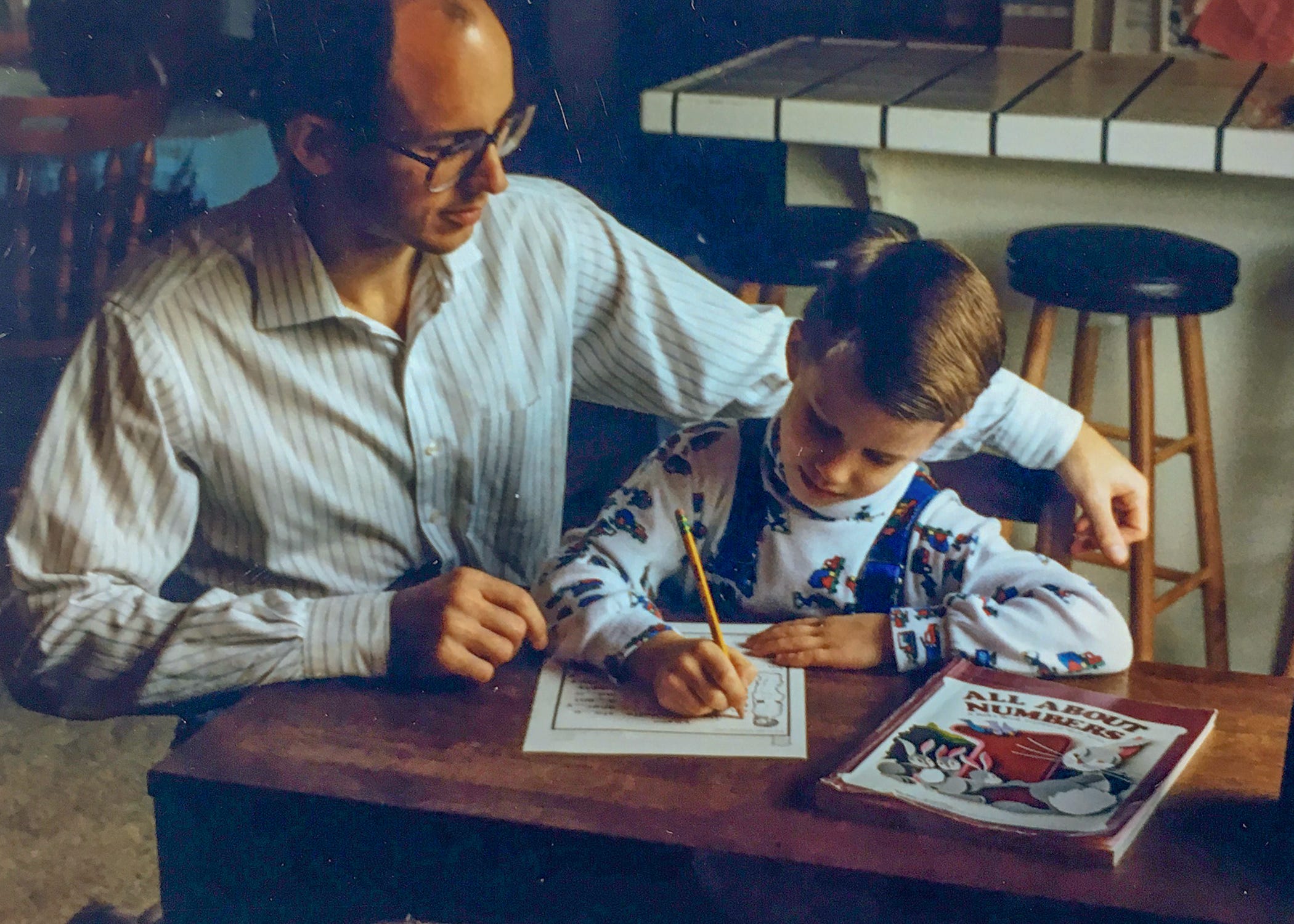
The 1992 Election Through a Child's Eyes
In the late 1980s and early 1990s, like many Christian families in California, my family became fairly politically active.People in our small social circle of conservative homeschool families often lamented just how “awful” California was becoming. Our politicians weren’t representing us well and were turning our state into a cesspool of oppressive government, high taxes, punitive regulation, and ever-increasing crime.So, my dad, who had never held elected office before, decided to get involved in politics for the first time. He started small: in 1990, he founded a group called Citizens for Responsible Education, which vetted a few candidates to run for the local school board, backed them financially, and helped manage their campaigns.I was just five years old at the time, but I still have vivid memories of that whole season of life that started back then. In addition to learning all about local elections with school boards (which was kind of ironic, if you think about it—we were homeschoolers, after all), my dad also supported a few races in the California State Assembly, U.S. Congress, and U.S. Senate.I learned a lot about the political process as I sometimes spent evenings and weekends helping my dad volunteer for various campaigns. We screen-printed signs, posted those signs on the side of the road, stuffed envelopes and mailers, and walked door-to-door, handing out flyers for candidates.As far as I recall, I was never really asked if I wanted to be a part of all this; I think it was just assumed that I would help. It was a family affair. I don’t know that I would have said “no” if I’d been asked, but I didn’t understand what it all meant and why we were doing it in the first place.So many of the things people discussed and the words they used were totally foreign to me. What was a “cannadate,” anyway? Why did people who were in charge of schools call themselves a “school board?” And weren’t “principals” in charge of schools?My very literal brain pictured a big sheet of plywood—a board—that said “school” on it; when I found out that school board members weren’t even teachers themselves, that made even less sense to me.There were so many words thrown out by people who thought apparently it was all so completely normal, but I was often confounded upon hearing terms like: elections, budgets, deficits, primaries, taxation, districts, surveys, polls, precincts, voter registration, and even legislation.What did it all mean? What were educational vouchers, the Clean Air Act, the Endangered Species Act, and the Three Strikes Law? Why were we talking about baseball in politics? And why were people so passionate about things like this, to the point where they’d argue and even get angry about them?The only thing that was clear to me was that some people were “for” certain things, while others were “against” them. I didn’t always have time to figure out what that meant, but I asked my dad to explain this whenever I could.“Dad, what are ‘Mello Roos?’ Are they good or bad?” I’d ask.If my dad supported an issue, it made sense that I’d support it, too—it would surely be the “right” position. After all, my dad was a “good guy.” He was a Republican. That meant Republicans were good, so I was probably a Republican, too.The inverse seemed just as logical. If the other guys were against an issue we supported, they were taking the “wrong” position. If they were against my dad, they were “bad guys.” Those people were usually Democrats, so that meant Democrats were bad guys.Micron is a reader-supported publication. To receive new posts and support my work, consider becoming a free or paid subscriber.But I found out my dad didn’t exactly see it that way. He would correct me and say: “They’re not ‘bad guys.’ They’re our ‘opponents.’” This made little sense to me, and I wondered why we’d be opposing other politicians if they weren’t bad guys. Despite all the baseball metaphors, this wasn’t just a game after all; this was a moral battle of right and wrong.Isn’t politics all about good guys fighting bad guys? I had assumed so, and I still thought so, even though my dad said it didn’t quite work that way.Of all the things we did to help support our candidates, going door-knocking was, by far, my least favorite activity. Usually, I’d go out with one or two adults, and we’d hit the road with giant stacks of flyers and door hangars.Walking for blocks at a time, we had big lists of registered voters that someone else on our team had previously highlighted, with each address color-colored. We knew who was and wasn’t registered to vote, which houses had Democrats, which had Republicans, and which had unaffiliated voters.Based on our list, we’d hand out different types of literature. If we knew the residents of one address were Republicans, we’d give them a large, glossy door hanger with one particular message on it that had nice, full-color photography. These cost us a lot of money to produce, so we had to give them out very carefully.If we knew they weren’t Republicans, we’d leave behind a smaller door hanger with a different, shorter message. These were printed on much uglier “highlighter green” paper with black smudgy ink that was much cheaper to print.I didn’t mind simply placing a door hanger on the knob and walking away, but we weren’t allowed to do that: we had to actually knock on the door. Every time I knocked on a door, I winced, hoping nobody was home.We had a rule that went something like: “If you knock three separate times, and nobody answers, you can just leave a hangar on the door.” I always wished nobody was home so I could just knock, place my flyer on the door, and run away.(Sometimes, I admit, I would cheat, inflating my numbers by pretending to have knocked three times when I’d only knocked once or twice. I’m sorry, Dad.)More often than not, though, someone was actually home. I always hated it when people came to the door. Usually, they were nice, and they’d open the door but leave their screen door closed and ask us what we wanted in a very defensive manner.I would tell them I was passing out flyers for Richard Pombo or Dan Lungren (US Congress), Larry Bowler (California Assembly), Tom McClintock (US Senate), or Mel Panizza (Stockton City Council).Depending on their political views, they might then open the screen door and step outside to talk to us. They’d tell us about who they voted for in the past or what their concerns were about the current election.On occasion, people were nasty. They’d open their door just a crack and angrily shout: “What do you want? Are you selling something? Go away!” and slam the door.One thing I learned very quickly going door to door was how I could immediately find out which houses had dogs. If a family had a dog in the house, the dog would start barking either when it detected me walking toward the house or the second I knocked on the door or rang the doorbell.Side note: if I hadn’t already hated dogs by this point, this experience certainly cemented my disdain for them. Walking up to a stranger’s house to talk to people I didn’t know, who didn’t want to talk to me, about topics I didn’t fully understand was already hard enough… but it was made worse by vicious-sounding dogs that I thought wanted to bite me or kill me.The ONLY thing that made going door-to-door worthwhile was how, after a long stretch of walking and knocking, there was a prize at the end: we would get a soda at the local gas station. Give me a 32 ounce icy root beer, and I was as good as new.At the end of the election cycle, some of our candidates won their elections, and some didn’t. In my mind, this was hard to comprehend: we had worked equally hard for all of them, and they all seemed to support the same issues, so there didn’t seem to be any rhyme or reason as to why one person would win, while another would lose.This was my first introduction to just how fickle voters are during elections and how, in truth, there is zero “science” in “political science.” Elections are ultimately decided by all kinds of things, I have found, but logic and common sense are not among them.After two years of my dad’s initial involvement in politics, he decided to jump in with both feet by running for the California State Senate.This was a shock because, aside from his recent efforts backing other candidates, he had no personal political experience to speak of. The only time he had been elected to anything in the past was being elected as an elder at church.(Once again, I heard the term “elder board” and pictured a bunch of old men sitting around a table made out of a giant board of wood… or something like that).So, when he made the announcement that he would be running for office himself, that really surprised me. Looking back now, if I were an adult who wasn’t related to him, I would have advised him not to run at all. I’d have told him he would make a bad politician for one simple reason: he’s far too honest.My dad is bold and direct; he’s willing to say things people don’t like to hear. In real life, that tendency helps make a man a good husband, father, and friend. But as a politician seeking elected office, it can often be career suicide. As I learned from an early age, despite all claims to the contrary, voters actually like politicians who lie to them.Oh sure, they’ll say they don’t like lying politicians—they will rant, rave, and scream angrily about how much they don’t like those g*ddamned, no-good, lying scumbag politicians… but you want to know the honest truth? Most people actually require politicians to lie to them in order to earn their votes.If you ask a candidate for the California State Senate, “Will you reduce crime in our city?” a politician giving you an honest answer would tell you the truth like this:“Actually, no, I can’t lower crime in our city. I can’t promise you anything like that at all. In fact, there’s very little I can do to affect crime in Stockton while serving in the State Senate.”Who would vote for someone like that? Answer: very few people. People will instead vote for the candidate who makes up complete, utter fairy tales:“Absolutely, I will reduce crime by half! If you elect me, I will fight for you in Sacramento. I will lower the crime in your very neighborhood. If you want cleaner streets and safer schools, give me your vote. A vote for me is a vote for a safer Stockton!”This answer is a giant pile of steaming crap. It’s all lies. But it’s what people want to hear.It was very strange to see how this played out in real life. As a stickler for truth myself, I have a hard time accepting it, still to this day. This is also why it was confusing to me to hear that my dad decided to run for State Senate.Why would he want to personally get involved in low-down, no-good, dirty politics like that? Was he going to become a lying scumbag too, who over-promised and under-delivered for our friends, family, and neighbors?I asked him about his decision and why he was choosing to run when he’d simply supported other candidates in the past. Running for office himself now, this was going to be far more disruptive to our lives. His explanation impressed me, even back then, as a young child.“Well, Ron, everybody keeps complaining about how bad things are and how they’re getting worse. And they all keep saying, ‘Somebody ought to do something about it.’ But nobody’s willing to actually do anything. Nobody is willing to ‘be that somebody,’ so I will.”That notion has stuck with me ever since: my dad wasn’t just spouting rhetorical feel-good nonsense; he was literally taking action to make a change in what seemed like a hopeless situation. As it turned out, he had tried to recruit multiple people to run for State Senate, just like he had in the past with the school board.But nobody was willing to!He dared a few people: “Oh, you’re fed up, are you? Really? So run for office!” and they’d withdraw like a shrinking violet, deciding they didn't actually care that much.It was due to the reluctance of everybody else that my dad was going to become a politician himself. He decided to “be that somebody” everyone else was hoping would come along but who they weren’t willing to be themselves. This was a bold move.By now, he had helped support candidates for the school board in Stockton, the school board in Lodi, the Stockton City Council, the U.S. Senate, the U.S. House of Representatives, and the California State Assembly, but nobody was willing to step up to fight for us in the State Senate. So he would.Patrick “Pat” Johnston, a Democrat, would be my dad’s opponent or, as I secretly thought, the “bad guy” we’d be fighting against. Pat Johnston was a career politician who represented everything that was wrong with California. He despised the Second Amendment, the death penalty, homeschooling, religious freedom, and the free market, and he loved big government, heavy-handed regulation, abortion, taxes, environmentalism, and labor unions.He had helped push so hard for environmental regulations and useless red tape in the Central Valley that businesses were now leaving California in droves. That hurt our industry, took away our employers, eliminated our jobs, and shrank our tax base.Many companies were relocating to greener pastures in other states that welcomed these businesses with open arms. In fact, the biggest part of my dad’s platform in the 1992 election was reversing the damage from business regulation that was now causing companies to flee California en masse.My dad traveled all over San Joaquin County, asking farmers, manufacturers, and other business owners what their number one complaint was about living and working in the Central Valley. The answer, he said, was almost unanimous: too many rules, too much regulation, too much red tape and bureaucracy, and too many taxes. This poor environment was making it impossible to run a profitable business, so they were all looking at downsizing, going bankrupt, or relocating to other states.So after my dad’s announcement to run against Pat Johnston the “bad guy,” what followed was a season in my life that was a totally wild ride. A whole year of crazy, exciting, exhilarating, disappointing, angering, political involvement.This time around, we kids weren’t just observers who occasionally volunteered for trivial tasks like envelope stuffing. On my dad’s campaign, our whole family got involved in a movement of political activity.Aside from knocking on doors and placing signs on the side of the road at random intersections, we also met many of the local movers and shakers in the California Republican party and nationally known figures.At various stages, my parents met with Alex Spanos (the billionaire and owner of the San Diego Chargers), Lt. Col. Oliver North, and even Vice President Dan Quayle.This was a bizarre education for me as a young child: to meet people as a political volunteer and also for simply being Ron Stauffer, the son of Ron Stauffer, the political candidate.It was SO strange seeing MY OWN NAME plastered on roadside signs, flyers, business cards, and even hearing my name spoken on TV and radio ads! People were talking about me! RON STAUFFER! What a trip!Meeting the people involved was even weirder. Women thought I was cute and would pinch my cheeks and tell me so. Men thought I was smart and handsome and would shake my hand and tell me how wonderful my father was. All of it was so confusing and hard to comprehend.Who were these people? How were they all connected? …and why did they care about my dad? How did they even know him? Women fawned over him in a way that seemed really awkward: beautiful ladies I’d never met before telling me how wonderful my dad was—that was very, very strange.So was seeing people from other families: friends and strangers, husbands and wives together, making phone calls and driving around town doing errands for my dad… was this real life? My dad, my boring ol’ dad who sold hospital beds was actually kind of… famous? What?The structure of government made even less sense to me. What even was the State Senate, or the California Assembly, or the U.S. House, or the City Council, or the School Board for that matter… and who cared? What did it all mean?I asked my dad once, “Dad, if you win, when will we have to move to Washington D.C., and will it just be for a while, or forever?” My dad laughed at me and told me: “Don’t worry. We won’t have to move to D.C.”But that didn’t make any sense. I wasn’t stupid. I knew Senators worked and lived in D.C. Why was he telling me this wasn’t the case? Why did adults always do this to me?During the election, my dad’s mother, “Grammy,” drove up from Bakersfield to stay with us for a few days. While she was in town, we all went to a huge political event at a place called “Winners Gaming & Sports Emporium.”Our whole family was there: mom and dad, the boys in our suits and ties, and the girls with their fluffy bangs and lacey dresses, everybody dolled up as fancy as we could be. There were balloons and confetti everywhere and music and food: a spirit of celebration was in the air.I couldn’t understand any of what this was all about, and nobody would tell me. I knew it had something to do with my dad running for State Senate, obviously… but what?I asked Grammy, “Is this a party to celebrate Daddy?” She seemed annoyed by my question and waved me off, saying, “No, honey, no, no, no.” But I wasn’t swayed.I put two and two together: my dad was running for a political office, and this was a political rally. People were excited and happy… there was cake, confetti, music, balloons, and everything, and my dad was there. What else could it be?“Yes!” I decided, “This IS a party to celebrate Daddy,” I shouted out loud for anybody to hear in defiance of what Grammy told me.But it still didn’t make any sense: we were a conservative, Christian, Mennonite family. What on earth were we doing at a ginormous casino where people were gambling on horse races, drinking alcoholic cocktails, and smoking cigarettes?The cognitive dissonance was stupefying.Also, once again, why had we been supporting candidates for public school boards when we were homeschoolers? Our parents had always derisively referred to “public schools” as “government schools” and said they were “evil.”So much about all of this made no sense to me.Certain parts of the political campaign did make some sense to me. Politics, in general, as I’ve said, was very easy for me to understand because it was so binary:* The Democratic party was the problem; the Republican party was the solution.* Pat Johnston was a bad guy; my dad was a good guy.At a basic level, this made sense. It was so simple: it was black and white. Dad was good, Pat was bad. End of story. But would the voters see it that way?Even before my dad became involved in politics in a tangible way, we were always raised with an extremely partisan view of right and wrong. The political struggle between left and right was so clear.For example, when my older sister’s cat gave birth to kittens, my dad said: “When kittens are born, they start out as Democrats. When they get older, they become Republicans.”This, I found fascinating. “Wow, why is that?” I asked my dad.“Well, because when they’re born, they’re blind. When they get older, they open their eyes.”“Oh,” I thought. “It’s a joke.” But my very literal brain needed time to process this.Still, the pure simplicity of good vs. evil, right vs. wrong, and Republican vs. Democrat made a lot of sense to my autistic mind.What did not make sense at all was how the political process played out. There were many things that happened that I did not like at all. Many of the tactics that people engaged in—even Republicans—made me feel uncomfortable.Even as a seven-year-old, my “b******t detector” was fully formed, and there were times I was asked to participate in posturing that I knew was fake, and that really bothered me.At one point, a photographer was hired to take pictures for the press of my dad holding a shotgun to show his support for gun rights. Due to the challenging sunlight at that time of day, though, the photographer got irritated after several ruined takes and insisted my dad take off his glasses.So he did, and then, apparently, they liked the photos. Except that I (and everybody who knew him) knew that my dad was legally blind without his glasses. He couldn’t do anything without them—certainly not shoot a gun without them!This really rubbed me the wrong way. I felt like it was deceitful and vain to publish pictures of my dad without his glasses on just because it “looked better” for the camera.Also, as far as I knew, he didn’t even own a shotgun. If he did, I’d never seen it before, and one thing I was certain of was that he had never gone hunting before. So these pictures that made it look like he was hunting ducks in the swamp were totally fake.Why was his campaign releasing obviously staged photos of him pretending to shoot a gun he didn’t use on a fake hunting trip he never went on while not wearing the glasses he would have needed to pull the trigger? That bugged me a lot.Worse, one day, a photographer came to our house to photograph “a day in the life of a conservative, Christian, homeschooling family.” I didn’t like the way this guy was intruding into what was normally our very boring, very private daily ritual, and I did not want to be on camera.But nobody ever asked me. I was just told that this was what we were doing. During the shoot, the man suggested we get a photo of my dad “homeschooling” one of his kids.As his oldest son, I was told to awkwardly pose for the camera seated at my desk. I did so grudgingly and placed my hands where the photographer told me to in a completely staged pose. In the picture, my dad looks over my shoulder as I pretend to fill out a spelling worksheet for the camera. Everything about this picture was fake, and I hated it.First of all, we were ridiculously overdressed. My hair had been brushed especially nicely, and I was wearing a turtleneck shirt and overalls. I hated fancy clothes like this, and I was way overdressed for the occasion. I was sure people would see through this obvious costuming.Second of all, my dad never helped me with my English homework. He helped me with math sometimes, but not English. So pretending like he taught me this subject, to me, seemed like a lie.Third of all, they made me pretend to fill out a grammar and spelling worksheet that I had already completed. You can’t see it in the photo, but all the blanks are already filled in. This felt deceptive to me as well.Fourth of all, the worst part: I was given a broken pencil to hold for the photo. This actually outraged me.In the end, in the picture, I can be seen sitting at my desk, overdressed in a turtleneck shirt with Richard Scarry’s Busytown cartoon characters on it, posing with a pretend smile, acting like it was normal for my dad to loom over me with his arm around my shoulder while I’m using a broken pencil to fill out a “G is for Giant” vocabulary worksheet that was already filled out.Basically, I was forced to produce political propaganda. I didn’t like any of this.I felt used, like I was being complicit in a lie. I told my dad and the photographer that I didn’t want to pose for this perfectly staged photo that was supposed to look like a surreptitious picture of a perfect homeschooling family in action, where a photographer just happened to be there.I especially couldn’t get over the fact that the stupid pencil I was holding was broken—it literally had no lead in it. I was told to just pretend to be writing words on the page so the cameraman could get his photo. This made me angry: I held up the pencil and showed it to the photographer: “This is broken… see? It doesn’t have any lead in it!” I have never forgotten his response.“It doesn’t matter; the camera won’t pick that up. Nobody’s going to know.”Of all the things I’d endured in this political campaign, pretending to be a perfect member of a perfect homeschool family, smiling, shaking hands, and going door to door, this hurt me the most.We were lying to the public. I was lying to the public.I didn’t even want to be photographed in the first place.I hated the photographer’s response. I hated his attitude. I hated politics.Nobody ever asked me! I never wanted strangers with cameras coming into our house, spending time, thought, and effort to pose us in the most photogenic way possible in order to pretend we were some perfect conservative, Christian, homeschooled family, as though that were the reason why people should elect my dad to the State Senate.Also, this pressure put on us kids was enormous. I felt like, “If I screw this up and don’t participate with a good attitude, my dad might lose the election, and it will all be my fault.”But I wasn’t a part of this political campaign. I wasn’t running for office!I felt like a pawn in a game I didn’t consent to, but I also felt like I had no voice. I was just a cog in a wheel in a machine, and I had been told—not asked—to play a part in it.I hated all the pomp and circumstance of these everyday events that seemed so important to the press, to the campaign, and to the voters.Why did we have to dress up all nice and get family photos at Lodi Lake in black and white? Why did the newspapers care what we looked like? Why did we have to smile for the camera in nice, clean clothes, with perfectly coiffed hair, and pretend everything was just peachy all the time?Why did everybody look at us kids as ornaments or decorations and not as actual living, breathing human beings with our own thoughts, feelings, and opinions?I despised the feeling of lying, no matter how small it was and no matter how little anybody else seemed to care about it. When I saw that picture of myself on a campaign brochure, pretending to fill out that “G is for Giant” grammar worksheet with my stupid broken pencil, I was angry. Literally, legitimately, angry. But what could I do? Nobody listened to a seven-year-old.Although I hated being paraded around in front of a camera like I was a perfect son with a perfect father in a perfect family, there were some things my dad did on the campaign trail that proved to me (and a lot of other people) that he was a very brave man and a tough fighter.One notable incident involved a kerfuffle between my dad and the Chief of Police. In a bizarre situation, despite the fact that Stockton had been listed by the FBI as one of the “Murder Capitals of the USA,” our idiot police chief had somehow decided that giving concealed carry gun permits to lawfully abiding citizens was a bad idea and said that it wouldn’t reduce crime.So, like many law-enforcement officers in California started doing in the 1990s, he just decided to stop issuing permits altogether. That was too much for my dad.One night, I watched our local television station and saw my dad, the balding man with enormous glasses, the State Senate candidate, Ron Stauffer, hold up a picture of my family in front of the video camera that showed all of us kids and challenged Stockton’s Chief of Police by name for his cowardly stance on self-defense.I wish I could find that video clip. I know it’s out there somewhere. Reconstructing this moment from memory and from newspaper clippings I found, he said:“Are you telling me, Chief Chavez, that you don’t believe my children are worth protecting?Are you telling me, Chief Chavez, that I should not be able to defend these children from a murderer?Let me tell you, Chief Chavez: I am not a violent man, but I would die for these children.…and I would kill for these children.”DAAAAAAAAAAAMMMMN!!!It was very weird seeing my face in a family photo held up to a television camera at city hall in a political scuffle between my own father and our Chief of Police.What a crazy experience. I could not make sense of everything I was seeing with my eyes and hearing with my ears.What I can say is that, over the years, I have met many people who grew up wondering if their fathers would have protected them or laid down their lives for them if their lives were threatened. …and I have never had to wonder about this with my own father.How could I doubt his sincerity when I watched him—with my own two eyes, on live television—directly challenge our Chief of Police while holding a picture of me? I have never forgotten that.Make no mistake: no matter how much I felt like a pawn in this political campaign, that day, my dad proved he had Cojones.As election day finally came into view and summer turned into autumn, one of the final events I remember is how my mom sent my dad and me on the strangest errand of my childhood.Over the years, my mom had made hundreds, maybe thousands of plates of delicious, homemade cookies baked carefully with love in every bite to give to friends and family we cared about.But count me as surprised when my dad and I got in the car to give a plate of fresh-baked persimmon cookies to none other than our nemesis, the archrival himself—the bad guy!—Pat Johnston!This blew my mind.Pat Johnston was the enemy! He was a Democrat! He was the evil man my dad was running against to save California! Why on earth would we give him cookies? A bad guy like him didn’t deserve my mom’s delicious cooking! We wanted him to lose the election, not have a jolly holiday! What was up with that?Of course, as Christians we knew that Jesus tells us in the bible: “Love your enemies.” So we would be giving my mom’s highly-coveted cookies to Pat Johnston because he was our enemy.Fine. I accepted this grudgingly but not gracefully.I was confused and angry the whole time it took to drive to his house. I was even angier when we parked the car across the street, and looked a Pat’s massive, expensive, luxurious, house.I was seething with rage and jealousy as we walked to Pat’s front door holding a plate of yummy, orange-colored, persimmon-flavored cookies. I knew these cookies would be delicious, and I knew all that deliciousness would be totally wasted on that stupid Johnston family—the Stauffer family’s mortal enemies.I was galled by the fact that it was always the smallest families we knew who inhabited the largest, most comfortable homes while the largest families, like ours, shared tiny houses… and the Johnstons were no exception to this unfair fact of life.We walked to the front door, and I pressed the doorbell. I jumped when I heard an actual DOORBELL, with real tube bells ringing throughout this giant, expensive house that was home to only two kids.I wasn’t exactly sure what would happen next. Here we were, political enemies, bringing an offering—a peace offering?—of home-baked dessert.I wondered if the Johnstons would think we were trying to poison them: I imagined the old trope of a medieval knight offering a poisoned glass of wine in a chalice to his enemy in a toast before they went off to fight each other in a jousting duel.Wouldn’t they be able to see through such a ruse? I wondered. It’s too obvious.Of course, I knew that we hadn’t poisoned the cookies—or, I was pretty sure, at least. But how would the Johnstons know?Surely, they would suspect the cookies were poisoned, right? Why wouldn’t they? This would be the perfect way for my dad to win the election: the bad guy is cruising along toward victory until, alas, he dies suddenly, for no expected reason, and, miraculously, my dad wins!Tah-dah! It was perfect! Except that wasn’t the plan at all, and I knew it.After the doorbell rang… nothing dramatic happened. A surprisingly tall, aloof teenage boy with pierced ears (gasp!) opened the door and said: “Uhh, hello? Can I help you?”He took a very confused look at me holding a plate of cookies with shrink-wrap on it, then looked up at my dad. My dad told him he was Ron Stauffer, and I was Ron Stauffer, and we were bringing over some cookies for a happy early Thanksgiving to the whole Johnston family.He seemed absolutely baffled and slowly reached out to accept the plate of cookies, saying, “Oh, wow, thanks, I guess…” and then closed the door.I knew the cookies weren’t poisoned, but I was certain their son would have suspected they were.Why else would your political opponent come and bring you cookies in the middle of an election? I imagined that after he closed the door and we walked back to our car, he probably threw the whole plate in the trash can and never even told his parents that we had dropped by.I didn’t really hate this young man. I didn’t know Pat Johnston’s son, whatever his name was. It’s just that he was the first-born son in the Johnston family, and I was the first-born son in the Stauffer family, and I was positive he was the exact opposite of me in every way.He was tall, he probably went to public school, his family was obviously rich, he lived in a giant house, and he only had one sibling. I hated that he had pierced ears. And I really hated that now, we gave them cookies.They never gave us anything. They probably never even thought of us!They were just living their stupid lives in their huge, stupid house with their enormous stupid income, being stupidly popular, and going to a stupid public school like stupid, normal kids.But even aside from the way we were raised, this young man, his father, and their house represented evil in my mind. Pat Johnston was as bad as any bad guy could be. First of all, he was a Democrat.Second of all, he was an incumbent politician who represented everything that was wrong with California. He was the guy who had made everything so bad in the first place.Third of all, and most crucially, he was my dad’s opponent.My parents often talked at home about how horrible Bill Clinton was. As far as we were concerned, Bill Clinton was basically Satain in our house. But Clinton lived far, far away from us. So he didn’t seem real to me.Pat Johnston, though, was very real: he lived in our same town. I had seen him in the flesh; I watched him debate my dad on TV. I had just gone to his house and even given his son a plate of cookies for Pete’s sake (for Pat’s sake?)In my mind, Pat Johnston was the worst man I could think of, like a comic book villain. He opposed everything we stood for: our family, our faith, our freedoms, and our lifestyle.I felt like my dad was Superman, and Pat Johnston was his nemesis, Lex Luthor.Sometimes, I would literally imagine him hiding out in his underground lair, smoking fat cigars, rubbing his hands together with glee, and plotting the evil takeover of our country. He was the worst bad guy I could possibly imagine.And there was only one man who could stop him: my dad, Ron Stauffer.Except, of course, in the end, he couldn’t. My dad lost the election. I was completely crushed. It had all been for naught.He lost 57% to 37%. My dad has gone on record saying he was “creamed” by his opponent; but the stubborn child in me refuses to admit that. I don’t believe that he—that we—wasted our efforts. I like to say that we “almost won.” Because, damn it, we almost did.Election night was one of the most profoundly disappointing days of my life, still to this day. We stayed up late, watching the returns on TV, and when I saw the red and blue bar charts superimposed on the screen, I knew that we had lost.It was just so sad. I looked at the results and was personally affected. It didn’t seem fair.All that work: the door knocking, envelope stuffing, rally-going, meeting-and-greeting, cheek pinching, posting of roadside signs, posing for intrusive cameras—we did all of that, just to lose?How?! We were the good guys! Couldn’t people see that?When it was all said and done, as sad as it was, the next few days were, strangely, a total high for us: it was like we were floating on clouds.We knew my dad lost the election, but there were so many people who were supportive and who openly told us that they’d voted for him. Folks I never even imagined came out of the woodwork to tell us they were sad my dad lost because they’d voted for him. For goodness’ sake, our babysitter told me she voted for my dad! I hated that woman with a passion, but after election day, I was shocked and pleasantly surprised that she could at least do one thing right.There was one thing I was glad about now that my dad had lost the election and wasn’t going to be a politician after all. Now that he wouldn’t be a Senator, we wouldn’t have to move to Washington, D.C.So, election season ended, my dad lost, and everything went back to normal. Which I was actually okay with. Except for that one nagging thought that I simply could not shake: whatever became of Pat Johnston?I don’t know. But in my mind, I imagine that the evil, power-hungry maniac, the bad guy of all bad guys, is still living today in the sewers, along with the Ninja Turtles and Power Rangers, guffawing with his wild madman laugh, still looking for ways to ruin California, take away our guns, overthrow the United States of America, force mandatory abortions on women, and lock up homeschoolers like us.I could be wrong, but I don’t think I’m that far off. Maybe that was his fantasy, too.Thanks for reading Micron! This post is public so feel free to share it. Get full access to Micron at micron.fm/subscribe
Losing the Farm: My Grandparents’ Home Is Now Just an Abandoned House on a Hilltop
Earlier this summer, I got a completely unexpected phone call from my grandpa. He told me that he and my grandmother (“Grammy”) had decided to sell their house in the Colorado mountains and move into an assisted living community in a larger city nearby.I was completely surprised by getting a call from Grandpa out of the blue, but what he said wasn’t so surprising in and of itself. My grandparents are getting up there in age: Grandpa is now 90, and Grammy is, well… actually, she’s the one who taught me never to ask about a woman’s age, so I’ll pretend I don’t know (even though I can do the math).It makes sense, of course: living by themselves in a small mountain town on the top of a hill, where it’s a significant drive to or from anywhere, is not a permanent solution for aging folks.At some point, mobility becomes a serious issue, as does safety. Just getting up the stairs is hard enough, but danger lurks as well: those TV commercials that show the elderly woman saying, “I’ve fallen, and I can’t get up” were hilarious to laugh at as a kid, but the prospect of being a frail and aging woman literally falling on the ground, unable to help yourself back up isn’t funny at all.So it wasn’t a big shock to find out that as my grandparents get closer to a full century of living, they can’t do things like they used to anymore and needed to make a change. Especially since they’ve been living in a single-family, two-story home in the forest, where their closest relatives live over 30 miles away.Also, the road up to their house from the highway is one of the steepest streets I’ve ever driven on, and I can’t imagine being 90 years old and trying to drive up a hill like that with inches of snow on the ground when it’s three degrees outside. That could be life-threatening.But after I got off the phone with Grandpa, I was actually shocked by two things.The first is the fact that they decided to sell the house at all. To be completely honest, I never saw that coming. Why would they sell their house? I always figured it was their forever home. They had it custom-built when they moved from California to Colorado back in 1990. (Wow. Just thinking about that blows my mind: that was almost 35 years ago!)The second is how it made me sad. I mean, really sad. A few days after I heard the news, out of curiosity, I decided to check out the house on a real estate website. That may have been a mistake. Seeing pictures of their house for sale was really weird.I’ve seen a lot of houses for sale over the years, and I’ve never once had an emotional response to seeing one before. But this was different, somehow. It wasn’t even my house, but as I clicked through the photo gallery and saw image after image of blank, empty rooms, I nearly cried.Gone was all the art on the walls: the family portraits, the posters of the marathons Grammy had run in years ago, the old-fashioned wooden clocks, and Cousin Bucky’s watercolor painting. All of the dozens of incredible, detailed needlework pictures Grammy had carefully hand-stitched over the decades were missing, too.The wall by the staircase going up to the bedrooms was always so covered in beautiful embroidered pictures of Hummel figurines, birds, butterflies, and angels that I almost didn’t even realize there was paint behind them until now.Looking at these pictures of a now-empty house, I can see the ugly, boring paint on the walls and ceiling, plain as day. It’s mostly just… white everywhere. The dining room hutch with the fine china is gone. The decorative plate on the wall with an Irish blessing is gone. The foyer cabinet in the front entry is gone as is the door mat that says: “A golfer and a normal person live here.”There used to be pictures of me in that house. Now, even they’re all gone. Everything is gone.There is nothing left.The house in the photos is totally empty, devoid of all human touch; it’s basically an abandoned house on a mountaintop. Looking at the sales data, I can tell that it took over three months to sell.That means for about 100 days, the most important place in the Stauffer family—where many of the most memorable moments of my life happened—was a vacant house with a “for sale” sign out front. How could this happen? How could we let this happen?Like a dead body rotting in the sun, all the life had gone out of this structure. It was now just a corpse on a cul-de-sac.Looking at the listing, with one depressing click after another, I saw how the epicenter of my childhood for the past three decades has now become nothing more than an empty shell for sale to the highest bidder.It feels almost grotesque.Honestly, it’s hard for me to even comprehend: I feel like a rug has been pulled out from under me, and now I’ve fallen and can’t get up. But I don’t have a “Life Call” button for someone to come help me in my moment of need.Thinking about this actually started to make me angry.Why would my grandparents sell the house? Isn’t it a “family” house? Why wouldn’t one of my five uncles inherit it? Whatever happened to keeping things in the family and passing down property from one generation to the next?I’ll admit that growing up, I always secretly wondered if I, as the first-born son of the first-born son of my grandparents, would inherit this house… or something kinda sorta like that. If Dad didn’t, I’d be next on the list. Right?When you’re a kid, life is very simple and black and white that that. Why wouldn’t we do everything we can to keep our family property and our legacy?Just think of farmers: why on earth would one generation sell the family farm before the next generation can take it over? And who could possibly imagine that parents would sell their farmhouse to an outsider rather than give it to their kids? At a bare minimum, why wouldn’t they at least give the kids the first right of refusal to buy it from them?My grandparents’ house in Woodland Park is the closest thing we’ve ever had to having a “family farm,” at least in my lifetime. So, to watch it slip away from our fingers is just… unimaginable. It’s a sadness of historic proportions for me.I learned a bit about a family’s legacy (or lack thereof) and what that means when I took a trip across the country a few years ago as a class project during college.In 2019, I went to Pennsylvania to find my family’s first-generation immigrant ancestors. Both sides of my family (Irish and German) came to America by way of Pennsylvania, but I was mostly there to see the Irish side.As I drove all over Northeastern Pennsylvania, I tried finding all the locations that had meaning to my family members. Armed with a list of historical addresses of the houses they lived in, I tried to methodically visit each one and check them off the list.By doing so, though, I found out a few things that made me very, very sad.First, most of the homes were dilapidated and in serious disrepair. It was clear that they had never been nice to begin with or hadn’t been in good shape for a very long time.I shook my head in disbelief as I saw a rotting shotgun shack in an extremely dirty and dangerous neighborhood listed as Grammy’s childhood home in downtown Philly.Litter was strewn everywhere, garbage was blowing all over the streets, and the roofs and gutters of some of the rowhouses nearby were falling off!Second, some of the houses my family members were born in, lived in, and even died in didn’t even exist anymore. Some were literally missing: they had been torn down.In some cases, newer, nicer homes stood in their place, sometimes with totally different street addresses. Sometimes, though, there was nothing in their place: just an empty lot covered in dead grass or concrete. It was just gone.Third, not a single address for any house I could find was still in my family’s name. My kin had long since moved on. If I had knocked on any of the front doors of these houses, I might have been cursed at or threatened.“But I have records showing my great-grandfather was born in this home!” didn’t feel like a very good defense for showing up to a stranger’s home uninvited in a state I’d never been to before.In the end, I was glad I made this trip, but as I processed what I was seeing, an incredibly depressing reality set in: the only remaining traces of my family on the East Coast are the gravestones on the ground where my ancestors are buried.But even this wasn’t entirely true.I spent about an hour trying to find my Irish great-grandmother’s burial plot in Yeadon, just outside Philadelphia, only to discover that she didn’t even have a gravestone.She was in an unmarked grave.Where she had been laid to rest, there was nothing but bare grass, dirt, and what looked like deer droppings. I kicked away the droppings with my feet quietly but angrily.When I got back home, I pondered all of this. The more I thought about it, the angrier I got: she died in 2000, which meant that for 19 years, nothing about the tiny plot where her urn of ashes was buried gave any indication that anyone had ever been there.What was I to make of all this? What was the universe trying to tell me? That our family isn’t even worthy of being recognized by name after death? My great-grandmother literally hadn’t even “left a mark upon this earth!”What a strange, horrible thought.I suppose, since our Irish family members were mostly blue-collar day laborers, who lived and worked in coal mining towns (and had very short lifespans), it might not be that surprising.From what I can tell, the McElwees, Gradys, and Gallaghers were all poor, just barely trying to survive. Some were orphans, and there were alcoholics in the family.With all that, plus their lifestyle and Irish culture in general, it’s not a shock that I didn’t find any “family farms” on that side of the family. And while I didn’t spend much time looking for any family property on the Stauffer side of the family (the German side), what little time I did spend researching them didn’t bring up anything major either.This, actually, was very surprising. That the Mennonite side of our family didn’t still have lots of working farms filled with Stauffers was very strange. My Pennsylvania Dutch Faamilye—famous for being farmers who literally kept and worked on family farms for decades (or centuries, as in our case)—didn’t seem to have any property still owned by my family members now either.How did this happen? Why did this happen?!Abraham Stauffer, my fifth-great-grandfather, wrote about the Stauffer family farm in great detail in his last will and testament right before he died in 1860. How did we apparently lose it all in the 160 years between then and now?The East Coast, of all places, is legendary for having some of America’s oldest and greatest intergenerational wealth. You can still see the vast, sprawling estates of families that have worked hard to create something glorious that still stands today and still carries the family name.The Fords, Vanderbilts, Pulitzers, Du Ponts, Rockefellers, Rothschilds, Astors, and yes, even the Trumps, have streets, hospitals, buildings, colleges, hotels, and a lot more named after them… you can’t drive around America’s East Coast and not notice them. Their names are everywhere, and their legacy is undeniable.So, what is my family’s legacy? What mark will we make upon this earth? What do I get to leave behind when I die?Just another gravestone on the ground… if that?For whatever reason, I always thought we didn’t have much, but at least we had Grammy and Grandpa’s house in the mountains. Now, we don’t even have that.Or maybe we never had that at all, and I was reading way too much into it because I was just a kid with grandiose ideas, and I manufactured a narrative in my head that was completely ridiculous. I just don’t know.So what now?Now that our family is scattered across the four winds, and very few of us still live in Colorado, and we no longer have a central “anchor” to keep us all there anymore; what’s going to happen?Will we ever have a Stauffer family reunion again? I doubt it. Where would it be? The whole point of Grammy and Grandpa having (and keeping) that big, four-bedroom home for just two people was so we could host large family gatherings there. But now that that’s gone, what happens next? Where do we go from here?I don’t know the answers to any of those questions.I do know one thing, though: whoever those jerks are who just bought that special house in Woodland Park, they’ll have NO IDEA just how precious it is. They’ll probably look at it and think, “Well, it’s okay. But it needs work.”They will probably paint over the walls where the embroidery used to hang. They will likely replace the carpet I used to race my Hot Wheels cars on. They may re-stain the back porch where we grilled so much bratwurst and drank so much beer. They might take down the giant chandeliers that lit so many dinners at the table in the living room where we drank sparkling cider out of wine glasses as kids and felt so grownup.They won’t have any idea what happened in that house.They won’t know about the life that was lived in that house.They won’t know about the special things that made that house a home.I had multiple birthday parties in that house, as Grammy, Grandpa and I all celebrated our birthdays together each August. (His on the 15th, hers on the 22nd, and mine on the 23rd).I spent many holiday evenings during Thanksgiving and Christmas in that house. I made love in that house when my wife and I stayed there during visits, sometimes bringing all our kids to come see “Gee Gee and Great Grandpa,” and sometimes going up there by ourselves to get away from the kids.It’s hard to even understand all the memories made, the moments shared, the pictures taken, the food enjoyed, and the conversations had under that one roof.The last time I went to that house, a few years ago, I spent the evening showing pictures of my Pennsylvania trip to my grandparents. Grandpa went to bed early, and I stayed up with Grammy, drinking wine, listening to stories of her childhood, and sharing the discoveries I had made on that trip late into the night.It was a profound moment of family discovery. I told her about her mother’s missing gravestone and about the sad state of the row houses and the cemeteries in disrepair.We laughed.We cried.We hugged.The next day, I got in my car and drove away. I drove around in circles in the cul-de-sac, honking my horn and waving like Stauffers have always done for decades.I said “goodbye” out loud and in my mind to both Grammy and Grandpa and to their house. But I didn’t know that would be the last time I’d see them there. As of this writing, my grandparents are both still alive, and I’m very grateful for that. They’re living in a great retirement community with professionals who can help them 24/7.But I’m also just immensely sad that their house still stands, yet if I drove by and pulled into the driveway and knocked on the front door, I’d be greeted by frightened strangers.I’d feel like George Bailey in “It’s a Wonderful Life,” where he rings the doorbell of his family’s home and is greeted by a cranky old woman (his mother in another life) who just looks at him without any recognition and tells him to go away.Grammy and Grandpa’s house is like that now. The home I spent so much time in growing up is no more. Well, actually, it is… but it’s complicated. If I show up unannounced, I’ll be as unwelcome as George Bailey visiting Ma Bailey’s Boarding House.This is the case for almost every home from my childhood, actually. Every house I grew up in or made any memories in might as well be a boarding house today.The first house I can remember in Stockton, California, has been sold at least five times since we moved away. (Also, someone decided to rip out the rosebushes and star jasmine vines in the front yard, which is sad.)The second house in Stockton was a country house with a walnut grove in the backyard. It’s now so grown over with bushes that when I took a trip back to California last year and saw it, it was not only unrecognizable but invisible from the road. It just looks like a wild mass of unkempt shrubbery that you can’t even peek through.The houses in Colorado Springs and Calhan, where we lived in my teen years, were, honestly, filled with just as many bad memories as good, so I don’t really want to visit them again anyway.But the one house I could always count on was Grammy and Grandpa’s house: that big, beautiful house covered in cedar siding that stood proudly on the hill overlooking Woodland Park, with a majestic view of Pikes Peak.I could always call that house home. Or at least stop by and see a friendly face. Until now.By the way… in case it isn’t obvious, I’m not upset at my grandparents or anyone else in my family. I’m just having a hard time dealing with the fact that 35 years of expectations, hopes, dreams, and memories came crashing down so quickly, and I’m not sure how to handle it all.The house doesn’t belong to me. It’s their house: they can do whatever they want with it. Again, I’m happy for them. But still, I feel loss. So much loss… It’s not the loss of a simple house made of concrete and wood that makes me sad. The house is just a symbol that represents love, relationships, celebrations, milestones, holidays, and, ultimately, family. And I’m sad that that’s gone now.Maybe when I make my millions, I’ll buy it back from the new owners and turn it into a boarding home myself. I can just see it now: “Pa Stauffer’s Boarding House.” And I’ll put the cross-stitch back on the walls.Thanks for reading Micron! This post is public so feel free to share it. Get full access to Micron at micron.fm/subscribe
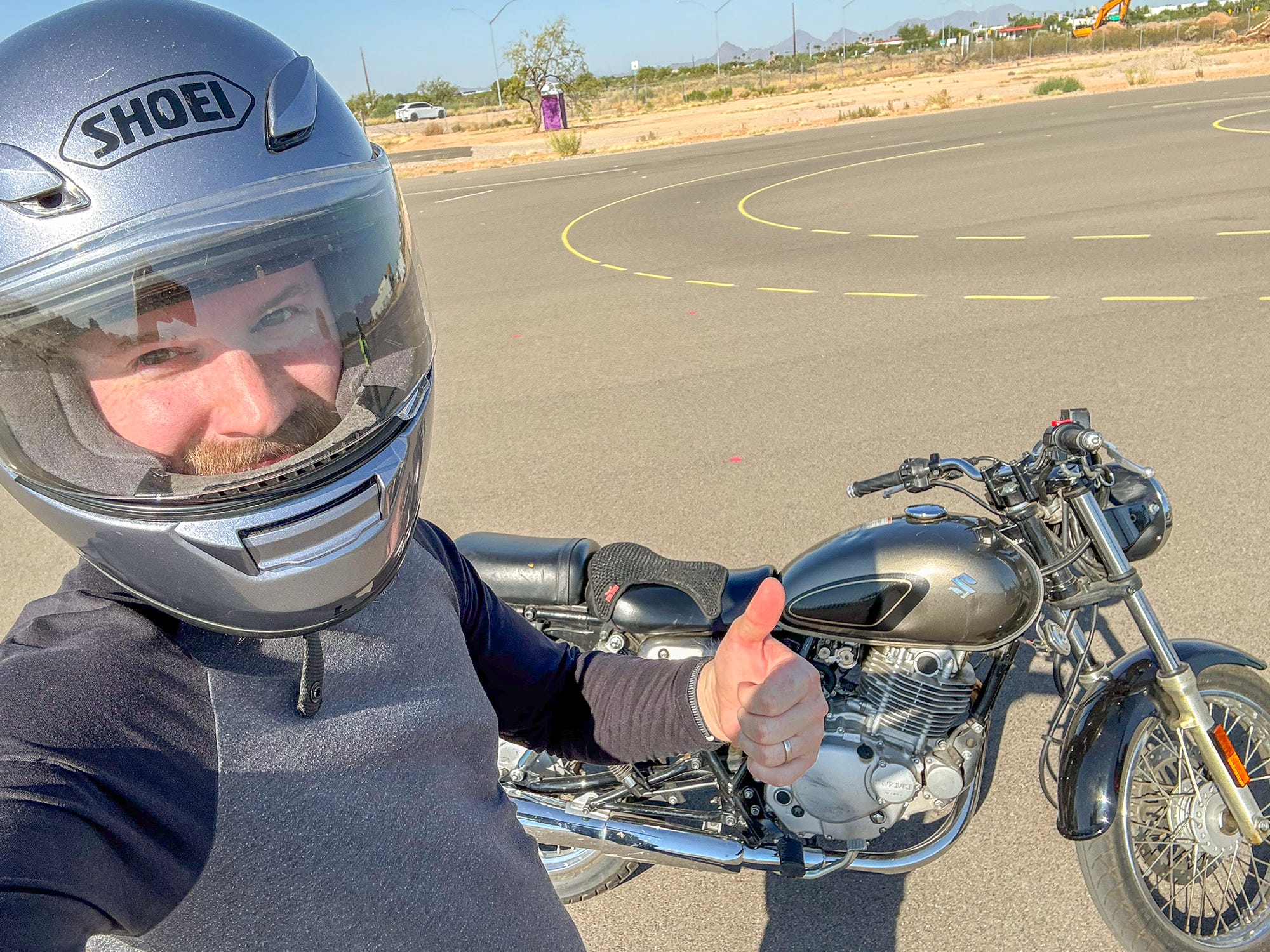
I Just Got My Motorcycle License. Now What?
Today, I unlocked a brand-new transportation method for getting around as I trek across the globe. While exploring the world by air, land, and sea, I can now add “motorcycle” to my list of options.There are a lot of ways I’ve explored new territory over the years: car, truck, canoe, kayak, hang glider, hot air balloon, small diving boat, enormous cruise ship, giant airplane, small bush plane, train, electric scooter… in addition to the obvious ones like bicycles, roller skates, skateboards, and snowboards.But I’ve never really cared about motorcycles at all until very recently. I was never enamored with them in the past, mainly because it seemed like riding them was so much work, and they seemed so incredibly dangerous.So, that’s why I signed up to take a safety course when I decided to give motorcycles a try, even though that’s not required in my state (Arizona). I wanted to start out on this new journey with as much safety and training as possible.What’s funny, though, is how, when I signed up for the course and took the test, my wife was completely mystified and almost angry.“You signed up for WHAT? A motorcycle class? I’ve known you for two decades, and you have never—even once—mentioned wanting to ride a motorcycle… ever!”I actually find this line of thinking to be quite funny. I have all kinds of interests that I don’t talk about with anyone… but that doesn’t mean I don’t have them.I’ve never understood people who tell others what their plans are or those who make all their thoughts and interests known to everybody. I’m a thinker, a researcher, a “finder-outer” who just slowly, carefully feels his way through life, quietly wondering about possibilities and asking: “What if?”I almost never announce anything to anyone about anything I do until it’s done.If I’m going to do something, I’ll keep it to myself unless and until I decide it’s the right thing to do, and then I’ll go do it. Only then will it be time to tell others about it—after the fact.This way of going through life has saved me from a lot of embarrassment over the years.I’ve known so many people who make these big, grand announcements to everyone they know about all the things they’re going to do… but they end up not doing them, either because they had no business making such a claim in the first place, or because circumstances outside their control made it impossible.So why create embarrassment for yourself by telling everybody something you don’t know is going to happen for sure? I guess I’m naturally like Michael Corleone in The Godfather III, where he says: “Never let anyone know what you’re thinking.”There’s really only one exception here, and that’s with my immediate family: my wife and kids. If something big and important affects them, I’ll tell them.In this case, I did feel it could affect them if I started riding a motorcycle, so I told my wife… after I signed up for the course.She was so completely astonished; she couldn’t even believe it. I think she thought I was kidding. But no. I don’t kid.If I were to take my wife’s question seriously (and while I am being lighthearted here, I did take her seriously and I did give her a solid answer), I still don’t know exactly why I want to start riding motorcycles.I think it comes down to two specific reasons:First, it’s mostly because I am, unapologetically, having a mid-life crisis. I yearn for new and interesting things to do and new ways to experience life while it’s not too late.Second, it’s also because buying a convertible Mustang last year really opened my eyes to being out on the open road. I mean, really, out on the open road.There’s a world of difference between sitting in the air-conditioned cab of a family sedan with soundproofing and nice, gentle music playing in the background as you politely leave one location and arrive at your destination.But my attitude these days is mostly: FORGET THAT!Gimme the top down, man! I want the wind blowing through my hair (or what’s left of it) and sunburn on my skin. I want to feel the rumble of my rickety suspension on the potholes, hear the loud road noise, and smell the dirt on the hills as I pass by them.I like driving my Mustang with the top down (I prefer “topless,” as I like to say to my wife), where I can hear my own engine purring. It’s a totally different experience that way when you’re connected to the world around you rather than isolated in a nice, sterile chamber on wheels.Driving with the open sky above me, I can smell the scent of wet pavement when it rains and the diesel fuel of trucks as they drive past me. I can also feel the fluctuation in the air temperature when I hit thermals and cool spots, and the hairs on my forearm respond as I sail down the road with my arm out the window.I want more of that.I want an unobstructed view of the world I’m exploring. Once I actually got a taste of what was going on above, under, and around my four-wheeled pony, it only gave me an appetite for taking in more of it.Do you know what your car sounds like? I know the metallic rattle my engine makes when I hit exactly 50 MPH on that one specific bend in the road when I’m in fourth gear as I drive home. I also know that when I rev it up a bit, that annoying rattle goes away once I hit exactly 54 MPH.How could I ever know this in a Honda Civic with my little piano music playing on my iPod and the air conditioner chugging away, trying to keep me cool?I can’t. It just doesn’t work that way. I like being attuned to those little environmental factors that are always there whether we realize them or not.And for whatever reason, the closer I get to turning 40, the more I crave those raw, visceral sounds and feelings of life. I don’t mind my face turning red because I forgot to put on sunscreen while driving up and down the s-curves of Mount Lemmon. Who cares?I got to feel the air change and become drastically cooler as I climbed from 2,000 to 7,000 feet in elevation while hearing the birds sing, smelling the oil spills on the road, and feeling the tingle of those UV rays pounding down on my neck as I raced away from the sun while it set!That makes me feel alive… and I am really in the mood to feel alive right now.I think that’s why I want to ride the simplest, purest mode of mechanized transportation out there. I want to take it all in. Bring on the two-wheeled cruisers!So, as of today, I’m all done with my safety course, and my license is good until I’m 65. The overall experience of learning to ride a motorcycle was very interesting… and I have to say, it was harder than I expected.I don’t mean that in the way most people mean it when they say, “It was harder than I expected.” I’m constantly surprised when people say that because it tells me they’re really bad at understanding or predicting how hard things are.A few of my kids are like this: God love ‘em, but they’re regularly shocked when they try new things and it turns out to be difficult. One of my sons was nearly histrionic due to his inability to ride a bicycle. Apparently, he thought he’d just hop on it for the very first time and ride off into the sunset. I was sad for him, but I also thought it was kind of hilarious: why would he think that balancing on two wheels while moving forward—something he’d never done before in his life—would be so simple?In the case of learning to ride a motorcycle, I was a bit surprised by what, exactly, turned out to be so challenging.Riding a motorcycle on a road filled with cars presents you with tremendous threats that are constantly changing, for example. You are always in danger, if not due to your own mistakes in speed and maneuvering, then due to the actions of others on the road.I won’t even bore you here with listing the unbelievable number of things you need to be observing, anticipating, thinking about, and preparing for while riding down the road on a bike… but I will share a few things I learned in this course that were very interesting.It was way harder than I expected.Okay, that’s not actually true. Like I said, I expected it to be hard. But the riding part was more challenging than I was prepared for in a few ways.I was totally prepared to do a very bad job and forget lots of things or do them the wrong way, over and over until I eventually got them right. And that is exactly what happened, but some of the things I thought would be hard weren’t. Some of the things that turned out to be hard were things I didn’t even know about at all before I started.Shifting was really tricky.In general, I’m not afraid of shifting. I’ve driven a car with a manual transmission for most of my life: I have always preferred a manual gearbox, in fact.In a car, though, you have a stick shift in your center console with numbers on it, and you can literally just look down at it and immediately know what gear you’re in. But as I learned today, shifting on a manual motorcycle is totally different. At least on the bike I used (a Suzuki TU250X), I had to stomp down on a peg on the left side of the bike to shift down and pull the peg up with my toe to shift up. How do you know which gear you’re in? You don’t! It doesn’t tell you.You simply have to remember the whole time what gear you’re in, and if you forget, you have to start over by putting it in neutral and trying to match the speed with the gear you want. That’s not necessarily a disaster waiting to happen, but it is a heck of a lot harder than a simple car shifter.The bike was really finicky.Putting my bike into neutral was nearly impossible: you have to just barely pull up slightly with your left toe until a green light comes on.But if you go too far, it upshifts. That was maddening. Many, many times, I tried to put it into neutral and accidentally put it into second or third gear.If I had more time to learn this bike, I might get used to it eventually, but during my rider course, I never did.I stalled a few times, which was embarrassing.Trying to figure out just how much play there was in the “friction zone” of the clutch (which was, confusingly, a handlebar lever controlled by the left hand) was quite difficult. And when the bike stalls, you have to put down the kickstand (or what they call the “side stand”), then pull it back up again. That’s kind of weird: it’s like having to restart your computer or going to the breaker box panel outside your house and flipping the switch from on to off to on again.That’s not such a bad thing in those circumstances, but it’s really strange when you’re on a bike and trying to ride!You have to ride by feel and intuition.Our instructor told us not to look down at our hands, our feet, the ground, or even the instrument panel: we had to look up and forward basically the entire time. So, even though you have a speedometer and a few other indicator lights in the steering column, we weren’t supposed to look at them. That was weird!During one exercise, my instructor kept saying, “I need you to go about 12-15 miles per hour between these cones,” but then, also told me, “Don’t look at the speedometer. You just have to feel it intuitively.”What? This was my first time on a motorcycle! How on earth could I “feel” 12 to 15 miles per hour intuitively?Obviously, if I owned my own bike and got to know it over a period of weeks, months, or years, this wouldn’t be so much of an issue. I would get to know it like I know my own guitars: I know the way they look, feel, sound… I can tell any one of my guitars from anyone else’s guitar with my eyes closed. I just know them that well. I know where the scratches are, which string tuners are wonky, and which custom modifications I’ve put on a few of them.But when borrowing a bike for a course like this, it felt like I spent 90% of the time getting used to the bike itself and only 10% of the time actually learning to ride a bike.Plus, here’s the other thing: every bike is different!Everyone in the class used a different bike, and there are myriad brands, sizes, configurations, colors, engine displacements, trims and packages, and a lot of other things that make each individual rider safe and more confident over time. But that’s going to take quite a while for me since I’m just starting out.Riding a motorcycle is a full-body experience.Like most other things I experienced during the course, I expected this, obviously. But again, I just didn’t—I couldn’t—understand the full extent of it all.For example, you can look at someone riding on a motorcycle and notice that they’re wearing a helmet. That’s obvious. But until you put a helmet on, for example, you have no idea what that actually involves.Helmets are tight, disorienting, and claustrophobic… and they sound weird.In addition to the helmet, we had to wear gloves. But, as I learned, you have to put the helmet on first. Otherwise, the gloves make it too hard to put your helmet on.There were lots of little things like this that involved doing things in a specific order, and many things had a lot of sensory overload.Immediately after I put my helmet on, for example, I noticed how weird everything sounded. A helmet attenuates noise in a certain way that muffles the sound, but you can still hear… sort of. It’s hard to explain. Things just sound different.Also, I couldn’t wear my sunglasses, and it was really bright outside, so driving into the sun without shades on definitely took some getting used to.The instructor shouting at me sounded weird, and when I shouted back (over the sound of our motors running), I could hear myself really loudly, but I couldn’t tell how much of the sound of my own voice actually escaped the helmet so she could hear what I was saying.Instead, we mostly just used hand gestures, but there’s a whole vocabulary for that, too, which I had to learn, and that was confusing, as well.Helmets also prevent you from touching your face.I lost access to my face after putting a helmet on, and I guess I just didn’t realize how much—and how often—I touch my face on a regular basis until I couldn’t touch it anymore.I have a beard and a mustache, and normally, I like to comb my facial hair out of my face and away from my mouth, but wearing a face shield completely prevented me from doing this. The facial padding on the inside of the helmet smashed all my facial hair into a weird space right in front of my mouth, which I wasn’t expecting.My lips became chapped, but I couldn’t put on chapstick, either, so the whole time I was on the bike during our riding test, I was licking my lips and blowing my mustache out of my mouth. That was uncomfortable and added to my stress level in a big way.Another weird quirk is that it was super hot (over 103ºF here in the Sonoran Desert) as we were riding, and while I brought a water bottle, I couldn’t use it. I couldn’t fit the darn thing anywhere near my mouth while wearing my helmet: I had to take it off completely.And, of course, the action of taking off my helmet required me to be at a complete stop or entirely dismounted from the motorcycle altogether.Your clothing choices are REALLY important.If you own a car, and you just want to pop down to the Circle K to get a soda during a random afternoon, you can be wearing a tee shirt and basketball shorts, then hop in your car and sail down the road without thinking much about it.All you really need in a car is something to cover your feet with (shoes, sandals, or even flip-flops) and your wallet. On a motorcycle, you can’t do that. Or, you reeeeeallllly shouldn’t, even if you could, since being uncovered is dangerous.For our class, we needed a long-sleeve shirt, thick, full-length pants, and durable boots that covered all our feet and went up past the ankle. That’s in addition to needing a helmet and gloves.That is SUCH a tremendous difference, and moving forward, it’s going to really make me think before deciding where and when to ride a motorcycle to get places.Do I just want to head out to run a quick errand? Or do I really want to go to all the effort of putting on all the proper gear to ride a motorcycle, even for a few blocks?That will highly depend on the day, the weather, my mood, my desired destination, and many other factors.Wearing all this safety gear makes you look, feel, (and smell) funny.Riding on a bike out in the open air, when it’s over a hundred degrees, and you’re wearing long pants, long sleeves, and a helmet makes you get pretty darn sweaty.There’s no air conditioner on a motorcycle (well, not on these small cruisers, at least), so you just rely on the breeze to keep you cool. But after dismounting and simply standing around for a few minutes, my goodness, you sure work up quite a sweat.After we were all done, and I got off my bike and removed my helmet, my hair looked ridiculous, my head was covered in sweat, my shirt was sweaty in the armpits, and I was also sweaty …elsewhere… in the “pant region” (I’m trying to be polite here) which made me walk funny.If had, say, tried to ride a motorcycle to church on Sunday morning, I would be cowering in embarrassment at the state of my hygiene and presentability.But there’s not much you can do here: I was wearing a minimal layer of clothing, and it still made me sweaty and uncomfortable. I guess it just is what it is.Maybe if I want to ride somewhere and be presentable, I’ll need to bring a hairbrush (for my hair), a beard brush (for my beard), and a change of clothes… or at least a change of underwear (at a minimum).The actual riding experience is more fun and less scary than I imagined.Of course, I wouldn’t want to ride a motorcycle if I thought it wasn’t fun or was purely scary. That would be silly. But I did expect it to be scary to start out. I mean, I was thinking it would actually be terrifying to get on the darn thing and start moving forward.But, really… it wasn’t! It was fun!Apparently, I was constantly going too slow.The weirdest thing my instructor kept complaining about was not at all what I expected. She kept telling me the same thing over and over, getting more and more frustrated each time.“I need you to try it again, with more speed this time. You have got to go faster.”Faster?! What? This was shocking. Half the time, I kept expecting her to tell me to slow down. But no, she was constantly telling me to speed up! This was very surprising.At one point, during our swerve test, I suggested that I might be going too fast, and she totally blew off my concern, waving her hand dismissively and laughing.“Honey, you don’t need to worry about that: you aren’t going fast enough to crash.”Hmmm… this was very comforting and yet surprising.I felt like a young military recruit in boot camp, shooting big guns like bazooka rocket launchers during target practice but feeling bad about how much ammo I was using up, and then being told: “Keep shooting! Use more ammo!”Weird.Going faster is easier than going slowerI’m a very careful, conservative person. This applies to almost every aspect of my life and almost everything I do. I am slow, methodical, systematic, and careful. But once I finally got the hang of the command to “go faster” — it was fun, and it was easier!That was so weird: you’d think (or I would, at least), think that going slower would be safer and easier. But it is not: it’s actually much harder. You can stall out, the bike can fall over, and you can’t do things like lean and turn, which make it much smoother when you’re going fast.The possibilities are endless now.So, now that I basically have an unrestricted license (and a spotless driving record, I might add), I can get my own bike and hit the road both on four wheels and/or two wheels. That’s an exciting possibility.I don’t know what I’ll do with that now… maybe go on a super long road trip across the country? Maybe just get a bike and ride back and forth to my office and get a bunch of city miles under my belt for a few months?I don’t know. But today was exciting, and I’m looking forward to what comes next. At some point, I’ll go bike shopping and pick something and see where that takes me.…and if anyone's listening to this, who has a motorcycle and is—or will be—in Southern Arizona at some point, look me up! Let’s go riding together.Show me your bike. Teach me some tips and tricks. Let’s go out together! I’d love to meet you and learn about this cool new world and community of bikers.Thanks for reading Micron! This post is public, so feel free to share it. Get full access to Micron at micron.fm/subscribe









Get this podcast on your phone, Free


Create Your Podcast In Minutes
- Full-featured podcast site
- Unlimited storage and bandwidth
- Comprehensive podcast stats
- Distribute to Apple Podcasts, Spotify, and more
- Make money with your podcast
