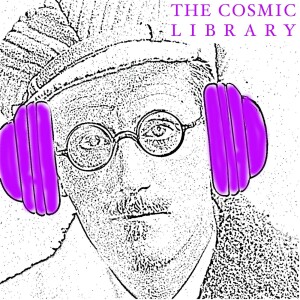
The Cosmic Library
https://rss.art19.com/the-cosmic-libraryEpisode List
7.5 In Search of Lost Time: Surprise Ending
In Time Regained, the concluding volume of Marcel Proust’s In Search of Lost Time, an older version of the narrator gloomily decides to attend a gathering at the Guermantes' mansion. He’s thinking, as Joshua Landy paraphrases here, "I might as well go and waste my time with these high-society snobs." But then he experiences a jolt of involuntary memory, prompted by a step onto uneven paving stones. His memory casts him across time, and he begins to think that he could commit himself to writing that might also access something true and enduring, beyond conventional time. "With Proust,” Hannah Freed-Thall tells us, “chance and contingency are so at the center of his aesthetic and epistemological world." Involuntary memory, by which the narrator senses a connection to a kind of being apart from the usual passage of time, has to happen by surprise, or it won’t be involuntary. Chance, therefore, leads to a feeling for something kind of magical. "Precisely because nothing is ordering this," Freed-Thall says, "enchantment is possible." When Proust’s narrator joins the party, however, he encounters aging characters, and the unavoidable force of mundane time is made vivid. He and the reader are left with a sense of something enduring along with recognition of the passage of time. Neither time nor timelessness seems to win here. “We can make of music what we will,” Alex Ross said earlier this season, and similarly, readers are free to make of this conclusion—and all of In Search of Lost Time—what they will.Guests this season include: The New Yorker’s Alex Ross—see especially "Imaginary Concerts"; Christine Smallwood, author of La Captive; Rick Moody, author of The Ice Storm; Hannah Freed-Thall, author of Modernism at the Beach; and Joshua Landy, author of The World According to Proust.See Privacy Policy at https://art19.com/privacy and California Privacy Notice at https://art19.com/privacy#do-not-sell-my-info.
7.4 In Search of Lost Time: Art vs. Jealousy
The Prisoner—the fifth volume of In Search of Lost Time—spirals through the vortex of the narrator’s jealousy concerning Albertine. Something of that vortex churns on into The Fugitive—the sixth volume—and then the focus moves toward grief. But across the entire novel, there are intimations of other ways to be, of other possibilities for the narrator. Hannah Freed-Thall describes, for example, a beach scene in the second volume, where the narrator is “in love with the whole landscape, and the sea, and the beach, and the air.” Intense experiences of art also jolt the narrator into other kinds of thinking. Joshua Landy says, “Art ends up being the answer to a lot of questions. In this context, one of the questions that it’s answering is: how can I make genuine contact with another mind?” Alex Ross explains how music in Proust’s novel offers “a deeper and more complex experience of life, time, memory, everything.” Hannah Freed-Thall sees potential for that richer experience beyond the narrator’s engagement with art, too. “In Proust,” she says, “it’s like everything is an aesthetic experience.”Guests this season include: The New Yorker’s Alex Ross—see especially "Imaginary Concerts"; Christine Smallwood, author of La Captive; Rick Moody, author of The Ice Storm; Hannah Freed-Thall, author of Modernism at the Beach; and Joshua Landy, author of The World According to Proust.See Privacy Policy at https://art19.com/privacy and California Privacy Notice at https://art19.com/privacy#do-not-sell-my-info.
7.3 In Search of Lost Time: Wasting Time
The “lost time” of In Search of Lost Time can connote “wasted time,” and Marcel Proust’s narrator does confront wastes of time, through pretentious conversations and moments when habit takes control. But the novel makes much of this waste, and we glimpse something beyond wasted time when involuntary memory prompts the narrator to consider existence beyond a drably habitual scheme.Christine Smallwood reads here from her book La Captive, where, reflecting on concepts of art and wasted time that the narrator considers, she writes, “Art is a record of the waste. It holds the waste, and changes it. Its material is time, and it makes time material.” In this episode, you'll hear how wasted time, the time of dull habits, gets remixed and reworked by Proust. And you’ll hear readings from the third and fourth volumes of the novel: The Guermantes Way and Sodom et Gomorrah.Guests this season include: The New Yorker’s Alex Ross—see especially "Imaginary Concerts"; Christine Smallwood, author of La Captive; Rick Moody, author of The Ice Storm; Hannah Freed-Thall, author of Modernism at the Beach; and Joshua Landy, author of The World According to Proust.See Privacy Policy at https://art19.com/privacy and California Privacy Notice at https://art19.com/privacy#do-not-sell-my-info.
7.2 In Search of Lost Time: Enchanted Self-Discovery
Marcel Proust’s In Search of Lost Time follows the development of a self. The narrator grows up in Combray, in the seaside town of Balbec, in Paris, and resolves to become a writer. But that narrative also encompasses so much else, from historical crises to philosophical riffs to self-doubts. Proust scholar Joshua Landy points out that Proust is “absolutely laying traps for the reader. He's tempting the reader into thinking it's a memoir at times. And he's tempting the reader to think that it's a treatise, that all the things that this narrator says can be taken at face value—you can take them to the bank, it's the gospel truth, this is what Proust believes. In fact, that's not the case.”As Hannah Freed-Thall, a scholar of Proust at NYU, says: “I try to approach this text with a certain humility . . . I will never make an argument that is true for the entirety of this novel. It’s just too self-contradictory.” In this episode, we talk about how multitudinous richness buzzes throughout the novel’s story of self-discovery. Along the way, you'll hear a reading from Within a Budding Grove, the second volume of In Search of Lost Time.Guests this season include: The New Yorker’s Alex Ross—see especially "Imaginary Concerts"; Christine Smallwood, author of La Captive; Hannah Freed-Thall, author of Modernism at the Beach; Joshua Landy, author of The World According to Proust; and Rick Moody, author of The Ice Storm.See Privacy Policy at https://art19.com/privacy and California Privacy Notice at https://art19.com/privacy#do-not-sell-my-info.
7.1 In Search of Lost Time: Imaginary Music
Marcel Proust’s In Search of Lost Time lifts off on page after page, but it always returns to earth, back to the narrator’s memories and thoughts and experiences. Somehow, this seven-volume French novel from the early twentieth century covers a vast range of possibility and surprise while still concerned completely with the thoughts and feelings of a single person—the narrator, whom we might or might not call Marcel, and who famously lights up when the taste of a madeleine reveals a world of memory.In this season of The Cosmic Library, we talk about how À la recherche du temps perdu soars beyond—and stays within—its limits. Artistic discovery pulses through this novel, even though it’s full of encounters with society’s cliches, with bad habits, with jealous obsession, and with wasted time, all of which are experienced by the narrator as he grows up.In this miniseries, we’ll hear passages from each volume of In Search of Lost Time, so you can consider these five episodes to be an unusual adaptation of Proust’s novel. Along the way, we’ll talk about the novel's notions of music, of self-discovery, of bad habits, and more. In this introduction, we hear from the first volume, Swann’s Way, and especially get into the subject of music, which activates the narrator’s thinking and that of the narrator’s family friend Charles Swann. Alex Ross, music critic at The New Yorker, explains here that the novel is "very observant about how music comes into our life and how it can obsess us.” Prompted by Proust’s musical sensibility, this season will also continually rework The Cosmic Library’s own theme song, turning to music in a way that might—the hope is—advance the show to new intensities.Intense experiences of art can, in Proust’s novel, make things happen. The Proust scholar Joshua Landy says that the novel's music “provides us a formal model for thinking about the shape of our own life.” And a novel where lives take musical shape can take some surprising turns. Hannah Freed-Thall, Proust scholar at NYU, says that “it feels like a text that is wild and not 100% in control of itself, and that’s appealing to me.” In Search of Lost Time can explore selfhood, then, and find that the self is a sprawling, mutable thing. As the novelist Rick Moody tells us, “Especially as you get towards volume seven, there’s not a stable Marcel.”Guests this season include: The New Yorker’s Alex Ross—see especially "Imaginary Concerts"; Christine Smallwood, author of La Captive; Hannah Freed-Thall, author of Modernism at the Beach; Joshua Landy, author of The World According to Proust; and Rick Moody, author of The Ice Storm.See Privacy Policy at https://art19.com/privacy and California Privacy Notice at https://art19.com/privacy#do-not-sell-my-info.







Get this podcast on your phone, Free


Create Your Podcast In Minutes
- Full-featured podcast site
- Unlimited storage and bandwidth
- Comprehensive podcast stats
- Distribute to Apple Podcasts, Spotify, and more
- Make money with your podcast