PDA Society Podcast
https://feeds.zencastr.com/f/XQI8x1Pv.rssEpisode List
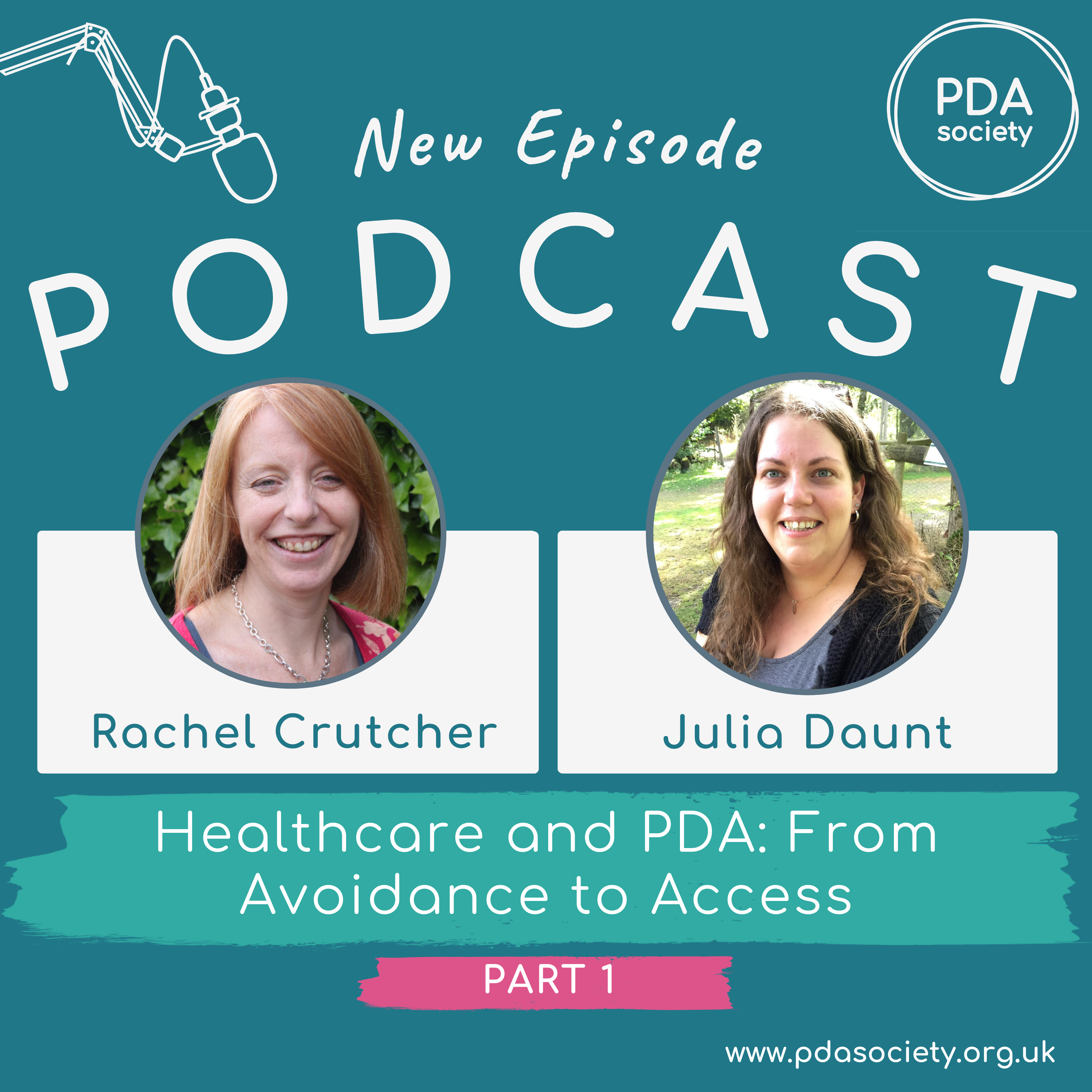
Healthcare and PDA: From Avoidance to Access
In this episode, Rachel from the PDA Society is joined by Julia Daunt, a PDA adult and trainer with the PDA Society, to explore the realities of accessing healthcare for PDAers.Julia shares her lived experience of navigating medical environments, highlighting how appointments, procedures and interactions with professionals can often feel overwhelming, unpredictable and highly demanding. The conversation explores why healthcare settings can trigger anxiety for PDAers, including loss of control, sensory challenges, unfamiliar environments and the expectation to comply quickly with instructions.Rachel and Julia discuss how these experiences can lead to avoidance, delayed care or heightened distress, even when support is urgently needed. Julia reflects on the importance of understanding how demand sensitivity shows up in medical contexts, and why what might appear as resistance is often a response to feeling unsafe or overwhelmed.Part 1 focuses on building understanding, offering insight into what healthcare feels like from a PDA perspective, and why compassionate, flexible approaches are essential for supporting access.Key Themes The challenges PDAers face when accessing healthcare Anxiety, control and unpredictability in medical settings Sensory and environmental factors affecting appointments Why avoidance and resistance can occur Understanding healthcare through a PDA lens The importance of safety, autonomy and trustDeep Diver Subscriber EpisodeFor those who would like to go further, Part 2, an exclusive “Deep Diver” subscriber episode, is available through our Training Hub.You can access it here: https://training.pdasociety.org.uk/pda-podcasts/DisclaimerThe views and opinions expressed by guest speakers in this podcast are their own and do not necessarily reflect those of the PDA Society. While we aim to provide balanced and inclusive discussions, individual experiences and perspectives may vary. The PDA Society is committed to using language and terminology that reflects the preferences of PDA and autistic people, but sometimes our guests may use language and terminology which differs. Appearance on our podcast is not an endorsement of an individual, and not all of our guests will align with our position on the issues discussed.Further sources of support and information PDA Society Training Hub: https://training.pdasociety.org.uk/pda-podcasts/ PDA Society Website: https://www.pdasociety.org.uk/ PDA Society Training: https://www.pdasociety.org.uk/support-and-training/training/ PDA Society Support Service: https://www.pdasociety.org.uk/support-and-training/support/
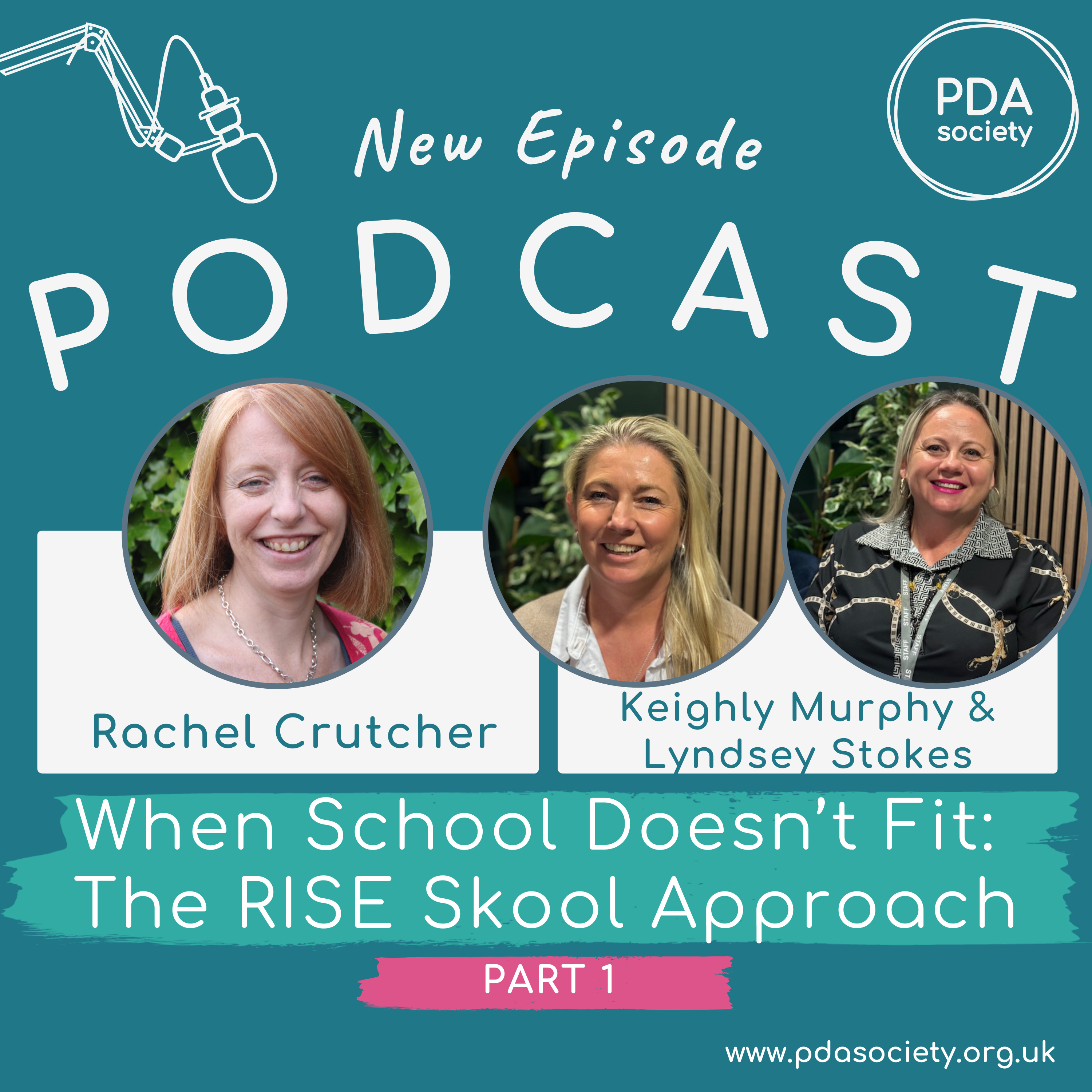
When School Doesn't Fit: The RISE Skool Approach
In this episode, Rachel from the PDA Society is joined by Lyndsey Stokes and Keighly Murphy from Rise Skool, an alternative education provision supporting neurodivergent children and young people who have struggled in mainstream settings.Together, they explore what can happen when education is rebuilt around safety, trust and emotional regulation rather than compliance and rigid expectations. Lyndsey and Keighly share how many of the young people who come to Rise Skool have experienced repeated school trauma, exclusions, anxiety or long-term disengagement.The conversation focuses on creating environments where children feel safe enough to learn. Rather than prioritising academic targets from the outset, Rise Skool centres relationship-building, predictability and co-regulation. Lyndsey and Keighly explain how reducing demands, observing communication patterns and tuning into nervous system responses helps students begin to re-engage.Part 1 explores how traditional education models can inadvertently escalate anxiety for PDA learners, and how alternative settings can shift from control to collaboration. The discussion highlights the importance of dignity, flexibility and truly listening to young people.Key Themes Why PDA learners often struggle in mainstream education The impact of school trauma and repeated exclusions Building safety before focusing on academic outcomes Relationship-led and co-regulation-based approaches Reducing demands to support re-engagement Reframing success in educationDeep Diver Subscriber EpisodeFor those who would like to go further, Part 2, an exclusive “Deep Diver” subscriber episode, is available through our Training Hub. You can access it here: https://training.pdasociety.org.uk/pda-podcasts/DisclaimerThe views and opinions expressed by guest speakers in this podcast are their own and do not necessarily reflect those of the PDA Society. While we aim to provide balanced and inclusive discussions, individual experiences and perspectives may vary. The PDA Society is committed to using language and terminology that reflects the preferences of PDA and autistic people, but sometimes our guests may use language and terminology which differs. Appearance on our podcast is not an endorsement of an individual, and not all of our guests will align with our position on the issues discussed.Further sources of support and information PDA Society Training Hub: https://training.pdasociety.org.uk/pda-podcasts/ PDA Society Website: https://www.pdasociety.org.uk/ PDA Society Training: https://www.pdasociety.org.uk/support-and-training/training/ PDA Society Support Service: https://www.pdasociety.org.uk/support-and-training/support/
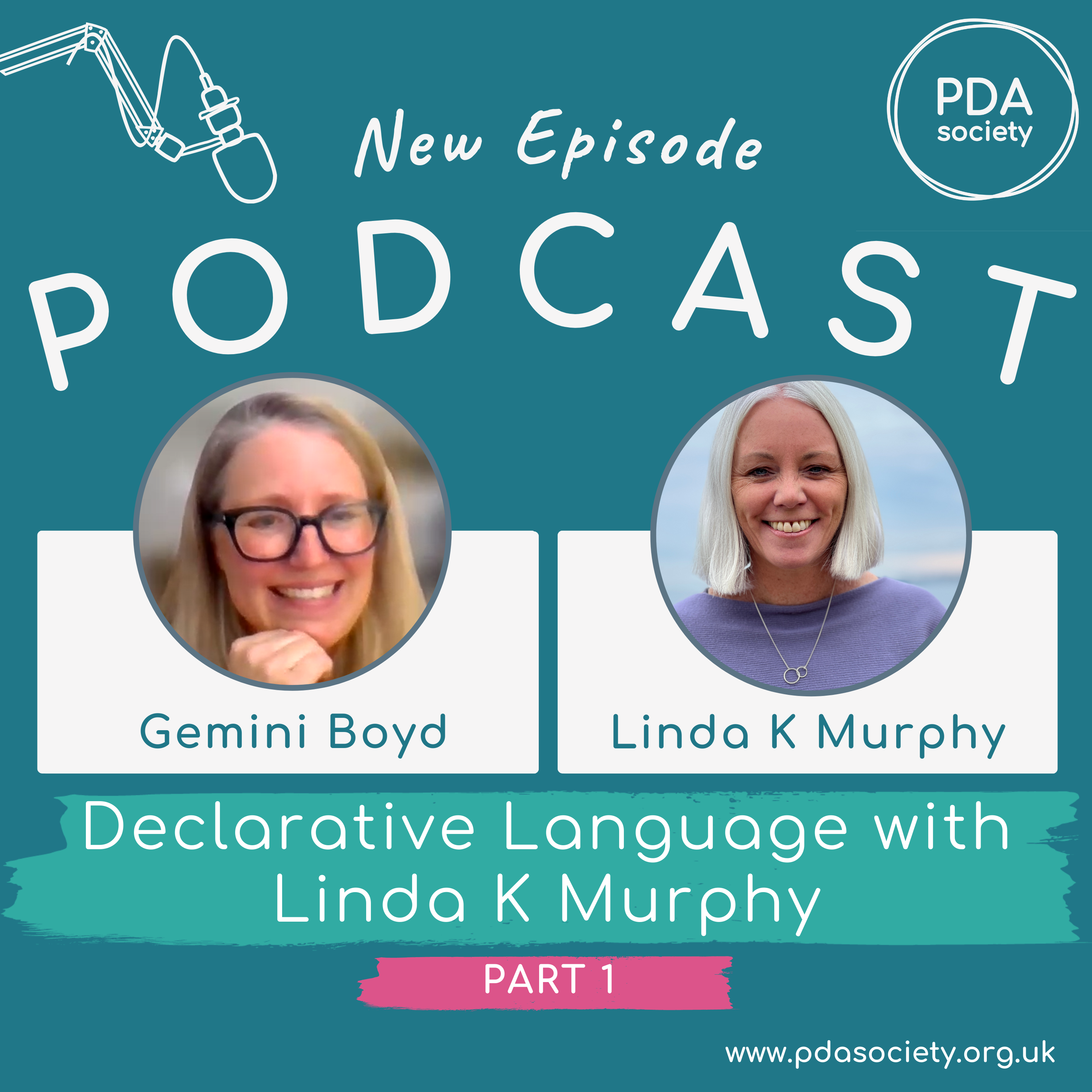
Declarative Language with Linda K. Murphy
In this episode, Gemini from the PDA Society is joined by Linda Murphy, author of The Declarative Language Handbook and The Co-Regulation Handbook, to explore how declarative language can support PDA children and young people.Linda explains the difference between declarative and imperative language, and why shifting from telling and directing to wondering and noticing can reduce anxiety and defensiveness. The conversation explores how questions, commands and corrections can inadvertently increase demand sensitivity, particularly for children with a PDA profile.Gemini and Linda discuss how declarative language creates space for autonomy, supports problem-solving, and strengthens connection. Rather than giving instructions, declarative statements share observations, feelings or information, allowing the child to process and respond without feeling controlled.Part 1 focuses on understanding the principles behind declarative language, how it supports co-regulation, and why small shifts in communication can have a powerful impact in both home and school settings.Key Themes The difference between declarative and imperative language How direct instructions can increase anxiety for PDA children Supporting autonomy and problem-solving through communication The link between declarative language and co-regulation Reducing demand while maintaining connection Using language to create safety rather than complianceDeep Diver Subscriber EpisodeFor those who would like to go further, Part 2, an exclusive “Deep Diver” subscriber episode, is available through our Training Hub.You can access it here: https://training.pdasociety.org.uk/pda-podcasts/DisclaimerThe views and opinions expressed by guest speakers in this podcast are their own and do not necessarily reflect those of the PDA Society. While we aim to provide balanced and inclusive discussions, individual experiences and perspectives may vary. The PDA Society is committed to using language and terminology that reflects the preferences of PDA and autistic people, but sometimes our guests may use language and terminology which differs. Appearance on our podcast is not an endorsement of an individual, and not all of our guests will align with our position on the issues discussed.Further sources of support and information PDA Society Training Hub: https://training.pdasociety.org.uk/pda-podcasts/ PDA Society Website: https://www.pdasociety.org.uk/ PDA Society Training: https://www.pdasociety.org.uk/support-and-training/training/ PDA Society Support Service: https://www.pdasociety.org.uk/support-and-training/support/Guest links:Linda’s website: https://www.declarativelanguage.com/
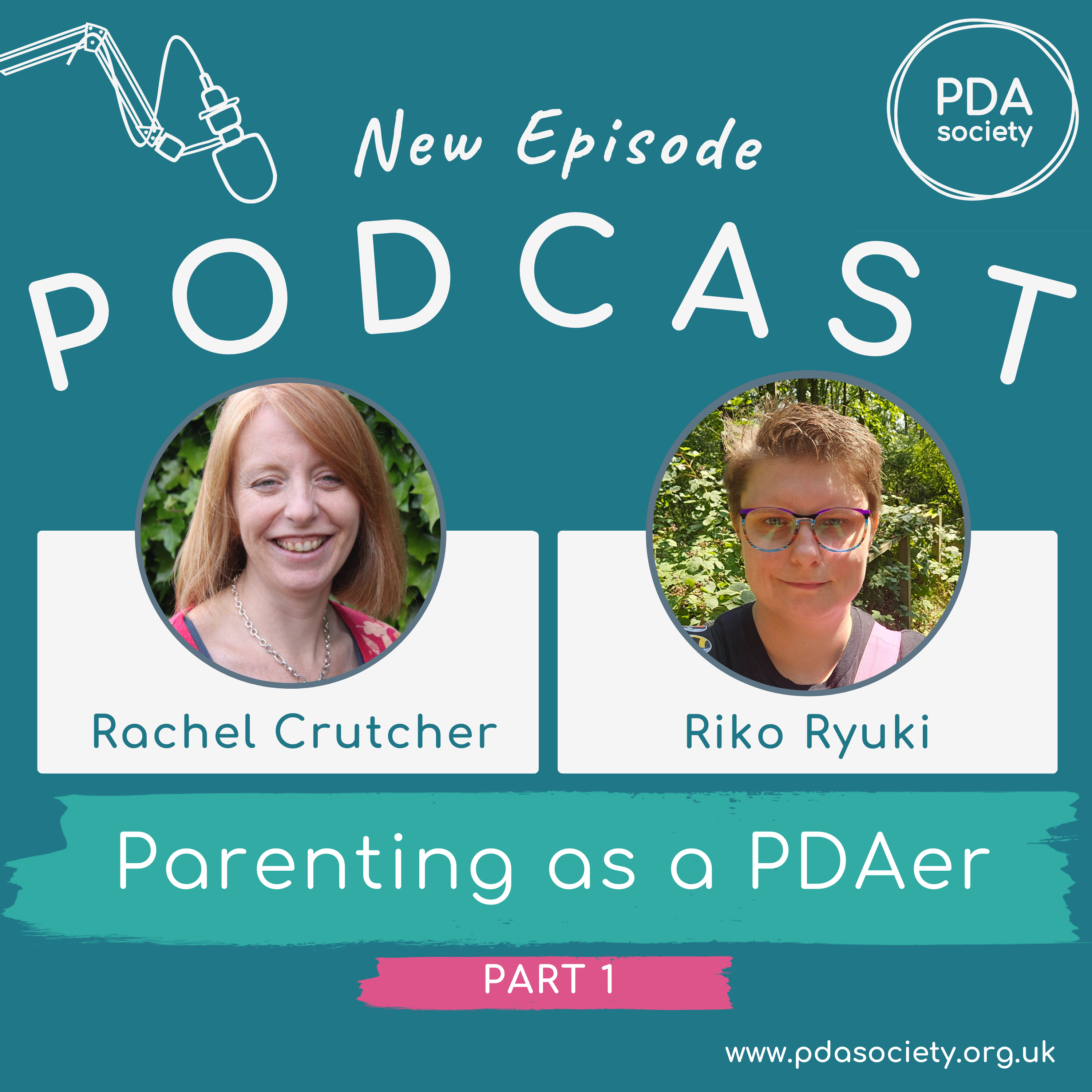
Parenting as a PDAer
In this episode, Rachel from the PDA Society is joined by Riko Ryuki to explore what it is like parenting as a PDAer.Riko shares openly about raising three children, two of whom have PDA profiles, while navigating their own PDA and additional disabilities. Together, Rachel and Riko discuss how parenting can look and feel different when you also experience high demand sensitivity yourself.The conversation explores the realities of everyday family life, including adapting routines to meet individual needs, responding flexibly rather than rigidly, and understanding that even children with the same profile can require very different approaches. Riko reflects on being more child-led, matching expectations to capacity, and resisting more traditional “because I said so” parenting models.Part 1 focuses on lived experience, connection and reframing. Riko speaks about the strengths that can come from shared understanding, the moments of joy and closeness that can emerge when anxiety is managed well, and some of the misconceptions they have encountered from others about parenting differently.Key Themes Parenting with a PDA profile Being child-led and adapting to fluctuating needs Raising multiple neurodivergent children with different support requirements Misconceptions about flexible parenting approaches The strengths and connection that can come from shared neurodivergenceDeep Diver Subscriber EpisodeFor those who would like to go further, Part 2, an exclusive “Deep Diver” subscriber episode, is available through our Training Hub. You can access it here: https://training.pdasociety.org.uk/pda-podcasts/DisclaimerThe views and opinions expressed by guest speakers in this podcast are their own and do not necessarily reflect those of the PDA Society. While we aim to provide balanced and inclusive discussions, individual experiences and perspectives may vary. The PDA Society is committed to using language and terminology that reflects the preferences of PDA and autistic people, but sometimes our guests may use language and terminology which differs. Appearance on our podcast is not an endorsement of an individual, and not all of our guests will align with our position on the issues discussed.Further sources of support and information PDA Society Training Hub: https://training.pdasociety.org.uk/pda-podcasts/ PDA Society Website: https://www.pdasociety.org.uk/ PDA Society Training: https://www.pdasociety.org.uk/support-and-training/training/ PDA Society Support Service: https://www.pdasociety.org.uk/support-and-training/support/Guest’s links: YouTube: https://www.youtube.com/user/rikoryuki Facebook: https://www.facebook.com/RikosPDApage1/ Blog: https://dragonriko.wordpress.com/
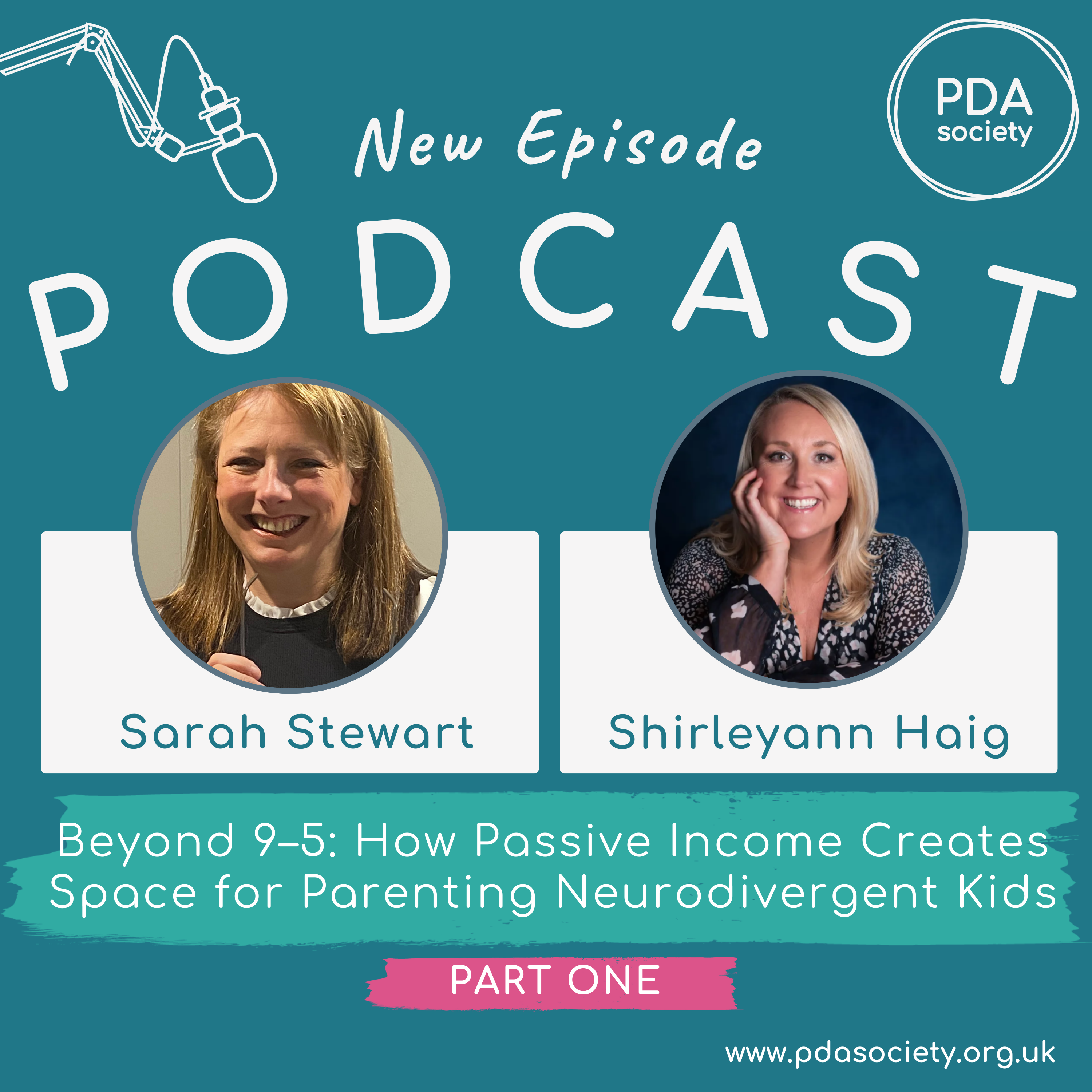
Beyond 9–5: How Passive Income Creates Space for Parenting Neurodivergent Kids
In this episode, Sarah from the PDA Society is joined by Shirleyann Haig, bestselling author and Passive Income Coach, to explore how creating alternative income streams can offer greater flexibility when parenting neurodivergent children.Shirleyann shares her personal journey as a mother of two boys, one with ADHD and one autistic with a PDA profile. After a 25-year career in the pharmaceutical industry, she found herself struggling to balance the demands of corporate life with the unpredictability of school exclusions, phone calls home and the reality of parenting children with complex needs. Despite being a top performer in her company, she was made redundant due to the time she needed to take off to support her children.The conversation explores the emotional and financial impact of that experience, particularly as a single parent navigating divorce alongside school exclusions and ongoing uncertainty. Shirleyann reflects on how that moment of redundancy forced her to confront how financially fragile many families can be when relying solely on traditional employment structures.Part 1 focuses on how Shirleyann transitioned away from corporate life and became a Passive Income Coach, helping others to build income streams that do not rely on fixed hours or physical presence. She explains how passive income is not about avoiding work, but about creating systems where work done once can generate income repeatedly. For families living with unpredictability, this flexibility can reduce stress, create stability and offer space to prioritise children’s needs without sacrificing long-term financial security.*Redundancy due to being a carer is illegal. If you are struggling our support service can direct you to information about your legal rights.Key Themes The challenge of balancing corporate work with neurodivergent parenting School exclusions, unpredictability and employment instability The emotional impact of redundancy linked to caregiving Understanding passive income and how it can create flexibilityDeep Diver Subscriber EpisodeFor those who would like to go further, Part 2, an exclusive “Deep Diver” subscriber episode, is available through our Training Hub.You can access it here: https://training.pdasociety.org.uk/pda-podcasts/DisclaimerThe views and opinions expressed by guest speakers in this podcast are their own and do not necessarily reflect those of the PDA Society. While we aim to provide balanced and inclusive discussions, individual experiences and perspectives may vary. The PDA Society is committed to using language and terminology that reflects the preferences of PDA and autistic people, but sometimes our guests may use language and terminology which differs. Appearance on our podcast is not an endorsement of an individual, and not all of our guests will align with our position on the issues discussed.Further sources of support and information PDA Society Training Hub: https://training.pdasociety.org.uk/pda-podcasts/ PDA Society Training: https://www.pdasociety.org.uk/support-and-training/training/ PDA Society Support Service: https://www.pdasociety.org.uk/support-and-training/support/Guest links: Shirleyann’s Website Shirleyann Haig | Ethical Passive Income Coach & Speaker Instagram: shirleyannhaig





Get this podcast on your phone, Free


Create Your Podcast In Minutes
- Full-featured podcast site
- Unlimited storage and bandwidth
- Comprehensive podcast stats
- Distribute to Apple Podcasts, Spotify, and more
- Make money with your podcast