Litigation Nation
https://feeds.transistor.fm/litigation-nationEpisode List
Florida's Social Media Ban Challenged: The Free Speech, Data Privacy, and Mental Health Implications of Age-Verification Laws - Ep 69
In this episode of Litigation Nation, co-hosts Danessa Watkins and Jack Sanker dive into two significant legal topics currently shaping the landscape of litigation in the U.S. Jack discusses the Trump administration's reversal of affirmative action programs, diving into the history of affirmative action and DEI programs in the U.S and breaking down the legal implications of their prohibition for the public and private sectors. Next, Danessa revisits Florida's ban on social media for children under 14 years of age (previously discussed in Episode 46). Social media industry groups have challenged the law, claiming it is in violation of the First Amendment. Danessa explores this lawsuit and the national conversation surrounding the legal, psychological, and data-privacy implications of social media age-verification laws. Join us as we discuss the complexities of critical topics and encourage our listeners to stay informed about how these issues may affect their rights and responsibilities in litigation. Don't forget to subscribe to Litigation Nation for more updates on legal news and analysis!
Is President Trump Authorized to Deploy the National Guard in U.S. Cities? - Ep 68
In this episode of Litigation Nation, co-hosts Danessa Watkins and Jack Sanker dive into two significant legal topics that are currently shaping the landscape of litigation in the United States. Danessa opens with an update on Drake's defamation and harassment lawsuit against his record label, UMG, for its promotion of Kendrick Lamar's "Not Like Us" diss track. Danessa explores how the line between free speech and defamation has come into question in arguments on both sides and shares where the lawsuit stands since our analysis in Episode 61. Next, Jack explores the scope of the U.S. president's domestic military authority, diving into the history of domestic troop deployment from George Washington to Donald Trump's recent efforts in U.S. cities including Los Angeles, Portland, and Chicago. Jack discusses how these events and the resulting state litigation are impacting the balance between executive and state power. Join us as we discuss the complexities of critical topics and we encourage our listeners to stay informed about how these issues may affect their rights and responsibilities in litigation. Don't forget to subscribe to Litigation Nation for more updates on legal news and analysis!
How Law Firm Acquisition by Private Equity Firms Could Alter the Litigation Landscape – Ep 67
In this episode of Litigation Nation, co-hosts Jack Sanker and Danessa Watkins dive into two legal topics currently impacting the U.S. litigation landscape. A private equity firm recently expressed interest in ownership stakes of several law firms, raising questions about the ethics of non-attorney involvement in the legal process. A prohibited practice to-date, non-attorney equity in law firms gives third parties the ability to take financial stakes in the outcome of lawsuits. Jack analyzes the ethical and administrative implications this introduces for both litigation and company operations. A Texas district court bill proposing the required display of the ten commandments in public school classrooms has resumed a long-standing debate and potentially prompted new law regarding the separation of church and state. Danessa examines the bill and the resulting national conversation about First Amendment rights and religious freedom in public schools. Join us as we discuss the complexities of critical topics and we encourage our listeners to stay informed about how these issues may affect their rights and responsibilities in litigation. Don't forget to subscribe to Litigation Nation for more updates on legal news and analysis!
The Hidden Provision in the 'Big Beautiful Bill' that Seeks to Weaken the Judicial Branch - Ep. 66
In this episode of Litigation Nation, co-hosts Danessa Watkins and Jack Sanker dive into two significant legal topics that are currently shaping the landscape of litigation in the United States. The tax and spending bill (a.k.a. 'The Big Beautiful Bill') has raised eyebrows due to its implications for federal court contempt powers. The bill, which passed the House by a narrow margin, includes a provision that could severely limit federal courts' ability to enforce temporary restraining orders (TROs) & injunctions, in contrast to most new legislation it is written to be retroactive affecting previous rulings issued by federal courts. Specifically, the provision states that no court may use appropriated funds to enforce a contempt citation for failure to comply with an injunction or TRO if no security was provided when the order was issued. This change could have far-reaching consequences, particularly in immigration cases and other areas of law where TROs are commonly sought. Jack explains the mechanics of Federal Rule 65C, which requires parties seeking injunctions to provide a surety bond to cover potential damages if the injunction is later found to be wrongful. The discussion highlights the potential chaos that could ensue if existing injunctions without bonds become unenforceable, particularly in cases involving civil rights and government actions.We then shift focus to the use of pseudonyms in litigation, and the delicate balance between the public's right to access judicial proceedings and the need for individuals to protect their identities in sensitive cases. Recent court decisions have indicated that the avoidance of reputational harm is not a compelling enough reason to allow litigants to proceed anonymously. A notable case from the Seventh Circuit involving a lawsuit against the University of Illinois, Initially allowed to proceed under a pseudonym, the university later objected. This case underscores the challenges faced by individuals who may have legitimate reasons for wanting to protect their anonymity, particularly in cases involving sensitive allegations.We encourage our listeners to stay informed about how these issues may affect their rights and responsibilities in litigation.Join us as we discuss the complexities of critical topics and we encourage our listeners to stay informed about how these issues may affect their rights and responsibilities in litigation.. Don't forget to subscribe to Litigation Nation for more updates on legal news and analysis!
Cookie giant Crumbl, sued by Warner Music Group over ‘massive scale’ copyright infringement for social media posts - Ep. 65
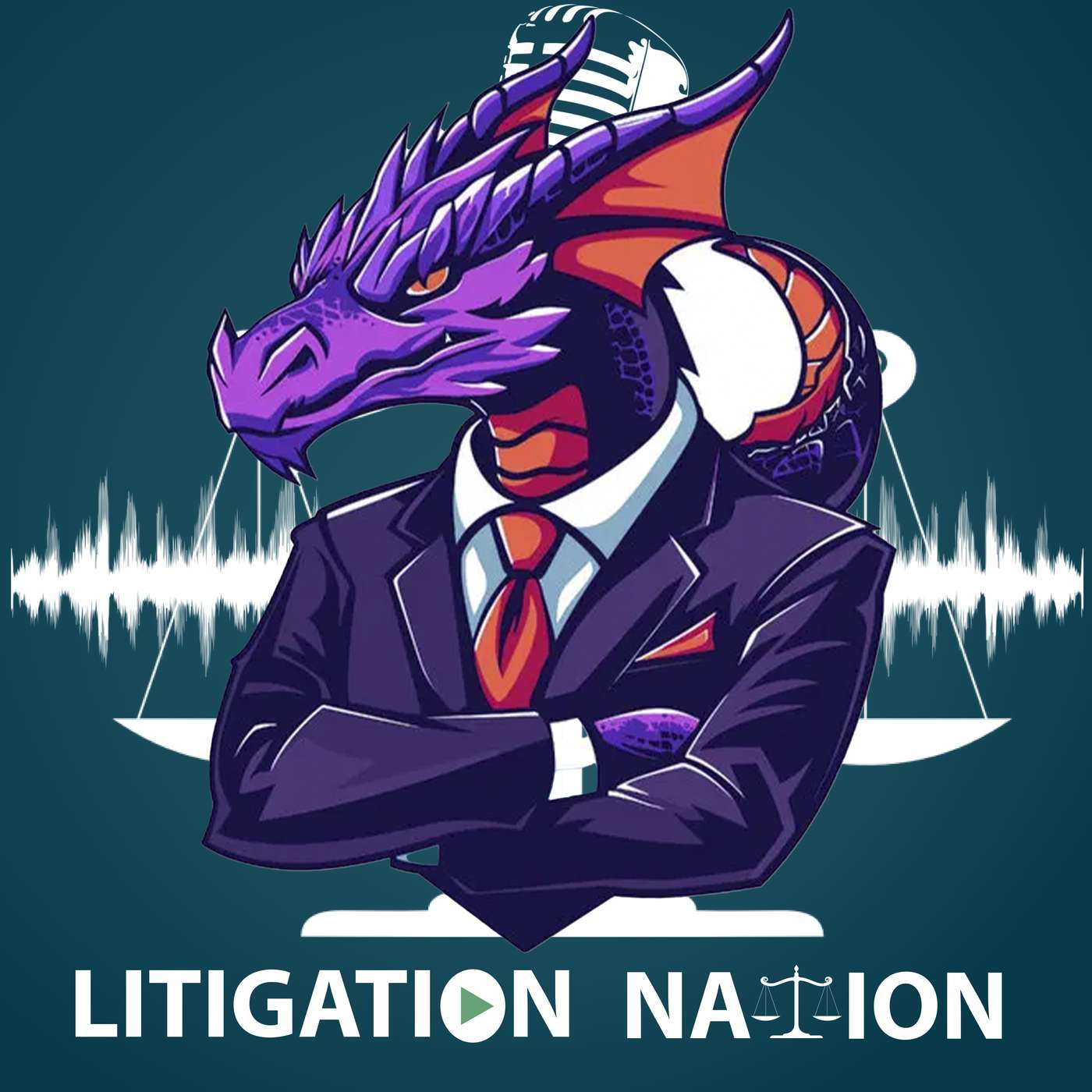
This episode of Litigation Nation covers several notable legal news stories, including a copyright infringement lawsuit against the cookie company Crumble, upcoming US Supreme Court hearings on the ability of lower courts to issue nationwide injunctions, a recent case involving lawyers misusing AI to generate legal citations, and a humorous anecdote about a law firm using a large cartoon dragon watermark in their court filings.Copyright Infringement in Social Media Marketing: Companies are increasingly using popular music in social media content for marketing, raising complex copyright issues, especially regarding the distinction between personal and commercial use licenses on platforms like TikTok and Instagram.Scope of Lower Court Injunctions: The US Supreme Court is set to hear arguments on the controversial issue of whether lower courts can issue nationwide injunctions against federal policies or if their relief must be limited to the specific parties before the court. This issue has become politicized and is particularly relevant in the context of immigration policy.Ethical Use of Artificial Intelligence in Legal Practice: The misuse of generative AI by lawyers to draft legal documents, specifically the hallucination of fake case citations, continues to be a problem leading to sanctions and highlighting the critical need for lawyers to verify AI-generated content.Adherence to Court Rules and Professionalism: Judge Rejects Lawsuit With Dragon Logo, Calling It ‘Juvenile and Impertinent’The legal landscape continues to evolve rapidly, driven by technological advancements, political dynamics, and novel applications of existing laws. The cases discussed in this episode highlight critical issues facing the legal profession and the judiciary, from navigating the complexities of intellectual property in the digital age to grappling with the appropriate scope of judicial power and the ethical integration of AI into legal practice. The upcoming Supreme Court arguments on nationwide injunctions, in particular, represent a potentially significant development with broad implications for federal policy implementation and the balance of power between the branches of government. The episode serves as a reminder for legal professionals and the public alike to be aware of these evolving legal challenges and the importance of upholding established legal principles and ethical standards. (01:50) - Crumbl Cookies Copyright Lawsuit (14:47) - US Supreme Court Hearings (40:35) - MyPillow CEO Torched for Bad AI-Generated Legal Filing (45:00) - Judge Rejects Lawsuit With Dragon Logo





Get this podcast on your phone, Free


Create Your Podcast In Minutes
- Full-featured podcast site
- Unlimited storage and bandwidth
- Comprehensive podcast stats
- Distribute to Apple Podcasts, Spotify, and more
- Make money with your podcast