What The Duck?!
https://www.abc.net.au/feeds/13709150/podcast.xmlEpisode List
G.O.A.T AUSTRALIAN WILDFLOWER
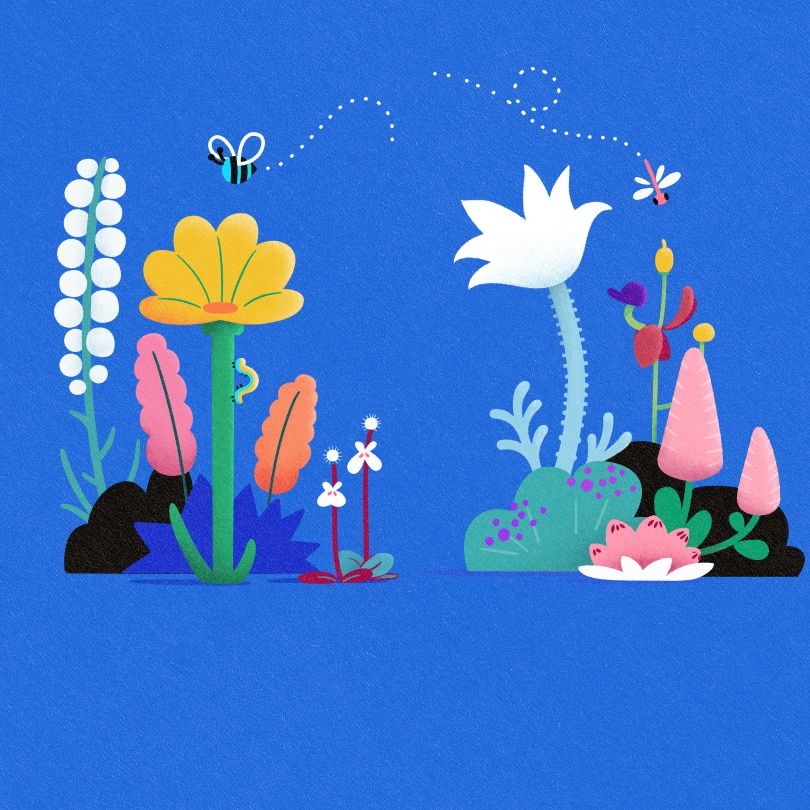
Does Australia have a BEST wildflower? Hang on... what even is a flower? Dr Ann Jones and Belinda Smith count down the top 10 best wildflowers as voted by YOU in a special live show, The Hour of Flower. FEATURING: Tim Entwisle – Author, The Sceptical Botanist. Former CEO of the Royal Botanic Gardens in MelbourneChantelle Doyle - Research Associate, Centre for Ecosystem Science, School of Biological, Earth and Environmental Sciences UNSWKingsley Dixon - Professor, School of Biological Sciences, The University of Western AustraliaMira Jordan - PhD candidate, Biological, Earth & Environmental Sciences, Centre for Ecosystem Science and Evolution & Ecology Research Centre, UNSWCosta Georgiadis - Presenter, Gardening AustraliaPRODUCTION: Ann Jones, Presenter / ProducerBelinda Smith, Presenter / ProducerPetria Ladgrove, Executive ProducerSarah Prosser, ProducerStudio Engineer, Carey Dell This episode of What the Duck was produced on the land of the Wadawarrung people. Find more episodes of the ABC podcast, What the Duck?! with the always curious Dr Ann Jones exploring the mysteries of nature on ABC Listen (Australia) or wherever you get your podcasts. You'll learn more about the weird and unusual aspects of our natural world in a quirky, fun way with easy to understand science.
Flowers are disgusting, filthy, badasses
Quackery and Catfishing. Fake news doesn’t only happen on the human internet. Welcome to nature’s dark web.We didn’t TRY to make a spooky and disturbing episode... we just wanted to talk about plants with DUCK in the title. But oh boy, these flowers are savage! One of them has become internet famous for a detox that could literally kill you. Another catfishes its pollinators by pretending to be (and even feeling like) the ‘private’ parts of a female fly! Nature isn’t safe from this algorithm.Featuring:Tim Entwisle – Author, The Sceptical Botanist. Former CEO of the Royal Botanic Gardens in MelbourneKatherine Isoardi - Associate Professor, University of Queensland. Senior Staff Specialist Emergency Physician and Clinical ToxicologistJulie Radford - Threatened Species expertGareth Prosser – Professional Voice Over Artist whose wife roped him in Production:Ann Jones, Presenter / ProducerSarah Prosser, ProducerMastering Engineer, Harvey O’Sullivan This episode of What the Duck was produced on the land of the Wadawarrung people. Find more episodes of the ABC podcast, What the Duck?! with the always curious Dr Ann Jones exploring the mysteries of nature on ABC Listen (Australia) or wherever you get your podcasts. You'll learn more about the weird and unusual aspects of our natural world in a quirky, fun way with easy to understand science.
Wombat scratches butt on recorder, snorts, gurgles and leaves.
WTF NATURE. I give up.||A Message from Dr Ann - the What the Duck?! host and general dork.||I don't really give up. The recording I took for the latest season of Nature Sounds by Ann Jones was a ripper (in terms of wombat farts).This bit got edited out of the longer soundscape over there, because, it was determined, that a wombat walking in and scratching its butt ON THE MICROPHONES in the middle of a meditation soundscape would harsh the high of the listener.So. What the Duck?! subscribers.Enjoy. A wombat scratching its butt on my very VERY expensive recorder.RECORDING: Ann JonesMASTERING ENGINEER: Isabella Tropiano
Dinosaur died. No flowers at funeral
In fact, most dinosaurs never got the chance to stop and smell a flower... and it was all because of bad timing. Sad face.The meteor that killed all the dinosaurs (rude) actually kicked off flower supremacy on planet earth. Flowering plants are only about 135 million years old, yet they’re the most bio-diverse plants on the planet. Without them, no birds, no bees. Again, sad face. So where did flowers come from? And how did they end up being top bud? FEATURING: Mario Vallejo-Marin - Professor in Evolutionary Ecology, Uppsala University, Sweden.Professor Michelle Waycott - Chief Botanist at the Adelaide Botanic Gardens State Herbarium / Professor in Systematic Biology, Adelaide University.Morris Lake - Author, Australian Rainforest Woods.Gareth Prosser - Professional Voice Over Artist whose wife roped him in. PRODUCTION:Ann Jones, Presenter / ProducerSarah Prosser, ProducerMastering Engineer: Tegan NichollsThis episode of What the Duck was produced on the land of the Wadawurrung people. Find more episodes of the ABC podcast, What the Duck?! with the always curious Dr Ann Jones exploring the mysteries of nature on ABC Listen (Australia) or wherever you get your podcasts. You'll learn more about the weird and unusual aspects of our natural world in a quirky, fun way with easy to understand science.
Duck on a screaming rampage wrecks Australia's 'quiet time'
It was a perfect night. But this duck had other ideas.The scene: A perfect, wonderful, windless night at a wetland.You couldn't ask for better conditions. The sun sets and the insects hum and eventually you hear a boobook and it's lovely… except one very loud duck keeps on yelling periodically the whole way through.It's like the thing KNEW I was recording. It goes on for hours.Anyway, I've got a passion project at the ABC.A podcast called Nature Sounds by Ann Jones.It's all these looooong form sounds scapes. The idea is that you can use them to relax, or go to sleep, or drown out your colleagues or whatever.You can find it on the ABC listen app or any other podcast app. I promise this screaming duck didn't make the cut. RECORDING: Ann JonesMASTERING ENGINEER: Isabella Tropiano
Get this podcast on your phone, Free


Create Your Podcast In Minutes
- Full-featured podcast site
- Unlimited storage and bandwidth
- Comprehensive podcast stats
- Distribute to Apple Podcasts, Spotify, and more
- Make money with your podcast
