Truth, Lies and Work
https://feeds.megaphone.fm/HS8013840693Episode List
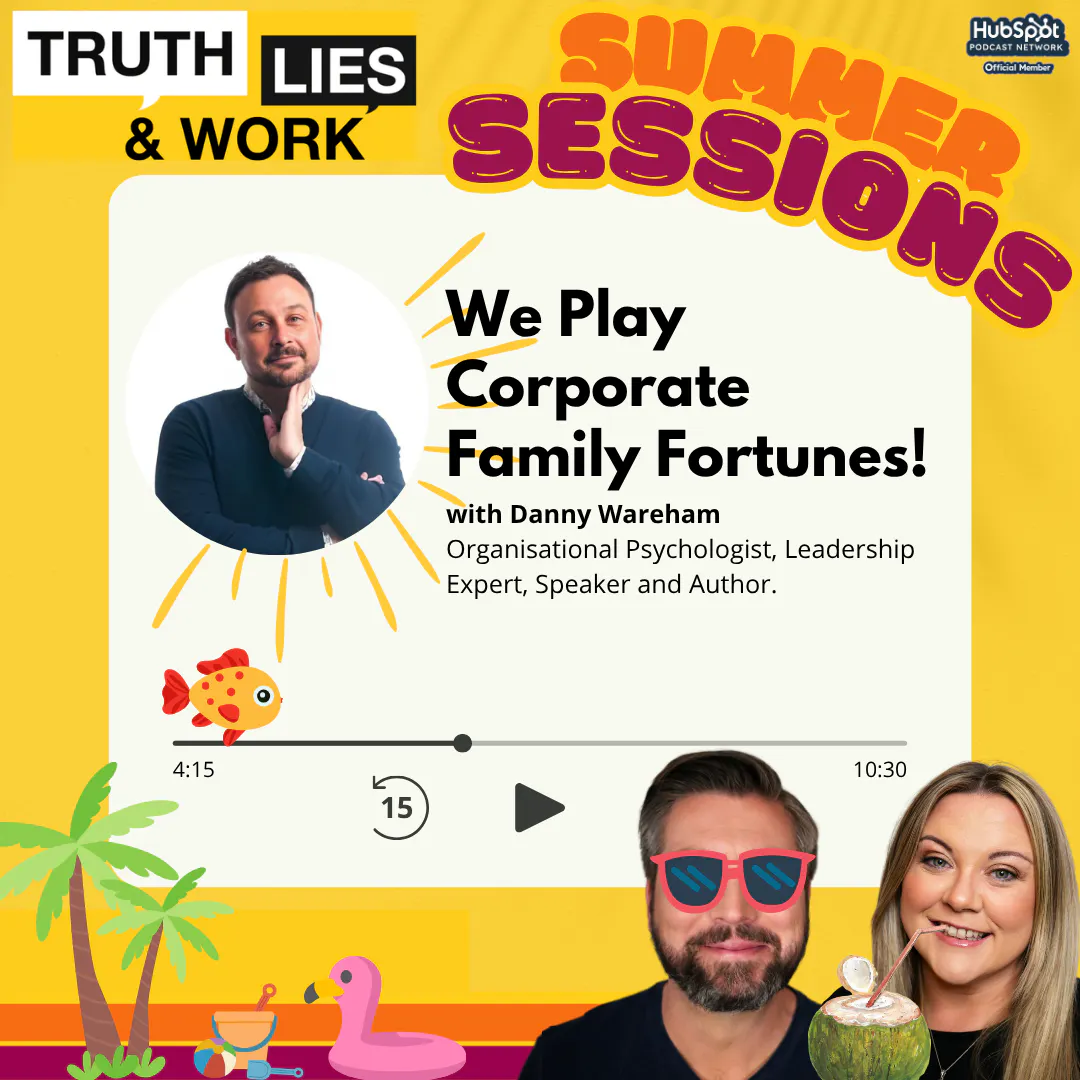
326. We Play Corporate Family Fortunes with Danny Wareham! Summer Sessions #3
Welcome to another edition of our Truth, Lies & Work Summer Sessions! For this episode, Al and Leanne take a quick break from workplace news and heavy behavioural science to host a special summer game: Corporate Family Fortunes. Joining the fun is organisational psychologist, leadership expert, speaker, and author Danny Wareham. They dive into survey results on the most irritating workplace habits, awkward social activities, how people really unwind after a stressful day, and the hidden psychological traps of office life. ⏱️ Episode Chapters 00:00 – Intro & Summer Sessions Housekeeping 02:40 – Introducing Danny Wareham & Constellation 05:00 – Post-Book Tour Life, Award Season, & Authentic LinkedIn Content 09:50 – What Makes a True Christmas Movie? (In August!) 13:05 – Round 1: Most Annoying Office Habits & Smelly Food 16:45 – Round 2: What Makes People Angriest at Work? 20:50 – Round 3: Which Work Social Activities Do People Avoid? 28:00 – Round 4: What Keeps Employees from Quitting? 34:00 – Round 5: Annoying Communication Styles & Voice Note Debates 45:30 – Round 6: The Weirdest Things Found in Desk Drawers 51:00 – Round 7: How Workers Really Unwind After a Stressful Day 57:50 – Wrap-up & What’s Coming Next Week 🎧 Want more from Danny Wareham? – Website: dannywareham.co.uk – LinkedIn: https://www.linkedin.com/in/danny-wareham/ – Buy Danny's Book: https://dannywareham.co.uk/constellation-leadership/ 📬 Connect with Al & Leanne – LinkedIn: https://www.linkedin.com/company/truthlieswork – Al Elliott: https://www.linkedin.com/in/thisisalelliott – Leanne Elliott: https://www.linkedin.com/in/meetleanne – Email: hello@truthliesandwork.com – Book a call: https://savvycal.com/meetleanne/chat Mental health support UK & ROI — Samaritans Call 116 123 or visit https://www.samaritans.org UK — Mind Call 0300 123 3393 or visit https://www.mind.org.uk US — Suicide & Crisis Lifeline Call or text 988 or visit https://988lifeline.org Australia — Lifeline Call 13 11 14 or visit https://www.lifeline.org.au Global helplines https://findahelpline.com
325. He cancelled his meetings for a week (and nobody noticed), with Chris Lovett, best-selling author
Have you ever looked at a calendar packed with back-to-back, colour-coded blocks and felt a strange sense of pride? In today’s workplace culture, a hectic diary isn’t just a schedule—it’s an identity. But what if all those reflex "yeses," endless Zoom syncs, and low-value emails are actually destroying your performance and pushing you toward burnout? In this episode of Truth, Lies & Work, host Al Elliott sits down with executive coach, author, and speaker Chris Lovett to discuss how applying a "less is more" mindset to your job can lead to radically better results. From stepping on an old 1990s CD case to convincing a senior leader to decline every meeting for a week, Chris shares actionable strategies to help you break free from busywork, reclaim your time, and become a true "corporate athlete." The Break Point: How stepping on a Mark Morrison CD case led Chris to sell almost everything he owned, board a flight to Copenhagen, and completely redefine success. The Meeting Experiment: What happened when a senior leader declined a whole week of meetings—and why only one person noticed? The "Needing to Be Needed" Trap: Why we treat calendar invitations like hits of dopamine, and how over-helping your team actually stunts their growth. Are You a Corporate Athlete? Why high performers build tactical rest into their days, and how back-to-back meetings drop your attention and engagement by up to 40%. Strategic Laziness & Small Rebellions: Tactical scripts and questions you can start using today to protect your time without burning bridges or looking uncooperative. Connect with Chris: Website: https://chrislovett.co.uk LinkedIn: https://www.linkedin.com/in/chris-lovett-29176933/ TikTok: https://www.tiktok/@chris_lovett Instagram: https://www.instagram.com/christolovett/ Books: Relentless & Discovery of Less 📬 Connect with Al & Leanne – LinkedIn: https://www.linkedin.com/company/truthlieswork – Al Elliott: https://www.linkedin.com/in/thisisalelliott – Leanne Elliott: https://www.linkedin.com/in/meetleanne – Email: hello@truthliesandwork.com – Book a call: https://savvycal.com/meetleanne/chat Mental health support UK & ROI — Samaritans Call 116 123 or visit https://www.samaritans.org UK — Mind Call 0300 123 3393 or visit https://www.mind.org.uk US — Suicide & Crisis Lifeline Call or text 988 or visit https://988lifeline.org Australia — Lifeline Call 13 11 14 or visit https://www.lifeline.org.au Global helplines https://findahelpline.com

324. Workplace Red Flag or Green Flag? Summer Sessions #2, with Meghan French-Dunbar
Welcome to another episode of our Summer Sessions! Every August, we take a short break from our usual news roundups and deep dives to bring you lighter, conversational, and debate-style episodes. These are designed to be enjoyed while you're out on a summer walk, driving, or taking a well-deserved break from work. In this second episode of the series, Al Elliott and Leanne Elliott are joined by author, speaker, and host of the Unbehaved podcast, Meghan French Dunbar. Together, they put some of the biggest workplace behaviours, leadership advice, and organisational trends to the test in a fast-paced game of Workplace Red Flag or Green Flag? From unlimited PTO and salary transparency to reception wall values and office dogs, we debate the unwritten rules of work—and challenge whether the things we accept as "normal" are actually helping or hurting workplace culture. Topics We Debate in This Episode: Unlimited Holiday: A genuine employee perk, or a trap that leads to taking less time off? Values on the Wall: Inspiration, or a clear sign of corporate virtue signaling? Salary Transparency: A green flag for pay equity, or a recipe for workplace chaos? Workplace Tropes: What do office dogs with email addresses, "we're like a family" statements, and founder-led interviews really say about a company? 🏢 Companies & Resources Mentioned: Barry-Wehmiller: https://www.barrywehmiller.com/ Torani Syrups: https://www.torani.com/ Zingerman's: https://www.zingermans.com/ 🎧 Want more from Meghan French Dunbar? – Website: https://www.meghanfrenchdunbar.com/book – LinkedIn: https://www.linkedin.com/in/meghanfrenchdunbar – Substack: https://meghanfrenchdunbar.substack.com – Email: meghan@frenchdunbar.com – Book: This Isn’t Working (use code TLW for 20% off) → https://www.hachettebookgroup.com/titles/meghan-french-dunbar/this-isnt-working/9781541704862/?lens=basic-venture 📬 Connect with Al & Leanne – LinkedIn: https://www.linkedin.com/company/truthlieswork – Al Elliott: https://www.linkedin.com/in/thisisalelliott – Leanne Elliott: https://www.linkedin.com/in/meetleanne – Email: hello@truthliesandwork.com – Book a call: https://savvycal.com/meetleanne/chat 🧠 Mental Health Support – UK & ROI — Samaritans: Call 116 123 or visit https://www.samaritans.org – UK — Mind: Call 0300 123 3393 or visit https://www.mind.org.uk – US — Suicide & Crisis Lifeline: Call or text 988 or visit https://988lifeline.org – Australia — Lifeline: Call 13 11 14 or visit https://www.lifeline.org.au – Global helplines: https://findahelpline.com Truth, Lies and Work is brought to you by the HubSpot Podcast Network, the audio destination for business professionals.
323. Why you believe you're right, even when you're wrong, with Owen Fitzpatrick, social psychologist and author
When you hear the word propaganda, you picture a dictator, a politician, or an ad executive. You never picture yourself. But turns out, you are running the exact same campaign on yourself every day. In this episode, charter occupational psychologist Leanne Elliott and entrepreneur Al Elliott are joined by psychologist, speaker, and author Owen Fitzpatrick. Owen has spent the last 25 years studying how beliefs form, why they change, and how they shape our leadership, choices, and success. From coaching billionaires and Olympic athletes to speaking across 100 countries, Owen breaks down his concept of Inner Propaganda—the story you sell to yourself—and why logic bullying never works when trying to change minds. 🎙️ In This Episode: What is "Inner Propaganda"? Why beliefs aren't based on objective evidence, but on what feels true and protects who you think you are. The "It'll Be Grand" Effect: How your brain functions as a prediction machine designed for survival and stability, not necessarily your success. Desired Truth vs. Objective Truth: How startup founders (like James Dyson and Melanie Perkins) rely on desired truth to push boundaries—and how to avoid letting it blind you. Why "Logic Bullying" Fails: Why bombarding people with data rarely changes minds and why changing how someone feels is the real secret to influence. Leading Through AI & Future Change: How to frame organizational shifts around your team’s identity and potential, rather than triggering fear. Steve Jobs & Reality Distortion: How legendary leaders shift feelings to paint desired identities for executives and teams. 💡 Top Takeaways Stop Leading with Logic: Evidence comes last, not first. Work out how you want someone to feel before you deliver the arguments. Catch Your Desired Truth: Ask yourself whether you believe an idea because the data supports it, or because you need it to be true. Believe in Potential First: The leaders people willingly follow are the ones who believe in who someone can become, long before the evidence proves it. 👤 About the Guest Owen Fitzpatrick is a psychologist, international speaker, author of 10 books, and host of the Inner Propaganda podcast. He helps global companies, leaders, and individuals master belief leadership to drive better decisions, influence teams, and reduce polarization. Website: owenfitzpatrick.com LinkedIn: https://www.linkedin.com/in/owenfitzp/ Instagram: https://www.instagram.com/owenf23/ Listen to Owen's Podcast: https://podcasts.apple.com/us/podcast/inner-propaganda-with-owen-fitzpatrick/id1441538919 📬 Connect with Al & Leanne – LinkedIn: https://www.linkedin.com/company/truthlieswork – Al Elliott: https://www.linkedin.com/in/thisisalelliott – Leanne Elliott: https://www.linkedin.com/in/meetleanne – Email: hello@truthliesandwork.com – Book a call: https://savvycal.com/meetleanne/chat Mental health support UK & ROI — Samaritans Call 116 123 or visit https://www.samaritans.org UK — Mind Call 0300 123 3393 or visit https://www.mind.org.uk US — Suicide & Crisis Lifeline Call or text 988 or visit https://988lifeline.org Australia — Lifeline Call 13 11 14 or visit https://www.lifeline.org.au Global helplines https://findahelpline.com 🎧 Truth, Lies & Work is part of the HubSpot Podcast Network, the audio destination for business professionals.

322. The World’s Weirdest Jobs: Penguinologists, Snake Milkers, Ice Cowboys and more! Summer Sessions #1, with Georgia Hodkinson
Welcome to Episode 1 of our Summer Sessions on Truth, Lies & Work! For the next few weeks, Al and Leanne are taking a short break from the workplace news and heavy management analysis to bring you something a bit lighter, funnier, and completely fascinating. Joined by special guest host Georgia Hodkinson (Associate Producer and Organisational Psychologist), the team goes head-to-head in a battle of bizarre careers. Each host brings genuinely real, highly specialised, and wildly strange jobs to the table—guessing what they involve, breaking down how you actually get into them, revealing what they pay, and scoring them on a leaderboard for sheer weirdness. Whether you're lounging by the pool, commuting to work, or hiding from your inbox on holiday, hit play to discover the most unbelievable ways people make a living around the globe! Unbelievable Careers Revealed: Deep dives into penguinologists, snake milkers, ice cowboys, professional apologists, and golf ball divers. Day-in-the-Life Breakdown: What these jobs actually involve, how rare they are, and how much they pay. How to Land One: Do you need a PhD, niche training, or do you just fall into it by accident? The Weirdest Job Leaderboard: Scores for pure weirdness, "Would you actually do it?", and the ultimate dinner party conversation-starter! 🎙️ Special Guest Host Georgia Hodkinson (GMBPsS) – Associate Producer & Organisational Psychologist LinkedIn: https://www.linkedin.com/in/georgia-hodkinson-gmbpss/ Company: Georgia's Psy Work 📬 Connect with Al & Leanne – LinkedIn: https://www.linkedin.com/company/truthlieswork – Al Elliott: https://www.linkedin.com/in/thisisalelliott – Leanne Elliott: https://www.linkedin.com/in/meetleanne – Email: hello@truthliesandwork.com – Book a call: https://savvycal.com/meetleanne/chat Mental health support UK & ROI — Samaritans Call 116 123 or visit https://www.samaritans.org UK — Mind Call 0300 123 3393 or visit https://www.mind.org.uk US — Suicide & Crisis Lifeline Call or text 988 or visit https://988lifeline.org Australia — Lifeline Call 13 11 14 or visit https://www.lifeline.org.au Global helplines https://findahelpline.com 🎧 Truth, Lies & Work is part of the HubSpot Podcast Network, the audio destination for business professionals.







Get this podcast on your phone, Free


Create Your Podcast In Minutes
- Full-featured podcast site
- Unlimited storage and bandwidth
- Comprehensive podcast stats
- Distribute to Apple Podcasts, Spotify, and more
- Make money with your podcast
