Imaginative Discipleship Podcast
https://api.substack.com/feed/podcast/528712/s/25085.rssEpisode List

Register free: Imagination in Discipleship online course with NavNetwork
Are you looking to go deeper in your own discipleship journey as a Christian, or to more effectively disciple others in the Christian faith? I’ve got just the thing for you!I’m excited to share that I’m running an online course on The Place of Imagination in Discipleship with the Navigators. It’s free with registration (you have to be registered as a NavNetwork member, but there’s no charge to sign up either for NavNetwork or the course itself).Register here: https://navigators.co.uk/navnetwork-member-modules/theplace-of-imagination-in-discipleship/When and where is it?The course will be held on Zoom and will be interactive, with teaching, discussion and exercises:I. Monday 29th September 7:30-9pmII. Monday 6th October 7:30-9pmIII. Monday 13th October 7:30-9pmWhat will the course cover?Session I: Why does imagination matter to discipleship?Why we experience the “discipleship gap” and how imagination relates to the biblical theme of “the heart”. Exploring how we imagine God and how we can move from distorted images and idols to spiritual reality.Session II: Imagination and spiritual disciplinesThe place of imagination in enriching and deepening our regular spiritual habits, such as prayer, reading the Bible, solitude and fellowship, focusing on our inner transformation.Session III: Imagination and whole-life discipleshipThe place of imagination in our active living out of our faith to reflect the kingdom of God, including in community, loving our neighbours, seeking justice and caring for creation.What is NavNetwork?NavNetwork is the free membership scheme of the Navigators. Navigators (or “Navs”) isn’t anything to do with orienteering or sailing, but is a Christian ministry focused on discipleship.I was part of the Navigators as a university student, and I really appreciated their emphasis on whole-life discipleship and grew a lot through my Navs group. So it’s a delight to be working with them many years later to deliver this material!Find out more at navigators.co.uk This is a public episode. If you would like to discuss this with other subscribers or get access to bonus episodes, visit www.biggerinside.co.uk
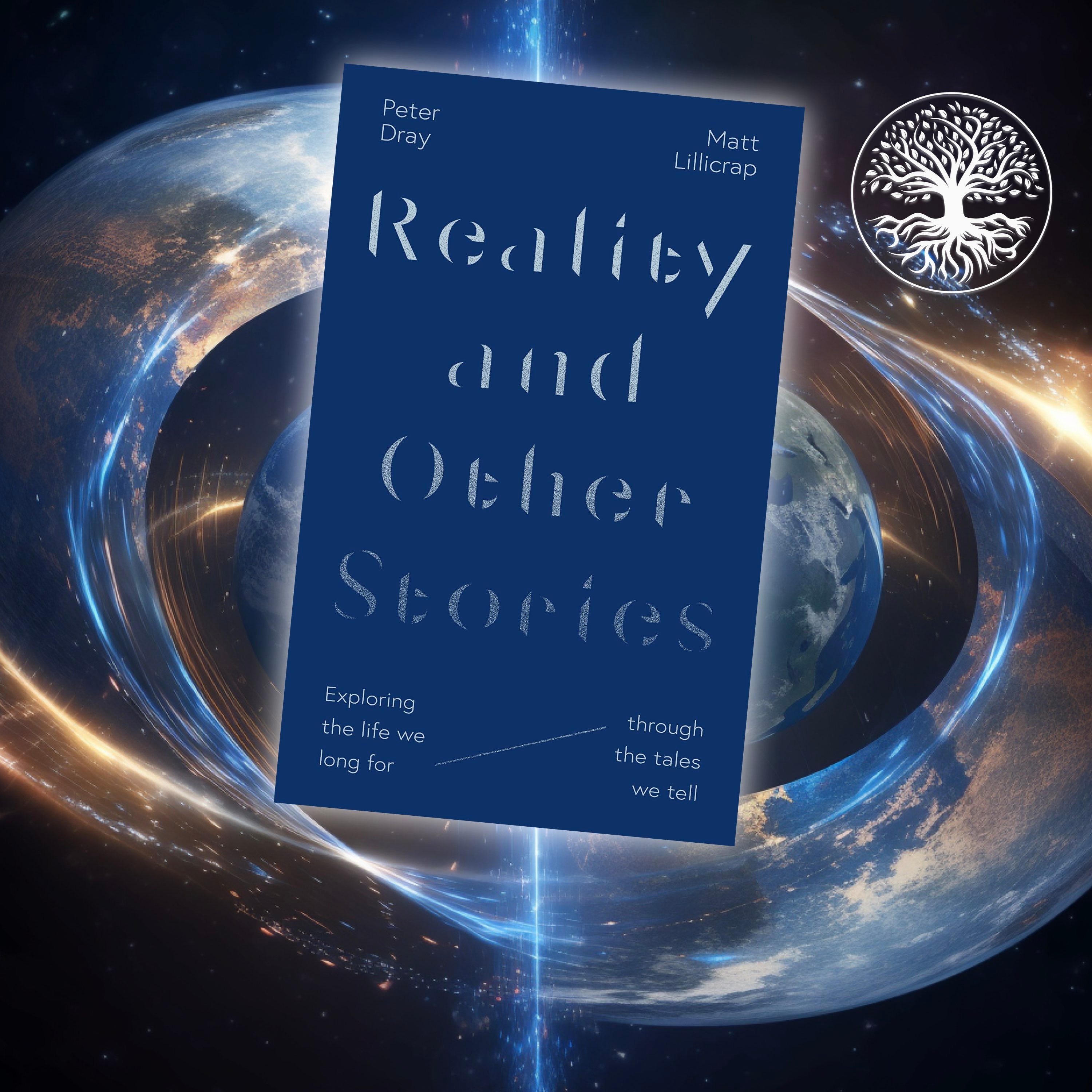
5 - Reality and Other Stories: How do the Seven Basic Plots point us to the meaning of reality? with Pete Dray and Matt Lillicrap
Pete Dray and Matt Lillicrap, authors of Reality and Other Stories (IVP, 2022), discuss the intriguing connection between the seven basic plots and the core Gospel story of Jesus’ life, death and resurrection. From overcoming the monster to rebirth, these plots reveal our deepest longings as human beings, which find their true fulfilment in the true story of Jesus Christ.This interview was recorded in October 2022.Peter Dray is Director for Creative Evangelism with UCCF. At present he is writing video scripts and supporting materials for CU Impact Groups (see www.uccf.org.uk/impact). He leads the evangelistic outreach in his local church, Redeemer Leeds.Matt Lillicrap is Pastor of Hope Community Church, Cambridge and a tutor with Crosslands Training. He has written for Themelios and Primer and blogs at www.onwardstoglory.org. He is married to Anika and has six children and one dog.Get Reality and Other Stories: ivpbooks.com – amazon.co.uk – 10ofthose.com – eden.co.ukTimings00:00 Introduction00:44 Who are Matt and Pete?03:43 What are your favourite stories?06:49 How did you come to be captivated by the Christian story?13:26 The Seven Basic Plots18:01 What insights do the Seven Basic Plots give us?22:08 Does evolutionary psychology explain the origin of story?28:26 How do the Seven Basic Plots point to God?36:16 How can story and imagination help us share our faith?TranscriptIntro[00:00:00]Caleb Woodbridge: Welcome to the Imaginative Discipleship podcast. I'm Caleb Woodbridge and this is a podcast for exploring the place that imagination has in discipleship, in following Jesus and in the life of faith. So whether you're a Christian wanting to go deeper in your discipleship or whether you're someone curious about faith and meaning making and what that looks like in the world today, I hope you'll find this a interesting and stimulating discussion. I'm really pleased to have Pete Dray and Matt Lillicrap. Welcome guys.Matt Lillicrap: Hi!Pete Dray: Hi Caleb!Who are Matt and Pete?Caleb Woodbridge: So Matt, do you want to kick us off and just, say who you are and just introduce to us Reality And Other Stories, the the book you've just written.Matt Lillicrap: Yeah, thanks, Caleb, and thanks for having us. Yes, I'm, I'm the pastor of a church on the edge [00:01:00] of Cambridge called Hope Community Church. I've been there for about a year. Before that, I was associate pastor at City Centre Church called Eden Baptist Church for four years working with students and then the wider congregation.And it was during that time that I met Peter. And we were able to share our mutual love of story and stories and particularly the story of the good news of Jesus. And I think share a mutual realization that we had both come to over kind of preceding years that that story is echoed by and kind of pointed to by so many of, in fact, all of the stories that we deeply, deeply love and engage within culture.And it was that that really kind of prompted us to, to want to write this book as a vehicle for being able to do that, to, to show how the stories that we love, the tales we tell, points of the life that we long for found in the story of Jesus. So I met Pete back in 2017, I think it was just at my, the beginning of my time.And I reckon he [00:02:00] can probably pick up the story there as to how the book came about.Pete Dray: Yeah. Thanks, Matt. Hi, Caleb. Hi, everyone. Yeah. So my name's Pete. I am, I live in Leeds. I'm the Director of Creative Evangelism with UCCF, the British university Christian Union movement. University CUs for a whole number of years have found that using the theme of story is a great way of engaging the broader culture.With the story of Jesus and so I guess what, what turned a vague idea into the first skeleton of the book was that I was asked to do one of these events weeks in Cambridge. With some of the students that Matt was working with, and I guess as, as a, as a kind of experiment, really, I thought it would be really interesting to take some of the basic plots that are identified by Christopher Booker, and on the premise that, as Matt said, Our favorite stories pique the desires that ultimately are satisfied in the [00:03:00] story, the Christian story to take four of those and to examine them more.As that was well received, a couple of people said, you should think about turning this into a book. And that's what happened.Caleb Woodbridge: Yeah, and that's where I came in. It landed on my desk at IVP Books, so I was really excited to see this approach. I'd been on the lookout for something that would communicate the Christian gospel in a story centered way, and so I was really excited to see what you were doing.So yes, we we took that on. Tom Creedy edited the book and now it's, it's out in the world and I'm really pleased to have played some part in that. So it's great to be talking to you guys about that.What are your favourite stories?Caleb Woodbridge: But you say you love stories. So do you have any favorites in particular ones that you've found meaningful and resonant, growing up and maybe still now? What, what, what are some of the ones that really stuck with you?[00:04:00]Pete Dray: Yeah. So yesterday I was with a group of students actually, and we were enjoying together the Hairy Maclary books written by Lynley Dodd. So they've been very much, very popular in our household, particularly since my boys were born. I guess beyond that I think growing up, I loved Gabriel García Márquez's One Hundred Years of Solitude.Then more recently I've, I've, I've really enjoyed Alan Paton's book, Cry, the Beloved Country. And then in terms of, I suppose, real life stories, I think the author Laura Hillenbrand tells an amazing story. So I guess her two most famous ones are about Seabiscuit, a racehorse, and if you never think that you'd ever read a book about horse racing, then that's the one for you.And then Unbroken, her her biography of Louis Zamperini, which is perhaps my favorite nonfiction book.Caleb Woodbridge: Amazing. What's about you, Matt?Matt Lillicrap: Growing up, I was addicted to the Narnia Chronicles.Caleb Woodbridge: Yeah. Love them. [00:05:00]Matt Lillicrap: And in interesting in an interesting and perhaps even CS Lewis sort of prophetically foretold it, I sort of put them aside and didn't really pay any attention to them through my teen years and could have thought that I'd grown up past them until my children then started reaching the point at which they wanted to read them.I have six children and I have read all of my children now, almost all seven – the youngest hasn't yet heard all seven from me – all seven of the Narnia Chronicles, and I have just fallen deeply, deeply in love with them again in a way that I'd sort of slightly fallen out of love with them as a teenager.So it's difficult to get past them as my favorite stories of all time. I think other things that I've really enjoyed, I've really enjoyed just getting to know Michael Morpurgo's writing for children as my children have grown a bit older too. I think he really is an excellent author for slightly older children, young teenagers.He can, he really wrestles with some very difficult themes in a way which is really effective for that age group. I find that very impressive. Yeah, and and like Pete, [00:06:00] I, I do like a good biography. I've enjoyed reading off the back of listening to another podcast. The Rest is Historypodcasts.I've enjoyed biographies of Winston Churchill just recently, which have been which have been a lot of fun to read. So I'm always on the lookout for good kind of real life stories like that as well.Caleb Woodbridge: Yeah. I spent quite a while when I was young trying to get into Narnia. I did know that it was a story, but my, my theory was that if I prayed hard enough God might indulge me and create the entirety of Narnia out of C. S. Lewis's imagination, just so that I could go and visit there!Matt Lillicrap: That would be so special, wouldn't it?Caleb Woodbridge: Yeah, maybe In the new creation, it's the whole thing of everything true and goods is just a shadow of something in Aslan's country. So we'll see!Matt Lillicrap: Ha ha ha.How did you come to be captivated by the Christian story?Caleb Woodbridge: So how, how did you come to be captivated by the Christian story? How did that become something that you came to believe in as both [00:07:00] true and something life, life giving?Matt Lillicrap: What a wonderful question. I think I've been in one sense captivated by this, the Christian story for as long as I can remember, hearing the Christian story well told by my parents and those around me from very, very young and feeling that there was something wondrous in it from a very young age.But I can remember getting to around about 11, 12, 13 and being convinced that although it was a wonderful story, that's all it was. It was a great story and it didn't really have any reality to it. And I consciously rejected it around there, but all the while was yearning for some sort of a sense of acceptance.I think that's probably quite common at that sort of age, 13, 14. I was bullied at school, felt very not accepted at school, and felt like I had to be somebody else in order to [00:08:00] be accepted and sought acceptance wherever I could find it, which is probably what made me a target for the bullies, if I'm totally honest.But the only place I ever felt like I was being accepted for who I really was was in church, which is why I didn't stop going. In a strange way, the Lord sort of gave me something of my idol of acceptance in order to ultimately draw me to himself because I didn't stop going to church, even though I decided I didn't believe it, even though I sort of thought that all these people around me were kind of caught up in a fairy tale that couldn't possibly be true.But I kept on asking questions and I can pretty much remember the day where I realized I was convinced in my mind that the resurrection was true, and it took a little while again. I was at a Christian camp in summer again, one of the very few places where I felt accepted for being me, which is why I went to that and sat down with one of the leaders who I think in a slightly perplexed [00:09:00] way was kind of I have a teenager here who says he's not a Christian, but believe Jesus rose from the dead and is absolutely convinced of that.And even convincing in his own way when he argues why that's true. And so he, he sort of sat me down and, and he just asked me if Jesus rose from the dead, who does that make him? And what does that mean for you? And I think it was then that I, through that week, I, it was almost as though I heard the story for the first time as a story in which I was a character, in which Jesus was the hero and he was drawing me into it. And I think that that was, yeah, that was the moment at 15 years old that I, I realized this was a story for me to step into and, and find that it was becoming my own, really.Caleb Woodbridge: So, yeah. So what about you, Pete? How did you come to see Christianity as a true story, as being a description of reality as it is?Pete Dray: Yeah, my story would actually [00:10:00] bear aspects in common with Matt. My dad is a pastor, I grew up in inner city London. I was the only white English person in my class at school. So we were surrounded by stories, actually, both religious stories, we would celebrate every festival of every religion at school, and other stories too.And then we ended up moving to, to Bournemouth. I remember hearing fairly early on, actually the story of the crucifixion. I remember, you know, in, in a very, you know, a childlike way of having my heart broken that this man who died, who I'd come to appreciate so much, would be treated in the way that he was.And, you know, in a four, five, six year old way came to appreciate that at some element this was for me. In truth, it stayed, my understanding of the Christian story stayed about [00:11:00] there for about the next decade and beyond. And it was actually during my first week at university I had the, I would now count it a privilege at the time, it was something of a chequered privilege, of being put on a corridor in my hall of residence with a whole load of third year law students, all of whom love to argue literally anything. You know, so you'd say your favorite color was yellow and they would not let it rest until you said, no, actually you're right. It's blue. And so fairly early on we talked about religion. They said, what religion are you? All of them would say I'm agnostic. I said, I'm a Christian.And they said, Oh, you know, that's pathetic. The only reason that you're a Christian is the fact that your parents are Christians. And, you know, I've replayed this conversation so many times in my mind and thought, well, I should have said, well, the only reason you're agnostic is probably because your parents are agnostic.But actually it shook me and probably over the next three, four months, [00:12:00] I would say came to the Christian story, the gospels with fresh eyes. I couldn't step outside of my family, I couldn't step outside of the heritage that had formed me, but as much as possible wanted to I guess come to my own understanding of the truthfulness of the claims here.The truth is I think that first time at university was the first time that following Jesus wholeheartedly was making my life more difficult. And I think every Christian gets to that point. That actually even if you've grown up, and more or less you follow Jesus, but it so happens that basically he wants what you want for your life.Easy. The point comes where actually you have to think, is this just a story? Or is that something that I can rest my life and my death upon? And over the next sort of three, four months, I came to the point that, This is not only good news, but I think this is [00:13:00] true and that I can, I can rest my everything upon it.Caleb Woodbridge: Great, amazing. So that's, that's really good to hear. And yeah. Wonderful to hear how the Lord's worked in, in your lives. And that brings us on to reality and other stories. Let's, let's walk through the ideas in that a bit. So we've already talked a bit about why you think stories are so important to us as human beings.The Seven Basic PlotsCaleb Woodbridge: So why is it that you've sort of gone into this, taking this approach of the seven basic plots. How is it that that relates to the Christian story?Pete Dray: The seven basic plots are an idea that was put forward by the theorist Christopher Booker. He went around the world collecting stories. And looked at stories from across cultures throughout time as well. And his project originally started, you know, what do stories have in common?[00:14:00] What makes a good story work? And one of the questions that he particularly asked is, what makes a story last? Not all stories last, which stories last? And essentially what he was able to do was to identify that there are seven basic plots, plots that repeat across cultures and throughout time in the stories that we tell.So one of them is, is Overcoming the Monster. The idea that there is this terrifying, chaotic entity, normally a monster, although not necessarily a monster that must be overcome if there's to be... peace re established.Caleb Woodbridge: So I guess we're thinking stuff like Beowulf and Jaws and I don't know. What, what else?Matt Lillicrap: Jurassic Park's your favourite, isn't it, Pete?Pete Dray: I love Jurassic Park, yes. The Highway Rat. All sorts of stories that would fall into that category. So yeah, that, that would be an overcoming the monster story. To go to some of the others.Caleb Woodbridge: yeah. Mm-hmm.Pete Dray: Okay. So he would then say [00:15:00] that Rags to Riches is another common storyline. So there you might think about Aladdin or Cinderella.Normally people who we recognize from the beginning have virtue, but who for some reason aren't honored and through their story arc they move from a position of shame to a position of of honor.The third story type that he would look to is is the Quest and that's where somebody sets out from home. In order to do something, in order to get something, or in the case of The Lord of the Rings, in order to destroy something. You look at nearly every tale of, of Olympic sport, and when that's told, it's a quest. I just couldn't stay at home, I couldn't be comfortable, I needed to go. So, Around the World in 80 Days would be another quest story as well.There are stories of voyage and return. So [00:16:00] think about Finding Nemo or Alice in Wonderland, where somebody is dramatically transported out of their normal world into another world, and eventually they get home, but their time away from home means that they see home in a completely different way.We would then have stories of Tragedy. A tragedy is where normally a central character treasures something, which actually is worthy of treasuring. It's not a bad thing that they set their attention on, but they get so consumed by it that it consumes them and leads to their eventual downfall.So, you know, you think about some of the Shakespearean tragedies like Macbeth and King Lear but also stories like The Great Gatsby we talk about The Social Network in the book as well.There are Comedies and, you know, these stories aren't necessarily ha ha funny although very often they are. At the heart of them, though, is a misunderstanding [00:17:00] and also circumstances which make it seem that The happy ever after that we long for will never be found. Yesterday with students, I spent a good half hour talking about High School Musical. And you know, there are other higher quality comedies.That's one that's particularly vogue at the moment. And then finally Christopher Wicker identified stories of Rebirth. is a story which looks as though it's going to be a Tragedy until there is an intervention such that the character is dramatically transformed. And the person that you see at the end of the film looks nothing like, or the book, the story, is nothing like the person at the beginning.So, The Lion King would be an example of of rebirth. Scrooge in the Christmas Carol.Matt Lillicrap: Me and my children watched Cars a couple of weeks ago, which is a really good example of a rebirth story, I think, as well. Lightning McQueen being transformed.Yeah.Pete Dray: So that's The Seven.[00:18:00]What insights do the Seven Basic Plots give us?Caleb Woodbridge: Yeah, great. So Why those seven? I mean, I guess if you squint hard enough you can kind of find commonalities between any kind of story. Everything's got a beginning, middle and end. That's one, one basic story. Yeah. Why, why, why do you think these seven are a helpful lens? Obviously, there's different ways you could slice things, different ways you could analyze things.What, what, what does this bring to our understanding of things?Matt Lillicrap: This is a, this is a really, that's a really good question. I think it's, it's fair to say that Christopher Booker's, he, he, he puts forward these seven basic plots. He spent 30 years or so writing a... It's about 900 pages book called The Seven Basic Plots. And it, in some ways, it's magisterial. It's just a fantastic book. It's very, very well researched. It's incredibly well respected, and it sort of is this, that sets a standard for this kind [00:19:00] of story analysis that everybody else kind of has to live up to. In some ways, it sets its own plot that all other story analyses have to kind of riff off.He obviously suggests Seven, although he sneaks in a couple that might be slightly out of the categories later on in the book which is slightly cheeky. But since he has written, and, and before, people have, have argued over how many exactly there are, sort of, basic plots. Some people try, like you just said, to sort of boil it all down to one very, very basic idea.Some people say there are three. Some people say nine. There are those who advocate for 30 and try and list 30 different plot categories. But what's interesting to notice is that everybody is saying there are a number. And we can identify them, that even in the story which has the biggest twist that you feel like, "Oh, I never really saw that coming", it still doesn't take you entirely by surprise, because you know [00:20:00] what kind of storyline you're sort of in. There's a, there's a familiar terrain even in the films with the biggest twists, things like The Sixth Sense and The Shawshank Redemption, no spoilers being given here but, but even those that have enormous twists in them, you, it's still, there's something that goes, you can be delighted in the way that it gives you some surprise, but it doesn't take you so far by surprise you never saw anything like that coming. Because if they they follow particular contours, and I think that the fascinating thing that both Peter and I really responded to in that is, why is that the case? Why do these stories have these structures? Where does this story scaffolding come from that we constantly reach for it?Authors such as Stephen King will describe themselves as being like archaeologists rather than architects. Digging up stories, he describes himself as like a... an archaeologist [00:21:00] trying to dig up a fossil as intact as possible from the ground. That's the role of the storyteller according to Stephen King.Dorothy Sayers says something similar about the way that she wrote her stories that it's a process of discovery rather than Sort of creation out of something completely new almost like they're rearranging material to tell a story rather than creating something out of the air. And that's fascinating.And just begins to uncover the way in which those stories perhaps connect with with reality. One of my favorite current quotes is from the the poet Muriel Rukeyser who, who says that "the universe is made of stories, not of atoms" which is really where this is getting at. There is a structure to reality which storytellers reach for in order to tell their stories. And ultimately, that structure comes from [00:22:00] somewhere: the Storyteller, the one who invites us into the story of his son, the Lord Jesus. That's really why we wrote the book.Does evolutionary psychology explain the origin of story?Caleb Woodbridge: So I think where a lot of people would go with this is to say that it points to something in human psychology that evolved over time. We've evolved certain patterns of doing that. Why do you think there's something else, or something more, going on than just a materialistic account?Pete Dray: Yeah, you're right, Caleb. That is where, where some people would go. We talk about John Yorke, the script writer in the book, who would hold that view. And he would say storytelling is actually an escape from reality in as much as we're all headed towards oblivion as individuals, as a human race, and as a planet, and therefore stories are an expression of our evolutionary psychology as a means of distracting us from reality. [00:23:00]Now, so they essentially are the two views. Stories take us deeper into reality or stories distract us from reality. Now I, I guess there would be several reasons why I would say that it's the former view.One would be that we don't function like that normally when it comes to our desires. We don't normally believe that our desires are this kind of mirage or chimera which are out to deceive us. In fact, if you try to live like that, you'll find that your life is unlivable. Yes, following our desires can sometimes take us to false ends. You know, they seem to promise too much or, or they lead us into decisions which are foolish. Nonetheless, we don't generally speaking question those deep desires. So when we have a desire for justice, a desire for honor, I think it'd be unlivable every day to believe that those things are just [00:24:00] mirage.A second thing I think they do is they actually destroy stories. So a story feels like much less than the sum of its parts. It feels much less satisfying, actually, when it comes to telling it, if you hold this materialist view.The third thing, ultimately, though, I suppose, Richard Dawkins would say that Christianity, perhaps it's just the ultimate meme. It's this idea which fits like a glove to a hand, but that is a projection of our deep desires rather than the satisfaction of our deep desires. I mean, ultimately this is where story and reality have to meet each other. That Christians believe that in the person of Jesus, God has pulled back the curtain and stepped into human space and time, not only to make himself known but also to make himself knowable as well.One of my favorite lines is from the Old Testament, that God has set eternity in the hearts of people. And if that is true, then the [00:25:00] idea that reality is baked into the human stories, that's not just a nice idea. Our desires are part of the living God beckoning us to true humanity and to enter life with him.Matt Lillicrap: The remarkable thing is that when you read someone like John Yorke or even Philip Pullman when he starts talking about stories, where they come from, their desire to try and explain away stories with no transcendence at all ends up, it ends up eating itself. Because someone like John Yorke will say, well, story is merely it's merely projection. It's merely pattern recognition. We recognize some patterns that are there, and then we project meaning onto them, which in itself begs the question of why that pattern is there in the first place, and where it arises from. But then of course what they don't notice is that they root that very much, John Yorke roots that very much in an evolutionary worldview.He says humans have evolved to [00:26:00] need to do this. It's an important part of our function. We can't survive without it. The real world being meaningless, we need to discover, project meaning onto that world in order to survive, which of course means that he is himself telling a story to explain, to give his explanation of the origin of stories. The question I, I'm, I'm constantly then needing, wanting to ask is, well, why should that story of the origin of stories be any more valid, than all the stories you're explaining away? Explaining away is a bit harsh, but in all the stories that you're sort of detaching from reality, why should the story that you're telling to do that be more attached to reality than any other? It undermines its own premise. I was very helped. C. S. Lewis writes a wonderful essay about theology being poetry. And then he talks about the science myth, and he talks about the fact that it's one of the most ingenious stories humans have ever come up [00:27:00] with.The, the story of origins based in an evolutionary worldview. Now. Whether or not we hold to a an evolution, an evolutionary process, we have to say it's an incredible story. It really is.It's pattern recognition. And again, so well, why then does it have any bearing on reality? That's the, that's the big question.I think I, I want to ask, you know, where does that pattern come from? Could it actually be that reality is maybe built of stories because there's a storyteller behind it all?Caleb Woodbridge: Yeah. It's interesting because I think Pullman in The Book of Dust, you see him wrestling with that, and that need for Lyra to find something more than the dry and empty demystification, emptying out of reductionist atheism. And I'm interested to see where he goes with the third one in that, and how he tries to resolve some of those those [00:28:00] tensions, but it's interesting to see him grappling with that. And perhaps if His Dark Materials more bears the mark of the new atheist type debates, I think his more recent stuff, it's more keyed into the more meaning crisis type grappling with questions of meaning in a way that goes, oh, actually that very reductionist materialist way doesn't give us enough to live with.How do the Seven Basic Plots point to God?Caleb Woodbridge: So, how do you think these seven basic plots then act as signposts to the story of Jesus or to God as a storyteller? How, how do you get that step from there are these stories to actually, jesus is the true story at the heart of reality?Pete Dray: Well, I think you can legitimately tell the whole Bible story, Genesis to Revelation, along the lines of these seven basic plots. So you can legitimately say[00:29:00] that the story of the Bible, Genesis to Revelation, is a story of Overcoming the Monster. That actually there is a chaotic reality in our world which must be overcome.One of the things that I love about Overcoming the Monster stories is the means by which the monster is overcome. The hero never just takes the monster on in, in their own terms. It's never just a display of brute strength. And I was considering with these students yesterday, why is that? And the answer, at least partly, I think, is that we don't just want a bigger bully, you know, an even bigger bully that takes on the bully. Not, not only do we want the malevolent forces of the world to be overcome, but we want them to be overcome in a way that demonstrates the beauty of the hero's motives and it, and perhaps the means in which evil forces, malevolent forces are always liable to overstretch themselves as well.So, so you see that in Overcoming the [00:30:00] Monster stories, that there's always an Achilles heel.Matt Lillicrap: Dare I say it? Because I know you've got loads of thoughts on it, Caleb but I reckon that's one of quite the big themes being explored by the Rings of Power right?Pete Dray: Yes.Caleb Woodbridge: Yeah, I've not seen the finale yet, so that's out today, but yeah, it's yeah, very interesting what they're doing there, so yeah.Pete Dray: That's right. So legitimately you can look at any of these seven stories as, as a means of, of telling the Bible story from Genesis to Revelation, perhaps with the exception of tragedy.Caleb Woodbridge: Yeah, I think there is genuine tragedy in the Christian story in that there is Fall and there is damnation, that not everyone is saved, that not everything is redeemed in that sense.There's that overall happy ending but for some within the story it is one of genuine tragedy. You can see tragedy as a partial truth, but you wouldn't [00:31:00] want to totalise them, they're not telling the whole story. So tragedy's there, but it doesn't have the final word.Pete Dray: I think that's a very helpful way of putting it. But I think with, with all seven of these plots, if you see them as overarching themes, from creation to new creation, the Bible story all seven of them center on ultimately the life, death and resurrection of Jesus. And so in Reality and Other Stories, we don't particularly look at these as these themes of big Bible arches, although that would be totally legitimate.Instead, we focus, as it were, on the climax of the action. And so therefore it's, it's unsurprising that if the zenith of the Christian story builds to the coming of Jesus, his life, death, and resurrection, that you would see episodes that exemplify these seven plots, in the ministry, death and resurrection of [00:32:00] Jesus.And that's, and that's what we seek to do in the book to show that the weight of history and the way of prophecy that you would see in the Bible, but also the way in which this story is worked out today in our own lives, flows from what Jesus did in human space and time. Not just once upon a time, not just in a galaxy far, far away, but in human history and in real space. That continues to shape our desires and the stories that we tell today.Matt Lillicrap: Yeah, one of the stories that I've really enjoyed reading in recent years with my children has been Andrew Peterson's Wingfeather Saga which I think it's wonderful and it's one of those series of books which gets better as you as you read on into it too. I think when we reached the end of the fourth of those books, and it's coming to what is it, a very real feeling ending in the sense that it's very bittersweet. There are some wonderful overcoming of monsters. There's some [00:33:00]wonderful rebirth that happens, but there is also some tragedy that happens too. And it feels like we're dealing with a world which is in some way reflective of the mixed nature of the world that we're in.It was remarkable to see my daughter who was seven at the time, her eyes were filled with tears. She was really moved by the story and by it finishing. And she, she said that she said, "It's so difficult and so beautiful. I wish it were true," is what she said. To which her brother, the year older than her said, "it kind of is" and it was something and I'm not sure they quite understood exactly why they were having this little conversation. It was an amazing thing to witness. A seven and an eight year old grasping that there was something true about the desires and yearnings that this story that they just heard was drawing out of them and piquing in them would be the phrase that Pete would use. And I think that's one of the biggest things here is that, as Pete says that, [00:34:00] the bare storyline of the Bible and then of Jesus's life, death and resurrection draws all of these seven threads together so that they are woven together in the life of Christ. But there's something even more happening under there, under the surface as well, which is that the reason we love those storylines and engage with those storylines is because we know that the world is kind of reflected in them.Either the world as it is, particularly in something like Tragedy, we face up to things that we wish were not true, but we know we need to deal with, or Overcoming the Monster. We're given, Pete puts it really well, he wrote this section of the book, he puts it really well in saying we're given a way of being able to express the fears that we would not otherwise want to name. Monsters in our lives that we wouldn't want to pay attention to, we can dress them up as a dinosaur or as a shark and then express our desire that they will be [00:35:00] overcome.Comedy again, it gives us it gives us a way of expressing the hope that we almost don't want to name in case naming it means that it's just get snuffed out because it just won't doesn't sound true. But in a comedy story, we can express that hope for everything coming right that we really have deep down in our lives because we feel like we had made for a world that isn't this one but we've never actually experienced. We miss a world we've never experienced and comedy enables us to express that somehow. And then we find those desires that all of these storylines rise in us being met in the true story and also being redirected.That's the other part of it. There's a subversion of those desires that happens as well. We, we desire the kind of the big, strong hero to ride in and rescue us. Or perhaps we desire to be, be able to be the big, strong hero. And then we find that [00:36:00] actually Jesus is the one who is going to overcome that monster. Jesus is the one who's going to lift us from Rags to Riches alongside him.We're not going to make our way there. There's a desire, the way that they're subverted as well as then being fulfilled in a really beautiful way. It's very exciting.How can story and imagination help us share our faith?Caleb Woodbridge: Yeah. Well, we better start moving towards wrapping up the conversation, but I'm sure we could go for far longer on this. I've got got many more questions that I'd written down that we haven't had chance to dig into yet. But one thing I'm keen to think about is, how would you encourage Christians to be more attentive to story and imagination in terms of sharing faith and in terms of trying to share Jesus with with people? How can this help us be better engaged with where our friends and neighbors and colleagues and people alongside us might be at?Pete Dray: For me, I think this approach helps us to tap into what [00:37:00] is already there in the Bible, what's already said about Jesus, but potentially that we miss through the blinkers that we bring. I was kind of first jolted into some of this way of thinking about 15 years ago when a colleague said to me your messages, the talks that you give are really interesting apart from when you talk about Jesus. And they basically said at that point you, you roll out the same words, the same illustrations, the same kind of hackneyed approach.And he said, you know, it's, it's so sad. It's too predictable. And I think I went away from that conversation thinking, oh goodness, he's absolutely right. That I would set up tension, I would explore these issues, and then essentially I would always copy and paste the same approach when it came to talking about the ministry of Jesus, and particularly when it came around to talking about the Cross and Jesus' death and resurrection the same [00:38:00] way. And I went away from that conversation thinking, goodness, if a Christian is finding this boring, if a Christian is finding this repetitive, then what about those who don't even have a sort of vested interest in this story when it comes to it?And in fact, when I started writing these messages for Cambridge, I, I found that it was vocabulary stretching that I was being given new terminology. Fresh terminology to explain things that I'd held to for a long time. And not only did that recapture my own heart in wonder and redirect it in worship, I think I found that this, this multiplicity of approaches begun to do a little more honor to the work of Jesus. And, and I think, you know, sometimes the same thing that said in a different way, we all know in our own lives that, that something that somebody has said to us many times before, there's a particular metaphor that they use, [00:39:00] a particular illustration, a particular story, and it comes home with power and clarity. So I think both for Christians in just not being bored and in allowing our own imaginations to be recaptured and plunged back into this big story is essential.But also I think even when it comes conversationally to talking to other people, I think, I think that's helpful. Matt, you've probably got things to add as well.Matt Lillicrap: I think that's so, so helpful, Pete. I'm really struck by your description of you being captured to wonder and worship by the almost the release of imagination. Pete's heard this story before, but I think back to being taught GCSE RS at school. And we, we studied Mark's gospel and it was almost as though when it wasn't almost as though it was literally as an object for study and analysis.And it felt like at the end of every lesson, and particularly at the end of the course, we basically taken Mark's Gospel and pinned it to a [00:40:00] dissection table and, and kind of tried to get inside the inner workings and then left it lifeless, just lying on the table. I can, I remember especially being struck by the sort of slightly outrageous kind of sort of amusing part of the transfiguration when Peter speaks about putting up shelters and Mark says he had no idea what he was saying.And that, that always struck me as slightly amusing. What my, what I was told told to do in the RE lessons was to understand the significance of what Peter might be saying, he uses the word tabernacle, et cetera, et cetera, et cetera, which all of which is important, but it sucked the imagination out of it.It sucked the fact that in my mind's eye, I could see Peter totally terrified and being completely at his wits end and not knowing what to say. And once again, his mouth going faster than his brain, which is, which is funny. And I think it's supposed to be kind of funny. It's supposed to count. And there's, there are parts of the gospels, which is supposed to make us cry.And there are parts of the gospel, which is supposed to fire our [00:41:00] hearts. But I think we we've become so used to, in a sense, so familiar with God's word, but also so kind of used to the idea that we have to observe it and analyze it because it's it's God's holy word that we don't enter into it anywhere near as much as we should.And so actually my first, my first plea to Christians thinking about this would be be imaginative in your faith, engage with Christ in your imagination, engage with his story, engage with the gospels, engage with the Old Testament in your imagination. It's told as a story, we are meant to be able to imagine in our mind's eye what's happening.Imagine kind of what it might be like to be the woman with a 12 years of bleeding, desperately trying to get close to Jesus to touch the hem of his cloak, knowing she shouldn't be in the crowd. We're supposed to feel some of that with her. And I think if we begin doing that, we will begin to [00:42:00]be able to speak of our relationship with the Lord Jesus in a much more real way that connects with the thing that's the reality that's really there.And the other thing I would say, this is a really brief thing is: don't use it as propaganda, imaginative propaganda where we're telling stories that are designed to show the Gospel. Has its place in very small contexts, but I think actually what we need to be doing rather is telling stories, full stop.Telling stories which reflect our desires. Telling stories which capture our hearts. And, allowing our relationship with Jesus to have the effect on the stories that it will, because we know that we are speaking about a world that is real, even when we're speaking about an imaginative world, because it's being infused by the real world and all our longings for it.Caleb Woodbridge: Great. Yeah. And anything to add Peter?Pete Dray: We live in a culture which loves stories. [00:43:00] We will always live in a culture that loves stories. I think that there is something particularly compelling about a story at the moment. But we quote Margaret Atwood in the book and says that you're never going to do away with stories.Therefore, this isn't just something that we're talking about as, as something which is vogue in the early part of the 21st century. This is an opportunity to recapture a confidence in a storied existence, in a storied, Bible. And you know, I've come to see that it's massively important that we, we hold that the form that scripture comes to us is as important as its content.In fact, you can't, you can't set them apart from each other. It's not as if there's a disposable husk at this, that we throw away in order to get to the goodness at the center. And therefore, I think when it comes to our own discipleship, and when it comes to our imagination as well stories aren't just a prop but there are certain things that you can only say in [00:44:00] stories.And whilst, you know, one of the students that I was talking to yesterday is a little nervous about talking about story this March, as if, you know, this is just, the latest saga to add to many others, whether or not we use the word story, I'm not too, too concerned about. Nonetheless, let's recognize that narrative is something that God himself has given us, and I think we dare not ignore it.Caleb Woodbridge: Yeah. I think there's a great, great quote you have towards the end of the book from Tolkien about how as storied creatures it's not surprising that salvation comes to us in the form of a story.Matt Lillicrap: God speaks to us in a language we can understand. And the language that we understand best is the language of story.Caleb Woodbridge: In my talk I've given recently on Imaginative Discipleship, I say that story isn't the spoonful of sugar to help the Gospel go [00:45:00] down, but it's actually a fundamental part of who we are as, as human beings.Matt Lillicrap: Absolutely.Caleb Woodbridge: Well, thank, thanks so much for, for the book and for this discussion. I think it's it's really helpful and yeah, a great one for Christians to read, for anyone interested in the, the meaning of life and of the power of story to read and engage with.Where, where can people get hold of, hold of the book? Well, I know the answerMatt Lillicrap: Yeah, yeah, yeah, indeed.Pete Dray: Ha!Caleb Woodbridge: You can get it from IVP Books, ivpbooks.com, but also from anywhere where good books are sold.Matt Lillicrap: Yes, yeah, absolutely. We would, we would love Christians to read it, to engage with it, to perhaps have their own imaginations fired or re-fired. We would love people to consider giving it to, to others whom perhaps they would never normally give a book about Christianity to, because of all that Pete said about that finding new language.I did that with a friend. [00:46:00] He told me about 15 years ago he would never read another book about Christianity again. But I passed him this past in this whilst we were writing and he said, you know, this is the kind of book that someone like me might read. And he really enjoyed it. So we're praying that it will be a book people be able to give to those who they might not normally consider giving a book to.Caleb Woodbridge: Great. Well, thanks very much and thanks to all our listeners. I hope that you've enjoyed this too. And please do like and subscribe and review, wherever you've been finding this, whether on YouTube or iTunes or Spotify or wherever.Please do let me know what you think of this discussion and spread the word about the Imaginative Discipleship podcast so that we can go deeper in our faith together and explore the richness of the Christian story.So, thank you. Thanks, thanks Matt, thanks Peter, and [00:47:00] thanks, thanks to our audience. This is a public episode. If you would like to discuss this with other subscribers or get access to bonus episodes, visit www.biggerinside.co.uk
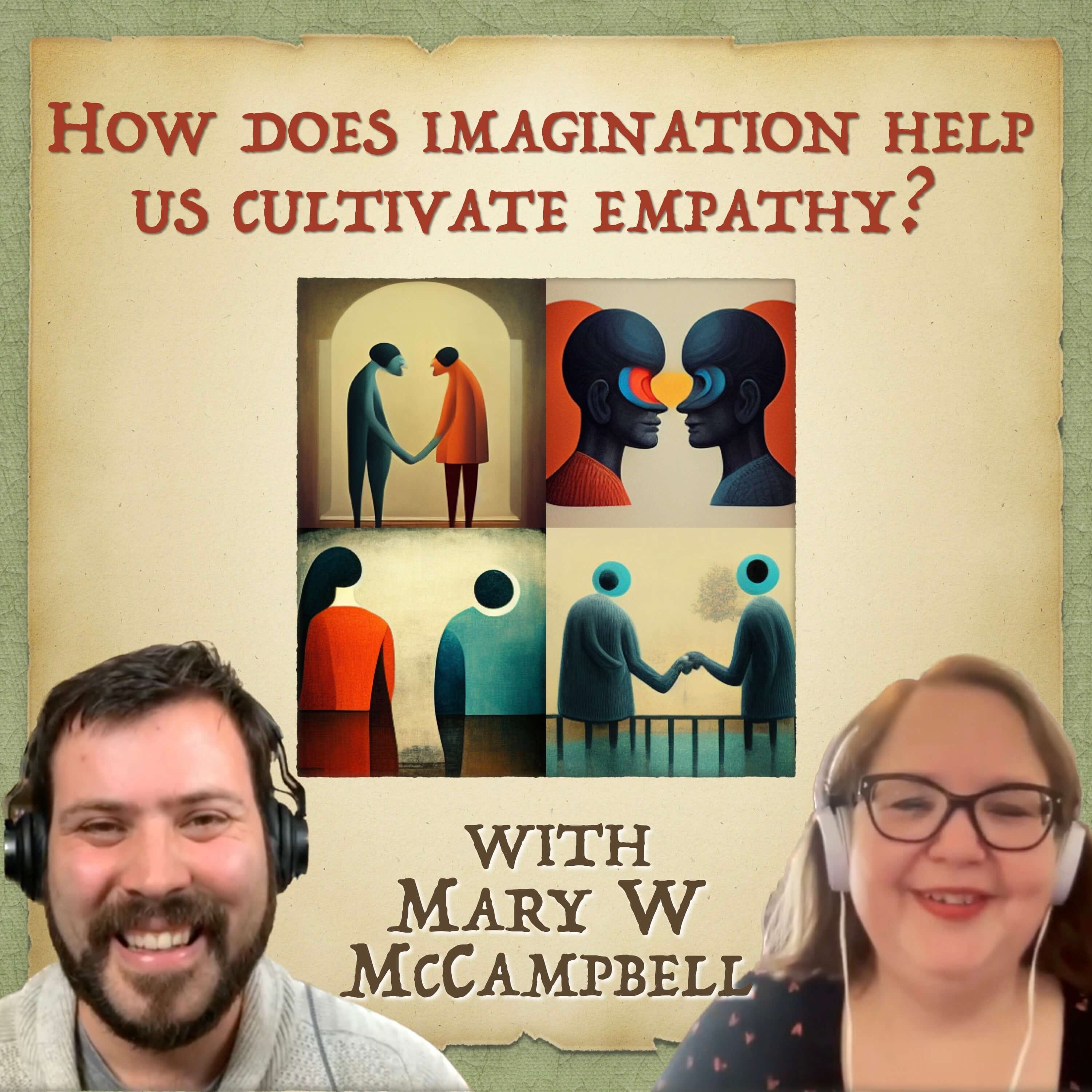
4 - Imagination and Empathy, with Dr Mary McCampbell
Mary McCampbell, author of Imagining Our Neighbours as Ourselves: How Art Shapes Empathy, discusses the place of imagination in shaping our attitudes and actions to those around us.How does empathy echo the incarnation? Is there a ‘sin of empathy’ where we take compassion too far so that other people’s agendas control us? How we can empathise while disagreeing well with or challenging other people?Dr. Mary McCampbell is an associate professor of humanities at Lee University where she regularly teaches courses on contemporary fiction, film, popular culture, and modernism.Find out more about Mary at her website marywmccampbell.com, and sign up for her Substack, The Empathetic Imagination.Timings00:00 Intro00:32 Welcome00:55 Introducing Mary and her book04:35 Why is empathy important to discipleship?10:00 How do you define 'empathy'?12:24 Imagination and the imago dei16:55 How can we choose stories to engage with that most cultive empathy?22:10 Why have some Christians get talked about the 'sin of empathy'?30:27 How do you have empathy for someone who shows no empathy?34:07 L'Abri, community and empathy38:41 Further recommendationsLinks* Get Mary’s book Imagining Our Neighbours as Ourselves - Fortress Press, Amazon.co.uk, Scribd* Watch Imagining Our Neighbours As Ourselves Fieldmoot Keynote Lecture, by Mary McCampbell* Choose Your Own Enchantment - How should Christians decide what media to consume? by Caleb Woodbridge, Equip.org including listening to our neighbour’s stories as a way of loving them* An example of the evangelical suspicion of empathy that we critiqued in the podcast: The Enticing Sin of Empathy - Joe Rigney, Desiring GodTranscriptThis is an auto-generated transcript that has been lightly corrected and edited. Please excuse any remaining errors and infelicities!Caleb Woodbridge: Welcome to Imaginative Discipleship. I'm Caleb Woodbridge, and I'm really pleased to have with me this week Mary McCampbell. Welcome Mary!Mary McCampbell: Thank you. I'm so excited to be here. Thank you very much.Introducing Mary and her bookCaleb: The topic we've got is one that you've written on. We're going to be exploring the connection between imagination and empathy and the Christian life. What's your background? How did you come to write about this?Mary: Just to say a little bit about me, I'm a professor at Lee University in Tennessee, and my area is literature, particularly contemporary literature and popular culture and how that relates with theology. I [00:01:00] think what really led me to writing about this book is basically my teaching and seeing what happens in the classroom. I think I've long been aware of how reading and watching movies and listening to music and looking at visual art helped me to see from somebody else's perspective, but the significance of it didn't really register on a deeper level until I saw what was happening with my students. And how you could, I could see transformations happening. And in particular, I have an article I wrote not too long ago, in particular about teaching Othello, Shakespeare's Othello, in a regular class I teach every year. Also teaching the autobiography of Frederick Douglass. And I teach in the deep south United States and certainly there's still so much racial tension, and there will also be students, [00:02:00] white students that might have come from communities where they really didn't interact with people of color very much.So reading both of those books, because Othello deals so much with racial profiling, and then also reading of course Douglas's Narrative. I've had so many students that really had never thought, in particular white students, who had never thought about the experience of a person with darker skin being judged and having these kind of microaggressions leveled at you and overt aggressions, in the case of both of those books. They just had never thought about it and it really struck something in them.And it also, of course, with these cases I would see with black students, it was empowering for them to be able to speak openly about these things if they wanted, you know, so anyway, I see it with all kinds of works of literature and film, but those two really stand [00:03:00] out to me.So, and I thought this is, this is about a kind of spiritual formation. I mean, every semester that I start with my general education classes, I talked for years, I've done this, I talk about the importance of empathy, and I give examples of how you must use your imagination in order to put yourself in the life experience, shoes of another, in order to love them more deeply. So [chuckles] that's just a little intro!Caleb: Yeah. Great. And your book is "Imagining Our Neighbors As Ourselves: How Art Shapes Empathy." So that's very much the overall theme and thesis of it. I think that's really interesting and vital. I wrote an article about how Christians should think about what they watch and engage with. And often, that question's approached from the question of, "Is it suitable? Is the content suitable?"Mary: Yeah.Caleb: And I was saying, well, actually, I [00:04:00] think there's an important sense in which it's a form of listening attentively to our neighbors. And yes, it's really helpful to have that perspective. On this podcast, I'm keen to be exploring that intersection of imagination and spiritual formation, the role it plays in our discipleship.Why is empathy important to discipleship?Caleb: So, why is cultivating empathy an important part of Christian discipleship? How does it fit within that frame and picture?Mary: Yeah, I mean, I'm gonna go to maybe the most extreme example, I mean, since I've been really reading and thinking a lot more about this, I've realized how much the idea of loving enemies is really at the heart of the gospel.Caleb: Mm-hmm.Mary: And it really is what sets Christianity apart. I mean, of course, there are many things that set Christianity apart, but even those who would say they're open-minded and liberal in their understanding of love one [00:05:00] another, there still tends to be a kind of tribalism.Caleb: Mm-hmm, yeah.Mary: Whereas Christianity is, we, in our rebellion, had made ourselves enemies to God, and the idea that Christ is the most... You can't get any deeper empathy than the incarnation, you know, and it's not possible for us to, of course, do what Christ did and really understand what it was like to live like us. But our imagination, in order to try to get over that hurdle and our natural inclination, which is to label others, dismiss others, gravitate towards people that we're initially comfortable with.But, it really does take intentional work of cultivating the imagination. And you use the word attentiveness. Attentiveness is really just to kind of [00:06:00] linger. I mean, that's an act of love to linger on someone's story, to spend more time, to slow down.Caleb: Mm-hmm.Mary: And I think that allows us to expand the imagination, to think how they are, what life is like for them. And I talk a lot about the Good Samaritan story, and there's a great MLK quote where he talks about the priest and Levite who didn't go over and help the man who had been beaten up.And he said that in their minds, it was, "What's gonna happen to me if I go over?" It's a fear-based, "What's gonna happen to me?" Whereas the Samaritan did what we should all be doing, "What's going to happen to him if I don't?"And so there's a sense of humility, but I think maybe we think less of ourselves if we allow space to hear the other story and then imagine life [00:07:00] that they're experiencing.Caleb: Yeah. I'm reminded of the line in the film Lady Bird where you have the exchange someone says to her, "Oh, you really seem to love the community she's in," and she says something like, "Oh, no, I just pay attention." And the person replies to her, "Don't you think attention and love are the same thing?" And I think that's a really interesting thing we. Would you go so far to say that in the act of imaginatively putting ourselves in other people's shoes, there is in that some kind of echo of the incarnation, how Christ as God became a human became one of us to sort of bridge that gap between us?Mary: Yeah, that's a really good question. I think it echoes Christ's most perfect and complete act of empathy. When we create, we're echoing the most perfect and whole act of creation. You know, when God began, started the world and created the world. I feel like we're called to love our enemies, and the only way we can really do that is through imagining what it's like to be them, rather than objectifying them. So, yes, that is echoing Christ. I mean, I'm just thinking about Christ on the cross when he says, "They know not what they do," and it's like he knows the whole story. He knows why they're doing this. He knows. There's a sense that he is... Yeah, I'm thinking about Christ with the woman at the well. He knows her story, and rather than dismissing her, banishing her, he loves her.How do you define ‘empathy’?Caleb: Just on that in terms of defining terms a bit. How would you define empathy then? What's the relationship between love and empathy, just to distinguish those?Mary: I think empathy, well, sympathy. Sympathy, and these terms have flipped in their meaning over the years. So it's interesting. But the way we think of it now generally is that sympathy is when you feel sad for someone, and it seems to still keep a power differential.Caleb: Mm-hmm.Mary: There could be a kind of condescension there, whereas empathy is allowing yourself to feel as the other person feels. So you're on the same plane?Caleb: Mm-hmm. Yeah.Mary: So, I'm thinking about an example. In the... I don't know if you've watched The Chosen?Caleb: No, I've been hearing good things about it. I've actually just downloaded the app onto my Apple TV so I can watch it on my TV at some point. But yeah, do you recommend it?Mary: Oh, I do. I really love it. But, well, you could look for this in the last episode of the first season. You have the woman, the woman at the well scene and the actor Jonathan Rumi. As he's talking to the woman, when she finally experiences this sense of joy because she recognizes who he is and that he has loved her, seen her, he has seen fully who she is and still loved her. The actor who plays Jesus, his eyes tear up, and I heard an interview with him and he says every time they filmed it, it wasn't part of the script that it would happen. Even when he was talking about it in an interview, it happened. And he said, "But I like to think that Christ himself, his eyes would've teared up because of feeling her joy." And that switch from where she felt so worthless and she felt like she would be judged and she felt such a self-hatred and shame, and then that joy, that deep love and joy.And so I think of that. Yeah. So, and that's really, you know, mourning with those who mourn and rejoicing with those who rejoice on a very deep level.Imagination and the imago deiCaleb: Yeah. Another theme that you explore is empathy as a way of recognizing the imago dei in people, the image of God.And how does imagination and good stories help us see people with that dignity and value that comes from being made in God's image?Mary: Well, there are so many ways you could go with that. I start the book with a very famous quote from Graham Greene's "The Power and the Glory." It's about the whiskey priest, who is not named in the novel but called the Whiskey Priest because he has problems with alcohol. Anyway, without going into all the historical context, there's a priest in prison with a pious woman, and it reminds me of a Flannery O'Connor story. In that story, the pious person is the worst type of person because they think they are so good and better than everyone else, and they're hateful.In the book, there's a point where the woman realizes that the whiskey priest is a bad priest. He's an alcoholic, he had a child out of wedlock. Of course, you couldn't be Mary's priest. She says it would be better off if he were dead. Normally, in a situation like that, your natural impulse would be anger and maybe even hate. But it's at that moment that the whiskey priest slows down and says, "You know, it's really important that when you look closely at someone's face, you can begin to pity them." The word "pity" sounds condescending, but I think he means that if you stop and intentionally look, you will see God's image. Then he says, "Hate is a failure of imagination." It's just the greatest line.I also think of the Gerard Manley Hopkins line about Christ playing in 2000 places. I can't remember the exact line, but it's about seeing Christ's face in other people's faces.And biblically, we were told that we're all made in God's image and that when we serve another person, we're serving Christ. We're seeing Christ in them. So again, it's that attentiveness. I think it's slowing down and intentionally looking because, of course, the human condition is so tangled up. We're made in God's image, but we're fallen. I believe in depravity. It's so easy to just focus on the depravity. The idea of slowing down and intentionally looking for that likeness, that there's a glory, dignity, and value regardless of what they do because of God's image in us.Caleb: Yes. Yes. I'm reminded, my taste runs to the geeky, so I studied Tolkien and his medieval sources. But I'm reminded of the pity for Gollum that's so vital to the story. Frodo recognizes something of himself in Gollum, seeing in this pitiful creature not just a monster, but someone who is, in his way, a victim of the ring who has been distorted by it. Frodo wants to treat him well and be merciful to him. And that's central to the eucatastrophic happy ending. Mercy is shown, and it's repeated with Sam as well. There are lots of stories that have this effect. Of course, there are forms of storytelling that can do the opposite, that can go in the direction of propaganda.How can we choose stories to engage with that most cultive empathy?Caleb: So how do we make sure that we're getting a healthy diet of stories? How do we choose what we feed our imaginations with and how we engage with the stories we consume? How can we do that in the best possible way?Mary: Yeah, I think it's really important to seek out art that presents a very complex picture of what it means to be human. And that doesn't necessarily mean Christian art either. Because I've seen some so-called Christian art that is very reductionist in the way it portrays things. Like, you know, I recently watched "God's Not Dead" or something I was writing, and just the straw man, the caricatures of the liberal reporter and the atheist professor, they were so combative, mean, and completely lacking empathy. The Christians were portrayed as the only good and empathetic ones, and everyone else was the enemy. There's no sense of humility in approaching that.To me, if you only watch things like that and that's the message you receive, I feel like it's actually kind of dangerous. But I also feel that way about really simplistic romantic comedies or action movies. Every once in a while, they're just fun, but if our idea of what a human being is formed by a very reductionist story like that, it's really problematic.Even some really good filmmaking, like Lars von Trier, his picture of human beings is so dark. You don't see the glory, goodness, or beauty. He goes to the other extreme. And I feel the same about someone like Ernest Hemingway. If I just read Hemingway all the time and his very low view of life and humans, it would be bleak. So we should seek something that challenges us to think about both the goodness and the badness in human beings.Caleb: Yeah, it's being true to the glory and misery of human beings, as Pascal talked about, and Alexander Solzhenitsyn's famous quote about the line between good and evil running through the middle of every human heart.Mary: Yes, absolutely. When you mentioned Gollum, it made me think of one of my favorite novels to teach, which is Frankenstein. Funny enough, I never read it in college or high school or even graduate school. I read it when I started teaching, and it worked so well because of the creature - I don't want to say monster, the creature. You have such empathy for the creature. You see the battle between good and evil within him, and you see how the lack of empathy around him has led to negative consequences. It's a powerful and beautiful story, and college students really get into it. It's not because it's dark and scary like the Hollywood version, but because it's more psychological and theological. It's quite instructive.And it doesn't have to be realistic. This is where we can talk about Tolkien or Lewis. It can be fantasy or science fiction as long as it asks those serious deep questions and presents a picture of human beings. The key is to engage with works of art that make you question what it means to be human. Lyotard talks about this in his postmodernism explanations. A work of art that simply presents and says, "This is reality. This is how it is," in an airbrushed version created to make money, can be dangerous. So, yeah.Caleb: I guess the other dangerous thing is that Christians feel the need to conform things to pre-packaged, preconceived right answers. Yes. [00:24:00] So we're unhappy to be uncomfortable sitting with the messiness of life. And it even gets to the point where some Christians have become suspicious of empathy, even going so far as to talk about the sin of empathy, which seems quite bonkers, in a way. But what do you think is going on there? What's perhaps the seed of a legitimate concern? Yeah. How, what, why, why do people get nervous?Mary: Yeah. I mean, it's hard for me to answer that without being a bit cynical. So, and I want to be empathetic to understand where they're coming from. But I'm not talking about these people as individuals. I'm talking about the way the argument is framed. [00:25:00] And I haven't even read it that much because what I've seen hasn't really made sense to me.Okay. I'm gonna talk. There is an academic discussion that's not the evangelical discussion. There's an academic discussion about a book called The Dark Side of Empathy, but that is about how we tend to have empathy for, we tend to, empathy could sometimes encourage a kind of tribalism if you're in your own, you're empathetic with those like you selectively, and to me, that's where Christianity is different. Because it's saying no, that's going against the grain of the gospel. So, but that's why I don't understand.I mean, yeah. How do I even approach it? Because I'm seeing that argument coming from networks of people that are also very aggressively what they call anti-woke. And [00:26:00] I feel that, to be honest, all of this at times feels like excuses for why we shouldn't listen to people that have less power than us.And I mean, again, I'm, I guess I'm being cynical and I need to read more deeply what they've said, but what I have read, I think there's a sense that there's a fear in there that empathizing means agreement. And so that is where discernment, I mean, this is about spiritual formation. This is why I get really frustrated with the vagueness of using the word love, especially in like progressivism, some forms of progressivism and liberalism, and just “love is love”. And I'm like, well, what is love?And [00:27:00] I don't, you know, I think yes, we are called to love everyone, but loving doesn't always mean full agreement. And in fact, if you fully agree with everyone, even if you think what they are doing is sinful or hurtful to them, then is that actually loving? You know?So, I do think there's a legitimate concern, but to me, that's not really... Because empathy comes from a strongly formed core where you know who you are. Um, and this is not just collapsing yourself onto someone else's point of view. Yeah, I don't know, but I do find the people talking about empathy as sinful are kind of like they think if you care too much about the oppression of black Americans, [00:28:00] because this is mostly coming from America, that I know, um, then you're being liberal and you're a danger of liberalism.Or if you talk about any kind of feminism, like, there's just such a fear. It feels very fear-based to me. Yeah. And fear is the opposite of love. So anyway, yeah. What do you think? What do you think about what you've probably read more about it than I have, so...Caleb: Possibly the legitimate thing it's trying to push back against is the elevation of people's feelings to a point where they're unquestionable. And I think in our culture, there can be a sense that if someone's offended by something, then you must necessarily have done something wrong.And as Christians, there are aspects of Christian teaching such as the exclusivity of Christ and Christian sexual ethics that will offend and put people's backs up. So I think what they're trying to do, perhaps legitimately, is to ensure that it's not just about listening to everyone's feelings and never disagreeing with someone.But like you said, it can easily become a way of shutting out disempowered voices and a sort of excuse not to listen. It's that age-old tension of holding true convictions with love, of being able to hold to particular beliefs while expressing loving disagreement rather than simply blocking people out. It's not always easy to hold those things together, but I think framing empathy as a sin is likely to close people's ears when they should be listening. So I don't think it's a very helpful way of approaching the issue.Mary: [00:31:00] I also see it often connected with a kind of, it's almost like Christian Twitter shock jocks, you know, like, I've just now thought about that. I'm really proud of myself. But it's kind of like we're gonna tweet something that is really, it kind of feels mean-spirited, but it's gonna have a Bible verse in it. And it might be something that is true biblically, but it's the way, it's like we're standing up for the gospel regardless, and it has this very combative approach. Yeah. It's very combative in the way it approaches. So that idea of trying to understand where the other person is coming from in order to really love them and speak to them in a loving way, even if you're disagreeing, seems kind of lost on that view. Yeah. But again, I'm glad we're talking about it because I need to go read some of that. [00:32:00] I've read some, but I need to read more. Yeah, I know that when my article was posted by Christianity Today, there was a press that posted their lecture about the sin of empathy several times under it, and I should go back and actually watch it. Yeah. But I was like, do I really have an hour and a half to listen to these white guys talk about it? I don't know, that sounds terrible, but I really should. I really should just to have a informed response that is...Caleb: Yeah. Well, I think it goes back to the challenge of empathizing with even the people who are perhaps our close theological neighbors who perhaps irritate us the most. We need to be empathetic to them and try to understand charitably where they are coming from. And again, that doesn't mean endorsement or excusing what might be wrong in what they're saying, but we do need to listen, even to the... It's easy for us to form outgroups and ingroups, even when talking about the subject of empathy.Mary: Well, and it's really difficult. I mean, that's the question I feel like I get the most. How do you have empathy for someone who shows no empathy? You know, and what I've read from people like Bonhoeffer and MLK is that it's those people who need the most sympathy because if someone is showing such anger themselves, you know, like the pious woman in the novel, in The Power and the Glory. But it's really tricky. It's also tricky if you see a figurehead like a pastor or politician or minister who is leading people astray by the things they're saying and pushing people away from empathy. I mean, it's very hard. It's a real challenge to see the image of God in this person, to pray for them, but it does help if you realize there's something inside that's hurting, you know, and to try to maybe think that way. But it's hard.Caleb: Yeah, because I think it is that not having selective empathy, and one of the blind spots that we can have is, perhaps more traditionally, in certain circles or tendencies in church culture, to selectively empathize for oppressors over the oppressed. It's like we see this with scandals, and it's like, "Oh, what about the poor church leader whose career is in tatters?" And I think the challenging thing is that actually there is, to some degree, inappropriate empathy, and it is entirely wrong if that is coming above or at the expense of empathy for those actually hurt and oppressed in the situation. So, I think holding that tension of, yeah, our hearts need to go out to, first of all, victims, to people genuinely hurt and oppressed in different situations, but also not losing sight of the humanity of people who have done wrong. And that's a really hard thing in our culture, not to draw simplistic villains and heroes and fall into reductionism, like you were saying earlier.Mary: Yeah, it has helped me too, to look at scripture and to see Christ, gravitated mostly towards the poor, and most of his disciples were not high up in society.But then you look at [00:33:00] Matthew and you think he was a traitor to his own people. He was serving the Man. He was really a problematic figure and would've been very much disliked, and sometimes probably for good reason, what he was doing. But then Christ chose him. And you think of Zaccheus and you think of the Roman centurion and you think of those who had positions of power and had gotten that power even maybe through bad ways. Paul, by gosh, Saul / Paul. Yeah. And it just shows that we have to be humble enough to recognize that God can transform anyone.Caleb: Yeah, it's the scandal of Grace. The scandal of Grace.Mary: Yeah. Scandal of grace. Yes, exactly.L'Abri, community and empathyCaleb Woodbridge: One of the things I know that you have in your background is that you write in residence L'Abri Fellowship over here in, in England, which is a place that's very dear to my heart as well.Yes. I [00:34:00] wonder whether you've got any thoughts on the place that community plays because L'Abri is a rich place of Christian community. And is there anything from your experience there, maybe or more broadly just in terms of the role that community plays in developing empathy?Mary McCampbell: Yes. So much. I feel like a large part of the way I think about art and the world, and God has been because of L'Abri. The first time I went to L'Abri was like 1995. So I have been, I've spent, I've never been to any other L'Abri, but I've spent so much time at English L'Abri. And yes, there was one summer I was there as like writer in residence and I also went there when I was finishing my dissertation.And, I've spent so much time and so I'll just say one of the – I'll get to the community thing in a minute. I'm just thinking this relates to community, but one thing that has truly [00:35:00] transformed my understanding of art and engaging with art and that I bring into the classroom, which relates to empathy, is I think it comes from Ellis Potter. When he talks about art, art is a conversation. It's not an act of consumption.And so from that, I, every beginning of semester I tell students in my general education classes, I want us to remember that these authors are made in God's image and that they're, we're having a conversation with them.I was about to say, I don't like it when people just say, I do or don't like something, but I just did that. But I'll say, I often say don't say or not dislike. Tell me what are they saying and what is your. Reaction. So that's very helpful and I think that really has helped me be, think empathetically and graciously and hospitably about the act of reading and engaging the arts.So that's a huge thing from L'Abri but also just L'Abri is formed around community. At the very heart of it is the lunch table [00:36:00] discussions. Yeah. Where anyone can have… I don't know if people are familiar with L'Abri it you sit at, it's usually about an hour and a half and you're at a table with, I don't know, 10, 15 people and anyone at the table can come up with a question and nothing is off limits.And then we all discuss that question. So I'm even thinking about that very act of attentiveness that you're taking someone's question and talking about it for an hour and a. And we, that's such a loving thing to do just to that one student, that one person who has the question. And so just that specific focus, that trying to listen to one another and what each other is saying as opposed to just focusing on your response.It really taught me a lot. I'm not sure I always model that. I get very excited and talk, but that I learned a lot from that. I also just, the [00:37:00] feeling of community and just the way of looking at you. You go in and you meet these people and you form quick judgments of the people you meet.And then if you're there for a month living with people and you discover like the, just the, there's such a beauty and glory to who they are. There's also dark sides, right? And it's just living in that community. And I remember once, after being at L'Abri like for a month, and I hadn't really gone anywhere.And I went to London and I was on the Tube . And I was like looking around, I just felt like I had new eyes and I was looking around and thinking every person in this train has a universe inside of them. Yeah. And it, how amazing is that? Like I was just in awe of people, cause L'Abri, I felt fostered that in me to really look at other, yeah, the whole Francis Schaeffer glorious ruins thing.Yeah. I [00:38:00] mean it really, living in a community like that helps you to see that, I think.Caleb: And it's the amazing thing about how people are bigger on the inside, like Doctor Who's Tardis or the Wardrobe to Narnia. Yeah, people contain whole worlds inside them. And yeah, I think that's an amazing thing.Mary: Absolutely.Further recommendationsCaleb: Yeah. So I think just in terms of our listeners in terms of cultivating empathy drawing on good good stories and good art to, to do that. Are there any particular practices or particular books or other works of art that you would recommend? Here's what you can do in the next week to do something with this.Mary: Oh, I don't know if I... let me think ... if I. Books?Caleb: Or be film or music or whatever.Mary: Okay.Caleb: Is there something perhaps that's has had a real impact on you recently?Mary: Yes. Yeah I was just, that's a, there's so many, and when [00:39:00] you said books, I didn't know. It was like, is there a particular book on empathy that I've read?I've been reading a lot of more Theology on Loving Enemies. That's been very helpful to me. Like Bonhoeffer, like MLK's Strengths, strength to Love Kierkergaard's works of love. I've been thinking about those, but as far as the, something that has impact, oh there's so many, but one that has really impacted me and.Cause I don't know if you know this, but my friend Joe Kickasola and I are also starting a podcast. I do, yes. Now I feel terrible. I'm like, Hey, let me promote my podcast on your podcast.Caleb: My next question was going to be where can people stay connected and hear more from you?Mary: Oh yeah. But we we interviewed the director of the film Sound of Metal. Ah, and. and I had watched it once and then I had watched it again before we talked to Darius Martyr, and this was an Oscar-winning film a couple years ago. And it was about, it's about a [00:40:00] man who is the drummer of a heavy metal band and he loses his hearing. and it's, it really places you on the inside of, first of all the loss of hearing the trauma of that. He's also an addict. And there's a real connection between the whole thing is about the human desire to wanna try to control. It's very powerful. But it also places you on the inside of the deaf community when he goes to a, it's like a AA group, a support group that lives in a house.But they're all deaf and how much he doesn't want to be a part of that. He wants to go get a cochlear implant and go back to his life. But wow. It was mind blowing. It's it was almost hard to watch initially just to see, to think about what would it be like if that happened to me.What if just one day I woke up and I couldn't. Or I couldn't see. And so that was very powerful. But it really just, even it, it wasn't it was of course, it was the [00:41:00] acting and it was the script, but also the use of sound. It was on so many different levels. It plunged you into his experience.Yeah. And it's very powerfully done. And it turns out the the director is not deaf, but his grandmother went deaf like overnight cause of an antibiotic that she took, and so he is even relating to this experience of what is that like? So it very, so that's something I'd recommend and you can watch it well in the US you can watch it on Amazon Prime.I don't know in the UK. Yeah. But but I'm sure it's easy to watch because it won an Oscar, an Academy Award winning film. So that's one I would recommend that I've engaged with recently.Caleb: Great. So yeah, and just as we wrap things up how can people be connected with you? What's the podcast going to be called?Yes. The book, the podcast, which should hopefully come out soon. We're [00:42:00] still working on, we've interviewed a lot of people, but it's called The Empathetic Imagination. Ah, it's so we can put yours in mind, side by side, we can refer each other the empathetic imagination, and we're asking all these different people how they define empathy.And it's in different ways. It's related to arts, but we have psychologists, pastors, different individuals. And I have a newsletter called The Empathetic Imagination that goes along with that like a Substack. And of course the book, which you can find anywhere that you find books Imagining Our Neighbours as Ourselves, and I, if you just look at my name you'll find my website, which has other articles and things.Yeah. So yeah, I'm around!Caleb Woodbridge: Thank, thanks very much. And yeah, I think that's a real reminder and inspiration. I'm reading the book at the moment. I hadn't quite made it to the end before, before this, but there are really wonderful insights and [00:43:00] clarity of thinking. So I'd recommend that to all our listeners.Mary: Thank you so much. I really appreciate that. Thank you for taking time with it, and for recommending it.Caleb: Yeah, so thanks. Thanks. It's been the real pleasure to have you on and yeah. All the best. With your podcast, it sounds like there's good overlap, so perhaps there will be chance to collaborate again in some way.Mary: Yes. Thank you so much.Caleb: Great. And thank you also to our listeners. We hope you've enjoyed this discussion and that it will help you in the pursuit of empathy as part of your discipleship in terms of loving our neighbors more deeply.Thanks for listening and do you let us know what you think leave a comment or review and yeah, it'd be great to get some conversation going more broadly. Thanks. Thanks Mary. And thanks. Thanks to you, our listeners. Thank you.Mary: Bye-Bye. This is a public episode. If you would like to discuss this with other subscribers or get access to bonus episodes, visit www.biggerinside.co.uk

3 - What is the imagination, anyway? with Ted Turnau
In this episode, I grill Ted Turnau, author of Popologetics and the forthcoming duology of Oasis of Imagination and Imagination Manifesto (the latter of which is co-authored with Ruth Naomi Floyd, and both of which I’m editing for IVP!) What exactly is the imagination, and why is it important for Christians to understand and appreciate it?Ted Turnau teaches culture, media, and religious studies at Anglo-American University in Prague, Czech Republic. He’s lived there with his wife and family since 1999. He graduated from Westminster Theological Seminary with both an M.Div. and a Ph.D. in apologetics. His writing and research interests circle around the territory where faith, imagination, and culture (especially popular culture) intersect.Watch this episode on YouTube: https://youtu.be/6Okwb34BG30Ted’s books:* Popologetics: Popular Culture in Christian Perspective (P&R, 2012)* The Pop Culture Parent: Helping Kids Engage Their World for Christ (with E. Stephen Burnett and Jared Moore, New Growth Press, 2020)* Oasis of Imagination (forthcoming, summer 2023, IVP)* Imagination Manifesto (with Ruth Naomi Floyd, forthcoming, summer 2023, IVP)Books mentioned:* You Are What You Love - James K A Smith* Jim Davies - Imagination: The Science of Your Brain’s Greatest Power* Why Art Matters - Alastair GordonMovies discussed:A Love Song for Bobby Long (2004, dir Shainee Gabel)A Short Film About Love (1988, dir Krzysztof Kieslowski)Music discussed:* Pink Floyd* 21 Pilots* Andrew Peterson* The Gray Havens* Ruth Naomi Floyd This is a public episode. If you would like to discuss this with other subscribers or get access to bonus episodes, visit www.biggerinside.co.uk
2 - How imagination shapes and reveals our hearts - L'Abri Lecture
This week I’m pleased to share with you a talk that I gave on Imaginative Discipleship at L’Abri Fellowship, England on 30th September 2022. Thanks to L’Abri for letting me share the recording here on the podcast!** How imagination shapes and reveals our heartsHow does the renewal of our imaginations shape our Christian life and witness?How do we cultivate the renewal of our imaginations by the Spirit through the Word, for life in the world?I explore the nature of the imagination and how it connects to the biblical theme of the heart, the importance of imaginative renewal for our discipleship, and suggests some steps we can take to help participate in God's redemption of our imaginations. Download the lecture slides.** Fieldmoot and Zoom Q&AI’m also excited that this talk will be part of Fieldmoot, an online conference to celebrate and encourage Christians in the creative arts, 3rd to 6th November 2022.I’ll be releasing the video recording of the talk as part of Fieldmoot, and doing a live Q&A on Zoom to discuss it further on Friday 4th November.Sign up at Fieldmoot.com for the full programme and to join in!** What is L’Abri Fellowship?L’Abri is a community that’s been a very special place for me in my own journey of discipleship. It’s a place of shelter where students can go and join in the life of the community, and explore honest answers to life’s big questions.You can find out more, including subscribing to the L’Abri lecture podcast, at englishlabri.org. For more resources, visit the L'Abri Ideas Library at labriideaslibrary.org. The library contains over one thousand lectures and discussions that explore questions about the reality and relevance of Christianity. This is a public episode. If you would like to discuss this with other subscribers or get access to bonus episodes, visit www.biggerinside.co.uk









Get this podcast on your phone, Free


Create Your Podcast In Minutes
- Full-featured podcast site
- Unlimited storage and bandwidth
- Comprehensive podcast stats
- Distribute to Apple Podcasts, Spotify, and more
- Make money with your podcast