Episode List
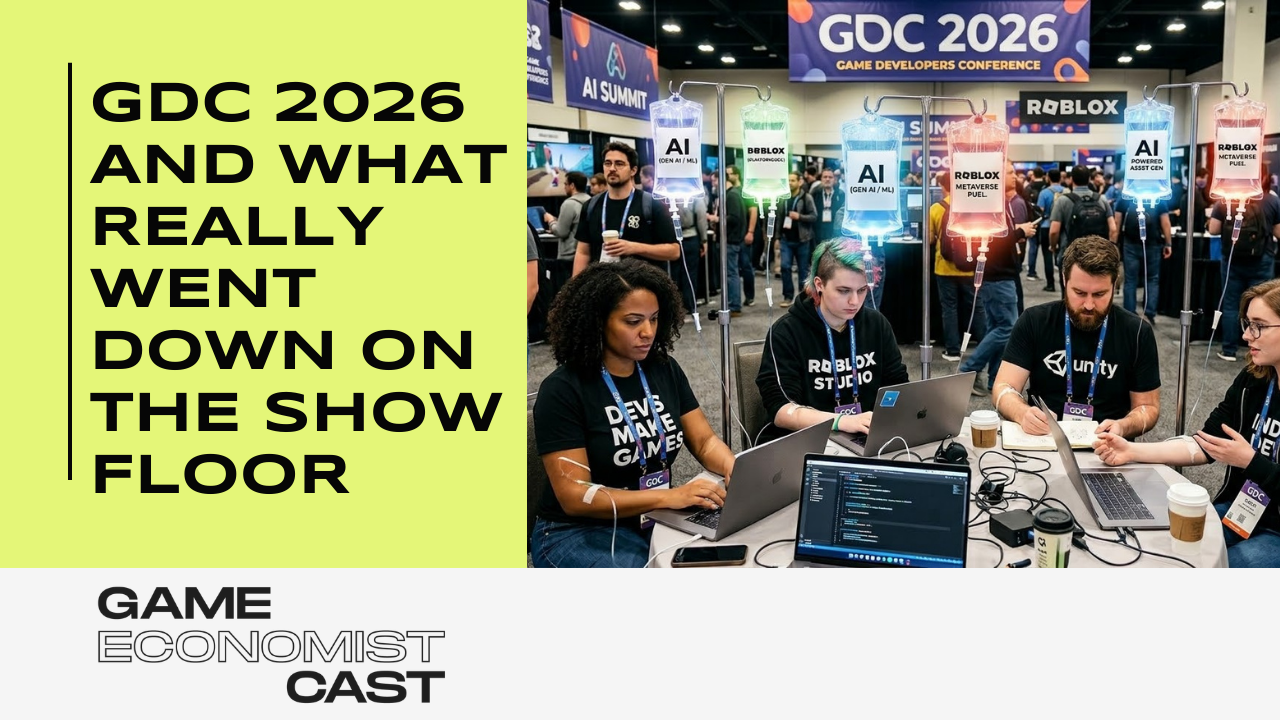
GEC BONUS EP: What's up at GDC 2026?
Takes so hot that they were recorded late at night after a long day on the GDC floor, and couple whiskeys. Phil, Eric, and Chris crew unpack what actually mattered at GDC 2026, and what didn’t. We discuss: A sharper critique of industry thinking Too many taxonomy talks, not enough opinions Why game talks should behave more like economics seminars AI’s role on the show floor and conference Shift from generative art hype to code generation and workflows Why survey data understates actual usage and masks revealed preferences AI present but muted, Web3 effectively gone Novelty hardware, indie creativity, and a clear tech pullback The collapse of production costs and what replaces them Near-zero fixed costs leading to infinite content supply Discovery, marketing, and CAC as the new binding constraints Why incumbents may strengthen, not weaken Ad spend and distribution advantages widening the moat Counterpoint: new channels still create pockets of disruption Hardware, interfaces, and “convergent evolution” Why controllers standardized and what that says about optimal design Failed alternatives and the persistent friction of interaction Chapters (00:00:00) - GDC 26: The Highlights and Disappointments(00:03:50) - Did You Play With The Rubik's Cube Mini-Screen?(00:05:08) - In the Elevator With Microsoft's Kinect(00:07:53) - Are Game Controllers Like Crabs?(00:10:54) - Nintendo's Live-Service Revenue(00:11:36) - Crypto: Should You Interact or Prevent a Regulatory Violation(00:12:59) - GDC 2017: Indie Games, Virtual Reality Games(00:14:58) - The Future of Generative Code(00:19:58) - Roblox's Conference on AI(00:25:15) - GDC 2017: Playing a Game Inside Your Talk(00:26:46) - Don't Make a Taxonomy Talk at GDC 2022(00:30:39) - Crypto Is a Decentralized Guild(00:30:55) - GDC 2013: A Food Budget(00:32:41) - GDC gift cards: Who is laundering the money?(00:34:46) - At Tech Conference 2017, China and the Future(00:35:16) - Indie Game Making(00:36:51) - Phil on the Floor at GDC 2014
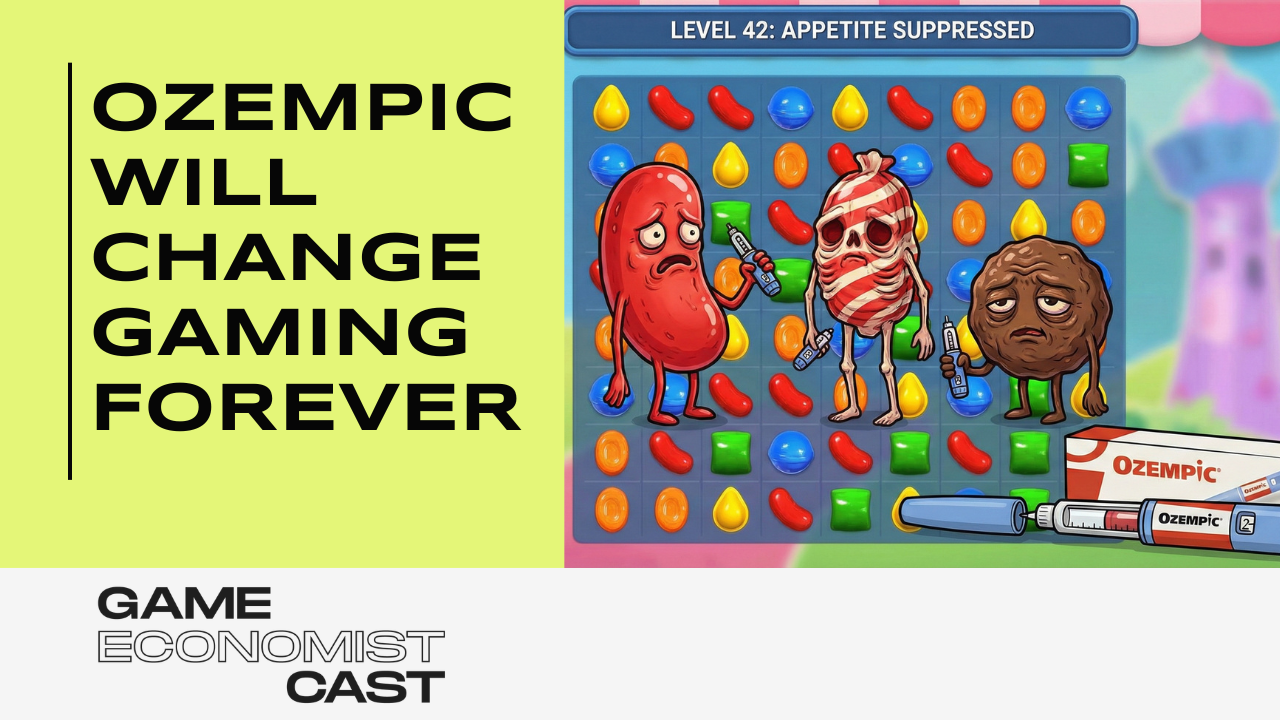
E48: Ozempic, 2XKO and ARPDAU For Wild Takes
If the majority of mobile casuals' target audience takes Ozempic, what effect does that have on games? No one's asking these questions, so welcome to the Game Economist Cast. Weight loss drugs, AI copilots, and gambling apps dominated the most expensive media real estate on earth, and games were barely in the frame. In this episode, we unpack what that signal means for interactive entertainment, Eric uncovers Riot’s 2XKO downsizing to Google’s Genie 3, and the future of engines. Phil previews his GDC talk on the economics of a billion-dollar cosmetic economy, Chris breaks down his attempt to design and publish a trading board game, and we ask a harder question: in a world of Ozempic and infinite AI supply, what actually happens to gaming demand? We discuss: • The 2XKO reset and the economics of niche within niche genres • Team size, burn rate, and why a 160-person fighting game team changes the break-even math • Free to play cosmetics versus box price DLC in a capped DAU genre • Why betting apps can out-monetize most games on ARPDAU • How appetite suppression might reallocate time, spending, and loop sensitivity • Genie 3 and the cost curve of game production • Engines as rule governance layers in a probabilistic content world • Cosmetic economies as foundational theory • Scarcity, signaling, and equilibrium pricing in digital status markets • Price discovery, private information, and turning trade into tabletop play Listen now! Chapters (00:00:00) - Do Dicks Make You Smarter?(00:03:14) - the economics of a billion-dollar game economy(00:05:21) - The Economics of Cosmetics(00:06:29) - Let's Talk Economics with Game Developers(00:08:36) - 2xKo Cut Their Team In Half(00:09:42) - 2xKO: A Niche Within a Niche(00:12:23) - On 2xK's Failed Fight(00:15:53) - Brawlhalla's $200 Million Run Rate(00:18:48) - How to Find Your Love of Gaming(00:20:59) - Do You Think Every Minute Played Playing Video Games Is Being Used for(00:21:49) - Tunic: A Masterclass in Game Design(00:23:41) - June's Journey: The Most Complex Game Ever Made(00:24:24) - June's Journey: The Hidden Objects Theme(00:26:20) - Phil Philonomics: No One Plays Games Together(00:30:28) - I Made a Board Game Without Money(00:33:16) - Super Bowl Gambling(00:34:29) - The Future of AI Ads(00:36:47) - Weight Loss Pills and Gaming(00:43:24) - Do You Think Being a Whales Is Harder Than Being a(00:44:01) - Gambling Apps vs. Sports Betting(00:47:42) - Is AI a Threat to Video Game Companies?(00:54:05) - Will AI Make Games More Cost Effective?(01:00:23) - B2B vs. Mainstream(01:00:39) - Game Economics
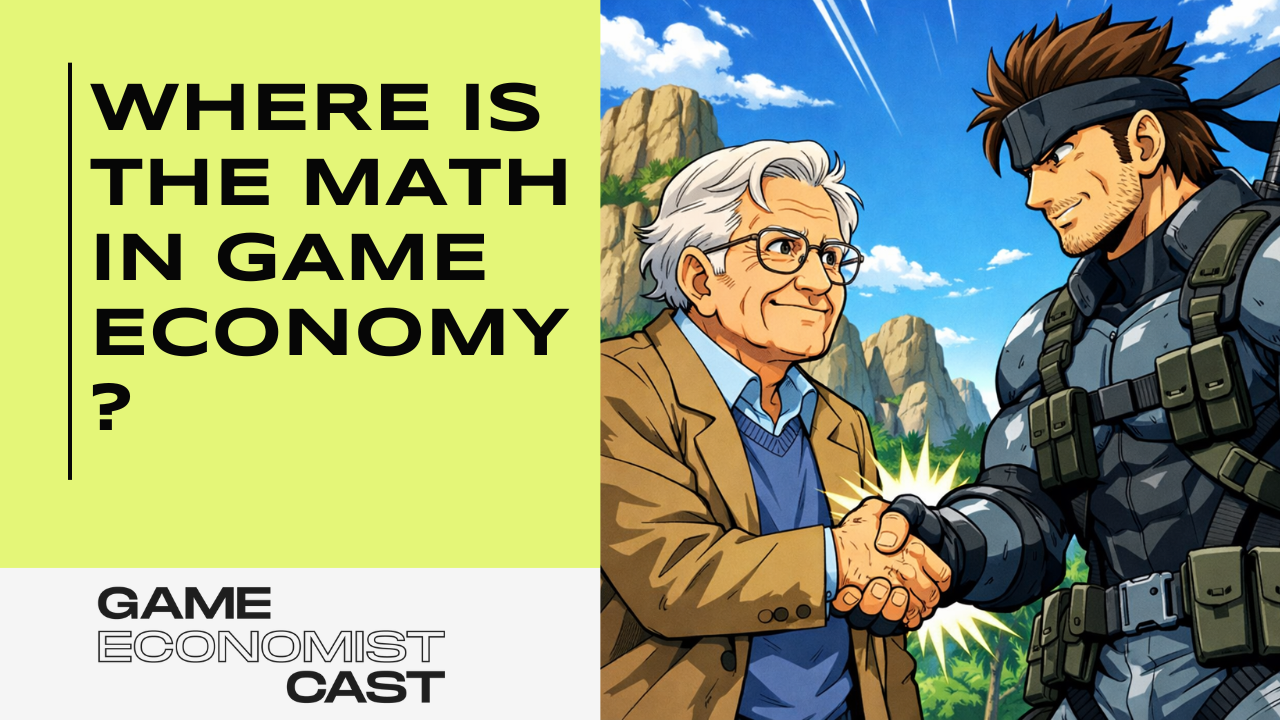
E47: Iterated Prisoner’s Dilemma, Social Norms Go Astray, and Why Game Economy Needs Math
Chuck E. Cheese is still alive, and so is the analytics-to-product pipeline. @Amanda Cesario analytics lead turned product leader, joins @Phillip Black, Eric, and @Christopher Kaczmarczyk-Smith argue for embedded analytics, sharper language, and game systems that actually produce cooperation instead of a cosplay community. We discuss: • The missing vocabulary for economy design in live service, and how it's harmed the entire industry• Why office ball pits best start-up ping pong tables • The analyst’s real job: explaining “why,” then realizing the only way to fix it is to own the lever • Embedded analytics vs centralized service orgs; who beats who • Roblox as a laboratory: aspirational visibility, server “neighborhoods,” and system norms that communicate more than art • Iterated Prisoner’s Dilemma, Axelrod’s tournaments, and why tit-for-tat is a design principle • Monopoly Go partner events as rare, genuine, cooperation-through-repeated-interaction design • Why Discovery Zone died, but Chuck E. Cheese prints money anyway Chapters (00:00:00) - In the Elevator With Chuck E. Cheese(00:00:52) - The Ball Pit(00:03:23) - How to Turn From Analyst to Product Designer(00:05:02) - Peter Feuerstein on Becoming Product Manager for Madden(00:13:09) - What Do Data Scientists Need to Know to Be a Product Manager?(00:15:07) - Have You Got What it Takes to Lead an Analytics Team?(00:20:16) - Analytics and Product Incentives(00:22:11) - Bee Swarm Simulator(00:28:38) - Roblox's Impact on the Game Industry(00:34:35) - Game Money vs. Positive Monetization(00:36:48) - Have We Reached a Turning Point in Video Gaming?(00:40:01) - Iterated Prisoner's Dilemma(00:45:14) - Tick for Tat in Minecraft(00:51:51) - Dark Souls 2(00:55:29) - How to Design a Board Game(00:58:42) - Board Games: Found Your Love of Gaming(01:03:57) - Game Economy in a Vocabulary(01:10:13) - Amanda Zario on Game of Economics
E46: Economics of Sweepstakes, Vertical Word Game Progression, and UXR Failure
Is fair matchmaking actually bad design? And how exactly did gaming companies fumble the bag when it came to the army of PhD psychologists they employ? We talk: • Sweepstakes, social casino, velocity, and why most players never cash out • Why Wordle feels flat to some designers and why elegance is not the same as progression • Surveys as UX, not truth machines, and how to extract signal without lying to yourself • Compensating differentials, handicaps, and why 50 percent win rates kill progression • Bots, deception, and whether games are magic shows or fraud Chapters (00:00:00) - In the Case of Moral Utility(00:00:41) - The Game Economist Cast(00:01:42) - Phil vs. Wordle(00:05:57) - The Need for Difficulty in Word Games(00:10:39) - Total War: An Absurd 4x Game(00:13:34) - How Sweeps Are Getting Around the Gambling Laws(00:17:43) - Are Loot Boxes Legally Gambling?(00:21:29) - How Social Casino Works Without Sweeps(00:23:48) - How To Win at MMOs(00:27:03) - How to Win on Surveys(00:32:38) - The Cognitive Task of Food Preferences(00:36:24) - Have Surveys Ruined Mobile Games?(00:38:22) - People's feelings in 'Star Wars': Are they reliable?(00:39:22) - Battlefield 1: Skill Based Matchmaking(00:44:48) - What's The Argument for No Skill Based Matchmaking(00:48:45) - Is Bots Bad for Content Ethics?(00:53:58) - Rejecting Kantian Ethics
E45: Autobattler Econ, WILD UGC Algo & A Currency Debate for the Ages (w/Arto Huhta) Autobattler Econ, WILD UGC Algo & The Big Currency Question (w/Arto Huhta)
What happens when autobattlers fail to monetize? We pull Arto Huhta into the cast and chat about Telegram’s pseudo-WeChat ambitions. Eric releases a distrack on Game Designer's obsessed social spaces, and Phil wants more blood from psychologists' nonsensical F2P "choice overload." Chris enleashes a model-meets-UGC experiment: a three-algorithm simulation that shows how recommendation systems distort consumer welfare and creator inequality. \We discuss: How Arto sees the split between economy design, product management, and classical economics (hint: it's not what you think) Pets as permanent progression, and the design logic behind Nonstop Knight’s monetization turnaround Why creator inequality explodes under bad reinforcement A brewing debate on regulation that is just getting started... Chapters 00:00 Journey to London: A Game Developer's Path 00:49 The Role of Economy Design in Gaming 01:20 From Academia to Game Development: Bridging the Gap 03:16 Experimentation in Game Design: Lessons Learned 05:22 The Intersection of Game Design and Economics 10:07 Understanding Game Development Roles 11:00 Monetization Strategies in Game Design 11:55 The Evolution of Publishing Models 12:42 Transitioning to Web 3: New Challenges 13:54 The Economics of Game Spending 18:27 Introduction to Game Economist Cast 19:06 Current Gaming Trends and Preferences 20:51 Game Modes and Player Engagement 22:03 The Future of Game Monetization 27:33 The Social Hub Experiment in Fighting Games 28:26 Street Fighter VI and Social Interaction 30:28 The Rise of HTML5 Games on Platforms 32:37 The Trend of Casual Games in Tech Companies 34:42 Telegram Games: A New Frontier 37:21 Challenges in Game Discovery on Telegram 38:52 User Engagement and Retention in Web3 Gaming 39:43 Consumer Welfare and Content Creation Dynamics 43:04 The Impact of Algorithms on User Experience 49:31 Heterogeneous Goods and Their Effects on Engagement 57:35 The Impact of Algorithms on Content Quality 59:04 Understanding Algorithmic Risks and User Retention 01:00:16 Exploring Algorithm Design in Gaming Platforms 01:01:54 The Role of User Choice in Content Discovery 01:04:29 The Future of Pricing Strategies in Free-to-Play Games 01:08:10 The Debate on Standardization and Market Forces Chapters (00:00:00) - The Cost of Free Speech(00:00:49) - Game of Connors Cast(00:01:16) - Meet Free-To-Play Designer Phil Rubin(00:02:43) - The Art of Being a Game Economist(00:03:59) - How to Get Out of Your Job(00:05:22) - Are You More of an Economist or a Designer?(00:07:51) - Candy Crush: Experimentation and Optimization(00:10:07) - Ex-Monetization Manager at King Publishing(00:12:30) - Have We Overreacted to Free-To-Play?(00:15:17) - Half-Off and the Price(00:18:27) - How To Make a Slop slideshow(00:18:56) - What Have You Been Playing?(00:20:35) - Clash Royale: The Future of Content(00:23:55) - How To Play Hearthstone With Re-rolling(00:25:59) - 2K XO: A Hardcore Fighting Game(00:29:37) - Fortnite vs. Monster Hunter: The Social Hub(00:30:29) - Are We Ready for Content in the Future?(00:34:24) - Facebook vs Instagram: What's The Difference?(00:34:57) - Telegram's plans for games(00:36:22) - How Telegram Could Make Games More Profitable(00:43:15) - The Probability of Encountering a Good(00:44:28) - Anatomy of Facebook's algorithm(00:49:53) - The Gini coefficient of content creators profit(00:54:30) - Measuring the social network's heterogeneous goods(00:58:58) - The Mix of Algorithms and Churn(01:01:07) - Do Algorithm Designers Care About Producer GENIE?(01:01:55) - What Should Roblox Do About Popularity?(01:03:51) - Too Much Choice in Online Content(01:05:56) - Is There Choice Overload in Mobile Games?(01:06:49) - What about discounts on hard currency purchases?(01:07:46) - Free-To-Play: Quantity Based Discounts(01:11:11) - USB 2.0: Standardization(01:12:11) - Roblox: Arto on UGC(01:13:27) - GIM economist cast episode 44
You may also like








Get this podcast on your phone, Free


Create Your Podcast In Minutes
- Full-featured podcast site
- Unlimited storage and bandwidth
- Comprehensive podcast stats
- Distribute to Apple Podcasts, Spotify, and more
- Make money with your podcast