
Widowed AF: Real stories of love, grief and beyond - With Rosie Moss
https://anchor.fm/s/104151d3c/podcast/rssEpisode List
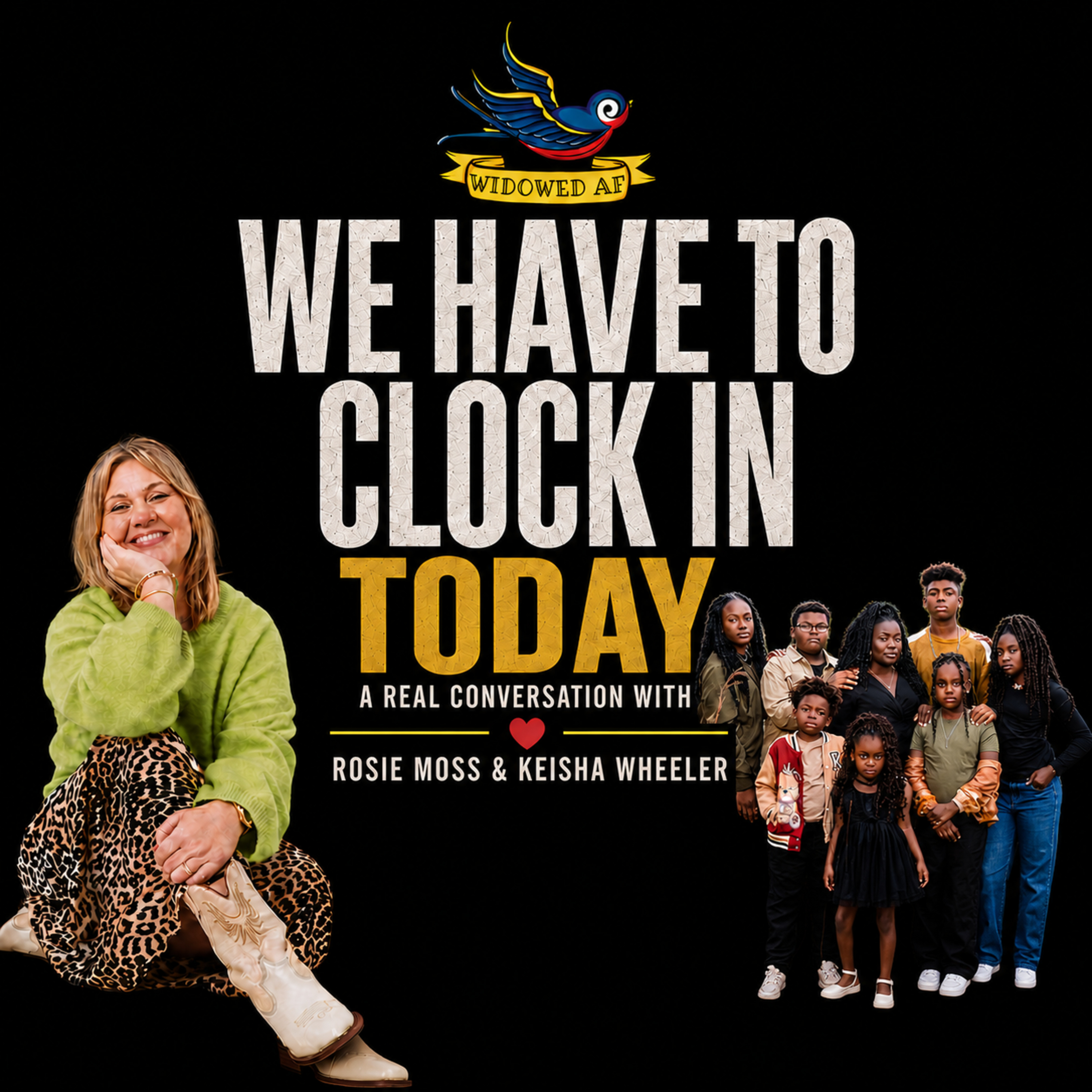
“We Have to Clock In Today”: Keisha Wheeler on Widowhood & Raising Seven Children
When Keisha Wheeler met Patrick at college, she wasn’t looking for a husband. Patrick, however, seemed fairly certain he’d found his wife.What followed was a marriage full of faith, family, music, ministry and, eventually, seven children.Then, in December 2021, everything changed.Patrick developed chest pain while the family were preparing to deliver food to their community. Within hours, Keisha was being told that he had suffered a ruptured aorta. He underwent emergency surgery but never regained consciousness, dying six days later.Suddenly, Keisha was a widow and the sole parent of seven children.In this episode of Widowed AF, Keisha joins Rosie for a remarkably open conversation about the reality of surviving a loss that changes absolutely everything.They talk about the strange autopilot of those first hours and days, the impossible responsibility of telling your children their dad has died, and what it means to keep getting up when other people mistake functioning for coping.Keisha also speaks candidly about something that is often much harder to discuss: what happens to faith when the person you prayed to doesn’t save the person you love.Having spent much of her life in church and ministry, Patrick’s death profoundly changed Keisha’s relationship with God. She talks about anger, betrayal, losing her ability to sing and watching her children wrestle with their own faith, including one daughter crying out: “I know you love us, God, this doesn’t feel like love.”Rosie and Keisha also talk about solo parenting after bereavement: the relentless decisions, the exhaustion, the compromises you make simply to keep everybody going and the reality that the parent your older children had may be very different from the one your younger children experience after loss.But this is also a conversation about community and what can grow alongside grief.After discovering the power of grief support for her own children, Keisha went on to create a space for other bereaved families through the Patrick Wesley Wheeler Foundation. What began with her own seven children has grown to support dozens of others, giving children somewhere they can grieve, laugh, remember and simply be around people who understand.There is no neat ending here. Keisha still misses Patrick. Her children still miss their dad. Life hasn’t become “normal”.But, together, they keep showing up.As Keisha puts it: sometimes you wake up wanting to quit. But you woke up alive today.So you clock in.FIND KEISHA & SUPPORT HER WORKInstagram: @servingwithsevenKeisha is the founder of Hand in Hand Brandon, part of the Patrick Wesley Wheeler Foundation. The grassroots organisation supports bereaved children and families, offering a space where they can grieve openly and be alongside others who understand.As Keisha says: “We can’t fix your grief, but we can walk alongside you.”Website: handinhandbrandon.orgYou can find out more about Hand in Hand, the Patrick Wesley Wheeler Foundation, upcoming events and ways to support or donate through the website.
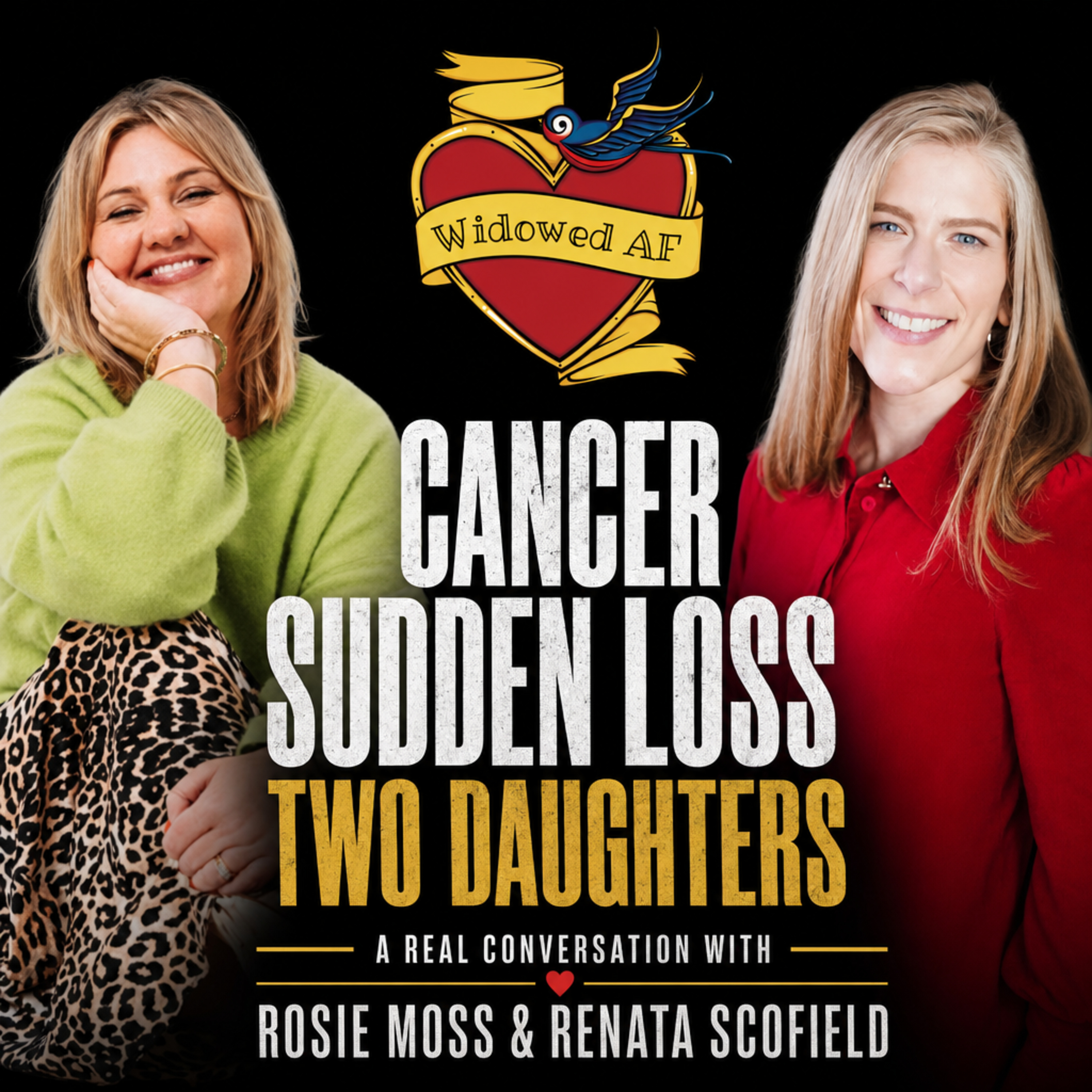
Renata Scofield on Cancer, Sudden Loss and Raising Two Young Daughters Alone
For ten years, Renata Scofield and her husband Colin packed a lot of living into a short time. They met online despite living a block apart, married quickly, moved countries, built careers, welcomed two daughters and created a life together in Edinburgh.Then, in April 2023, Colin was diagnosed with kidney cancer that had already spread to his lungs.The treatment appeared to be working. Five days before he died, doctors told them the immunotherapy was shrinking lesions and things were looking positive. But what nobody realised was that the cancer had spread to his brain. A sudden stroke changed everything.In this episode, Renata shares the devastating reality of becoming widowed while raising two young girls aged just three and six, with no family nearby and no time to prepare. She talks about doing school drop-offs and pick-ups while her husband lay in hospital, making the decision to switch off life support, and the practical chaos that follows when the person holding your family together is suddenly gone.We also talk about Colin himself: a fourth-degree black belt in jiu-jitsu, a devoted hands-on dad, and the calm, steady presence who made everything feel possible.Along the way we discuss children’s grief, the importance of community, returning to work after loss, and why preparation is one of the greatest gifts we can leave the people we love, from wills and insurance to the passwords we never think to share.A conversation about love, resilience, solo parenting, and finding a way forward when life changes in an instant.
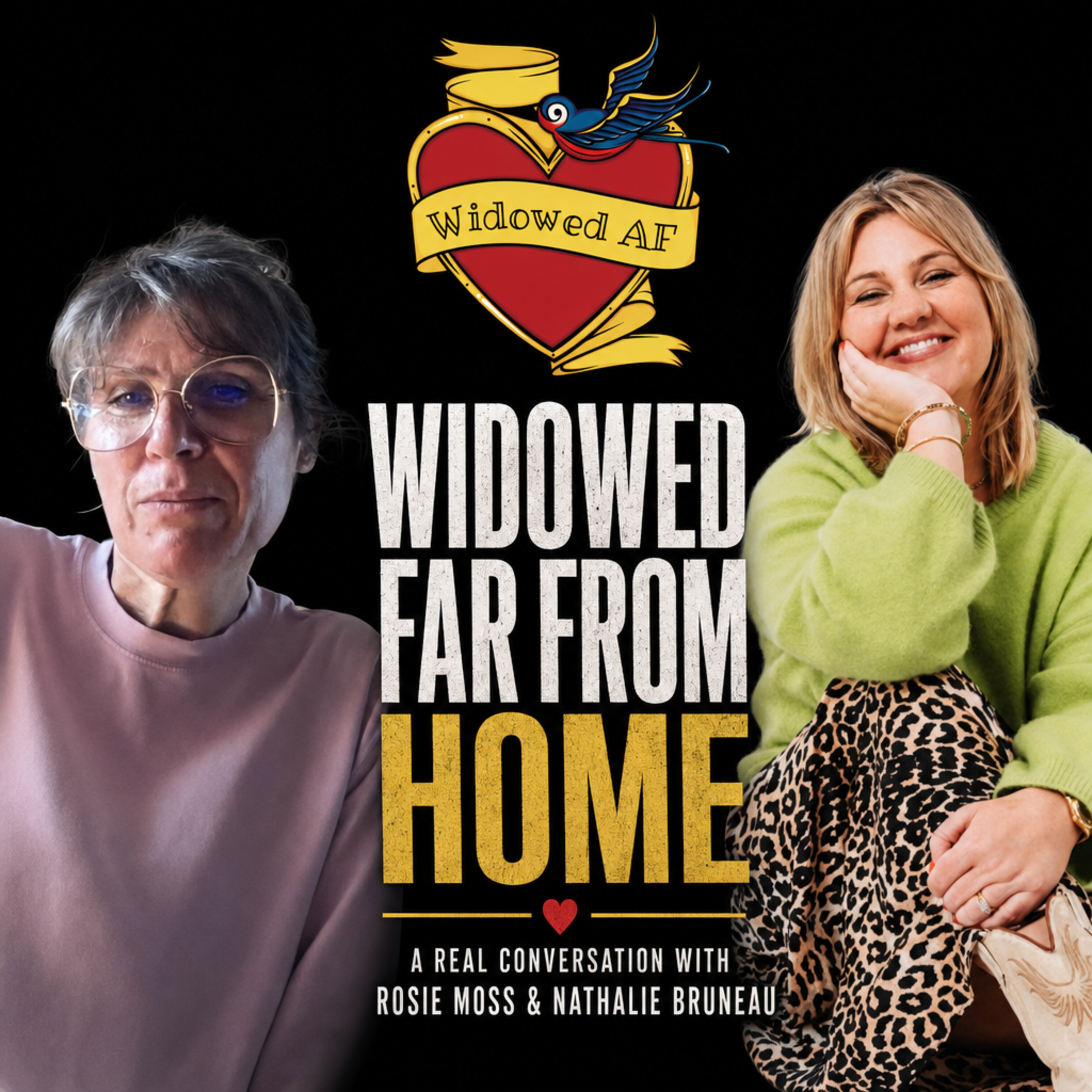
Widowed Far From Home | Nathalie Bruneau
What happens when the worst day of your life unfolds thousands of miles from home?This week I'm joined by Nathalie Bruneau, who moved from France to China for what was meant to be a short adventure. Instead, she fell in love with Leo, built a life in Shanghai, and together they had two young sons.Nathalie shares the extraordinary story of navigating marriage across cultures, the challenges alcohol brought to their relationship, and the difficult decision to separate while continuing to co-parent.Then, one Sunday morning, everything changed.After a phone call in a language she barely understood, Nathalie was taken to a police station and then a hospital, where she discovered she was there to identify Leo's body. Alone, in a foreign country, she suddenly found herself having to navigate grief, language barriers, unfamiliar traditions and the unimaginable task of telling her two little boys that their dad had died.We also explore Chinese mourning rituals, life after sudden loss, parenting through trauma, and how, somehow, we find the strength to keep going when we think we can't.This is a remarkable conversation about love, culture, addiction, resilience and the universal language of grief.If this episode resonates with you, please follow Widowed AF, leave a rating or review, and share it with someone who might need to hear it. Your support helps these conversations reach more people.
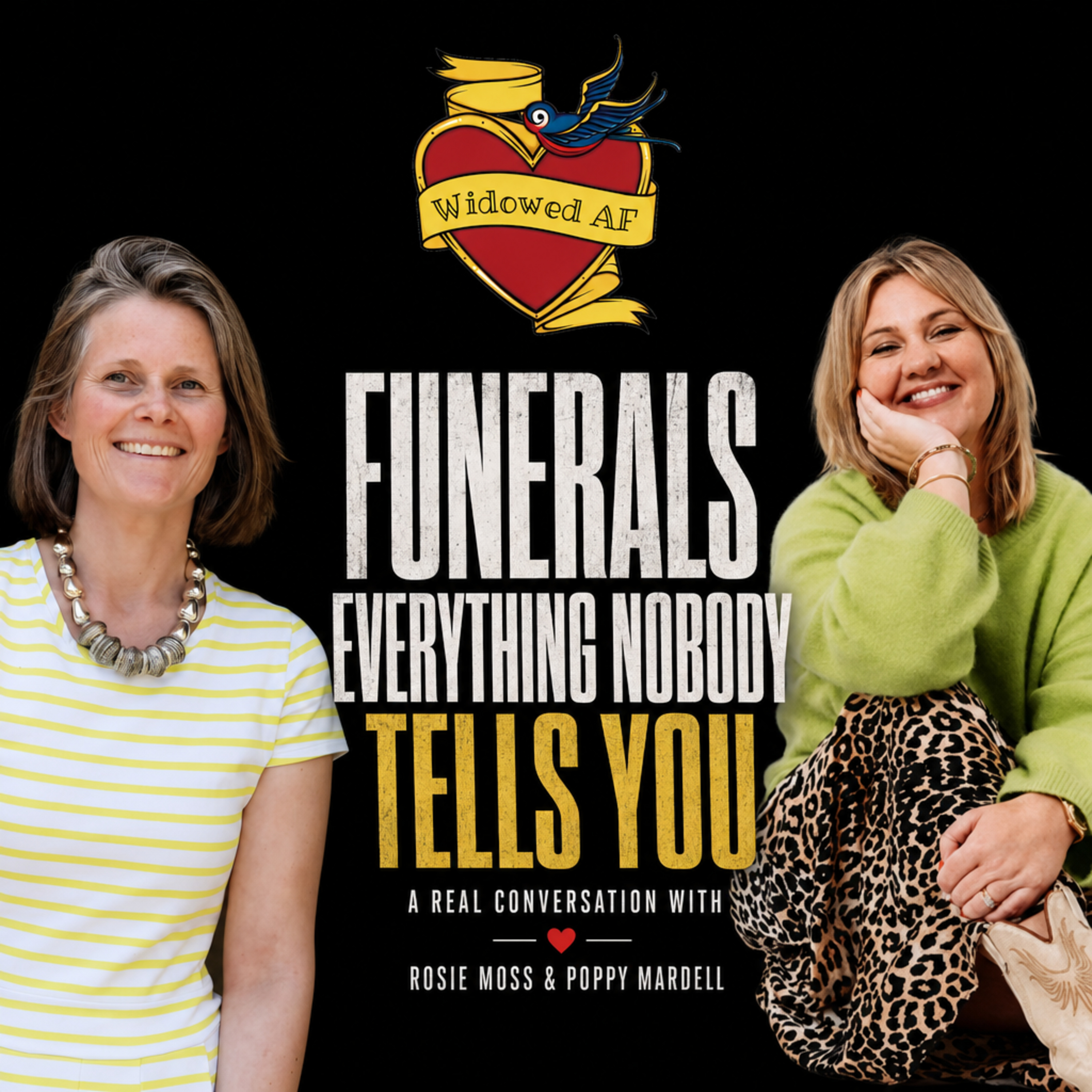
Funerals: Everything Nobody Tells You | With Poppy Mardell
Most of us don’t think about funerals until we’re forced to.And by then we’re expected to make some of the biggest decisions of our lives whilst barely able to think straight.This week Rosie is joined by funeral director Poppy Mardell, founder of Poppy’s Funerals, for one of the most practical, eye-opening conversations we’ve ever had on Widowed AF.Together they dismantle the myths surrounding death, funerals and grief, exploring why so many of us feel rushed, overwhelmed and completely unprepared when someone dies.They discuss why the funeral industry remains unregulated, why there often isn’t the urgency we’re led to believe, and how reclaiming time and choice can make an enormous difference to grieving families.Rosie and Poppy also talk about seeing the person who has died, whether children should attend funerals, the importance of ritual (whether you’re religious or not), and why wakes might be one of the most important parts of saying goodbye.They also look to the future of funerals, from direct cremation and natural burials to water cremation, human composting and what really happens to thousands of unclaimed ashes.Whether you’re recently bereaved, supporting someone who is, or simply want to feel less afraid of talking about death, this is an episode everyone should hear.In this episode:• How Poppy went from Sotheby’s to founding one of the UK’s most progressive funeral companies• Why the funeral industry is still unregulated — and why that matters• The myth that funerals have to happen quickly• Why seeing the body can help us “see to believe” — for adults and children alike• Practical ways to include children in funerals without overwhelming them• Creating meaningful farewells that genuinely reflect the person who has died• Why rituals matter, even if you have no faith• Direct cremation, natural burial, water cremation and human composting explained• What happens to unclaimed ashes — and why the law is finally changingAs always, if this episode resonated with you, please consider leaving a review or sharing it with someone who might need it. It really does help more grieving people find the podcast.

Holly Matthews: “Just Tell Them I Was Alright” | Brain Cancer, Anticipatory Grief & Parenting Through Loss
What happens when you have to grieve the person you love before they’ve even gone?This week I’m joined by Holly Matthews. Holly is a former actress, TEDx speaker, founder of The Happy Me Project, and was widowed at just 32 when her husband Ross died from grade four brain cancer, leaving her to raise their two young daughters alone.But before any of that, there was a Pimm’s promotional job, an instant connection, and a love story that moved at lightning speed. Holly and Ross built a relationship full of adventure, brutal honesty and the kind of laughter that makes two people feel like they’re speaking a language nobody else understands.Then came headaches. Anxiety. Focal seizures that were dismissed as panic attacks. Until one scan changed everything.Holly talks candidly about anticipatory grief, watching the person you love slowly disappear while they’re still alive, and the impossible conflict of desperately wanting more time while also wanting their suffering to end.We also discuss what good healthcare communication looks like, why Holly later stood in front of a room full of brain surgeons to tell them exactly where they were getting it wrong, and how a single compassionate doctor made all the difference.As always, we don’t shy away from the harder conversations. Holly shares what it was like preparing two little girls for the death of their dad, why she chose honesty over euphemisms, and the practical ways she’s helped them navigate grief ever since.This is a conversation about love, truth, parenting, neurodivergence, identity, and what it really means to live fully when you’ve learned just how fragile life is.In this episode we cover:• Falling in love almost instantly and trusting your instincts, even when everyone else thinks you’re making a mistake.• The symptoms that were repeatedly dismissed before Ross’s brain tumour was finally discovered.• Anticipatory grief and losing someone long before they physically die.• Hospice life, dark humour, and navigating the final weeks together.• Why the way doctors deliver devastating news matters so much.• Raising bereaved children with honesty, curiosity and space to ask every question.• Neurodivergence, masking and building a life that feels authentic after loss.





Get this podcast on your phone, Free


Create Your Podcast In Minutes
- Full-featured podcast site
- Unlimited storage and bandwidth
- Comprehensive podcast stats
- Distribute to Apple Podcasts, Spotify, and more
- Make money with your podcast
