Episode List

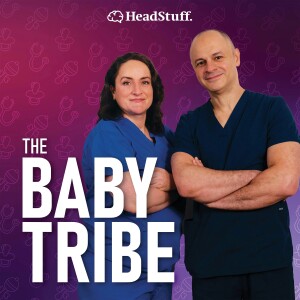
BTS: Is Private Maternity Care Really Safer?
A large Australian study comparing public and private maternity care seemed to show better outcomes for mothers and babies in private obstetric-led care, including lower rates of stillbirth, NICU admission, severe perineal tears, and maternal haemorrhage. But the story is much more complicated than the headline suggests.In this episode of Baby Tribe Shorts, Afif and Anne unpack the study and ask whether it really proves that private care is safer, or whether the results reflect something deeper: differences in patient selection, continuity of care, intervention thresholds, and the fact that public hospitals often absorb the highest-risk pregnancies.They also discuss why the findings may not translate neatly to Ireland, where private obstetric care usually sits within public maternity hospitals rather than separate private maternity units. The take-home message is not that public care is worse, but that fragmented care, lack of continuity, and risk transfer matter. A high-risk hospital having worse outcomes does not mean it gives worse care. Sometimes it simply means it is looking after the patients who need the most help.Link to Article: https://obgyn.onlinelibrary.wiley.com/doi/10.1111/1471-0528.18286

BTS: Paracetamol, Pregnancy and Autism: What Parents Need to Know
In this episode of Baby Tribe Shorts, Afif and Anne tackle the anxiety caused by recent headlines linking paracetamol use in pregnancy with autism, ADHD and intellectual disability. They walk through a major Lancet systematic review and meta-analysis, explaining why the best-quality evidence, especially sibling comparison studies, does not support a causal link between paracetamol use in pregnancy and these neurodevelopmental outcomes.The episode also explains why paracetamol remains the recommended first-line option for pain and fever in pregnancy, why untreated fever can itself be harmful, and why earlier studies may have suggested a risk because of confounding, recall bias and the reasons people take medication in the first place. The key message for parents is clear: use paracetamol when needed, at recommended doses, and don’t let fear-driven headlines make pregnancy harder than it already is. https://www.thelancet.com/journals/lanogw/article/PIIS3050-5038(25)00211-0/fulltext

BTS: Should Everyone Be Induced at 39 Weeks?
In this episode of Baby Tribe Shorts, Afif and Anne take a closer look at one of the most influential obstetric studies of the last decade: the ARRIVE trial.The trial is often used in conversations about elective induction at 39 weeks, especially for low-risk first-time mothers. But what did it actually show? Did induction improve outcomes for babies? Did it really reduce C-section rates? And what happens when the findings of a carefully controlled clinical trial are applied to busy real-world maternity units?Afif and Anne break down the design of the trial, including who was included, how the induction and expectant management groups were managed, and why the distinction between internal validity and external validity matters. They discuss the key findings, including the lack of significant difference in neonatal outcomes, the reported reduction in C-section rates, and the importance of patience, staffing, careful selection, and clinical context when translating research into practice.This is not an anti-induction episode. It is an episode about nuance. Induction at 39 weeks may be a reasonable option for some women, but the ARRIVE trial does not mean that every low-risk pregnancy should automatically end at 39 weeks. As always, the real question is not just “what did the study show?” but “does this apply to this person, in this hospital, with these resources, and these priorities?”Link to Trial: https://www.nejm.org/doi/full/10.1056/NEJMoa1800566

134: Baby Gadgets, Gimmicks and Red Flags
This week on Baby Tribe, Afif and Anne take a closer look at the baby products being marketed to exhausted parents, from sleep pods, reflux pillows and weighted sleep suits to formula prep machines, nasal aspirators, rectal wind devices, baby monitors, walkers and bouncers. The episode is not about shaming parents for buying products that promise help. It is about asking better questions before clicking “add to cart”. Does the product support safety, or does it introduce risk? Is it solving a real problem, or selling reassurance to tired parents? And does it follow the basic principles of safe sleep, safe feeding, safe movement and sensible monitoring? With practical advice, plenty of honesty, and a healthy suspicion of pastel-coloured nonsense, this episode gives parents a simple framework for deciding what is useful, what is unnecessary, and what should probably stay out of the cot, the bottle, the buggy, or the baby’s holes. https://www2.hse.ie/babies-children/first-aid/choking-in-babies/ Learn more about your ad choices. Visit megaphone.fm/adchoices

133: The Freebirth Movement: Choice, Risk and Accountability
In this episode of The Baby Tribe, Afif speaks with Irish Times journalist Ellen Coyne about her reporting on the rise of freebirth in Ireland: giving birth without a midwife, doctor or trained medical professional present. Ellen discusses what led her to investigate the movement, the concerns raised by senior midwives, the lack of clear data around unassisted births, and how online communities can frame freebirth as empowering while failing to fully engage with the risks. After the interview, Afif and Anne debrief the issue from neonatal and obstetric perspectives. They explore why some women may feel drawn away from maternity services, including previous trauma, poor communication, lack of continuity of care and fear of intervention. They also examine the role of social media, doulas, birthkeepers and unregulated advice in shaping decisions during one of the most vulnerable times in a woman’s life. This is not a conversation about shaming women. It is about safety, autonomy, trust and accountability. Birth trauma is real. Consent matters. But real empowerment is not being left alone with risk. It is having accurate information, respectful care and skilled support available when things change. Birth is not a purity test. There is no gold medal for suffering. https://www.irishtimes.com/health/2026/06/06/free-births-in-ireland-concern-grows-for-women-choosing-births-without-medical-help/ Learn more about your ad choices. Visit megaphone.fm/adchoices







Get this podcast on your phone, Free


Create Your Podcast In Minutes
- Full-featured podcast site
- Unlimited storage and bandwidth
- Comprehensive podcast stats
- Distribute to Apple Podcasts, Spotify, and more
- Make money with your podcast
