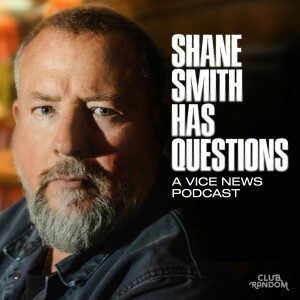
Shane Smith Has Questions
https://feeds.megaphone.fm/LILLL9002079998Episode List
When Politics Became Sports: Tim Miller on Trump, Media & America | Shane Smith Has Questions
When did politics stop being about solving problems and start becoming a team sport? Former Republican strategist and The Bulwark host Tim Miller joins Shane Smith for a conversation about the forces that reshaped American politics—from the collapse of the Republican establishment to Donald Trump's takeover, the rise of partisan media, and why our information ecosystem rewards outrage over understanding. Rather than asking who is winning, Shane and Tim explore why politics increasingly feels like entertainment, why Washington failed to understand its own voters, and whether America's institutions can still solve modern problems. Topics include: Why the Republican establishment misread Trump The rise of partisan media and algorithm-driven news Why politics now feels like sports Can America ever become less polarized? Is the political center disappearing? What's actually broken in Washington? Could another political outsider change everything? If you enjoy long-form conversations about politics, media, culture and the future of democracy, subscribe for new episodes every week. Try Quo for free plus get 20% off your first 6 months at https://www.quo.com/shane Learn more about your ad choices. Visit podcastchoices.com/adchoices
Sean Penn on Zelenskyy, El Chapo, and Seeing the World Up Close | Shane Smith Has Questions
Sean Penn has spent much of his life going places most people only experience through headlines — wartime Kyiv with Zelenskyy, Chávez's Venezuela, Castro's Cuba, Iran before the Green Movement, and deep inside cartel country in Mexico with El Chapo. In this conversation with Shane Smith, Penn reflects on meeting Volodymyr Zelenskyy in wartime Kyiv, traveling through Iran before the Ahmadinejad era, spending time with Hugo Chávez and Fidel Castro, and the infamous journey that led to his meeting with El Chapo while the cartel leader was still on the run. Along the way, they talk about propaganda, journalism, war, political mythmaking, and why the story almost always changes when you go there yourself. Penn explains why he skipped the Oscars after winning his third Academy Award, what Americans misunderstand about Ukraine, why he was drawn to Chávez and Cuba, and what decades spent around power and conflict have taught him about human nature. This isn't a conversation about politics as much as it is about proximity — to history, to power, and to the people we are told to fear. -Get 20% off your first order at https://www.mood.com with promo code SHANESMITH -Save 20% on your first online Lucy order at https://www.lucy.co/ QUESTIONS with promo code QUESTIONS! Learn more about your ad choices. Visit podcastchoices.com/adchoices
Reporting the Region: Inside Iran & Afghanistan | Gelareh Kiazand | SSHQ
For more than a decade, Gelareh Kiazand reported from some of the world's most complicated and misunderstood places. From covering life under the Taliban in Afghanistan to documenting everyday life inside Iran, her work focused on telling stories from the ground — often in places where politics, war, and international headlines rarely capture the full picture. In this conversation, Shane Smith sits down with Gelareh to reflect on years of reporting across Iran and Afghanistan, the realities of covering conflict, and what journalists can learn by spending time with the people who actually live through these events. Featuring archival VICE reporting and footage from recent reporting in Tehran, they discuss war, sanctions, media narratives, daily life, and the challenge of understanding countries that are often reduced to headlines and geopolitics. After decades covering the region, one thing remains true:Showing up still matters. In this episode: • Reporting from Afghanistan during the war • Life under the Taliban and what changed after the withdrawal • What everyday life in Iran looks like beyond the headlines • The challenges of reporting from conflict zones • Journalism, propaganda, and competing narratives • Sanctions, politics, and ordinary people • How VICE reported from places few Western outlets could access • Why being there still matters Subscribe to Shane Smith Has Questions for new conversations with the people shaping politics, culture, technology, and the world around us. -Get 20% off your first order at https://www.mood.com with promo code SHANESMITH -Try Quo for free plus get 20% off your first 6 months at https://www.quo.com/shane Learn more about your ad choices. Visit podcastchoices.com/adchoices
Ken Burns: "There is No Them. There's Only Us." | Shane Smith Has Questions
Ken Burns has spent more than five decades telling America's story. From The Civil War and The Vietnam War to Baseball, Jazz, and The U.S. and the Holocaust, his films have shaped how generations of Americans understand their country. In this conversation, Shane Smith sits down with the legendary filmmaker to talk about much more than documentaries. Together they explore why America feels so divided, whether we're living through another turning point in history, the collapse of shared facts, the changing media landscape, and why Burns believes understanding our past is essential to navigating our future. Burns also reflects on his early films Brooklyn Bridge and The Statue of Liberty, the making of The Civil War and The Vietnam War, the importance of PBS, and why documentary filmmaking still matters in an age of algorithms, clips, and social media. After a lifetime studying America's greatest triumphs and deepest failures, Ken Burns keeps coming back to one simple idea: "There's only us.” Get 20% off your entire purchase for first-time buyers with code SHANE at https://www.mood.com In this episode: • The story behind Brooklyn Bridge and Burns' first documentary • Why The Civil War became a cultural phenomenon • The making of The Vietnam War • Why PBS has been essential to documentary filmmaking • Journalism vs. history • The collapse of shared reality • Social media, AI, and the future of truth • Political polarization and America's recurring cycles • What history says about our future • Why Ken Burns still believes there's reason for hope Subscribe to Shane Smith Has Questions for new conversations with the people shaping politics, culture, technology, and the world around us. Learn more about your ad choices. Visit podcastchoices.com/adchoices
The Age of Disclosure: Who Actually Controls the UAP Secrets? | w/ Dan Farah | Shane Smith Has Questions
Who actually controls the biggest secret in modern history? For decades, UFOs were treated as conspiracy theories, fringe science, or tabloid fodder. Today, senators, intelligence officials, military officers, and even presidents are publicly discussing unidentified anomalous phenomena (UAPs). What changed? This week, Shane sits down with filmmaker Dan Farah, director of The Age of Disclosure to discuss the growing push for government transparency around UAPs, the role of defense contractors, congressional investigations, declassified documents, and the battle currently unfolding inside Washington over what the public should know. The conversation goes far beyond aliens. Shane and Dan explore the idea of a decades-long "legacy program," whether critical information has migrated from government agencies into private contractors, why recent disclosures may be happening now, the role of China and a potential technological arms race, and whether the real story is less about extraterrestrials and more about power, secrecy, and accountability. They also discuss Steven Spielberg's influence on Farah's work, the making of The Age of Disclosure, media stigma, FOIA requests, whistleblowers, and what full disclosure could mean for science, technology, and society.Topics include: • The making of The Age of Disclosure • Steven Spielberg and Ready Player One • Government transparency and secrecy • Congress vs. the intelligence community • The "legacy program" • Defense contractors and oversight • China and the UAP technology race • FOIA and declassified records • Media stigma around UFOs • What disclosure could actually look like Save 20% on your first online Lucy order at https://www.lucy.co/ QUESTIONS with promo code QUESTIONS! Before the interview, Shane reviewed hundreds of pages of UAP documents in our custom PDF Space. Explore the files yourself here: https://adobe.ly/ViceUAPFilesYT Subscribe to VICE News here: http://bit.ly/Subscribe-to-VICE-News Check out VICE News for more: http://vicenews.com Learn more about your ad choices. Visit podcastchoices.com/adchoices






Get this podcast on your phone, Free


Create Your Podcast In Minutes
- Full-featured podcast site
- Unlimited storage and bandwidth
- Comprehensive podcast stats
- Distribute to Apple Podcasts, Spotify, and more
- Make money with your podcast
