
Episode List
How to Organize in a Plague
This is a free preview of a paid episode. To hear more, visit hatchetmedia.caIf you were an openly gay man in Toronto in 1980, chances are that you would’ve thought that life was getting better. After all, the last decade had seen so much progress.Homosexuality had been partially decriminalized back in the late 1960s. A few years later, Toronto had become the first city in the country to ban homophobic discrimination in municipal hiring. Pride parades and festivals were a regular occurrence. There was a thriving queer nightlife and queer press and queer arts scene.George Hislop, an out-and-proud gay man, was running for city council, and even the sitting mayor, John Sewell, was pro-gay. Was there still discrimination and hardship? Of course. But more and more people were coming out of the closet, and even the broader society was starting to slowly embrace people with different sexual orientations. But then, things started to change. George Hislop lost his run and so did John Sewell, largely because of homophobic attacks in the press. In 1981, the Toronto Police launched Operation Soap, raiding multiple gay bathhouses and arresting almost 300 men. And though the community mobilized — taking to the streets and the courts to fight back against such blatant aggression — all of a sudden, progress doesn’t look nearly as certain.And it wouldn’t have been long before you started to hear the rumours — something was going around. Some kind of a disease.You’d notice people around you getting sick. Young men, in the prime of their lives. You’d see the purple blotches peeking out from under sleeves and shirt collars and you’d wonder what the hell could be happening. And then, one by one, you’d see those people start to die. By 1982, the disease had a name — AIDS. But the government wasn’t doing anything to help. And most public officials wouldn’t even say the word out loud. And so you get together with a few other people and decide that something needs to be done. That is, in essence, the origin story of one of the most impactful grassroots organizations in recent Canadian history — the AIDS Committee of Toronto (ACT), our first so-called “AIDS service organization.”ACT has had a profound impact on the country, and the world at large. It was a beacon of hope at a time when social conservative forces were ascendent across North America. It spawned other important organizations, like AIDS Action Now! and Casey House, that had their own out-sized impacts. And for decades, it was the largest and most prominent entity of its kind in Canada.But late last year, ACT announced that it was closing its doors. And as someone who covered the AIDS epidemic for years, this came as quite a shock to me. So I wanted to dig into what happened and take a look back at ACT’s unique history. And what I found was absolutely fascinating. If we examine ACT over the decades, we see so many examples of the various dilemmas that plague any organization trying to do good in the modern world:Should you set out to help people or allow people to help themselves?Is it better to work within the system or to fight it from the outside?When do charity fundraisers stop being a way to help more people, and become something that exist solely to keep on fundraising?I spoke to Kevin Hurren, who wrote an excellent profile about the history of the AIDS Committee of Toronto for Xtra, that digs into all of these questions.To Learn More“The many eras of the AIDS Committee of Toronto—including its final bow” by Kevin Hurren in Xtra.How to Survive a Plague by David FranceQueer Progress: From Homophobia to Homonationalism by Tim McCaskell“The Last Pandemic” by Arshy Mann & Jordan Cornish in COMMONS
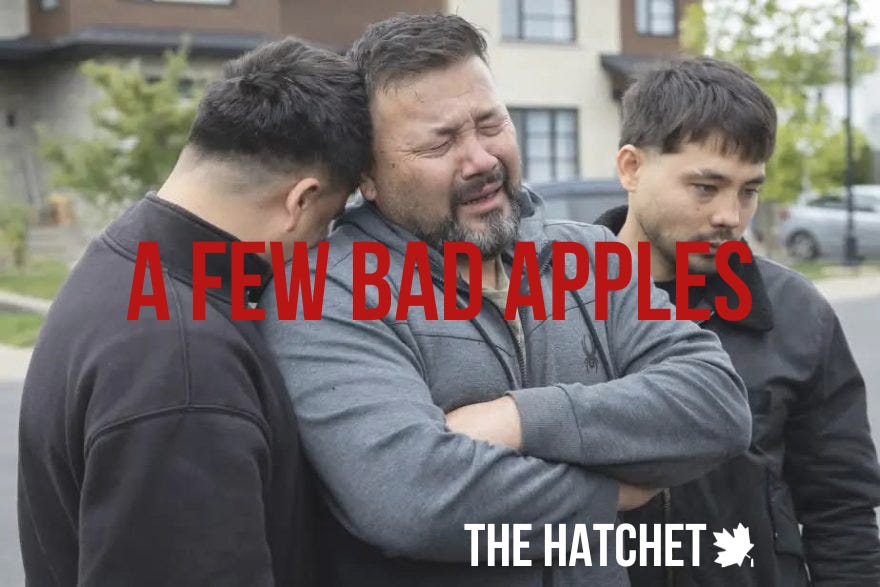
Quebec cops killed a teenage boy. Now they’re targeting his friends.
The Montreal police have arrested and charged the friends of an unarmed teenage boy who was shot and killed by the Longueuil police last year. Meanwhile, the police officer who killed Nooran Rezayi is a free man.The whole thing stinks of a cover-up. The full force of the state is being deployed against a group of teenagers in order to silence them, smear their reputations and whitewash the unjustified and unjustifiable killing of an unarmed child.And it's all because Quebec’s policing establishment understands what it would mean for the public to see Nooran Rezayi’s death for what it is — a moral outrage, where justice must be served. To Learn More:The Killing of Nooran Rezayi from The Hatchet"11 charged in connection with events leading up to fatal police shooting of teen Nooran Rezayi" by Alessia Simona Maratta & Phil Carpenter in Global News"SPVM cracks down on Montréal-Nord unit suspected of co-ordinated racist behaviour" in CBC Montreal This is a public episode. If you'd like to discuss this with other subscribers or get access to bonus episodes, visit hatchetmedia.ca/subscribe
Chaos in the Saint John Police Force | A Few Bad Apples
This is a free preview of a paid episode. To hear more, visit hatchetmedia.caThere’s an unfortunate tendency to talk about the cops as some kind of a monolith.And don’t worry, I’m not about to go on some lecture about how not all police officers are bad. I just mean that we often miss that police forces are complex, political institutions with competing centres of power.There are the police boards that are supposed to govern these forces and maintain civilian rule over the cops; the police chief and upper management that run the force and oversee the day-to-day operations; the rank-and-file cops who actually do the police work; and the union that represents them.Even in relatively well-run police forces, there’s inevitably going to be tension between these different levels. But it’s not uncommon for those tensions to turn into outright infighting and backstabbing, which can have profound implications everyday people.That’s one way to think about what’s been happening in Saint John, New Brunswick.The city’s police chief Robert Bruce has been in his position since 2021.And over the last year, tensions that had been building between him and everyday officers have spilled out into the open in dramatic fashion. A police union rep was dragged out of a city council meeting by force. Numerous harassment complaints have been filed against the chief by the officers working directly with him.And you have a police force where one out of every five officers is on leave, putting a major drain on the city’s resources.But the chief claims that at the heart of all of this is simply the police union playing dirty, and refusing to go along with the change that is necessary to modernize the Saint John police force and make it more accountable.So what is actually going on here? And who’s in the right?Andrew Bates, a reporter from The Telegraph-Journal, joined us in The Hatchet studios in Toronto to help us make sense of this mess.To Learn More:"Chief said wounded officer 'had it coming to him,' lawsuit alleges" by Andrew Bates in The Telegraph-Journal"Chief says he faced 'resistance' to change from union" by Andrew Bates in The Telegraph-Journal"Saint John police union rep forcibly removed from council chambers" by Bobbi-Jean MacKinnon in CBC News "Saint John police Chief Robert Bruce announces retirement amid conduct complaints" by Bobbi-Jean MacKinnon in CBC News
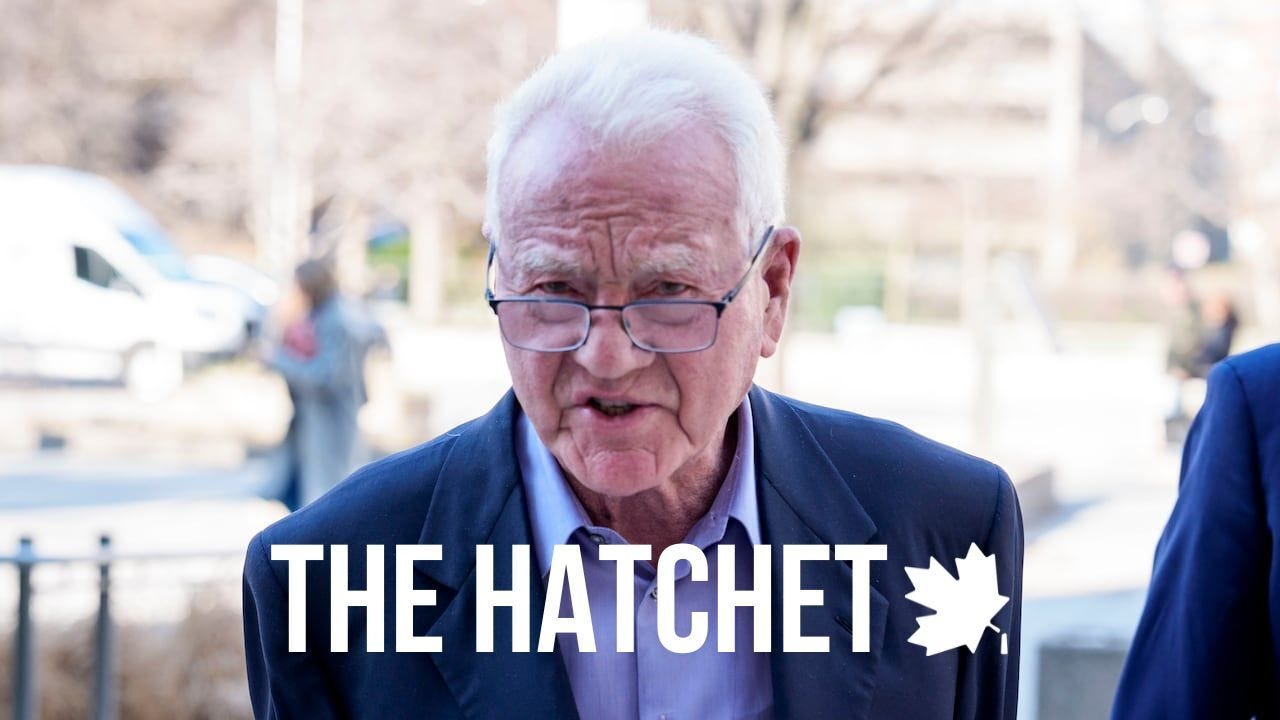
Inside Canada’s Billionaire Sexual Assault Trial
For the last few years, it’s become almost a cliché to talk about how we’re in the middle of a new era of accountability when it comes to sexual violence. Whether it’s the prosecution of Harvey Weinstein or the ongoing revelations from the Epstein Files, the rich, famous and powerful appear to be having their crimes exposed and, on occasion, even punished. Here in Canada it’s been no different. There have been numerous media exposes on the prevalence of sexual violence in arenas as varied as media, sports, business, politics, the service industry and so many others.But when it comes to actually prosecuting these alleged crimes in the legal system, Canada’s track record has been much more mixed. The Jian Ghomeshi trial, which kicked off Canada’s #MeToo movement years before The New York Times expose on Harvey Weinstein, ended with an acquittal. On the other hand, billionaire fashion mogul Peter Nygard is now serving eleven years in prison for sexually assaulting four women in Toronto at the height of his fame and power. Quebec technology billionaire Robert Miller was arrested and faced two dozens charged, including sexually assaulting minors. But last year he was found unfit to face trial due to advanced Parkinson’s disease.And last year’s Hockey Canada trial, maybe the most high-profile case of them all, ended without any guilty verdicts.If there’s one takeaway that I have from all of these trials and the way that they’ve been covered, it’s this — each trial comes to represent the whole in the public’s mind. Each individual case became a litmus test on whether or not #MeToo has gone too far or not far enough. And the trial of Frank Stronach has been no different.Stronach is one of the most recognizable and influential billionaires in Canadian history. The founder of Magna International, an auto parts manufacturer, he has long been considered to be a leading light of Canadian industry. And he never shied away from the spotlight, making himself a near-constant public figure in the worlds of thoroughbred horse-racing and politics, both in Canada and in his birth country of Austria. But two years ago, he was arrested and eventually charged with eighteen alleged sexual crimes involving thirteen women, from a period that spanned from 1977 to 2024. And when the stories first broke, it was hard not to see just how remarkably similar most of the accounts from the alleged victims were. From the outside, it seemed like these charges would lead to a successful prosecution and significant jail time.But today, that no longer appears nearly as certain. Stronach is facing two separate trials, the first of which wrapped up in April. And that trial has been an unmitigated disaster for the Crown.During the course of the trial, it was revealed that the police hadn’t even tried to verify whether or not Frank Stronach was in the country for one of the alleged assaults. Prosecutors were upbraided by the judge for allowing an accuser to knowingly lie on the stand. And the Crown was forced to drop charges related to three of the seven accusers, putting into question the entire course of the prosecution. The judge is expected to deliver her verdict as early as this week.So what happened here? And is any of this indicative of a broader trend or a larger point?Stronach’s defence team certainly thinks so. Here’s what defence lawyer Leora Shemesh said in her closing arguments.“I say with the greatest respect that the pendulum has swung so far the other way that we’ve really lost our ability to balance and respect our constitutional norms. This “Believe all Women” and the “#MeToo” movement and political platforms of not challenging women or testing their complaints really have no place in our criminal justice system.”So is she right? Is this a case of #MeToo gone too far?I’m not so sure. Part of me suspects that if this trial is indicative of anything, it’s about broader failures of police and prosecutors to take their jobs as seriously as they should. That it might be part of a pattern of procedural laziness that has doomed so many other high-profile cases in Canada.Here to talk about it all is Joseph Brean, a reporter for The National Post, who has been covering the trial from inside the court room. We go in-depth about what actually happened during the trial, whether or not it represents broader failures in the justice system and if criminal trials can ever bring justice for historical sexual assaults. This is a public episode. If you'd like to discuss this with other subscribers or get access to bonus episodes, visit hatchetmedia.ca/subscribe
The RCMP’s War on Dissent | A Few Bad Apples
This is a free preview of a paid episode. To hear more, visit hatchetmedia.caThere’s this idea out there that often gets bandied about; that the RCMP, from its very inception, has been a tool of political repression.People claim that for most of the force’s 150-year history, the Mounties have been used to clamp down on perceived opponents of the state, whether they’re Indigenous activists, Francophone separatists or leftists of all stripes.And that theory, well, it’s basically true. During World War One and into the 1920s, one of the force’s primary missions was to infiltrate and surveil any group deemed potentially subversive. This typically meant leftists, trade unionists and immigrants from communities deemed untrustworthy, especially Jews, Ukrainians and Finns, even if they’d committed no crimes.When the Cold War came around, the RCMP surveilled over 800,000 Canadians.In the 1970s, Mounties were literally planting false flag bombs that they could then pin on Québécois radicals.And just this year, a CBC News investigation has revealed the ridiculous lengths that the RCMP was willing to go to in order to sabotage Indigenous rights groups in that same decade.Of course, there are many more examples. But what unites these shameful episodes in the history of the RCMP is that they were led by units within the police force dedicated specifically to targeting political dissidents within Canada.These units went by different names: the Intelligence Section, the Special Branch, the Directorate of Security and Intelligence, the Security Service.But all of them were committed to rooting out politically unreliable Canadians — and then, silencing them.After a royal commission issued a damning report about the RCMP’s dirty tricks in 1981, the federal government decided that the Mounties should get out of the business of intelligence gathering and political policing.Of course, they never really stopped, especially when it came to Indigenous groups. But over the past few decades, things have been a little bit better. Yes, the RCMP still infiltrated groups of leftist organizers, and continued to surveil Canadians expressing political opinions that the cops deemed to be too radical. But unlike the 1920s or the 1970s, there typically haven’t been entire branches or units within the RCMP explicitly dedicated to political policing.That is, until now.It’s called the Critical Response Unit. And it operates under the umbrella of the British Columbia RCMP.The unit was created in 2017, in order to crack down on the resistance to the Coastal GasLink pipeline in Wetʼsuwetʼen territory in northern British Columbia. At the time it was called the Community-Industry Response Group. It was then deployed to repress protests to old growth logging in Fairy Creek on Vancouver Island.Today, it has become a permanent fixture within the BC RCMP. And this unit is now being used to surveil political dissent of all stripes, especially pro-Palestinian protesters on university campuses.And if you think about it for a second, it kind of sounds like a leftist fever dream. A police unit that was founded to protect a gas pipeline and is now spying on pro-Palestinian students? But that’s exactly what it is.Emma Bainbridge investigated this new political policing unit — alongside Tia Dafnos and Shiri Pasternak — for The Breach.And she’s here to talk about what they found.Featured in this episode: Emma Bainbridge (The Breach)To Learn More:"A notorious RCMP unit shaped B.C. universities’ reaction to Palestine encampments" by Emma Bainbridge, Tia Dafnos & Shiri Pasternak in The Breach"Controversial B.C. RCMP unit to police opposition to fast-tracked resource projects" by Shiri Pasternak & Tia Dafnos in The Breach"BC’s Protest-Response Team Is Monitoring Treaty Negotiations, Internal Docs Show" by Amanda Follett Hosgood in The Tyee"Worrying’ and ‘extremely concerning’ C-IRG methods prompt calls for better RCMP oversight, reform" by Brett Forester in APTN News







Get this podcast on your phone, Free


Create Your Podcast In Minutes
- Full-featured podcast site
- Unlimited storage and bandwidth
- Comprehensive podcast stats
- Distribute to Apple Podcasts, Spotify, and more
- Make money with your podcast
