Homebrewed Christianity
https://feeds.feedburner.com/homebrewedchristianity/podcast?feed=podcastEpisode List
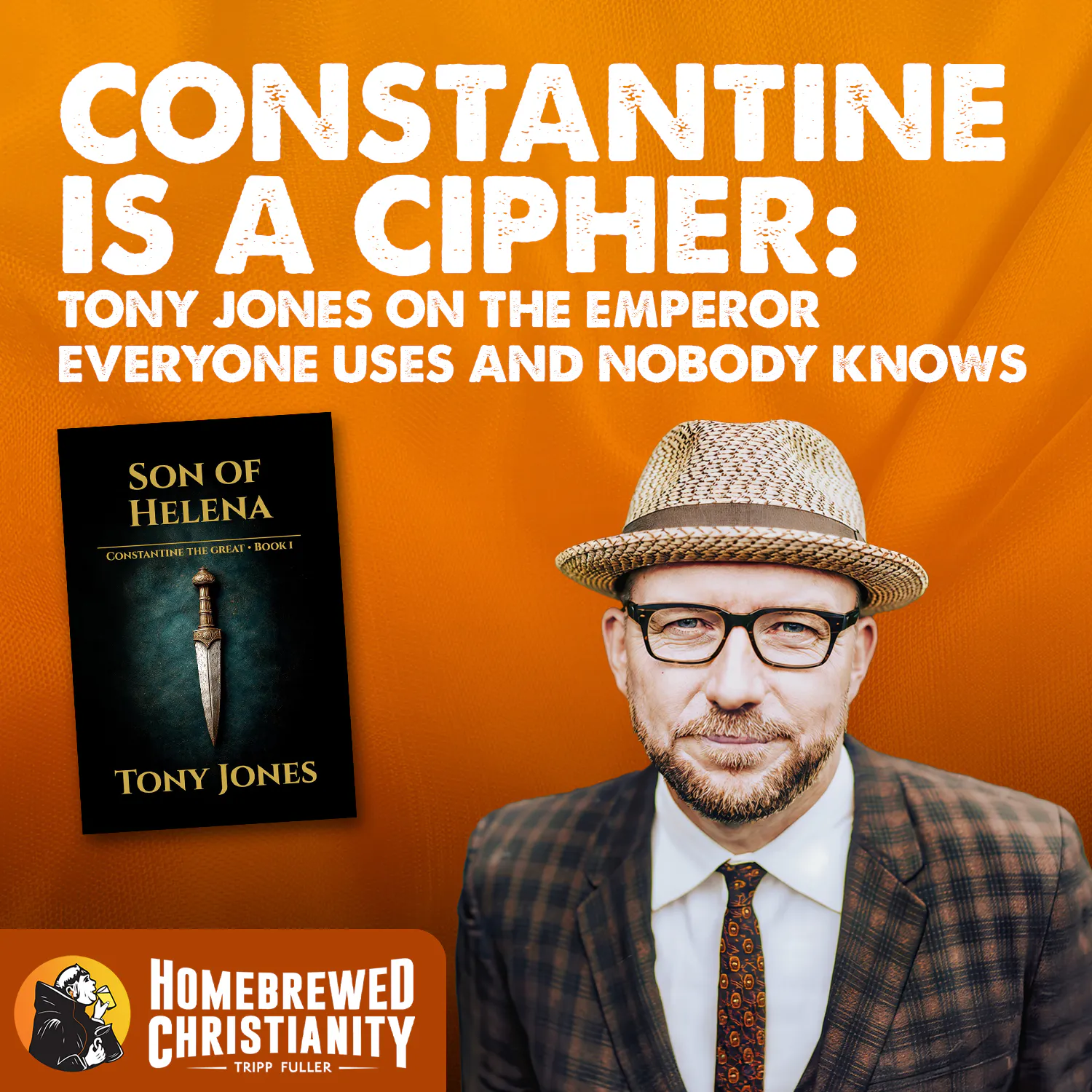
Constantine Is a Cipher: Tony Jones on the Emperor Everyone Uses and Nobody Knows
Tony Jones has been getting up early for ten years and refusing to talk to anyone until he has written for hours. Now we know why. Son of Helena is the first book of a trilogy about Constantine — a figure Tony correctly calls a cipher, the empty container into which everyone who loves or hates the marriage of church and state pours their own opinions — and nobody had ever written the historical fiction. Not one. Twenty-five novels about Julius Caesar, several about Nero, Claudius for Claudius, and nothing on the man whose name gets thrown around in every progressive Protestant conversation about Christendom. So Tony wrote it. Or rather, the muse handed it to him during a hypnic jerk on a plane home from the worst family vacation of his life. What follows is a coming-of-age story that ends in 306 — before everything you think you know about Constantine happens — and centers his mother, Helena, the concubine with an unshakeable faith who is the actual argument of the title. We covered why fiction lets him say things nonfiction can't, why he told almost no one he was writing it, the moral imaginary of Rome and why it is so hard to get modern readers inside it, and then a rapid-fire debunking segment where I brought clergy hot takes from the internet and Tony took them apart one at a time. Bring your church history notes. You will be editing them. You can WATCH the conversation on YouTube Dr. Tony Jones is a theologian, historian, and now novelist — and, by his own count, the most frequent guest in the history of Homebrewed Christianity (he passed Pete Rollins a while back). He was a classics major with Greek and Latin, did a foreign study program in Rome, still leads history tours there, and focused on the early church in seminary. His nonfiction includes Did God Kill Jesus?, The Teaching of the Twelve (on the Didache — whose Eucharistic liturgy shows up in a catacomb scene in this novel), The New Christians, Postmodern Youth Ministry, and his memoir The God of Wild Places. The book at the center of this conversation is Son of Helena, volume one of his Constantine trilogy — available now, with the audiobook out on or before September 1. Volume two, The Sign, releases October 1 and Volume three, The Apostle, releases December 1. All at tonyjonesbooks.com. JOIN OUR OPEN ONLINE CLASS: The Empire Christ Couldn’t Keep Ever notice how Christian nationalism gets talked about like it's some bizarre new glitch in the faith? It isn't — it's a 2,000-year-old arrangement wearing new clothes, and once you see how the pattern works, you can also spot the Christ who keeps slipping free of it. Join theologian Joerg Rieger and Tripp Fuller for The Christ Empire Couldn't Keep, a free six-week online class tracing the holy alliances, imperial creeds, and stubborn resistance that have shaped Christianity from Paul to the present. You'll get six lectures from Joerg, six live Q&As, weekly readings from his book Christ and Empire, and a community of fellow troublemakers thinking it through together. It's free to join, every session is recorded, and it kicks off Thursday, August 27. Grab your spot at HomebrewedClasses.com. This podcast is a Homebrewed Christianity production. Follow the Homebrewed Christianity, Theology Nerd Throwdown, & The Rise of Bonhoeffer podcasts for more theological goodness for your earbuds. Join over 75,000 other people by joining our Substack - Process This! Get instant access to over 50 classes at www.TheologyClass.com Follow the podcast, drop a review, send feedback/questions or become a member of the HBC Community. Learn more about your ad choices. Visit megaphone.fm/adchoices
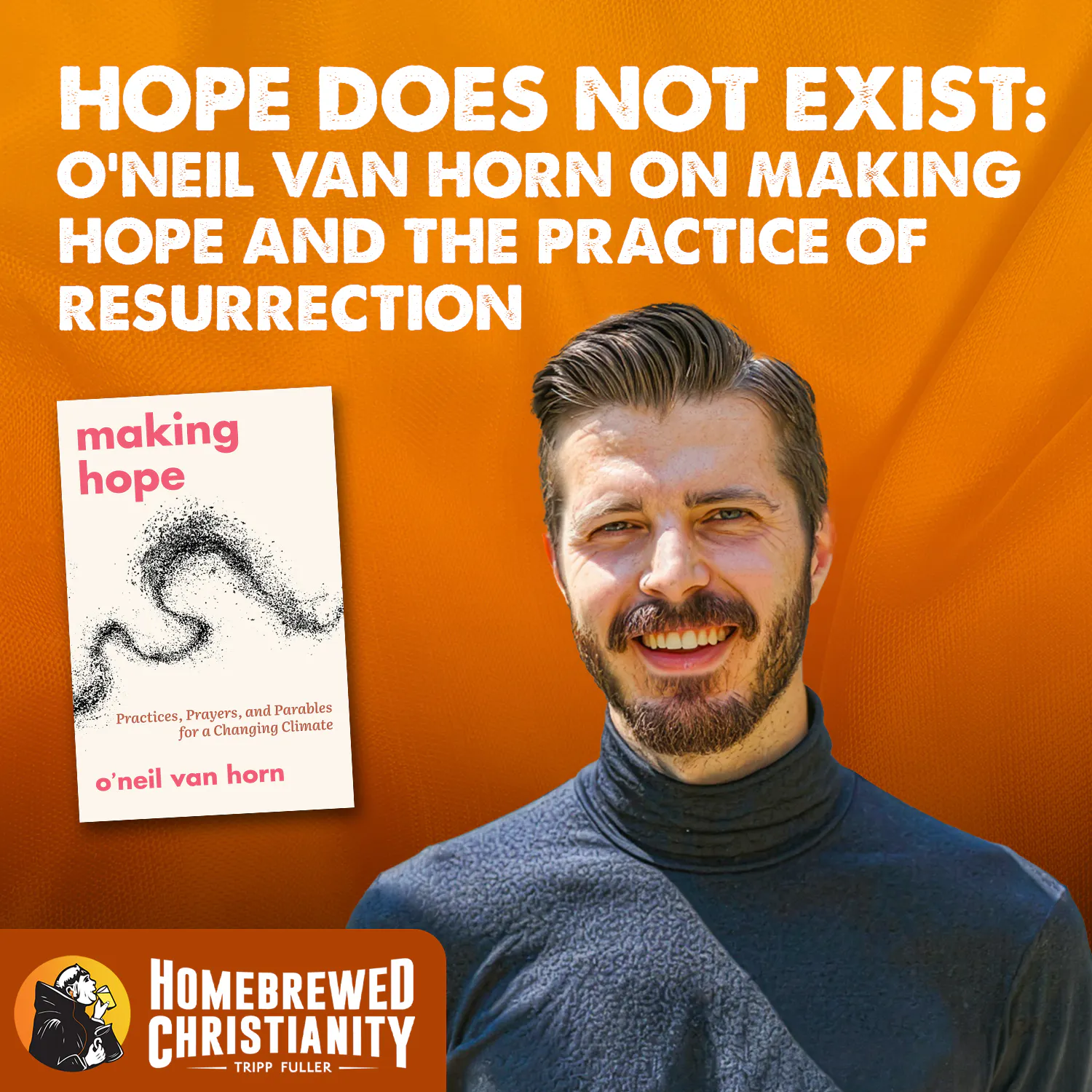
Hope Does Not Exist": O'neil Van Horn on Making Hope and the Practice of Resurrection
My friend & Orbis editor, Dr. Tom Hermans-Webster, sent me this book with a note that said, "You're going to love this, Tripp. No, really, you are." He was right. O'neil Van Horn's Making Hope: Practices, Prayers, and Parables for a Changing Climate opens on page one by announcing that hope does not exist — which sounds like a branding failure until you realize he means hope is not a feeling or a thing or an object you possess, but an activity. Verbal. Processual. Something we weave together. The book is built in three movements — noticing, gathering, repairing — with nine everyday practices treated as parables: birding, foraging, composting, seed saving, mending, baking bread. It is process theology written for people who do not want to hear the word concrescence ever again, and it does the rare thing of being genuinely usable by a reading group, a Sunday school class, or a preacher looking for a sermon series. We covered why optimism and pessimism are both forms of certainty and hope is neither, why his farmer friend asking who is that? about a birdsong was a revelation, why compost undermines the entire Western notion of essence, why the shame you feel about not knowing your local trees is not your fault, and what it means that the book ends not with a trumpet but with a loaf of bread. My chicken Raven made a cameo. She said it was her favorite. Van Horn is offering to Zoom in with any reading group, discussion group, or congregation working through Making Hope. Reach him through the contact form at oneilvanhorn.com. You can WATCH the conversation on YouTube About our guest Dr. O'neil Van Horn is Assistant Professor of Theology at Xavier University in Cincinnati. He holds a PhD in philosophical and theological studies in religion from Drew University (where he studied with Catherine Keller), was a Louisville Institute Scholar from 2021 to 2023, and comes to theology with a background in organic agriculture and sustainability. JOIN OUR OPEN ONLINE CLASS: The Empire Christ Couldn’t Keep Ever notice how Christian nationalism gets talked about like it's some bizarre new glitch in the faith? It isn't — it's a 2,000-year-old arrangement wearing new clothes, and once you see how the pattern works, you can also spot the Christ who keeps slipping free of it. Join theologian Joerg Rieger and Tripp Fuller for The Christ Empire Couldn't Keep, a free six-week online class tracing the holy alliances, imperial creeds, and stubborn resistance that have shaped Christianity from Paul to the present. You'll get six lectures from Joerg, six live Q&As, weekly readings from his book Christ and Empire, and a community of fellow troublemakers thinking it through together. It's free to join, every session is recorded, and it kicks off Thursday, August 27. Grab your spot at HomebrewedClasses.com. This podcast is a Homebrewed Christianity production. Follow the Homebrewed Christianity, Theology Nerd Throwdown, & The Rise of Bonhoeffer podcasts for more theological goodness for your earbuds. Join over 75,000 other people by joining our Substack - Process This! Get instant access to over 50 classes at www.TheologyClass.com Follow the podcast, drop a review, send feedback/questions or become a member of the HBC Community. Learn more about your ad choices. Visit megaphone.fm/adchoices
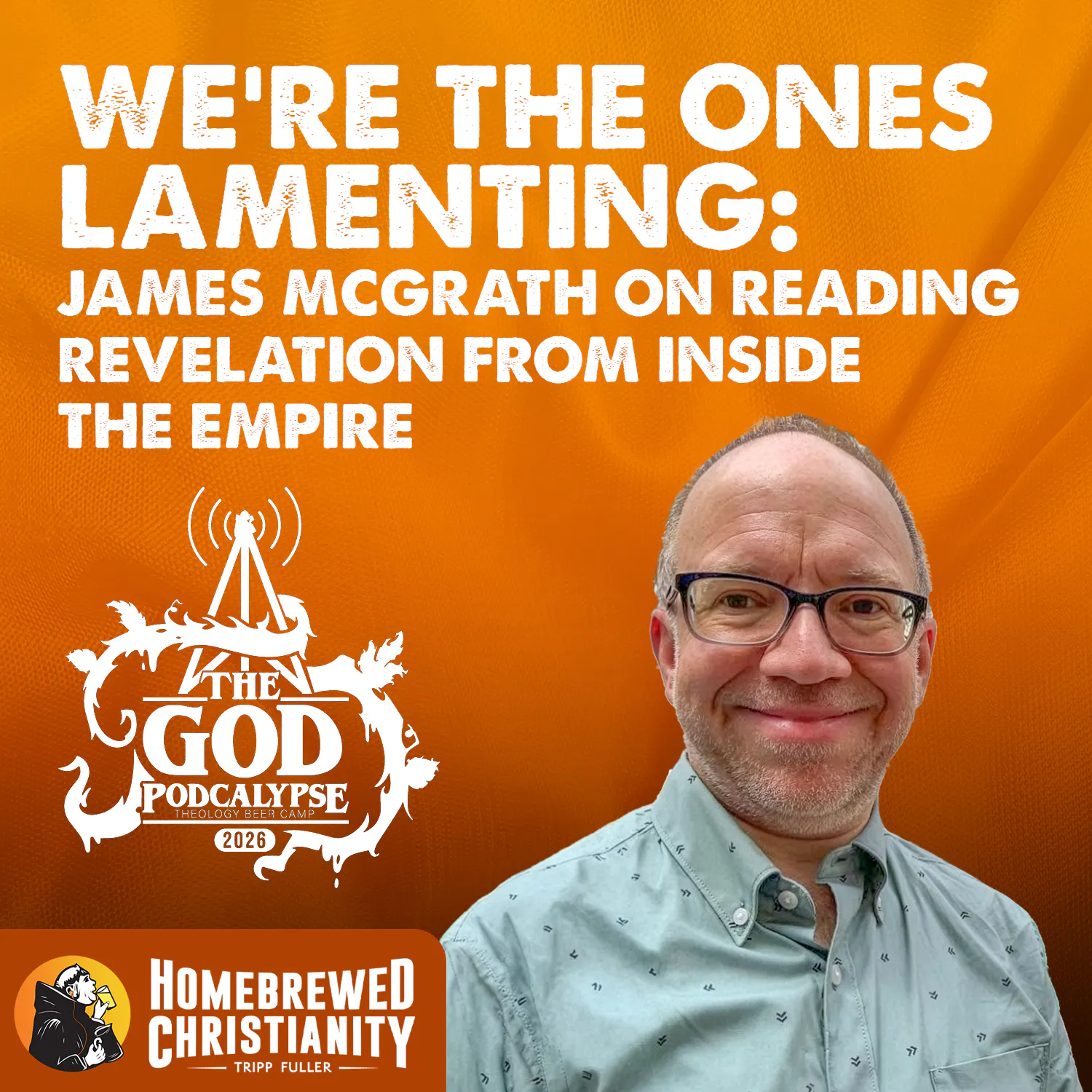
We're the Ones Lamenting: James McGrath on Reading Revelation from Inside the Empire
Welcome to TBC 26 FM, the post-apocalyptic radio station broadcasting from the wasteland of late modern America. James McGrath — the Religion Prof himself — was the right guest for the apocalyptic-themed Theology Beer Camp preview, because he wrote Theology and Science Fiction, he loves some Battlestar Galactica, and he spent a full year of sabbatical thinking about nothing but the New Testament's best apocalyptic preacher. We got the post-apocalyptic factions workshopped (James thinks the sorting needs a Hunger Games battle), then we went where the actual apocalypse lives: what John the Baptist was actually preaching in Second Temple Judaism, why apocalyptic literature always gets the end wrong and why that is a feature rather than a bug, why American Christians reading Revelation as horror instead of hope says everything about which side of the ledger we are on, what AI actually is under the hood and what it does to the way we read scripture, how James teaches a course called The Bible and Misinformation by fooling his own students on day one with AI-generated footage of himself announcing the discovery of the Ark of the Covenant, and — the part that will stay with me — what he says to the person whose evangelical faith is collapsing and who wrote me terrified. James's answer: that thing you thought was faith was actually doubt. Come for the Andor riff. Stay for the pastoral turn. You can WATCH the conversation on YouTube JOIN OUR OPEN ONLINE CLASS: The Empire Christ Couldn’t Keep Ever notice how Christian nationalism gets talked about like it's some bizarre new glitch in the faith? It isn't — it's a 2,000-year-old arrangement wearing new clothes, and once you see how the pattern works, you can also spot the Christ who keeps slipping free of it. Join theologian Joerg Rieger and Tripp Fuller for The Christ Empire Couldn't Keep, a free six-week online class tracing the holy alliances, imperial creeds, and stubborn resistance that have shaped Christianity from Paul to the present. You'll get six lectures from Joerg, six live Q&As, weekly readings from his book Christ and Empire, and a community of fellow troublemakers thinking it through together. It's free to join, every session is recorded, and it kicks off Thursday, August 27. Grab your spot at HomebrewedClasses.com. This podcast is a Homebrewed Christianity production. Follow the Homebrewed Christianity, Theology Nerd Throwdown, & The Rise of Bonhoeffer podcasts for more theological goodness for your earbuds. Join over 75,000 other people by joining our Substack - Process This! Get instant access to over 50 classes at www.TheologyClass.com Follow the podcast, drop a review, send feedback/questions or become a member of the HBC Community. Learn more about your ad choices. Visit megaphone.fm/adchoices
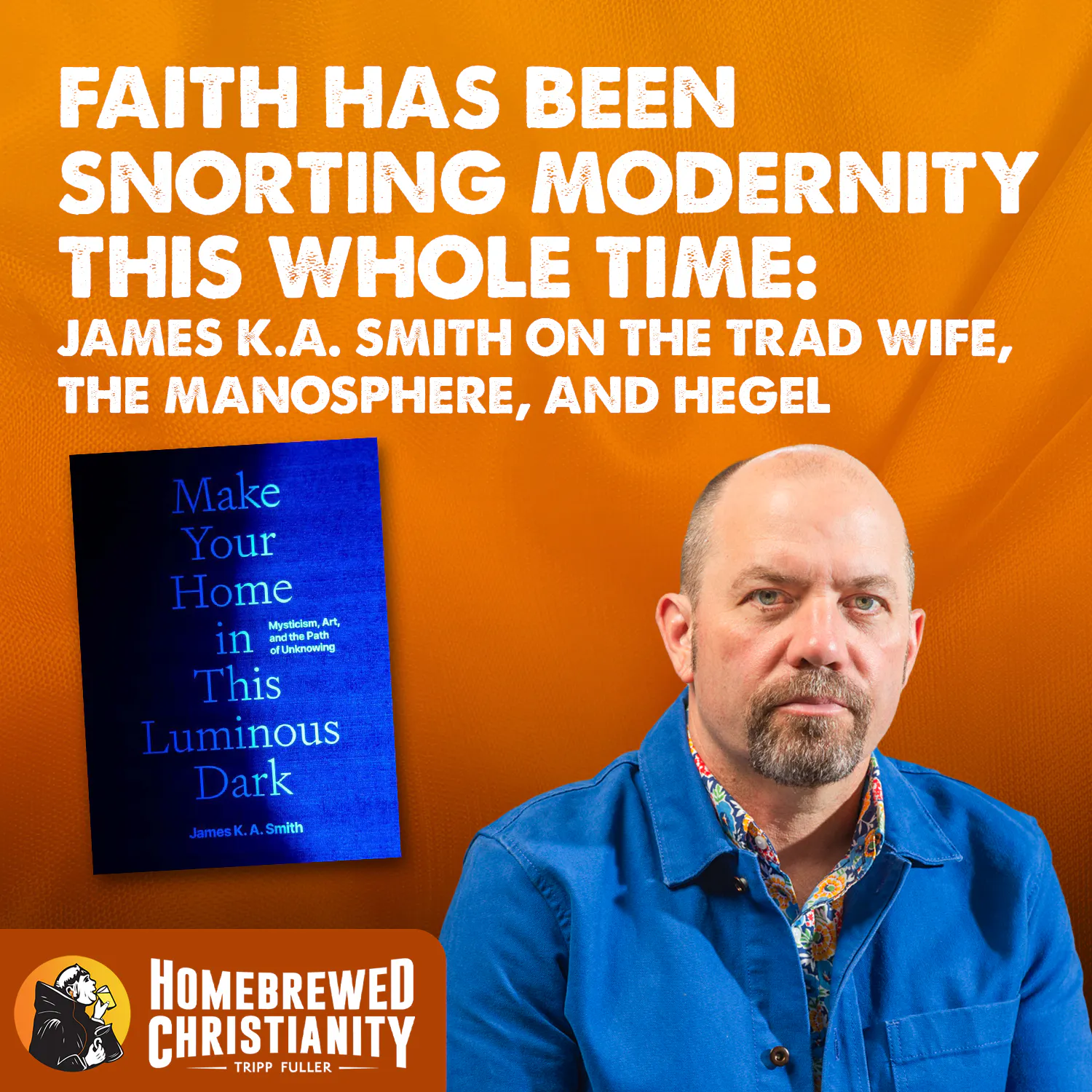
Faith Has Been Snorting Modernity This Whole Time: James K.A. Smith on the Trad Wife, the Manosphere, and Hegel
Jamie Smith is a Reformed philosopher — one of the first to put a Catholic mystic in the title of a book and then proceed to argue that it was the contemplative tradition that brought him back to a flourishing form of faith on the far side of a series of nerdy dead ends. Make Your Home in the Luminous Dark is his most personal and, I would argue, most beautiful book. It began the day, more than a decade ago, when Jamie was in the depths of a severe depression his analytical philosophical training could not think its way out of, and his wife came home from a garage sale with a battered used copy of The Dark Night of the Soul and told him he should read it. What that began — St. John of the Cross, Teresa of Avila, Meister Eckhart, Merton — is what this book bears witness to. It is a book about the mystics saving Jamie's faith. It is also a Reformed philosopher's argument that the cultural liturgies project he is best known for needs a prior undoing before its formative work can do anything at all. As I told Jamie in the hour, this is a book that made me feel uncomfortable about how much I enjoyed it. We covered the apophatic/cataphatic distinction with the twist Jamie puts on it, the way certainty is still Cartesian even when it calls itself pious, the trad-wife/manosphere as snorting modernity while claiming to have escaped it, Charles Taylor's Cosmic Connections as the real sequel to A Secular Age, and what to do when Distraction Inc. has fully occupied the inner room. The platform is the plantation. Come sit with this one and check out the book. You can WATCH the conversation on YouTube About our guest Dr. James K.A. Smith is Professor of Philosophy at Calvin University in Grand Rapids, Michigan, where he holds the Gary and Henrietta Byker Chair in Applied Reformed Theology and Worldview. He earned his PhD at Villanova University under John D. Caputo. He served as editor of Comment magazine (2013–2018) and as editor-in-chief of Imagejournal (2019–2024). His new book is Make Your Home in the Luminous Dark. His previous books include the Cultural Liturgies trilogy — Desiring the Kingdom, Imagining the Kingdom, and Awaiting the King — as well as You Are What You Love: The Spiritual Power of Habit, How (Not) to Be Secular: Reading Charles Taylor, On the Road with Saint Augustine, How to Inhabit Time, and his early philosophical work Speech and Theology. He writes at Quid Amo on Substack. JOIN OUR OPEN ONLINE CLASS: The Empire Christ Couldn’t Keep Ever notice how Christian nationalism gets talked about like it's some bizarre new glitch in the faith? It isn't — it's a 2,000-year-old arrangement wearing new clothes, and once you see how the pattern works, you can also spot the Christ who keeps slipping free of it. Join theologian Joerg Rieger and Tripp Fuller for The Christ Empire Couldn't Keep, a free six-week online class tracing the holy alliances, imperial creeds, and stubborn resistance that have shaped Christianity from Paul to the present. You'll get six lectures from Joerg, six live Q&As, weekly readings from his book Christ and Empire, and a community of fellow troublemakers thinking it through together. It's free to join, every session is recorded, and it kicks off Thursday, August 27. Grab your spot at HomebrewedClasses.com. This podcast is a Homebrewed Christianity production. Follow the Homebrewed Christianity, Theology Nerd Throwdown, & The Rise of Bonhoeffer podcasts for more theological goodness for your earbuds. Join over 75,000 other people by joining our Substack - Process This! Get instant access to over 50 classes at www.TheologyClass.com Follow the podcast, drop a review, send feedback/questions or become a member of the HBC Community. Learn more about your ad choices. Visit megaphone.fm/adchoices

Doubt Is the Door: Chaplains in the Trenches, George MacDonald, and the Bebbington Quadrilateral w/ Timothy Larsen
Dr. Timothy Larsen writes about serious, energetic faith in the places other historians assume the faith cannot really be. A Victorian Christian fantasist. A Westminster canon who quietly set aside biblical authority. And, in his newest and most acclaimed book, seventeen Anglican chaplains who came out of the trenches of World War I as radicals. Tim is McManis Professor of Christian Thought at Wheaton College and the 2025 president of the American Society of Church History, and this hour is us moving through three of his books at once. The Fires of Moloch takes its title from H. G. Wells's line describing Britain sending its sons into the fires of a false god during the Passchendaele Offensive. George MacDonald in the Age of Miracles takes the mid-nineteenth-century Scottish theological turn from the Age of Atonement to the Age of the Incarnation and shows what happens when a rigorously Calvinist minister-turned-fantasy-writer decides doubt is the door in, and therefore the door out, of a mature faith. Every Leaf, Line, and Letter returns to Tim's PhD supervisor David Bebbington's famous quadrilateral for defining evangelicalism and asks what it takes to keep that word doing honest work now that polls will code Muslim Trump voters as evangelical. Come for Anglo-Catholic sacramental confession as battle-tested ministry. Stay for the George MacDonald grandmother who burned her son's violin because he enjoyed music too much. You can WATCH the conversation on YouTube Dr. Timothy Larsen is McManis Professor of Christian Thought and Professor of History at Wheaton College, an Honorary Fellow of the School of Divinity at the University of Edinburgh, and an Honorary Research Fellow at the University of Wales Trinity Saint David. He is a Fellow of the Royal Historical Society and a Fellow of the Royal Anthropological Institute. He has been a Visiting Fellow at Trinity College, Cambridge, All Souls College, Oxford, and Christ Church, Oxford. In 2025 he served as President of the American Society of Church History. He has authored or edited more than twenty books. Books at the center of this conversation: The Fires of Moloch: Anglican Clergymen in the Furnace of World War One; George MacDonald in the Age of Miracles: Incarnation, Doubt, and Reenchantment ; and Every Leaf, Line, and Letter: Evangelicals and the Bible from the 1730s to the Present. JOIN OUR OPEN ONLINE CLASS: The Empire Christ Couldn’t Keep Ever notice how Christian nationalism gets talked about like it's some bizarre new glitch in the faith? It isn't — it's a 2,000-year-old arrangement wearing new clothes, and once you see how the pattern works, you can also spot the Christ who keeps slipping free of it. Join theologian Joerg Rieger and Tripp Fuller for The Christ Empire Couldn't Keep, a free six-week online class tracing the holy alliances, imperial creeds, and stubborn resistance that have shaped Christianity from Paul to the present. You'll get six lectures from Joerg, six live Q&As, weekly readings from his book Christ and Empire, and a community of fellow troublemakers thinking it through together. It's free to join, every session is recorded, and it kicks off Thursday, August 27. Grab your spot at HomebrewedClasses.com. This podcast is a Homebrewed Christianity production. Follow the Homebrewed Christianity, Theology Nerd Throwdown, & The Rise of Bonhoeffer podcasts for more theological goodness for your earbuds. Join over 75,000 other people by joining our Substack - Process This! Get instant access to over 50 classes at www.TheologyClass.com Follow the podcast, drop a review, send feedback/questions or become a member of the HBC Community. Learn more about your ad choices. Visit megaphone.fm/adchoices
You may also like

Get this podcast on your phone, Free


Create Your Podcast In Minutes
- Full-featured podcast site
- Unlimited storage and bandwidth
- Comprehensive podcast stats
- Distribute to Apple Podcasts, Spotify, and more
- Make money with your podcast
