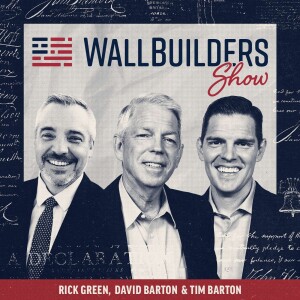
The WallBuilders Show
https://rss.buzzsprout.com/2077254.rssEpisode List
A Thousand Pounds Of Glass And A Lot Of Prayer - With Logan Ryser
See the flag here: https://www.facebook.com/watch/?v=1018566781065855A thousand pounds of glass hangs mid-air… and somehow it looks like it’s waving. That’s the true story behind a world-record American flag made of hand-blown glass, built for the 250th anniversary of America and finished with Scripture in 24 karat gold. We’re still trying to wrap our minds around how something that massive can be crafted panel by panel, shipped in wooden crates, and installed without losing a single piece.Before we get to the art, we give an important update on the Patriot Academy campus in Fredericksburg, Texas. The response from listeners has been overwhelming, with people praying, giving, and even sponsoring entire cottages to help protect a training ground for constitutional education and leadership development. It’s a reminder that culture isn’t changed only by talk, it’s changed when people step in, share the message, and support the mission.Then glass artist Logan Ryser joins us to explain how the flag came together, why only a handful of artisans can do this kind of work, and how he chose passages like Psalm 35 and 2 Chronicles 7:14 to connect America’s founding story with a clear call back to humility and repentance. We also talk about where the flag may travel next, including possible stops on the road to Washington, DC, so the public can see it up close and experience the message for themselves.If this conversation encourages you, subscribe, share the show with a friend, and leave a review so more people can find resources at the intersection of faith, history, and the Constitution.Support the show
Victory Mindset For Young Civic Leaders - with Thomas Umstattd and Elias Coop-Gonzalez
We’re coming to you from the Patriot Academy National Leadership Congress in Constitution City, Texas, where more than a hundred young adults are debating bills on the floor in a full legislative simulation. It’s constitutional education with real-world pressure, real speeches, real motions, and the kind of civic leadership training most people never get until they’re already in office, if they ever get it at all.We sit down with Patriot Academy alum Thomas Umstattd to talk about something deeper than procedures: mindset. He argues it’s time to trade retreatism for an attitude of victory and to recover the belief that we can actually take ground in culture and public life. From there, we zoom out into storytelling and influence, including how books shape leaders over decades, then into a fascinating thread on Elon Musk, Benjamin Franklin, and why radical accountability beats committee-driven systems. That leads to the hard question underneath modern bureaucracy: if nobody can be held responsible, can anything be fixed?Later, we talk with West Virginia delegate Elias Coop-Gonzalez, who came to Patriot Academy as a teenager, ran for office at 19, and became the youngest member of his state legislature. He shares what helped him hold his ground, why community and mentorship matter, and what he wants the next generation to carry with them. We also preview two timely topics brought to the students: when to compromise without becoming compromised, and how to think clearly about AI without panic or blind trust.If you care about civics, constitutional literacy, and raising up serious young leaders, subscribe, share this with a friend, and leave a review so more people can find the show.Support the show
How Patriot Academy Trains Young Leaders And Protects Its Mission
A neighboring property can look like “just real estate” until it becomes a direct challenge to your mission. We open Good News Friday with a major update from Patriot Academy’s campus in Constitution City, Texas and then pivot into the kind of story you can’t ignore: a high-stakes effort to stop a dangerous group from buying the 47 acres right next door, including 40 newly built cottages, and what it takes to secure a contract before an auction changes everything.We also zoom out to the bigger why. We talk about the Patriot Institute and why we see it as the most important work happening on the campus: training young adults with a biblical worldview, moral philosophy, apologetics, leadership, communication, debate, and real-world skills that translate into business, education, ministry, the arts, law enforcement, and public service. We even touch Washington, DC, where training and encouraging principled congressional staffers matters because “staff is policy” and the right people in the right rooms can steady leadership and protect communities.Then we get practical with the deadline. We share how cottage sponsorships helped pull the property from auction, why 24 cottages are already sponsored, and why 16 still need sponsors before the August 31 close. If you care about Christian civic leadership, constitutional education, religious liberty, and local culture battles that shape the future, you’ll feel the urgency and the hope in this conversation.Subscribe, share this with a friend who cares about faith and culture, and leave a review so more people can find the show. What part of this story hits closest to home for you?Support the show
Faith That Stands Up - with Jaco Booyens
Washington, DC doesn’t just run on policy, it runs on pressure, influence, and competing spiritual visions. We sit down with Jaco Booyens, a longtime abolitionist fighting human trafficking, to hear what happened when he felt called to move his family into the city, open an office, and launch a new church right in the middle of it all. The “yes” sounded clear, but the fallout was immediate: eviction after eviction, open hostility, and the kind of resistance that makes most people quietly back away. Tim Barton pushes into the question many of us ask when life gets hard: if God is leading, why is there so much opposition? Jaco's answer is direct and challenging. He argues that calling often comes with attack, and that courage isn’t bravado, it’s sonship, daily obedience, and a life anchored in God’s presence. We also get practical about what “daily encounters with God” look like beyond church attendance, including repentance, Scripture, listening, and a healthier view of deliverance as freedom from strongholds and fear. Then it gets surprisingly actionable: not everyone connects with God the same way. Jaco shares how movement, solitude, nature, and joy can become consistent pathways to hearing God, and he invites listeners to discover their own connection style. We also point you to anti-trafficking resources at helpjbm.org, plus a closing challenge that lands with weight: invite God into your trauma, talk to Him honestly, and let healing start where you’ve felt stuck. Subscribe for more conversations at the intersection of faith and culture, share this with a friend who needs courage, and leave a review so more people can find the show.Support the show
Trauma, Truth, And Freedom - with Jaco Booyens
Trauma can steal more than peace, it can steal your story. We pick up our conversation with Jaco Booyens at the intersection of faith and culture, where he lays out a sobering idea: spiritual accusation often targets the very wounds we carry, and if we don’t know what God says about us, we’re easier to manipulate through shame, fear, and false identity. That’s why we talk so plainly about laying down heavy burdens, choosing courage, and trusting that God can bring beauty and testimony out of what tried to break you.Jaco also shares hard-earned insight from decades of fighting human trafficking and sexual exploitation. We unpack how extreme trauma can warp memory, rewrite narrative, and leave people feeling disconnected from reality, which helps explain why “rescue” is only the first step and why restoration takes endurance, community, and truth. This is a frank conversation about evil, but it’s also a hopeful one about healing, resilience, and the kind of faith that refuses to quit.Then we zoom out to America: what makes this nation different, why a naturalized citizen can sometimes see its value more clearly than we do, and what responsibility Christians and pastors carry right now. Jaco explains why he believes the church must be anchored in Washington, DC and why he feels called to plant there while continuing the work of protecting children. If you care about trauma healing, anti-human trafficking advocacy, Christian civic engagement, and biblical values in public life, this segment will challenge you to build instead of consume.Subscribe for the finale, share this with a friend, and leave a review so more people can find the conversation. What part challenged you most?Support the show



Get this podcast on your phone, Free


Create Your Podcast In Minutes
- Full-featured podcast site
- Unlimited storage and bandwidth
- Comprehensive podcast stats
- Distribute to Apple Podcasts, Spotify, and more
- Make money with your podcast
