Episode List
Neobe and the cancer matrix
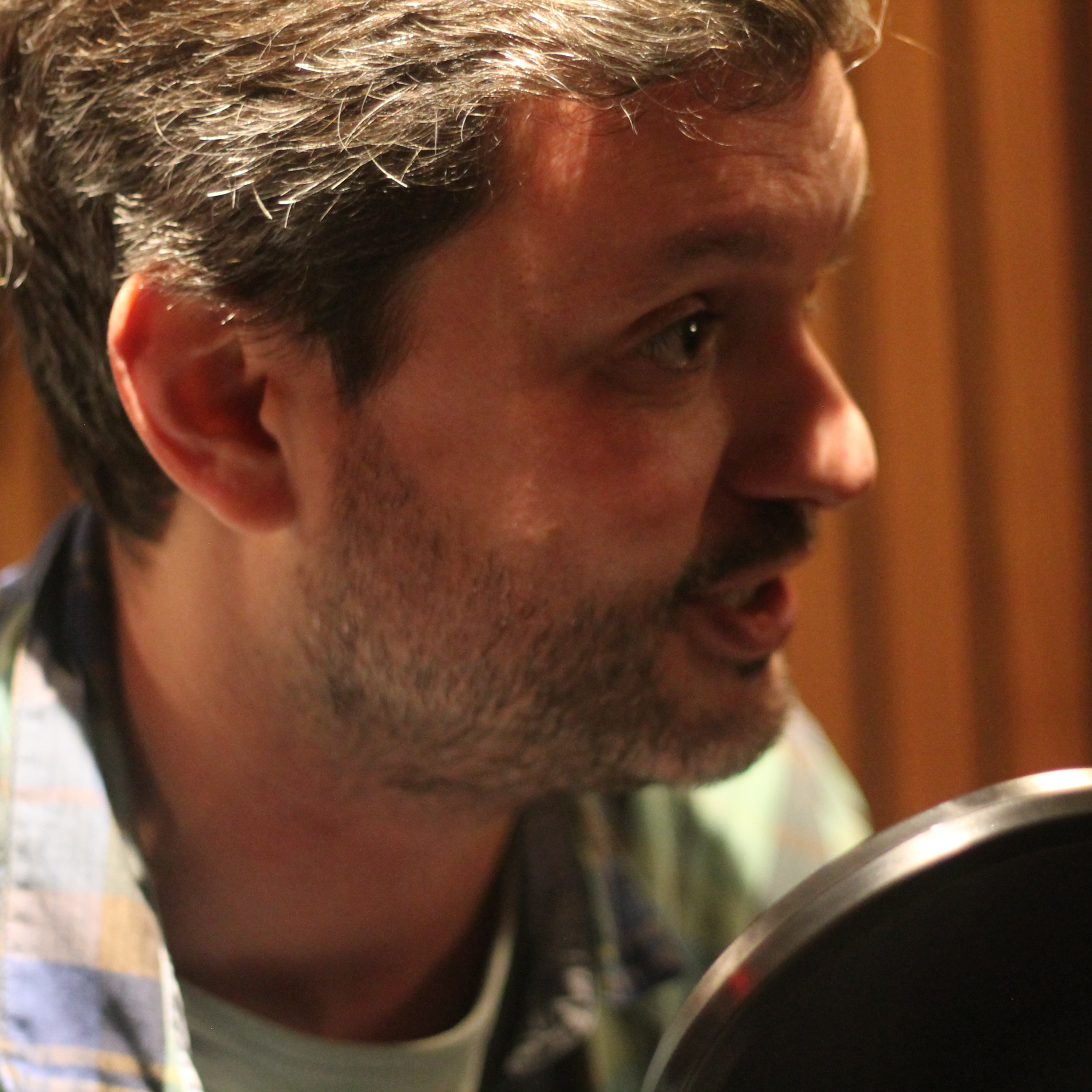
Using bacteria to treat a disease like cancer may not seem very intuitive, but there are very smart reasons for doing so. No one knows this better than Dr. Pedro Correa de Sampaio, co-founder of Neobe, a company doing just that. No, the name isn’t a reference to the Matrix movies (for those of us old enough to remember them). It’s derived from “neo” as in new and “obe” as in the end of microbe, which makes perfect sense since they synthesize bacteria from scratch. We also talked to Pedro about traveling as a scientist, setting up his own biotech company and the need for science communication. Keep up with Pedro’s work and advances on Linkedin and check out the website for Neobe. We’re very much enjoying listening to Afonso Cabral’s album Morada, which you too can download from Bandcamp, or check out his website for more info about his music.
Brains, drones and smart apps for our phones
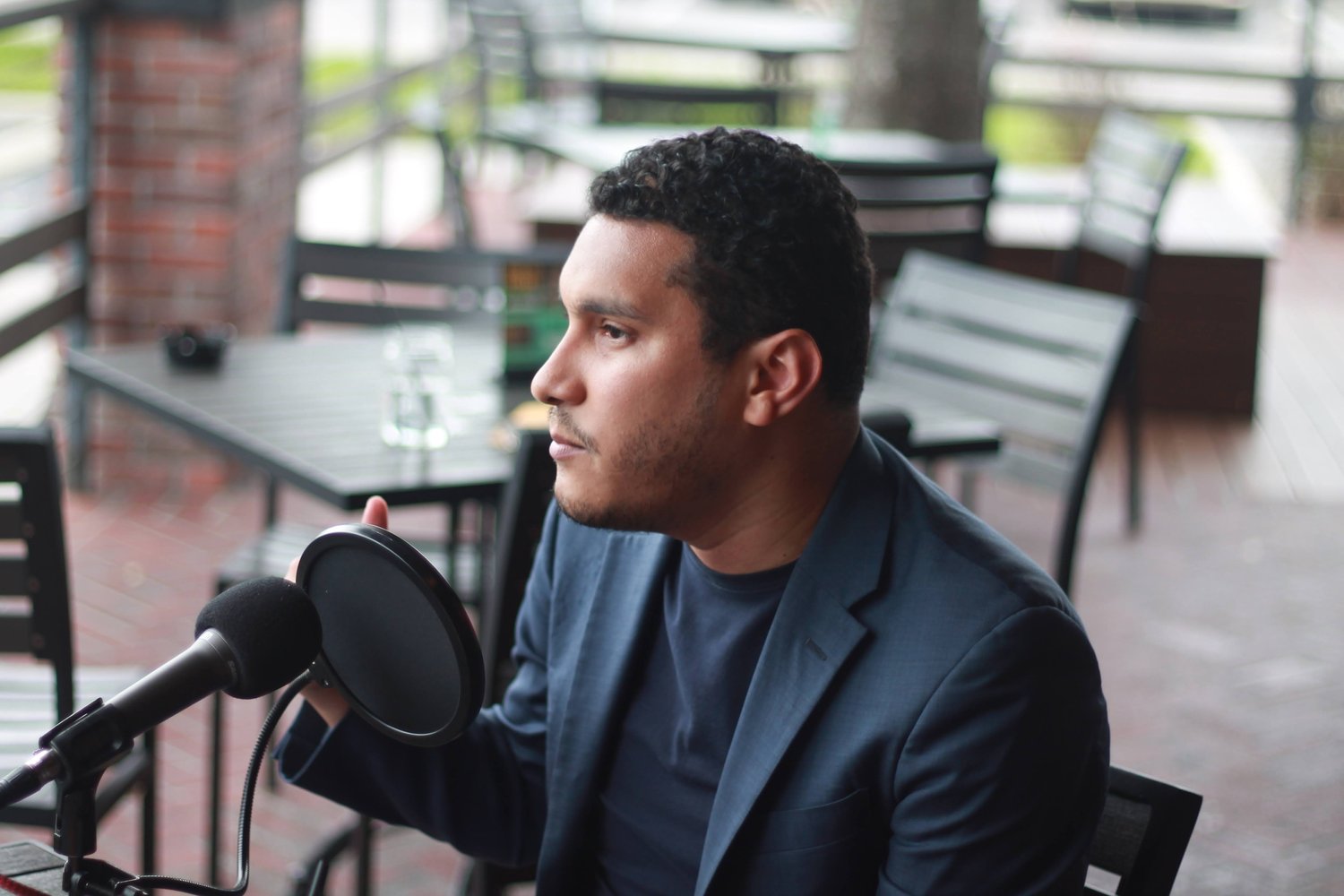
Have you ever just though how easy it would be to control everything with your brain? Poof, the lights go on, and Netflix just chooses your favorite show. Beyond these niceties though, Dr. Marvin Andujar has bigger and better plans.Working as a computer scientist at the University of South Florida, Marvin is developing brain-computer interfaces to do fun things like fly drones. But also with more practical applications like helping those with ADHD, dementia and anyone looking to improve their mental health.Join us to learn more about what we can do with the power of our minds. Listen: Check out Marvin’s work and interviews on his site: marvinandujar.com and follow him on: linkedin, twitter, or instagram.As promised, you can find The Easy Button’s music on Bandcamp: theeasybutton.bandcamp.com along with all their socials.Watch:Subscribe to our YouTube channel now for all future recordings. Episode transcript[Background intro music playing is "She doesn’t live there any more" by The Easy Button] Parmvir: So welcome folks to another episode of 2Scientists, where inspiring scientists share their work with you wherever you like to listen. And today's guest is not only inspiring, but his work, at least to me, sounds so much like science fiction. Thank you for joining us, Dr. Marvin Andujar. Marvin: Yeah, thank you for the invitation,Parmvir: You are an assistant professor in the Department of Computer Science and Engineering, and there you are the director of something that's referred to as the Neuro Machine Interaction Lab. That sounds like potentially you have fingers in a lot of pies and that your background extends to a lot of different things.Is that right? Marvin: Yes. So, my background is on computer science, so my bachelor's was in computer science and mathematics, and my PhD specifically on human center computing, which is a combination of psychology and computer science and other fields. So, I was always interested about the human brain.Parmvir: Yeah. Marvin: Hated biology to be honest [laughs] . So I just, I was like this is not for me. But then I love technology. Parmvir: Yeah. Marvin: And I love math. So when I heard the field of brain-computer interfaces, that of course in the medical field brain-computer interfaces, has been around for a while. Parmvir: Mm-hmm. Marvin: Then I was extending to non-medical work in the early two thousands, and when I was an undergrad I heard about it and I was like this is what I really want to do.Parmvir: Yeah. Marvin: So, yeah. Parmvir: It's, I mean, it sounds incredibly cool from the get-go, but I wanted to say back to the very beginning, I saw a lovely interview with you in like the Tampa magazines, which mentions that you're from Santa Domingo in the Dominican Republic. Marvin: Yep.Parmvir: And your parents were your inspiration.Marvin: Mm-hmm. Parmvir: So how was it that you ended up in the US and doing engineering? Marvin: Yes. So, my parents decided to move to the states, when I was a freshman in high school. They thought it was the best move for us as a family. So, of course the whole green card application to be able to work here in the States. And then when I got to the States, I was a sophomore in high school. Of course, I didn't know English, so I had to learn English and learn a brand new system. Then applied for colleges a few years later. But then in my final year of high school, I was wondering what would be my major.I knew I loved computer science. Well, I love computers. I didn't know what computer science was. And someone said, oh, you should do IT, you should do information technology. If you like computers, you like, you know, playing around with technology. So my major was IT when I applied for colleges.Then I take my first computer science class, and in my mind I thought computer science was Microsoft Office, doing PowerPoint Excel. Until I see my professor writing code on the board. I was like, I have no idea. What is she talking about? Even after that first lecture, I had a big headache.I was like, this is completely different from what I expected. And the funny thing is, that's typical. People really think that computer science is all fixing computers and you know, Microsoft Office and it's really not, right? We never fix a computer in any of our classes, right? So even my family think that, that's partially what I do. But yes, so that's how I started doing engineering.I still love computer science. Even then, even when I learned more about it. And then through time I started doing research as an undergrad. I did research for about five years as an undergrad when I was doing double major. And I fell in love with research that I decided to pursue a PhD and that's why I'm doing engineering still.Parmvir: Okay. Yeah. So funnily enough, between David and myself, it feels like a mashup of our two backgrounds. So, I'm a neuroscientist and he is a computer scientist. Marvin: Oh, nice. Okay. Parmvir: Yeah. So I'm sure he'll have some probing questions for you at some point during the interview,But kind of going back to your lab and the group that you started, I guess the first thing I want to know is what is the history of these kinds of brain-machine interfaces? So for something like prosthetics and creating new limbs and kind of being robot humans, I can see that as a natural progression, right. Marvin: Right. Parmvir: But when it comes to the idea that you are going to use electrical activity in the brain to power something that's somewhere else. Marvin: Mm-hmm.Parmvir: How did that come about? And essentially what is it that you do in your research? Marvin: Yes. So even back in the sixties, fifties, there was a lot of work done with electrical signals using EEG sensors to be able to get electrical signals from the brain for different purposes. We saw that of course, in psychology and in understanding more in neuroscience, right? So using EEG's and also MRI machines. But the term brain computer interfaces didn't exist until the 1970s. And the idea behind it was to use our brain activity actively. So if I'm imagining a movement in my head, can we associate that with a task. Meaning that, can I open a door with my brain? Parmvir: Mm-hmm. Marvin: And that started more instead of just collecting data and saving it for analysis purposes and for other great things, then it's how can we use that for applications? Parmvir: Yeah. Marvin: So neuroprosthetics, people in a wheelchair, can they move the wheelchair with the brains? Thankfully with the findings from neuroscience and currently psychology, we have learned enough about the human brain, then the computer scientist said: well, I think we know enough now to be able to do a lot of work outside medicine. Or help them also through machine learning, signal processing to be able to get better signals from the brain, with our devices. So, the work that we started, at least when I started doing brain-computer interfaces in the early two thousands, I was an undergrad. I was doing a summer program for undergrads at Clemson University. And, at the time he was just my RU advisor, then he became my PhD advisor later on. And then he shared that idea with us before we got to the lab that summer and said, well bring the interfaces.And I asked, what is that? And he said, well, we're trying to combine the human brain with technology. I was like, this is it. [Both laugh] This might be my field. And then when I got there in the summer, they're like, well, we're, we're about to start this here. Brain-computer interfaces. So I started working with one of the PhD students. Now he's a principal engineer at Intel on the West coast. And then we started coming up with ideas and say, well, we don't want to do neuroprosthetics, we don't want to do wheelchair, because that's more in biomedical engineering. We are computer scientists, so we need to come up with our own ideas that outside of it.So we started looking into how can we use BCI's (Brain-computer interfaces) for education purposes. Then the Brain-Computer Interface Society just a few years back created a roadmap, on where do we want to see brain-computer interfaces in the year 2025. And one of them was, can we use BCI's for education? And the idea is like, can we track engagement of students, count their workload using EEG, right. Using brain-computer interfaces. And they provide feedback to those students so they can have a better learning experience.So that's what we came up with. We did some work on that. And then of course, once I became a PhD student, I met my colleague called Chris Crawford. He's an assistant professor at University of Alabama right now. So we did our PhDs together. Parmvir: Yeah. Marvin: And when we started, the great thing about it was that my PhD advisor allowed us to work on any project that we wanted because it was an open field at the time. And then I asked my colleague and said: Hey, what are you working on right now? He's like, oh, not much, our advisor has me working on this project, whatever. And then I said, oh, we should work on brain-controlled drones. Parmvir: Mm-hmm. Marvin: And he looked at me like I was drinking something [both laugh]It's like, Marvin must be drunk right now. I was like yeah brain-controlled drones. The reason why I brought it up, it was because he was working on drones before and I also was already working on brain-computer interfaces. So I wanted to combine both of them. So that's how our work on brain-controlled drones, brain-drone racing, came along.And we did a Brain-drone race back in 2016, and of course we did one here at USF back in 2019, if I'm not mistaken. So yeah, that's working on some of the things I'm working on now.Parmvir: So expanding on the brain drone racing. You have a very nice little TEDx talk that you gave a while back, which we'll link to in our show notes. But it starts off as a fairly standard, like we are doing some cool things with tech, but it actually becomes a much more profound conversation about how we can use or utilize these things to help people with disabilities and level the playing field. Can you actually tell us more about this specific race and what it is that you think that it achieves. Marvin: Yes. So once we had a prototype on the brain control drone technology, which we started back at Clemson University. And then my advisor moved, so we moved with him we moved to University of Florida. So we, we're just sitting in the lab and we started thinking, what's next?So we have a brain-controlled drone. I mean, we can always do the computational aspect, make it more accurate, but we wanted to do something more than just that. So we came up with the idea of brain-drone racing. Drone racing in general. It started to take off. Parmvir: Right. Marvin: That was back in 2015, 2016. And then we were thinking, how about if we do something similar to like brain-drone racing? And the whole goal of that brain drone racing was to educate society or that brain-computer interfaces exist, and that it's not science fiction. Parmvir: Yep. Marvin: Right. So even still today, people say, when I tell them the stuff I work on, they're like, wait, so are you talking about the movies? Parmvir: Yeah. Marvin: Stranger things. Star Wars.I'm like, no, this is real. Even when I show videos to some people, they still don't believe it. Parmvir: Yeah. Marvin: They're like, oh, you know, we can always fake videos and tech. No, this is real stuff. So that's why that was the main goal of it. Parmvir: Yeah. Marvin: So I would say a few days before the race the associated press wanted to cover the race. And they sent us an email saying, It was like about a good paragraph telling us like, well, we want to be honest. That's what AP told us: we don't believe this is real. This is like 48 hours before the race.Parmvir: Right [laughs] Marvin: Yeah. It was like, we don't believe this is real. We talked to our editor and he said he's skeptical. We emailed MIT and Harvard and whoever, and although they say that it's possible, we're still skeptical. They saw a video that was covered by Fox News at the time. They still didn't believe in the video. Parmvir: Uhhuh. Marvin: So I was like, how can I convince the associated press to travel to Florida to cover this race?And I pretty much told them, well, look, the only way you are able to see if this is real is by coming here. And try it yourself. Parmvir: Yeah. Marvin: Right. Every new technology people always are gonna be skeptical.Parmvir: Yeah. Marvin: People were skeptical about planes. The fact that you put hundreds of people, in a flying submarine, to go from one country to the other. Parmvir: Yeah. Marvin: So, and that's exactly what I said in the email. I said, look at us now. We use planes every single day. And he pretty much said: see you on Saturday.Parmvir: Okay. Marvin: Yeah. So, and they, of course they covered the race. They tried it, they saw that it was real. We had students racing and after the coverage from the news, which was covered by Discovery Channel in New York Times, the response that we got from society about it, that's when we saw that regardless of gender, your physical abilities and disabilities, you can compete in the same sport.Parmvir: Yeah. Marvin: That's when we are like, wait a second, this one can be the one that is the most inclusive sport.Parmvir: Yeah. Marvin: Because only your brain is needed. Right, so I could be 50 years old and compete against somebody who's 20, 30 years old as long as I'm keeping my mind in shape. And again they don't have to worry about someone being taller or stronger. It's all about your capabilities of concentrating for a long period of time. Parmvir: Yeah. Marvin: And that's when we started thinking we may have something here that we can provide to people that is more inclusive than what we have right now in society. So that's why we started doing more races. My colleague at University of Alabama did his own race and we did of course one here at USF.And we hope to do more races in the future and make it more applyable at different universities. Parmvir: It does sound very exciting. I'd love to come and see it. So. David hates sharing stuff on the microphone. Marvin: Okay. Parmvir: I forced him to start doing the interviews in Spanish, but other than that [Marvin laughs] , so he asked questions via a messenger.So he said, if your life depended on it, is there anything you would still trust a human to do with a regular interface that you wouldn't with a neural one? Marvin: That's a great question.As of right now, I wouldn't depend on brain-control much, depending on the person, right? So, not myself, but other people at least, had people driving a Formula One car with their brains. I definitely will not get in a car, and [Parmvir laughs] they tell me they're about to brain [Marvin laughs] brain-control their car.I think I would prefer autonomous at that point. Parmvir: Yeah. Marvin: Controlling in video games, definitely I'd trust it. Right, so simulations virtual reality. Of course the brain-controlled drones are great as long as in a safe space. Parmvir: Yeah And presumably for each one of these things, like in order to be able to use it in real life, people would have to train up.Marvin: Yes. That's a great point. People always ask me, even in my classes, it doesn't take long to train or to get used to it. It really depends on the person. Parmvir: Right. Marvin: So I always use the example of athletes. Some of them are natural and some of us really need to train for a long period of time to be able to catch up to that.Who is a natural. Parmvir: Or, some of us will never get to that point. [both laugh] . Marvin: But when it comes to brain activity, we can, right? Parmvir: That's true. Marvin: So it takes a few seconds, a few minutes to be able to train, but then it takes days, weeks for mastery. Parmvir: Right. Marvin: And of course our technology still needs to improve for us to be able to do things that is more real time. Parmvir: Right. Marvin: The second part of it, we are asking people to use their brains in a way they had never used it before.So when we walk, we don't think, oh, I need to walk. Parmvir: Yep. Marvin: We just walk. In this case, I'm actually telling people, imagine yourself walking to be able to generate that brain activity so you can control this drone. It's a completely different way. Parmvir: Yeah. Marvin: Kids, they're great at doing these things right, because they're still, you know, they're more creative.They're no adults. Adults, they take longer time to be more creative with those thoughts. Parmvir: We're talking a lot about, how you actually use these things, how you implement them, but can we backtrack a little bit and exactly what does this thing look like?How does it work on a very practical level? How is it that a brainwave or something happening in your brain can then be translated into a physical thing happening over there? Marvin: Each part of our brain have their own functions. That's all thanks to neuroscience and current psychology that they have studied and find out what are the functions of each part of the brain. So we try to grab those electrical signals using what we call neurotechnology headsets nowadays. Neurotechnology is typically any headset that we're able to get brain data information from people.Parmvir: Yep. Marvin: It could be either non-invasive, meaning that it's just on top of their head, or invasive meaning that it will require surgery. Parmvir: Okay. Marvin: In that case, so the work that I do is mainly, of course, non-invasive. We get electrical signals from the brain. Of course we have to clean up that signal from any noise, any unwanted data, like muscle movement, eye blinks, we clean up all that. We're using algorithms and then using what we call machine learning algorithms to be able to classify those signals into that particular task. In general, that's how we're able to get those electrical signals from the brain and classify them to a specific application.So an example I can give you that I always use is when you are driving and we are able to detect if you're falling asleep. Parmvir: Yeah. Marvin: So it is, we have something called theta. We all have that theta wave in our brain activity. So it's more related to drowsiness, right before you fall asleep, which is your delta stage. So if you're driving and you're wearing a brain-computer interface what we know as a neurotechnology, as soon as we detect your, mainly that theta stage, then your car probably can give you a notification saying you may want to pull over, you're about to go to sleep. Parmvir: Yeah. Marvin: Or in this case, if you are driving in a smart car like Teslas or another electric car, then they will start the autopilot right before you sleep, and then park for you, at a safe space.Parmvir: Yeah. Marvin: So that's the idea of how we can use these type of technologies and how it will work in practicality. Parmvir: So I mean, looking at your webpage and the kind of the various things that you do research on, there's a lot under there. But one of the other practical things that I noticed that came up, a specific example is ADHD and helping people improve concentration.Marvin: Yep. Parmvir: So how does that work? Because as you mentioned with a theta wave, you, you have something very specific you're measuring. Marvin: Yep. Parmvir: How do you measure something like concentration and use that in people with ADHD?Marvin: Yes. So, in that case we look into what we call beta waves. So it's more related to alertness, and concentration. Of course we look more into other waves as well. And we use what we call an engagement formula. But we look into alertness and try to remove drowsiness and relaxation from the attention data. So the idea of improving attention for those with ADHD came about because of the community.So every time I did a demo with brain-controlled drones, or the simulation that we have, adults will just come to me and ask me: How they can buy the technology because they would like to use it at a home, to train their attention because they have ADHD.Parmvir: Yep. Marvin: And then when I have some presentations. And I have mentioned like, oh, this may be useful to train your attention, I get someone in the audience with ADHD saying, I wouldn't want to use drugs, I want to use this. Parmvir: Yep. Marvin: So the community pretty much told me, you need to start working on this [both laugh].They're like: just help us out. Parmvir: Yeah. Marvin: And that's when we started looking into brain art, what we call brain painting. Parmvir: Okay. Marvin: To be able to create your own, abstract paintings with your brain, where you're concentrating a stimulus, so it'll be, you're considering different objects and colors in the screen, and then you can create your own art. The reason why we decided that method to be able to improve attention is because you had to concentrate for a long period of time. So if I try to brain paint, create my paintings with my brain and my phone rings, then as I pick up my phone, I get distracted. So I'll be selecting the wrong object or the wrong color. Or the system will not be able to select anything at all. So now I have to go back to it to concentrate on what I was trying to select. So that mental discipline is, it can be trained. And then the number two part of it is doing the brain painting in a virtual reality environment. The reason why we decided that, is when you're more immersed in your own painting and we're trying to find out if we can improve your mental health. As art is related to improved health, mental health in that sense, being inside your own painting, you'll be less distracted, because you'll be more immersed in the painting and the activity that you are doing. Parmvir: Yeah. Marvin: So that's why we're collecting data right now, with participants and we're trying to hopefully see some improvement there over time. Parmvir: I have to say it feels like it, it must be really nice to have a very tangible impact of your research on people. And related to that, and actually this is one I was thinking of as well, so David says, your work seems to be at the intersection of many disciplines. Who do you work and collaborate with?Marvin: That's a good question. Mostly I collaborate with other computer scientists, currently, that look into emotional data. I'm looking also to collaborate with neurosurgeons. So after the brain painting work has been in the news recently. There were some neurosurgeons that have reached out to me, asking me if I have thought of using brain painting for those who have experienced stroke. Parmvir: Mm-hmm. Marvin: And I haven't, right. So I have been concentrating with ADHD and I hope there's a potential collaboration there. But then also those who have experienced stroke have emailed me after they saw that in the news and said have you thought of using brain painting? [both laugh] because I have experienced stroke and I think this will be useful. Parmvir: Yeah. Marvin: And of course there has been others with dementia and dementia definitely is one that is personal to me. My grandfather passed away of Alzheimer's a few years ago after 12 years of fighting with it.So I'm highly. interested to see how I can use this work to help those with dementia, at the early stage, right. Because once it's late stage, it's hard to really do anything. It's that early stage, early detection. Help caregivers. Parmvir: Yeah. Marvin: Can we help them improve their mental health because they go through so much, right. If, especially if they're family members. Parmvir: Yep. Marvin: I saw that firsthand with my mum seeing that her own father didn't recognize her. So if I could have helped her with my own technology in some ways, that's where I want new collaborations to start so we can help them long term.Parmvir: Yeah. That's quite the motivation. Marvin: Yeah. Parmvir: So he had another question... My phone is weird. It likes my left thumb, but not my right thumb to unlock. Marvin: You need a brain controlled phone. Parmvir: I do. I do! I need a brain controlled phone. Um, I don't know. I think it still freaks me out a little bit to some degree. And I wonder if people come up to you and they actually tell you that I'm too nervous to kind of interact with these technologies. Marvin: So people haven't told me that directly, that they are scared of the technology. Well, actually, I did have a faculty tell me that before that she was scared of the stuff I was working on. Yeah. Which was interesting because she was also a researcher.Parmvir: Right. Marvin: I guess it's, when I start talking about brain-controlled anything, people start looking into like, okay, wait, that sounds too science fiction. When I have seen posts in social media sometimes I do check the comments, and I have seen mixed opinions about it.Of course, some positive opinions. Some others have been scared about it, saying the future is scary. Some are concerned of getting their brain hacked. As of 2022, that's not possible [David laughs in background]. I just, even scientifically speaking, I cannot think of how can that be possible yet. They're concerned of the government implanting information into their brains. Again, it's not possible, at least as of right now. And of course, then you hear people like Elon Musk having his own company called Neuralink, and start talking about downloading and uploading information from the brain and associating things with The Matrix. Parmvir: Yeah.Marvin: People get scared, right. So, and when people bring that to me, after I give a presentation, I say, yeah, that's not possible yet, right? So, maybe in the next 100 years, but we still haven't gotten there yet, right? So, it's a concern for people. Parmvir: Yeah. Marvin: Which is understandable, right. So this could be privacy concerns, ethical concerns that we had to always consider. But, I would say most people are always, just find it more interesting.Like, okay, what else can I do with it? Can I just be lazy and have Netflix just based on how I feel, or have my home adapt based on my emotional state? Right? So, those are the types we talk about. Parmvir: Yeah, I mean there is so much interest in technologies and I think all of us are very into the idea of how they can improve our lives and make it more cool and fun. And as you say, inclusive and accessible. You know, more people can be brought into the fold in certain activities. But at the same time, certainly with the brain stuff like, we don't even know where memories are held in the brain. Like, there's enough of the brain that you understand to be able to develop these technologies, but the idea that we even know what bits of the brain connect to each other, there are trillions of connections. We're just nowhere near that yet. Marvin: I agree. So, that's why I always say, the brain is the ultimate frontier. We know a little bit, and there's so much more we don't know. But at the same, I actually have been saying this for the past 10 years, that it's the golden time to get into this field. One, because it's so open, there's so many questions that we need to answer. My biggest goal is how can people start using this type of technology at home? Just like how they use their watches. Because it's a wearable computer, right? So a smart watch, it gets information from you, like heart rate. In this case it'll be a neurotechnology getting brain data for other purposes. So it's how can we get there first? And then we can answer the other questions. Parmvir: So that leads very nicely into David's next question, which is, if anybody wanted to do what you do, do you have any advice and what type of personality does it take? Marvin: Oh my God. Um, great question, [Parmvir laughs at the pause]. So the beauty about it is you could be an electrical engineer, computer scientist, biomedical engineer, psychologist, any other neuroscientist of course, and contribute from that side of your field.So for example, I'm teaching the class right now for both undergrads and graduate students and some PhD students from psychology and biomedical engineering. They're taking my class. They don't get to do the development side of computer science, but they get to learn the science behind it. So, they can always, of course learn, if they're looking more into the science side of it.Parmvir: Yep. Marvin: Which is not the development side. They can always learn more about the signal processing side of things. Machine learning classifying these signals, these data. Understanding more of the brain, to be able to control specific machines in different ways. Personality wise, it takes a lot of patience, because these are very hard problems, right? So when I tell my students, oh yeah, let's create this application, we're able to create paintings with your brain. They look at me like if I'm going crazy, but at the same time it's like, this is what we do. This is what we, PhDs are supposed to do, is create things. And we have the technical skills and the science behind it to be able to make it happen. So it's being patient, a lot of perseverance. So, that's what it takes.Parmvir: So we've talked about how other people should consider going into this field. But in your own lab, imagine everything works as well as you could possibly hope for. What do you think your group can achieve in the next few years, and what does that mean to society? Marvin: Oh, if we can do the best, best, best? I can start with the brain painting project as that's my current biggest project in my lab. My goal is for people to start using brain painting applications at home. If we can work at the best pace, I would like to start incorporating those type of technologies at home.Where people can say, you know what? I have ADHD, or I would like to use it because I would like to improve my mental health. I can just get brain painting anywhere. Parmvir: Yep. Marvin: Right. It's not just in the lab, using a $20,000 device, right? Parmvir: Yeah, yeah, yeah. Marvin: It'll be more consumer-based. That people can actually afford.When it comes to the brain-controlled drones, I definitely would like to see more universities doing their own brain-drone racing. Having a college league, a professional league where someone who is in a wheelchair can compete at the same level as someone who's not in a wheelchair because all that matters is your brain.Parmvir: Yep. Marvin: And that's like my overall goal is to get there and create more applications that, can we use our brain activity as a password? To secure our data with our brain activity. That's some of the things we are also working on. I know we are in voting season now and we have a project that you can vote for a candidate with your brain. Parmvir: Oh, wow. Yeah. I mean, okay [both laugh] , how controversial do you think that would be given... Right now... Marvin: That's why I don't even wanna touch that too much [Parmvir laughs]. Yeah. But in that case, can we help people with physical disabilities to independently vote? With their brains. And besides that, to authenticate the right person who's supposed to be voting for your account, your brain activity is your own unique biometric. Parmvir: Yep. Marvin: Nobody can replicate it. So we have been thinking about things like that, that maybe in the future, it can become a reality. But, you know, when it comes to politics, it can get interesting. Yeah. Parmvir: As someone who didn't even know that these things existed.... So what could I have in my house right now that I can control with my brain?Marvin: That's a good point. So, like simulations, video games. Not necessarily for fun. It could be for fun for entertainment purposes. But it could be for meditation. Parmvir: Oh, okay. Marvin: To be able to relax, to meditate. It could also be for attention training, like I mentioned before.But the idea of relaxing that I'm able to actually take your relaxation levels. It's applicable today. Parmvir: Very cool. That's something I'll have to look into. Marvin: Yeah. Parmvir: Well, thank you so much for your time today, Marvin. It's been an absolute pleasure. Marvin: Yeah. Parmvir: And we look forward to seeing where your research goes.Marvin: Yeah, no, thank you for the invitation. Glad to be here.[musical interlude]Marvin: Funny thing some of my students have asked me, they ask me the craziest questions, which is great. They're like, oh, if somebody think on cocaine and they're trying to do this, I'm like, first of all, I cannot do any of that.I'm pretty sure the IRB (Institutional Review Board - for ethical approval of studies) will not be happy. Yeah. Yeah. So, okay. What happened if somebody's drunk? I'm like, I guess it's possible to look into it, but I am not touching that. [musical outro]Parmvir: I like that you're having to prime yourself with alcohol first. Oh, yes. This is gonna be good.
This time it's personal...
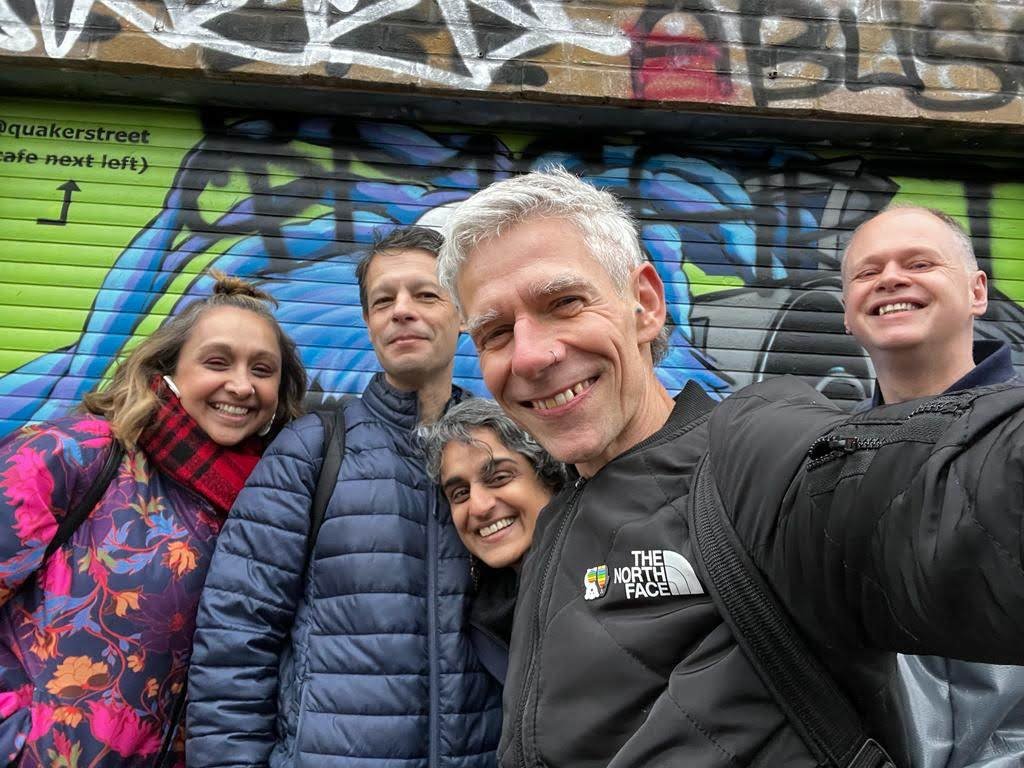
It may feel like 2Scientists has dropped off the face of the planet since our last release, so we wanted to check in and let you all know where we’re at. A quick reminder of all our important pod-links, to show us some support - or show us some money!🫶 patreon.com/2Scientists☕ ko-fi.com/2scientists🔗 2scientists.org🎥 youtube.com/@2scientists📧 mailing list📖 facebook.com/2scientists🐦 twitter.com/2scis📷 instagram.com/2scientists🦣 mastodon.social/@2scientists⚙️ linkedin.com/showcase/2scientists Our friends out for Oz Ismail’s recording in a pub in London. From left to right: Artem, Sukhy, Sarah and Edward. Recording the first episode of Biology in Numbers. At the mics are: Heiko Enderling and Parmvir. Kicking off season 2 of Cancer in our Community. From left to right: Ms. Valerie Goddard, Dr. Green, Topher Larkin, Kenisha Avery, Dr. Blue, Parmvir. Catching up with 2Scientists friends. From left to right: Sukhy, David B, Parmvir, Anson and David A. Listen: The melancholic track “Someday We’ll Make It” comes courtesy of Chicago alt-country singer and songwriter Derek Clegg, thanks to a creative commons license (CC BY-NC-ND 3.0). Find more of Derek’s work on Bandcamp: derekclegg.bandcamp.com. Episode transcript[Background intro music playing is “Someday We’ll Make It” by Derek Clegg]Parmvir: Hello all, this is Parmvir here, dropping in for our more regular listeners who may have noticed our absence these last few months. Even then, this is not going to be one of our regular episodes since for one thing, there’s only one scientist on this occasion. That’d be me, in case you hadn’t figured it out. This is more of an explanation of our unexpected hiatus and to share what we’ve been during this time.But yeah, this is the longest break we’ve taken since we first started recording almost 10 years ago (yes, I said 10 years! a mind-blowing fact that we’ll get back to later).So I’d like to start by introducing my youngest sister Sukhy, who has regular cameos in our episodes asking questions, or in our photos as she comes to hang out for our recordings.For anyone following me on my personal social media, you may have seen that she was diagnosed with breast cancer just before the pandemic hit. It would be an understatement to say how harrowing it was trying to keep up with her surgeries and treatments and trips to the hospital before we had the vaccine. She was lucky enough to make it through that ordeal to be discharged from oncology in March of 2022. Unfortunately, that lasted until August when she received a diagnosis of metastatic cancer after scans showed tumors in her liver and bones. At this stage it is incurable - there is no going back to “cancer free”, so to help her work through this diagnosis, as scientists we’ve been drawing on our experience to read through the literature and speak to colleagues about her options, then keeping her informed. You could say that we’ve still been communicating science, just in a very concentrated, non-public and personalized way. Needless to say this has been taking a good chunk of our time and energy, but we couldn’t see ourselves doing anything less.Not all of our distractions have been bad news though. In the process of recording 2Scientists, I seem to have attracted the attention of a couple of other organizations who are giving me actual money to produce podcasts for them. *whoop whoop.* First this year I was asked by the Society for Mathematical Biology to help them produce a podcast for their members and a wider listening audience to learn more about math biology. For example how do you put those two subjects together? How can theoretical scientists inform real world biology? And more simply, what does it even mean to be an academic and/or scientist doing research?We have a whole range of 2Scientists conversations with math biologists so if you want to learn more, go back and find: From Pikas to Politics with Nancy Huntley, The Math Epidemiologist, a COVID-19 special with Brandon Ogbunu, Mental health in Mandarin and modeling in Montreal with Julian Xue. Or you can go back and revisit recordings with two of David’s bosses, past and present: Peter Bentley and Sandy Anderson, one of our earliest guests!Another project I was excited to be invited back to work on is for Moffitt Cancer Center and their Office of Community Outreach Engagement and Equity. I’m just starting to record the second season of Cancer in our Community, a podcast dedicated to informing the local community about how researchers and physicians at Moffitt are working to reduce racial health disparities in cancer care. In-keeping with our expansion into Spanish language podcasts, this series will also have two episodes in Spanish specifically about the disparities experienced by people living with cancer in the Hispanic community. As a member of the South Asian diaspora, I know that we too are profoundly underrepresented in scientific studies and clinical trials. So for obvious reasons, this podcast is very close to my heart.If you’re interested in learning more, I’ve added a link to my website for Artha Science Media, my new company for freelance work in the show notes.But enough about me, you’re here because you subscribe to 2Scientists, where I feel like huge apologies are owed to our last two guests Marvin and Pedro, whose recordings have been gathering digital dust for months now. Especially because we know you want to hear about flying drones with your brain, and creating bacteria from scratch! We loved speaking with them just like all the other scientists who have been so generous in sharing stories about their work with us. We enjoy it so much we’d do it even if we only had a handful of listeners. As it is, we’ve now past the mark for over half a million episodes downloads, HALF A MILLION! And we have you all to thank for that.So we will get back to recording episodes with new guests. But in honor of our upcoming 10th anniversary, we’re also hoping to have some fun with different platforms to go back and visit our scientists from the past, as a “where are they now” kind of deal. And as ridiculously ambitious as this sounds having just spent an entire podcast essentially talking about how overwhelmed we are, we’re also hoping to launch a tasty new project, so watch this space to learn more about that!While you wait for all that though, this seems to be the point of the podcast where I’m obliged to tell you to subscribe if you don’t already do so. You are almost guaranteed to find us on your favorite platform. If you like to see the photos from events, or read transcripts, go to our website: 2 (as in the number) scientists.org. Follow us on the socials! particularly instagram and youtube, where we’re hoping to create some new material for you. Let me see, what else…oh yeah, subscribe to our mailing list. We may or may not remember to send you stuff, but that’ll just make it all the more tantalizing for you.Alternatively get in touch to say hello! We’d love to hear from you. Just use the ever so convenient email address: hello@2scientists.org. In fact, if you message us to tell us what you like, let us know what your favorite episode is and why, or what you might want to learn more about, we will send you a free 2Scientists sticker or bookmark, or lets just go nuts here and say both!Finally, nothing says “I love you” like a little monetary sumin sumin, so if you’re feeling generous and want to kickstart our next season of recordings, the show notes also include links for you to buy us a coffee or subscribe to our patreon where we only take your money when we make something that we think deserves it.And I think that’s all for now. I hope this has reassured you all we’re still out here and still thinking about how to get back to business albeit at a pace that means we can look after ourselves and our families. We hope that you’re all taking care of yourselves, and getting your science fixes from other great sources.Until we’re properly back with you, this is bye from me, Parmvir (and somewhere in the other room, David).[musical outro]

The pharmacovigilante
He’s here, he’s there; Dr. Hillman brings drug safety everywhere! So given the rules and regulations he needs to follow, the title “vigilante” could be nothing but ironic.We chart David’s progress through choosing pharmacology as a subject to study, and settling on pharmacovigilance as a career to pursue. Listen: The Bollywood beats come courtesy of Cambridge-based artist Anish Kumar whose music you can also find on Bandcamp: anishkumarmusic.bandcamp.com, YouTube, Instagram and Twitter.Watch:Subscribe to our YouTube channel now for all future recordings. Episode transcript[Background intro music playing is "Nazia" by Anish Kumar]Parmvir: Hello everyone. And welcome to another episode of the 2Scientists podcast, where inspiring scientists share their work with you, wherever you like to listen. Today we come to you from a rather unique spot, rather than a cafe or bar we are camped out in Kensington Gardens in London, because it's a glorious day and our podcasting equipment allows us to do that. But enough about me and us, we are here today, of course I am your host Parmvir Bahia here and we're here with David Basanta, but we also have with us another David who is very special to me, he is an old friend of mine from my PhD program, and we shared much time and much swearing over experiments together at University college London. How are you David Hillman? David: I'm doing well. Thank you. It's, as you say, it's a, it's a lovely day and, it's nice to be back with old friends. Parmvir: Yes, yes. Of course everything rotates background to COVID and whereas we would normally see each other once a year. It's been three, four, possibly? David: Three, I think that's yeah.Parmvir: Miserable. David: Yeah. Sad times we shall have to make up for it. Parmvir: We will, we will. There's a bottle of Cava with our name on it. Once we've done with this. David: And onion rings. Parmvir: And onion rings. Yes. Fancy Marks and Spencer’s one's though. So let's start at the beginning. I'm not talking about like, where were you born kind of thing. Although you can mention Kidderminster if you'd like. So as I understand it, we had a relatively similar track as undergraduates. So you did a bachelor's in pharmacology, correct? David: Yeah, that's right. Parmvir: So tell us why, why pharmacology? David: So this is gonna age me, age us.So I, for my A levels, so for my senior school exams, I, studied chemistry, biology, and maths, and I wanted to study something at university that combined chemistry and biology. And so this is the bit that will age us. So back in the day, if you remember, you would go to the, career advice department who were trying to help people to steer people towards what options they might want to pick at university.And they had this huge telephone directory effectively, which, mapped together people's different, combinations of A level courses and then gave you a list of options that you could, study at university. So I was sat in this little tiny room with this career advisor person, and they were basically running through this list of different courses.And when they came to pharmacology, they'd already mentioned pharmacy, which, you know, most people know what it is, but then they said pharmacology and I stopped them and said, well, what's, what's the difference? And they actually gave a pretty good summary. They said, it's more the biology of medicine. It's more the, the research and development of new medicines. They said it's potentially a controversial topic because it's the pharmaceutical industry is itself sometimes controversial and there's other aspects to the industry, which are, challenging sometimes. But yeah, that's how it started. So I picked a few different pharmacology courses, one of which was King’s College London. I was always very practical, so I liked the idea of doing a year in industry at some point. So I chose a sandwich course like you and yeah, so that took me to KCL all that time ago. Parmvir: Mm. So I didn't realize how similar our tracks had been, because I also did biology, chemistry and maths, and I wanted to do something with the chemistry and the biology.And I got put in that direction by David: did you pick it out of the phone book as well? Parmvir: I did. What was it called? There was a name for it. David: It was pretty like a UCAS publication. Parmvir: Yes. It was just, it was enormous. David: Yeah. Parmvir: But yeah, in any case, I also, I did a sandwich year and I got to go and hang out in Germany for a year, which was fun.But yeah. So obviously after that you came to do a PhD at UCL where we were, well, I was a year ahead of you, I think. David: Yeah. You were. Parmvir: Why? Why did you do a PhD? David: So well for the reasons that I guess a lot of people do them, which is that I wasn't sure what to do next [both laugh] and a PhD seemed like a good way to string it out for another few years before I figured that out.But the reason I landed on UCL was that when I did go and do my year in industry, which like you was for a large pharma company, I worked in a lab looking at some non-clinical safety models. And we were using electrophysiology techniques at the time that was sharp electrode electrophysiology.Parmvir: You're gonna have to explain what electrophysiology means. David: Oh, don't make me do that. It's been 20 years [Parmvir laughs]. Oh, it's basically where you take either isolated cells or tissues and you put tiny, tiny electrodes into them and measure the changing currents across cell membranes. And as you put different drugs on, you can look at different effects of those drugs how they affect the electrical signals that you can measure.And really it's ions moving back and forward across membranes by little things called ion channels. So yeah, so I'd done sharp electrode electrophysiology there. I went back to university to finish my last year, and then the question came up about what to pick for a PhD. And I thought, well, although I hadn't enjoyed electrophysiology, it's something that I had started to, I guess, gain an interest in. Plus I had some skills that in that area. So, yeah, so I found a course, rather a PhD studentship at UCL, which seemed to fit the bill. It was looking at using a slightly different electrophysiology technique, so patch, clamping in a different area, but I thought it was something that I could use what I'd learnt in my year in industry Parmvir: I gave you some of these questions beforehand. David: Yes, because I'm incapable of spontaneous reaction to questions [Parmvir laughs]. Parmvir: Actually, I loved it so much that I have to read out your description of what your memory is like. David: I was quite proud of that. I coined that yesterday. I used to think of my memory as a lobster pot. Parmvir: All right. So you said I've just come up with a good analogy for my recall memory. It's like a reference library. You have to put in a request and then go away for a bit. When you come back, I'll have retrieved something from the vaults. Hopefully. David: Yeah, exactly. Parmvir: But aside from that I wanted to say this might be something of a loaded question, but what did you think of your PhD experience?David: You know, I really, I look back on those years with fond memory. Now it's partly because looking back, you edit out all of the stress and anxiety associated with doing a research project like that. I remember at the time when I first started UCL ran some induction courses where they pulled together PhD students and other postgraduate students from all sorts of backgrounds and John Foreman who you'll remember who was the Dean of students at the time, he gave a little introduction to UCL, but also gave some interesting advice let's say and pointers.And one of the things he pointed out in that session was the high degree of mental illness that is encountered by students in general taking these types of courses because they are stressful. And you often feel like you are kind of on your own. Driving your own research project forward. Sometimes through difficult times. So I do remember that in particular, but you know, what I remember mostly is just how impressed I was with all of the people that surrounded me because our department was not particularly flashy in its kind of presentation, but there were some seriously impressive people there.So I always like to think of our lab in the sense of, you know, it was run by effectively by Dennis and, and Guy when we got there. But before then it had been run by Don and before then it had been run by Bernard Katz who was a Nobel laureate. So it felt like we were the either grandchildren or great grandchildren of a Nobel Laureate and the whole department was a bit like that. It had a lot of very understated people who were world experts in their, in their field. And I always felt like the dumbest person in the department. But that didn't bother me too much because you know, being surrounded by all this greatness and even just, you know, the little glimpses of things you would see at the kind of coffee breaks and in the corridors, some of those memories still live with me, you know. Bearing in mind, this was back in what, between 2001 and 2005.So very, very early days of smartphones, things like trios and things like that, which seem antiquated now. But I remember coming across two old professors, so probably in their seventies or eighties comparing their smartphones and that like little microcosm, are the things that I loved about the department.Parmvir: Actually, I mean, I think you're, you're definitely selling yourself short. Like nobody would say that you weren't smart enough to be there. And I think one of the things that kind of ties into the, the mental health aspect is that we all felt that way. David: Yeah. Parmvir: Except we didn't express it to anyone else. It's, it's utterly ridiculous. How can we all be the least smart person in the room that's just not possible. David: Yeah. Parmvir: And after that, we all got our PhDs anyway, so, you know yeah. David: I certainly have no regrets about it. And I look back on those times with, with very fond memories, for sure. Parmvir: Yeah. Just talk briefly about what you did for your project and what the difficulties were.David: So the lab that I joined, so which, which you were a part of as well, their specialty was calcium activated potassium channels. And over time, the lab had looked at these ion channels in various different settings. The project that I was given was looking at these channels in vascular endothelial cells, which was a cell type that no one in the lab had ever studied before.Parmvir: Mm. David: So one of the biggest challenges that we were hit with straight away was that no one in the lab could really help that much with firsthand experience of how to obtain these cells, how to isolate them, how to culture them, how to grow them and really how to manage those cell types. So you might well remember that, the first, probably nine months of my PhD was just spent trying to culture these cells. Parmvir: Mm-hmm David: and it started with you know, available tissue from rats and other small mammals.But then eventually we were not having success with culturing cells from those models. So I switched onto pigs and, you know, I'd done a bit of reading that, you know, these vessels, because they were much larger the blood vessels, it was easier effectively to culture cells from, so I looked in the phone book and I found the address of an abattoir out in the middle of Essex.And there began my weekly trip for getting on for two and a half years to the deepest, darkest corners of Essex to go and retrieve pig, coronary artery cells once a week. Parmvir: Yeah. And essentially you suffered because these things were so flat. [David laughs] And when you're trying to, so you, for anyone who's listening, you have to picture trying to get a very, very fine tube onto something that is incredibly flat, and essentially you need this thing to form a vacuum seal and that just wasn't gonna happen. David: No, so, you know, vascular endothelial cells, they're the cells that line blood vessels, which is why they're, they're very flat. They're like tiles almost on the inside of veins and arteries.And you know, with other cells in the lab that were being looked at like the ones that you were looking at, like DRGs and like neurons and things like that, you know, you were basically putting the, the electrode down onto like a ball. Parmvir: Yeah. David: So the gap between the bottom of the dish and the top of the cell was who knows, 10, 20 microns, something like that. The cells that we were looking at, they flattened themselves out so much, they were about one micron, I think we estimated and therefore the tiniest vibration in the room would destroy the cell. And yeah, so the first stage was trying to culture, the damn things, and that was extremely challenging. It took a long time, but nine months of the way through managed it, and then began the whole pain of trying to get electrical recordings from them, which turned out to be as difficult. Parmvir: Yeah. So one of the things, I don't know if we ever talked about this, but what did you aspire to do after you'd done your PhD originally?Like, did you have any kind of idea? David: I mean, I think I was always headed into the pharmaceutical industry, which is where I landed up. In my undergrad degree in, I think my either first or second year, I did a very nice course, which was a kind of practical introduction to the pharmaceutical industry and from very top level, how drugs are developed and how pharma companies are organized internally and how the research progresses. And that, I'd always found that interesting. I mean, I find the entire pharmaceutical industry absolutely fascinating. And still do to this day. It's such an amazingly complex industry. And so, yeah, so I think I'd always been heading in that direction. Sure enough, the PhD certainly made me decide I was done with bench science [Parmvir laughs]. So, you know, by the time you've spent three plus years plodding along with these experiments that have a success rate of one in 50 sometimes. Parmvir: Yeah. David: You know, days and weeks without getting any data, and towards the end, still being in the lab at three o'clock in the morning, trying to get something to work and breaking more and more glassware as time goes on [Parmvir laughs]Yeah, I decided I was done with bench science, although I loved being in the labs, I loved playing in the labs. But I was never that into the kind of reading of the scientific papers and that sort of thing. Once it came down to maths and things like that, I wasn't so engaged. I needed to see practical things. Parmvir: Yeah. I feel like at some point we realized we were both some kind of engineer at heart rather than David: Yeah. Maybe Parmvir: scientist, David: maybe. Parmvir: It's more like, how does this work rather than trying to answer a bigger scientific question. David: Yeah. Parmvir: But obviously you were, you were a little bit scarred by your experience there, and you ended up going off in, I guess, a very different track from what the standard academic education leads you towards. So I think at this point this might be a good place to put your disclaimer in. David: Yes. So I work in the pharmaceutical industry and over time I've worked for, and with a variety of different companies.Any of the content that I describe today are my opinions and my opinions alone, and often they're really based off things which are in the public domain. In fact it's all based off things that were in the public domain and also some of the education that I've received, because actually, even after I finished my PhD, I then years later went on to study a, another academic course specifically in pharmacovigilance and pharmacoepidemiology.Parmvir: Oh, where did you do that? David: London school of Hygiene and Tropical Medicine. Parmvir: Oh. David: And it's interesting because it's a short course and I felt was a very valuable course. It's a course where regulatory authorities also send their people to learn too. Parmvir: So there's a lot of questions I can ask next.But one of the things that your job description throws up is this word "pharmacovigilance". What does that mean? David: Okay. So somewhere because I'm not gonna do it justice from memory, I'm going to read out the WHO definition of pharmacovigilance. It doesn't roll off the tongue, unfortunately, which is why it's never quite there in my head.So per the WHO: pharmacovigilance is the science and activities relating to the detection, assessment, understanding and prevention of adverse effects, or any other medicine, or vaccine-related problem. So essentially it is the process and the science relating to drug side effects. Now as you'll remember from pharmacology days, very early on, you're taught that all pharmacologically active substances, if it applies to the human body have side effects. The same side effects are not encountered by every person.And you know, some of the side effects might have obvious clinical manifestations. Some might not, you might get side effects, never know you've had them. And of course they vary massively in severity. So when you are looking at a medicine, particularly one that you're introducing to kind of general use in humans, you have a trade-off to make because you have an expected therapeutic benefit, but you also have to be mindful of potential side effects, particularly serious side effects and how much tolerance you have for those versus the good that the drug is supposed to do.And achieving that balance is one of the big challenges that's faced in drug development.Parmvir: So what you do really, it kind of comes at the end of the whole process of clinical trials and so on for given products, right? David: It actually starts right at the beginning of clinical development.So. Parmvir: Oh, hang on, I have to ask David's question: does that make you a Pharmacovigilante? David: [David and Parmvir laugh] I've often wondered the same thing myself. But yeah, so pharmacovigilance takes off really where toxicology leaves. So before you can put a drug into clinical development, by which I mean development in humans, drugs first have to go through preclinical development and that's where all the various toxicology studies are run.Parmvir: Can you quickly define toxicology for us? David: Sure. It is really focusing on the well, the potentially toxic side of medicines. So before you put a drug anywhere near a human, you want to be absolutely certain that it doesn't cause various catastrophic side effects in humans.So, for example, you need to be confident that it doesn't cause cancer. You need to be confident that it's not gonna cause a heart attack immediately, or cause a stroke immediately or things like that. So as per regulations in pretty much every country in the world, before you put a drug anywhere near a human in a clinical trial, it has to go through a standard set of tests.And there's various ways to achieve that. You know, sometimes those are tests using computer simulated models. Sometimes they are using individual cells or cultured cells or tissues. And sometimes as is well known in the industry they're using animal models and these are legally required tests.So every drug that goes through the process has to go through these. So that's done before it gets to clinical development. And then you start with phase one clinical trials which are studies on, usually on healthy volunteers and they're very small trials. They involve perhaps a few tens of patients. And the only purpose of those trials is to look at the safety and tolerability of the drug. So this is the first time you're putting the drug into humans. There is a bit of an exception to that. So although these are usually conducted on healthy volunteers, for some drugs, including, for example oncology drugs. Those drugs are usually along the more kind of toxic end of agents, so it's not ethical to put those into healthy volunteers. So sometimes those studies are conducted in a patient population. So once a drug moves into human studies into phase one, from that point, really for the rest of the lifetime of that drug as a human medicine pharmacovigilance is involved. So all the way through the phase one, two and three studies and then once the drug goes onto the market, pharmacovigilance continues.So the companies or the pharmaceutical or biotech companies that are developing these assets have a legal requirement to collect and analyze this data on an ongoing basis pretty much forever. Until that drug is eventually, perhaps if it's lucky enough to get to the market, until it's withdrawn from the market, perhaps many decades later.Parmvir: Very good. And I think that there are probably some very topical things that have come up recently as a result of COVID 19, which is important to consider when we're talking about these things, in that we are not just relying on these clinical trials that have gone out to ensure that these things are safe, but once they're out there that you have to continue to get feedback from people who are taking these to ensure that they continue to be safe in the long term, right?David: That's true. So, you know, ordinarily in clinical development, once you get through phase 1, 2, 3, and if you are lucky enough to have a drug, which is sufficiently efficacious, tolerable to go to market, then yes, you know, the drug's released to market and you continue to monitor for this stuff.Vaccines are in a particularly special category because they are drugs that are given to healthy people. Mm yes. And so therefore the benefit risk balance is more complicated in some ways, because , you know, it's, it's hard to consider the benefit to the individual of taking a product when they don't yet have that disease.So now there are other drugs that are in a similar category, other drugs that are given to healthy people. This is where I can ask you some questions. So what, what do you think those other drugs include? Parmvir: Oh, goodness. Um, I'm trying to think off the top of my head, what they might be. David: Yeah. It's very unfair. Parmvir: All I can think of at the moment are the other vaccines. David: Okay. So, Parmvir: but there are lots of prophylactic things. Yeah. Yeah. I can't think of anything David: Contraceptives. Parmvir: The obvious prophylactic. Yes. David: Drugs used for travel. So things like anti-malaria tablets. Parmvir: Oh yeah. David: Drugs used for things like smoking cessation Parmvir: mm-hmmDavid: stuff like that.So again, these are all drugs that are generally given to healthy people. So, you know, and this is where benefit risk balance comes into sharp focus, because if you have a drug that has been developed to treat a very hard to treat cancer, let's say, then when you consider benefit risk balance you know, if these patients are effectively going to die without a treatment, and this is the only treatment available, you might be able to accept that a drug has a one in a hundred chance of causing a fatal stroke. Particularly if that drug is given in hospital and these things can be, can be managed. If however, you are developing a cough medicine, then your tolerance for any type of dangerous side effects is basically zero, and of course, many drugs elsewhere on that scale. So yeah, benefit risk balance is a key part of what has to be looked at during drug development. And yeah, as we say, vaccines are particularly challenging. Often these days when a new drug is developed the clinical development and the studies don't stop necessarily when the drug is released for marketing. So, often as a condition of the marketing authorizations that are granted for these drugs, there have to be continuing studies to look at safety. These are called post-authorization safety studies. And so there's ongoing collection of data in a rigorous way to keep monitoring for various things. Either new things that we didn't know about the drug before, because of course when you're in clinical development, your number of patients is normally quite small Parmvir: mm-hmm David: so you're less likely to spot very rare side effects. You wouldn't usually detect a one in 50,000 probability side effect in a clinical trial cohort. Parmvir: Yeah. David: But sometimes these post authorization safety studies allow you to pick up more of that and enable you to characterize some of the side effects that you do know about more in detail.Parmvir: Yeah. So David B here asks essentially how long do these things go on after the drug's been on the market? For example, is there still pharmacovigilance for aspirin? David: Yes. Every single drug that has a marketing authorization out there it is the law in pretty much every country in the world that all safety data that becomes available to the marketing authorization holders, that's the company that owns the rights to the drug and effectively sells the drug, they're required by law to collect process, analyze and report this data. Now as drugs age, the natural reporting rate for some of these drugs drops so the probability of a physician or a pharmacist or a nurse, or even a patient reporting a side effect probably drops over time because theses are not new medicines anymore, but even so, any data that is collected has to go through that process, which is the pharmacovigilance that we were referring to earlier. In addition to that, all companies with marketing authorizations have to look at scientific and medical literature. It all has to be reviewed, so in European requirements, including the UK on a weekly basis, companies have to trawl some of the big literature databases, such as PubMed and M base, they have to trawl that information for any articles on their drugs. And any indication of side effects or other similar challenges. Parmvir: So how is this information collected and processed? Cause you've said obviously doctors, nurses, patients, they will all report certain things. Mm-hmm how do you kind of get them to a central place and cataloged and how do you decide what are actual side effects versus David: So if we think about the front end of the process, most pharma companies out there will have medical information help lines. So these are help lines that are set out there so that healthcare professionals. So that's the physicians, the, the pharmacists, the nurses and others but also consumers can contact the company for more information about the medicine and also potentially report adverse events, side effects. In parallel to that the same thing's going on with the regulators. So in the UK, for example, we have the yellow card scheme, which these days is a web portal system where anyone can go in and report side effects of medicines they're taking. In the us, you have the MedWatch scheme, which is very similar. Most companies around the world have similar things. Plus you've also got ongoing clinical trials, clinical studies, so data is coming in that way too. We've got data coming in from literature that I've mentioned. The regulators, when they receive stuff directly, they often pass that information over to the pharma company.So essentially all this information is coming towards the pharma company. It all gets directed to a pharmacovigilance department. And then we go through the process of processing that data. And so that data comes in from everywhere around the world where the drug is available for patients to take both in clinical trials and on the market.So the process basically consists of firstly translating the data, if it needs to be translated that gets captured into a safety database and there are various commercial safe databases out there. This is where companies collate all the information received on their drugs. And it goes through a process whereby data is kind of standardized it's put into standard terminology in a way that is compatible with the regulatory requirements. A narrative is constructed. So we write a story of what's happened to the patient from beginning to end. We look at various things like if the information is available to us, you know, what other medications were the patients taking? What's their medical history? What was the sequence of events? So what was the time to onset if possible, if we have that information between the patient taking the drug and them reporting the side effect, what the clinical course of the side effect was, so did the patient recover? Was any adjustment made to the the, the dosing or any treatments given? And so all that gets written up, we then decide what other information do we need to know?And then there's a feedback loop to go and ask the reporter if they'll provide additional information. Usually we ask for more information on more serious adverse events. We don't wanna overburden the reporters. Now reporters in clinical trials, so physicians involved in those, they're legally obliged to help with that process. Spontaneous reporters that we refer to, which is just where any healthcare professional or consumer contacts, the company, that's a voluntary reporting system, so we can ask them for additional information, they don't have to provide it, but we have to ask the questions anyway. So the information gets pulled together. It then goes, usually goes through a medical review, so we have kind of scientists pulling the data together. And then we have physicians reviewing the case, making sure it makes medical sense. And then depending on the seriousness of the case and other attributes, that case might have to be reported out to regulators worldwide.And a lot of the reports which are serious, have to be reported out within 15 days of what we call day zero, which is the first day anyone in the company became aware of the report. Parmvir: Mm-hmm. David: But to give you an idea, the large pharma companies are dealing with potentially tens of thousands of reports a week that are coming in on all of their products. So these are vast systems that are set up and they have to be set up to be able to meet all of the regulatory requirements in terms of timelines, for reporting. So the data's coming in, the expedited reports are going out in the format that the regulators require. We also have to pull together what we call aggregate reports. So these aggregated analyses of data over time for newer drugs, for example, those are submitted in Europe every six months. And then over time as the drug gets older, the gap between reports gets longer. And then also we're doing something, what we call signal section, which is where we are analyzing the data. And we're looking for trends in the data. Where we think we've got patterns we're starting to then look into researching those patterns a little bit more, you know, if we start to see, for example that I don't know that we are getting what appears to be a disproportionate number of nose bleeds, let's say, in a patient cohort, we would, you know, do background research on, well, you know, is there a plausible biological mechanism that we know about through the development of the drug? Was there stuff seen in the animal studies or even the human studies that might indicate that there's a, there's a root cause here.We'll look into confounding effects. Are all these patients on other drugs, which actually are likely causing that? And yeah, so kind of an appraisal is done: what's going on? Is it likely to be caused by something else? And if not, you know, we, keep on looking and those conversations then have to be shared with the regulatory authorities.And over time, what you'll see is the labeling of the product, the professional labeling which in Europe, including the UK, is the SMPC, the summary of product characteristics, which is a bit like the instruction manual for the product, which is available to healthcare professionals and the simplified version of that PIL those little leaflets you find inside of packs, those eventually get revised on an ongoing basis to accommodate the new knowledge that we are gaining on the side effect profile of the drug. So this is an ongoing process and it happens throughout the entire lifetime of the, of the drug. Parmvir: But yeah, so here's a subject that no one's talked about for a little while. COVID 19 David: mm-hmm Parmvir: [laughs] Obviously I know there's probably a collective groan from people listening right now, but it seems like a relevant subject, given the conversations around safety that people are having with regard to the vaccine. So do you know if there's been like a major uptick in these reports by individuals, of side effects from the vaccines, or do you take account of the fact that so many billions of people essentially at this point have received at least one shot of the vaccine versus how many reports you get coming in?David: Yeah. So this is one of the big challenges, and one of the things I should have said about drugs like vaccines is because they're given to such vast numbers of people, it becomes a particular challenge to differentiate between things which are being caused potentially by the vaccine and other things, which unfortunately are just bad luck of being a human being.And by that, I mean, so years ago when I was doing one of the academic courses we were being taught about the vast amounts of research that had to be done in terms of epidemiology before the HPV vaccines were released. So these vaccines were being released for use in teenage girls, and at the time it was felt that there was perhaps an insufficient understanding of the general health of that population, including things like what is the probability of a freak occurrence that a teenage girl is going to have a stroke or something like that? Things which we think of as of course, they're exceptionally rare, but they do happen.Parmvir: Mm-hmm David: and I'm talking about in untreated populations. Parmvir: Yep. David: But of course, you know, some of these patients are also on birth control and things like that, that also have other risk factors associated with them so my understanding is before the HPV vaccines were released, a huge amount of epidemiology research was done so that when the new vaccines were released, we knew that we would expect, and I'm just gonna make up a number here that, you know, one in 500,000 teenage girls would have, I don't know, some kind of fatal event which would just naturally occur, you know, even without them having the vaccine. And so that's similar for other vaccine rollouts as well. There has to be a good understanding of the background events of other things that, people will have happen to them, which have nothing to do with the medicine that you are giving.So, you know, that data is kept available and kept an eye on by the regulatory authorities and also the pharma companies. We don't have background rates for everything, so being prepared for what might come and then, you know, there perhaps isn't so much panic when the first case comes in of a patient that has one of these catastrophic events but if you start to see more than that, that's when you start to perhaps get more interested in: is this really being caused by the vaccine or the drug of interest. So, yeah, a lot of upfront work has to be done before you even put the drug out there. I mean, in terms of the COVID vaccines and the treatments, because of the high degree of public interest and scrutiny a lot of these drugs when they were first given and the vaccines were first given, so adverse events, side effects were tracked through post-authorization safety studies. So actually a lot of people, when they got their first doses, consented to have maybe a follow up call from an investigator who would ask them about various side effects that happened. So in addition to all of the natural spontaneous reporting that was coming in, there were very large cohorts of past study data coming in which is a robust way to look at these things. I know as well, there were legitimate questions about, you know, the COVID vaccines in particular were produced fairly quickly compared to the usual 10 to 15 years in development of, of a product. But you know, there are various reasons for this. So vaccines are perhaps one of the medicines where it's more possible to template out the product and therefore switch out components. But they still have a product which is similar to other products that have previously been used. But also, the COVID era in terms of vaccine development and treatment development was, in my opinion at least a completely unique event in terms of drug development so far. If you think of drug development as a kind of universe, or I'm gonna use some wonky analogies here, but let's say as galaxies, which have solar systems within them that have planets within them.So if you think of the galaxy of drug development you have all of these different stakeholders involved. You have the pharmaceutical companies and biotech companies and the service companies that support them, that's one area. You have the regulatory authorities but you have many other stakeholders.You have patients, of course they're the most important. For chronic diseases you might have patient advocacy groups. But also, you know, you guys are part of this universe as well, because you are the ones doing basic research, which is the foundation on which all, you know, all of this is, is ultimately built. So you have universities and other research organizations. You have the funding bodies that sit behind those that decide where the research money goes. And then out the other end of the process you have ethics committees that are involved in approving clinical trials. You have payers. So these are the organizations that ultimately pay for medicinal products in the UK, for example, that's the NHS. Parmvir: Yep. David: In the US, that would be insurance companies. Parmvir: Yeah. David: You have many other stakeholders. So you have obviously healthcare professionals at the end of the day, new drugs have to be woven into the fabric of medicine. And so you have to bring HCPs along with you. There are the learning bodies as well in relation to HCPs, the kind of professional bodies.So that's really at a kind of galaxy level, these are all the different solar systems. And then within them, if you look at the pharmaceutical biotechnology and service provider solar system, within those you have an incredibly complicated set of different skills departments, functions, you have the functions that are doing discovery.So these are the early days of, development where, you know, biologists and chemists are working out, you know, what are the new therapeutic targets we can look at? Then you have the clinical development division. You have the patent divisions, you have the regulatory affairs functions. You have the pharmacovigilance functions. You have the medical affairs functions, you have the medical information functions [Parmvir cackles]. There are, and I'm going to miss out many, many. You have the, the bio stats folks, you have the medical writers. And then of course you have the manufacturing, which is in itself a completely different, you know, specialized world.So yeah, you're dealing with a very complicated process with lots of things which are interlinked. But for me, if you think of all these things, like if you use layout or different compass, let's say, and I'm talking about the compass you use to check direction, not the ones you used to draw circles [Parmvir laughs] and if you scatter them all out they'll all be pointing at different directions. You know, all of these different entities have their own priorities. Because of course the industry as a whole is developing many different medicinal products for different reasons. I think when COVID came along, it was like drawing a magnet across the top of all those compasses and it got all the needles to point in the same direction.So you had governments who had a clear incentive to try and support the development of treatments. So you had governments putting up money, which was perhaps slightly unusual. They were putting money into basic research, such as the type of stuff that you guys do. They were putting money into diagnostics, which are critical for things like COVID.They were putting money into the development of vaccines and into treatments. And then of course, you know, you have the pharma companies where there was a scramble to try and develop something, to help humanity in its hour of need. You had the regulators with a lot of focus on them you know, and everyone watching their, every move and trying to ensure that you know, as many processes that often might take months, or perhaps even years were made as efficient as possible.Parmvir: Mm-hmm David: And it was a unique point in time because everyone was lined up with the same objective. So it meant, for example, that, you know, parts of the industry, which are normally a nine to five job, became a 24/7 job. Parmvir: Yeah. David: For a short period of time.And there was a huge amount of collaboration, which happened between the different stakeholder groups, you know regulatory authorities offered perhaps free scientific advice to companies that were developing this stuff. They met very regularly with companies that were in development. They gave a lot of advice as to what their expectations were when the data was received by them. They shortened some administrative pathways let's say which usually take a lot of time. They prioritized resource. So there's resource specifically waiting for this data to come in. And so, yeah, a lot of normal processes were adapted so that things could be done as efficiently as possible.And the outcome was that, you know, these drugs went through the entire process in a much more efficient way than would usually be encountered. I think another thing as well is with things like vaccines, the side effects that we anticipate to see, including the rare unusual ones ordinarily these manifest within, you know, days or weeks.It's not something that usually we anticipate things to occur years later. So there was that aspect too, but yeah, it was a, it was a unique time. Parmvir: Yeah. And actually this is a good throwback to Dr. Carina Rodriguez's podcast because she ran one of the clinical trials for the vaccine in children at USF where I work.David: Oh, fascinating. Parmvir: Yeah, so she talked about some of the things that you mentioned as well. David: I should say I was not involved sadly in any of the COVID vaccine development, but you know, it was fascinating to watch and actually to see my profession become a talking point in the news every day. Parmvir: Yes. David: It was very interesting to see all of this play out.Parmvir: Yeah. So actually, that's probably a good point to pause and ask you, what do you actually do? David: Okay. So [everyone laughs]. So as I've kind of indicated the process of pulling in adverse event data of coding it, which is the term we use for tidying up all of the data, putting it into a safety database, writing those narratives, getting the medical review, getting the important cases out the other end to the regulators, writing the reports, doing the signal section.These are very complicated processes and every company will develop them slightly differently. You know, small biotech companies, they might only have one product. It might only be approved in one or two countries. A top five pharma company will have hundreds of products authorized in many countries around the world. But all of these processes are put together in compliance with extremely strict regulations. Regulations that as I said exist in almost every country in the world and actually the regulations kind of cross over in the sense of, if you have a product that's authorized for marketing in the UK and the US, for example you know, the UK requires you to collect all the data and analyze it as does the US.They also require you to collect the data from each other's territories so companies are in the middle of the very complicated regulatory framework, which is a little bit different in each country, but fortunately is harmonized through some international bodies and international terminology. But building pharmacovigilance systems is complicated and it has to be done right. Firstly, for the obvious reason that we want to protect patients it's in no one's interest that that that patients are not protected. But also, you know, the penalties for not complying with these complex regulatory requirements are severe. And so my job really, as a, let's say senior leader within a pharmacovigilance department is to make sure that we build the right structures.And for these companies that we that we keep an eye out on all the areas, which are potential challenges and that companies are being compliant with the legislation to which we're all held. And so, so yeah, so building pharmacovigilance systems, I think is the simplest way I can describe it.Parmvir: It sounds pretty heavy and pretty complicated. David: Yeah. I mean, if you look at the larger pharma companies, if you add up all of the resource that they put into pharmacovigilance that they're legally required to put into pharmacovigilance, to service the needs of their products. A lot of things are outsourced these days, if you the count everything that comes from the outsourcing organizations as well, the big pharma companies have thousands of people like me involved in the processing and analysis of this data. So it is a big area, and that is all we do. You know, we are not involved in any other aspect of the drug. Not involved in the sales and marketing, for example, with the product, that's almost the complete opposite side of the company to us, all we do is you know, work in this very professionalized, very standardized discipline, which is pharmacovigilance. Parmvir: So David has a couple of questions. So first one should be relatively quick, which is that, is there a regulatory authority that is the gold standard? David: [David laughs] This is a very politically sensitive one.There are certainly some regulatory authorities who, particularly in some of the larger markets who are let's say more prominent. So examples would be the US FDA, the food and drug administration that is the drug regulatory authority for the United States. In the UK, we also have an extremely prominent regulator, the MHRA they're one of the oldest regulators, I believe in the world. So that's the UK medicines and healthcare products, regulatory agency. But you know, every country has its own regulator and whilst there are some who put themselves out there, perhaps as world leading regulators, there are just as many others that are doing the same important job for their countries. The European Union and European Economic Area has a slightly more complicated system because they have a coordinating regulatory authority, which is the European Medicines agency, the EMA, who many of you all have heard about in news reports, particularly during the COVID situation. But at a national level, you also have all of the national regulators who are working in tandem with the EMA. Parmvir: Okay. So this sounds quite different from, obviously it's very different from what you were doing during your PhD. David: Yes. Parmvir: He also wants to know, how did your PhD work, prepare you to do what you do now. David: If I could sum it up in one phrase, and this is a phrase which is overused, but I think in this case, it is really true: problem solving.Parmvir: Mm-hmm David: because it's interesting, you mentioned earlier that you and I we're almost engineers. Well, I went from becoming a physical engineer, at least in a lab environment to a process engineer. And, you know, I always used to think very naively when I was doing the basic research with you, I used to think, look, we are solving problems that no one knows the answer to. This must be the hardest job in the world. [Parmvir laughs] We're not solving manmade problems. Manmade problems must be so easy to solve. But no manmade problems [Parmvir laughs] are also particularly challenging. And when I say manmade problems, you know, I'm not talking about problems that someone is deliberately created, it's just, you know, logistical challenges, and just the challenges caused by working in, you know, different regulatory envionments with different sets of requirements and how to build processes that meet all of the requirements at the same time. And react to events, of course, because it might well be that you've had a product that has been ticking along nicely for a long time. And then suddenly there is a safety concern with the product. And if that safety concern is in the public domain, you will be deluged with reports in relation to that product called stimulated reporting. And you know, of course sometimes companies will be subject to class action lawsuits particularly in the US. So they might also receive large volumes of reports all in one go. All of those reports have to meet the same legal timelines, but now suddenly you've got 10,000 reports landed on your desk. Each one takes four hours to process and they're all due to the regulators in 15 days. So yeah, it is challenging working in a hyper regulated environment. Parmvir: Essentially these are problems that come about because we are humans. David: Exactly. Yeah. Parmvir: And we have to somehow live together. David: Yeah. Parmvir: So I had a couple of questions from my little sister and these might not be directly related to your work, but they are related to the fact that you work within an environment that involves clinical trials and patients and so on.And so Sukhy wants to know are side effects from drugs, usually the same for healthy people versus patients. David: This is a great question and cause me a little bit of head scratching. I think, I mean, the answer is it depends, I think by and large. Yes. But there will be some exceptions and those exceptions include things like some of the oncology treatments, because obviously there is an interaction often between the drug and the tumor, for example, so in a healthy person you can't emulate that because there is no tumor. So an example would be a phenomenon called tumorlysis syndrome which can only occur when there's a tumor to react to the particular drug. But by and large, yes, we extrapolate safety data from healthy individuals initially, which is why the earlier phases of studies are done often in healthy volunteers with some exceptions. But yeah. Then when we move on to phase two and then phase three, phase two and three are conducted in patients that have the indication of interest, I have the disease that we're trying to treat.Parmvir: So another question she had: how do you know people who are not healthy will be able to tolerate the drugs given that initially that they're tested on healthy people?David: So the first thing I would say is I'm not an expert in the design of clinical trials, but as I said, as you go through phase one which are the trials that are normally on healthy patients, you actually start out with a tiny, tiny dose. So you have an idea of dosing from your animal studies, but the data isn't always transferrable. But you take the maximum tolerable dose in animals, including in the most sensitive animals. And you then cut that by huge factor by perhaps 500 fold. Parmvir: Right. David: So you start out with a tiny amount and then you escalate up the doses to see how the patients are tolerating the drug, not the patients subject, I should say. So these are healthy volunteers usually. Parmvir: Yep. David: So that's phase one, but yeah, then of course, when you go into phase two, you're dealing with a different patient population. I don't know exactly how that's always done, but of course, you know, trials are put together by experts in the field. And they involve, you clinicians whose expertise is this particular area of medicine.Parmvir: Yeah. David: And of course it's not just the physicians at the pharmaceutical company and the biopharma company and the scientists, I should say as well. Also, this stuff is going to regulatory authorities, it's going to ethics committees, all of whom will have their own areas of expertise. So, you know, protocols are designed around the patient and to ensure the patients are not put at unnecessary risk.Parmvir: Ah, sometimes David sends me one of those questions that really makes me giggle. And this is if regulations are so important and onerous, how do I start my own biotech in the garage? David: [David laughs] Well, it's interesting, you know, companies don't necessarily have to be that big themselves to get started, but what they will need is a lot of help.Parmvir: Yeah. David: So what you'll see these days is you know, new biotechs starting up. But they rely very heavily on outsourcing. So they will partner with service providers with contract research organizations, with contract manufacturing organizations, all sorts of other parties that have the expertise that perhaps they aren't able to pull together themselves.But yeah, there are some companies out there, particularly smaller companies in earlier development that are, you know, pretty small might have 20 people in the company. Parmvir: Yeah. David: But they will need to rely on the help of many others, because going back to the kind of universe description that I gave, you know, there are so many specialized areas that you need to have covered in order to pull together everything you need, both to run a clinical trial. and also to submit a marketing authorization application. And then also keep your product compliant with all of the legal requirements that are out there.Parmvir: It's a lot.David: It is a lot, and you know this is why drug development is so costly because it needs a truly vast number of specialists involved. And, you know, quite a lot of physicians as well. And also, you know, most drugs that enter drug development don't make it all the way through the other end, so the end costs of medicinal products also have to cover the cost of the drugs that didn't make it.And plus companies only have a certain period of exclusivity before their drug becomes generic, i.e., other companies can start making it. Parmvir: So this is purely from a personal perspective, from your point of view: what do you think about the fact that obviously you have these companies who have put so much money developing these things, which were designed to treat a global pandemic. And yet we found that for example, like entire continents, like Africa still don't have a lot of people vaccinated against COVID 19, and those companies will refuse to open up the patents to allow them to be able to get people to stay healthy. David: Yeah, it's an area that really I'm not really sufficiently qualified to talk on. And I'm not just saying that, you know, through not wanting to put my foot in my mouth, but particularly with some of the vaccine technologies that were used, they were not simple medicines to manufacture. So not simple to manufacture, not simple to store, not simple to distribute. And sometimes I guess, it is perhaps a legitimate concern of a company that if other companies start making their same drug to a lower quality, that can have ramifications elsewhere. Now I'm not saying that that was the reason behind some of what you mentioned. Now there was a vaccine that was developed the UK vaccine which was specifically developed from the outset to be made available in developing world countries, let's say, and specifically to be made available at cost. And even the way that product was designed, it can be manufactured and stored at fridge temperature Parmvir: mm-hmm, which is a big deal. David: Exactly. It is a big deal, you know, those are all very important components to consider. A vaccine that could be used in those environments. But even, I remember because I vacuumed up all of the documentaries I think on television, Netflix, everywhere else about all of the challenges that were being faced. And, you know, there were even things that you just wouldn't think about, which was, you know, because the mRNA vaccines had to be stored at -80 [degrees Celsius], there wasn't enough minus 80 freezers in the developed countries, let alone figuring out how to develop and ship these to other countries with different climatic conditions.And so you even had the manufacturers of that type of equipment, having to up their game and suddenly churn out much more equipment than they previously had. So, yeah, there's no simple answer. I mean, historically there've been other challenges in the past with other types of drugs, such as the HIV medications. In the end access to those drugs was resolved through very careful dialogue between companies, regulators others. Access issues, I believe to those drugs, and again, this is just basically what I see on documentaries and other things; where are access problems these days, they're not in relation to the drug supply chain they're in relation to other things like people not wanting to come forward and receive treatment because of the stigma associated with things like that.Parmvir: So in short, do you enjoy your work? David: I do. I mean, I can honestly say that in my work every day is different. I'm very privileged in my job to support a number of different companies that are developing different products with a very wide variety of indications. And also, you know, just when you think you've seen it all worked with a wide variety of medicinal products, suddenly something completely new will come along. For example, we are now on the precipice of many commercial gene therapies coming out. Parmvir: Ooh. David: And you know, those products have some different considerations. Perhaps some of these interventions are irreversible Parmvir: mm-hmm.David: So, you know, what happens if patients do start developing something rare and unexpected. You have patients surviving a lot longer than was originally envisaged so, you know, are there other things which come about you know, as a result of the underlying disease that just no one had ever seen before. And yeah, many other types of technologies and the regulations are always having to evolve to take into account of these new therapies and the challenges associated with them.Parmvir: Well, it sounds like you will continue to live in interesting times. David: Yeah. I don't think I'm going anywhere anytime soon . Parmvir: Well, thank you so much for your time today, David. That was fantastic. And yeah, as I say, we kind of thought of you as soon as we started thinking about the safety surrounding things like COVID vaccines and knew that was your jam.So yes, we very much appreciate your time today. David: Okay. Thank you very much. [musical interlude]David: So I mentioned earlier that at an early point in my PhD, I switched to studying vascular endothelial cells that were harvested from pigs. So essentially these were pigs that were being slaughtered for the meat industry. And so I had to look through a phone book and identify an abattoir that I could go to and get the tissue that I needed to do my experiments so obviously this all had to start somewhere. So I put in a call to an abattoir in deepest, darkest Essex. And I gingerly made my way on the train to this place, which of course was in the middle of rural nowhere. And unfortunately the first day that I picked to go, it was snowing. Now we don't get vast amounts of snow in Southern England, but this was a decent sprinkling of snow. So I arrived in this quiet rural destination and I walked across various fields. I think I'd perhaps just got GPS on my phone, but it was very early days. And I was lost in fields of white in no time at all. So I ended up putting in a call to, the guys, to, come and pick me up, which they very kindly did. So then, you know, at that time I really didn't know what a coronary artery looked like so what I decided to do for that first trip was I just collected the fresh hearts that they were able to bring out the processing facility. So these were kind of warm pi
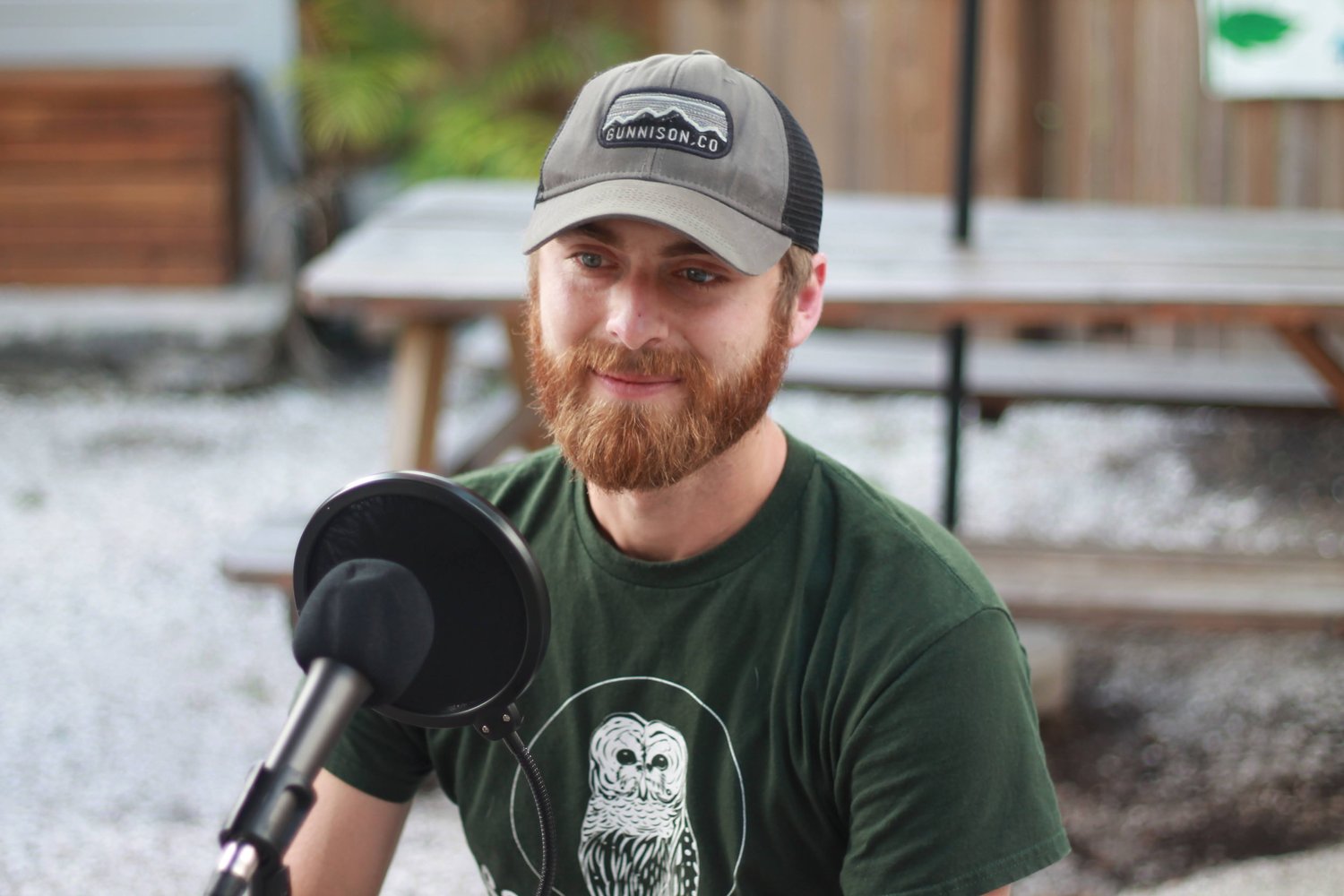
The salamander scientist
He conserves wild spaces, he climbs tall trees, he records flying amphibians. He is: Christian Brown – the Salamander Scientist! We talked about his graduate research involving dropping salamanders in a wind tunnel, watching hours of recordings to get his data, and his work outside the lab to save a local forest preserve.





Get this podcast on your phone, Free


Create Your Podcast In Minutes
- Full-featured podcast site
- Unlimited storage and bandwidth
- Comprehensive podcast stats
- Distribute to Apple Podcasts, Spotify, and more
- Make money with your podcast