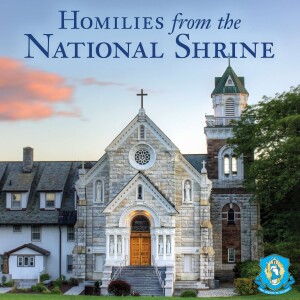
Homilies from the National Shrine
Love God, Love Neighbor: The Heart of Mercy - Fr. Chris Alar | 3/13/26
2026-03-13
The readings for this homily: https://bible.usccb.org/bible/readings/031326.cfmFather Chris Alar, MIC, explains that the Ten Commandments form the moral foundation of Christianity, Judaism, and Islam, rooted in natural law written on every human heart. The first three commandments shed light on how we should be loving God, while the remaining seven explain loving neighbor. Jesus summarized this dual commandment: Love God with all your heart, mind, soul, and strength, and love your neighbor as...
View more
Comments (3)
More Episodes
All Episodes>>
Get this podcast on your phone, Free


Create Your Podcast In Minutes
- Full-featured podcast site
- Unlimited storage and bandwidth
- Comprehensive podcast stats
- Distribute to Apple Podcasts, Spotify, and more
- Make money with your podcast
It is Free