Trees A Crowd
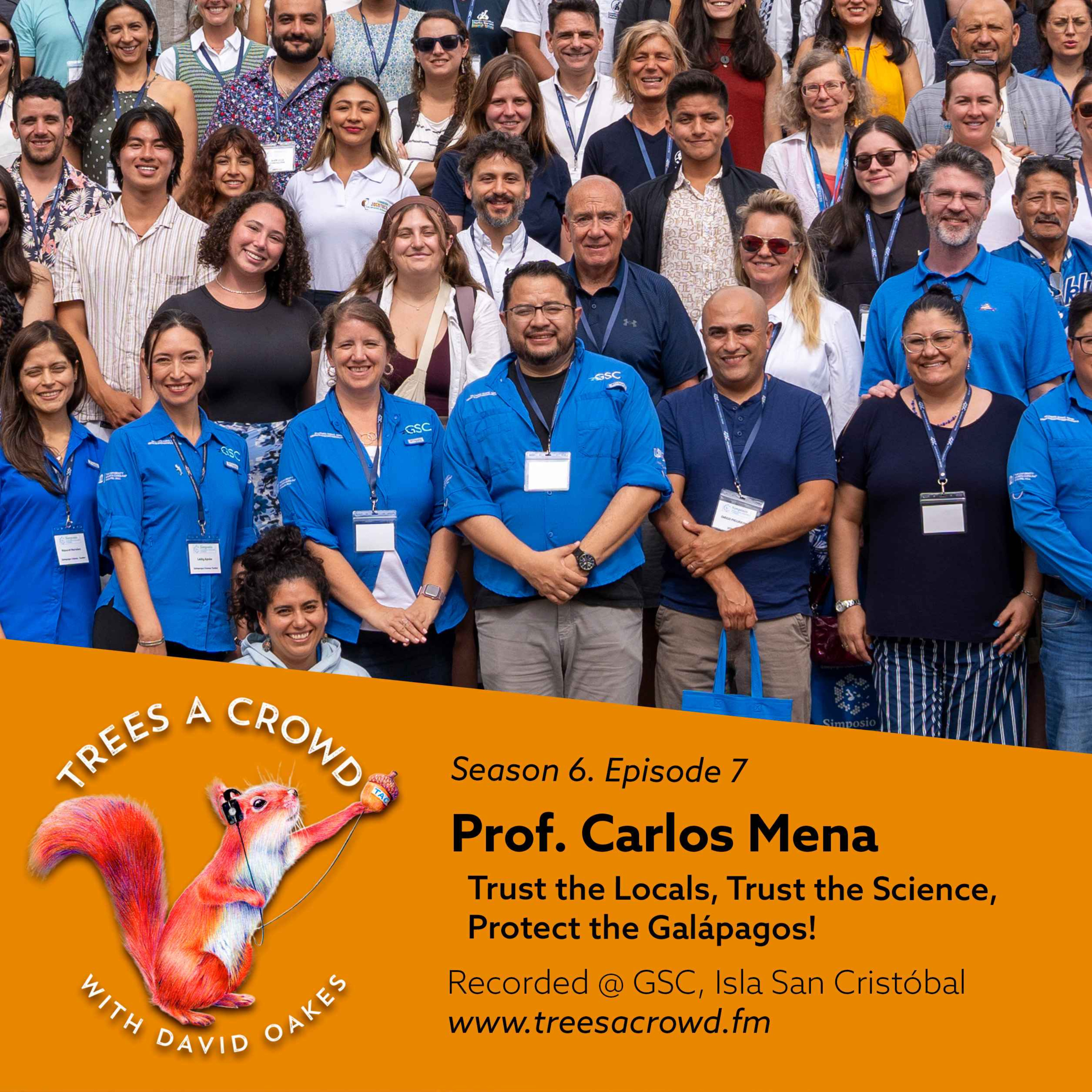
Prof. Carlos Mena: Trust the Locals, Trust the Science, Protect the Galápagos
2026-02-24
This episode finds David in conversation with the Galápagos-born geographer, Director of Universidad San Francisco de Quito’s Galápagos campus and Co-Director of the Galápagos Science Centre, Professor Carlos F. Mena (recorded with a chorus of barking sea lions providing an unmistakably local backdrop!)From a NASA fellowship and early work modelling human behaviour in the Amazon, Carlos explains how his research led to a simple, uncomfortable truth: conservation succeeds or fails at the level of f...
View more
Comments (3)
More Episodes
All Episodes>>

Get this podcast on your phone, Free


Create Your Podcast In Minutes
- Full-featured podcast site
- Unlimited storage and bandwidth
- Comprehensive podcast stats
- Distribute to Apple Podcasts, Spotify, and more
- Make money with your podcast
It is Free