“That’s how I would picture fascists: this never-satisfied, dissonant climb to nothing… to ruin.” — David Baerwald Earlier this month, the historian James M. Scott came on the show to talk about those three deadly days in August 1945 when the Americans dropped two nuclear bombs on Japan. Today we return to that war in the skies above Japan. Only with a fictional twist. Behind this fiction, however, is the kind of family saga that few novelists have either the nerve or im...
“That’s how I would picture fascists: this never-satisfied, dissonant climb to nothing… to ruin.” — David Baerwald
Earlier this month, the historian James M. Scott came on the show to talk about those three deadly days in August 1945 when the Americans dropped two nuclear bombs on Japan. Today we return to that war in the skies above Japan. Only with a fictional twist.
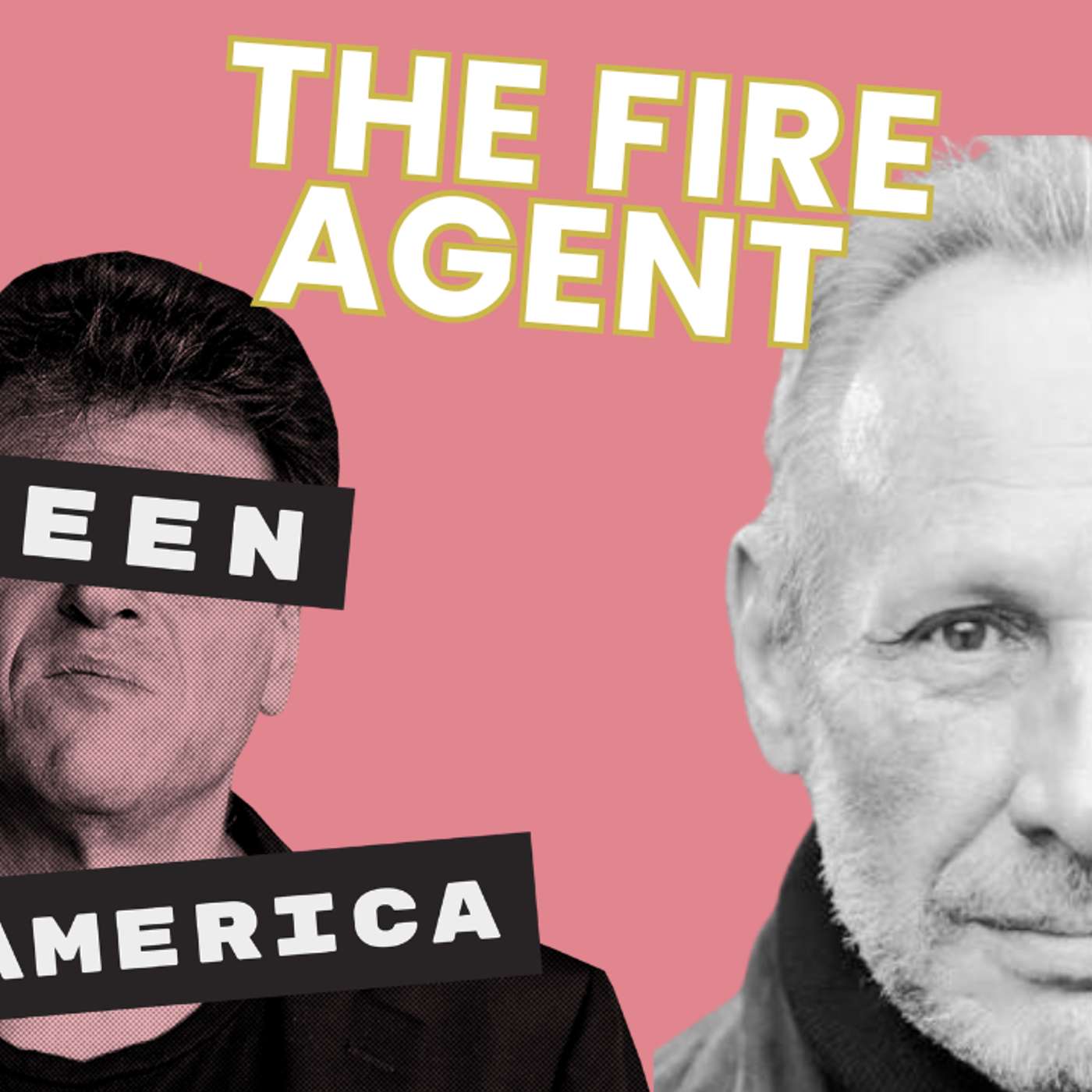
Behind this fiction, however, is the kind of family saga that few novelists have either the nerve or imagination to invent. It concerns three generations of the Baerwalds. In the Thirties, a German Jewish organic chemist called Ernst Baerwald worked for (of all people) I.G. Farben, the company that manufactured the gas used at Auschwitz. A sophisticated Japanophile, Baerwald was Farben’s man in Tokyo, where he hobnobbed with a member of the royal family. American intelligence turned Ernst Baerwald into a spy, using his intimate knowledge of Japan in their firebombing of Tokyo. In exchange, Baerwald fled to the United States with his wife and son Hans, who became a leading authority on 20th century Japanese politics. Hans’ son, David Baerwald, meanwhile, became a platinum-selling musician who has worked with Joni Mitchell, Bob Dylan, Rickie Lee Jones, Sheryl Crow, and Bruce Springsteen.
Growing up in California, David knew little about Ernst. But seven years ago, while clearing out the family home after the Los Angeles fires, he discovered his grandfather’s diaries, photographs, and letters. He found a 1943 speech to the American Intelligence School proving that Ernst, a German Jew who loved Japan, knew the details of the Tokyo firebombing in which 140,000 people died, two years before it happened.
“I have no qualifications as a historian,” David Baerwald confesses. So what followed was The Fire Agent, a 624-page novel loosely imagined around his grandfather’s enigmatic life. But what David brought to this epic was a lyricist’s skill in the kind of musical composition that enabled him to keep characters in play like sections of an orchestra. No wonder then that The Fire Agent is one of the most acclaimed literary debuts of the year. And no wonder that, in our age of looming fascism, The Fire Agent reads as more than just history.
Five Takeaways
• Papers Found in a Fire. The novel began, appropriately, in flames: during a Los Angeles fire at an old family home, Baerwald discovered his grandfather’s papers — among them a 1943 speech delivered at the American Intelligence School in San Francisco, proving that Ernst Baerwald was deeply involved in, or at least privy to, the planning of the Tokyo firebombing two years before the bombs fell in March 1945. The shock was moral as much as archival: everything David knew of his grandfather was how much he loved Japan and hated what happened to it. The contradiction became an obsession, the obsession became an investigation — of one family, and of the joining of industry and fascism in three countries — and the investigation became a novel, because “I have no qualifications as a historian” and a novel allows some jokes to carry the tragedy’s weight.
• The Man Who Knew Where the Gas Was. Ernst Baerwald, the family’s “dye seller,” was nothing so modest: dyestuffs being slang for organic chemistry, he was Asia director of the chemical cartel that supplied IG Farben — the conglomerate that built a work camp at Auschwitz — a violinist mentor to Prince Takamatsu, and a German Jew too valuable to fire until far too late. He helped build Tokyo’s natural gas distribution system after the Kanto earthquake, which meant he knew every depot, fuel store, and pumping station in the city he loved — knowledge that made this dual enemy alien mysteriously trusted by American intelligence. His OSS box is nearly empty; the OSS Society’s verdict was “he was a commie.” Behind him stands the Philanthropin — the Frankfurt school of the Jewish Enlightenment his father Hermann ran — which raised Ernst antifascist before fascism existed: “before he was a German, before he was an American, before he was a lover of Japan, he was a hater of tyranny.”
• “So We Firebombed the Civilians.” The moral reckoning at the book’s heart: 140,000 killed in Tokyo, sixty-five more cities burned — while the industrial strip from Tokyo to Yokohama was deliberately spared, because America wanted it intact to rebuild the Japanese economy after the war. Baerwald calls the firebombing “an atrocity of unspeakable terms” and, following Gar Alperovitz, questions the necessity of the atomic bombs — a message to the Soviets more than a strategy against Japan. His father, scheduled for the invasion that never came, felt lifelong relief at Hiroshima — one of many things father and son never discussed. “Why do fathers and sons have problems? A lot of reasons.” The writing became a posthumous reconciliation: “I understand more of my father than I ever did when he was alive. I’ve forgiven him a lot.” The next book is about him — the UCLA Japan scholar who lost his security clearance to McCarthyism for being insufficiently anti-communist about China.
• From Boomtown to The Fire Agent. What a songwriter brings to a 624-page epic: reliability — a working lyricist learns he can “write a page on demand” — and orchestration, since composing instrumental music means keeping track of characters the way you track an orchestra, knowing what each instrument cannot play. Baerwald’s formation was the émigré Los Angeles of a breakfast joint on the Pacific Coast Highway where his surf crew gathered mornings — the same tables once shared by Duke Kahanamoku, Bertolt Brecht, and Stravinsky, in the Santa Monica neighborhood of Thomas Mann, on the street where James Dean later lived. Brecht was always his favorite lyricist, a secret he kept: in Los Angeles, admit you want to write songs like Brecht and “they lock you up in a padded room.” The German Jewish musical tradition that fled to his hometown now flows, a generation on, back into prose.
• The Music of Fascism. The novel’s present-tense purpose: fascist movements “have a very limited vocabulary,” and sometimes it’s easier to hear how stupid it is from the mouths of foreigners. The mechanisms — how such movements are funded, how they function, what they do with total power — were identical in Germany, Japan, and Italy, and the contemporary echoes are “impossible to avoid. They’re identical.” All three countries ended as rubble. In Japan, where prime minister Takaichi stands in the lineage of Kishi Nobusuke and Nanking denial persists, the conservatives will object; Baerwald hopes to spark debates. And asked what neo-fascism sounds like, he composed it: Kundera’s kitsch — the child in the field, the tear on the cheek, “sanitized absurdities because the truth is so bloody awful” — rendered as a music-box melody gradually tortured by Ligeti dissonance, resolving into the Shepard tone: an audio illusion of endless ascent that never arrives. “That’s how I would picture fascists: this never-satisfied, dissonant climb to nothing… to ruin.”
About the Guest
David Baerwald is an award-winning singer-songwriter, composer, and recording artist, best known fo...