Episode OverviewMike Schultz joins The Butcher Shop to deliver a comprehensive deep dive into the Swingin' D, one of predator fly fishing's most effective swim patterns for targeting smallmouth bass in Michigan rivers. This detailed conversation traces the pattern's evolution from its early 2000s origins through modern 2.0 variations, exploring the critical role of Larry Dahlberg's diver head design in creating the fly's signature side-to-side action. Mike shares the problem he was solving—creating a fly that w...
Episode Overview
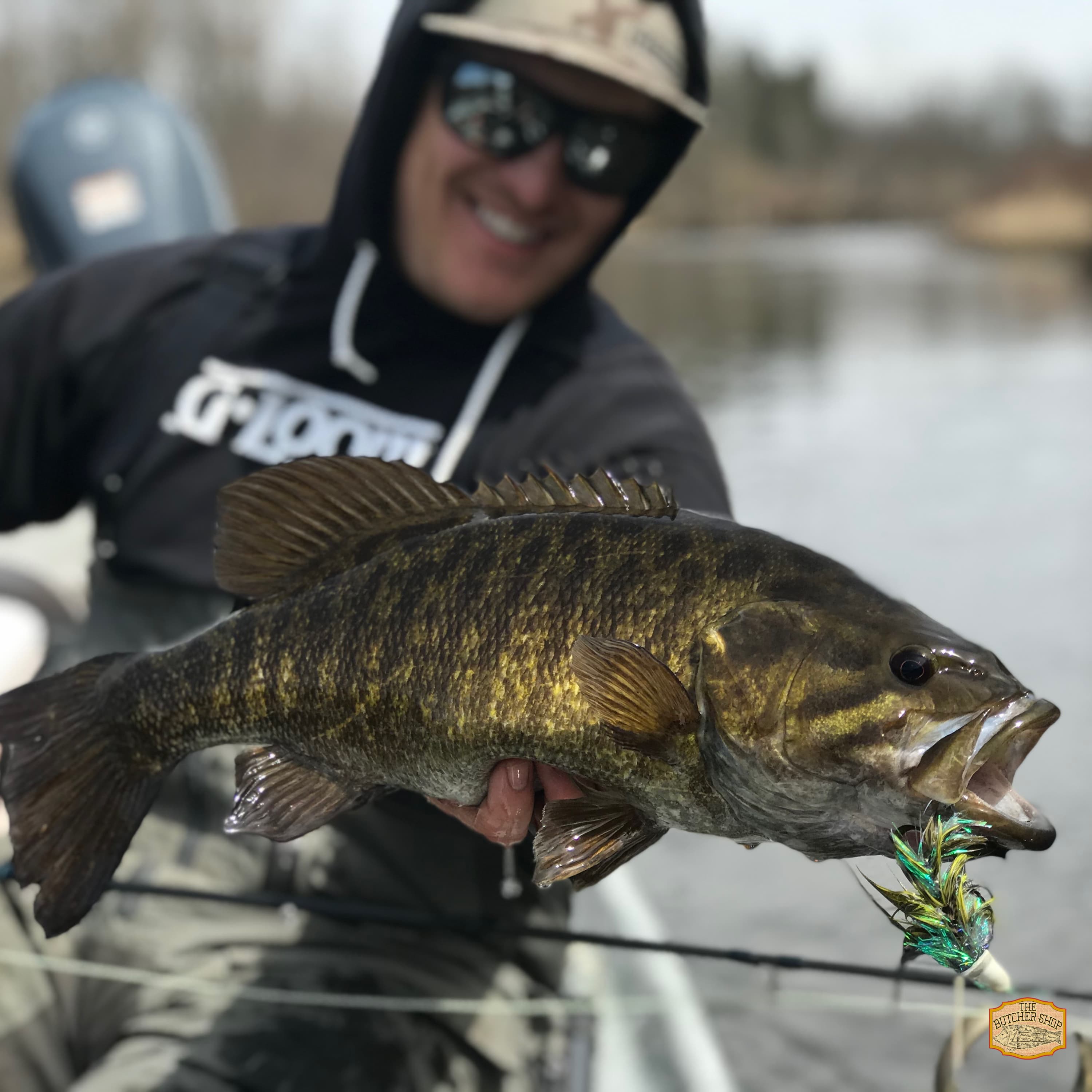
Mike Schultz joins The Butcher Shop to deliver a comprehensive deep dive into the Swingin' D, one of predator fly fishing's most effective swim patterns for targeting smallmouth bass in Michigan rivers. This detailed conversation traces the pattern's evolution from its early 2000s origins through modern 2.0 variations, exploring the critical role of Larry Dahlberg's diver head design in creating the fly's signature side-to-side action. Mike shares the problem he was solving—creating a fly that would hang and move horizontally rather than just vertically like traditional leech and crayfish patterns. He walks through material selection spanning over 15 years of refinement, from the original beads-and-wire construction to today's shank-based articulated designs. The discussion covers tactical presentation details including optimal water temperatures (45-50°F+), rod and intermediate line selection, retrieve cadences and the importance of fishing at proper angles to achieve maximum action. Mike also provides updates on Schultz Outfitters' new e-commerce platform and upcoming events including the fourth annual Bobbin the Hood.
Key Takeaways
- How to achieve unpredictable horizontal swim action by properly selecting and seating Rainy's diver heads, which create side-to-side darting movement that mimics wounded baitfish when fished at 45-degree angles on intermediate lines.
- Why the Swingin' D fills a critical gap in predator fly boxes by suspending in the strike zone and allowing precise depth control through strategic weighting with lead wraps or tungsten scud bodies balanced against the buoyant foam head.
- When to fish the Swingin' D most effectively—peak performance occurs in 45-50°F+ water during late March through May when smallmouth are aggressive and feeding in shallow 2-4 foot zones.
- How to construct durable 2.0 versions using The Chocklett Factory shanks, Senyo micro shank connections, Ahrex XO 774 rear hooks and Gamakatsu 2/0 worm hooks up front to prevent hook failures and maximize hookups.
- Why proper head selection and orientation matters—wider heads with substantial collars produce aggressive side-to-side action for cold water while narrower heads swim tighter for warmer conditions.
Techniques & Gear Covered
Mike emphasizes the Swingin' D's effectiveness stems from proper presentation on intermediate lines using 7-8 weight rods like the G. Loomis IMX Pro V2 or his signature NRX+ Swim Fly. The fly excels when fished at 45-degree angles from a moving boat, using erratic strip-and-pause retrieves that allow the Dahlberg diver head to create horizontal darting action. Keeling techniques using .020-.030 lead wire or Hareline tungsten scud bodies balance the buoyant foam head to achieve desired depth penetration. Mike details construction using articulated shanks (The Chocklett Factory, Senyo micro shanks), Ahrex XO 774 universal curve rear hooks and Gamakatsu 2/0 worm hooks up front, incorporating materials like Senyo's Predator Wrap, Whiting hen saddles, mallard flank and Blane Chocklett's rattle boxes. Leaders run 4-7 feet terminating in 15-16lb fluorocarbon tied with loop knots to the fly with no swivels. The pattern's versatility allows customization through flash colors, head widths and weight placement to match conditions ranging from high spring flows to lower summer levels.
Locations & Species
The Swingin' D was developed specifically for Michigan's small to medium-sized rivers where smallmouth bass are the primary target during the critical late March through May peak season. Mike's guiding focuses on shallow water zones of 2-4 feet depth where the fly's horizontal swimming action excels at triggering aggressive strikes. The pattern proves most effective when water temperatures climb from 45°F into the optimal 50-60°F+ range and bass feed actively in current seams, log jams and structure. Pike frequently intercept the fly, necessitating heavy 15-16lb fluorocarbon tippet to prevent bite-offs. While designed for Michigan's specific smallmouth fisheries, the swim fly principles and Dahlberg head mechanics translate to other predator fishing scenarios where anglers need flies that suspend and dart horizontally in the upper water column.
FAQ / Key Questions AnsweredHow does the Swingin' D differ from traditional smallmouth patterns?
The Swingin' D fills the gap between vertically jigging flies like leeches and crayfish by incorporating Larry Dahlberg's diver head design, which creates horizontal side-to-side darting action when fished on intermediate lines at proper angles. The foam head provides buoyancy that allows the fly to suspend and hang in the strike zone, while strategic weighting controls depth. This mimics wounded baitfish behavior that triggers aggressive strikes, particularly during the peak spring season when smallmouth are actively feeding in shallow water.
What materials and construction techniques make the modern 2.0 version more durable?
The 2.0 version uses articulated Chocklett Factory and Senyo micro shanks, eliminating the wire-kinking problems of original beads-and-wire construction. Rear hooks switched from the B10S (which bends out easily) to the Ahrex XO 774 universal curve in sizes 2-4, while the front maintains the reliable Gamakatsu 2/0 worm hook. Materials include Senyo's Predator Wrap or translucy brushes, Whiting hen saddles, mallard flank and Blane Chocklett's new rattle boxes which seat more securely than traditional glass rattles. Liberal use of Wapsi brushable super glue throughout construction creates indestructible flies that survive multiple fish and wood contacts.
When is the optimal time and water temperature to fish the Swingin' D?
While the Swingin' D can catch fish as cold as 40-45°F, peak effectiveness begins when water temperatures reach 50°F and above, typically during the third to fourth week of April in Michigan. The prime window runs from late March through May into early June—Michigan's peak smallmouth season—when water levels are still elevated but warming and bass are aggressive. In February's coldest water, traditional leeches and peanuts outperform swim patterns, but as temperatures climb into the 45-50°F range, the Swingin' D's horizontal action becomes increasingly deadly.
How should anglers weight and balance the Swingin' D for different conditions?
Balancing the buoyant foam head with proper weight achieves desired depth and swim action. For immediate water penetration, wrap .020-.030 lead wire (10 wraps of .025 is a good starting point) on the front Gamakatsu 2/0 hook bend, then coat with flexible resin like RaidZap or Solarez to protect it and allow on-stream adjustments by breaking away sections. For heavier applications in deeper or faster water, Hareline's tungsten scud and shrimp bodies in small or medium sizes provide concentrated weight while maintaining the fly's suspended character. The goal is creating a fly that dives quickly on the strip but hangs and suspends on the pause, maintaining position in the 2-4 foot strike zone where Michigan smallmouth feed most aggressively.
What rod, line and leader setup works best for presenting the Swingin' D?
Mike recommends 7-8 weight rods designed specifically for streamers, particularly the G. Loomis IMX Pro V2 (his most popular client rod at $595) or his signature NRX+ Swim Fly, both 8'10" in length with tips engineered to animate swim flies effectively rather than throw floating lines like traditional saltwater rods. Pair these with intermediate sinking lines—Airflo Sniper Four Season fast intermediate or SA Titan Full intermediate. Hand-tied leaders run 4-7 feet (shorter for less experienced anglers, longer for advanced casters) terminating in 15-16lb fluorocarbon, with Mike favoring Hatch's pike-resistant fluorocarbon tied to the fly with a loop knot. No swivels are necessary if the head is seated properly and straight, which eliminates line twist issues.
Sponsors
Thanks to TroutRoutes and onX Fish Midwest for sponsoring this episode. Use artfly20 to get 20% off of your TroutRoutes Pro membership.
Related Content
S1, Ep 97 - All Things Smallmouth with Mike Schultz
S7, Ep 33 - Nut Jobs and Chimichangas: A PA Smallmouth Update with Brendan Ruch
S7, Ep 1 - Winter Fly Tying and Pre-Spawn Tips with Matt Reilly
S6, Ep 97 - Fly Fishing Wisdom and Industry Pet Peeves with Greg Senyo
All Things Social Media Follow Schultz Outfitters on Facebook, Instagram and YouTube.
Follow us on Facebook, Instagram, Twitter and YouTube.
Support the Show Shop on Amazon
Become a Patreon Patron
Subscribe to the Podcast Subscribe to the podcast in the podcatcher of your choice.
Advertise on the Podcast Is our community a good fit for your brand? Advertise with us.
In the Industry and Need Help Getting Unstuck? Check out our consulting options!
Helpful Episode Chapters00:00 Introduction
04:23 The Swingin' D Origins
11:52 Enhancements and Innovations
17:28 Evolution of the Swingin' D
30:16 Fly Presentation Techniques
49:02 Upcoming Events and Promotions