Chapter 1 What's The Other Wes Moore
"The Other Wes Moore" is a non-fiction book written by Wes Moore, first published in 2010. The book explores the lives of two men with the same name: Wes Moore. Both grew up in similar neighborhoods in Baltimore, Maryland, during the same time period. However, their lives took dramatically different paths. The author Wes Moore became a Rhodes Scholar, decorated combat veteran, White House Fellow, and business leader, while the "other" Wes Moore ended up serving a life...
Chapter 1 What's The Other Wes Moore
"The Other Wes Moore" is a non-fiction book written by Wes Moore, first published in 2010. The book explores the lives of two men with the same name: Wes Moore. Both grew up in similar neighborhoods in Baltimore, Maryland, during the same time period. However, their lives took dramatically different paths. The author Wes Moore became a Rhodes Scholar, decorated combat veteran, White House Fellow, and business leader, while the "other" Wes Moore ended up serving a life sentence in prison for his involvement in the killing of a police officer during an armed robbery.
The theme of the book revolves around the impact of education, family, and societal expectations on individual outcomes. It also delves into issues of race, economic disparity, and the challenges faced by those living in impoverished urban areas.
Wes Moore, the author, was motivated to write the book after learning about the other Wes Moore during his stint as a Rhodes Scholar. Initially struck by the surface-level similarities and the stark differences in their eventual destinies, he began a correspondence with the incarcerated Wes Moore. This interaction forms the basis of the narrative.
The book probes deeply into questions about fate, choice, and the factors that dictate the course of our lives. It also serves as a call to action to understand and act on the inequalities prevalent in society. By juxtaposing the two lives, Wes Moore aims to highlight how small decisions and the support systems around individuals can shape their futures dramatically.
Chapter 2 Is The Other Wes Moore Recommended for Reading?
"The Other Wes Moore" by Wes Moore is widely considered a compelling and thought-provoking book. It explores two lives sharing the same name but leading drastically different paths. Wes Moore, the author, becomes a Rhodes Scholar, a decorated veteran, and a White House fellow. In contrast, the other Wes Moore ends up convicted of murder and serving a life sentence.
The book’s strength lies in its profound exploration of the thin line between success and failure in our lives and how community, education, expectations, and even seemingly small choices can influence one's fate dramatically. Here are some aspects that make "The Other Wes Moore" a particularly good read:
- Dual Narrative Structure: The book’s structure is innovative — Moore tells both his biography and that of the other Wes Moore in parallel. This allows readers to constantly compare and contrast the choices and influences that directed each Wes along his path.
- Sociological Insight: Moore uses his and the other Wes's life stories as a springboard to discuss larger sociological theories and insights about the systemic issues affecting individuals in similar socio-economic circumstances. The narrative doubles as a broader commentary on race, education, and economic inequality in America.
- Humanization of Statistics: By putting a human face on issues like poverty, crime, and the justice system, Moore provides a poignant exploration of topics that are often discussed in purely statistical terms. This personal approach engenders empathy and a deeper understanding of the societal issues.
- Reflection and Self-Examination: The book prompts readers to reflect on their circumstances and choices. Wes Moore emphasizes that the different outcomes of the two lives are a mix of personal decisions and societal influences, offering a complex picture that resists simplistic explanations of success and failure.
- Motivational Elements: Despite revealing harsh realities, the book is ultimately motivational. It encourages readers to consider how they can contribute positively to their communities and help alter the courses of others' lives through mentorship, advocacy, or by fostering changes in public policy.
- Educational Tool: In educational settings, this book is particularly useful for discussing topics like criminal justice, personal responsibility, and social environment. It facilitates discussions on how identity is formed and the role of individual agency.
"The Other Wes Moore" appeals not only because of its narrative but also because it serves as a call to action, urging a reevaluation of our societal structures and personal responsibilities. Each reader is led to ask themselves: "What separates me from someone who goes down a different path?" These insights make the book not just a narrative of two men but a lens through which to view our society and ourselves.
Chapter 3 The Other Wes Moore Summary
"The Other Wes Moore" is a non-fiction book by Wes Moore that explores the lives of two individuals with the same name - Wes Moore - who both grew up in similar, challenging environments in Baltimore but ended up with vastly different fates. One Wes Moore, the author, became a Rhodes Scholar, veteran, and successful business leader. The other Wes Moore ended up convicted of murder and sentenced to life in prison.
The core idea of the book revolves around the impact of personal choices and societal influences on individuals' life trajectories. Through alternate narratives of their lives, the book delves into themes such as the importance of education, family influence, societal expectations, and the consequences of decisions. It addresses complex social issues such as systemic racism, poverty, and the failures of the criminal justice system.
The book provokes a discussion about how small moments and different decisions can profoundly change the course of a person’s life. It also highlights the broader social factors that play crucial roles, such as access to education and community support. The author prompts readers to consider the delicate interplay between individual responsibility and societal conditions in shaping one’s destiny.
Chapter 4 Meet the Writer of The Other Wes Moore
"The Other Wes Moore" is authored by Wes Moore, an accomplished individual with diverse experiences ranging from being a combat veteran to a social entrepreneur. Born in 1978, Moore graduated from Johns Hopkins University with a degree in International Relations and later earned a Master's degree as a Rhodes Scholar from Oxford University.
Before his academic successes, Wes Moore overcame challenges posed by his early environment in Baltimore, where he was exposed to crime and poverty. His determination and the guidance from his family and mentors helped him escape the cyclical disadvantages often prevalent in his community. Moore’s personal journey from a troubled youth to a respected public figure is a foundational element in his work and writings, allowing him to speak authentically on issues of social justice and redemption.
Professionally, Wes Moore has a broad and impressive spectrum of experiences. He served as a paratrooper and a Captain in the United States Army, participating in combat operations in Afghanistan. This military background provided him with leadership skills and a profound appreciation for the complexities of global issues and the impacts of social policies. After his military service, Moore engaged in various capacities focusing on supporting underprivileged youth, including working on Wall Street and with the White House Fellowship, where he served as a special assistant to Secretary of State Condoleezza Rice.
In his literary work, "The Other Wes Moore," he explores the fine line between success and failure in our communities and how much community support and personal decisions can influence lives. The book delves into the lives of two individuals named Wes Moore, both from Baltimore but whose lives took drastically different paths—one becoming a Rhodes Scholar, decorated veteran, and a White House Fellow, and the other serving a life sentence for felony murder. This parallel biography is used to discuss larger questions about the role of personal responsibility versus societal influences and the impact of education, family, and expectations on shaping one’s future.
Mooney's professional and personal insights make him particularly well-suited to discuss issues related to social justice, youth development, education reform, and leadership. His experiences have given him a unique perspective on the challenges that face marginalized communities, and through his book and public engagements, he seeks to inspire action and change. Wes Moore emphasizes the importance of individual initiative and the powerful role of supportive communities in fostering successful and resilient individuals.
Chapter 5 Various Alternate Resources
"The Other Wes Moore" by Wes Moore is a compelling non-fiction narrative that explores the lives of two individuals with the same name who grew up in similar circumstances in Baltimore but ended up on very different life paths. One Wes Moore became a Rhodes Scholar, combat veteran, White House Fellow, and successful author, while the other Wes Moore ended up serving a life sentence in prison.
Here are ten resources spanning various major information media platforms to help you explore the themes, context, and impact of this book:
- Book Reviews (Print Media & Literary Websites)
- The New York Times: A comprehensive review can provide insights into how the book has been received by critics and the wider public.
- Goodreads: Features reader reviews and ratings, which can give you a sense of how different audiences perceive the book.
- Author Interviews (Podcasts, Radio)
- NPR (National Public Radio): Interviews with Wes Moore discussing his motivations for writing the book and his reflections on issues like systemic racism and education.
- The Moth Podcast: Wes Moore has shared anecdotes from his life and book in this storytelling format, giving a more personal touch to his experiences.
- Academic Articles (Online Academic Journals)
- Google Scholar: Search for peer-reviewed articles that analyze the social, economic, and psychological themes discussed in the book.
- Television Appearances (News and Talk Shows)
- PBS NewsHour: Wes Moore sometimes appears to talk about societal issues, often touching upon themes relevant to his book.
- Social Media (Influencer and Reader Comments)
- Instagram and Twitter: Wes Moore (@iamwesmoore) often discusses themes related to his book, interacts with readers, and shares relevant content about social issues.
- Documentaries and Video Interviews (Streaming Platforms)
- YouTube: Search for speeches, talks, and interviews where Wes Moore discusses the key themes of his book. This could include university talks, TEDx talks, and other public speaking engagements.
- Educational Curricula and Study Guides (Educational Websites)
- Teacher’s Guide by SparkNotes or Shmoop: These platforms offer insights, summaries, study questions, and analytical content that can help in educational settings.
- Public Library Resources
- Local Library Databases: Many libraries offer access to interviews, book discussion recordings, and sometimes interactive sessions with authors. Check library websites for past or upcoming events related to Wes Moore.
- Book Clubs and Discussion Groups (Online Communities)
- Reddit: Subreddits like r/books or r/nonfiction might have discussions or past AMAs (Ask Me Anything) with authors, including Wes Moore.
- Sales Platforms (Online Retailers)
- Amazon: The customer reviews section can provide diverse opinions and interpretations of the book. Additionally, the “Customers who bought this item also bought” section may lead to resources with similar themes.
These resources will provide a multifaceted view of "The Other Wes Moore" through various interpretations, discussions, and analyses, helping deepen your understanding of the book and its broader social context.
Chapter 6 Quotes of The Other Wes Moore
The Other Wes Moore quotes as follows:
"The Other Wes Moore" by Wes Moore is a compelling nonfiction book that explores the lives of two men with the same name, who grew up under similar circumstances but took very different paths in life. Here are ten quotes from the book that capture its essence and insights:
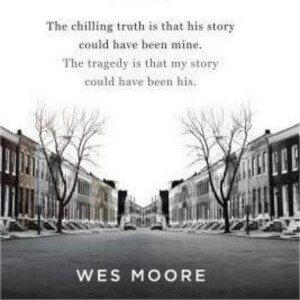
- "The chilling truth is that his story could have been mine. The tragedy is that my story could have been his."
- “When it is time to die, let us not discover that we have never lived.”
- “We will do what others expect of us. If they expect us to graduate, we will graduate. If they expect us to get a job, we will get a job. If they expect us to go to jail, then that’s where we will end up too. At some point you lose control.”
- "Our destinies can be determined by a single stumble down the wrong path, or a tentative step down the right one."
- “There are consequences for your actions that are way beyond your years."
- “Potential just means you haven’t done it yet.”
- “In each of our lives, we are faced with occasions where we need to make hard choices, choices that often can determine the course of our future.”
- "Don't let anyone tell you you're too young to accomplish something. A baby shark is still a f shark.”
- "It’s easy to forget and easy to say that what happens in other people’s lives, what happens in other neighborhoods, not too far from your own, is not your problem. But the truth is that everything that happens impacts us."
- "You can't change where you come from, but you can change where you are going."
These quotes highlight themes of responsibility, potential, fate, and social circumstances that weave throughout Wes Moore's exploration of identity, choice, and chance in his and the other Wes Moore's lives.
Chapter 7 Books with a Similar Theme as The Other Wes Moore
After delving into "The Other Wes Moore" by Wes Moore, a gripping exploration of two lives with the same name but vastly different outcomes, you may find yourself eager to explore more narratives that examine themes of life choices, socio-economic factors, and the thin line between success and failure. Here are five recommended books that resonate with these themes and will keep you pondering long after you've turned the last page:
- "Between the World and Me" by Ta-Nehisi Coates
A profound work framed as a letter to the author's teenage son, this book offers a personal exploration of the American Black experience. Coates discusses systemic racism and shares narrative threads that question the embodiment of an ideal in the face of harsh realities. His poignant prose and insightful perspectives make this a complementary read to the introspections found in "The Other Wes Moore."
- "Outliers: The Story of Success" by Malcolm Gladwell
This book is a fascinating study of what makes high-achievers different. Gladwell argues that the context of our lives is as significant as personal ambition in shaping our success. His exploration of the impact of culture, timing, upbringing, and even quirks of fate resonate with the exploration of how small differences in Wes Moore’s circumstances led to their diverging paths.
- "Evicted: Poverty and Profit in the American City" by Matthew Desmond
This Pulitzer Prize-winning work dives deep into the issue of housing instability and its profound effects on the poor in America. By following eight families in Milwaukee, Desmond provides immersive reportage that illuminates the impact of eviction on the cycle of poverty in urban America, akin to the systemic challenges posed to the characters in Moore’s story.
- "Hillbilly Elegy: A Memoir of a Family and Culture in Crisis" by J.D. Vance
Vance's memoir offers a personal analysis of the white working-class Americans living in Appalachia. This book juxtaposes personal anecdotes with broader socio-economic insights, illustrating how closely personal outcomes are tied to social and familial dynamics. It makes for a compelling parallel to "The Other Wes Moore" in exploring how individual ambitions are often throttled or fueled by cultural and community ties.
- "Just Mercy: A Story of Justice and Redemption" by Bryan Stevenson
Stevenson’s inspiring fight for justice intertwines personal stories with legal battles, particularly focusing on one wrongful conviction case that highlights systemic racial bias in the American justice system. This narrative complements "The Other Wes Moore" by showing another aspect of how societal structures shape individual destinies, particularly for African American men.
Each of these books offers a unique lens on issues of identity, environment, and destiny, similar to the explorations in "The Other Wes Moore." They encourage reflection on how deeply intertwined our personal choices are with the fabric of our community and society at large. Whether through the lens of sociology, personal memoir, or narrative nonfiction, these books will expand your understanding of the forces that shape lives and legacies.
Book https://www.bookey.app/book/the-other-wes-moore
Quotes https://www.bookey.app/quote-book/the-other-wes-moore
YouTube https://www.youtube.com/watch?v=0R-Y_x1VyLk
Amazom https://www.amazon.com/-/zh/dp/0385528205
Goodreads https://www.goodreads.com/book/show/7099273-the-other-wes-moore?from_search=true&from_srp=true&qid=dZsbEfbr57&rank=1