
Episode List
Beyond jury reform - what else does Leveson recommend?: Jonathan Rogers
Former President of the Queen's Bench Division, Sir Brian Leveson, was appointed by the government to carry out an independent review into the criminal courts. Specifically, the review considered 2 key themes, which are outlined in the Terms of Reference: 1) Reform: how the criminal courts could be reformed to ensure cases are dealt with proportionately, in light of the current pressures on the Crown Court, and 1) Efficiency: how they could operate as efficiently as possible. On 9 July Part 1 of the report was published, dealing with reform measures. Here, Sir Leveson proposed a number of changes to reduce the pressure on the criminal justice system. What attracted the most media attention was the proposal to reduce access to trial by jury. However, there were other very interesting proposals which received less coverage and scrutiny.In this short video Dr Jonathan Rogers explores some of the other changes proposed, and considers their likely effects.Jonathan Rogers is Associate Professor in Criminal Justice at the University of Cambridge, and a Fellow of Fitzwilliam College, Cambridge. He co-founded the Criminal Law Reform Now Network in 2017.For more information about Dr Rogers, you can also refer to his staff profile.Law in Focus is a collection of short videos featuring academics from the University of Cambridge Faculty of Law, addressing legal issues in current affairs and the news. These issues are examples of the many which challenge researchers and students studying undergraduate and postgraduate law at the Faculty.

Does the European Court of Human Rights dictate climate policy?: Stefan Theil
On 9th April 2024 the European Court of Human Rights delivered Grand Chamber rulings in three cases relating to climate change:Carême v. France - https://hudoc.echr.coe.int/eng?i=001-233261Duarte Agostinho and Others v. Portugal and 32 Others - https://hudoc.echr.coe.int/eng?i=001-233174Verein KlimaSeniorinnen Schweiz and Others v. Switzerland - https://hudoc.echr.coe.int/eng?i=001-233206In this video, Dr Stefan Theil discusses the extent to which the ECHR is prepared to dictate how countries might implement their own climate change policies.Stefan Theil is Assistant Professor in Public Law and a Fellow and Director of Studies at Sidney Sussex College. In Stefan's recent book 'Towards the Environmental Minimum' (Cambridge University Press, 2021) he argues for the recognition of a comprehensive framework that addresses the relationship between human rights and environmental harm.For more information about Dr Theil, please refer to his profile at:https://www.law.cam.ac.uk/people/academic/s-theil/6578Law in Focus is a collection of short videos featuring academics from the University of Cambridge Faculty of Law, addressing legal issues in current affairs and the news. These issues are examples of the many which challenge researchers and students studying undergraduate and postgraduate law at the Faculty.
Can the 'Post Office convictions' be quashed by legislation?: Jonathan Rogers
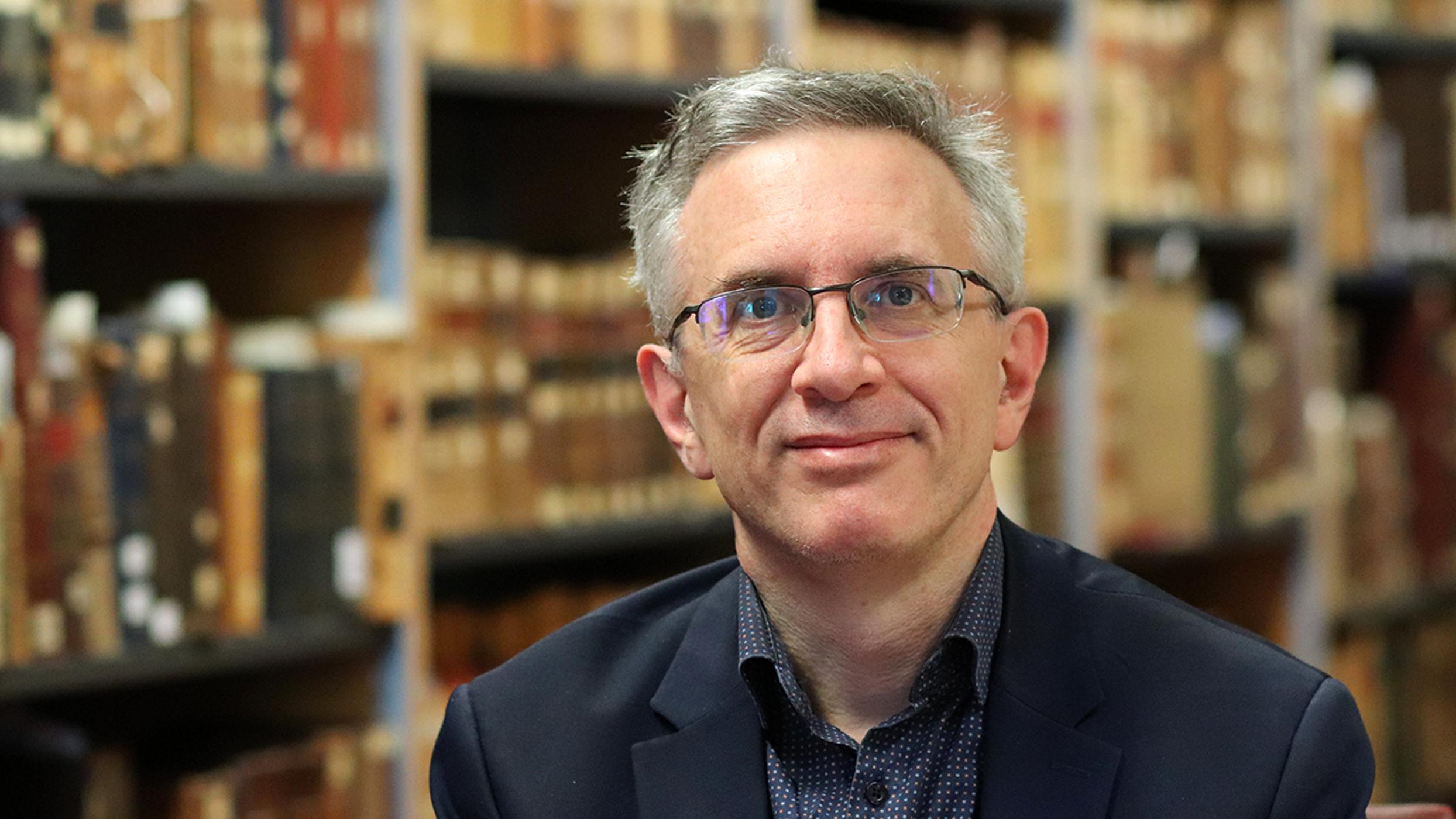
The government has recently announced that it intends to quash by legislation convictions of hundreds of subpostmasters who had been prosecuted by the Post Office for, variously, theft, fraud and false accounting. This follows a number of appeals which have already succeeded where it has been accepted that convictions that are based on generated by the Horizon software are necessarily unsafe. Usually, one would expect other subpostmasters to have to follow that same route, but the government is concerned about the delay in processing so many cases. Nonetheless it is unprecedented to quash convictions by legislative fiat in a situation when the courts would yet be competent to do the same; and notwithstanding the concerns of criminal and constitutional lawyers, a Bill to this effect appears likely to be produced this year and to receive support from all sides of the House of Commons. In this short video Dr Jonathan Rogers explains the background, explores the challenges that will face those who draft the legislation, and comments further on the likely reservations that many will still entertain about this innovation.Jonathan Rogers is Associate Professor in Criminal Justice at the University of Cambridge, and a Fellow of Fitzwilliam College, Cambridge. He co-founded the Criminal Law Reform Now Network (http://www.clrnn.co.uk/) in 2017 and leads an ongoing project by that network into the reform of private prosecutions, and in that capacity he gave evidence to the Justice Select Committee in 2020 on safeguards in the wake of the Post Office scandal. For more information about Dr Rogers, you can also refer to his profile at: https://www.law.cam.ac.uk/people/academic/jw-rogers/78191Law in Focus is a collection of short videos featuring academics from the University of Cambridge Faculty of Law, addressing legal issues in current affairs and the news. These issues are examples of the many which challenge researchers and students studying undergraduate and postgraduate law at the Faculty.This entry provides an audio source for iTunes.

What are the legal and constitutional implications of the Rwanda Bill?: Mark Elliott
The Safety of Rwanda (Asylum and Immigration) Bill seeks to circumvent the UK Supreme Court's recent judgment holding the Government's Rwanda policy, concerning the removal of certain asylum-seekers, to Rwanda. The Bill contemplates placing the UK in breach of its international obligations, including under the European Convention on Human Rights and the Refugee Convention, while forming part of a policy that relies upon Rwanda's adherence to its own international obligations. The Bill is thus at once hypocritical and parochial, given that domestic legislation cannot free the UK of its legal obligations on the international plane.In this short video Professor Mark Elliott explores the legal and constitutional implications of the Bill.Mark Elliott is Professor of Public Law and Chair of the Faculty of Law at the University of Cambridge, and a Fellow of St Catharine's College, Cambridge. From 2015 to 2019, he served as Legal Adviser to the House of Lords Select Committee on the Constitution, providing advice to the Committee on a range of legislative and other matters. Mark co-founded the international biennial Public Law Conference series and co-convened the first two conferences. He is the recipient of a University of Cambridge Pilkington Prize for excellence in teaching and is the author of a widely read blog http://publiclawforeveryone.com/ that is aimed at public law scholars, current and prospective law students, policy-makers, and others who are interested in the subject.For more information about Professor Elliott, you can also refer to his profile at: https://www.law.cam.ac.uk/people/academic/mc-elliott/25Law in Focus is a collection of short videos featuring academics from the University of Cambridge Faculty of Law, addressing legal issues in current affairs and the news. These issues are examples of the many which challenge researchers and students studying undergraduate and postgraduate law at the Faculty.This entry provides an audio source for iTunes.

Why was the Rwanda Agreement unlawful, and will withdrawal from the ECHR resolve this?: Kirsty Hughes
On the 15 November the UK Supreme Court decided that the United Kingdom's policy of sending asylum seekers to Rwanda was unlawful.In this short video Dr Kirsty Hughes explains the Court's reasoning, and considers the Government's response and possible next steps.Kirsty Hughes is an Associate Professor specialising in Human Rights Law. She is joint General Editor of the European Human Rights Law Review, Director of the Centre for Public Law, University of Cambridge, a member of Blackstone Chambers Academic Panel and Deputy Editor of Public Law. She is a co-convenor of the European Human Rights Law Conference.For more information about Dr Hughes, please refer to her profile at https://www.law.cam.ac.uk/people/academic/ke-hughes/2113Law in Focus is a collection of short videos featuring academics from the University of Cambridge Faculty of Law, addressing legal issues in current affairs and the news. These issues are examples of the many which challenge researchers and students studying undergraduate and postgraduate law at the Faculty.This entry provides an audio source for iTunes.

Get this podcast on your phone, Free


Create Your Podcast In Minutes
- Full-featured podcast site
- Unlimited storage and bandwidth
- Comprehensive podcast stats
- Distribute to Apple Podcasts, Spotify, and more
- Make money with your podcast
