AnesthesiaExam Podcast
https://anesthesiaexampodcast.libsyn.com/rssEpisode List
Phantom Limb Pain and SI Joint Dysfunction for the Anesthesia & Pain Boards
🎙️ PainExam Podcast Show Notes Phantom Limb Pain & Sacroiliac Joint Dysfunction — High-Yield Pain Board Review 🔥 Episode Overview In this episode of the PainExam Podcast, David Rosenblum delivers a high-yield review of two must-know topics for the ABA Pain Medicine Board Certification exam: Phantom Limb Pain — mechanisms, risk factors, and advanced treatment strategies Sacroiliac (SI) Joint Dysfunction — diagnosis, provocative testing, and interventional management Whether you're preparing for the ABA, ABPM, ABIPP, or FIPP boards, or looking to sharpen your clinical practice, this episode focuses on testable concepts, real-world applications, and interventional pearls. 👉 Explore full board prep and CME: PainExam.com 🧠 Topic 1: Phantom Limb Pain — Key Points Phantom limb pain is a neuropathic pain syndrome following amputation, driven by both peripheral and central mechanisms. High-Yield Pearls Caused by cortical reorganization + central sensitization Strongly associated with pre-amputation pain Distinct from: Phantom sensation (non-painful) Stump pain (localized) Clinical Features Burning, cramping, or electric pain Perceived in the missing limb May be triggered by stress or environmental factors Treatment Strategies First-line: gabapentinoids, TCAs Advanced: ketamine, neuromodulation Key non-pharmacologic therapy: mirror therapy 🚨 Board Pearl Preemptive analgesia reduces the risk of phantom limb pain 🦴 Topic 2: Sacroiliac Joint Dysfunction — Key Points SI joint dysfunction is a major cause of axial low back pain, accounting for up to 25% of cases. High-Yield Pearls Pain is typically: Unilateral Buttock-dominant Radiates to posterior thigh (rarely below knee) Physical Exam Positive provocative tests: FABER Gaenslen Thigh thrust Compression 👉 3 or more positive tests = high diagnostic accuracy Diagnosis Confirmed with image-guided intra-articular injection Imaging alone is NOT diagnostic Treatment Physical therapy SI joint injections Lateral branch RFA SI joint fusion (refractory cases) 🚨 Board Pearl Diagnostic SI joint injection is the gold standard 🎯 Board Prep Takeaways Always distinguish central vs peripheral mechanisms in neuropathic pain Know diagnostic confirmation strategies (blocks vs imaging) Focus on first-line vs interventional escalation pathways Understand procedure indications for boards 🎓 Upcoming Events & Live Training 🏆 ASPN 2026 Annual Meeting Join Dr. Rosenblum for: Ultrasound-guided peripheral nerve blocks Spine interventions Regenerative medicine techniques (PRP, biologics) Hands-on procedural training 💉 Ultrasound-Guided Regenerative Medicine Course Learn: PRP injection techniques Ultrasound-guided joint and nerve procedures Real-world workflows for integrating regenerative medicine into your practice 👉 Hosted through NRAP Academy 🎤 PainWeek 2026 Lectures Dr. Rosenblum will be presenting on: Precision image-guided pain procedures Ultrasound integration in clinical practice Regenerative medicine in interventional pain Future directions: AI and neuromodulation 🔗 Resources 🌐 Pain Board Review: PainExam.com 🎓 Courses & CME: NRAPPain.org 📺 YouTube: NRAP Academy 🧠 Question Bank + Virtual Fellowship: Available now 📢 Call to Action If you're preparing for the pain boards or want to elevate your clinical skillset: ✅ Subscribe to the PainExam Podcast ✅ Join our Virtual Pain Fellowship ✅ Attend a live ultrasound or regenerative medicine course

What is Red Light Therapy?
PainExam Podcast Show Notes Red Light Therapy (Photobiomodulation) for Pain Evidence, Mechanisms, and Clinical Applications Host: Dr. David Rosenblum Red light therapy, also known as photobiomodulation (PBM) or low-level laser therapy (LLLT), is an emerging non-invasive treatment modality increasingly used in pain medicine, rehabilitation, and regenerative medicine practices. In this episode of the PainExam Podcast, Dr. Rosenblum reviews the mechanisms, clinical evidence, indications, and safety considerations surrounding photobiomodulation therapy for pain. Red and near-infrared wavelengths stimulate mitochondrial activity, increase ATP production, reduce inflammatory mediators, and promote tissue healing. These physiologic effects may translate into analgesic benefits for a variety of musculoskeletal and neuropathic pain conditions. Clinical research suggests potential benefit in temporomandibular disorders, chronic neck pain, and inflammatory oral conditions, though results vary due to differences in dosing parameters and treatment protocols. Despite these limitations, PBM has a favorable safety profile and is increasingly being integrated into multimodal pain management strategies. Key Topics Covered • What is photobiomodulation therapy (PBM) • How red and near-infrared light interact with mitochondria • Mechanisms of analgesia and tissue repair • Evidence from clinical trials in TMD, neck pain, and oral inflammatory pain • The biphasic dose response (Arndt-Schulz law) • Safety profile and contraindications • How PBM may integrate with regenerative pain medicine Mechanism of Action Photobiomodulation works primarily through stimulation of mitochondrial chromophores, particularly cytochrome c oxidase. This leads to: • Increased ATP production • Modulation of inflammatory cytokines • Increased angiogenesis and tissue repair • Reduced oxidative stress These effects may improve pain, inflammation, and healing in certain musculoskeletal conditions. Evidence Discussed in This Episode Temporomandibular Disorders Randomized trial demonstrating improvements in pain and mandibular function with red light therapy. De Carvalho et al., Pain Research and Treatment (2019) https://onlinelibrary.wiley.com/doi/full/10.1155/2019/8578703 Chronic Neck Pain Clinical trial demonstrating improvements in pain scores and pressure pain thresholds after photobiomodulation therapy. Chen et al., Lasers in Medical Science (2022) https://link.springer.com/article/10.1007/s10103-022-03540-0 Oral Pain and Dental Inflammation Randomized study demonstrating reduced pain and improved healing following PBM treatment. Almeida et al., BMC Oral Health (2023) https://link.springer.com/article/10.1186/s12903-023-02784-8 Who May Benefit From Photobiomodulation? Red light therapy may be considered as an adjunct treatment for: • myofascial pain • cervical spine pain • temporomandibular disorder • tendinopathy • peripheral neuropathy • musculoskeletal injury recovery Safety and Contraindications Photobiomodulation has a very favorable safety profile. Reported adverse effects are rare and usually mild: • transient erythema • warmth at treatment site • headache • eye irritation without proper protection Precautions include: • avoiding direct retinal exposure • avoiding treatment over malignancy • avoiding application over the uterus during pregnancy • caution in photosensitive disorders Resources For Patients Seeking Treatment Learn more about integrative and regenerative pain treatments including PRP, ultrasound-guided injections, and advanced pain therapies: AABP Integrative Pain Care & Wellness https://www.AABPpain.com For Pain Physicians and Advanced Practice Providers Training in ultrasound, interventional pain procedures, and pain board preparation: NRAP Academy CME Education https://www.NRAPpain.org
What you need to know about Regenerative Pain Medicine- ASIPP Regenerative Med Talk
Dr. Rosenblum from NRAP Academy presented a webinar on the integration of regenerative medicine into pain practices, highlighting its benefits and applications. He discussed the evolution of treating pain, emphasizing the shift from neural blockade to addressing tissue health. Dave explained the use of PRP and BMAC in treating conditions like knee pain, and shared patient success stories. He addressed common misconceptions about regenerative medicine, including its cost and effectiveness. Dave also mentioned upcoming events and training opportunities in regenerative medicine. Regenerative Medicine Pain Management Events Dr. Rosenblum announced his upcoming involvement in two significant events: a webinar on regenerative medicine for ASIPP and co-directing the ASPN Ultrasound and Regenerative Medicine Pain Workshop in Miami with Dr. Ali Valimoed. He encouraged attendees to register for these events, emphasizing their importance in the field of pain management. He also mentioned a previous lecture he gave on the integration of regenerative medicine into pain practices, though the recording was not successful. Regenerative Medicine in Pain Practices Dr. Rosenblum discussed the integration of regenerative medicine into pain practices, emphasizing its importance in 2026 and beyond. He explained that traditional approaches like steroids and RFA only manage pain without addressing tissue health, using the knee as an example. He suggested combining visco supplements with regenerative techniques like PRP or BMAC to preserve joints in patients seeking alternatives to knee replacement. He noted that while other stem cell products are promising, more research is needed for wider adoption, and he plans to focus on PRP and BMAC for now. Regenerative Medicine Patient Education Dr. Rosenblum discussed the importance of educating patients about regenerative medicine and pain treatment options. He explained that while regenerative treatments cannot fully reverse severe issues like meniscus damage, they can help heal and repair tissues, reduce inflammation, and improve function. He highlighted the growing demand for non-surgical, opiate-sparing solutions and mentioned the role of government and physician-led campaigns in addressing the opiate crisis. PRP's Role in Chronic Pain Management Dr. Rosenblum discussed the growing demand for alternative treatments to opioids and surgeries, highlighting the role of Platelet-Rich Plasma (PRP) in addressing chronic pain by modulating inflammation and stimulating tissue repair. He emphasized the importance of using high-quality PRP preparation methods, such as a double-spin kit, to achieve optimal results, and criticized studies claiming PRP's ineffectiveness, often due to poor preparation techniques. David also noted that effective PRP treatments can improve pain and function better than corticosteroids, and he expressed hope that patients would refer others, leading to business growth. PRP Therapy: A Promising Alternative Dr. Rosenblum discussed the effectiveness of PRP (platelet-rich plasma) therapy compared to steroids and viscosupplements in treating various musculoskeletal conditions. He cited a meta-analysis showing that PRP provided better relief than steroid and viscosupplement treatments for patients with moderate arthritis after one year. David also shared a recent case where he used PRP to treat coccydynia, a condition involving pain in the coccyx, and mentioned its potential use in treating other conditions such as radiculopathy and foraminal stenosis. PRP Injection Treatment Flexibility Dr. Rosenblum discussed a medical procedure involving PRP and lidocaine injections in various areas of the body, including the coccygeal ligaments, caudal space, and transforaminal spaces, to address pain and inflammation. He emphasized the importance of tailoring treatment to individual patients rather than adhering to insurance company guidelines, which can limit the number of injections given in a single session. David highlighted that when patients pay out-of-pocket, practitioners have more flexibility to effectively treat their conditions, potentially avoiding surgery or improving post-surgical outcomes. PRP in Orthopedic Practice Dr. Rosenblum shared his experience treating a patient with PRP for post-operative knee surgery, despite the orthopedic surgeon's skepticism. He discussed how regenerative medicine can enhance a practice by positioning it as innovative and attracting younger patients who prefer non-surgical treatments. David noted that while some orthopedic surgeons may refer patients for PRP, others might be hesitant due to potential decreases in surgical procedures. He also mentioned that primary care doctors may not be aware of the growing evidence supporting PRP's effectiveness and safety. PRP: A Cost-Effective Alternative Dr. Rosenblum discussed regenerative medicine, particularly PRP, highlighting its potential to avoid surgeries and improve patient satisfaction with an estimated 70% success rate. He emphasized the financial benefits for physicians, as it provides a cash stream with no need for prior authorizations or denials. David also addressed patient responsibility in healthcare costs, comparing the cost of regenerative treatments to other lifestyle expenses. He noted that while training is necessary, most interventional pain physicians possess the skills to administer PRP treatments. PRP Treatment Success Stories Dr. Rosenblum shared patient testimonials highlighting successful outcomes from PRP (platelet-rich plasma) treatments for various pain conditions, including shoulder, back, and neck issues. Patients reported significant improvements in pain relief and mobility, with some noting long-lasting effects beyond cortisone shots or surgery. David emphasized the importance of individualized treatment approaches and quality care, encouraging both patients and physicians to reach out for training and consultations. He concluded by inviting listeners to share the content with colleagues and patients, emphasizing the value of PRP treatments when done correctly.
Meralgia Paresethetica for the Anesthesia Boards- NRAPpain.org
Meralgia Paresthetica Education and the Anesthesiology Boards This podcast episode from the NRAP Academy features Dr. David Rosenblum discussing Meralgia Paresthetica, a mononeuropathy affecting the lateral femoral cutaneous nerve. The condition involves entrapment or compression of this purely sensory nerve as it passes under the inguinal ligament near the anterior superior iliac spine, causing burning pain, tingling, and numbness in the anterior lateral thigh. Key clinical points covered include the nerve's L2-3 origin from the lumbar plexus, common causes such as obesity, tight clothing, pregnancy, and diabetes, and the absence of motor weakness or reflex changes. Diagnosis is primarily clinical, though ultrasound can visualize nerve entrapment effectively. Treatment approaches range from conservative management including weight loss, avoiding tight clothing, physical therapy, and neuropathic pain medications (gabapentinoids, duloxetine, tricyclics) to interventional procedures. Dr. Rosenblu strongly advocates for ultrasound-guided nerve blocks over fluoroscopic or blind approaches, citing better visualization and reduced risk of nerve trauma. Advanced treatments mentioned include peripheral neuromodulation and cryoablation for refractory cases. The episode emphasizes that this condition is commonly tested on pain management board examinations (ABA, ABPM, FIPP, osteopathic boards) and can be significantly more painful and disabling than typically appreciated. Upcoming Courses and Training Opportunities: Ultrasound training available at nrappain.org Regenerative medicine training courses Comprehensive Anestheisia and Question Bank for Pain Management board preparation covering ABA, ABPM, FIPP, and osteopathic examinations CME credits available through the platform Clinical consultation services available at Dr. Rosenblum's Brooklyn office for patients seeking treatment. Call 718 436 7246 or go to www.AABPpain.com Meralgia Paresthetica Education and Clinical Guidance Overview: Focused on definition, anatomy, diagnosis, management, and board exam relevance for meralgia paresthetica. Anatomy and Pathophysiology: Nerve: lateral femoral cutaneous nerve (sensory only), typically arising from L2–L3. Course: traverses across the iliacus, passes under or through the inguinal ligament just medial to the ASIS, then enters the thigh. Sensory distribution: anterolateral thigh; anterior cutaneous division extends toward the knee. Etiology and Risk Factors: Common contributors: obesity, tight belts or clothing, pregnancy, prolonged sitting, diabetes, prior pelvic or hip surgery. Entrapment site: under the inguinal ligament near the ASIS (most frequent). Clinical Presentation: Symptoms: burning pain, tingling, numbness, dysesthesia localized to the anterolateral thigh. Provocation/relief: worse with standing or walking; relief with sitting or hip flexion. Neurologic exam: no motor weakness; no reflex changes. Diagnosis: Primarily clinical; Tinel's sign over the inguinal ligament may reproduce symptoms. EMG and nerve conduction studies are typically normal. Ultrasound: superficial nerve, generally easy to visualize, including in obese patients; can identify entrapment. Management Recommendations: First-line conservative care: weight loss; avoidance of tight belts/clothing; physical therapy; NSAIDs for inflammation. Pharmacologic options: gabapentin, pregabalin, duloxetine, tricyclic antidepressants; consider topical analgesic creams (e.g., lidocaine or anti-inflammatory combinations). Interventional approach: Ultrasound-guided nerve block is strongly recommended; the nerve lies lateral to the sartorius; real-time visualization enables precise, safe injection. Avoid fluoroscopic and blind approaches due to risk of further nerve trauma and post-procedure pain. Advanced interventions: Peripheral neuromodulation may provide benefit in select cases. Cryoablation has shown beneficial outcomes for the lateral femoral cutaneous nerve. Surgery is rarely required; options include neurolysis, decompression, or neurectomy as a last resort. Board Exam Preparation Emphasis: Key facts commonly tested: Involved nerve: lateral femoral cutaneous nerve. Nerve roots: L2–L3 (with population variants). Sensory-only nerve; absence of motor deficits. Compression site: under the inguinal ligament near the ASIS. First-line therapy: conservative measures; refractory cases: ultrasound-guided nerve block. Keywords to study: meralgia paresthetica; lateral femoral cutaneous nerve (also called lateral cutaneous nerve of the thigh). Practice Considerations: Severity: can be profoundly painful and disabling; often underappreciated. Referral: clinicians not trained in interventional techniques should refer patients to an interventionalist for diagnosis and treatment. Decisions and Recommendations Ultrasound guidance is the preferred modality for lateral femoral cutaneous nerve interventions, superseding fluoroscopic or blind approaches. Rationale: superior visualization, real-time feedback, and reduced risk of nerve trauma and post-procedural pain. Outreach and Resources NRAP Academy resources: Ultrasound training, regenerative medicine training, CME credits, and a comprehensive pain board question bank (ABA, ABPM, FIPP, osteopathic, and related exams). Clinical availability: Patient consultations for meralgia paresthetica offered in Brooklyn at www.AABPpain.com 718 436 7246 .
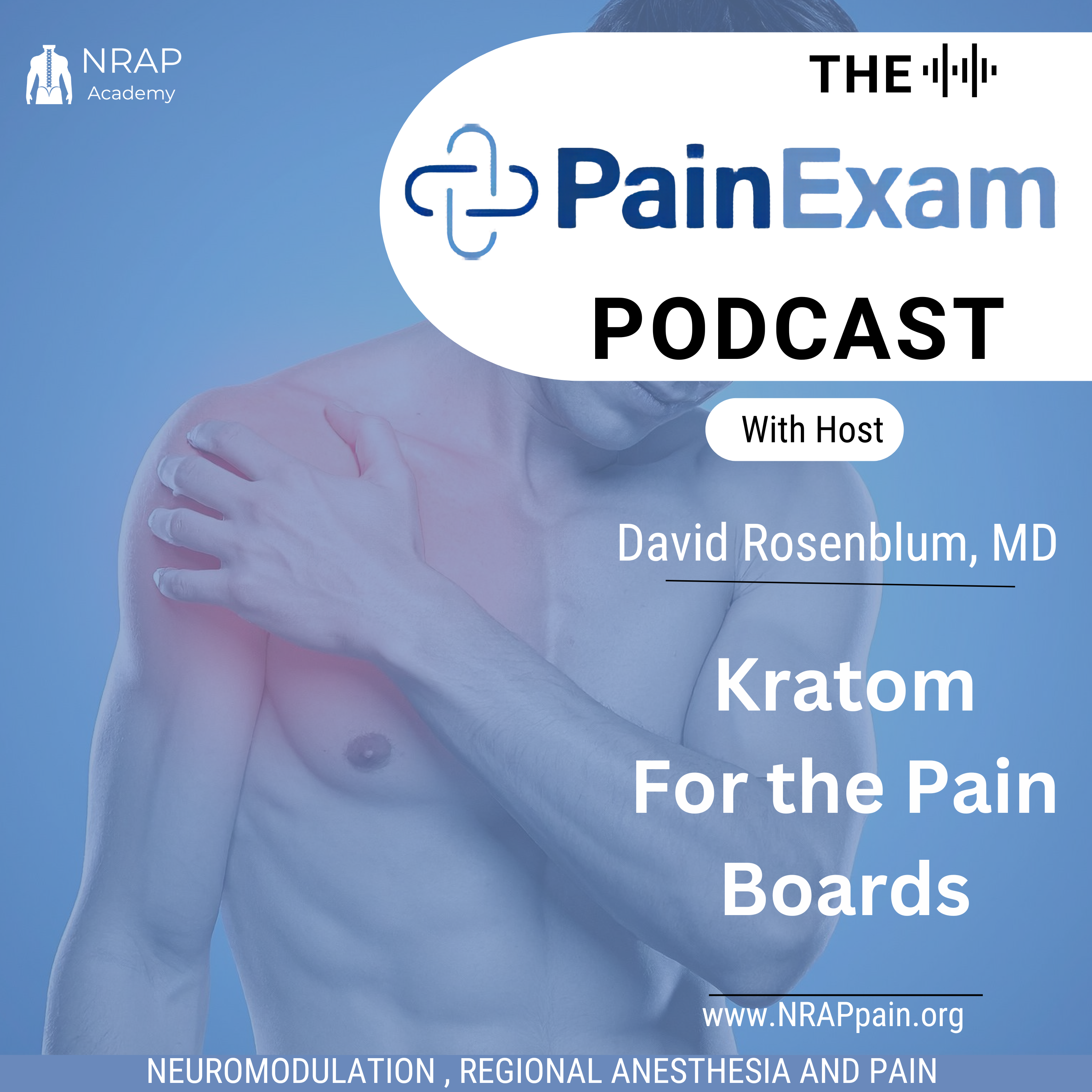
What is Kratom? Effects, Side Effects and Benefits in Pain Reduction
🎙️ PainExam Podcast Show Notes Kratom (Mitragyna speciosa): What Pain Physicians Must Know for the Boards In this episode, Dr. David Rosenblum reviews the current science, pharmacology, risks, and clinical relevance of Kratom — an herbal substance widely discussed by pain patients and increasingly appearing on pain-medicine board exams. The discussion focuses on evidence-based mechanisms, safety considerations, and counseling points essential for ABA/ABPM/ABIPP/FIPP board preparation. 🔍 Key Board-Relevant Takeaways 1. Pharmacology & Mechanism Kratom's primary alkaloids are mitragynine and 7-hydroxymitragynine. They act as partial mu-opioid receptor agonists and demonstrate G-protein biased signaling, which may reduce β-arrestin–mediated respiratory depression seen with full opioids. No FDA-approved medical use; pharmacokinetics and dose-response remain inconsistent. 2. Reported Effects Potential Benefits (mostly anecdotal or preclinical): Analgesia for chronic pain Mood elevation and increased energy Reduction of opioid withdrawal symptoms Major Limitations: No high-quality randomized controlled trials Not a recommended analgesic for evidence-based pain practice 3. Adverse Effects & Safety Concerns Commonly reported: Nausea, vomiting, constipation Tachycardia, palpitations Hepatotoxicity in some users Dependence and withdrawal syndrome similar to mild-moderate opioid withdrawal Serious risks: Product variability and contamination Potential interactions with CNS depressants Unpredictable potency of alkaloids 4. Regulatory Status Kratom is unregulated, with significant variability in purity and composition. FDA and multiple public-health agencies caution against its use due to safety concerns. Not recommended as a first-line or adjunct pain therapy. 5. What Boards Like to Test Expect questions on: Mechanism: partial MOR agonist, G-protein bias Differences from classical opioids Adverse effects and withdrawal Toxicology and contamination risks Counseling patients who self-medicate Lack of clinical trial data and regulatory approval 🎓 Board Prep Resources Prepare for the ABA, ABPM, ABIPP, FIPP, and AOBPM exams with the PainExam Board Review and full curriculum at the NRAP Academy: 👉 https://www.NRAPpain.org 🫁 Hands-On Ultrasound Training for Pain Physicians Boost your procedural skills with live ultrasound-guided interventional pain and regional anesthesia workshops: 👉 https://www.nrappain.org/pages/ultrasound-training 📚 References (Condensed) Kruegel AC, Grundmann O. Neuropharmacology of kratom alkaloids. Neuropharmacology. Eastlack SC et al. Kratom: Pharmacology & clinical implications. Phytother Res. Striley CW et al. Health effects of kratom. Front Pharmacol. FDA Public Health Advisory on Kratom. Educational Offerings & Learning Opportunities PainExam / NRAP Academy Training & Programs: Neuromodulation & Regional Anesthesia Workshops Ultrasound-Guided Pain Procedures Regenerative Pain Medicine Training Virtual Pain Fellowship Pain Management Board Review & Question Banks Learn More / Register: 🔹 https://PainExam.com 🔹 https://NRAPpain.org Board Prep & Certification Support Prepare for: ABA Pain Boards ABPM ABIPP Pain Management Board Certification Exams (No reference to FIPP included, per request) Access Board Prep Courses & Q-Banks: ➡️ https://PainExam.com ➡️ https://NRAPpain.org Clinical Practice AABP Integrative Pain Care (Brooklyn & Great Neck, NY) To schedule a consultation or referral: 🌐 https://AABPpain.com 📞 Brooklyn: 718-436-7246 About the Host – David Rosenblum, MD Dr. Rosenblum serves as Director of Pain Management at Maimonides Medical Center and Managing Partner at AABP Integrative Pain Care in Brooklyn, NY. He is recognized as an early adopter and leading educator in ultrasound-guided pain procedures, neuromodulation, and regenerative medicine. He has: Developed regional anesthesia training programs Published widely in pain medicine literature Lectured nationally and internationally through ASIPP, ASPN, NANS, IASP, and more Helped over 3000 physicians pass pain board exams Hosted the PainExam, AnesthesiaExam, and PMRExam podcasts Awards (Selected): New York Magazine Top Doctors: 2016–2025 Top Doctors NY Metro Area: 2016–2025 Schneps Media Honors: Multiple Years Connect with Dr. Rosenblum LinkedIn: https://www.linkedin.com/in/davidrosenblummd/ Instagram: https://www.instagram.com/painexam/ Facebook: https://www.facebook.com/david.rosenblum.16 X (Twitter): https://x.com/AlgoSonic Episode Call-to-Action ✅ Join the NRAP Community ✅ Register for an Upcoming Workshop ✅ Access Pain Board Review Training Start here → https://NRAPpain.org | https://PainExam.com
You may also like








Get this podcast on your phone, Free


Create Your Podcast In Minutes
- Full-featured podcast site
- Unlimited storage and bandwidth
- Comprehensive podcast stats
- Distribute to Apple Podcasts, Spotify, and more
- Make money with your podcast