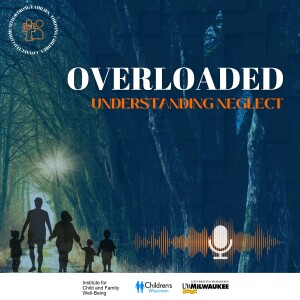
Overloaded: Understanding Neglect
https://feeds.simplecast.com/7HkvK0QAEpisode List
Systems Change: Understanding the Problem
Today’s episode included the following speakers (in the order they appear):Opening quote: Julie Woodbury – Family Preservation and Support Manager, Children’s WisconsinHost: Luke WaldoExperts:Ashlee Jackson – Family Support Specialist II, Children’s WisconsinJennifer Jones – Chief Strategy Officer, Prevent Child Abuse AmericaTheresa Swiechowski – Family Support Supervisor – Children’s WisconsinDr. Kristi Slack – Professor, University of Wisconsin School of Social WorkBryan Samuels – Executive Director, Chapin HallTim Grove – Senior Consultant – Wellpoint Care NetworkBregetta Wilson – Lived Experience Coordinator, Wisconsin’s Department of Children and FamiliesHannah Kirk – Healthy Support Supervisor – Children’s Wisconsin0:00 – Julie Woodbury – “It’s not somebody else’s problem, it’s everybody’s problem.”00:14 – Luke Waldo – Introduction to the child welfare system’s organizing principles, systems change and its drivers – policies, practices, resource flow; relationships and power dynamics; and mental models.How the Child Welfare System Works – Children’s BureauThe Water of Systems Change - FSG4:36 – Ashlee Jackson – Addressing mistrust by clarifying child welfare’s role and goals for the families it serves.5:50 – Jennifer Jones – Racial disparities in child welfare and access to community supports.6:35 – Theresa Swiechowski – “Parents don’t wake up and say, ‘Man, I just can’t wait to have mental health issues today…to have my car break down today....to be in a system.” Navigating our systems is really hard, and it can lead to people feeling shame, isolation, and shutting down.8:23 – Dr. Kristi Slack – The experience of being reported to or investigated by the child welfare system can be traumatic. “If there were other ways to help families that didn’t need to be there, then we should pursue those other strategies.” 8:58 – Luke Waldo – How might we divert overloaded families that may not need child welfare intervention to supportive services that keep their families together and help avoid the trauma and mistrust that comes from family separation? Introduction of next speakers that discuss the challenges presented within our policies, practices and resource flows. 9:44 – Jennifer Jones – Considering the complex relationship between race, poverty and neglect, “by putting an actual bigger emphasis on addressing poverty, we should see, without a doubt, a decrease in neglect cases in the U.S.” We spend $33 billion federally on our child welfare system and only 15% of that on prevention programs. Invest more in anti-poverty and prevention community-based resources.The Social Welfare Policy Landscape and Child Protective Services: Opportunities for and Barriers to Creating Systems Synergy – Dr. Megan Feely12:55 – Theresa Swiechowski – Introduction to Children’s Northern Wisconsin child welfare programs. Families are in crisis when she first meets them.Children’s Wisconsin’s Child Welfare programs14:37 – Ashlee Jackson – Policies change when their impacts are felt closer to home. How might we treat the impacts of trauma and Adverse Childhood Experiences like we have treated the opioid crisis?15:50 – Luke Waldo – How might we change how policymakers and systems leaders see overloaded families, so that they implement policies that strengthen families and keep them together? Introduction of next speakers that discuss our society’s role with our policies, practices and resource flows. 16:47 – Bryan Samuels – Policy impacts practice. Policy changes need to be made to enable the work at the community level. “Shift resources, shift power, and then ultimately, change outcomes.”18:25 – Dr. Kristi Slack – If you change policies, change outcomes. Cognitive load makes it more difficult for parents to care for their children. What part of that is society’s responsibility? Economic safety net as a child maltreatment prevention strategy.Temporary Assistance for Needy Families (TANF)CDC’s Essentials for Childhood FrameworkCenter for the Study of Social Policy’s (CSSP) Protective Factors Framework22:33 – Luke Waldo – It’s striking to hear Dr. Slack talk about the social safety net, a concept that assumes individuals or families will fall, as a set of supports that too often barely gets overloaded families above the meager poverty line. Introduction of next speakers that discuss accessibility of social safety net and the impacts of relationships and power dynamics on mistrust between systems and communities.23:49 – Dr. Kristi Slack – Accessibility of social safety net programs such as WIC and SNAP. Tax credits and direct cash assistance can have sizable impacts on families. Community response such as Family Resource Centers can divert families from the child welfare system.Special Supplemental Nutrition Program for Women, Infants, and Children (WIC)Supplemental Nutrition Assistance Program (SNAP)Earned Income Tax CreditChild Tax Credit25:22 – Bryan Samuels – Child welfare needs partners at the table if progress is going to be made. There is a lot of distrust between child welfare and communities. 25:51 – Dr. Julie Woodbury – The power dynamics between policymakers, business leaders, and families has shifted during the pandemic, and the tables have turned as families’ needs and demands have become more prominent. Leveraging those relationships to change the conversation is at the center of collective impact.Collective Impact – Collective Impact Forum27:12 – Luke Waldo – How we think about and see families will determine how we develop policies, how we serve and support them, and how we share power and community with them. 28:30 – Dr. Kristi Slack – Mandated reporters as sources of support rather than surveillance. Community Response models to provide access to needed resources to overloaded families.System Transformation through Community Leadership - Chapin HallWisconsin’s Community Response Program for Families That Have Been Reported for Child Maltreatment – Dr. Kristen Slack et al.29:59 – Tim Grove – Reporting is subjective and can be impacted by bias. When people are stressed, people may be more likely to lean into their bias. System actors need adequate resources and support to be able to be compassionate and empathic, rather than to lean into their biases.32:23 – Dr. Julie Woodbury – Model healthy boundaries and support networks with clients, while also doing this with the community so that we can educate everyone to be a protective factor. “It’s not someone else’s problem, it’s everyone’s problem.”33:58 – Luke Waldo – Introduction of final segment that focuses on those that work in the child welfare system with the intention of being part of a benevolent system, as Tim mentioned earlier, and the many challenges they face. These challenges are often a direct result of our systems’ policies and demands.35:00 – Bregetta Wilson – System timelines conflict with social timelines – employment, etc. Get to know the family first, as it changes the perspective on who they are. 37:45 – Ashlee Jackson – The services, goals and impact of Family Support program.Intensive In-Home servicesNurturing Parenting Programs39:12 – Hannah Kirk – Educate community on the purpose of child welfare. Community outreach to be more proactive as a system could change relationships and strengthen families.41:16 – Luke Waldo – 3 Key Takeaways44:35 – Closing CreditsJoin the conversation and connect with us!Visit our podcast page on our ICFW website to learn more about the experts you hear in this series.Subscribe, rate our show and leave feedback in the comments section.Check out our upcoming events.Sign up for our Strong Families, Thriving Children, Connected Communities initiative and our quarterly newsletter.Follow the Institute for Child and Family Well-being on Facebook, Instagram and LinkedIn.
Systems Change: Understanding the Drivers
Today’s episode included the following speakers (in the order they appear):Opening quote: Bryan Samuels – Executive Director, Chapin HallHost: Luke WaldoExperts:Tim Grove – Senior Consultant, Wellpoint Care Network Jennifer Jones – Chief Strategy Officer, Prevent Child Abuse AmericaDr. Julie Woodbury – Family Preservation and Support Manager, Children’s WisconsinBregetta Wilson – Lived Experience Coordinator, Wisconsin’s Department of Children and FamiliesHannah Kirk – Healthy Support Supervisor, Children’s WisconsinDr. Kristi Slack – Professor, University of Wisconsin School of Social Work0:00 – Bryan Samuels – “We often miss the opportunity to recognize that the relationships that are needed to get into communities and to successfully leverage the assets that exist there requires trust-building and power-sharing.”00:24 – Luke Waldo – Introduction to the child welfare system’s organizing principles, systems change and its drivers – policies, practices, resource flow; relationships and power dynamics; and mental models.How the Child Welfare System Works – Children’s BureauThe Water of Systems Change - FSG5:04 – Tim Grove – We too often celebrate individual efficiencies and productivity in child welfare rather than lowering caseloads and addressing systemic issues. We risk burnout. Explores the impacts of Pair of ACEs and equity on the cycle of healing people and sending them back into combat. Dr. Wendy Ellis – Pair of ACEs8:26 – Jennifer Jones – Address systemic and community-level inequities to improve family well-being.Adverse Childhood Experiences Questionnaire – Center on the Developing Child at Harvard University9:48 – Bryan Samuels – To understand what communities need, there must be authentic engagement and trust building, which often conflict with system timelines.11:16 – Luke Waldo – If our systems face a trust deficit, then we must address them by better understanding and often challenging mental models. Flip the waterfall, turn the tables as Julie mentioned in the last episode.12:01 - Dr. Julie Woodbury – What are the top issues in your community? What could we do about it? “We judge others on their behaviors, and ourselves on our intentions.” 13:23 – Bryan Samuels – Engaged community residents to promote healthy development. Community is a powerful lever in changing the day to day lives of people. Systems Transformation framework. There are already assets in communities to leverage.Systems Transformation Framework – Chapin Hall14:56 - Tim Grove - Address bias to promote equity.16:54 - Luke Waldo – Building trust requires that we authentically engage communities, share power, and give them leadership and ownership opportunities. 18:12 - Bregetta Wilson – We make up the system. How do we level the playing field? 19:25 – Bryan Samuels – California Endowment funded a number of community engagement efforts throughout California and had varying outcomes.Building Healthy Communities – California Endowment20:40 - Hannah Kirk – Building formal and informal supports in child welfare programs. Children’s Wisconsin’s Child Welfare programs21:36 – Bregetta Wilson – The importance of consistency from child welfare professionals. The power dynamics that exist within our court system. The power of language in building relationships and trust. 24:24 – Luke Waldo - Changing population level outcomes requires policies, practices and resources to address the underlying root causes that we’ve discussed. 25:38 - Bryan Samuels - Community Pathways, Family First Prevention Services Act, Home Visiting, and Family Resource Centers to provide support to overloaded families when they need it most.Family First Prevention Services Act – Chapin Hall ToolkitHome VisitingFamily Resource Centers28:14 - Dr. Kristi Slack –Community response for deflected populations so that they receive actual engagement from supportive services such as Family Resource Centers. 29:12 - Jennifer Jones - Cutting short TANF benefits led to increase in child maltreatment reports.Temporary Assistance for Needy Families (TANF)29:57 - Bregetta Wilson – What if we gave families the opportunity to buy a home and then wrapped supportive services around them to build self-efficacy and address poverty? Evicted by Matthew Desmond32:20 - Luke Waldo – Systems collaboration must become normalized if we are to prevent family separations for reasons of neglect.32:52 - Dr. Kristi Slack – Systems integration conversations have been happening for a long time. Risks and benefits of systems integration and collaboration. Siloed systems need better coordination.35:40 - Bryan Samuels – Policies that impact cross-systems collaboration through an example of Medicaid and Child Welfare. Flexible funding and time are needed to reform our child welfare system into a more integrated child well-being system.Medicaid and Child Welfare40:09 - Luke Waldo – 3 Key Takeaways43:10 – Closing and GratitudeJoin the conversation and connect with us!Visit our podcast page on our ICFW website to learn more about the experts you hear in this series.Subscribe, rate our show and leave feedback in the comments section.Check out our upcoming events.Sign up for our Strong Families, Thriving Children, Connected Communities initiative and our quarterly newsletter.Follow the Institute for Child and Family Well-being on Facebook, Instagram and LinkedIn.
Moving Upstream
Today’s episode included the following speakers (in the order they appear):Opening quote: Jennifer Jones – Chief Strategy Officer, Prevent Child Abuse America Host: Luke WaldoExperts:Dr. Kristi Slack – Professor, University of Wisconsin School of Social WorkTim Grove – Senior Consultant – Wellpoint Care Network Dr. Julie Woodbury – Family Preservation and Support Manager, Children’s WisconsinSoua Thao – Home Visitor – Children’s WisconsinAshlee Jackson – Family Support Specialist II – Children’s WisconsinTheresa Swiechowski – Family Support Supervisor – Children’s Wisconsin00:00 – Jennifer Jones – “Investing in prevention not only keeps kids safe and in their own families and communities, but it also creates significant savings in our systems. We will see savings in healthcare, we will see savings in corrections, and we will obviously see savings in the child welfare system.” 00:22 - Luke Waldo – How might we move further upstream to prevent overloading families with stress and the potential for neglect? Building Better Childhoods – Prevent Child Abuse America and Frameworks Institute4:38 - Jennifer Jones – Our country needs to invest way more in prevention. $33 billion spent on federal child welfare each year, but only 15% is spent on prevention. We need to invest more in Home Visiting, Family Resource Centers, and anti-poverty programs such as economic concrete supports. Access to these services and supports shouldn’t be impacted by where you live, but we know that it does for too many overloaded families.Home VisitingFamily Resource Centers6:20 - Dr. Kristi Slack – There are not a lot programs or services designed specifically to address neglect. What about parenting needs to change if we are to prevent neglect? We need to get better at assessing what it is that parents need to prevent neglect. We are not likely to see significant reductions in neglect unless we treat it at a structural level, particularly in the area of financial instability and poverty. 1. It’s not one size fits all. 2. We need to learn more about what prevents neglect specifically. 3. We need to focus on systems and structural issues and how they contribute to conditions that lead to neglect.8:54 – Jennifer Jones - Families too often get the support that they need once entering the child welfare system, which is too late. We need a child maltreatment prevention system that supports families once problems begin to occur to prevent child welfare involvement and family separation. We need to think about prevention differently that includes housing, anti-poverty programs, and addressing systemic discrimination.11:02 - Luke Waldo – Early Intervention Services as a potential prevention investment for child welfare system. In this next segment, we discuss the challenges we face with a well-intentioned, but often overloaded workforce that frequently experiences secondary trauma or an empathy overload due to the many work-related and community-based experiences. We also are influenced by our mental models, our beliefs and biases, which can limit our ability to best serve overloaded families or deliver programs with the efficacy and compassion that is needed. Early Intervention Services12:30 - Tim Grove – Discusses the 3 month old child from previous episodes. If there was evidence of physical abuse, the child welfare caseworker would have to take the child to a Child Advocacy Center. This can be overwhelming for the child welfare case worker and manifest as secondary trauma. People that go into the helping fields have a disproportionate rate of their own trauma. This can make them more vulnerable to triggers and reenactment. Between pandemic times and high caseloads, there is greater risk of burnout. This can make it even harder to show compassion to clients. Organizations need to find balance in accommodating staff while still meeting clients’ needs.Child Advocacy Centers – Children’s Wisconsin16:33 - Dr. Kristi Slack – Community Response models can support families that had been deflected from Child Protective Services. Worked with Social Development Commission’s Project Gain to provide greater access to better economic situations in Milwaukee. Through trainings and conversations with staff, discovered biases and beliefs as to why families were poor. Those mental models could impact how model was delivered. It’s interesting to see the differences between what people believe causes poverty and what research shows causes poverty. Changing mental models and cultures of our systems and organizations can improve these programs as families will feel more accepted and outreach will improve.Wisconsin Child Abuse and Neglect Prevention BoardCommunity Response Model and Project Gain study – Berger, Collins and SlackSocial Development Commission19:29 – Luke Waldo – How might we become more trauma-informed? We can address these challenges by shifting our mental models towards upstream solutions and leveraging the strengths of our relationships and communities that give overloaded families greater opportunities.20:21 – Jennifer Jones – We have to address the structural and systems issues that both hinder and help families.21:26 - Tim Grove – Promoting evidence-based clinical solutions has to be done in tandem with a self-healing community approach such as Blueprint for Peace. When you do this, you get less Adverse Community Environments, and consequently, less Adverse Childhood Experiences (ACEs) and less neglect. Former president of the American Psychiatric Association said “Trauma is to mental health as smoking is to cancer.” We will not heal all trauma with mental health clinical interventions. There are not enough clinicians, and many people are voting with their feet by saying we need another option than a clinical pathway. We need to lift up Office of Violence Prevention and grassroots approaches. Blueprint for Peace – Office of Violence Prevention – City of MilwaukeeA Time to Heal – Milwaukee Journal Sentinel series on trauma by John Schmid – Quotes Steven Sharfstein – Former American Psychiatric Association President24:14 - Dr. Julie Woodbury – Teach the community that it is a protective factor. Educate our community how it can support prevention.24:50 - Tim Grove – Leverage the community to ask what they need. Discusses self-healing communities. Laura Porter study looks at individuals with 4 or more ACEs, and what themes surfaced for those that didn’t have poor health and well-being outcomes. They found that having support of 2 or more people was found as a strong theme. How might our communities serve as those supports by raking someone’s lawn, bringing over a meal to serve as those supportive people?Self-healing communities in Washington - Laura Porter28:24 - Luke Waldo – It takes a village to raise a child. How might we rebuild our communities that have been disconnected? If we have addressed our mental models, built trust with our communities, then we have created the conditions in which policy, practice and resource flow changes can be effectively targeted to have the greatest possible effect for overloaded families and communities. 29:38 - Jennifer Jones - Key strategies from the CDC for preventing neglect and adversity. 1. Strengthen economic supports; 2. Promote social norms that protect against violence; 3. Invest in Early Childhood programs; 4. Implement services and supports for ACEs, substance abuse and mental health. 5. Improve environments. CDC says if we invest more in these upstream approaches, we will see a reduction of 44% in depressive disorders, 24% in asthma, 13% in heart disease, 6% in cancer and 15% in unemployment. This keeps families together AND saves our society a lot of money.Child Neglect Prevention Strategies - Center for Disease Control (CDC) 31:54 - Dr. Kristi Slack – Access to a centralized place for all families should exist when they are facing a critical situation, so that they can receive emergency assistance. Project Gain was successful in addressing these concrete needs. Shares a story about a person that needed steel-toed boots that allowed him to get a good-paying job. Shares a story about a mom that needed a refrigerator to keep food cold for her child, and she asked if she should call Child Protective Services on herself because she didn’t know what else to do. 211 is an option, but it would be helpful to have a go-to place.211 for Essential Community Services34:05 - Soua Thao - Connects families to community resources like English as a Second Language classes to support them in improving their language skills, and consequently, access to employment. Provides support in completing job applications or referring to the Hmong American Center, so that they get the support they need.Children’s Wisconsin’s Home Visiting programsNorthcentral Technical College – English Language Learning programHmong American Center36:01 - Luke Waldo – If we focus our policies and practices on prevention services and investing in families and communities through concrete economic supports, then we should see an improvement in outcomes for our children, families and communities. In this final segment, we discuss the opportunities to increase resources to overloaded families, keep families together through extended families, and increase prevention through education in our adjacent systems like education and healthcare. We close by sharing how many of these drivers can come together through the example of Prevent Child Abuse America (PCAA).36:47 - Jennifer Jones – A Healthy Families America (HFA) site is offering $500 a month for housing allowances to eligible families. Delaware is looking at universal cash assistance. Providing cash assistance to families reduces child maltreatment.Where the Guaranteed Income Movement is Going Next – Vox article37:39 - Ashlee Jackson – Keep children with extended family and close relationships such as godparents to maintain family and cultural traditions and reduce family separations.Kinship Care - Transfer of Guardianship38:56 - Theresa Swiechowski – Prevention, prevention, prevention. Introducing family education back into schools, doctor’s offices, and family support programs. 39:50 - Jennifer Jones – PCAA is the oldest and largest organization committed to preventing child maltreatment by providing programs that are backed by evidence. Four main focus areas: 1. Home visiting (HFA) in 600 sites. 2. State chapter networks. Advocacy, research, network to create conditions for families to thrive. 3. Policy work. Advocating for MIEHCV, economic and concrete supports like Child Tax Credit. 4. Communications function. Released Building Better Childhoods with Frameworks Institute to amplify message and mission.Healthy Families AmericaMaternal, Infant, and Early Childhood Home Visiting (MIECHV) Prevent Child Abuse WisconsinChild Abuse Prevention and Treatment Act (CAPTA)Frameworks Institute42:17 - Luke Waldo – 3 Key Takeaways46:45 – Closing and GratitudeJoin the conversation and connect with us!Visit our podcast page on our ICFW website to learn more about the experts you hear in this series.Subscribe, rate our show and leave feedback in the comments section.Check out our upcoming events.Sign up for our Strong Families, Thriving Children, Connected Communities initiative and our quarterly newsletter.Follow the Institute for Child and Family Well-being on Facebook, Instagram and LinkedIn.
Pathways Forward
Today’s episode included the following speakers (in the order they appear):Opening quote: Bregetta Wilson – Lived Experience Coordination, Wisconsin’s Department for Children and FamiliesHost: Luke WaldoExperts:Bryan Samuels – Executive Director, Chapin HallJennifer Jones – Chief Strategy Officer, Prevent Child Abuse America Dr. Kristi Slack – Professor, University of Wisconsin School of Social WorkTim Grove – Senior Consultant, Wellpoint Care Network Dr. Julie Woodbury – Family Preservation and Support Manager, Children’s WisconsinAshlee Jackson – Family Support Specialist II, Children’s Wisconsin00:00 – Bregetta Wilson – “I kind of joke a little bit. Some of my colleagues and I, we say, “We’ve got to burn it down and start all over.” And in reality, that would make a lot of sense, but it’s very unrealistic. So how can we do what we can from where we’re sitting? And how can we make some remodeling happen, so to speak, within our system?” 00:28 - Luke Waldo – Introduction to final episode and first segment. Whether you are a child welfare director or case manager, a teacher or neighbor, I hope that you are able to find an idea from advocating for and implementing impactful, proven policies and practices to shifting how we think about and treat our communities and families that have been crushed by the heavy hand of systemic oppression and generational trauma and poverty. The Water of Systems Change - FSG4:13 – Bryan Samuels – “If I’m sitting in a child welfare director’s seat, I would” review the neglect definition and how we operationalize it to ensure that we have the best possible definition and our practice is reflective of that definition.Wisconsin’s Definition of Neglect6:04 – Bregetta Wilson – Lived Experience Partners have helped define safety language in our child welfare system through shared decision-making.Lived Experience – Wisconsin Department of Children and Families (DCF)6:45 - Luke Waldo – We can take some initial steps to reduce family separations for reasons of neglect by reviewing our state and organizational policies and how they define neglect. We can then share power by refining those policies with Lived Experience partners. Additionally, we can review data to determine if our practices truly align with our neglect definition and policies.7:54 – Bryan Samuels - Review the data to determine if we are, in fact, separating families based on the definition of neglect, and if we could be serving families in different ways and systems.9:20 - Jennifer Jones – If we are to tackle systemic inequities and improve health outcomes, then we have to reduce adversity and exposure to trauma. 10:38 – Bregetta Wilson - If we are to meaningfully remedy the historical injustices in our communities, we must value the voice of Lived Experience partners and put them in positions of power that can create systems change. “…and on the back end, we’re getting the outcomes because we know that this is what families said that they need and want.” 13:00 - Luke Waldo – We must use data to inform how we are in fact separating families and who we are disproportionately affecting. From there, how might we change policies such as our mandated reporting standards? How might we educate and train system actors like mandated reporters to confront the mental models and biases that lead to disproportionate numbers of Black, Hispanic and Native American families being investigated and separated by our child welfare system? We should elevate the voice and power of those with Lived Experience to begin tackling systemic oppression and leveling the playing field.14:45 - Dr. Kristi Slack - We need to address mental models so that we see overloaded families as not always having control over their situations. The pandemic and recession built some empathy in our society as many people suddenly experienced hardship.16:04 – Dr. Kristi Slack – Means-tested programs like food stamps (SNAP) and the Child Tax Credit are all policies that can serve as maltreatment prevention tools along with the coordination of other systems such as child care centers and schools to support families before they enter the system. We have to be careful to not create more surveillance. Temporary Assistance for Needy Families (TANF)Special Supplemental Nutrition Program for Women, Infants, and Children (WIC)Supplemental Nutrition Assistance Program (SNAP)Earned Income Tax CreditChild Tax Credit17:53 - Tim Grove – Marshall Plan to improve human capital. Relational connection is our superpower. How do we get people more safe and connected? If we increase everyone’s social connections by 20%, we create the potential for bringing our best selves to solve these complex problems. State-dependent Functioning - Dr. Bruce Perry21:20 - Luke Waldo – When we invest in concrete economic supports such as a universal basic income or SNAP, we not only reduce the likelihood of neglect for many children, but we also reduce the costs to society of child welfare, healthcare, and criminal justice, just to name a few. How might we confront mindsets that blame poverty entirely on individuals, and reflect on the reality that systems often contribute to entering and remaining in poverty? How might we build more collective empathy that leads to these policy changes that might ensure that safe, affordable housing, healthy food, and childcare is accessible to all? At a practice level, we should explore programs like the Early Intervention Services that divert families that are experiencing poverty from child welfare to anti-poverty and housing programs.We need to invest in communities and programs that enhance overloaded families’ social capital.Early Intervention Services22:50 - Julie Woodbury – We need to be more proactive, be prepared to meet families’ needs when they first present them. We need to be more trauma-informed, so that we can model healthy boundaries.23:22 – Ashlee Jackson - Address mistrust by sharing that overloaded families aren’t alone, that you’ve worked with families that experience the same underlying challenges. Support and encourage them, sharing that you believe that they can get through it.24:02 – Bregetta Wilson – Put families first when developing and implementing our policies, practices and resources.Wisconsin Department of Children and Families (DCF) Strategic Transformation24:21 – Ashlee Jackson – Advocating for an expanded definition of family so that children can be placed with relatives while their parents work on what they need to do.24:52 - Bregetta Wilson - Kinship care and kinship navigators put an emphasis on placing kids with their family members. Use data to inform changes. Lived Experience is not new to DCF as it has influenced a lot of decisions over the years like mandated foster parent training and ensuring that youth aging out of foster care have health insurance.Family Finding – Children’s WisconsinKinship Navigators – Wisconsin Department of Children and Families26:35 - Luke Waldo - We do best by families when we let them lead. We have promising and effective programs like Family Finding and Kinship Navigators that seek to keep children with their families, traditions and cultures. 27:30 - Dr. Kristi Slack – We don’t have a prevention system. In fact, identifying prevention services in communities is very complex as there is no single repository. Additionally, many prevention services don’t necessarily prevent maltreatment, so we should begin looking more carefully at what does, especially economic support programs. More specifically, prevention programs should understand the impacts of economic stress on parenting, and importance of economic mobility in their practices.Dr. Katie Maguire-Jack – University of MichiganCDC’s Essentials for Childhood Framework30:01 - Bregetta Wilson - Build Lived Experience partners’ capacity to advance our efforts to address bias.31:32 - Dr. Kristi Slack - Listen to families and what they need. A study that they conducted asked workers and families “what do families need?”, and the two groups had different answers. Workers cited parenting while families cited economic support. We need to know what families feel they need as they are the experts on their lives.33:12 - Luke Waldo – We must do a better job of prioritizing families’ needs over our systems’ timelines and demands. We also need to evaluate the impacts and efficacy of many of our prevention programs, so that we might begin to centralize prevention programs that keep families safe and together into a more comprehensive prevention system. 34:07 - Bryan Samuels - Social innovation and Collective Impact frameworks can bring people together, especially those that have not been there historically, to provide structure to the relationships, networks and systems change work.Social Innovation Frameworks - Social Change by Design Database – Greater Good StudioCollective Impact Frameworks – Tamarack Institute36:20 – Julie Woodbury - Describes Collective Impact, data walk, the problem their community faces, and the goals that they set.Data Walk38:06 - Bregetta Wilson - “Do what you can from the seat that you’re in.” As systems and organizations are implementing Lived Experience into their practice, it is important to define what the intent is so that there isn’t tokenism, but rather real application for systems change. 40:23 – Luke Waldo – Introducing next segment.40:38 - Tim Grove – Study with ICFW Clinical Director Dimitri Topitzes explored effectiveness of trauma-informed care. Trauma-informed care can’t just be addressed through training, but rather through culture-shaping. Trauma-responsive child welfare services: A mixed methods study assessing safety, stability and permanency – Topitzes and Grove43:48 – Bregetta Wilson - We need to compensate our Lived Experience partners, and understand the emotional labor that they carry through their work.Lived Experience Partners – Wisconsin Office of Children’s Mental Health44:17 - Dr. Kristi Slack - Evidence-based practice is talking to families about all their options, finding out what they need and where there’s alignment with what’s out there, and then sharing the evidence that supports those options, so that they can make an informed decision as to what they believe will work best for them. “I’m interested in what works for whom.” Evidence-Based PracticeFamily First Prevention Services Act46:23 - Bregetta Wilson - Parents Supporting Parents program. Pairing Lived Experience partners with parents that are currently involved in the system, so that they have an advocate that truly understands their experience.Parents Supporting Parents - DCF47:00 - Julie Woodbury - Bring everyone together from government to business to Lived Experience partners to social services, and then get community to work together differently through Collective Impact. Once we get the community used to working together, we can normalize this collaboration.48:31 - Luke Waldo – Whether through Collective Impact, Social Innovation or another framework, systems and community collaboration must become normalized if we are to prevent family separations for reasons of neglect. Through Lived Experience or Peer Support programs, we share power with those most impacted by our systems, and empower leadership and ownership opportunities that can lead to meaningful systems change. Practice models like Community Response models help deflect families from the child welfare system to supportive services such as Family Resource Centers that may lead to social capital that we know is so critical in preventing future neglect.49:34 – Jennifer Jones - “Prevention happens in partnership.” A public health approach to prevention is essential as it requires all of us. 50:20 - Tim Grove - How do we bring together people from and within communities that don’t always talk to one another to work towards collective solutions? There is a deep resolve to solve these complex problems.52:50 - Luke Waldo – To prevent neglect we will need to take a structural approach that requires that we partner across systems that include our child welfare, anti-poverty, and housing systems to name a few, and across our communities that include organizations and individuals that haven’t worked together or even necessarily agreed with one another on many things previously.54:03 - Dr. Kristi Slack – Provides a number of directions that we can go to improve our child maltreatment prevention approaches – policies, public campaigns, and addressing mental models. “There’s a fine line between parental neglect of a child and societal neglect of families.”Children’s Trust Fund Alliance - Teresa Rafael 56:28 - Bryan Samuels - Child welfare starts on a new big idea or strategy until another one comes along, and then they abandon the previous strategy. This is an exciting, dynamic time for child welfare with more great ideas than we’ve had in a long time, so it’s important that we choose the right strategies and see them through.59:02 – Luke Waldo – Closing. How might we take these great ideas and translate them into impactful, sustainable solutions for overloaded families? 1:03:03 – Luke Waldo – Gratitude and GoodbyeJoin the conversation and connect with us!Visit our podcast page on our ICFW website to learn more about the experts you hear in this series.Subscribe, rate our show and leave feedback in the comments section.Check out our upcoming events.Sign up for our Strong Families, Thriving Children, Connected Communities initiative and our quarterly newsletter.Follow the Institute for Child and Family Well-being on Facebook, Instagram and LinkedIn.
Legislation and Workforce
Today’s episode included the following speakers (in the order they appear):00:15 - Bryan Samuels – Executive Director, Chapin Hall - Opening quote: “But I believe we have every reason to believe that we can grow a population and a workforce that can effectively meet the needs of families. But if we only stay in the deep end, I think we continue to struggle with a limited pool of front-line workers who are stretched to the max.” Host: Luke WaldoExperts:Jennifer Jones – Chief Strategy Officer, Prevent Child Abuse America Bryan Samuels – Executive Director, Chapin HallTim Grove – Senior Consultant, Wellpoint Care Network 00:40 – Luke Waldo – Introduction to bonus episode and first segment. The conversation begins in response to the following questions that I asked them to consider: How might the policies/legislation that have been passed recently impact overloaded families and neglect prevention? Where do you see the greatest opportunities through these policies to improve individual, family and community well-being that might reduce family separations for reasons of neglect?Safer Communities ActAmerican Rescue PlanFamily First Prevention Services ActMaternal, Infant, and Early Childhood Home Visiting (MIECHV)Child Abuse Prevention and Treatment Act (CAPTA)3:56 – Jennifer Jones – Failures at the policy level, particularly concrete economic supports, are one reason why we haven’t seen reductions in child neglect. MIECHV, CAPTA, and the Child Tax Credit are two opportunities that help us address child neglect and promote race equity. Policy is important, but only if access is truly available to those that need it.Child Tax CreditPaid Family LeaveCommunity-Based Child Abuse Prevention (CBCAP) GrantsJackie Walorski Maternal and Child Home Visiting Reauthorization Act of 20229:08 – Bryan Samuels – Policies and programs need “to see themselves less as a safety net that’s trying to catch people, and more like a springboard that’s trying to support families moving towards improved well-being.” We need to invest in a system that supports families much earlier than child welfare, so that child welfare has a smaller footprint and is involved in fewer families’ lives. We can then reinvest those child welfare dollars in family and community well-being.13:00 – Jennifer Jones – How might we pull together many of the existing government programs (see below) to create a more comprehensive child abuse prevention system?Temporary Assistance for Needy Families (TANF)Social Services Block Grant (SSBG)Community Services Block Grant (CSBG)Medicaid14:01 – Tim Grove – Remembering Uvalde, Texas and how it led to policy overcoming politics. “Can our political system actually solve problems? Can our partisanship diminish? Can people on both sides of the aisle come together?”“Can we go back and find whatever that was after Uvalde happened, the best maybe of who we are, can we find a little bit more of that?”Matthew McConaughey speech on Uvalde tragedy16:19 – Bryan Samuels – “There are always challenges to making good policy in the context of bad politics.” However, we have seen policy developed based on good science, with Family First Prevention Services Act as a recent example.18:09 – Jennifer Jones – We have also seen evidence of bipartisanship as a response to good evidence with MIECHV. Individual and family testimony of the importance of home visiting in their lives to policymakers has proven to be effective as well. 19:11 – Tim Grove – Recent Wisconsin Youth Risk Behavior Survey report. Uvalde’s tragedy may have been the spark to get meaningful legislation passed. 30% of kids report a pervasive sense of hopelessness, which, if ignored, could have staggering implications for our future.Wisconsin Youth Risk Behavior Survey20:56 – Jennifer Jones - Only 5% of the $30+ billion spent on child welfare goes to prevention. Advocate for additional funding for prevention in addition to funding for families that are struggling now. This will lead to a cost savings in our child welfare, healthcare, corrections, etc.22:50 – Tim Grove – We are asking the same people who work with our most vulnerable kids to do more work. How do we address our limited capacity and our overloaded workforce?24:27 – Jennifer Jones – Child welfare system needs to become a child maltreatment prevention system according to the defund, abolish child welfare movements. Jennifer believes that a prevention system should run alongside a child protection system, so that child welfare staff doesn’t have to wear three or four hats. 26:22 - Luke Waldo – Review of previous segment and introduction of upcoming segment. The workforce conversation begins in response to the following question that I asked them to consider: As we have experienced significant changes in our workforce over the past few years due to the Great Resignation, impacts of minimum wage increases, emphasis on Lived Experience; and approaches to our workforce practices and culture such as Trauma-Informed Care, Diversity, Equity and Inclusion, etc., what challenges and opportunities do you see for the future of our workforce in Child Maltreatment Prevention/Child Welfare Systems?28:41 – Bryan Samuels – Runaway and homeless youth space. Around 4 million youth experience homelessness/housing instability each year. 50% experienced homelessness for the first time when surveyed, which means prevention and intervention both need funding and support. Child welfare shouldn’t be working directly with TANF, however, TANF should see itself as reducing the likelihood of its participants entering the child welfare system. When something bad happens in child welfare, we don’t hire more people, we ask them to do more. Growing evidence that paraprofessionals can effectively deliver evidence-based interventions when trained well. This could be a solution as we go further upstream, so that we can get these evidence-based services scaled and into more communities. It would also reduce the stress and demands on front-line workers.Youth Homelessness Prevention Initiative – Chapin Hall35:15 – Jennifer Jones - Prevention system needs to create access for families no matter where those families reside.36:23 – Tim Grove – Can we add this funding for prevention, or will we be expected to reduce the current child welfare intervention funding if we request more prevention funding?37:06 – Bryan Samuels – When running the Illinois child welfare system, they were able to reinvest cost savings when they reduced the number of children in the system back into more preventive services. Family First Prevention Services Act went to the Congressional Budget Office to see how the money would be spent and how much savings over time it would create. Congressional Budget Office Report – Family First Prevention Services Act40:30 – Jennifer Jones - We need the political will to make the investment upfront, so that over the years we can see the savings on the deep-end systems side. We can then consider pulling money back from the deep end systems when we see that there is less need for them.41:10 – Gabe McGaughey - A lot of our prevention services aren’t funded by federal or state dollars, but rather by local philanthropists, organizations like United Way. So how might we support local municipalities to invest more in prevention and evaluate effectively how they might improve well-being outcomes and save money for their communities?42:17 – Luke Waldo – Introduction of workforce question.42:38 – Tim Grove - Secondary trauma moving to Moral injury. How does this impact who you want to be as a professional and who you can be as a professional? The past few years have impacted our ability/capacity to be our best self. Moral Injury – Scientific American article 44:36 – Bryan Samuels - Increasing discussion of safety culture and moral injury within child welfare. Organizations need to be more committed to supervision, understanding what work demands and what we can realistically put on our staff. Think about how safety culture works in healthcare and air travel. We shouldn’t ask our pilots to work more than they can do so safely. The same should go for our child welfare staff. We should also be mindful of how long a person should be working in the same position.49:16 – Jennifer Jones – We need to provide financial support for our workforce to be able to address their own financial challenges. How might we make our services more adaptable like virtual Home Visiting to encourage work-life balance? Invest in diversity in our workforce. Eliminate barriers that make it difficult to hire individuals with lived experience. “We have to change the face of our workforce to look more like the people and communities that are part of those systems.” 51:55 - Tim Grove – Dr. Vikram Patel’s “task shifting”. What if there was a way to distill, translate what professionals know, and support and train the local community members and leaders so that they can deliver it to their community? Task-shifters in trauma-informed care and clinical work is a real possibility, which could lead to greater trust within communities.Task-Shifting54:43 - Luke Waldo – Closing and Gratitude.Join the conversation and connect with us!Visit our podcast page on our ICFW website to learn more about the experts you hear in this series.Subscribe, rate our show and leave feedback in the comments section.Check out our upcoming events.Sign up for our Strong Families, Thriving Children, Connected Communities initiative and our quarterly newsletter.Follow the Institute for Child and Family Well-being on Facebook, Instagram and LinkedIn.







Get this podcast on your phone, Free


Create Your Podcast In Minutes
- Full-featured podcast site
- Unlimited storage and bandwidth
- Comprehensive podcast stats
- Distribute to Apple Podcasts, Spotify, and more
- Make money with your podcast