Episode List
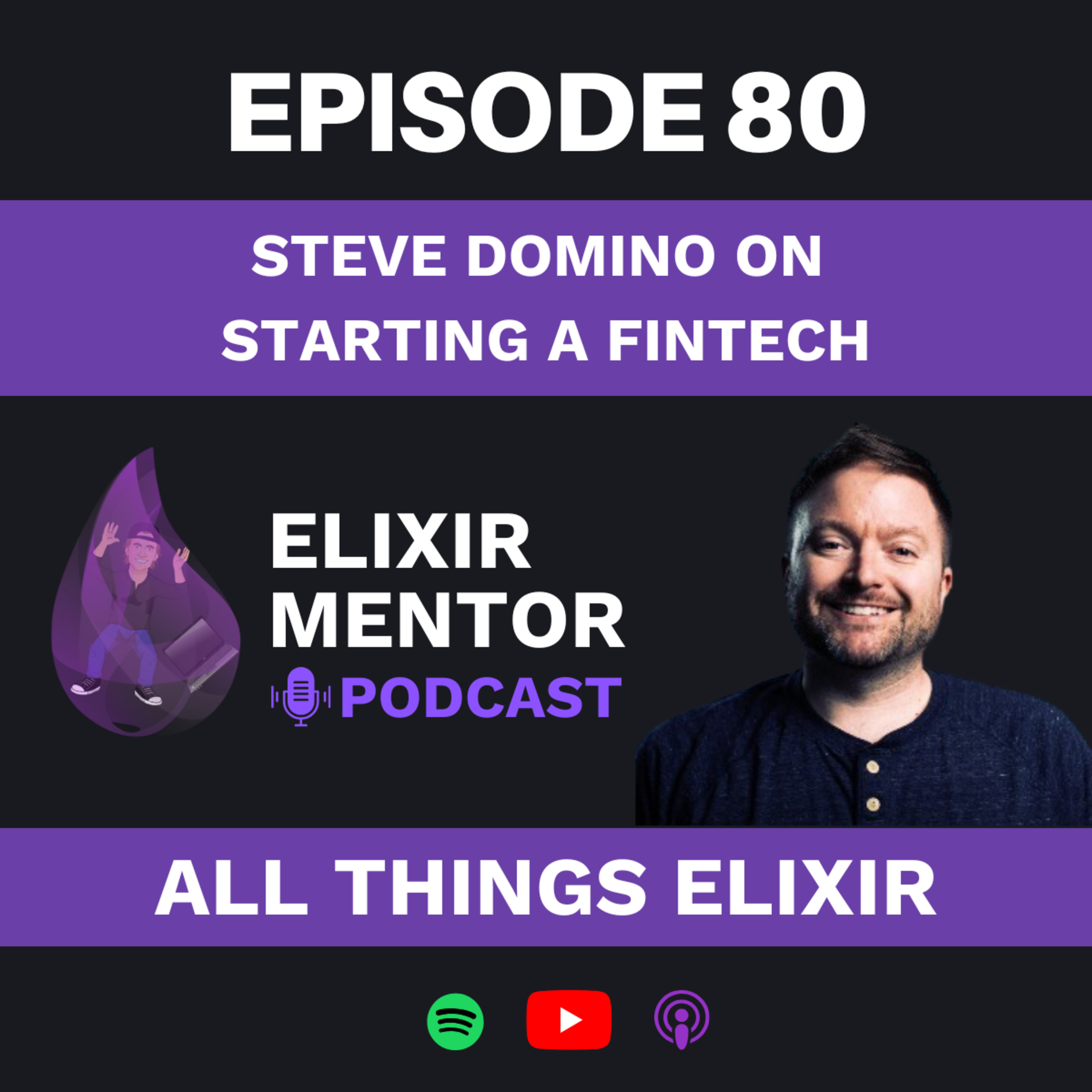
Steve Domino on Starting a Fintech
Steve Domino is the co-founder and CTO of Crew, a fintech startup building what he calls the most powerful checking account in the world — one with programmable automation rules, a family-scoped AI financial assistant, and zero of the fees that make traditional banking frustrating. He came up through startups, spent time at Divvy before its Bill.com acquisition, and brought his Elixir experience directly into Crew's foundation.We cover a lot of ground on the product side: how Crew's "Autopilot" rules engine lets users program their money (and the recursion checks it took to make that safe), why Crew consolidated savings and checking into a single account, how the team handles high-value deposits without physical branches, and what's coming — business accounts, wills and trusts, family investing, and a credit card designed to work like a debit card. Steve also talks through the challenge of projecting bills years into the future to keep balance reservations accurate, and how building and using your own product surfaces problems fast.On the Elixir side, Steve talks about why fintech is a natural fit for the BEAM — Crew decisions on card transactions in under 250 milliseconds — and how Oban became central to their reliability story when partner services go down. He shares what drew him to Elixir personally (pattern matching, the pipe operator, the with block), reflects on the Utah Elixir ecosystem that Divvy and Podium helped build, and explains how Penny, their AI financial assistant, is scoped per family so it can never reach outside a user's own data.We also spend time on career and engineering culture: Steve's take on the "Extreme Ownership" mindset that shaped how he grew into a leadership role, why he asks candidates to design something they'd actually build at Crew instead of solving puzzles, and his honest concern that developers leaning entirely on AI may lose the ability to think critically about architecture. Good conversation throughout.Resources Mentioned:- Extreme Ownership (book): Amazon- Oban: oban.proConnect with Steve:- Crew: trycrew.com- LinkedIn: linkedin.com/in/steve-dominoSUPPORT ELIXIR MENTOR- Elixir Mentor: elixirmentor.comSPONSORS- Paraxial.io — Elixir-first app security: paraxial.io- BEAMOps — Scalable Elixir infrastructure: beamops.co.uk- Jido — Elixir AI Collective Discord: agentjido.xyz/discord
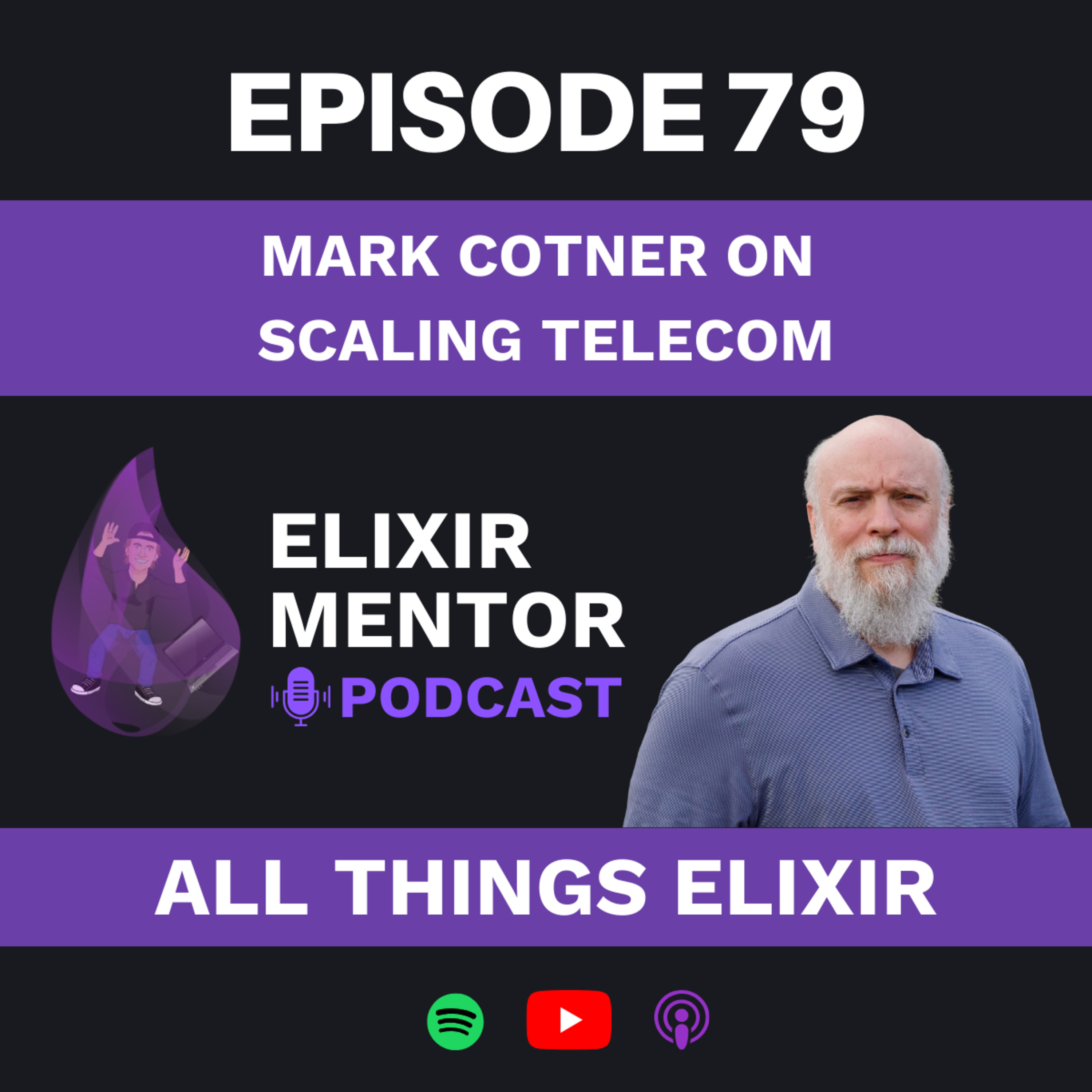
Mark Cotner on Scaling Telecom
Mark Cotner is a DBA managing around a thousand databases by day and a telecom CTO by night — building hospitality cable networks for RV parks, nursing homes, and apartment complexes at 100% annual growth. In this episode, he walks through the infrastructure, the business, and the two-year project that just landed on Hex: Timeless, an embedded observability suite for Elixir built on Rust NIFs, hitting 3 million metric inserts per second with 14:1 compression.We get into what a hospitality network actually looks like — branded cable hardware, DOCSIS provisioning, and mesh Wi-Fi across dispersed sites — and how Mark's team handles monitoring across thousands of cable modems using a full Elixir stack (DHCP, TFTP, NTP, and Ash). He also shares how a frustrating Ansible setup led him to build something he thought should exist: a lightweight, embeddable observability backend that drops into a Phoenix app in under five minutes via Igniter, with less than 5% CPU overhead.The technical core of the conversation covers the Timeless architecture in depth — PCO compression for metrics, OpenZL for logs and traces, 15 rounds of iteration before landing on a single consolidated Rust NIF, and why the Elixir-to-Rust translation layer ended up being the real bottleneck. Mark also talks benchmarking against Victoria Metrics on a 192-core AWS ARM instance, the custom C web server (Rocket) he built to cut HTTP latency 30x below Bandit, and how supervision trees let him pack an entire DOCSIS provisioning stack into one Elixir app without worrying about cascading failures.Whether you're curious about Elixir in telecom, Rust NIF development, time series database internals, or just want to hear what 30 years of observability experience looks like applied to the BEAM, this one is packed.Resources Mentioned:- Timeless on Hex: https://hex.pm/packages/timeless_phoenix- Timeless website): https://timelessmetrics.comConnect with Mark:- X/Twitter: https://x.com/awksedgreepSUPPORT ELIXIR MENTOR- Elixir Mentor: https://elixirmentor.comSponsored by BEAMOps — scalable Elixir deployments and infrastructure migrations, authors of Engineering Elixir Applications: https://beamops.co.ukElixir AI Collective Discord — your community for coding Elixir with AI: https://agentjido.xyz/discord
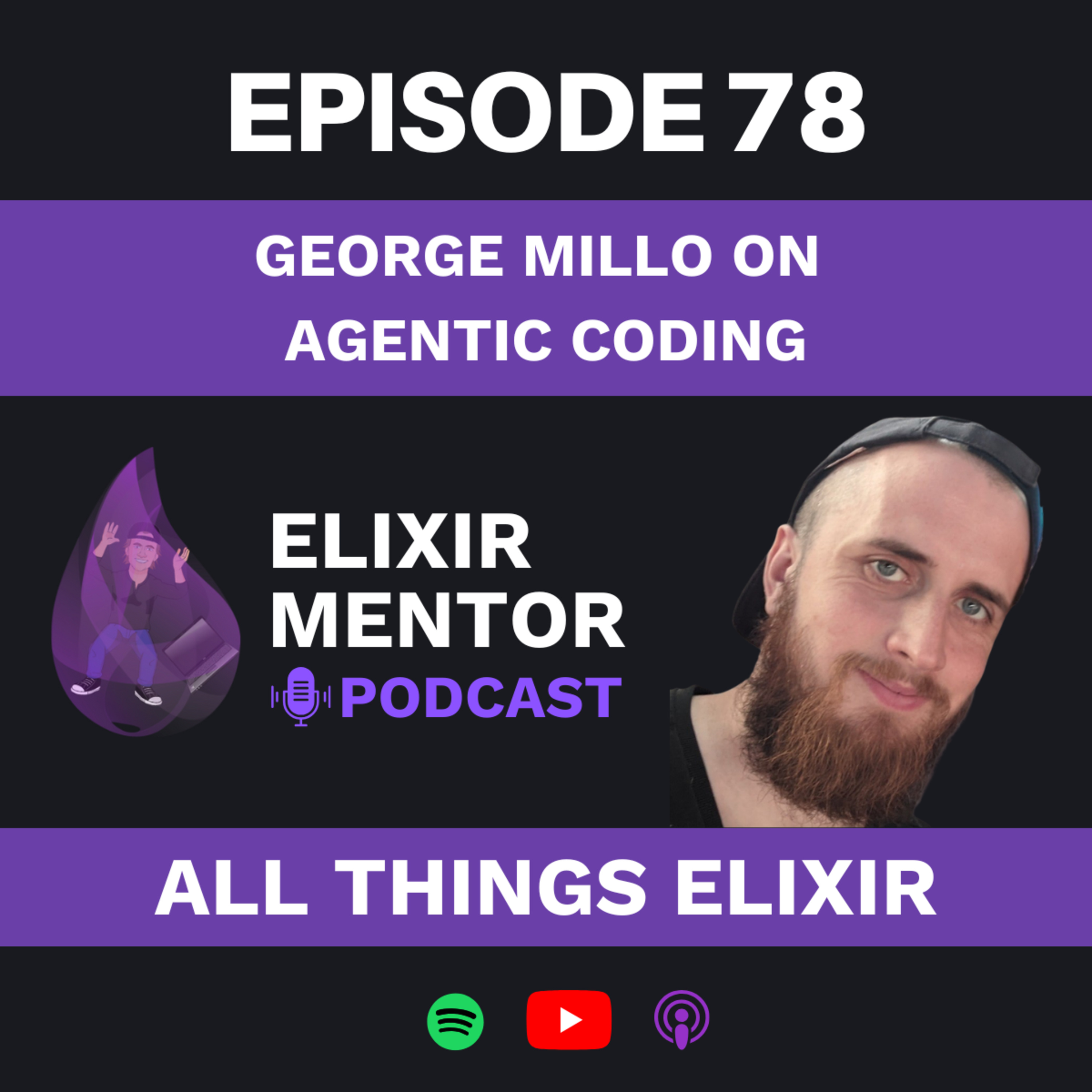
George Millo on Agentic Coding
George Millo — creator of Learn Phoenix Live View and alumnus of the Gauntlet AI fellowship — joins me to talk through what really changes when you commit to LLM-driven development. George went through Gauntlet's intensive 10-week program built around LLM maximalism, came out the other side rethinking how he builds software, and has spent the past year working on an AI-first engineering team applying those lessons in production.We spend a lot of time on the practical realities of agentic coding: verification debt (the gap that grows between your mental model and what the AI actually built), the importance of planning before prompting, why George works in small self-contained PRs, and how he uses Codex and Claude Code in parallel tabs without losing track of what's happening. We also get into the debate around vibe coding, spec-driven development, testing pitfalls, and why deep technical knowledge matters more now — not less — when AI is writing most of the code.The conversation covers where Elixir fits in an AI-first world: the BEAM's process model as a natural fit for agent architectures, Phoenix shipping with an agent.md file, Tidewave's approach to closing the feedback loop, and why Elixir's tooling consistency puts it ahead of the JavaScript fragmentation George deals with at his day job. We also get into the security risks that come with AI-assisted development — giving LLM tools codebase access, the OpenClaw skills marketplace vulnerabilities, and the kinds of security mistakes that are now much easier to ship without noticing.George closes with practical advice for anyone hesitant to adopt agentic workflows: stay curious, ask the AI to explain the code it writes, build something outside your comfort zone, and put in the reps.Resources Mentioned:- Learn Phoenix Live View: https://learnphoenixliveview.comConnect with George:- X/Twitter: x.com/georgemillo- LinkedIn: linkedin.com/in/millogSponsors:- Paraxial.io — Elixir-first application security: paraxial.io- Jido — Elixir AI Collective Discord: agentjido.xyz/discordSUPPORT ELIXIR MENTOR- Elixir Mentor: elixirmentor.com
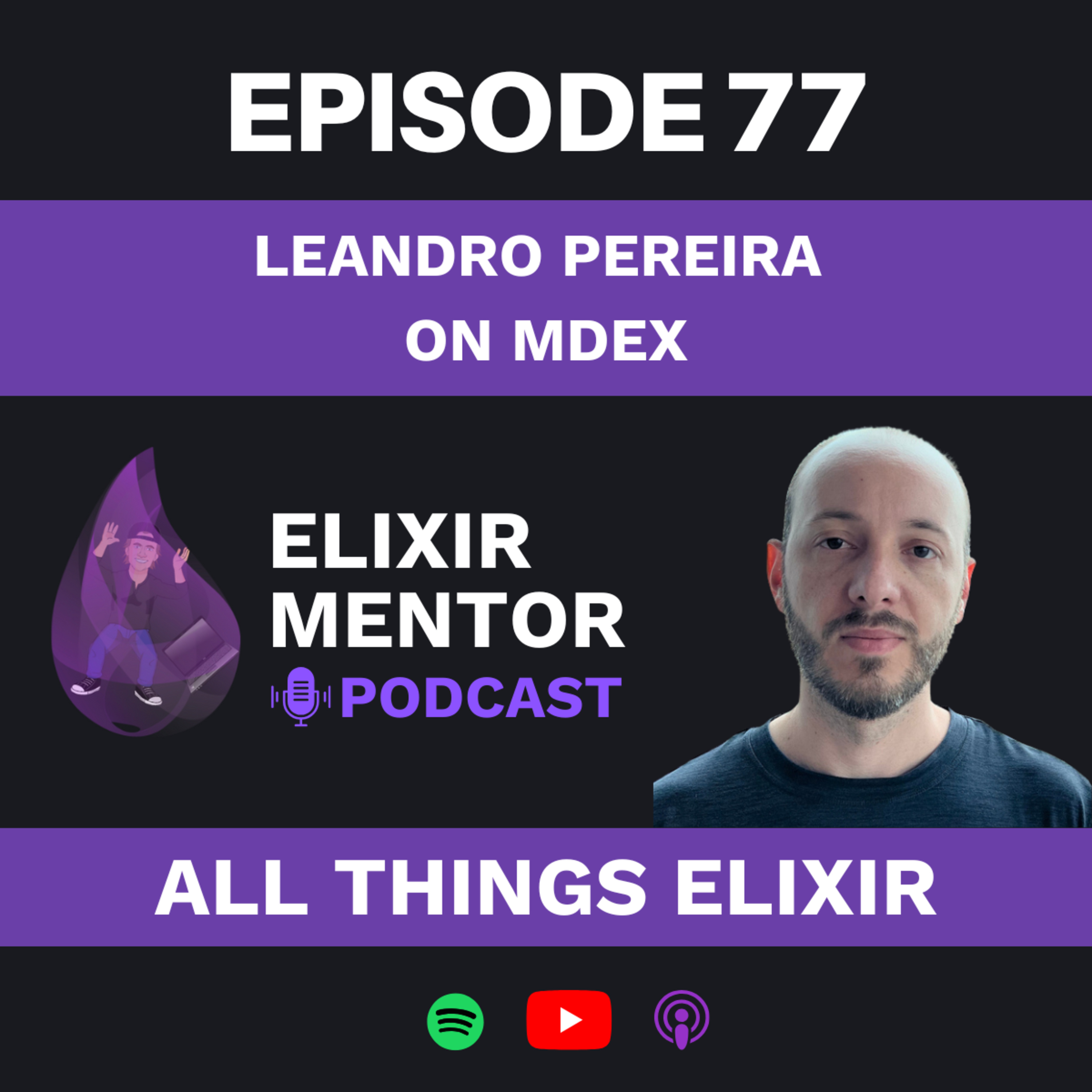
Leandro Pereira on MDEx
Leandro Pereira is back on the Elixir Mentor Podcast — this time to dive deep into MDEx, his Rust-powered Markdown library for Elixir. MDEx is built on the Comrak Rust crate, runs 31x faster, and uses 3,500x less memory than existing Elixir alternatives. We also get into Lumis, his standalone syntax highlighting engine powered by tree-sitter and Neovim themes.Leandro walks through why he chose a Rust NIF over a pure Elixir implementation, what it took to ship Lumis as its own project, and the surprisingly hard technical challenge at the heart of MDEx: streaming Markdown for AI applications. We discuss how MDEx handles incomplete Markdown fragments in real time, what the upcoming Components feature unlocks for Phoenix/LiveView developers, and how the HEEx parser integration works under the hood.We also cover the human side of maintaining two solo open source projects: how Leandro prioritizes, uses AI to chip away at the backlog, and thinks about monetization. The conversation goes deeper into how the AI era has changed Markdown's role in the ecosystem, the pitfalls of vibe coding, and what it really takes to get an open source project noticed — including the uncomfortable truth that marketing matters more than most developers want to admit.The episode closes with a wide-ranging conversation on developer growth — the Dunning-Krueger curve, making the mental shift from OOP to functional programming, and why Elixir feels easier once it finally clicks. A great listen for anyone building libraries, wrestling with Rust NIFs, or navigating open source in the Elixir ecosystem.Resources Mentioned:- MDEx: https://mdelixir.dev- MDEx on Hex: https://hex.pm/packages/mdex- Lumis: https://lumis.sh- Lumis on Hex: https://hex.pm/packages/lumisConnect with Leandro:- X/Twitter: https://x.com/leandrocesquini- GitHub: https://github.com/leandrocp/mdexSPONSORS- Paraxial.io: https://paraxial.io- Jido (Elixir AI Collective Discord): https://agentjido.xyz/discordSUPPORT ELIXIR MENTOR- Elixir Mentor: https://elixirmentor.com
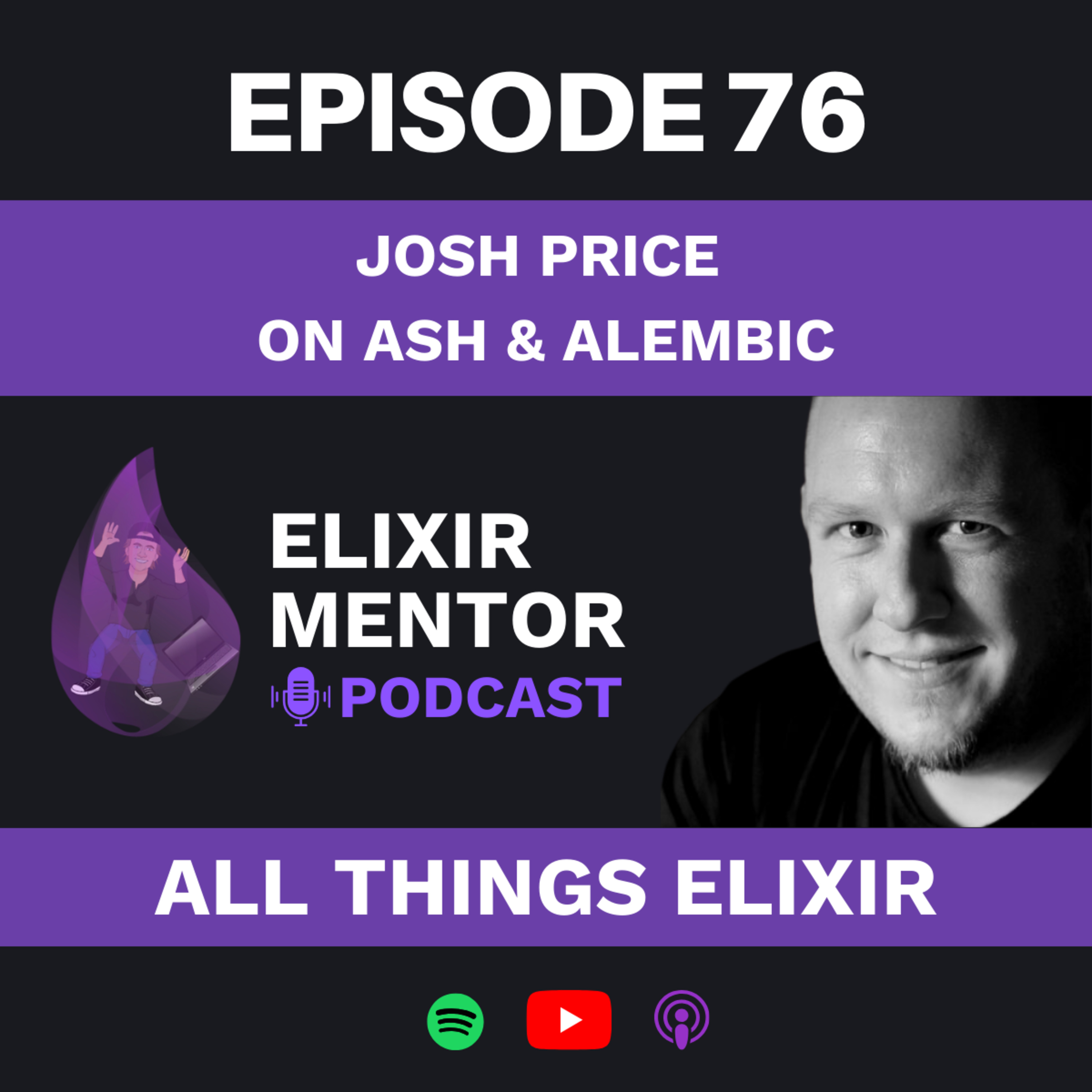
Josh Price on Ash & Alembic
Josh Price, founder & CTO of Alembic and one of the core forces behind Ash Framework, joins me for a wide-ranging conversation that starts with the origin story of Alembic, winds through the history of GraphQL and Ash, and lands on Clarity — his new interactive introspection and visualization tool for understanding your Ash codebase. Josh has been writing Elixir for over ten years and building Alembic for nine, which gives him a rare perspective on how the ecosystem has matured and where it's headed in an agentic world.We trace how Josh's frustration with real-time data at a gaming company pointed him toward Elixir and Erlang, how that led to an obsession with GraphQL domain modeling, and how that obsession eventually collided with Ash — which turned out to solve exactly the problems he'd been hacking around for years. We talk about what Ash actually is beyond an API generator, why auto-generated migrations are criminally underrated, and why the developers who resist Ash most are often the ones in the middle of the experience curve. Josh also shares the inside story of how slowing Zack Daniel down was actually the best thing that ever happened to the Ash ecosystem.A big chunk of the conversation covers the AI moment we're in right now — Claude Code workflow tips (including the /insights command and how to keep session history beyond 30 days), why CLIs are beating MCPs for LLM tool use, Claude Code skills and usage rules for progressive disclosure, and how Clarity grew from Ash's built-in introspection into something far more interesting: an in-memory Erlang digraph knowledge graph of your entire Elixir application. Josh also shares his take on multi-model databases, the disappearance of the UI, and why the only limits left for software engineers are taste, judgment, and imagination.Resources mentioned in this episode:- Alembic: https://alembic.com.au- Clarity (Hex): https://hex.pm/packages/clarity- Ash Framework: https://ash-hq.org- Ash Framework book: https://pragprog.com/titles/ldash/ash-framework/- Killswitch: https://killswitch.appConnect with Josh:- Website: https://alembic.com.au- X/Twitter: https://x.com/joshprice- LinkedIn: https://www.linkedin.com/in/joshcpriceSponsors:- Paraxial.io: https://paraxial.io- Jido: https://agentjido.xyz/discordSUPPORT ELIXIR MENTOR- Elixir Mentor: https://elixirmentor.com









Get this podcast on your phone, Free


Create Your Podcast In Minutes
- Full-featured podcast site
- Unlimited storage and bandwidth
- Comprehensive podcast stats
- Distribute to Apple Podcasts, Spotify, and more
- Make money with your podcast