CFO THOUGHT LEADER
https://feeds.captivate.fm/cfo-thought-leader/Episode List

1179: Why Trust Can Outperform Price | Thomas Baumgartner, CFO, voestalpine Metsec
As a child in Austria, Thomas Baumgartner bundled unwanted toys into mystery bags and sold them to classmates. Buyers could not see what was inside—they simply paid and took their chances. He cleared out old toys and earned spending money, he tells us. The story is lighthearted, but it reveals something enduring: an instinct to create value, move decisively, and keep looking for the next opportunity.That same mindset has shaped a career spent inside the voestalpine group. Baumgartner began in controlling roles in Austria, where he developed an early view of finance as a forward-looking discipline. A controller, he explains, is the person spotting the iceberg ahead, while others are still measuring the water temperature. The distinction matters. For him, finance was never only about recording results—it was about anticipating scenarios and helping steer the business.A promotion to the UK expanded that perspective. Suddenly, he was navigating unfamiliar pension systems, new tax rules, and a different business culture, he tells us. The move required more than technical knowledge. It demanded adaptation. Over time, he learned that direct leadership styles do not travel seamlessly across borders, and he evolved toward a more collaborative approach built on listening and buy-in.Today, as CFO of voestalpine Metsec plc, he applies that same blend of discipline and curiosity. The company invests heavily in certifications, fire testing, and trusted solutions rather than competing only on price, he tells us. He has also championed internal AI Test Labs to help employees explore new tools and generate ideas from the ground up. “Stand still is not an option,” he tells us.

1178: From Numbers to Narrative: Seeing the Business End-to-End | David Larson, CFO, Feedzai
David Larson still recalls the moment he challenged conventional thinking inside Thomson Reuters. A shared services team in Hyderabad, long viewed as transactional, held untapped potential. Rather than accept the status quo, Larson pushed to integrate the team into the broader finance function—despite resistance tied to time zones and skepticism. The effort required planning, persuasion, and patience, but ultimately reshaped how the organization operated.That moment reflects a career defined less by linear progression and more by deliberate expansion. Larson began in tax at Ernst & Young before pivoting into M&A, where he “didn’t know anything about valuing companies” (tells us). Over two decades, he developed a deep understanding of how businesses function end-to-end, leading due diligence, integrations, and go-to-market alignment.His willingness to step into the unfamiliar—relocating internationally, raising his hand for new roles, and moving beyond corporate development—enabled him to broaden into enterprise leadership. At Thomson Reuters, he progressed through finance leadership roles before becoming Chief Strategy Officer, gaining a long-term view of growth and competitive positioning.Today, as CFO of Feedzai, Larson applies these lessons to an AI-driven business where trust and execution are paramount. He emphasizes that finance leaders must understand “how companies operate…from A to Z” (tells us), pairing data discipline with business insight.For Larson, the CFO role has evolved beyond numbers. It is about shaping strategy, guiding investment, and helping organizations see the business clearly—end-to-end.

Special Episode: Why AI Speed Without Direction Is a Strategic Risk | Laura Belmont, General Counsel, The L Suite
In this special third installment of Suite Voices, featuring general counsels from The L Suite, Laura Belmont explores how organizations can adopt AI responsibly while balancing speed with strategic direction. Building on insights from earlier episodes, she emphasizes that AI success depends on aligning usage with business goals and governance frameworks—not just rapid deployment. Belmont highlights early risks such as “shadow AI” and underscores the importance of CFO–GC collaboration in evaluating financial and legal exposure. She also stresses continuous training and vendor scrutiny, while looking ahead to a future where GCs act as systems architects embedding accountability into AI-driven decision-making.
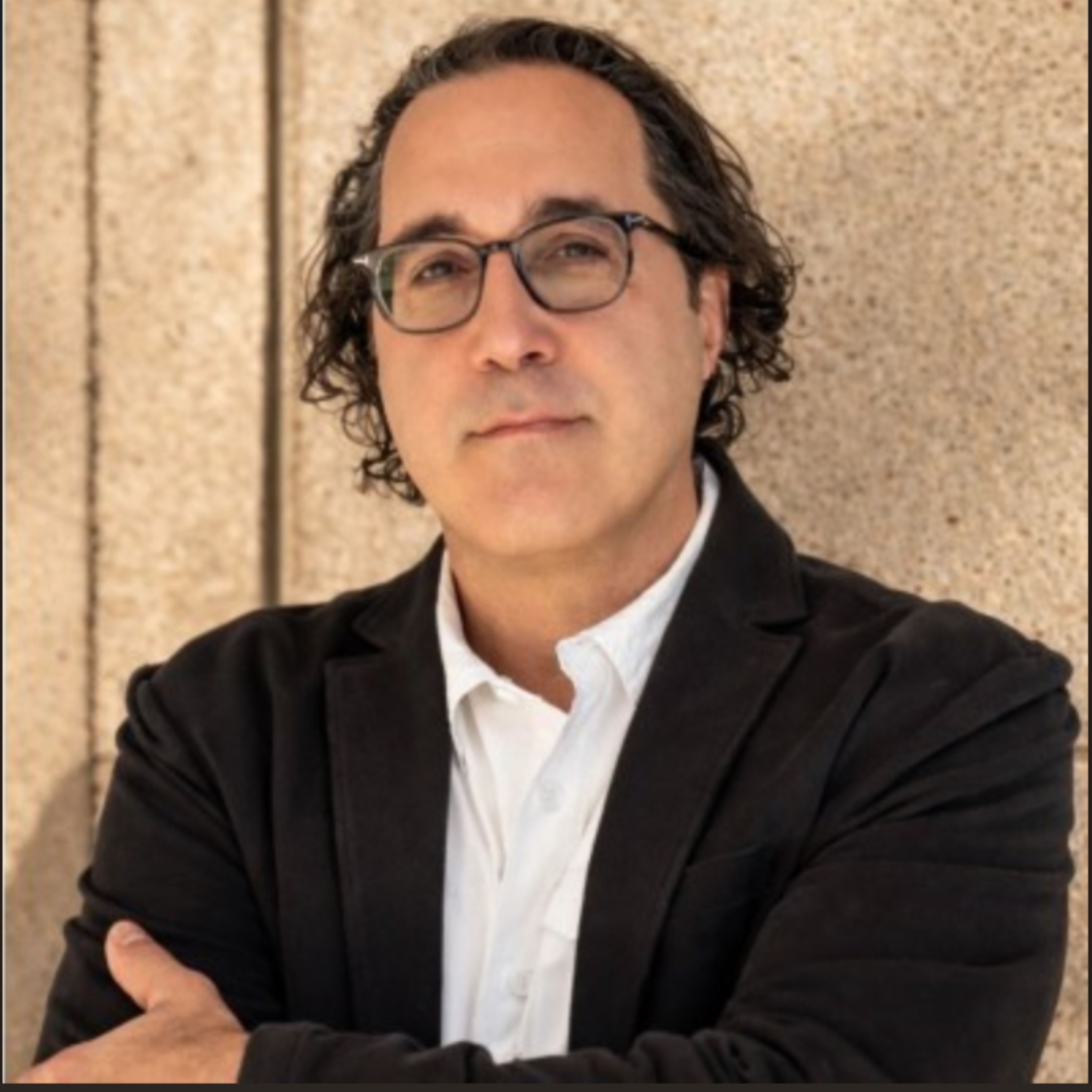
1177: Navigating an Acquisition at the Edge of Change | Tom DiDesidero, CFO, SmartRecruiters
Tom DiDesidero describes a period when SmartRecruiters was actively taking customers from a much larger competitor. It wasn’t just momentum—it was proof. “We were stealing a lot of their customers,” DiDesidero tells us, describing how that traction became a defining signal of value.At the same time, SmartRecruiters was moving quickly on a new front. “We were really the first mover in the embedded AI product,” DiDesidero tells us, emphasizing that speed and execution—not perfection—mattered most. The team brought its AI platform to market early, leaning on strong customer relationships and credibility. Beta users quickly became paying customers, reinforcing that the strategy was working.This combination—customer momentum and early AI execution—positioned SmartRecruiters as more than just a product. It became a strategic asset. “It’s important… it’s not just the theory, it’s the execution,” DiDesidero tells us. That distinction ultimately shaped how SAP evaluated the opportunity.Still, the deal itself was only the beginning. Integration, he explains, is where value is realized. “You keep being you. Don’t let our bureaucracy slow you down,” DiDesidero tells us, recalling the message from SAP leadership.Six months in, the reality is nuanced. “It’s a mixture of progress and pain every day,” he tells us. Yet, for DiDesidero, the differentiator remains the people—teams committed to building, adapting, and pushing forward.In his view, success at scale isn’t just about strategy or technology—it’s about sustaining the behaviors that made growth possible in the first place.

1176: From Signatures to Systems of Value | Blake Grayson, CFO, Docusign
Within his first 90 days at DocuSign, Blake Grayson recognized the company needed to make difficult efficiency decisions following a post-COVID slowdown. Acting quickly, he partnered with leadership to address the issue, noting that “making the hard decision faster is way better than waiting,” Grayson tells us. That moment set the tone for how he approaches finance leadership—decisive, data-driven, and focused on forward momentum.That same mindset now shapes how he views DocuSign’s evolution. Long known as the “default eSignature business,” Grayson tells us, the company serves over 1.8 million customers worldwide. Yet he emphasizes that the real opportunity lies beyond the signature itself. “There’s so much more to an agreement than just the act of the signature,” he tells us, pointing to missed renewal clauses and buried pricing terms as examples of untapped value.This realization underpins DocuSign’s push into intelligent agreement management. Early results suggest traction: the platform reached more than $350 million in annualized recurring revenue within 18 months, Grayson tells us, contributing to a broader milestone of over $1 billion in both billings and free cash flow. Still, he remains measured, describing the progress as “early validation” while acknowledging the company is “in the early innings,” he tells us.Across these moments, a consistent theme emerges. Whether evaluating operational efficiency or unlocking customer value, Grayson’s approach centers on acting with clarity and speed—using finance not as a constraint, but as a catalyst for disciplined growth.
You may also like









Get this podcast on your phone, Free


Create Your Podcast In Minutes
- Full-featured podcast site
- Unlimited storage and bandwidth
- Comprehensive podcast stats
- Distribute to Apple Podcasts, Spotify, and more
- Make money with your podcast
