
Episode List

Fun Facts About Mount Everest
Mount Everest, the highest peak on Earth, stands as a monumental testament to the geological process known as orogeny. Formed approximately 50 million years ago through the colossal collision of the Indian and Eurasian tectonic plates, the mountain remains geologically active and continues to rise at a rate of roughly a quarter-inch per year. While globally recognized by the name of British surveyor Sir George Everest, the peak holds deep spiritual significance for local cultures, known as Chomolungma ("Mother Goddess of the World") in Tibet and Sagarmatha ("Peak of Heaven") in Nepal. Its official height, recalibrated in 2020, stands at 29,031.7 feet above sea level, yet its summit contains 450-million-year-old marine fossils from the ancient Tethys Sea, revealing its prehistoric origins on the ocean floor. The extreme environment of the Himalayas hosts unique biological and physical phenomena that challenge the limits of nature. At 22,000 feet, the Himalayan jumping spider (Euophrys omnisuperstes) thrives as one of the world's highest-dwelling permanent residents, surviving on organic debris carried upward by high-altitude winds. Human endurance has also reached record-breaking milestones on the peak, most notably by Yuichiro Miura, who successfully summited at the age of 80 despite having undergone multiple heart surgeries. Due to the significantly lower atmospheric pressure at the summit, the boiling point of water drops to approximately 160°F (71°C), a temperature that complicates basic tasks like cooking and requires specialized nutrition for high-altitude expeditions. Support me on Patreon. Please consider joining my new Patreon community and listen ad-free. For just $3 per month, you can get ad-free versions of Fun Facts Daily, Who ARTed and Art Smart. Head over to https://www.patreon.com/cw/FunFactsDailyPod if you are interested. Want to learn more? Head over to my website www.funfactsdailypod.com and be sure to listen to my other podcasts Who ARTed: Weekly Art History for All Ages or Art Smart. For family fun, check out my son's podcast Rainbow Puppy Science Lab Fun Facts Daily is an Airwave Media Podcast. If you are interested in advertising on this or any other Airwave Media show, email: advertising@airwavemedia.com Learn more about your ad choices. Visit megaphone.fm/adchoices

Fun Facts About Hamburgers
The history of the American hamburger traces back to 1900 when Louis Lassen of Louis' Lunch in New Haven, Connecticut, first served ground steak trimmings between slices of toast. While the burger's popularity grew steadily, the establishment of the first fast-food chain, White Castle, in 1921 was pivotal in shifting public perception regarding the safety and quality of ground beef. Founders Billy Ingram and Walter Anderson utilized gleaming white, stainless steel interiors and transparent cooking processes to build consumer trust, eventually pioneering the "slider"—a small, square, standardized patty that laid the groundwork for the modern global fast-food industry. Central to the burger's culinary appeal is the Maillard reaction, a complex chemical process occurring between 280 and 330 degrees where amino acids and reducing sugars react to produce the savory, browned crust and rich aromas characteristic of a professionally seared patty. Today, the hamburger stands as a cultural and dietary staple, with Americans consuming an estimated 50 billion burgers annually, which averages to approximately three per person each week. This iconic status has occasionally intersected with political history, notably during World War I when the United States government briefly promoted the name "Liberty Sandwich" to distance the dish from its German namesake, the city of Hamburg. Beyond standard fare, the burger has reached heights of extreme luxury, exemplified by "The Golden Boy," a $5,964 creation featuring Wagyu beef, white truffles, caviar, and gold leaf, crafted to raise funds for charity. For home preparation, culinary techniques such as pressing a thumb indentation into the center of a raw patty are employed to counter meat contraction, ensuring even heat distribution and a perfectly flat shape for optimal topping stability. Support me on Patreon. Please consider joining my new Patreon community and listen ad-free. For just $3 per month, you can get ad-free versions of Fun Facts Daily, Who ARTed and Art Smart. Head over to https://www.patreon.com/cw/FunFactsDailyPod if you are interested. Want to learn more? Head over to my website www.funfactsdailypod.com and be sure to listen to my other podcasts Who ARTed: Weekly Art History for All Ages or Art Smart. For family fun, check out my son's podcast Rainbow Puppy Science Lab Fun Facts Daily is an Airwave Media Podcast. If you are interested in advertising on this or any other Airwave Media show, email: advertising@airwavemedia.com Learn more about your ad choices. Visit megaphone.fm/adchoices

Fun Facts About Gardening
Sustainable gardening relies on a complex interplay of chemical reactions and biological adaptations. At the core of plant life is photosynthesis, a process where light energy converts carbon dioxide and water into glucose and oxygen. Beyond basic growth, many plants utilize sophisticated survival mechanisms, such as converting stored starches into natural sugars to act as a biological antifreeze during winter frosts. This chemical shift not only protects cellular structures in vegetables like carrots and kale but also significantly enhances their sweetness. Additionally, plants engage in a form of "invisible communication" by emitting volatile organic compounds when under attack by insects, signaling neighboring plants to bolster their chemical defenses or even attracting predatory species to eliminate the pests. The health of a garden is fundamentally tied to the biodiversity of its soil and the preservation of global botanical heritage. A single teaspoon of healthy topsoil contains upwards of eight billion microorganisms, including bacteria like Mycobacterium vaccae, which has been linked to increased serotonin levels in humans who come into contact with it. While earthworms are often seen as essential garden allies for soil aeration, they are actually an invasive species in many parts of North America, having been reintroduced by European settlers after the last ice age wiped out native populations. To safeguard these diverse plant life cycles against environmental collapse, facilities like the Svalbard Global Seed Vault in Norway maintain over a million seed varieties in a permafrost-cooled bunker, ensuring that the foundations of the global food supply remain protected for future generations. Support me on Patreon. Please consider joining my new Patreon community and listen ad-free. For just $3 per month, you can get ad-free versions of Fun Facts Daily, Who ARTed and Art Smart. Head over to https://www.patreon.com/cw/FunFactsDailyPod if you are interested. Want to learn more? Head over to my website www.funfactsdailypod.com and be sure to listen to my other podcasts Who ARTed: Weekly Art History for All Ages or Art Smart. For family fun, check out my son's podcast Rainbow Puppy Science Lab Fun Facts Daily is an Airwave Media Podcast. If you are interested in advertising on this or any other Airwave Media show, email: advertising@airwavemedia.com Learn more about your ad choices. Visit megaphone.fm/adchoices
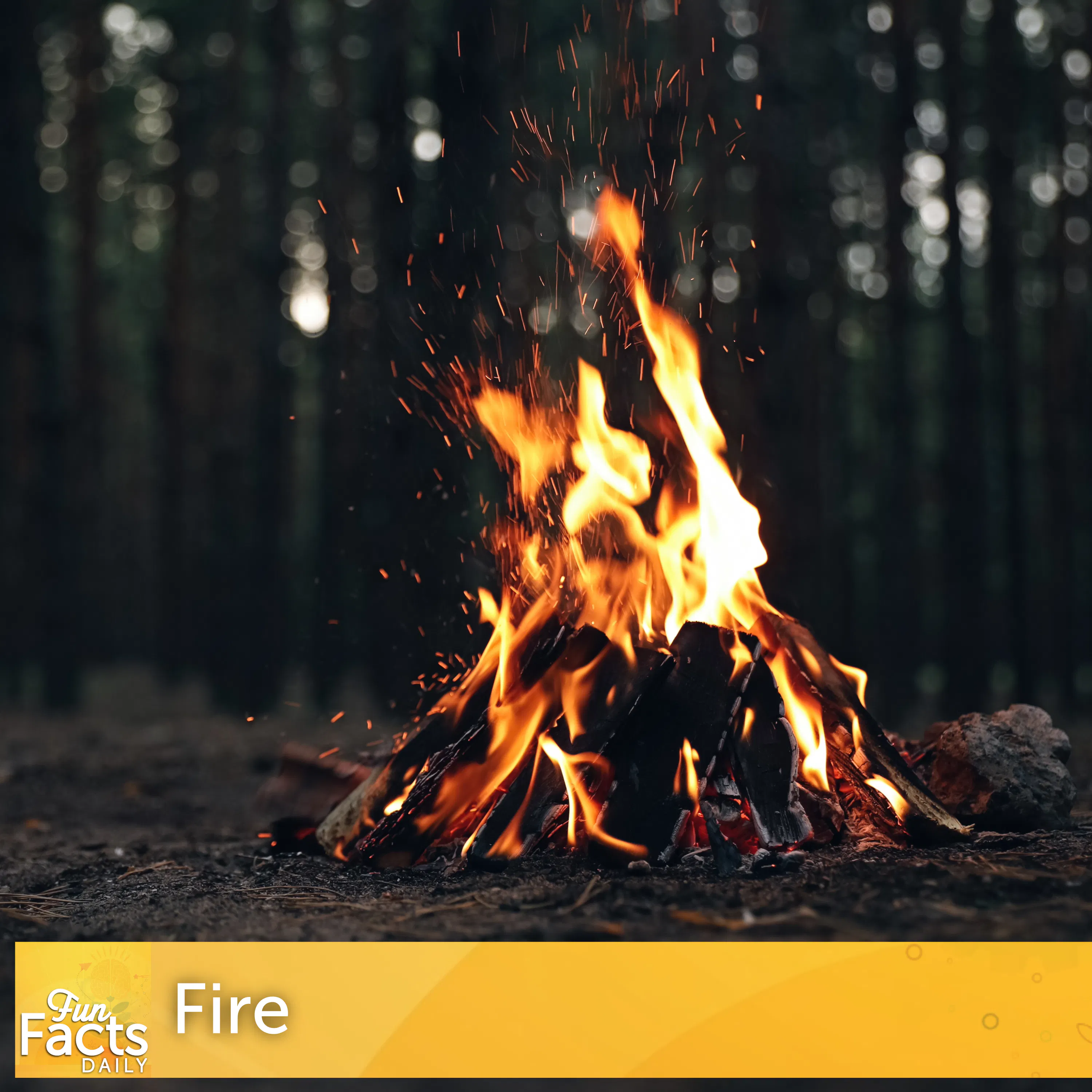
Fun Facts About Fire
Fire is a complex chemical process that begins with pyrolysis, a stage where intense heat decomposes solid fuel into volatile gases that ignite upon mixing with oxygen. On Earth, gravity dictates the behavior of a flame; cooler, oxygen-rich air is pulled downward while hot air rises, creating the iconic flickering teardrop shape. In the microgravity environment of space, however, fire behaves differently, forming a slow-burning, spherical blue dome of plasma. Earth currently stands as the only known planet in the universe with an atmosphere rich enough in free oxygen to support combustion, making fire a phenomenon unique to this world. The relationship between fire and the natural world extends to ecological reproduction and historical innovation. Certain tree species, such as the Lodgepole pine, utilize a process called serotiny, where resin-sealed cones only release seeds when melted by the extreme heat of a forest fire. Human mastery of fire was significantly advanced in 1826 when chemist John Walker accidentally created the first friction match by scraping a dried chemical mixture across a stone floor. While often perceived as a fleeting event, fire can persist for millennia, as evidenced by Australia’s Burning Mountain, where an underground coal seam has smoldered continuously for at least 6,000 years. Support me on Patreon. Please consider joining my new Patreon community and listen ad-free. For just $3 per month, you can get ad-free versions of Fun Facts Daily, Who ARTed and Art Smart. Head over to https://www.patreon.com/cw/FunFactsDailyPod if you are interested. Want to learn more? Head over to my website www.funfactsdailypod.com and be sure to listen to my other podcasts Who ARTed: Weekly Art History for All Ages or Art Smart. For family fun, check out my son's podcast Rainbow Puppy Science Lab Fun Facts Daily is an Airwave Media Podcast. If you are interested in advertising on this or any other Airwave Media show, email: advertising@airwavemedia.com Learn more about your ad choices. Visit megaphone.fm/adchoices
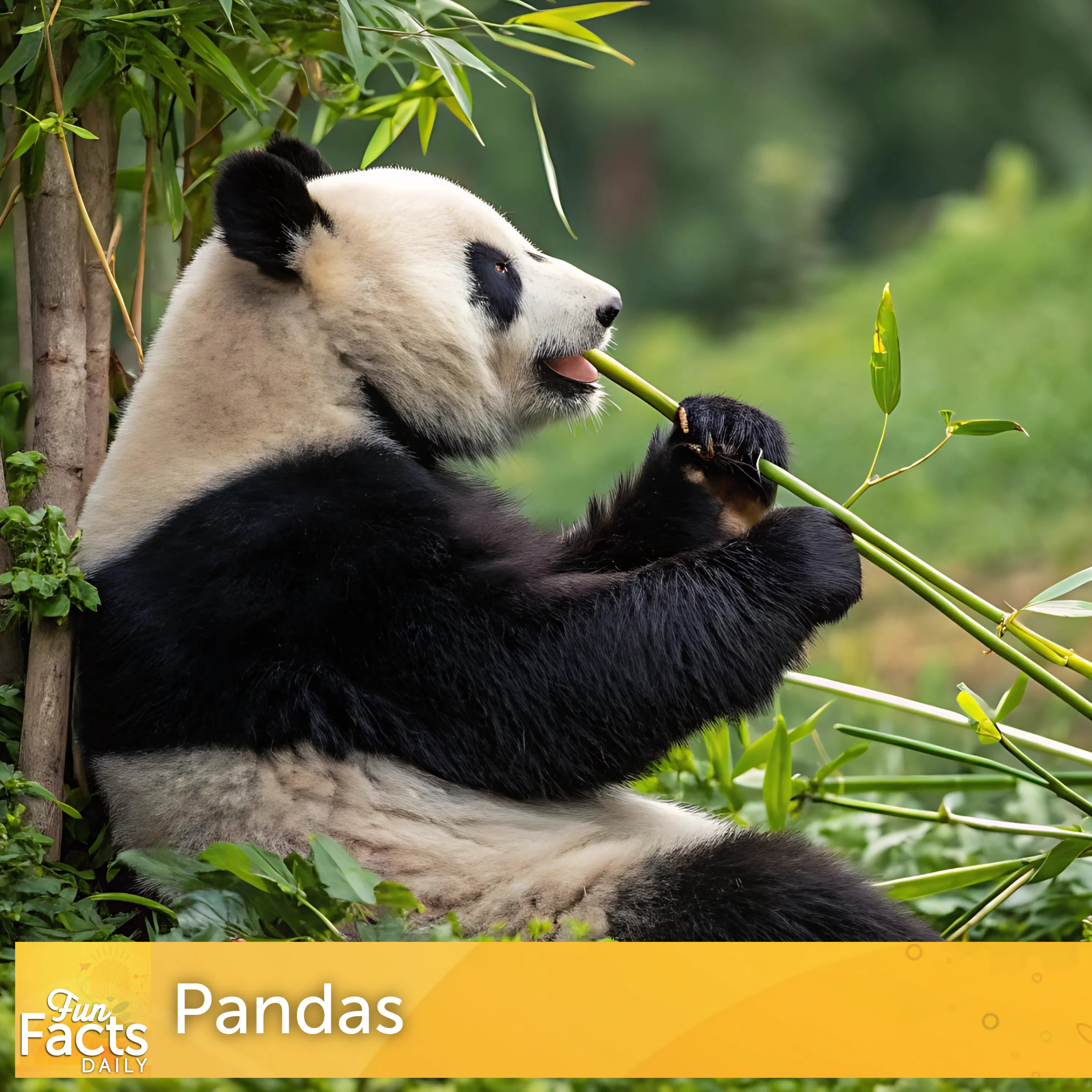
Fun Facts About Pandas
Giant pandas are fascinating members of the bear family with a highly specialized, bamboo-centric diet that requires unique physical and behavioral adaptations. Despite functioning primarily as folivores, these bears possess the gastrointestinal tract of a carnivore, meaning they lack the multi-chambered stomachs needed to efficiently digest plant matter. Consequently, they extract only about 17% of the nutrients from their food, forcing them to consume between 25 and 85 pounds of bamboo daily over eating sessions that can last up to 14 hours. To handle this massive intake, they have developed a pseudo-thumb from an elongated radial sesamoid wrist bone, granting them the dexterity to grip and strip slippery bamboo stalks with precision. Conservation efforts have successfully improved the global population of these vulnerable animals, with wild populations rebounding to an estimated 1,800 individuals. In addition to their protected status, their reproductive habits remain a point of scientific interest due to extreme size disparities; a newborn cub weighs a mere three to five ounces—making it smaller than a stick of butter—and relies entirely on its mother for survival. Adult pandas also exhibit highly unusual behaviors, such as males performing handstands while urinating to mark their scent higher on trees. Captive females have even been known to mimic the signs of pregnancy, a phenomenon that often results in the animals receiving elevated care, premium food, and air-conditioned quarters from their caretakers. Support me on Patreon. Please consider joining my new Patreon community and listen ad-free. For just $3 per month, you can get ad-free versions of Fun Facts Daily, Who ARTed and Art Smart. Head over to https://www.patreon.com/cw/FunFactsDailyPod if you are interested. Want to learn more? Head over to my website www.funfactsdailypod.com and be sure to listen to my other podcasts Who ARTed: Weekly Art History for All Ages or Art Smart. For family fun, check out my son's podcast Rainbow Puppy Science Lab Fun Facts Daily is an Airwave Media Podcast. If you are interested in advertising on this or any other Airwave Media show, email: advertising@airwavemedia.com Learn more about your ad choices. Visit megaphone.fm/adchoices
You may also like










Get this podcast on your phone, Free


Create Your Podcast In Minutes
- Full-featured podcast site
- Unlimited storage and bandwidth
- Comprehensive podcast stats
- Distribute to Apple Podcasts, Spotify, and more
- Make money with your podcast
