Optimising Human Performance
https://feeds.acast.com/public/shows/65e07fa5dfdd5a0017dd8296Episode List
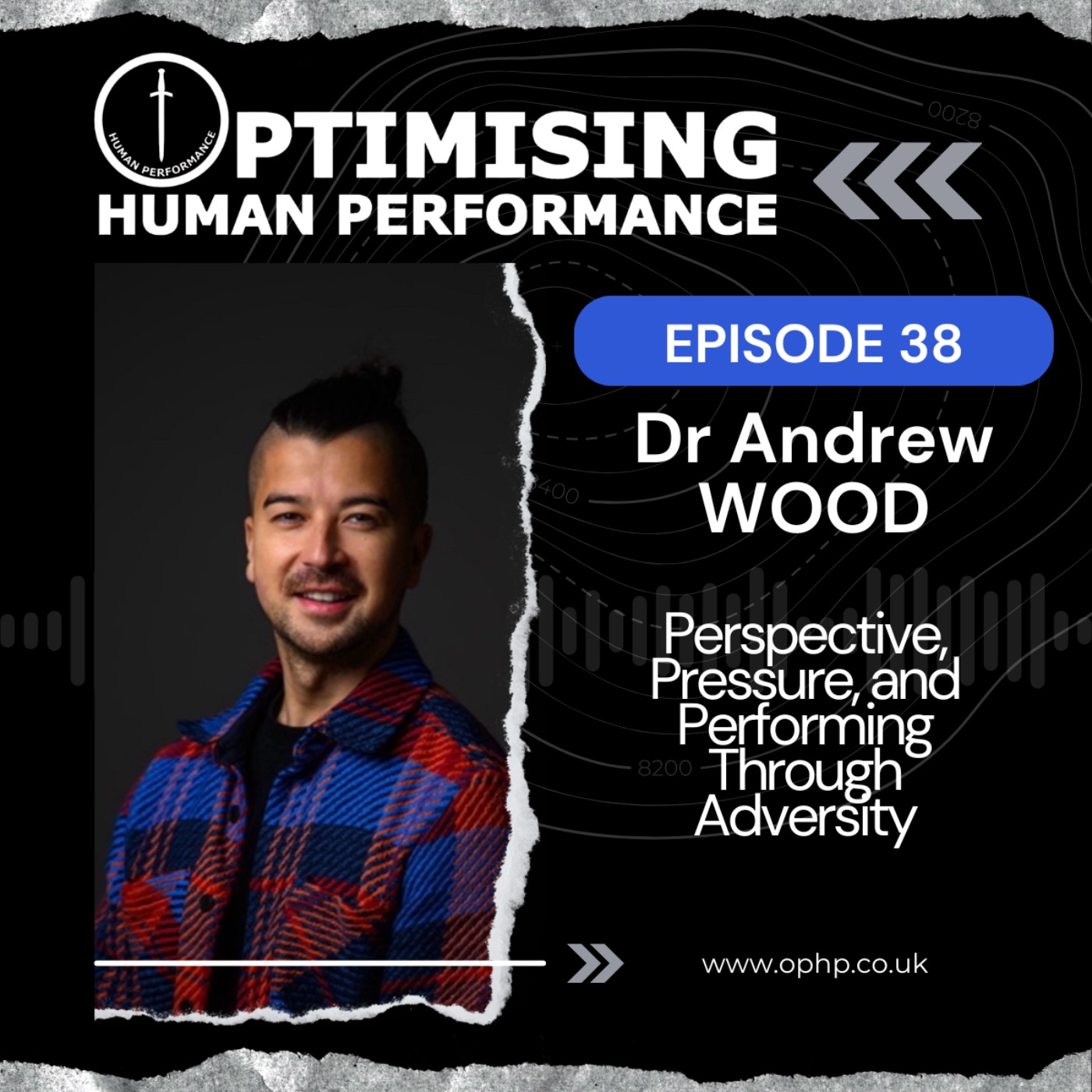
Perspective, Pressure, and Performing Through Adversity with Dr Andrew Wood
What if the biggest obstacle to performing under pressure isn't the situation itself, but the way we think about it? In this episode, Martin talks to fellow psychologist and world-leading expert on pressure and adversity, Dr. Andrew Wood, about the strategies and philosophies that can help you take control of the irrational beliefs that often hold us back.We discuss rational emotive behaviour therapy (REBT) and how irrational core beliefs fuel pressure, anxiety, and maladaptive behaviour. Andrew explains REBT’s focus on flexible, rational beliefs, distinguishing helpful vs unhelpful responses rather than positive vs negative thinking, and introduces concepts like awfulizing & low frustration tolerance. He describes tools such as the “badness scale,” 10-10-10 perspective taking, humour, and testing beliefs through controlled exposure to feared situations. Andrew also discusses leadership climates that normalise all-or-nothing thinking, and shares his own long COVID experience, bedbound for a year, identity loss, and using rationality, values and symptom-tracking to cope, ending with reflections on reconciling fear of death to reduce everyday fears.Guest, Cast & CrewDr. Andrew Wood is a Performance Psychologist, keynote speaker, and published researcher specialising in rational thinking under pressure. Drawing on over a decade working with elite athletes, emergency services, corporate leaders, and his own lived experience navigating life-changing disability, Andrew's work sits at the intersection of science, story, and practicality. He doesn't just teach people how to think more clearly and perform at their best when faced with setbacks, he's also had to do it himself, when it mattered the most. Hosted by Martin Jones https://www.ophp.co.uk Produced & edited by Bess ManleyResourceshttps://www.linkedin.com/in/drandrewwood/?originalSubdomain=ukdrandrewgwood@gmail.com Thanks for tuning in. If you found this podcast valuable, please take a moment to rate, share & review. If you have feedback, guest suggestions or topics that you'd love us to cover, then do email us at info@ophp.co.uk or connect with us on LinkedIn. Chapters02:20 REBT Explained 05:09 Irrational Beliefs In Action05:53 Awfulizing07:44 Badness Scale Perspective11:14 When Identity Collapses14:39 Culture And Leadership Climate18:06 Resilience Myths And Language22:00 Building Robustness And Tolerance25:48 Reframing Pain And Discomfort27:33 Bedbound After COVID28:09 Finding Your Why29:06 Meaning Without Extremes31:07 Testing Beliefs Safely34:26 Tools Without The App36:49 Imagery And Perspective38:37 Reframing Setbacks41:24 No One Is Perfectly Rational43:39 Long COVID Lived Experience47:16 Acceptance And New Normal49:45 Keynote Plans And Contact50:44 Making Peace With Death51:50 Final Wrap UpThanks for listening to Optimising Human Performance.This podcast is for people who can’t afford to fail. Each episode gives you practical, evidence‑based tools you can apply in the real world.For more about the podcast, speaking, coaching, and mentoring, visit:www.ophp.co.ukConnect with us:LinkedIn: https://www.linkedin.com/company/ophp/Instagram: @ophumanperformanceIf you found this episode useful, please share it with one colleague, subscribe, and leave a review – it helps us reach more people who operate in high‑stakes environments. Hosted on Acast. See acast.com/privacy for more information.
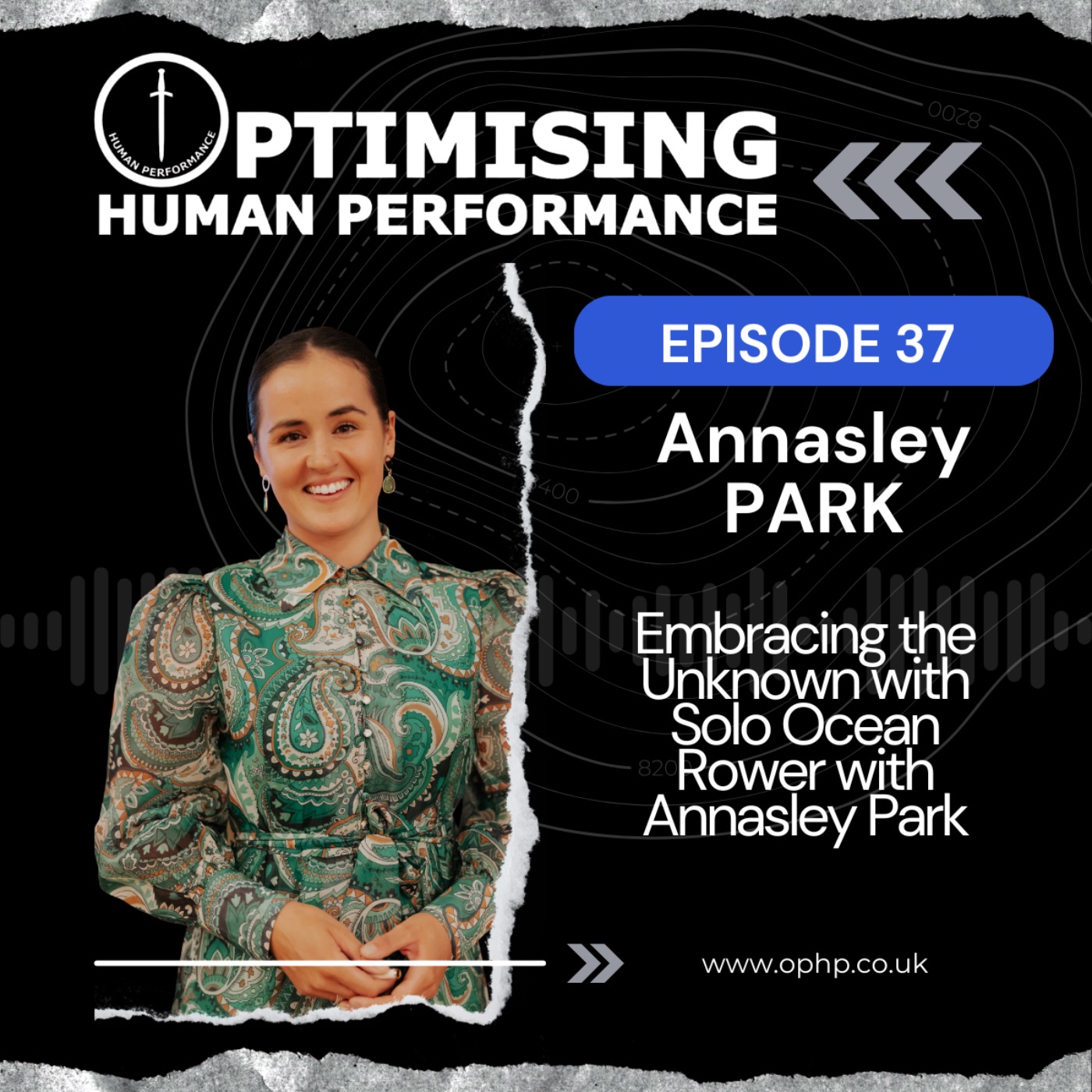
Embracing the Unknown with Solo Ocean Rower with Annasley Park
Former GB cyclist-turned-adventurer and solo ocean rower Annasley Park has built her life on the value of fortitude. In this episode of the Optimising Human Performance Podcast, she shares her journey, including her experiences with injury and burnout. She introduces the ‘fortitude mindset’, built on feral intelligence, visualisation, and emotion, and shares practical routines that anchored her through fear, fatigue and uncertainty.Guest, Cast & CrewAnnasley Parks speaks from lived experience about leadership under pressure, performing in uncertainty, managing fear, and sustaining high performance without burnout.At just twenty-nine years of age, she is the ninth solo, unsupported and independent woman in history to row three thousand miles across the Atlantic Ocean. A former professional cyclist, white-water raft instructor, Alpine chalet manager and superyacht deckhand. Annasley has spent over a decade working in demanding and unpredictable environments where resilience, adaptability, decision-making under pressure and self-leadership were essential skills.Growing up on the military estates of Herefordshire, Annasley found her freedom in the mountains through sports, ultimately building a professional cycling career with the Great Britain Cycling Team, competing on the road and track, and signing for a UCI World Tour-level road team. However, injuries cut this chapter short, teaching her early lessons in rebuilding and resilience when identity and purpose is lost.She went on to explore unconventional career paths that took her from source to sea. From Alpine chalet management to white-water rafting on the American rivers, and four years serving as a deckhand on superyachts, travelling all over the world with high-profile clients. Annasley gained unique insights into navigating diverse environments and thriving outside the conventional structures.Despite her physical, mental and emotional fortitude, Annasley experienced severe burnout in 2023. That period led her to question what truly sustains people when pressure rises, plans fail, fear sets in, and motivation runs out. Her Ocean Survivoar Challenge became the ultimate test of all the knowledge, skills, resources and networks she had developed. In less than a year, she brought the project to the starting line, assembling a world-class team of experts in ocean rowing, communications, medical and equipment support, and more, ensuring the expedition's success.Her Atlantic row was more than a test of endurance. It was a journey into the critical 20% zone. An unpredictable space she calls the messy middle, a threshold of transition where you are no longer who you once were, but not yet who you are becoming. This is a space where human capacity outlasts the plan. The lessons she learned in that zone form the foundation of The Fortitude System, built on the disciplines of solitude, magnitude and attitude of any given challenge or faced adversity, helping audiences convert chaos into clarity, overwhelm into sustainable performance and fear into action.Hosted by Martin Jones & Jonpaul Nevin https://www.ophp.co.uk Produced & edited by Bess ManleyResourceshttps://annasleypark.com/https://www.instagram.com/annasleypark/ Thanks for tuning in. If you found this podcast valuable, please take a moment to rate, share & review. If you have feedback, guest suggestions or topics that you'd love us to cover, then do email us at info@ophp.co.uk or connect with us on LinkedIn. Chapters01:23 Podcast Setup and Welcome02:26 From Running to GB Cycling04:06 Inside British Cycling Culture08:03 Injuries Identity and Retirement09:48 Where the Drive Comes From10:49 Post Cycling Adventures and Burnout18:25 Ocean Rowing Begins 21:17 Chaos at Sea22:22 Fortitude Mindset Tools24:46 Lows and Liminal Space27:06 Scraping Barnacles 29:17 Bird Companion and Team30:39 Flow State Ocean Signs33:04 Purpose and Charity Mission35:25 Advice for Young People39:24 Enjoy the Middle Space40:49 Where to Follow Next41:27 Final Podcast WrapThanks for listening to Optimising Human Performance.This podcast is for people who can’t afford to fail. Each episode gives you practical, evidence‑based tools you can apply in the real world.For more about the podcast, speaking, coaching, and mentoring, visit:www.ophp.co.ukConnect with us:LinkedIn: https://www.linkedin.com/company/ophp/Instagram: @ophumanperformanceIf you found this episode useful, please share it with one colleague, subscribe, and leave a review – it helps us reach more people who operate in high‑stakes environments. Hosted on Acast. See acast.com/privacy for more information.
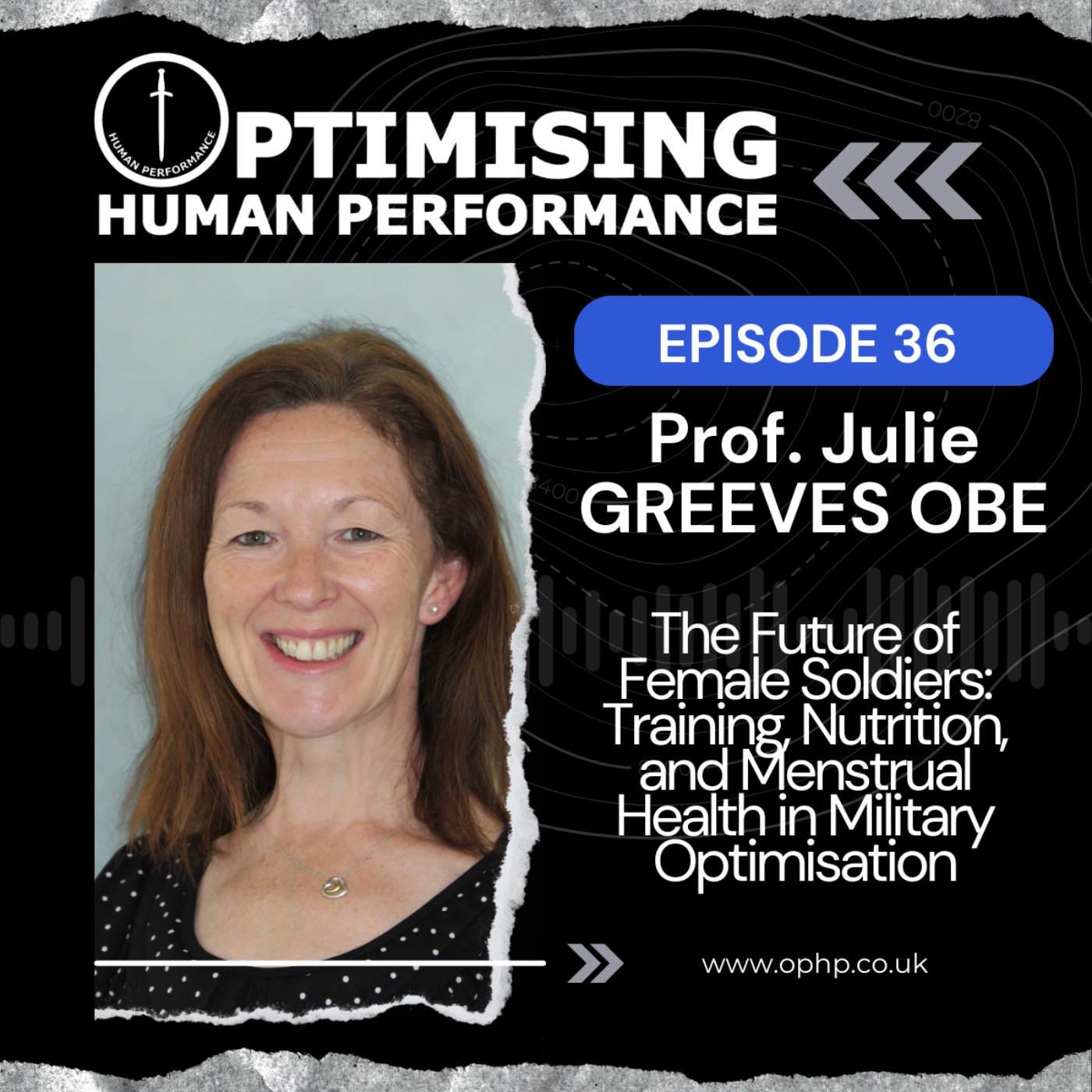
The Future of Female Soldiers: Training, Nutrition, and Menstrual Health in Military Optimisation
In this episode, Dr Julie Greeves, principal physiologist for the British Army and expert in applied human physiology, shares groundbreaking research on female soldier health, injury prevention, and performance optimisation. Dr. Greeves unpacks the Women in Ground Close Combat research program, and explains what it tells us about physical performance, load carriage and reproductive health. Listeners from defence, sports, or health sciences will benefit from these insights, which can help tailor training and policies for women in demanding environments. We discuss the implementation of physical employment standards, the importance of nutrition, menstrual health and sleep for female soldiers, and the steps required to help women thrive in strenuous roles within the military.Key Takeaways:Development and implementation of gender-specific physical employment standards and their impact on female recruitment.Physiological differences between men and women: skeletal structure, muscle mass, cardiovascular capacity, and susceptibility to injury.Injury risk factors: higher stress fractures and bone injuries in women, especially during initial training phases.Benefits of female physiology: metabolic advantages, increased fat oxidation during prolonged submaximal exercise, and potential to reduce injury risk with appropriate systems.The myth of training around the menstrual cycle and its practical, science-backed inaccuracy.Hormonal fluctuations, menstrual health, contraceptive use, and their impacts on performance and injury risk.The importance of micronutrients like iron and calcium for women in military settings.The role of sleep, stress, and the gut-brain axis in psychological health and performance, with sex differences in cortisol responses.Practical advice for individuals preparing for arduous training: targeted load carriage, resistance, nutrition, and tracking menstrual health.Guest:Julie is the Head of Army Health and Performance Research in the British Army. After obtaining her doctorate in female physiology, Julie has spent over 25 years pioneering original research on musculoskeletal health and human performance in the military. Julie's research has widely informed Army and Defence policies, and she was decorated with an OBE in 2017 for her scientific contribution to the opening of Ground Close Combat roles to women. Julie holds honorary Chair appointments at the School of Medicine UEA and UCL and has published over 140 original papers in peer-reviewed journals.Hosted by Martin Jones & Jonpaul Nevin https://www.ophp.co.uk Produced & edited by Bess ManleyResources:https://www.linkedin.com/in/julie-greeves-obe-facsm-60170a52/?originalSubdomain=ukhttps://scholar.google.com/citations?user=RgILbTUAAAAJ&hl=en Arduous Training Guide for Women – coming soon!Chapters:00:13 Julie's Career Journey and Current Role02:06 Women in Ground Close Combat Research Program04:39 Implementing Research Findings in the Army08:41 Physical Differences and Injury Risks for Women12:02 Benefits of Female Physiology in the Military16:17 Training and the Menstrual Cycle22:58 Analysing Data on Muscle Performance and Bone Health23:12 Informed Decisions on Contraceptives and Training23:57 Tactical Decisions Around Menstrual Cycle24:17 Understanding RED-S in Military Context25:13 Energy Deficiency and Logistical Challenges26:52 Impact of Sleep on Reproductive Health29:16 Psychological Health and Stress Responses33:14 Nutritional Needs and Training Recommendations36:09 Empowering Women Through Menstrual Health Tracking38:33 Future Research and Implementation42:46 Final Thoughts and Closing RemarksWomen can absolutely thrive in demanding military and sporting environments if they get the right training, nutrition, sleep, and monitor their menstrual health. The tools and policies to support you are on the horizon. Thanks for listening!Thanks for listening to Optimising Human Performance.This podcast is for people who can’t afford to fail. Each episode gives you practical, evidence‑based tools you can apply in the real world.For more about the podcast, speaking, coaching, and mentoring, visit:www.ophp.co.ukConnect with us:LinkedIn: https://www.linkedin.com/company/ophp/Instagram: @ophumanperformanceIf you found this episode useful, please share it with one colleague, subscribe, and leave a review – it helps us reach more people who operate in high‑stakes environments. Hosted on Acast. See acast.com/privacy for more information.
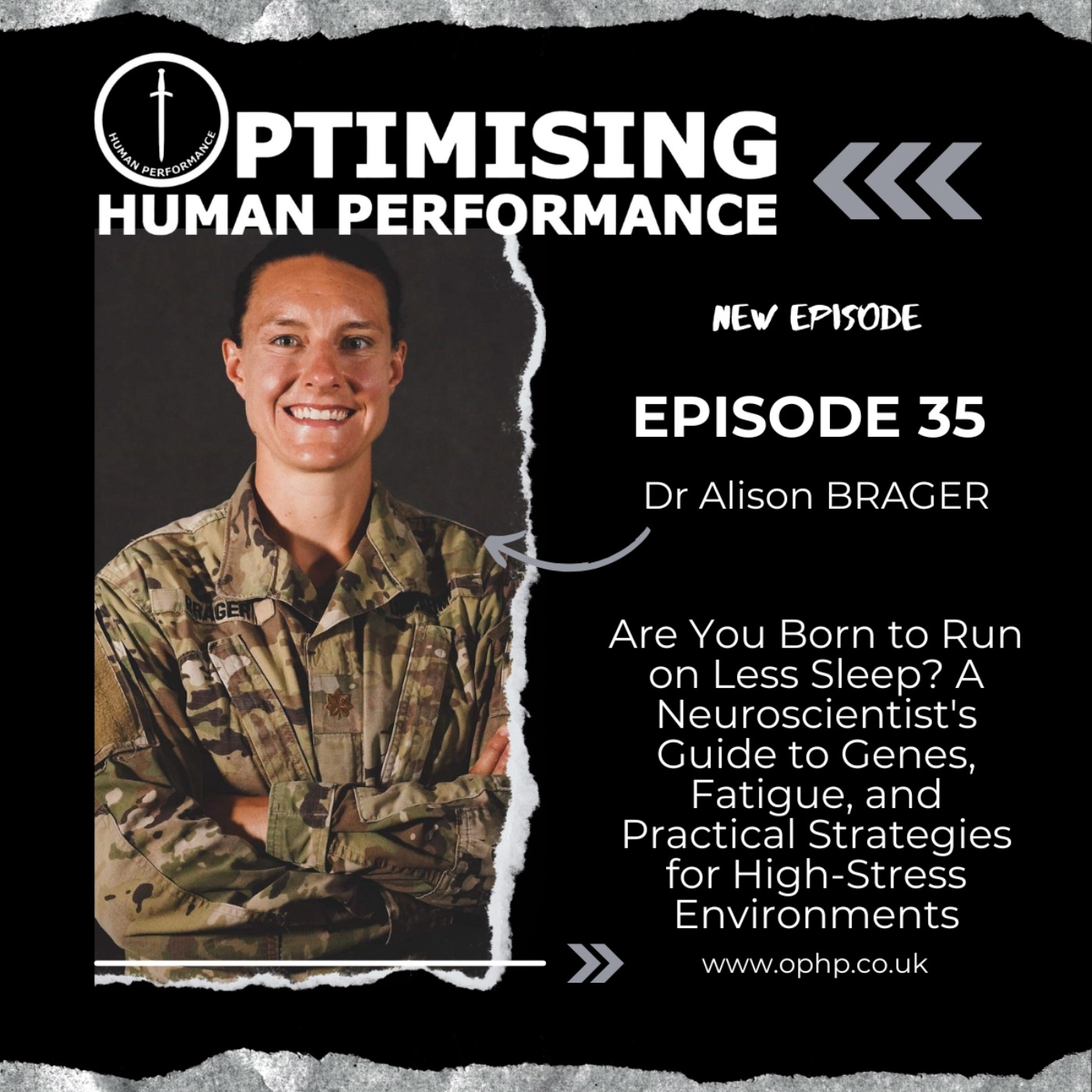
Are You Born to Run on Less Sleep? A Neuroscientist's Guide to Genes, Fatigue, and Practical Strategies for High-Stress Environments: With Dr Allison Brager
In this episode, Martin & JP talk to Dr Allison Brager, an active-duty Army officer and neuroscientist specialising in sleep and fatigue research.Dr. Brager shares her pioneering research on how both acute and chronic sleep deprivation affect physiological, cognitive, and emotional performance, especially in high-stakes environments. She breaks down the genetic factors that make some individuals resilient to sleep loss, debunks common myths about "training" yourself to need less sleep, and reveals the critical role of sleep in energy (ATP) production outside of the brain. Plus, learn about the military's evidence-based strategies for managing inevitable fatigue, including the best way to use strategic caffeine dosing.Key Takeaways:Acute (Forced Wakefulness): After 18 to 24 hours, an individual struggles to recover performance without a sleep opportunity.Chronic (5 hours/night): Three days of chronic restriction lead to a decline in physiological, cognitive, and emotional state approaching clinically significant levels (e.g., a 50% drop in testosterone).Genetic Resiliency: A naturally occurring mutation in the adenosine receptors can make individuals more resilient to sleep deprivation, slowing the rate of decline in performance under forced wakefulness.The Sleep-First Principle: Sleep is the biological foundation for readiness. It is necessary to replenish glycogen and fat reserves (ATP/energy homeostasis) to support high-intensity training and performance the following day.Nap Strategy: A simple 20-minute nap or "chill time" can significantly increase productivity, morale, and unit welfare in operational settings.Strategic Caffeine Dosing: Do not wait until you feel tired to take caffeine; it's already too late.SLANT Acronym: Optimise a suboptimal sleep environment by controlling Surface, Light (use red light, eye masks), Air quality, Noise (use earplugs), and Temperature.Busting the Morning Caffeine Myth: Dr. Brager states that for an individual with an entrained circadian rhythm, morning caffeine has a minimal effect on the body's ability to use light as a time cue. Light is the most potent time cue, and the idea that you must wait hours after waking up to consume coffee is generally considered "nonsense."Guest, Cast & CrewDr Allison Brager is a highly respected neurobiologist and active-duty US Army officer with expertise in neuroscience, sleep, and circadian rhythms. Her work examines substrates and mechanisms of resiliency to extreme environmental stress in Special Forces and other elite populations during intense maritime, aviation, and land-based training and operations in Antarctica, the Central American rainforest, and other austere environments. Her popular science book, titled Meathead: Unravelling the Athletic Brain, links exercise physiology and neuroscience to her experiences as an elite athlete.Hosted by Martin Jones & Jonpaul Nevin https://www.ophp.co.uk Produced & edited by Bess ManleyResourceshttps://www.westpoint.edu/directory/allison-j-bragerhttps://www.instagram.com/docjockzzz/?hl=en linkedin.com/in/allison-brager-80a58210 Meathead: Unraveling the Athletic Brain https://www.amazon.co.uk/Meathead-Unraveling-Athletic-Allison-Brager/dp/149086444X Born To Run https://www.amazon.co.uk/Born-Run-Hidden-Ultra-Runners-Greatest/dp/1861978774 Thanks for tuning in. If you found this podcast valuable, please take a moment to rate, share & review. If you have feedback, guest suggestions or topics that you'd love us to cover, then do email us at info@ophp.co.uk or connect with us on LinkedIn. Chapters01:33 Exploring Sleep Deprivation07:55 Genetic Factors in Sleep Resilience13:43 Impact of Physical Activity on Sleep24:57 Practical Sleep Strategies for High-Stress Environments29:55 Caffeine and Sleep Management37:59 Conclusion and Final ThoughtsThanks for listening to Optimising Human Performance.This podcast is for people who can’t afford to fail. Each episode gives you practical, evidence‑based tools you can apply in the real world.For more about the podcast, speaking, coaching, and mentoring, visit:www.ophp.co.ukConnect with us:LinkedIn: https://www.linkedin.com/company/ophp/Instagram: @ophumanperformanceIf you found this episode useful, please share it with one colleague, subscribe, and leave a review – it helps us reach more people who operate in high‑stakes environments. Hosted on Acast. See acast.com/privacy for more information.
The Science of Mental Fatigue: Strategies for High Performance & Endurance with Prof Sam Marcora
Are you ready to unlock your full potential in high-demand situations?Join hosts Martin Jones and Jonpaul Nevin on the Optimising Human Performance podcast as they dive deep into the fascinating truth about mental fatigue with one of the world's most cited sport scientists, Professor Samuele Marcora.Discover groundbreaking and often surprising research findings that redefine the limits of human capability. We don't just explore the problem; Sam provides immediately applicable, practical strategies for mitigating mental fatigue, including:Strategic caffeine use to combat fatigue.The science behind brain endurance training.The critical role of motivation in pushing through mental and physical barriers.Tune in to master your mind and elevate your high performance and endurance to a new level!Guest Spotlight: Professor Samuele MarcoraProfessor Samuele Marcora is a leading authority whose pioneering research seamlessly integrates physiology and psychology to understand human performance. His high-impact scientific publications span crucial topics like physical and mental fatigue, endurance performance, and cognitive load.A sought-after consultant, Sam has advised elite organisations globally, including:Italian Cycling FederationJuventusArsenalBath RugbyHonda Racing CorporationASICSIn This Episode: Key Topics & ChaptersWe break down the science of the mind-muscle connection:Understanding Mental Fatigue (01:42): What is it and how does it differ from physical exhaustion? (02:11)Impact on Performance (05:28): The surprising ways mental fatigue limits your endurance.Cognitive Load and Limits (12:30): Exploring the neurophysiology of mental fatigue. (19:33)Caffeine and Fatigue (23:07): The definitive guide to using caffeine strategically.Nootropics and Energy Drinks (24:00): Evaluating their real role in fighting fatigue.Identifying and Measuring Mental Fatigue (27:51): Practical methods for athletes and high-performers.Strategies to Mitigate Fatigue (31:17): Immediate actions you can take.Training Your Mind for Endurance (33:51): The power of brain endurance training.Resources Mentioned:Sam Marcora's Academic Profile: University of BolognaSam's Publications: Google Scholar CitationsVideo: The Eternal RunHosts: Martin I. Jones & Jonpaul Nevin (ophp.co.uk)Produced & Edited by: Bess Manley00:08 Sam's Professional Journey01:42 Understanding Mental Fatigue02:11 Mental Fatigue vs. Physical Fatigue05:28 Impact of Mental Fatigue on Performance05:39 Research on Mental Fatigue and Endurance12:30 Cognitive Load and Performance19:33 Neurophysiology of Mental Fatigue21:48 Understanding Adenosine and Mental Fatigue23:07 The Role of Caffeine in Combating Fatigue24:00 Evaluating Nootropics and Energy Drinks26:25 Exploring Caffeine Delivery Methods27:51 Identifying and Measuring Mental Fatigue29:53 The Importance of Motivation in Fatigue31:17 Strategies to Mitigate Mental Fatigue33:51 Training for Mental and Physical Endurance40:20 Final Thoughts and Key TakeawaysIf you found this episode valuable, please take a moment to rate, share, and review the podcast. For feedback, guest suggestions, or topics you'd love us to cover, email us at info@ophp.co.uk or connect with us on LinkedIn.Thanks for listening to Optimising Human Performance.This podcast is for people who can’t afford to fail. Each episode gives you practical, evidence‑based tools you can apply in the real world.For more about the podcast, speaking, coaching, and mentoring, visit:www.ophp.co.ukConnect with us:LinkedIn: https://www.linkedin.com/company/ophp/Instagram: @ophumanperformanceIf you found this episode useful, please share it with one colleague, subscribe, and leave a review – it helps us reach more people who operate in high‑stakes environments. Hosted on Acast. See acast.com/privacy for more information.
You may also like










Get this podcast on your phone, Free


Create Your Podcast In Minutes
- Full-featured podcast site
- Unlimited storage and bandwidth
- Comprehensive podcast stats
- Distribute to Apple Podcasts, Spotify, and more
- Make money with your podcast