The Compassionate Leadership Interview
https://feeds.captivate.fm/compassionate-leadership/Episode List
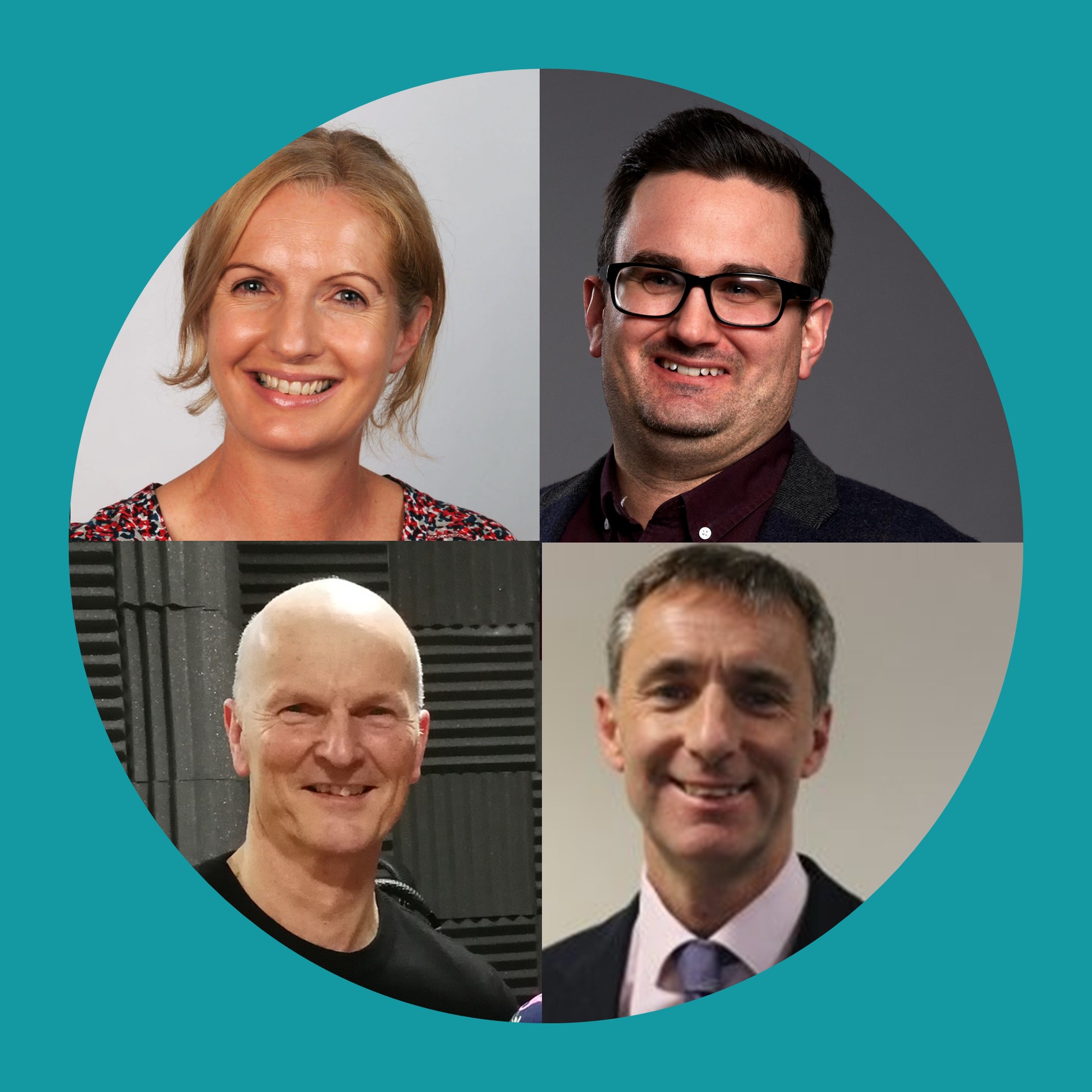
Anna Lowe, Nigel Harrison, and Chris Dayson: Joining up Sport and Wellbeing
This show is a departure from The CLI’s one-to-one format. Chris is joined by three guests to discuss joining up sport and wellbeing in Sheffield.Anna Lowe is Programme Manager at the National Centre for Sport and Exercise Medicine and Leader of Move More. Chris Dayson is Associate Professor in the Centre for Regional Economic and Social Research, and leader of the Healthy and Active 100 research theme at the Advanced Wellbeing Research Centre (AWRC). Nigel Harrison is Chief Executive of the Yorkshire Sport Foundation. Move More is the vision of Sheffield as a happier, healthier, and more connected city. It recognises the key role that being more active has to play in that vision. The first Move More strategy was launched in 2015, and the second was launched in June 2021. It’s a whole systems approach to increasing physical activity in Sheffield. The six priority areas are communities, education, health and social care, environment, sport, and active travel.Anna observes that many of the things that support wellbeing are non-medical; such as relationships, nature, and moving more. The latest Move More strategy targets the areas of the city where the need is greatest, as characterised by geographical location (the most disadvantaged wards), and demographic groups such as age (older people), and sex (women and girls).The Yorkshire Sport Foundation (YSF) is one of 43 active partnerships across England, primarily funded by Sport England. Their role is one of “connecting, influencing, and, where needs be, providing opportunities to be active.” One of YSF’s managers is part of Anna’s Move More team.Active Burngreave is an example of a project involving close collaboration between Move More and YSF. The funding for this originated from Comic Relief. The physical activity and sport were designed around how the community operated. The project employed Safiya Saeed, now a local councillor. She is “the sticky person that everybody goes to in that particular area.” There are now several activity groups: Big Brothers, Reach Up, Sisters. The key, maintains Nigel, is that this is people in Burngreave organising things for themselves through local leadership. The role of Move More and YSF has been to support it in the background through funding, advice, and professional development.Chris Dayson explains that social prescribing is an opportunity for health practitioners to address a patient’s social and emotional needs by referring them on to activities in their community. Such activities may be social, physical, or a combination of the two. At the heart of the process – and where NHS England are investing a significant amount of money over 10 years – is the link worker. The link worker keeps abreast of what is happening in the community, and potentially also plays a community development role. They take the referral from the health practitioner, develop an understanding of the patient, and then put in place appropriate support and activities.Thus, social prescribing is a pathway from the NHS to the community, and it provides just one mechanism through which the Move More strategy might be delivered.Activities that involve connecting to nature or take place outdoors are sometime referred to as ‘green social prescribing.’ The government has seven test and learn sites for green social prescribing. South Yorkshire and Bassetlaw has one of these test and learn pilots. This is a cross-government initiative including NHS, Department of Health, Defra, along with sector partners such as Sport England and Natural England.At present we don’t know what proportion of social prescribing involves sports clubs, and in general there is a lack of knowledge about what capacity exists in the community and what can be done to support that capacity. Directories exist, but more important is the link worker’s understanding of the community and what is going on.Chris is heavily involved in the evaluation of social prescribing. He describes it as “the most evaluated thing of the 21st Century”, however most of the research is localised. NHS England are about to embark on a national study, and Sheffield Hallam, The University of Sheffield, and Exeter University have been commissioned to look at green social prescribing.How does a sports club become more engaged with Move More and also social prescribing?Anna acknowledges that Move More is only as strong as its networks, and depends for its success on collaboration across the city. To that end it maintains a website, holds quarterly partnerships meetings, convenes a partnership group, and is active on social media.Chris suggests that a club might make informal contact with the link worker from the closest Primary Care Network (PCN) and start a conversation. The Social Prescribing Network offers practical support to clubs that put their heads above the parapet, as does the National Academy for Social Prescribing. He suggests that this needs to be a point of focus for the coming years.What further opportunities do we need to take in order to join up sport and wellbeing in the city?Anna says implementing the current Move More strategy is key to that. Nigel says that the Move Move ambassadors programme is important; people who champion the cause of physical activity in the community. Additionally, physical activity needs to be integrated into all of the Council’s policies. Chris observes that poverty is one of the greatest barriers to participation and says that alongside the other good work that is being done, the city needs to address this issue.
Dr Julian Abel, The Compassion Project: A case for hope and humankindness
Dr Julian Abel is a recently retired consultant in palliative care, former Vice President of Public Health Palliative Care International, and co-author with Lindsay Clarke of The Compassion Project: A Case for Hope and Humankindness from the Town that Beat Loneliness.From childhood Julian has tried to seek out what he can do that is “meaningful and helpful.” Going into healthcare was a direct expression of that. When he first entered medicine he discovered that it had a pronounced hierarchy. “The patient was nowhere near the top.”After a spell studying Chinese medicine and cranial osteopathy, he became a palliative care consultant in Weston-super-Mare within a service that covered hospice, community and hospitals. He became particularly interested in the community dimension of this because he came to understand that “the thing that makes the biggest difference is not the professional support but the love, laughter and friendship.” He says that it is deeply embedded in our nervous system: “we have a prosocial nervous system.”Julian’s book The Compassion Project is largely based on the Compassion Frome Model initiated by Dr Helen Kingston and Jenny Hartnoll, and which Julian helped to lead. It spun out of a paper initiated by Helen. Julian supported the paper with some statistics, which included that emergency admissions in Frome had decreased by 14% whilst in the rest of Somerset they had risen by 29%. It was clear that they were onto something.Up until this point no-one had come across an intervention that would reduce population emergency admissions. The team decided that they need to ‘go public’ and explain the building blocks of what they were doing and the benefits. Julian co-authored an article in Resurgence magazine, that was reported in the Guardian. Someone read the publicity and approached the Frome team concerning the possibility of writing a book.The Compassionate Frome model provides a means of connecting lonely and isolated patients with the plethora of activities that are going on in the community. The friendships brokered by Compassionate Frome create mental wellbeing which, via the mind-body connection, is reflected in physical wellbeing. Community connectors and health connectors play a key role in the Frome model. There are around 700 of the former (in a population of 28,000). The role of the community connectors is, by reference to a web directory, to signpost people to activities in the community that might be of interest. Julian the conversations that each connector has as a “little explosion of compassion in the community.”The health connectors are fewer in number and help people gain clarity on what is important to them and what they need when they are not in touch with these things. They are trained in motivational interviewing.His son Bewick has taken compassionate thinking into his primary school, located in a hard-pressed community. The first thing he did was help children recognise and name their emotions. And then they talked about which ones were beneficial to school life and which ones were harmful. More recently they have introduced a morning check-in, where they ask one another how they are, and if there is anything they can do to make it better. In time the children became happier and more connected and educational attainment improved dramatically.Julian feels that one of the challenges of the UK education system is that many of the ministers and civil servants are emotionally inarticulate themselves.Julian has formed an organisation Compassionate Communities UK (you can find it on the web at compassionate-communities.co.uk). It is focused on sharing, developing expertise, and education. Some of its work is professional facing and some is public facing. Julian’s podcast ‘Survival of the Kindest’ is also part of it.Julian is looking to develop expertise around community sources of support for trauma. “If you just rely on professional services, it’s never going to happen” he says.The books he would recommend include “When the Body Says No” by Gabor Mate. He also notes the work of Fritzi Horstman (for example the documentary “Step Inside the Circle”), and palliative care physician Naheed Dosani (for example TEDx talk “What’s a life worth?”). In his career, it’s the things that Julian has done that has promoted a sense of belonging and connectedness, that helped people realise that they weren’t alone, that Julian has found most fulfilling.In the world of palliative care, the person who inspired Julian the most was Allan Kellehear (of the University of Bradford). He has helped to reframe the subject, and has become a close friend of Julian.Julian doesn’t have a problem with self-care! He lives on the coast in Cornwall, he surfs, he meditates, goes running with his dogs, and has a steady trickle of family and friends who come to visit.Julian’s advice to his 20-year old self (or to himself at any age) is to understand that we are already compassionate. “We swim in a sea of compassion.” If you want to have a happy life, be healthier, have a meaningful life, live a long time, then be more compassionate.
Dr Amar Rughani MBE, The Leadership Hike
Dr Amar Rughani is a leadership mentor and former Sheffield GP, former Royal College of General Practitioners examiner and Blueprinting clinical lead, and co-author with Joanna Bircher of ‘The Leadership Hike: Shaping Primary Care Together.’General practice didn’t become a specialty in its own right – in terms of having a compulsory licencing examination – until 2007. Amar was involved in defining what general practice involved. He believes good GPs engage first and foremost with people rather than with disease systems and lab tests. Understanding humanity is at the core of what GPs do.Similarly leadership was just an expectation of GP colleagues rather than being defined or taught until recently. Amar set out to define it so that it could be taught. He’s no longer sure it can be defined or taught, but it has been an interesting journey. His interest in leadership also stemmed from his reflections on working with patients collaboratively to improve their lives.He believes a strong argument can be made that effective leadership is highly context dependent. He found that much of the business literature on leadership – promoting positional power, control, personal achievement, and reward as motivators – didn’t really resonate with him. The values of primary care are more to do with compassion, community, engaging with complexity, openness, and honesty. And so he felt that he had to write the book, because he couldn’t find anything out there that said what was needed in a GP context.The book itself is “totally an exercise in compassionate leadership.” Amar says that he wanted to convey that he and Joanna did not have all the answers, but that people really matter, and “what they can do for their community matters for the whole world.” They called the book a ‘hike’ because they wanted people to feel that Amar and Joanna were accompanying them on their journey.In the book Amar says “maybe we should ask ourselves whether, if we rarely feel uncomfortable or need to use our courage, we are actually engaging in leadership at all.” If we are going to change things then first we will have to “stick our head above the parapet.” We’ve noticed that there is a problem and we care enough to actually say so. He also says “it is humbling to appreciate that so much of what differentiates people who are given higher or lower status by society is not determined, for example, by genetics or talent, but by resources, opportunity and support” and feels that the more we see ourselves as an elite, the more disconnected we are liable to become from the people we serve. Leaders generally operate along two dimensions – task and people – and the people dimension is normally harder. People need to be willing to connect with you, and to give their ‘discretionary effort.’ They won’t do that unless they feel their ideas are welcomed, they are going to be supported, given some resource perhaps, and receive some acknowledgement. But the start of it all is that they don’t feel that you look down on them or talk down to them.Amar maintains “our greatest potential for developing our most useful contributions lies not in the areas where we are weak, but in the areas where we are already strong.” At a traditional GP appraisal, weaknesses are identified and the expectation is that over the coming year you will spend time remedying your deficits. He found the work of the Gallup organisation, which is summarised in the book Strengths Finder 2.0, revelatory. That research revealed that a great number of measures of personal effectiveness were positively correlated with the ability of people to connect with what they were singularly good at. Therefore, one of the arts of leadership is to support people to engage with those strengths and apply them.Amar observes that in primary care, ones work can be so reactive that there seems to be little time to do much other than firefighting. However, it is nonetheless essential to clarify vision and direction. In his practice Amar promoted this by encouraging people to reconnect with the ‘why’ both in one-to-one conversations and in group discussions. You can also learn much about the ‘why’ of an organisation by observing what energises people, what they celebrate, what they discuss with passion over coffee.Towards the end of the book Amar warns “Power corrupts. No-one is exempt.” However, there are strategies we can adopt to resist the temptation to become grandiose and even abuse our leadership power. He believes we need to find the balance between the overuse of power, associated with coercion and control, and the opposite position where we seek to avoid influencing others altogether. To do that we need to “keep our antennae twitching” and sense how we are coming across to others. “How are people with us?” is a question explored in the book.On his journey Amar was inspired by Pat Lane, who was a regional director in medical education. He had a number of qualities that hugely helped Amar, and Amar has tried to bring them into his own life. He was a person of great energy, enthusiasm, and drive. He encouraged people who had original ideas, and backed up his encouragement with resources.Apart from his own book (!), Amar would recommend Simon Sinek’s TED Talk ‘How great leaders inspire action’, Sir Ken Robinson’s TED Talk ‘Do schools kill creativity?’, and Neil McGregor’s series of podcasts, ‘A history of the word in 100 objects.’ He would also recommend Otto Scharmer’s book ‘Theory U.’Amar’s self-care regime includes walking, working out, and yoga. He maintains a spiritual life, and he also has fun, and tries to “be fun.”His advice to his 20-year-old self would be: “You don’t necessarily have to slow down, but just linger... a little between the events of each day… what happens in the spaces is what really helps you to savour life.”
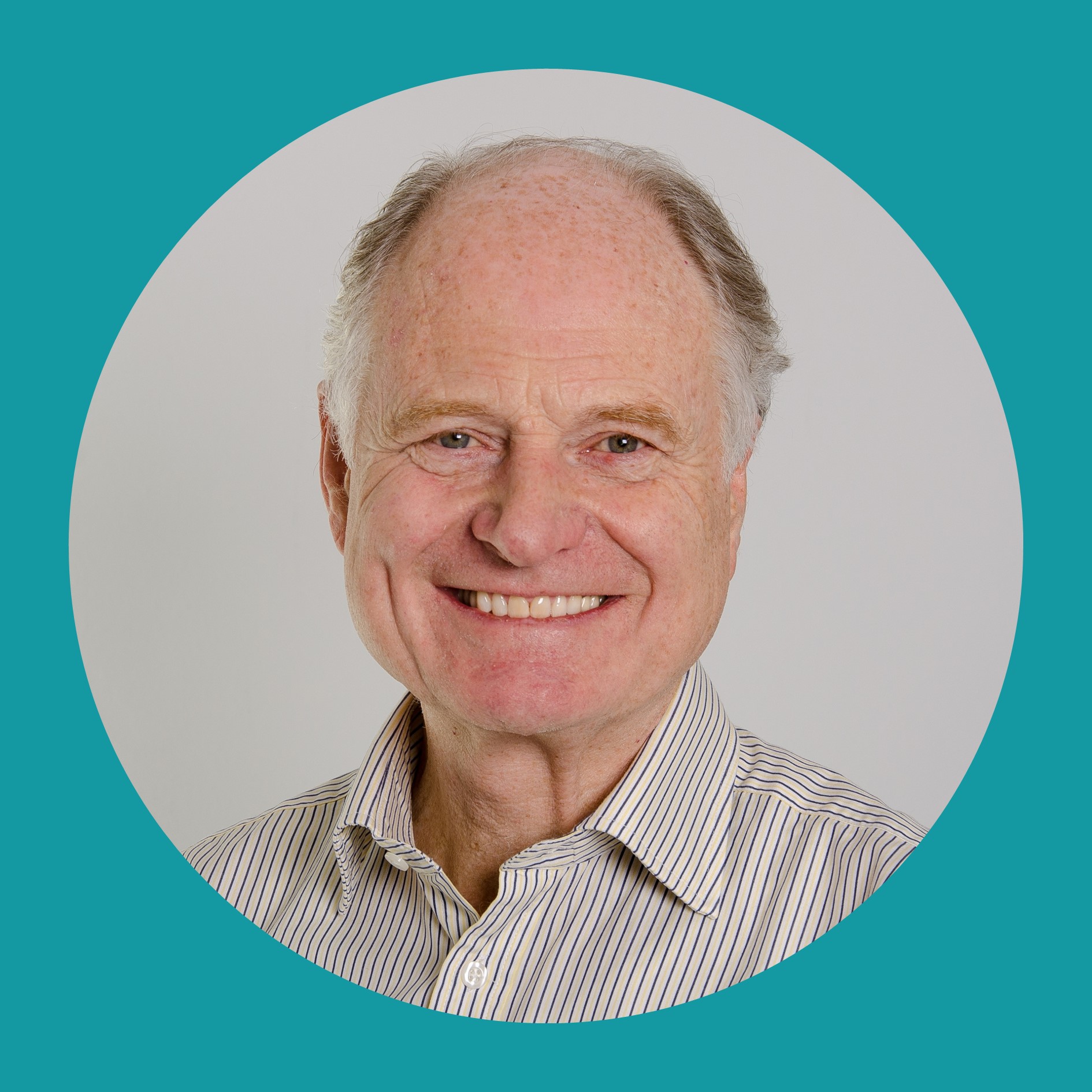
Dr Richard Field OBE, being present, listening, and reflecting
Dr Richard Field OBE is a specialist in individual and organisation growth and development, Chairman of Highlander Computing Solutions, former Chairman and CEO of the Dyson Refractories Group, visiting professor at Sheffield Hallam University, and a former South Yorkshire Businessman of the Year.Dave Hembrough recommended Richard for the show – Richard made a big impression on him when Dave attended his 10-day Integral Leadership course. Richard was running a leadership course at Balliol College Oxford for the Industrial Society when he was approached by the Training and Enterprise Council to design “a world-class leadership programme.” Richard designed it with a team of collaborators over a period of two years. He describes the result as a “programme for life”, as relevant to a young student as to a board of directors.He and Rob Copeland of the Advanced Wellbeing Research Centre (AWRC) (episode 15, January 2020, of this podcast) have recently developed a further iteration of the programme called ‘Leading for Health and Wellbeing’ (LHW), which will be rolled out at the AWRC from June.He believes it is difficult to lead with compassion unless you are compassionate towards yourself. The Dale Carnegie training organisation has the ‘3Cs’ rule; “never criticism, condemn, or complain.” And Richard didn’t, except that he came to realise that the one person he was beating up was himself.At 35 Richard became the Chairman and Chief Executive of a large organisation. He sought advice on how to lead from a well-known business leader of the time David Frith, who told him there are only two things were necessary; be there and listen. Richard says “everyone is wonderful, it’s up to us to give them the space to be the best that they can be.”As a child Richard had encephalitis and was in a coma for a month. He was bullied at school, and had to wear irons because his bones were brittle. On a course, he heard a saying that changed his life: “By doing you become.” He started working hard and looking after other people. A life of achievement, recognised through his OBE, followed. One of the objectives of his leadership course is to help people avoid the pain that he went through.His leadership philosophy is that everyone is doing the best they can with the resources available to them, and that people are family. His style is to ask questions because then the answer comes from the individual and they are learning. If things don’t go so well, he asks how might that have gone better, and believes that reflection is one of the keys to life. He is chairman of several companies and believes that the effectiveness of teams is critical to successful business. The stronger the relationships within a board, the greater its ability to deal with challenging issues. The role of the chairman is to build those relationships, and create a culture of psychological safety within which difficult matters can be discussed openly. Richard sees the two greatest challenges facing business as social and environmental sustainability, and professionalism: entrepreneurs frequently fail through lacking the basic tools they need. Everyone should be continuously learning.His too proudest achievements in business are “just seeing people be the very best they can be”, and his Doctor of Business Administration (DBA) at Sheffield Hallam University.His biggest mistake concerns a visit by Tony Robbins to Sheffield Arena. At the last minute it transpired that the hire of the arena would be another £70,000 on account of the lighting rig. Firstly, Richard hadn’t written down the requirements of Tony’s team, and secondly he hadn’t monitored what was going on properly.The course that has had the greatest impact on Richard was the Industrial Society course where he learnt “In doing you become”, so much so that he returned as a volunteer on 15 occasions before eventually he was asked to run the programme.One of the people that has inspired Richard on his journey is Sir Hugh Sykes, with whom he worked in a management consultancy. He learnt from that experience that often barriers are created within ourselves.He believes that supporting young people is crucial to the future of the city region.Richard is an ambassador for Homeless and Roofless at Christmas (HARC, formerly the Archer Project), but he focuses on facilitation and training – the things he excels at – in order to support hospices, and other charities.Books Richard would recommend include ‘Shoe Dog’ by Phil Knight the creator of Nike, ‘Principles’ by Ray Dalio, ‘The Seven Habits of Highly Effective People’ by Steven Covey, and ‘The Servant’ by James C Hunter. Anyone who would like a comprehensive book list from Richard can obtain it by writing to rich@fieldenterprise.co.uk.Self-care is for Richard the most important thing of all. He says “unless you’re healthy then you can’t help others.” He does Tai Chi and yoga every day and meditates for 20 minutes each morning and evening.His advice to his 20-year-old self would be to slow down – you notice so much more – and reflect. How could I have done that better? What have I learnt from the situation? Also, he would advise him to focus and plan ahead, and look for the good things in other people and in yourself. Be there and listen, and do what you love to do, and work hard at it consistently.
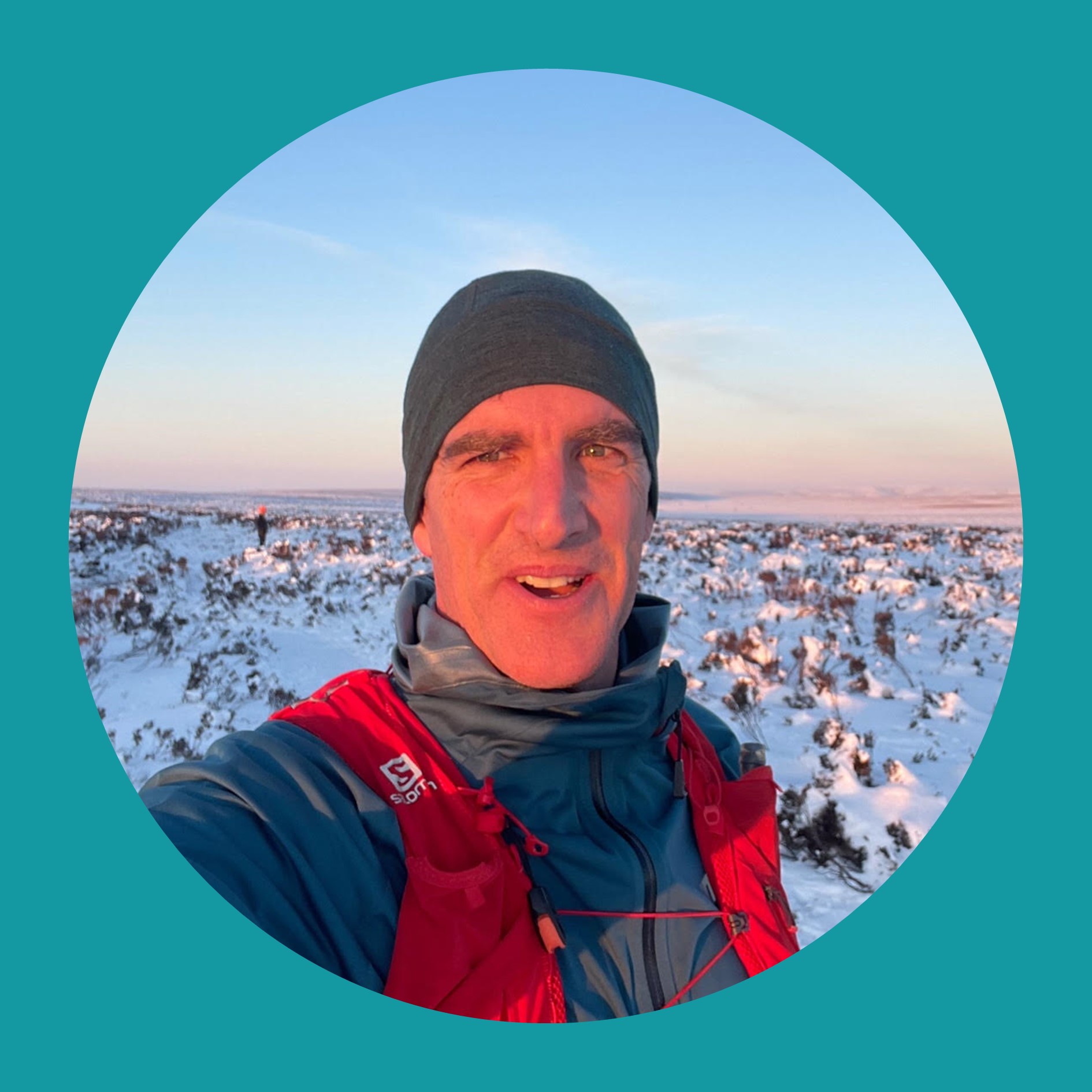
Ollie Hart, a community focused vision of health and wellbeing
Ollie Hart is a GP at Sloan Medical Centre Sheffield, Director of Peak Health Coaching, Clinical Commissioning Lead, social media influencer, and innovation leader in healthcare and wellness.His vision for the future of health and wellness in the UK involves inviting the individual and their community to take a more prominent role, as opposed to the healthcare system. All the research suggests that the impact of the system, based on a ‘medicalised model’ is far less than was imagined. The behaviour of the individual and the support provided to them by their community is the dominant factor in their health and wellbeing. He believes the pandemic has demonstrated that alternative ways of doing things can be better: video appointments and the vaccine delivery model, involving collaboration between clinicians, volunteers and the community, are two examples.Over time during his practice as a GP, Ollie discovered that the medical interventions he prescribed were often less effective than when he supported people in understanding their condition, and in adopting healthy behaviours. He learnt a lot of his health coaching skills in a pain clinic, where the drug treatment options were limited. He finds having good therapeutic relationships “recharging,” for him as well as his patients.He set up Peak Health Coaching to support clinicians in health coaching, patient activation measurement (PAM), and social prescribing. Patient activation is about understanding where a patient is on their journey to empowerment, and tailoring their coaching and treatment accordingly. Social prescribing in its simplest form helps connect people to organisations within their community that might help them to initiate or sustain good behaviours. In a wider context, it is about providing equitable access and support to all members of a community.General practice is “constantly redefining itself. We respond to need, and to changes in the evidence base.” He says “in our essence we are community-based organisations.” Link workers, health coaches, and care coordinators are all part of the current wave of change. Ollie believes GPs with health coaching knowledge are in a position to make a judgement call on the most beneficial use of their time with a particular patient, whether that is in understanding their context better, or whether it is in discussing a prescription for a new medication. Good health coaching can create time, by starting a patient on a path that he might then pursue outside of the consultation.Ollie believes that health coaching can reduce health inequalities, but only if it is done with skilful consideration of the individual. If executed clumsily it can overwhelm the patient. He contends that there are no cultural barriers to health coaching, but the socio-economic circumstances of any community, irrespective of ethnicity, need to be carefully considered in its deployment. Ollie was instrumental in setting up the Graves Park Park Run. He feels it is a great example of an initiative that once executed with skill and imagination takes on a life of its own. He says “what they tuned into in Park Run was that it was not just about the running and the exercise, it was about the connection and … the common purpose.”Ollie says that the NHS and the current experiment in personalised care – the NHS has a target of recruiting 1,000 new link workers by the end of the 2021 – is a great example of learning by doing, somewhat similar to Park Run. He maintains that to promote an environment of innovation there has to be a degree of tolerance of risk, and a preparedness to accept failure. And whilst there has to be some acknowledgement of the potential downsides, if the system doesn’t innovate it misses the opportunity of improved approaches that may save lives.Through his appearances on radio and television, and also on social media, Ollie is influencing the direction of the NHS and government. He doesn’t have a deliberate PR strategy, but he is taking opportunities as they arise in support of a mission to support people and communities to perform at their best. He constantly checks whether what he is doing is genuinely supporting his mission or ‘fuelling his ego.’Ollie is an optimist by nature. He says “I’ve always had a positive internal dialogue” and he is generally compassionate with himself.He recently passed on his role as an executive on Move More, Sheffield’s 20-year physical activity plan, to two of his GP colleagues. Though Move More has always been close to his heart, he says with such a long-term project you “need to keep the energy fresh and new peoples’ ideas flowing through… If you’re taking a leadership role, it’s important to know when it is time to bring other people in.” The new Move More [5-year] plan will focus more on the 20-25% of the population that are physically active for less than 30 minutes a week, and on the communities that most need support.Ollie works as a clinical care network leader and as a clinical director. In these roles he tries less to give specific advice than to help people think clearly for themselves, and have the confidence to take tough decisions and, on occasion, experiment. It’s a coaching approach to leadership.Ollie’s self-care regime revolves around physical exercise, the family, and nature. He cycles, runs on the hills of the Peak District, and takes walks with his family.The book ‘Being Mortal’ by Atul Gawande, which he read shortly after his father’s death, made a big impression on Ollie. He loves the Fairhealth podcast (https://fairhealth.org.uk/podcasts/) and Ranjan Chatterjee’s the Four Pillars of Health (https://drchatterjee.com/blog/category/podcast/). Sometimes he likes to take in non-health related material, for example The Knowledge Project (https://fs.blog/knowledge-project/). “It keeps your curiosity in life going.”He says he wouldn’t give his 20-year old self any advice. For one thing, there’s too many people in the world giving advice. Life’s a genuine adventure and you generally have to make your own mistakes. Ollie says “I’d just let myself make the same mistakes again and enjoy the journey.”



Get this podcast on your phone, Free


Create Your Podcast In Minutes
- Full-featured podcast site
- Unlimited storage and bandwidth
- Comprehensive podcast stats
- Distribute to Apple Podcasts, Spotify, and more
- Make money with your podcast