Inside Biodiversity
https://insidebiodiversity.podigee.io/feed/mp3Episode List
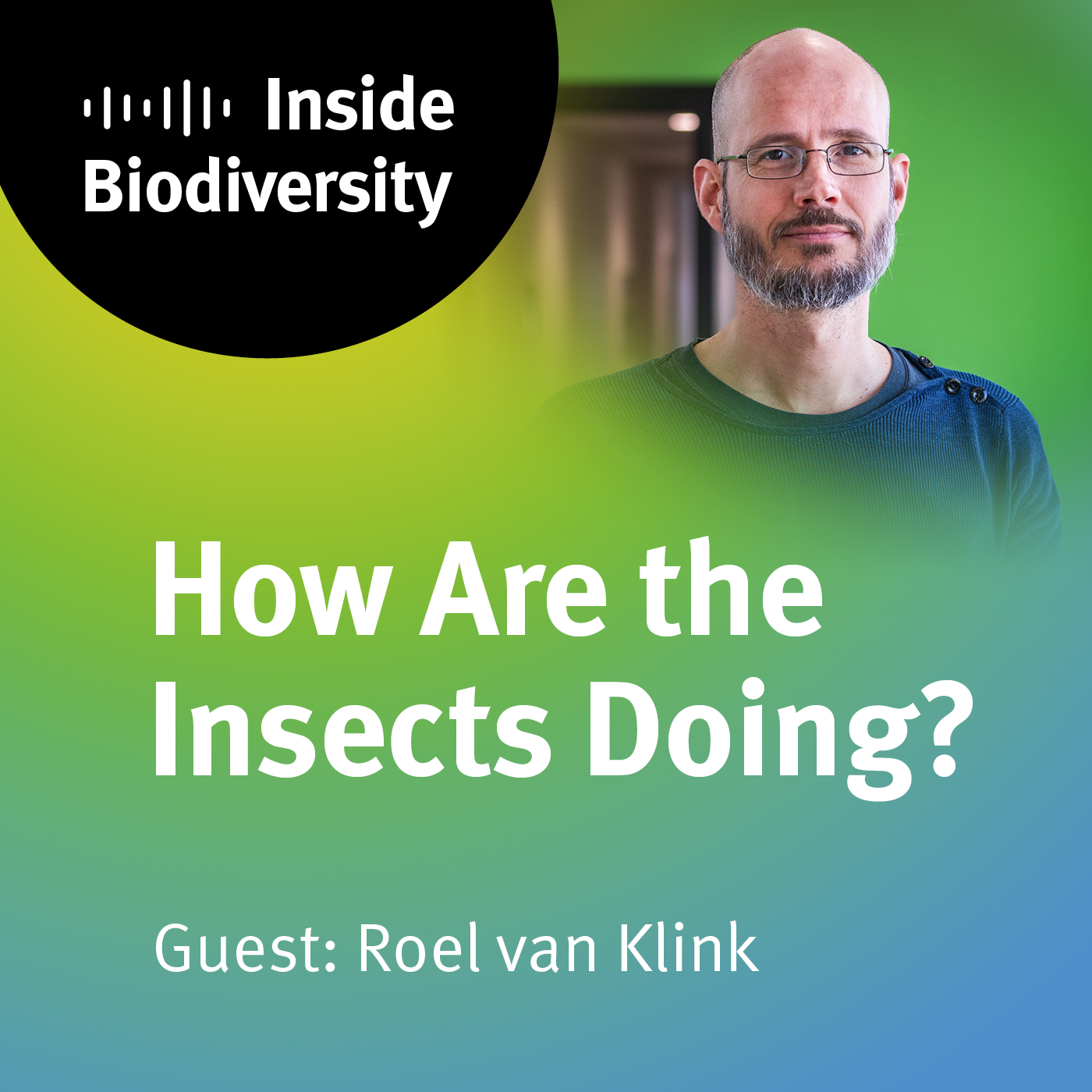
How Are the Insects Doing?
Guest: Roel van Klink Are insect numbers really declining — and if so, why? In this episode, entomologist Roel van Klink explains what long-term data reveal about global and local insect trends and why the causes behind these changes remain surprisingly uncertain. We also discuss why it is difficult to distinguish between natural fluctuations and human-driven impacts, such as land-use change or climate change. We explore what scientists currently know, what they still don’t know, and why understanding these drivers is crucial for biodiversity conservation. Dr. Roel van Klink is an entomologist at iDiv and the Martin Luther University Halle-Wittenberg. He is the lead author of one of the largest meta-studies on global insect trends. Related links: Roel van Klink at iDiv: https://www.idiv.de/staff/roel-van-klink/ Roel van Klink on LinkedIn: https://www.linkedin.com/in/roelvanklink/ Roel van Klink’s major study on global insect trends, published in the journal Science in 2020 and discussed in this episode: https://www.science.org/doi/10.1126/science.aax9931 Study of insect declines in the Krefeld area, published in 2017 and mentioned in this episode. This study drew massive public attention to the issue of insect declines: https://journals.plos.org/plosone/article?id=10.1371/journal.pone.0185809
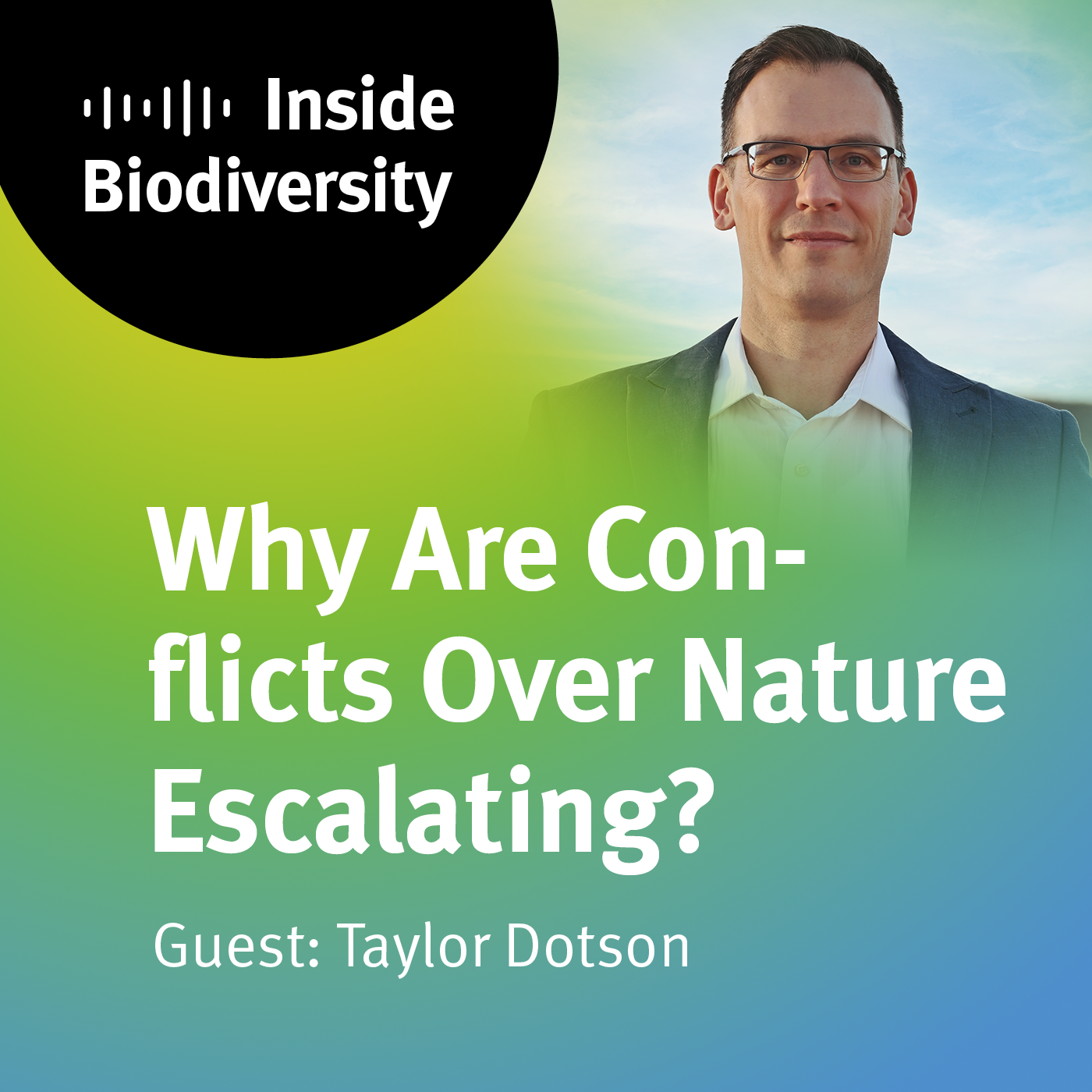
Why Are Conflicts Over Nature Escalating?
Guest: Taylor Dotson How can conservation succeed in a polarised society? This episode features Taylor Dotson, a Science and Technology Studies scholar and an associate professor at New Mexico Tech. Together with podcast host Dr. Volker Hahn, Dotson discusses his new book, “Conservation by the people – The Future of Biodiversity in a Divided World”. In it, Dotson describes “fanatical confrontations over nature”, and he explores ways of resolving environmental disputes productively and democratically. How can we better understand those who oppose conservation policies? How do we prevent biodiversity policy from becoming as polarising as climate change? How can incremental change through trial and error help us achieve what Dotson calls “biodiversity democracy”? Related links: Taylor Dotson at New Mexico Tech: https://www.nmt.edu/academics/class/faculty/tdotson.php Taylor Dotson on Substack: https://tamingcomplexity.substack.com/ Taylor Dotson’s latest book “Conservation by the people – The Future of Biodiversity in a Divided World”: https://mitpress.mit.edu/9780262052092/conservation-by-the-people/ Taylor Dotson’s second book “The Divide – How Fanatical Certitude is Destroying Democracy”: https://www.taylorcdotson.com/the-divide.html
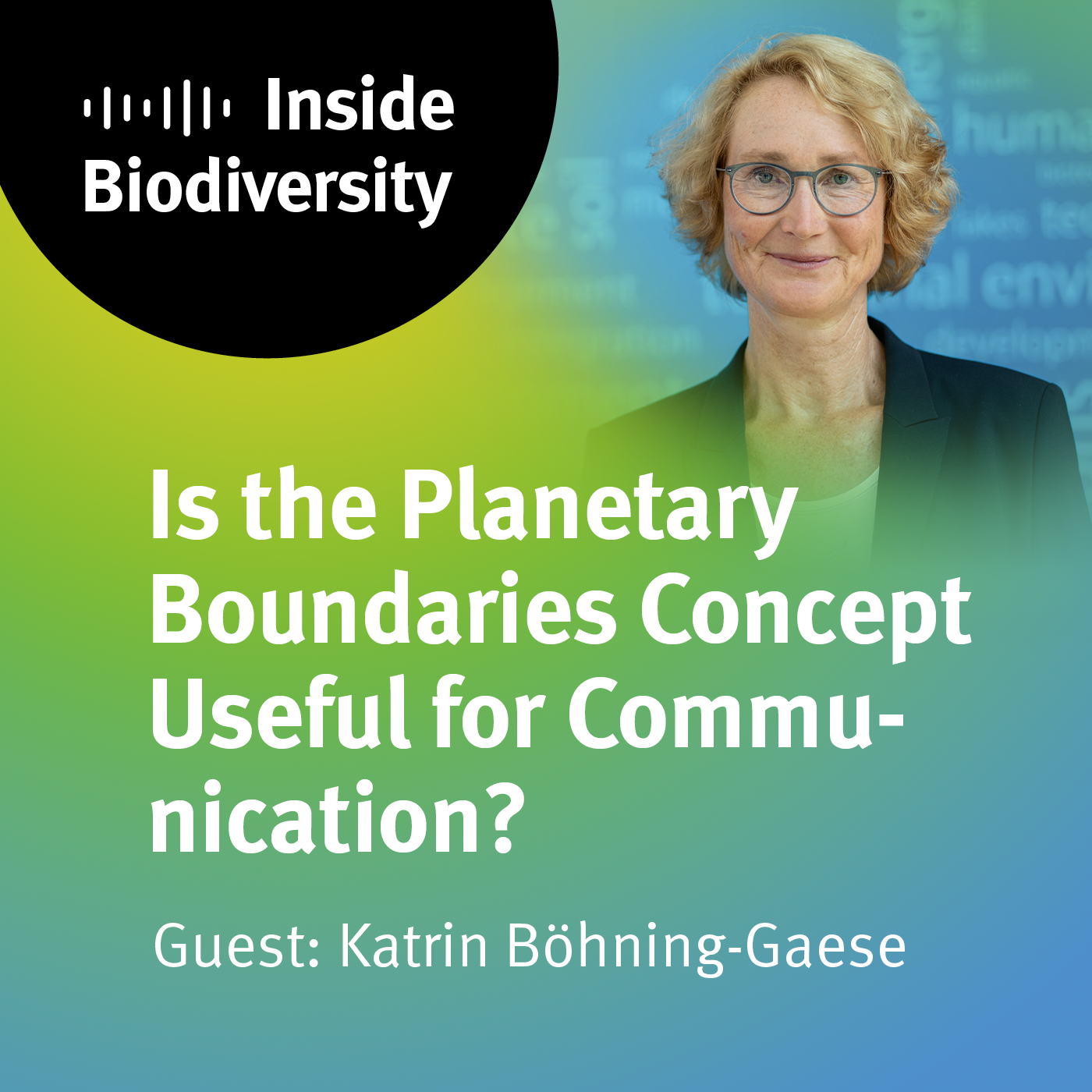
Is the Planetary Boundaries Concept Useful for Communication?
Guest: Katrin Böhning-Gaese In this episode, Professor Katrin Böhning-Gaese, scientific director of the Helmholtz Centre for Environmental Research – UFZ, and podcast host Dr. Volker Hahn discuss the Planetary Boundaries framework, focusing not only on the science but also considering the value of this framework for communication. Other questions at the heart of this episode are: Where has communication on climate and biodiversity gone wrong? Is there a tendency to exaggerate risks and understate progress? What are the consequences of catastrophizing rhetoric for mental health and people’s readiness to act? What can biodiversity communication learn from climate communication, and vice versa? Most importantly, how can researchers and the media do better? Related links: Katrin Böhning-Gaese on the UFZ website: https://www.ufz.de/index.php?en=51666 The Planetary Boundaries Framework and its control variables discussed in this podcast (HANPP, industrial nitrogen fixation, among others): https://www.science.org/doi/10.1126/sciadv.adh2458 “Global Catastrophic Risks 2026”, “Ecological Collapse” section, cited in this episode: https://globalchallenges.org//app/uploads/2025/12/GCF-Risk-report-2026-Risk-2-.pdf
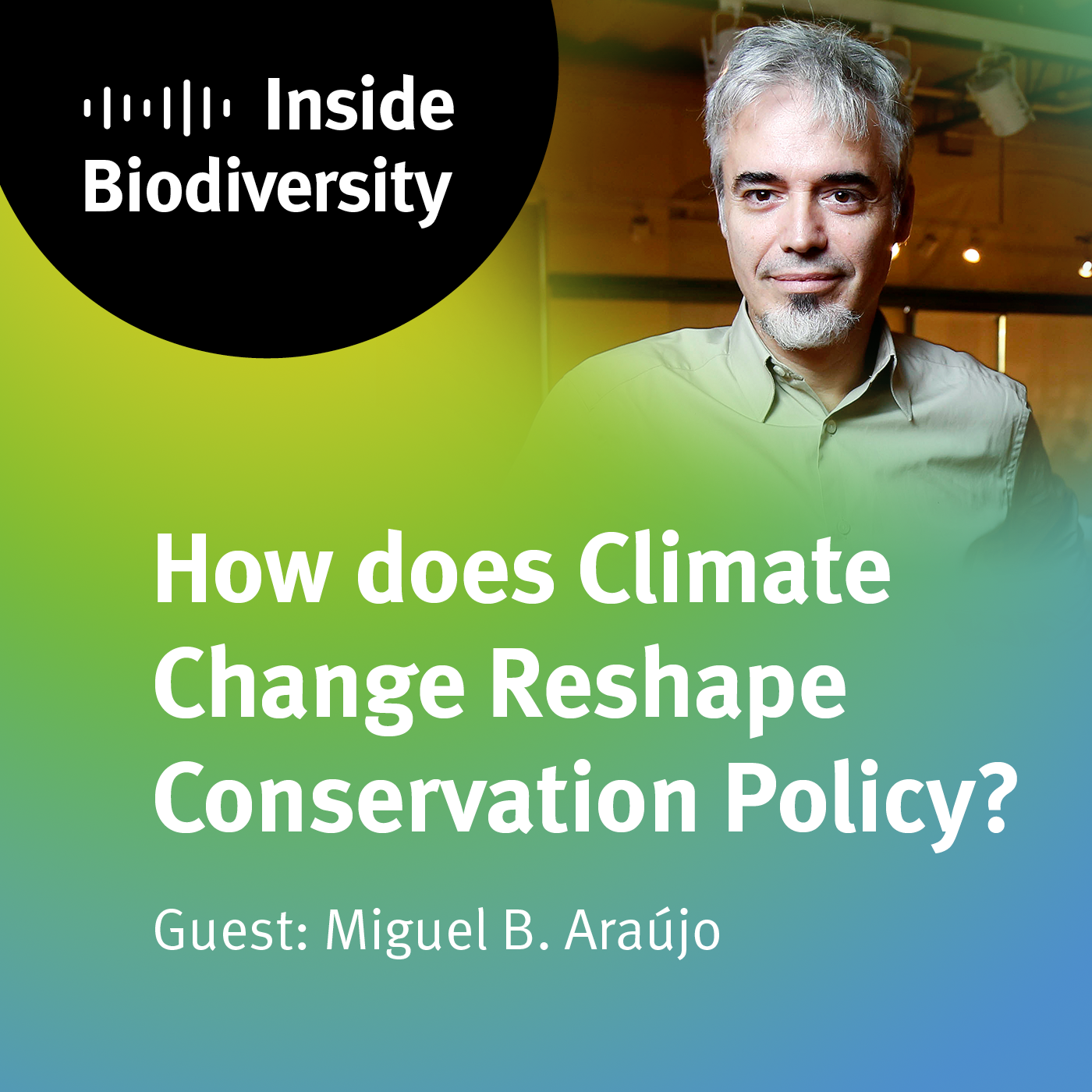
How Does Climate Change Reshape Conservation Policy?
Guest: Miguel Bastos Araújo In this episode of Inside Biodiversity, Volker Hahn speaks with iDiv's sabbatical guest Miguel Bastos Araújo (Spanish Research Council at the National Museum of Natural Sciences, Madrid), one of the leading experts on species distributions and climate change. Araújo explains how species are shifting their ranges due to climate change, why some traditional protected areas are reaching their limits, and how conservation policy should adapt to a changing climate. The conversation explores how scientific evidence can inform policy and why effective conservation requires navigating multiple, often competing, rationalities. A thought-provoking episode on climate change, biodiversity, and the science-policy interface. Related links: Miguel Bastos Araújo’s website: https://www.maraujolab.eu/people/miguel-bastos-araujo/# Towards a climate-resilient conservation network in Portugal. Araújo’s Biological Conservation paper mentioned in this episode: https://www.sciencedirect.com/science/article/pii/S0006320725002861 Conflicting rationalities limit the uptake of spatial conservation prioritizations. Araújo’s comment in Nature Reviews Biodiversity, mentioned in this episode: https://www.nature.com/articles/s44358-025-00042-z Host: Dr. Volker Hahn, Head of iDiv’s Impact Department Postproduction: Leven Wortmann
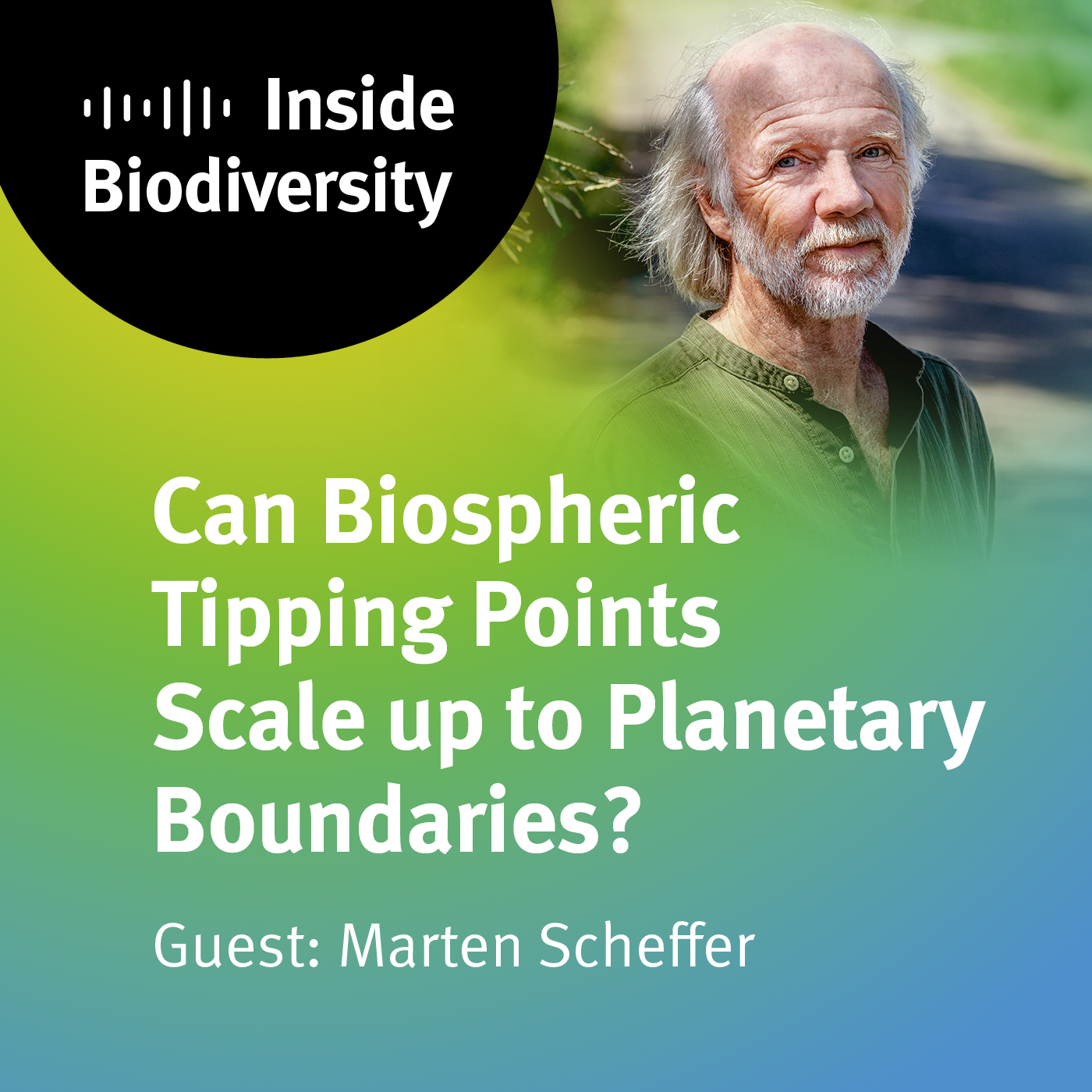
Can Biospheric Tipping Points Scale up to Planetary Boundaries?
Guest: Marten Scheffer In this episode, Prof. Marten Scheffer from Wageningen University & Research explains critical transitions and tipping points, from shallow lakes and coral reefs to tropical rainforests. Together with host Dr. Volker Hahn, he explores whether local tipping points can be scaled up to a biospheric planetary boundary, and how uncertainty shapes our understanding and communication. Scheffer explains why he believes the concept of tipping points remains relevant for policy and management—even when we do not know where they lie. Related links: Marten Scheffer on Wikipedia: https://en.wikipedia.org/wiki/Marten_Scheffer “Critical Transitions in Nature and Society”, Marten Scheffer’s influential book from 2009: https://www.degruyterbrill.com/document/doi/10.1515/9781400833276/html Two influential planetary boundary papers co-authored by Marten Scheffer “A safe operating space for humanity” (2009) https://www.nature.com/articles/461472a “Safe and just Earth system boundaries” (2023) https://www.nature.com/articles/s41586-023-06083-8 “Tipping out of Trouble”, Marten Scheffer’s new book: https://www.cambridge.org/tc/universitypress/subjects/history/global-history/tipping-out-trouble-how-societies-transformed-and-how-we-can-do-so-again Host: Dr. Volker Hahn, Head of Media and Communications at iDiv Postproduction: Leven Wortmann








Get this podcast on your phone, Free


Create Your Podcast In Minutes
- Full-featured podcast site
- Unlimited storage and bandwidth
- Comprehensive podcast stats
- Distribute to Apple Podcasts, Spotify, and more
- Make money with your podcast