Service Design Show
https://anchor.fm/s/1021a9c/podcast/rssEpisode List
Why Bad CX is Your Greatest Leverage Point / Journey Management Playbook / S2E01
How do you get your boss to actually fund journey management? 💰We’ve all felt the frustration of making an impressive map that everyone "likes" but nobody actually uses. when that happens, our practice loses credibility. Season 2 of the Journey Management Playbook is here to fix that by focusing on the BUSINESS CASE.what we cover in this episode:Why journey management is a strategic asset, not a "nice-to-have."how to calculate the actual cost of bad customer experience.shifting the conversation from "fluffy" CX metrics to boardroom metrics.getting stakeholders to embrace a journey-led way of working.guest spotlight:Martin Palamarz is the chief customer officer at TheyDo. he spends his time helping global organizations scale their CX efforts and understands the language of executive decision-making.Resources:It’s best to watch the video version on Youtube to see the examples on screen, but you can also find the slide deck in the show notes below.--- [ 1. LINKS ] ---Playbook SlidesSign up for TheyDoCX Cost CalculatorThe Journey Management Playbook--- [ 2. GUIDE ] --- 00:00 Journey Management Playbook S2E0102:00 Martin's background04:30 Origin story of TheyDo06:45 Series overview: CX costs08:45 The CX Toolkit10:00 Bridging the gap13:45 Forrester research findings16:30 CX & business performance19:30 The Norway story23:00 Boardroom metrics30:45 The Cost of Bad CX38:30 High-value journey steps40:30 Drop Off Rate Explained42:30 "Nice-to-have" trap48:15 Service design & revenue50:00 Starting small52:15 Mckinsey research57:30 AI for customer data1:00:00 3-minute executive reports1:01:30 Ticket value & variables1:08:30 Bad CX VS. CX Investment1:12:00 Building momentum1:14:00 the final challenge--- [ 3. FIND THE SHOW ON ] --- Youtube ~ https://go.servicedesignshow.com/journey-management-playbook-09-youtubeSpotify ~ https://go.servicedesignshow.com/journey-management-playbook-09-spotifyApple ~ https://go.servicedesignshow.com/journey-management-playbook-09-appleSnipd ~ https://go.servicedesignshow.com/journey-management-playbook-09-snipd
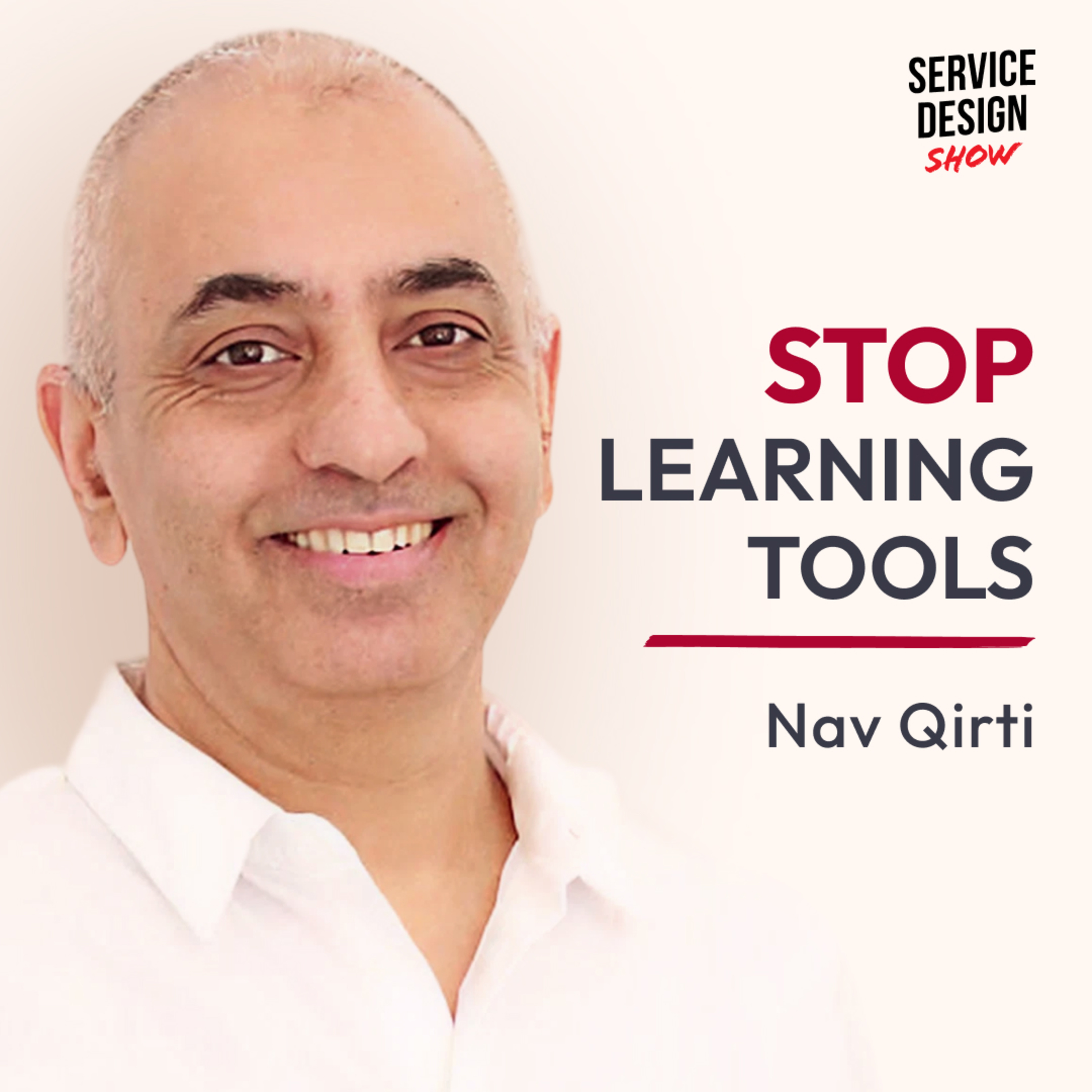
Why "Being Human" is Your Only Future-Proof Skill / Nav Qirti / Episode #251
Our brains were not designed for this pace... Just think about it. For thousands of years, humans had ages to adapt to new technology. When we discovered fire or the steam engine, we had generations to figure out the implications.Today, things are shifting so fast that trying to keep up by just "learning more stuff" feels biologically impossible. At least to me 🤣It’s like you’re trying to run 2026 apps on the operating system of a legendary—but limited—Nokia 3310 phone.So, for this episode, I sat down with Nav Qirti from the School of Metaskills to talk about why we’re looking at the "skills gap" all wrong.Nav argues that we should stop chasing "functional skills" (which have a very short shelf life anyway) and focus on the things technology can't touch: judgment, curiosity, and reasoning.We also dive into why you can’t just read a book to get better at empathy or judgment. Nav explains that you need a "proxy environment" to train those muscles. Most professionals I know practice by just following a script, but Nav shows us how to build the mental strength behind the craft.This conversation offers an optimistic path forward by focusing on the core human abilities that technology simply cannot replace.Which of your "mental muscles" feels a bit weak lately? If you’ve got a moment, leave a comment below and let me know. I’d love to hear what a "workout" would actually look like for you 🙂Enjoy the conversation and keep making a positive impact.Be well, ~ Marc--- [ 1. GUIDE ] --- 00:00 Welcome to Episode 25104:00 The Falling Behind Puzzle05:30 6Adapting to AI08:15 Seeing what matters10:15 Obsolete hard skills12:30 Outdated learning models15:00 The 90/10 Imbalance16:45 Bucketing Skills17:15 Communication as a base19:00 Human survival traits21:15 Building capacity25:45 Expertise vs. scripts29:15 Measuring the wrong things37:30 Leadership and meta-skills39:45 The shift from "doing" to "leading"42:15 Why technical expertise has a ceiling45:00 Identifying your personal meta-skill gaps48:15 Low-stakes practice50:00 Defining Proxy Environments51:30 How to practice judgment daily55:15 Building empathy without the pressure58:15 Anxiety to Control59:00 Reframing the AI threat1:01:00 Focusing on the human operating system1:02:15 Regaining professional confidence1:02:30 Closing thoughts --- [ 2. LINKS ] --- https://www.linkedin.com/in/navqirti/www.navqirti.comwww.metaskills.globalSkills to make us future ready & future relevant --- [ 3. CIRCLE ] --- Join our private community for in-house service design professionals. https://servicedesignshow.com/circle[4. FIND THE SHOW ON]Youtube ~ https://go.servicedesignshow.com/251-youtubeSpotify ~ https://go.servicedesignshow.com/251-spotifyApple ~ https://go.servicedesignshow.com/251-appleSnipd ~ https://go.servicedesignshow.com/251-snipd
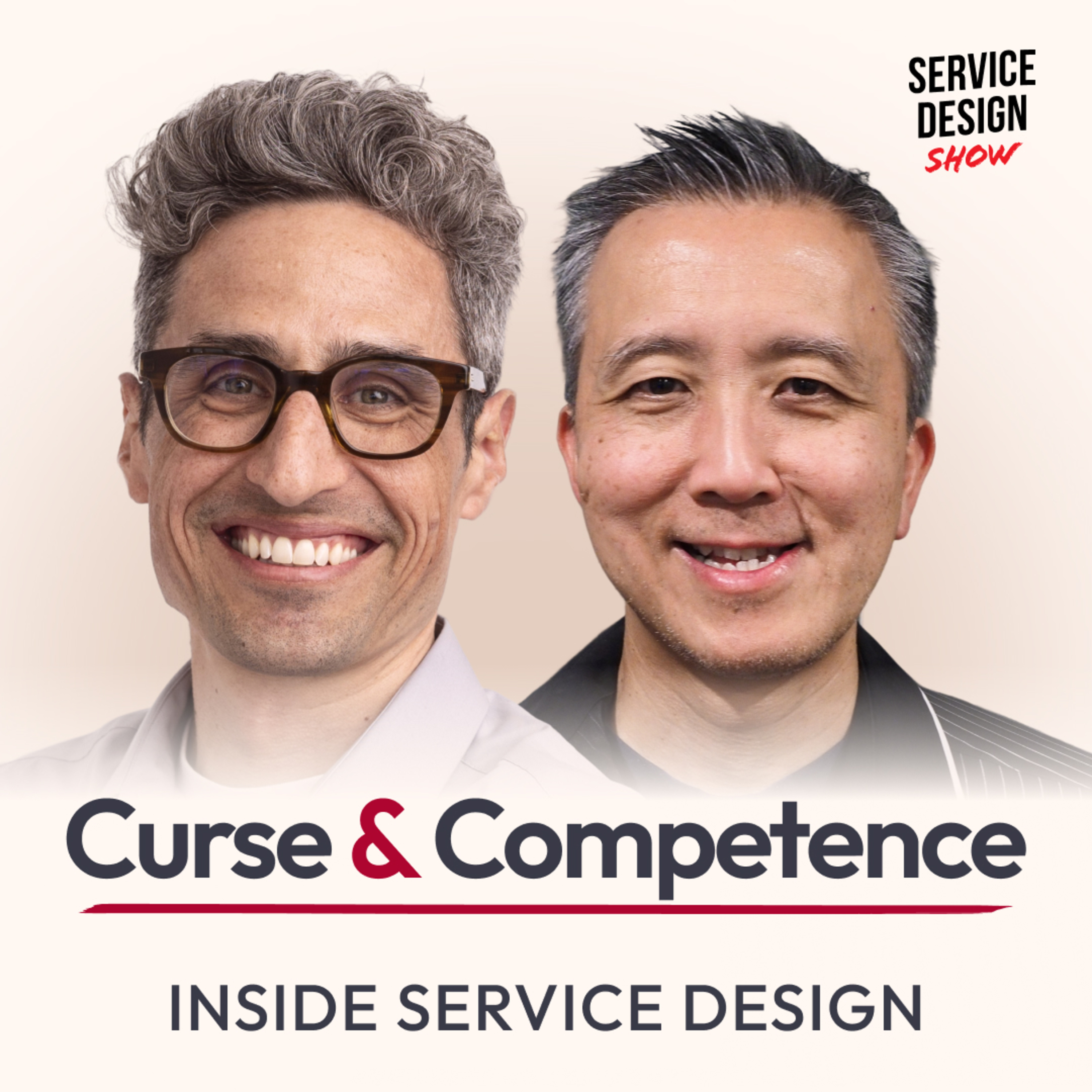
The Curse of the Competent Service Designers / Chad & Jin / Inside Service Design #11
What happens when a service design professional does their job well...Usually? Absolutely nothing.No organizational gears grind. No customers complain. No one panics.You did your job, so the disaster simply stayed in your head instead of becoming a reality.That’s the curse, though. No one's going to congratulate you for a crisis they didn't have to experience.I sat down with Jin Wan and Chad Cheverier for the this episode of Inside Service Design to talk about this "great enabler" trap.To make things practical, Jin had a great example about redesigning an onboarding journey. His biggest win wasn't a shiny new interface. It was moving a step in the verification process to the backend so nobody had to intervene manually. It saved the company (and customers) countless hours, but the solution itself is completely unseen.Chad mentioned a similar struggle. Looking at his quarterly review and realizing he doesn't have many "shiny" deliverables to show. His best work was aligning teams and coaching PMs to do their jobs better, which doesn't look like a "deliverable".So, how do you stay motivated when your best work is invisible and goes unnoticed? And more importantly, how do you sell the value of that work to the people holding the budget? We unpack all of that in this episode.If you had to make an estimate, how much of the work you do is "invisible"? Send me a quick reply and let me know.Be well,~ Marc--- [ 1. GUIDE ] --- 00:00 Welcome to February Round Up05:00 Jin's path: From IT and HR to Marketing and CX 07:30 Chad's path: From photography to in-house design 10:45 What a CX professional does at a startup 11:45 Why you should ignore job titles 14:30 Jin’s digital onboarding in financial services 18:00 Why service design feels like internal consulting 24:35 Core competencies missing from design education 31:15 Navigating the "messy middle" of organizational change 39:00 Dealing with stakeholders who bake in solutions 45:30 The power of simplifying complex journey maps 52:00 Strategies for building internal resilience 58:45 Advice for aspiring in-house service designers --- [ 2. LINKS ] --- https://www.linkedin.com/in/chadcheverier/https://www.linkedin.com/in/wanjin/ --- [ 3. CIRCLE ] --- Join our private community for in-house service design professionals. https://servicedesignshow.com/circle--- [4. FIND THE SHOW ON ] ---Youtube ~ https://go.servicedesignshow.com/inside-service-design-11-youtubeSpotify ~ https://go.servicedesignshow.com/inside-service-design-11-spotifyApple ~ https://go.servicedesignshow.com/inside-service-design-11-appleSnipd ~ https://go.servicedesignshow.com/inside-service-design-11-snipd
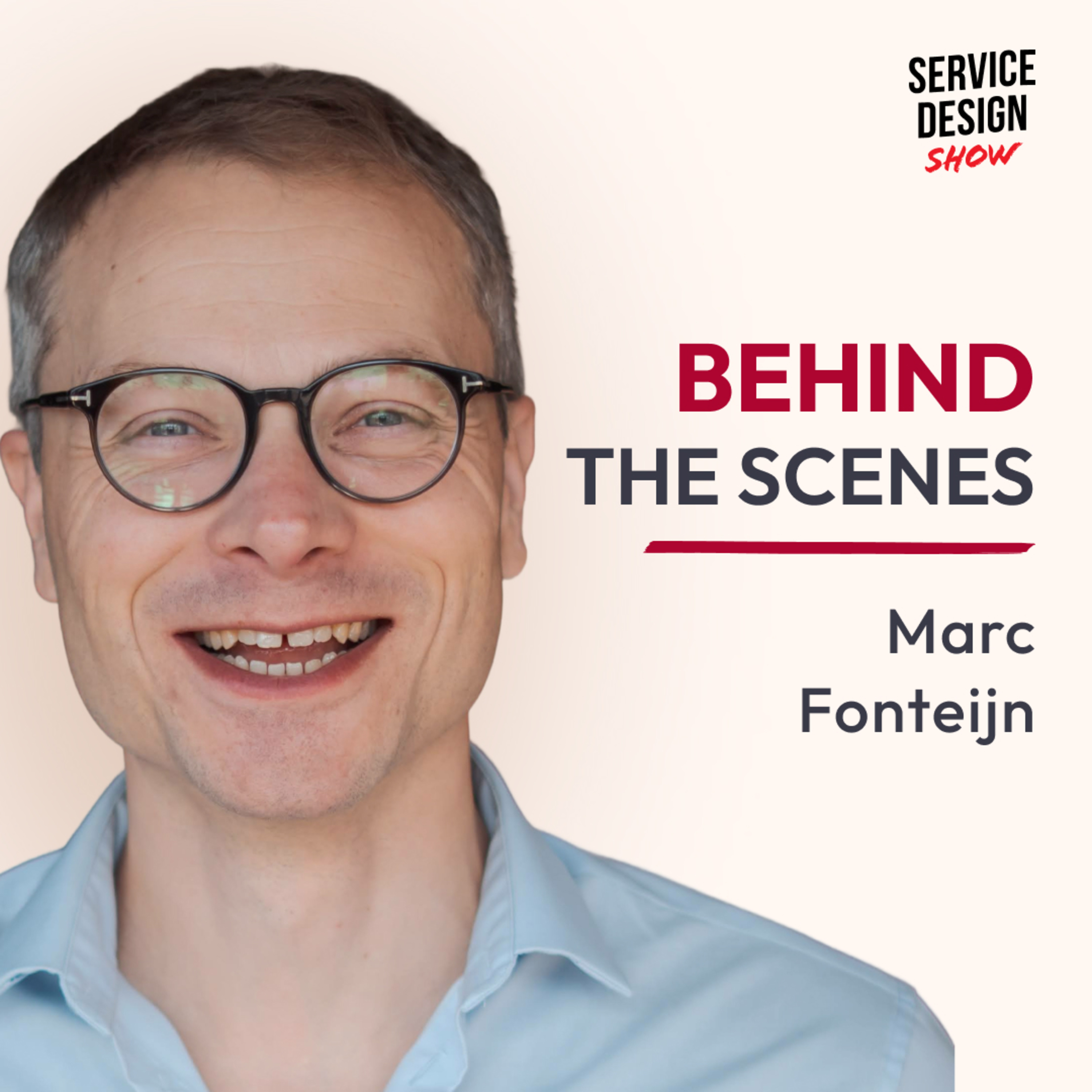
My Biggest Lessons from 250 Episodes / Marc Fonteijn / Ep. #250
I'll let you in on a small secret...Ten years ago, the Service Design Show was never even supposed to be a podcast. And somehow here we are. We've officially hit episode 250. Its been a decade since I published that very first interview. Somewhat of a cliche but, I never expected to reach this milestone. I still remember the early days very well when I was struggling with a "split identity". Torn between running a service design agency and following this pull toward content creation. It took me a good three years to finally take the leap, but looking back, it was the best decision I ever made. As you'll notice, this episode is quite different. Usually, it’s my job to ask the questions, but in this one, I’m the one answering them.I wanted to share some of the messy, behind-the-scenes lessons from the last decade. They are quite personal but who knows maybe you can use them as tools in your own practice. We’re diving into things like my cheat code to gain clarity, the power of friction, what I’ve learned about building real connections and how "remarkable" things are often built through consistent, often unglamorous work. And yes, I even answer some hot questions from the community.I have to say that recording this episode was both difficult and incredibly rewarding.So, if you’ve been on this journey with me, I’d love for you to join me for this reflection. This milestone isn't just mine, it’s ours. By the way, if you prefer our regular interview format, feel free to skip this one. I won't judge! We’ll be back to our normal schedule next week.Thank you again for your attention, your trust, and for being part of this movement.Be well,~ Marc --- [ 1. GUIDE ] --- 00:00 Welcome to EP 25003:30 Friction of a "split identity"05:00 How did I get into service design06:30 Overlap between engineering and design skills07:00 Letting go of code08:15 Biggest lessons I learned in the last decade08:45 Don’t wait for permission to start your project10:15 The power of consistency over perfection12:30 Choosing guests for the podcast13:00 The "Curiosity Filter"15:45 The shift from generalist to specialist topics in service design18:30 One of the most challenging episodes19:15 Dealing with technical failures and "lost" interviews22:00 The future of the Service Design Show22:45 Moving towards more community-driven content25:15 Some Advice for someone starting their own podcast26:00 Focusing on the "Why" before the "How"28:30 Importance of building a platform you own31:45 The ripple effect of 250 conversations34:30 Thank you for being part of the journey --- [ 2. LINKS ] --- https://www.linkedin.com/in/marcfonteijnhttps://www.servicedesignshow.com/ --- [ 3. CIRCLE ] --- Join our private community for in-house service design professionals. https://servicedesignshow.com/circle[4. FIND THE SHOW ON]Youtube ~ https://go.servicedesignshow.com/250-youtubeSpotify ~ https://go.servicedesignshow.com/250-spotifyApple ~ https://go.servicedesignshow.com/250-appleSnipd ~ https://go.servicedesignshow.com/250-snipd
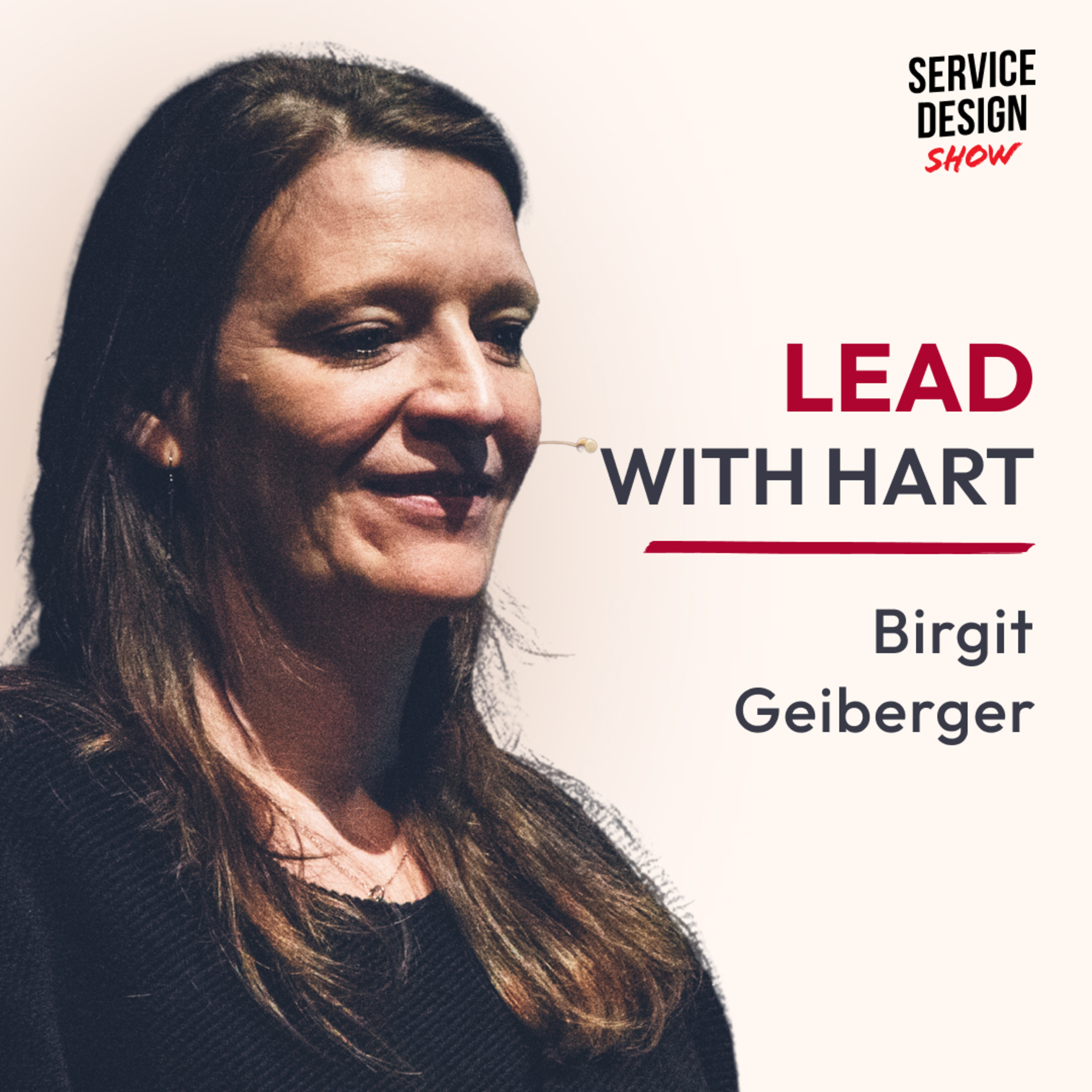
How to Lead with Head and Heart in the Age of AI / Birgit Geiberger / Ep. #249
This episode falls into a pattern that's hard to ignore...I'm seeing a growing undercurrent of design leaders strongly advocating for a more sustainable approach toward work and life.It is hard to separate this development from the rise of AI, which is shaping many aspects of our lives and turning what we know upside down. Sure, there's always been a push to do more, and preferably faster and cheaper, but now with AI, it feels like the volume knob has been turned to 11.Of course, this has a significant impact on us as service design professionals. The "productivity" pressure is rising for us as well. And if we're honest, it often reaches a point where it not only takes away the fulfillment we find in our work, but also leaves us on the edge of burnout.But we're humans, not machines. We're not merely replaceable cogs in a system. So we must find an alternative.One of the leaders advocating for this more sustainable approach toward work is our guest, Birgit Geiberger. She argues that in order for us to thrive in this new reality, we must adopt a different leadership style. Birgit says we need to focus on leading with both head and heart in a way she calls regenerative leadership.In this conversation, we unpack what this form of leadership entails and why it's now more important than ever. Birgit offers ideas on how you can push back and escape the unsustainable pace of work when everything and everyone around us seems to demand more, go, go, go.We discuss what you can do on a day-to-day basis to find your grounding and stay true to who you truly are in a world where compromises are unavoidable. And finally, we investigate how you can show that doing things in a regenerative way is not just good for you, but also accelerates and increases your business impact.A great conversation, packed with hope, inspiration, and practical advice for anyone who wants to bring back the joy in their work again.What might be good to know is that I haven't selected my recent guests based on their interest in this theme, or instructed them in any way to discuss it. This is just something that emerges when I ask them to speak about what is dear to their hearts right now.If you've been listening to the Show, I'm curious if you've noticed this undercurrent as well.Enjoy the conversation and keep making a positive impact!~ Marc--- [ 1. GUIDE ] --- 00:00 Welcome to Episode 24904:15 Human-Centered Leadership Legacy06:30 Post-Pandemic Reflections10:00 Redefining Growth and Resources13:00 Introduction to Regenerative Leadership15:00 The Power of Self-Leadership18:30 Designing for Mental Capacity22:00 Moving Beyond Short-Term Business Thinking24:45 Breaking Functional Silos33:15 Leading through Global Uncertainty40:15 Service Design as a Cultural Catalyst47:30 Empathy as a Business Strategic Tool54:30 Scaling Influence Through Others1:00:30 Closing Reflections --- [ 2. LINKS ] --- https://www.linkedin.com/in/birgitgeiberger --- [ 3. CIRCLE ] --- Join our private community for in-house service design professionals. https://servicedesignshow.com/circle[4. FIND THE SHOW ON]Youtube ~ https://go.servicedesignshow.com/249-youtubeSpotify ~ https://go.servicedesignshow.com/249-spotifyApple ~ https://go.servicedesignshow.com/249-appleSnipd ~ https://go.servicedesignshow.com/249-snipd









Get this podcast on your phone, Free


Create Your Podcast In Minutes
- Full-featured podcast site
- Unlimited storage and bandwidth
- Comprehensive podcast stats
- Distribute to Apple Podcasts, Spotify, and more
- Make money with your podcast