
Episode List

Labour Fair 2026: The radical labour of care
This latest episode of the Courage My Friends podcast series features "The Radical Labour of Care" panel discussion with: Indigenous midwife, leader, and educator, Claire Dion Fletcher; crisis outreach worker, case manager, and advocate in Toronto's Downtown East, Lorraine Lam; and program director of the Latinx Womyn's Program at the Toronto Rape Crisis Centre/Multicultural Women Against Rape, Grissel Orellana. It is moderated by Eliza Chandler, associate professor in the School of Disability Studies and executive director of the Office of Social Innovation at Toronto Metropolitan University. This latest session of TMU's Transformation Café series was hosted at the 34th annual Labour Fair at George Brown Polytechnic. Under this year's Labour Fair theme, "Building a Working Peoples' City," the panel discussed the essential, but undervalued labour of care, interventions in the increasingly inaccessible, unaffordable and hostile city and building practices of mutual aid, community safety and collective survival toward caring and liveable cities. Fletcher explains: "My work is very grounded in an Indigenous feminist perspective, and that self-determination of our nations cannot be fully realized unless all members of our nations are included.And that means we must address the gendered nature of colonization. And that sovereignty of our nations cannot happen without sovereignty of our bodies. And so this has led me to a deep commitment to reproductive justice" According to Lam: "The root of care for me is really about compassion.And the original Latin meaning of the word compassion comes from two different words ... "to suffer" and "with." And so for me, the radical root of care … is really about compassion, which is different from pity. 'Cause you can walk by someone and have pity on them. You can have sympathy for them. You might even get empathy for them. But the goal is really about: what does it mean to suffer with? And I think that's what pushes us towards thinking about solidarity." Orellana says: "The frontline work as labour, it's so devalued. When we're doing so much caring, so much support, so much healing going on, so much advocacy … And I find it difficult … I mean, I've been working in the field for a long time. But more Latin American people are coming in. And every time I sit down with a person it is like when I came here 38 years ago, it's the story over and over again … But we are all needed, needed, needed. We're all important and beautiful." About today's guests: Eliza Chandler (she/her) is an associate professor in the School of Disability Studies and executive director of the Office of Social Innovation at Toronto Metropolitan University whose work is grounded in disability arts. As a scholar, curator, and organizer, she explores how disability arts reshape cultural spaces through critical access, disability justice, and disability-led creative practice. Chandler's work highlights disability arts as a vital site of political, aesthetic, and world-making knowledge. Claire Dion Fletcher (she/her) is a Lenape- Potawatomi and mixed settler registered midwife. Fletcher is current vice-president of the Canadian Association of Midwives and past co-chair of the National Council of Indigenous Midwives. She is an assistant professor at the Toronto Metropolitan University Midwifery Education Program. Her teaching focuses on Indigenous midwifery and social justice issues. Fletcher is deeply committed to increasing diversity in the midwifery profession through Indigenous-led education. Lorraine Lam (she/her) is a Chinese-Canadian daughter of a solo parent, with an education in music, sociology and social work. For over a decade, she has worked in Toronto's Downtown East, walking alongside community members navigating homelessness, drug use, incarceration, poverty, racism, and systemic injustice. Her work is shaped by these communities that have taught her to centre harm reduction, anti-oppression, and trauma-informed practices. She is currently a caseworker at Amadeusz, supporting individuals with firearms-related charges, and she serves on the board of Building Roots and organizes with Christians for a Free Palestine: Toronto and Shelter & Housing Justice Network. Lam also co-authored a chapter in Displacement City (University of Toronto Press, 2022) Find her at www.lorrainelam.me, IG: @lorrainelamchops, X: @lorrainelamchop, Bluesky: @lorrainelamchops.bsky.social and Tiktok: @lorrainelamchops. Grissel Orellana (she/they) is from El Salvador, Central America and lives in Tkaronto/Toronto. She identifies as Indigenous, from Mestiza ancestry. Grissel is a feminist, a human rights activist/defender, a lesbian femme, a mother, a healer, and a survivor of war and gender-based violence. Orellana has worked at the Toronto Rape Crisis Centre/Multicultural Women Against Rape for 26 years. She is currently a program director of the Latinx Womyn Program at the Centre, where she continues to triumph for a diversity of Latin American survivors. This program is a space for support, personal growth, collective development and dialogue about our role as Latinx immigrants, political refugees, and survivors of multiple abuse and human rights violations, here in Toronto, Canada. In her work at the Toronto Rape Crisis Centre/Multicultural Women Against Rape, Orellana is part of a collective that advocates for liberation from all forms of violence. Transcript of this episode can be accessed at georgebrown.ca/TommyDouglasInstitute. Images: Eliza Chandler, Claire Dion Fletcher, Lorraine Lam, Grissel Orellana (Used with permission) Tech & Recording Support: Ben McCarthy Music: Ang Kahora. Lynne, Bjorn. Rights Purchased. Intro Voices: Ashley Booth (Podcast Announcer); Bob Luker (Tommy) Courage My Friends podcast organizing committee: Chandra Budhu, Ashley Booth, Resh Budhu. Produced by: Resh Budhu, Tommy Douglas Institute of Labour and Social Justice and Breanne Doyle, rabble.ca. Host: Resh Budhu.
Mining, militarism and organizing against the march to war
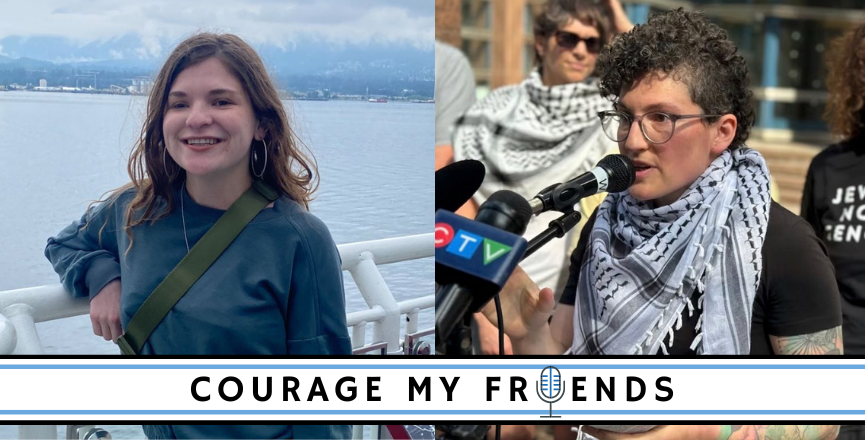
In the latest episode of the Courage My Friends series, we welcome organizer with the Mining Injustice Solidarity Network Kara Anderson and welcome back Canada organizer for World Beyond War and coordinator of the Arms Embargo Now Campaign, Rachel Small. We discuss Canada's radical turn toward militarism and its ramping up of defence spending, the many and deep connections between militarism and mining in the mining capital of the world and solidarity organizing against the march to war. Reflecting on Canada's increased defence spending, Small says: " Canadian military spending had already doubled from $20 billion to over $40 billion over the past decade … And then last June, Carney gave it an extra $9 billion overnight and then committed to doubling it again over the next decade. So … the number that's kind of being floated around is that the new defence spending would amount to $150 billion per year in the next decade … It's vastly more than the federal government spends on all health and social transfers to all the provinces and territories combined. It's an enormous flow of funding that's pretty unprecedented in Canada since at least World War II. This is an enormous gift to Trump. It's Canada literally doing precisely what Trump demanded Canada do." On the link between militarism and mining, Anderson says: "The playbook for mining is the ways in which colonization itself has perpetuated itself … What is the premise for going into other countries? It's to get resources. And how do you do that? You do that through violence. Like the OG colonial ways. But I think that just reinforces why it's so important to shut things down, like mining … mining is so central to a lot of the violence, the militarization that we see in the world today… You go in, you use violence to take the land, .. and then you use that to make weapons. And then these weapons, again end up in opposite parts of the world, blowing things up … these weapons also end up back in the same communities from which they were mined and they're used to further suppress these communities. " About today's guests: Kara Anderson is an organizer with the Mining Injustice Solidarity Network, as well as a PhD candidate at the University of Toronto working on food justice. Rachel Small works as the Canada Organizer for World BEYOND War, a global grassroots organisation and network working to abolish war and the military industrial complex, is a founding member of the Jews Say No to Genocide Coalition, and coordinates the Arms Embargo Now Campaign. She has done grassroots organizing within local and international social/environmental justice movements for nearly two decades, with a special focus on working in solidarity with communities harmed by Canadian extractive industry projects. Transcript of this episode can be accessed at georgebrown.ca/TommyDouglasInstitute. Image: Kara Anderson, Rachel Small / Used with permission. Music: Ang Kahora. Lynne, Bjorn. Rights Purchased. Intro Voices: Ashley Booth (Podcast Announcer); Bob Luker (Tommy) Courage My Friends podcast organizing committee: Chandra Budhu, Ashley Booth, Resh Budhu. Produced by: Resh Budhu, Tommy Douglas Institute and Breanne Doyle, rabble.ca. Host: Resh Budhu.

Pension divestment: From funding crises to a radical pension politics
In our third episode of the season, Tom Fraser, a union researcher and author of Invested in Crisis: Public Sector Pensions Against the Future, and Becca Steckle, a research and policy analyst with Just Peace Advocates, join us to discuss how Canada's public sector pensions are funding crises from housing to genocide, the restructuring of Canadian retirement security into capital funding for militarism and welfare erosion around the world and the urgent need for divestment toward a radical pension politics. According to Fraser: "What I see as specifically contradictory about the structure of the pension fund is that in an age of de-industrial capitalism returns on investment and ..profits ..are directly contradictory with the point of the pension itself … [which] is to enable the continued life of the worker after retirement. But the structure of that sort of capital accumulation necessitates taking value from those same sorts of necessities. There is a basic level contradiction in terms between the pension as finance and the pension as welfare. And they ultimately hit their collision point in the moment we call retirement." Reflecting on what pensions are funding, Steckle says: "If you look at most of all eight of those pensions … there is a significant percentage of those investments in companies that are actively funneling money, whether the companies themselves are participating in war crimes, genocide, armed conflict … For example, if you look at CPP, the Canadian Pension Plan. They had in 2025 an estimated $27 billion just invested in companies complicit in the occupation, apartheid genocide in Palestine by Israel … That doesn't include how the companies are violating Indigenous rights here in so-called Canada. That doesn't include Sudan. That doesn't include Haiti … That is just looking at Palestine." About today's guests: Tom Fraser is a researcher based in Toronto. His book on the political economy of Ontario's pension funds, Invested in Crisis: Public Sector Pensions Against the Future, was released by Between the Lines in February 2025. Becca Steckle (she/they) holds a law degree from Osgoode Hall Law School and is a registered nurse (RN, non-practicing). As a research and policy analyst at Just Peace Advocates (JPA), Steckle helps to analyze and expose institutional complicity, particularly Canadian institutional complicity in occupied Palestine and Kashmir. As part of JPA's work, they have analyzed the investment portfolios of more than 15 entities to identify companies complicit in Israel's occupation, apartheid, and genocide in the report Our Pensions Are Funding Genocide. She is deeply committed to local organizing efforts and believes in Disability Justice as a daily praxis. Transcript of this episode can be accessed at georgebrown.ca/TommyDouglasInstitute. Image: Becca Steckle, Tom Fraser / Used with permission. Music: Ang Kahora. Lynne, Bjorn. Rights Purchased. Intro Voices: Ashley Booth (Podcast Announcer); Bob Luker (Tommy) Courage My Friends podcast organizing committee: Chandra Budhu, Ashley Booth, Resh Budhu. Produced by: Resh Budhu, Tommy Douglas Institute of Labour and Social Justice and Breanne Doyle, rabble.ca. Host: Resh Budhu.
Oxfam Inequality Report 2026: Resisting the rule of the rich and protecting freedom from billionaire power
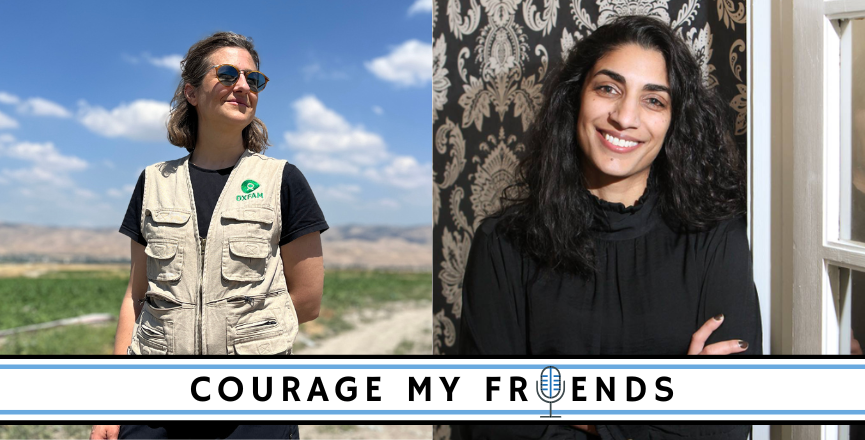
In our second episode of the season, executive director of Oxfam Canada, Lauren Ravon returns for our annual focus on the Oxfam Inequality Report and this year we are also joined by senior director of Strategy and Innovation at Family Service Toronto and national director of Campaign 2000, Leila Sarangi. We discuss Oxfam's latest report on global inequality, Resisting the Rule of the Rich: Protecting Freedom from Billionaire Power, the capture of political power by the billionaire class, the rise of authoritarianism and how this is being lived in Canada. Ravon says: "One of the main points that we're trying to get across in this year's Oxfam report. Is saying that not only does massive wealth allow you to buy luxury items … It allows you to buy political influence, and this is really what we see as most troubling … this political capture … around the world and it's a risk for us here in Canada too, is that ultimately extreme wealth concentration, this kind of billionaire wealth that we're talking about, is incompatible with the very idea of democracy. That you cannot have a healthy democracy when so much is held in the hands of so few … And it's not a new trend, but we're seeing it accelerating. And what's really concerning is that this is eroding civil and political rights … is actually a really fertile ground for authoritarianism." Reflection on increasing poverty in Canada, Sarangi says: "Our data has shown and our report cards the last two years, the largest historic increases in poverty since the pandemic. So it's striking. While billionaire wealth is growing, poverty rates are rising, and incomes are plummeting, and depth of poverty is increasing … We have in Canada, two and a half million children living in food insecure households. ..in the provinces alone, we're not asking about the Territories. We're not collecting that data … Parents are skipping meals so the kids don't have to. They're foregoing buying medication or they're cutting their pills in half to save money. They're making strategic decisions every day, every week." Oxfam's Global Inequality Report: Resisting the Rule of the Rich: Protecting Freedom from Billionaire Power Oxfam Canada's Report: The Rise of the Super-Rich: The State of Inequality in Canada About today's guests: Lauren Ravon is a feminist and social justice advocate with over 20 years of experience in human rights and international development. She is currently the executive director of Oxfam Canada, where she leads a fabulous team working to advance women's rights and economic justice by tackling the root causes of poverty, inequality and exclusion. Before joining Oxfam, Ravon worked at the International Centre for Human Rights and Democratic Development (Rights & Democracy) where she managed the organization's human rights advocacy programs in the Americas. She has also worked to tackle gender-based violence and promote sexual and reproductive rights with Planned Parenthood Global and the International Rescue Committee. Ravon has conducted extensive policy research and campaigned on the right to food, economic inequality and tax justice, sexual and reproductive health and rights, and the role of women's movements. She is passionate about building alliances across sectors to protect and advance human rights. Ravon co-chairs the board of directors of the Humanitarian Coalition, which brings together Canada's leading aid organizations to join forces during international humanitarian disasters. She is also a member of the board of directors of the Welcome Collective, a local organization dedicated to supporting refugee claimants in Montreal. Leila Sarangi is senior director of Strategy and Innovation at Family Service Toronto and National Director of Campaign 2000: End Child and Family Poverty. With over 25 years of experience in non‑profit leadership, coalition‑building, and policy advocacy, she is a nationally recognized leader on child and family poverty, income security, gender equity, and social infrastructure. Leila is the lead author of Campaign 2000's annual national Child and Family Poverty and Disability Poverty Report Cards and regularly testifies before Parliamentary and municipal committees. She currently serves as chair of the board of Social Planning Toronto and as a board member of Child Care Now. In 2024, she received the King Charles III Coronation Medal for her contributions to poverty eradication. Transcript of this episode can be accessed at georgebrown.ca/TommyDouglasInstitute. Image: Lauren Ravon, Leila Sarangi / Used with permission. Music: Ang Kahora. Lynne, Bjorn. Rights Purchased. Intro Voices: Ashley Booth (Podcast Announcer); Bob Luker (Tommy) Courage My Friends podcast organizing committee: Chandra Budhu, Ashley Booth, Resh Budhu. Produced by: Resh Budhu, Tommy Douglas Institute and Breanne Doyle, rabble.ca. Host: Resh Budhu.
Venezuela, Canada and the "Donroe Doctrine"
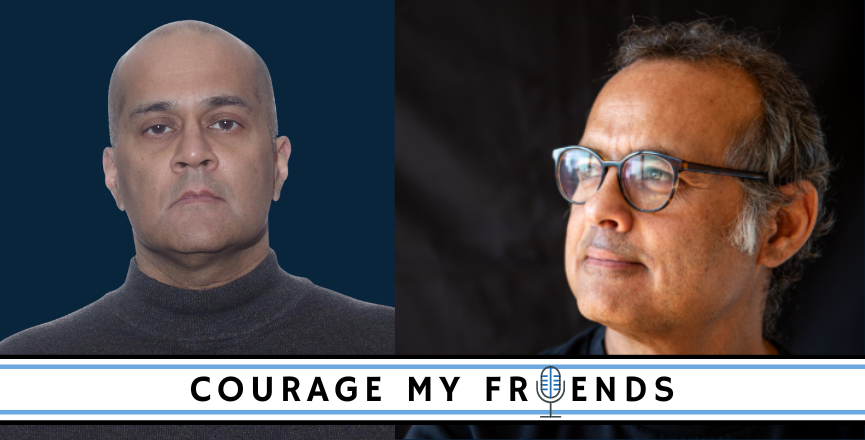
In the season 10 premiere of the Courage My Friends podcast series, we are pleased to welcome back journalist, author and director of the Tricontinental Institute for Social Research, Vijay Prashad and professor of International Relations at St. Thomas University, Shaun Narine. We discuss the recent US military attack on Venezuela and the abduction of President Nicolas Maduro and First Lady Cilia Flores, the Trump administration's new National Security Strategy (the so-called "Donroe Doctrine") and what this means for Canada, and how all of this is connected to the decline of US hegemony, the rise of Asia and the West's shift into hyper-imperialism. Speaking on the US National Security Strategy or the "Donroe Doctrine", Narine says: "They're actually saying, look, the Western Hemisphere is ours … And I think in a lot of ways, the Venezuela situation was an easy sort of first pass at asserting this …'Let's go in. Let's take out Maduro. And let's send the message to the entire region"... And of course, the message was received.And if I'm reading this correctly, and from Canada, they're making good on the threat that no country in the Western Hemisphere can do anything that the United States finds to be objectionable." On hyper-imperialism, Prashad explains: "The United States and its European partners … hollowed out the manufacturing. Hollowed out science and technology. Hollowed out the universities … and find suddenly the center of gravity of the world economy shifting to Asia … They've lost the source of power they used to have over raw materials, over finance, over science and technology. But two sources of power remain. One of them is military power … The other source of power is the power of information … And they use it pretty effectively to try to dampen other powers. But there are contradictions." About today's guests: Vijay Prashad is an Indian historian and journalist. Prashad is the author of forty books, including Washington Bullets, Red Star Over the Third World, The Darker Nations: A People's History of the Third World, The Poorer Nations: A Possible History of the Global South, and The Withdrawal: Iraq, Libya, Afghanistan, and the Fragility of U.S. Power. His most recent book, with Grieve Chelwa, is How the International Monetary Fund Suffocates Africa (Johannesburg: Inkani Books, 2026). Prashad is director of Tricontinental: Institute for Social Research and chief correspondent for Globetrotter. He is an editor at LeftWord Books (New Delhi), at Inkani Books (Johannesburg), and at La Trocha (Chile). He has appeared in two films – Shadow World (2016) and Two Meetings (2017). Shaun Narine is a professor of International Relations at St. Thomas University in Fredericton. He specializes in studying institutions in the Asia Pacific but has also written and commented on Canadian and US foreign policy and great power politics, including the rise of China. Transcript of this episode can be accessed at georgebrown.ca/TommyDouglasInstitute or here. Image: Vijay Prashad, Shaun Narine / Used with permission. Music: Ang Kahora. Lynne, Bjorn. Rights Purchased. Intro Voices: Ashley Booth (Podcast Announcer); Bob Luker (Tommy) Courage My Friends Podcast Organizing Committee: Chandra Budhu, Ashley Booth, Resh Budhu. Produced by: Resh Budhu, The Tommy Douglas Institute of Labour and Social Justice and Breanne Doyle, rabble.ca. Host: Resh Budhu.
Get this podcast on your phone, Free


Create Your Podcast In Minutes
- Full-featured podcast site
- Unlimited storage and bandwidth
- Comprehensive podcast stats
- Distribute to Apple Podcasts, Spotify, and more
- Make money with your podcast
