Super Data Science: ML & AI Podcast with Jon Krohn
https://feeds.megaphone.fm/SUPERDATASCIENCEPTYLTD9836501887Episode List
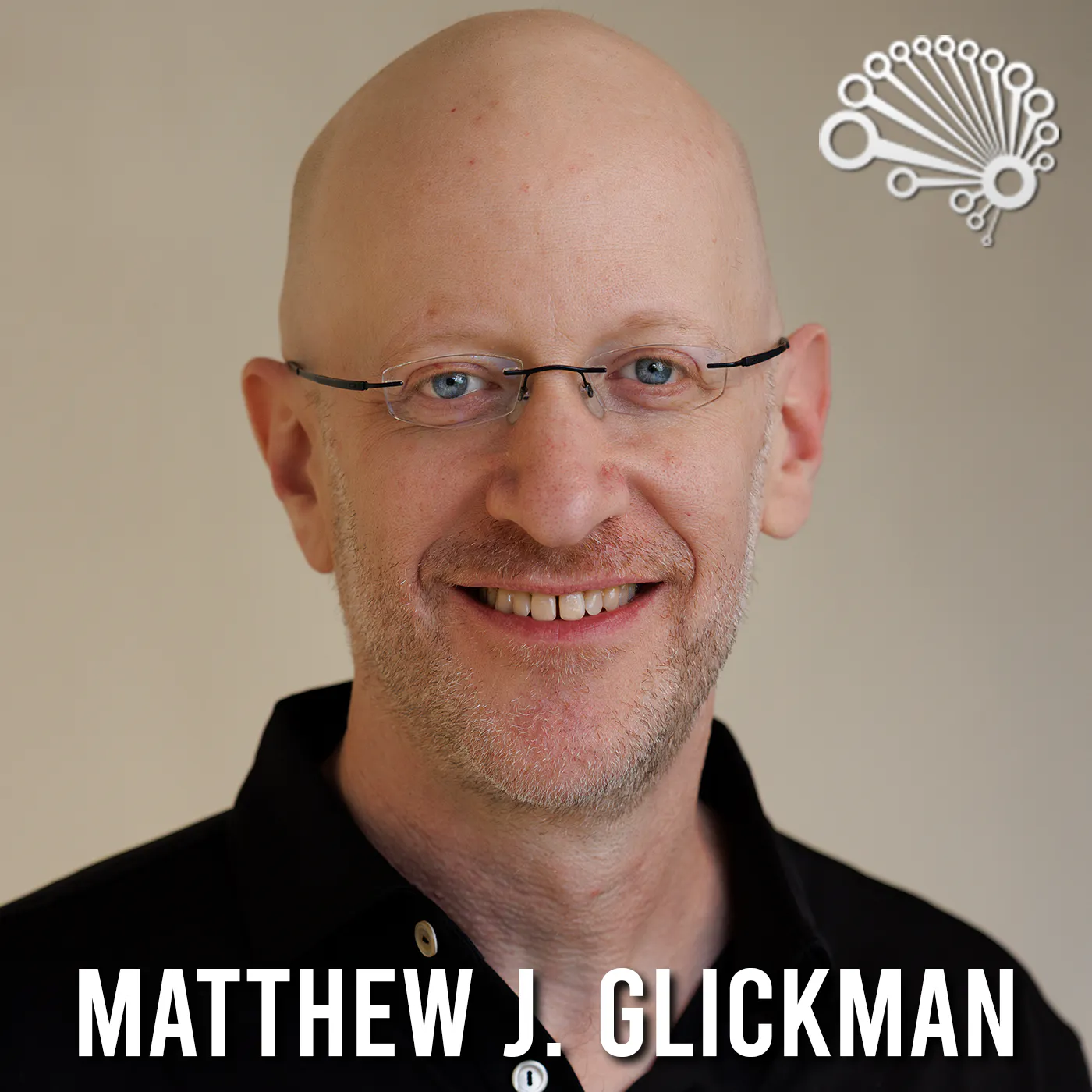
981: How Data Engineers Are “10x’ing” Themselves With Agents, feat. Matt Glickman
Matt Glickman talks to Jon Krohn about co-founding the agentic-platform startup, Genesis Computing, how his experience at Goldman Sachs paved the way for developing AI agents, and where he thinks agentic AI has just as much value as a company’s human employees. This February, Genesis Computing revealed how its platform can offer the guardrails so crucial to businesses, alongside increased capabilities that help execute entire workflows from research to deployment. Additional materials: www.superdatascience.com/981 Interested in sponsoring a SuperDataScience Podcast episode? Email natalie@superdatascience.com for sponsorship information. In this episode you will learn: (12:56) Cloud adoption in finance and healthcare (18:28) How Genesis Computing uses AI agents (31:05) AI agents replacing humans in the workplace (56:25) An argument for encouraging enterprises to use AI

980: AI Making Theoretical Physics Breakthroughs
A team of theoretical physicists from Harvard, Cambridge, the Institute for Advanced Study, and Vanderbilt used OpenAI’s models not just as a tool, but as a collaborator, cracking a problem in particle physics that had stymied them for months. In this Five-Minute Friday, Jon Krohn walks through how GPT-5.2 Pro simplified a 32-variable mathematical expression into a single line, proposed what it called the “obvious generalization” for any number of gluons, and how a more powerful internal model then produced a formal proof after 12 hours of autonomous reasoning. Find out why this may be a template for AI-assisted scientific discovery and what it means for the future of research. Additional materials: www.superdatascience.com/980 Interested in sponsoring a SuperDataScience Podcast episode? Email natalie@superdatascience.com for sponsorship information.

979: Agentic Data Management and the Future of Enterprise AI, with Rohit Choudhary
For years, Jon has been quoting the stat that the world's data is roughly doubling every year. His guest today says that’s way too conservative, he’s seeing enterprise data soon growing at close to 10x per year. And most organizations are nowhere near ready for what that means. In this episode, Rohit Choudhary, founder and CEO of Acceldata, explains how the agentic data management platform his team has built helps enterprises make their increasingly vast amounts of data self-aware, self-optimizing, and AI-ready. He breaks down why governance needs to be operational and real-time rather than a one-time compliance exercise, and shares his view on why the most valuable professionals in the age of AI won’t be the best programmers, they’ll be the ones with the clearest thinking and the deepest domain expertise. Additional materials: www.superdatascience.com/979 Interested in sponsoring a SuperDataScience Podcast episode? Email natalie@superdatascience.com for sponsorship information. In this episode you will learn: (03:26) How Rohit coined the term “data observability” (06:04) Agentic data management use cases (12:46) Why fixing data at the point of consumption is 1000x more expensive (30:49) Career paths and skills for the age of AI (42:38) Why enterprise data will soon grow at nearly 10x per year

978: A Post-Transformer Architecture Crushes Sudoku (Transformers Solve ~0%)
A game millions of people solve over morning coffee is exposing a fundamental weakness in today’s most powerful AI models. In this Five-Minute Friday, Jon Krohn breaks down Pathway’s new Sudoku Extreme benchmark, roughly 250,000 of the hardest Sudoku puzzles available and why leading LLMs like o3-mini, DeepSeek-R1, and Claude 3.7 Sonnet scored effectively zero percent, while Pathway’s post-transformer BDH architecture achieved 97.4% accuracy at a fraction of the cost. Listen to the episode to find out what BDH is doing differently, why Sudoku performance matters far beyond puzzles, and what this means for the future of AI reasoning. Additional materials: www.superdatascience.com/978 Interested in sponsoring a SuperDataScience Podcast episode? Email natalie@superdatascience.com for sponsorship information.
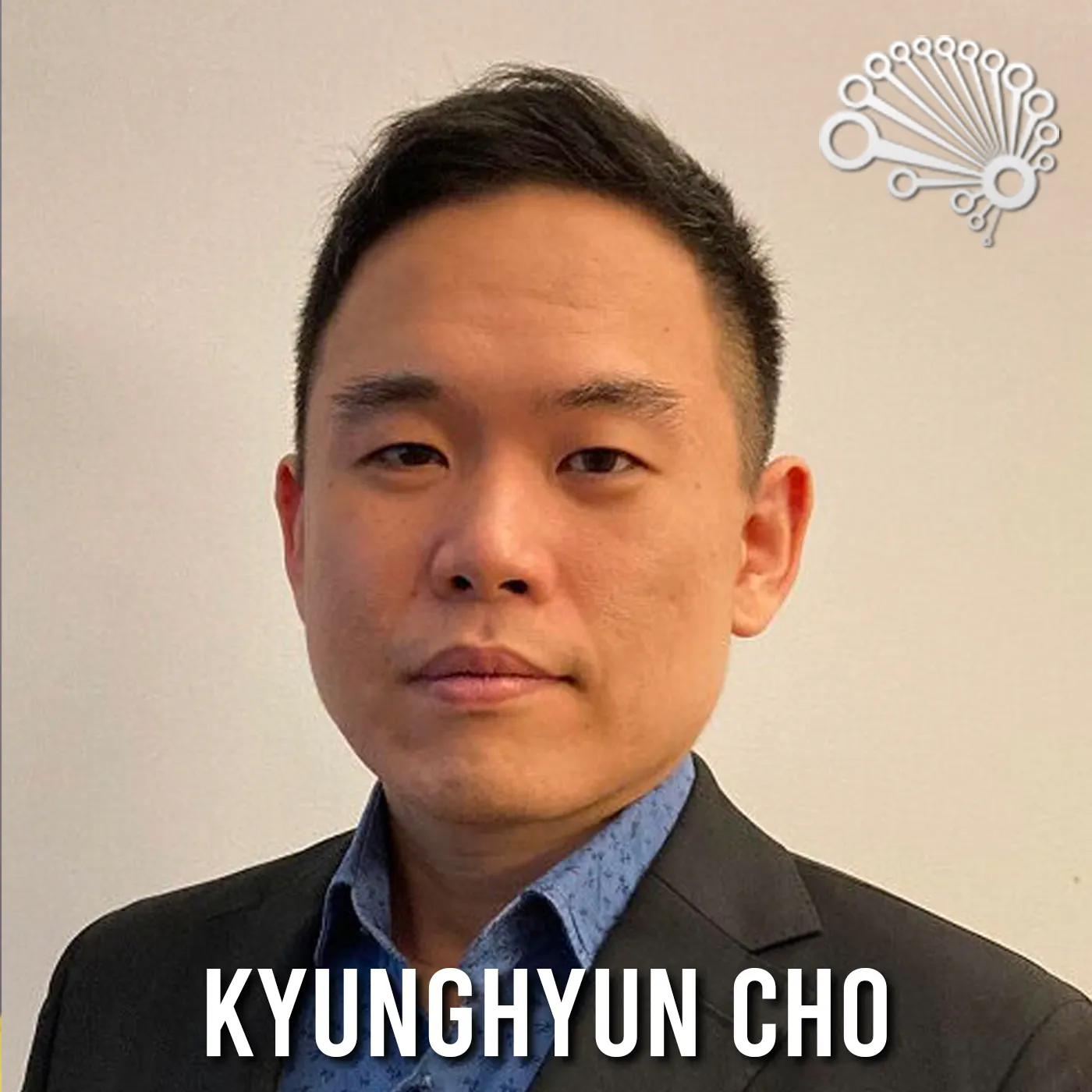
977: Attention, World Models and the Future of AI, with Prof. Kyunghyun Cho
What’s going to be the next big step function that blasts us forward in AI capabilities? To find out, Jon Krohn sits down with Professor Kyunghyun Cho, whose 200,000 citations and co-authorship of the first paper on attention place him among the most influential AI researchers in the world. In this episode, Kyunghyun explains why today’s models have already captured most correlations in passive data, making the real challenge about actively choosing which data to collect. He also weighs in on the open debate around world models, whether AI needs high-fidelity, step-by-step imagination or whether a high-level latent representation that lets it skip ahead is sufficient and shares the surprising discovery that 80% of his 200 computer science students had never installed a coding agent. Additional materials: www.superdatascience.com/977 Interested in sponsoring a SuperDataScience Podcast episode? Email natalie@superdatascience.com for sponsorship information. In this episode you will learn: (06:43) The story behind the attention mechanism (28:43) Sample efficiency and active data collection (39:04) World models and latent planning (49:52) Teaching undergrads with coding agents (58:21) Reranking, multi-stage ranking, and the foundations of RAG
You may also like









Get this podcast on your phone, Free


Create Your Podcast In Minutes
- Full-featured podcast site
- Unlimited storage and bandwidth
- Comprehensive podcast stats
- Distribute to Apple Podcasts, Spotify, and more
- Make money with your podcast