Full program podcast
https://www.abc.net.au/feeds/6344892/podcast.xmlEpisode List

Social cohesion is straining — can citizens’ assemblies help?
There is a thread that’s been left dangling from our show at the end of last year on Ambrogio Lorenzetti’s fourteenth century “Allegory of Good and Bad Government”, painted on the walls of the Sala dei Nova in Siena’s Palazzo Pubblico.The dominant figure of Justice sits on the left side of the central mural. She has her thumbs on two scales to hold them in balance, with angels on either side meeting out punishment and just recompense. Directly below her sits the figure of Concord (Concordia), a carpenter’s plane across her lap, as she weaves together the judgements into a red-and-white braided rope. This rope then passes from her hand to the hand of the first of 24 citizens who stand along the base of the mural.The rope finally becomes the staff held by the figure of the “The Good Commune” — or, perhaps, “the Common Good”. It is as though the Common Good is constituted by concord among citizens, from which citizens in turn hope to receive what is necessary for their shared life.From Roman philosophers like Cicero down to the artists of the Italian Renaissance, there has been an understanding that concord — or what we now might call “social cohesion” — proceeds from the fair distribution of justice, and is grounded in the confidence of citizens that it is being distributed fairly. But what happens when concord begins to fray?This month, the Royal Commission into Antisemitism and Social Cohesion will be handing down its interim report. It is fair to say that, since the horrific attack at Bondi Beach that precipitated the establishment of the commission, social cohesion is under severe strain, perhaps to breaking point for some communities.The question for us now is: When the conditions of public trust in a society have weakened, could the deliberative capacity of a mini-public — such as a citizens’ assembly — help restore it?Guest: Ron Levy is a Professor in the College of Law, Governance and Policy at the Australian National University.
Why do democracies seem so fragile in the face of shortages?
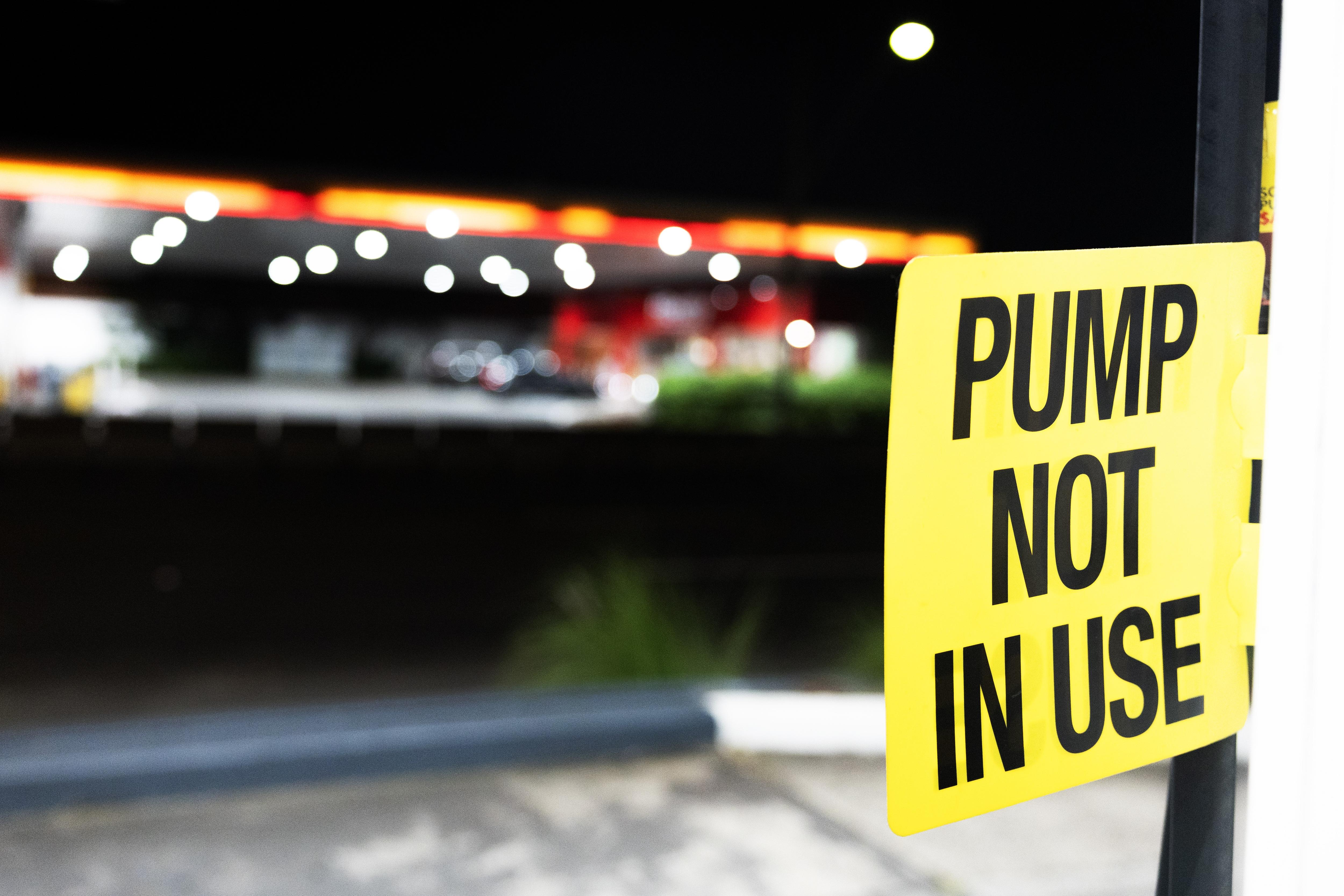
Within days of the commencement of the war that has enveloped the Middle East — and that continues to severely disrupt global energy supplies — a familiar pattern began to emerge in some of the world’s most prosperous democracies. Much as they did at the outset of the pandemic, people began stockpiling. Then, it was toilet paper and food; this time, it’s fuel. In cities across Australia, long lines formed outside petrol stations and tensions flared as motorists seized their opportunity to fill not just their cars, but jerry cans as well.Since then, the fears that motivated this behaviour have only heightened as the war goes on, petrol prices sharply rise and “not in use” signs appear on petrol pumps. The federal and state governments have already introduced measures designed soften the economic blow of significantly more expensive fuel. And while the prospect of rationing fuel reserves remains some distance away — at this stage, at least — the Prime Minister is nonetheless urging Australians not to use “more fuel than you need”.It is nonetheless telling that the mere possibility of fuel rationing has seemingly sent a chill down the nation’s collective spine. The prospect of government restrictions on petrol is tailormade to the exacerbate the underlying conditions of distrust, division and resentment, and to make the parties who are most adept at harnessing that resentment, that distrust, more attractive still.There is something here that is eerily reminiscent to the popular backlash to US President Jimmy Carter’s 1979 “Crisis of Confidence” speech to the nation, with its modest request for voluntary sacrifices in the face of a similar energy crisis:“And I’m asking you for your good and for your nation’s security to take no unnecessary trips, to use carpools or public transportation whenever you can, to park your car one extra day per week, to obey the speed limit, and to set your thermostats to save fuel. Every act of energy conservation like this is more than just common sense — I tell you it is an act of patriotism.”Carter’s exhortation proved wildly unpopular then, and there is every reason to wonder whether similarly voluntary measures would be politically costly now.This presents us with a dilemma. We’ve long known that liberal democracies are averse to sacrifice, and that the basest yet most effective commentary on federal budgets divides the population into “winners” and “losers”. We know that economic growth is the precondition of political stability. Does this mean that liberal democracy is, fundamentally, a politics for times of prosperity? Is the corollary, then, that, during times of scarcity and sacrifice, the majority of the electorate revert to being populists?For John Rawls, one of the defining features of a society dedicated to “justice as fairness” is the agreement among citizens to bear each other’s burdens, “to share one another’s fate”. The challenge, then, is how to inculcate those just dispositions — we could call them the habits or virtues constitutive of democratic morality — such that, during times of scarcity, we do not turn habitually to fear, envy and self-interest. For when that happens, citizens soon become competitors, and neighbours become threats.There is every reason to believe that intermittent energy crises will be a feature of our common future. If our social commitments are this fragile in times of prevailing prosperity, what will become of them in the face of shared hardship?Guest: Melanie White is Professor of Sociology in the School of Social Sciences at the University of New South Wales.
Why Autocracy Needs Spectacle — with M Gessen
One of the words we use to describe political authority gone wrong is "autocracy": which is to say, the concentration of power in a unitary figure who then exercises that power without countervailing constraints and for its own sake. To borrow an expression of St Augustine, autocracy is a form of political authority that curves in on itself.Because most citizens have a clear sense that governance ought to be for something beyond political self-interest or naked self-enrichment, we rightly take a dim view of politicians who are unmoved by the interests and opinions of their constituents. But, of course, only tyrants are prepared to present themselves as wholly disinterested in the lives of those over whom they rule.Autocrats don't claim to be in it for themselves; they typically insist that they represent, serve and fight for "the people" — but "the people" politically defined as those who truly belong to the nation, those who build and contribute, those who are loyal and patriotic. In short, those who can be encompassed by the political pronouns "us"/"we". Accordingly, autocrats also claim to be defending the nation and its interests against "they"/"them", who have no part or place in the nation's life and are therefore no voice in the conversation of politics.What is corrupting about autocratic rule, then, is not simply that it is "corrupt" in the conventional sense of using the affordances of political office for private gain. Rather, it is the way autocracy throws off the basic constraints that define political authority in a representative democracy, and thereby betrays its character.In democratic life, we are constantly being reminded of the contingency of political authority and its fundamental accountability. When autocratic power lays claim to the necessity of an unconstrainted mode of executive decision-making — most often in the face of some "emergency" which suspends the normal functioning of democratic scrutiny — it corrodes the conditions of democratic life, precisely because representative democracy reveals what political authority really is: contingent, correctable and inherently contestable.As George Kateb writes in "The Moral Distinctiveness of Representative Democracy": “political authority is suspect when undivided and thus untroubled by antithetical voices … when it moves too easily or takes shortcuts to accomplish its ends, or when it prevents appeals and second thoughts, or when it closes itself off in secrecy or unapproachability.”It is no stretch, then, to say that autocracy is a politics of contempt. It is contemptuous of deliberation and mutual accountability; it is contemptuous of expertise and the constraints of precedent; it is contemptuous of any notion that the source of one's legitimacy could be extrinsic to one's own self. Which is why, ultimately, autocracy is a form of contempt for the people.It is for this reason, perhaps, that autocracy depends so much on the aesthetics of power: spectacular performances of force mask the lack of substance beneath, designed as they to eliminate accountability and overwhelm deliberation.This episode of The Minefield was recorded in front of a live audience at Customs House in Brisbane as part of the University of Queensland's "Dialogues Across Difference" event series.Guest: M Gessen is an acclaimed and multi-award winning Russian-American journalist, author and activist, known for their influential writing on authoritarianism, human rights and LGBTQ+ issues — most notably in their columns for The New Yorker and The New York Times, and their books Surviving Autocracy and The Future Is History: How Totalitarianism Reclaimed Russia. Gessen is a Distinguished Professor at the Craig Newmark Graduate School of Journalism in New York.
Can illegal wars still be legitimate wars?
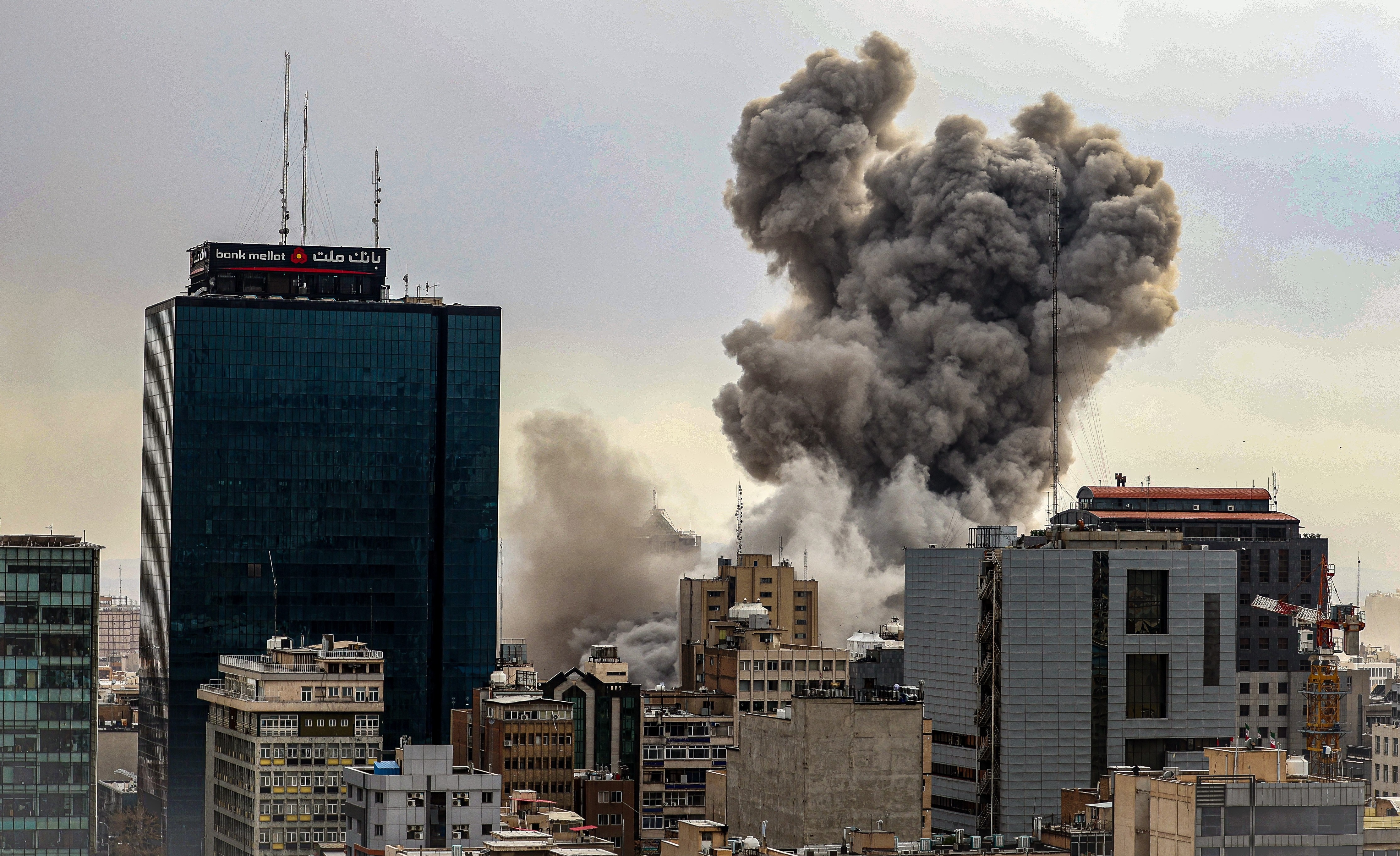
It’s like déjà vu all over again. After launching a devastating but limited series of strikes on Iranian nuclear facilities and against the nation’s top military leaders and nuclear scientists in June last year, the United States and Israel recommenced hostilities against Iran at the end of February.The objectives of this ‘war’ are similar — to eliminate Iran’s nuclear capabilities and remove the senior leadership of the Islamic Republic regime — but its implementation is more thoroughgoing, more open-ended, more uncontainable, and more problematic in terms of its basis in international law.There is near consensus among international law experts that the US-Israeli attacks on Iran come in violation Article 2(4) of the UN Charter. And yet neither the United States nor Israel seem interested in justifying their actions in terms of their legality (unlike their “middle power” allies, who are intent on using the language of “collective self-defence”). In its place are assertions of power, of unassailable might, of moral legitimacy, of “good and evil”, of an “intolerable threat” posed by Iran.The casual way that international law has been cast off in the conflict that is spreading across the Middle East raises pressing and pertinent questions about the moral considerations that undergird international law itself.Guest: Tamer Morris is a Senior Lecturer at the University of Sydney, where he focusses on international law, United Nations peacekeeping and international humanitarian law. You can read his penetrating article on the illegality and (il)legitimacy of the Iran war on ABC Religion and Ethics.

Ramadan: Politics Straight from the Heart — with Christos Tsiolkas
If there is something inherently suspicious about political appeals to “the heart” — which is to say, attempts to exploit unreflective prejudices and reactive emotions — then it is also true that a form of politics that is unresponsive to heart-felt appeals to a common humanity, to compassion, to decency, is dangerous.How can we maintain the precarious balance between a politics that trades cheaply on emotion, and one that both comes from and appeals to the heart?Guest: Christos Tsiolkas is the author of eight novels — Loaded, The Jesus Man, Dead Europe, The Slap, Barracuda, Damascus, 7 ½, The In-Between — and the short story collection, Merciless Gods. He is a playwright, screen writer, essayist, radio host and currently a film critic for The Saturday Paper. In September last year, he delivered the 2025 Ray Mathew Lecture at the National Library of Australia, on the topic “Fence-Sitting”.
You may also like







Get this podcast on your phone, Free


Create Your Podcast In Minutes
- Full-featured podcast site
- Unlimited storage and bandwidth
- Comprehensive podcast stats
- Distribute to Apple Podcasts, Spotify, and more
- Make money with your podcast